
Top SEO Trends to Watch in 2027: A Practitioner’s Guide to the New Search
Forget trying to “trick” an algorithm. The most significant shift in SEO has nothing to do with new tactics and everything to do with search engines becoming sentient, conversational partners. For years, we treated Google like a vending machine: insert keyword, get ranking. In 2027, you’re not talking to a machine; you’re building a relationship with a digital brain that thinks in concepts, not just strings of text.
The top SEO trends to watch in 2027 are the definitive shift from keyword-based tactics to entity-based strategies, driven by AI. This means focusing on Answer Engine Optimization (AEO) for generative AI overviews, building deep topical authority instead of chasing single keywords, and embracing privacy-first marketing in a cookieless world. For a deeper dive into these evolving practices, explore seo content trends and next-gen SEO strategies. However, it’s crucial to understand what truly matters in SEO beyond fleeting trends. Success will depend on integrating AI for personalization and content generation while doubling down on human experience, demonstrable expertise (E-E-A-T), and robust technical SEO fundamentals.
The Rise of AI in SEO: From Tool to Teammate
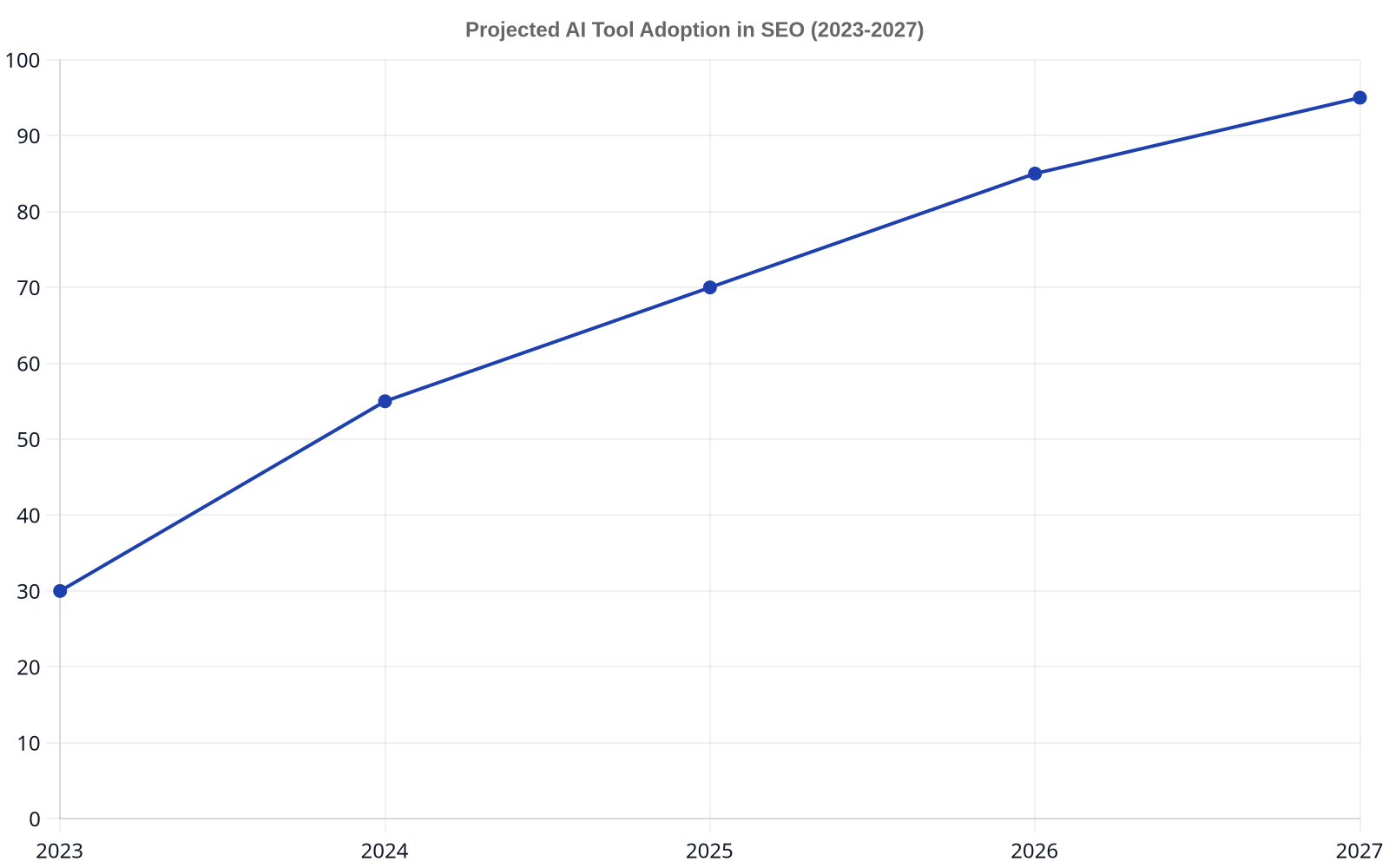
Artificial intelligence isn’t a new visitor to SEO, but its role has undergone a radical promotion. It’s no longer just a helpful intern fetching data; it’s a strategic partner embedded in every facet of our workflow. By 2027, any SEO strategy that doesn’t fundamentally integrate AI is already obsolete. A 2024 Gartner analysis predicts that generative AI will be a workforce partner for 90% of creative professionals by 2026, a trend accelerating rapidly in the SEO space.
AI-Powered Personalization and Content Generation
Generative AI models like Google’s own Gemini are not just powering search results; they’re becoming content creation engines. At Rank My Website, we see this firsthand in how we approach content. The era of writing one article for one keyword is over. Now, we use AI to generate clusters of content around a topic, personalized for different user intents and stages of the buyer’s journey. The rote work of keyword research has evolved from finding simple phrases to identifying complex user questions and semantic relationships that AI can then help us answer at scale.
However, this introduces profound ethical questions. The ease of generating content floods the internet with low-quality, derivative articles. The winning strategy in 2027 isn’t just using AI—it’s using AI to augment human creativity. AI can outline, research, and draft, but the final layer of unique insight, experience, and brand voice must come from a human expert. This is how you build trust, not just rankings.
AI Chatbots and Conversational Marketing
Conversational AI is another critical piece of the puzzle. On-site chatbots and AI assistants are no longer simple FAQ bots. They are now sophisticated tools that can guide users through complex funnels, answer nuanced questions, and collect valuable zero-party data. By integrating your site’s content repository with a powerful Large Language Model (LLM), you can provide instant, accurate answers 24/7. This not only improves user experience but also creates a new signal for search engines: your site is a reliable source of information, capable of satisfying user queries directly.
AEO: The New Frontier is Answer Engine Optimization
The most disruptive trend is the evolution of Search Engine Optimization (SEO) into Answer Engine Optimization (AEO). Google isn’t just showing a list of links anymore; it’s synthesizing information from those links to provide a direct answer in AI Overviews. If your content isn’t structured to be the source of that answer, you will become invisible.
Your new goal isn’t to rank #1. It’s to become the canonical, cited source within the AI-generated answer. Your content needs to be the fact that the machine quotes.
Optimizing for AI Overviews and LLMs
To succeed in AEO, you must shift your mindset from “keywords” to “entities” and “answers.” An entity is a specific, well-defined thing or concept—a person, a place, a company, a product. Google’s Knowledge Graph is built on entities. To optimize for answer engines, you must:
- Be Direct and Factual: Answer questions clearly and concisely. Use simple language and structure your content with clear headings. The first paragraph of a section should directly answer the question posed by its heading.
- Use Structured Data: Schema markup is the language of search engines. Implementing detailed schema (like FAQPage, HowTo, Product, etc.) gives search engines the specific, structured information they need to generate accurate answers. It’s no longer optional.
- Prioritize E-E-A-T: Google must trust the source of its answers. This means demonstrating Experience, Expertise, Authoritativeness, and Trustworthiness is more critical than ever. Author bios, cited sources, and clear evidence of first-hand experience are non-negotiable.
SEO vs. AEO: A Shift in Metrics
The key performance indicators for search are changing. While old metrics still have a place, a new set of AEO-focused measures is emerging to define success.
| Metric Type | Traditional SEO Metric | Modern AEO Metric |
|---|---|---|
| Visibility | Keyword Ranking Position | Percentage of AI Overviews Sourced |
| Engagement | Click-Through Rate (CTR) | Brand Mentions within Answers |
| Content | Pages per Session | Query Satisfaction Rate |
| Authority | Domain Authority (DA) | Entity Salience & Topical Authority |
Measuring the ROI for these new efforts requires a shift in analytics. You need to track how often your domain is cited as a source in AI Overviews and monitor the traffic coming from these features. It requires looking beyond simple clicks to understand your brand’s overall visibility and authority within the search engine’s “brain.”
Topical Authority: Why Deep Expertise Beats Broad Content
In 2027, an “inch-deep, mile-wide” content strategy is a recipe for failure. To become a trusted source for an answer engine, you must prove deep, comprehensive expertise on a specific topic. This is topical authority. Instead of writing one blog post about “industrial assemblies,” a company like our client wolverine-llc.com would need a complete hub of content covering everything from materials and processes to logistics and quality control for that industry. This signals to Google that they are a definitive authority on the subject.
Building Content Hubs and Clusters
Building topical authority is a deliberate, structured process. It’s about creating a universe of content, not just a single star.
- Identify Your Core Topic: Start with the central pillar of your expertise. This should be a broad topic that is fundamental to your business.
- Map Out Subtopics: Brainstorm every possible question, sub-topic, and related concept around your core topic. Use tools to find what your audience is asking.
- Create Pillar and Cluster Content: Write a long-form “pillar” page that provides a comprehensive overview of your core topic. Then, create dozens of “cluster” articles that dive deep into each subtopic, all linking back to the pillar page.
- Master Internal Linking: This is where the magic happens. A strong internal linking structure connects all of your related content, creating a web of expertise that search engines can easily crawl and understand. These logical connections are a powerful signal of authority. We’ve seen how a well-planned structure is key to achieving automated organic traffic growth.
The Role of E-E-A-T in Authority
Topical authority is intrinsically linked to E-E-A-T. You can’t build authority without demonstrating real expertise. As outlined in Google’s own documentation on helpful content, search systems are designed to reward content that is created for a specific audience and shows it was produced by someone with relevant life experience or deep knowledge. This is why human oversight is so critical. An AI can generate text, but it can’t fake a decade of hands-on experience in an industry.
Core Web Vitals and User Experience: The Non-Negotiables
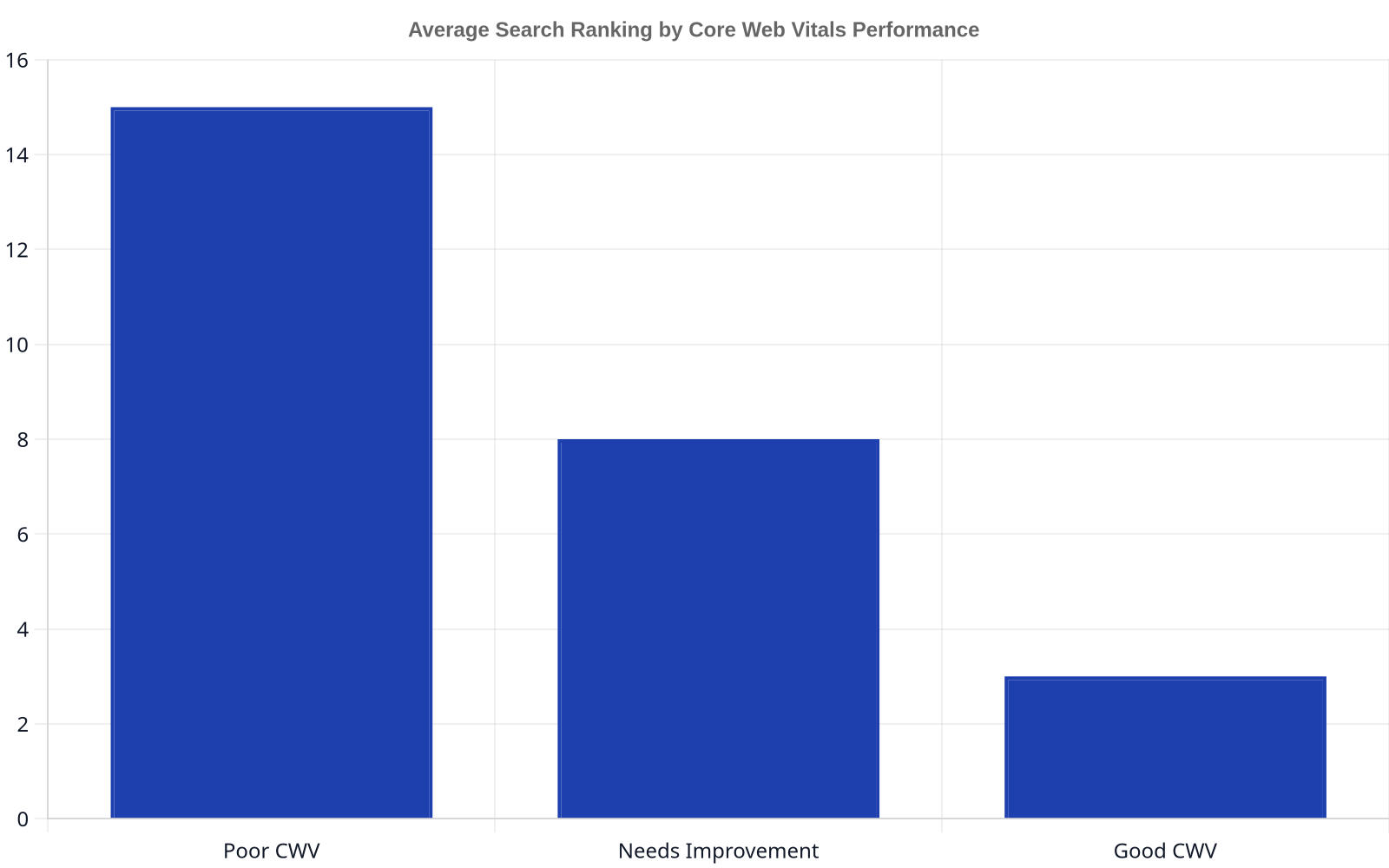
For all the focus on AI and content, the technical foundation of your website has never been more important. If a user (or a search crawler) has a poor experience on your site, nothing else matters. Core Web Vitals (CWV)—Largest Contentful Paint (LCP), Interaction to Next Paint (INP), and Cumulative Layout Shift (CLS)—are direct measures of user experience and established ranking factors.
Technical SEO is Still Foundational
By 2027, perfect CWV scores are table stakes. Users expect pages to load instantly, be interactive immediately, and remain visually stable. A slow, janky website isn’t just an annoyance; it’s a direct signal to Google that your site is low-quality. Beyond CWV, a clean site architecture, mobile-first design, and efficient crawlability are essential. These are not exciting trends; they are the fundamental prerequisites for even competing in modern search. They are a significant part of the seo ranking factors and will only become more critical.
The Human Element of UX
User experience goes beyond technical metrics. Is your content readable? Is your navigation intuitive? Does your site design inspire trust? AI can’t answer these questions for you. This is where human creativity and empathy come in. Testing your site with real users, gathering feedback, and continuously iterating on the user journey are essential parts of a holistic SEO strategy. A user who is confused or frustrated will bounce, sending a powerful negative signal back to the search engine.
In an AI-driven world, the most defensible SEO advantage you can have is a genuinely superior human experience. Machines can replicate facts, but they can’t replicate feeling.
The Evolving Content Landscape: Video, Voice, and Verification
Content is no longer just the written word. To dominate search in 2027, you must be present in the formats your audience prefers, and that increasingly means video and audio.
The Dominance of Video Content
Short-form video (YouTube Shorts, TikTok, Instagram Reels) and long-form video (YouTube explainers, tutorials, webinars) are essential for both engagement and search visibility. Google is indexing and ranking video content more prominently than ever. In fact, projections show that online video will account for 66 percent of mobile data traffic in 2027. Your content strategy must include video. This means creating video versions of your key articles, optimizing your YouTube channel, and embedding relevant videos within your blog posts to increase dwell time and user satisfaction.
Voice Search Optimization is AEO in Practice
Voice search is not a separate discipline; it is the epitome of answer-engine optimization. When a user asks a question to a smart speaker, they get one answer. The number of digital voice assistants is exploding, with Statista projecting their numbers to have reached 8.4 billion units worldwide back in 2024, making this a massive interface for search. To win the voice search answer, your content needs to be structured for AEO: be direct, be factual, and use natural, conversational language. Think about the questions your customers ask out loud and create content that answers them perfectly.
SERP Feature Evolution: Thriving in a Post-Link World
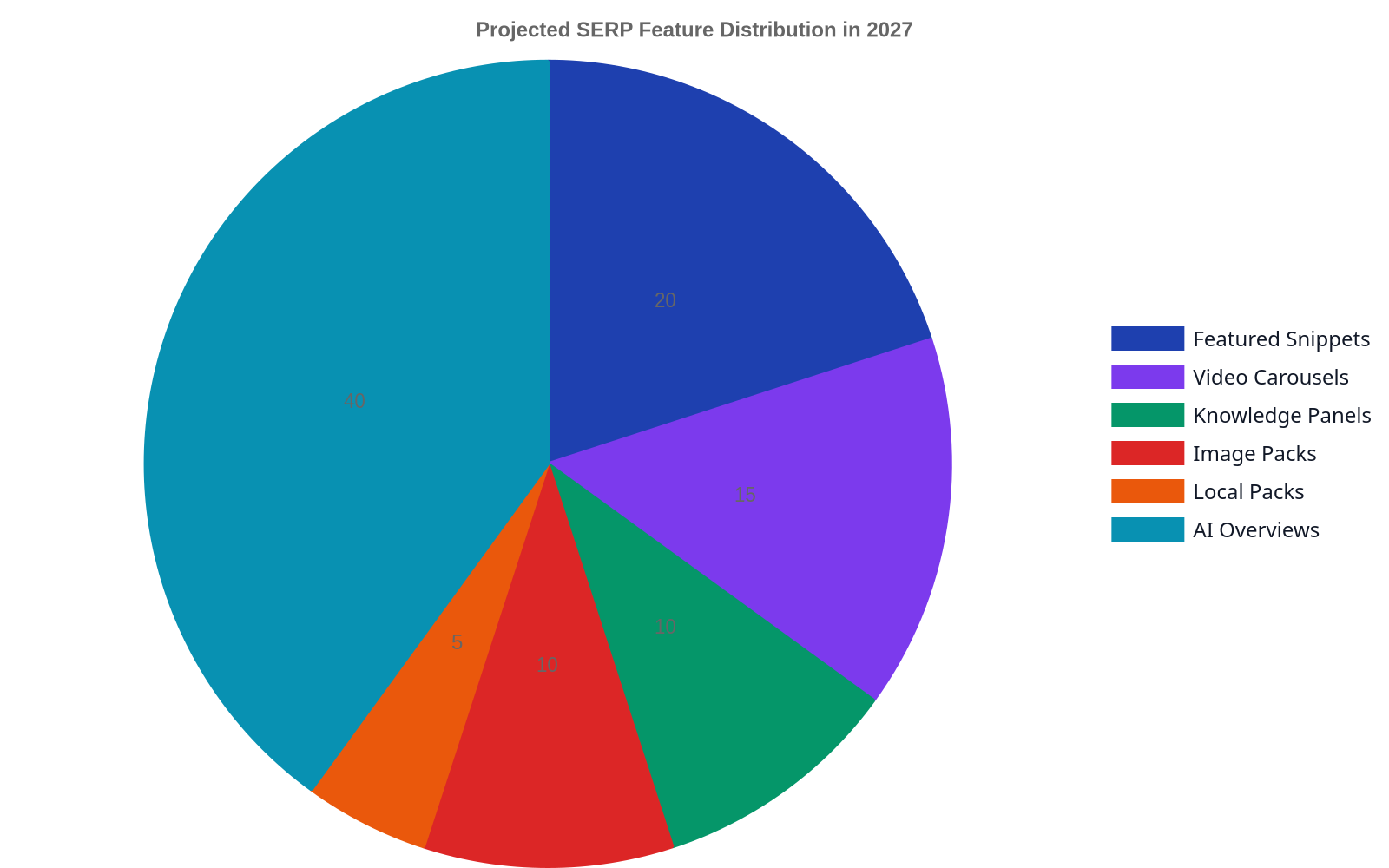
The traditional “10 blue links” are a relic. The Search Engine Results Page (SERP) of 2027 is a dynamic, modular interface dominated by AI Overviews, “People Also Ask” boxes, video carousels, and knowledge panels. Clicks are becoming less important than impressions and visibility within these features.
Adapting to a Zero-Click Future
A significant percentage of searches are now “zero-click,” meaning the user gets their answer from the SERP itself without clicking a link. This is terrifying for those who rely on website traffic. But it’s an opportunity for those who adapt. The goal is to own the SERP real estate for your brand and topics. This means optimizing for featured snippets, ensuring your business appears in the local pack with stellar reviews, and having your videos show up in carousels. It’s about being the answer, wherever the answer is displayed.
Emerging Search Platforms
While Google remains the giant, it is not the only search engine that matters. Younger audiences, in particular, are increasingly using platforms like TikTok, Instagram, and even Roblox as search engines for discovery and product research. An effective 2027 SEO strategy must consider these platforms. This doesn’t mean you need to be a dance-challenge star on TikTok, but it does mean understanding how information is discovered on these platforms and ensuring your brand is present in a way that is authentic to the environment.
The Privacy Pivot: Navigating a Cookieless and Regulated Future
The digital marketing world is being reshaped by a seismic shift toward user privacy. The demise of the third-party cookie, driven by regulations like GDPR and CCPA and browser changes via initiatives like Google’s Privacy Sandbox, fundamentally alters how we track and target users. The old ways of ad targeting and retargeting are disappearing.
Thriving in a Cookieless Environment
Success in a privacy-first world depends on building direct relationships with your audience and collecting zero-party and first-party data. Zero-party data is information customers intentionally share with you (e.g., through quizzes or preference centers). First-party data is information you collect from user interactions on your own website. An SEO strategy that drives engaged, loyal traffic to your owned properties is the best way to build this data asset. Content that solves problems and builds trust encourages users to share their information willingly.
AI Governance and Future Regulations
Beyond privacy, a new wave of regulations around AI is coming. Issues of data bias, transparency in AI-generated content, and copyright are already being debated. As an SEO professional, staying ahead of these regulatory changes is crucial. This means clearly labeling AI-generated content where appropriate, ensuring your AI models are trained on ethically sourced data, and being transparent with users about how you are using AI. Building an ethical and compliant SEO practice is not just good governance; it’s a prerequisite for long-term survival.
Further reading
- Digital Marketing Trends 2027: What to Watch
- SEO Trends for 2027: 15 Strategies to Improve Rankings
- What are the biggest digital marketing trends to watch in …
- Future of Search Trends & AI SEO: 2026–2027
- Top 10 Digital Marketing Trends in 2027
Frequently Asked Questions
What is the difference between SEO and AEO?
Search Engine Optimization (SEO) is the traditional practice of optimizing a website to rank high in a list of links. Answer Engine Optimization (AEO) is the modern practice of structuring content to be the direct source of information for an AI-powered answer engine, like Google’s AI Overviews. AEO focuses on providing clear, factual answers and building topical authority.
Will AI make SEO writers obsolete in 2027?
No, AI will not make expert SEO writers obsolete; it will make lazy ones obsolete. AI is a powerful tool for research and drafting, but it cannot replicate genuine first-hand experience, unique strategic insights, or a distinct brand voice. In 2027, the most valuable writers will be those who can collaborate with AI to produce content that is both factually deep and creatively human.
How important are backlinks in 2027?
Backlinks are still a signal of authority, but their relative importance is diminishing compared to topical authority and E-E-A-T signals. A link from an irrelevant, low-quality site is worthless. A link from a recognized, topical authority in your field is still incredibly valuable. The focus has shifted from quantity to quality and topical relevance.
What is the most overlooked SEO trend for 2027?
The most overlooked trend is the impact of emerging search platforms beyond Google. Billions of searches are happening on TikTok, YouTube, Instagram, and Amazon every day. Brands that continue to focus 100% of their effort on Google are ignoring a massive shift in user behavior, especially among younger demographics. A multi-platform discovery strategy is essential.
How do I measure the ROI of AI-driven SEO?
Measuring the ROI requires new metrics. Instead of just tracking keyword rankings and organic traffic, you need to measure your brand’s share of voice within AI Overviews (how often you are cited), your entity’s salience in the knowledge graph, and the conversion rate of traffic coming from answer-engine features. It’s a shift from measuring clicks to measuring authority and influence.
Ultimately, navigating the top SEO trends to watch in 2027 requires a dual focus: embrace the power of AI to operate at scale and with precision, but double down on the human elements that build trust and loyalty. At Rank My Website, we automate the technical and content generation processes, freeing up strategists to focus on what matters most: creating genuinely helpful experiences that establish you as the definitive authority in your field.