
Next Generation On-Page SEO Trends 2027: A Practitioner’s Guide to the Post-Keyword Era
“Most SEOs are still playing a game that ended two years ago. They’re obsessing over keyword density and chasing backlinks while Google’s AI has already moved the goalposts to a different stadium. The old playbook isn’t just outdated; it’s a liability. The next generation of on-page SEO trends for 2027 centers on a decisive shift away from simple keyword matching. To master next-gen seo strategies, success now depends on optimizing for entities and concepts, building demonstrable topical authority, and mastering technical UX signals to satisfy both human users and AI-driven search engines. The new core tasks involve structuring data for machine consumption, creating content that serves as a trustworthy source for Large Language Models (LLMs), and adapting to an evolving definition of a ‘page’ itself.”
The End of Keywords: Semantic SEO and Entity Optimization
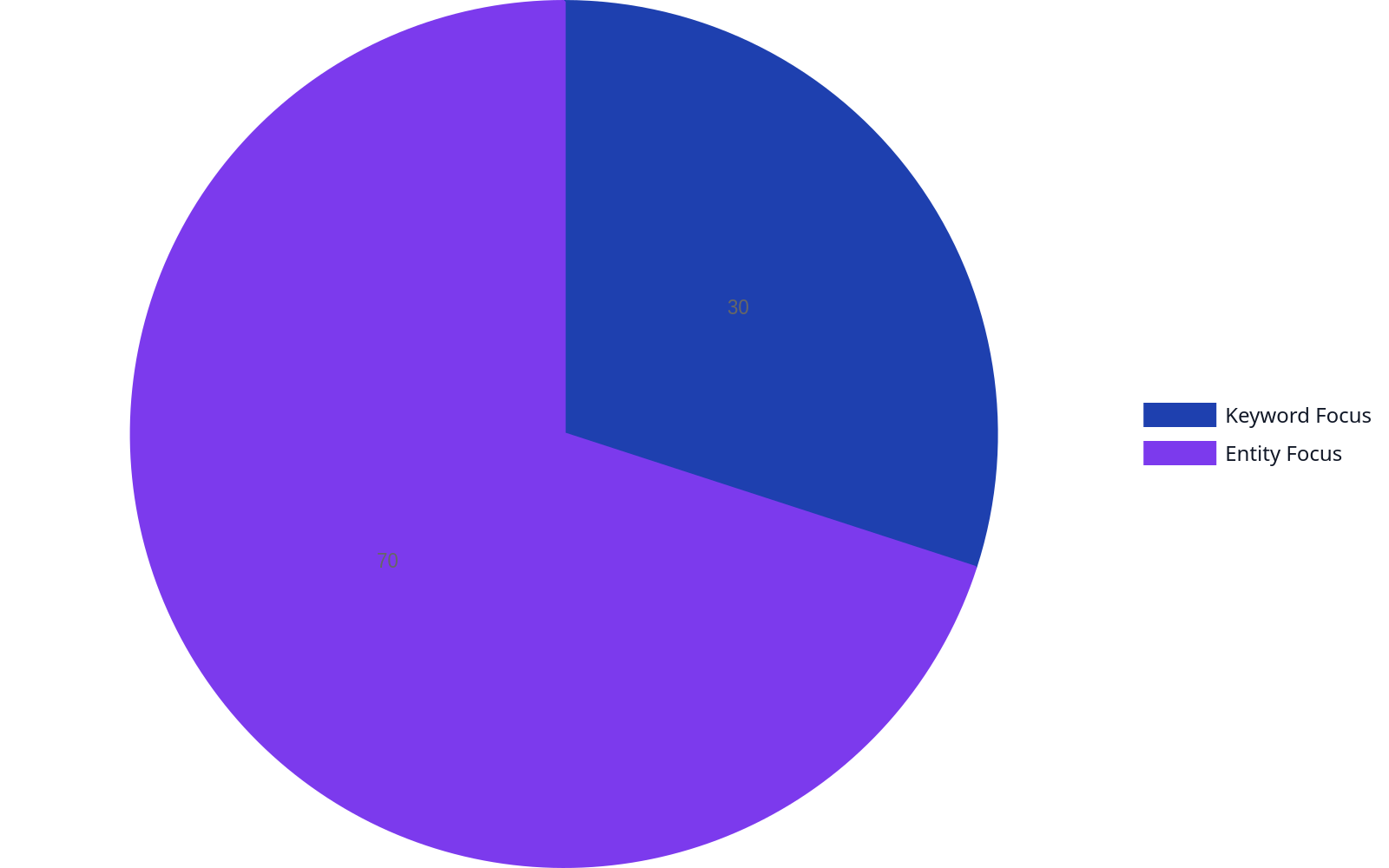
For years, keyword research was the bedrock of SEO. That era is over. While keywords still matter for initial discovery, the real work is in entity optimization. An “entity” is a well-defined thing or concept like a person, place, product, or company—for instance, our client Wolverine Assemblies. Google no longer just matches strings of text; it understands the relationship between these entities. This is the core of semantic search, and by 2027, it will be the only game in town.
Building Topic Clusters for Authority
Topical authority isn’t just a buzzword; it’s a prerequisite for ranking. Instead of creating one-off articles, you must build comprehensive topic clusters. This involves creating a central “pillar” page for a broad topic and surrounding it with “cluster” content that addresses specific sub-topics and long-tail questions in detail. For example, a pillar page on “Supply Chain Automation” would be supported by cluster articles on “Robotic Process Automation in Warehousing,” “AI for Demand Forecasting,” and “IoT Sensor Implementation.” This structure proves to search engines that you are a comprehensive authority on the subject. Platforms like ours automate the creation of daily articles and the crucial internal linking that connects these clusters, building a web of authority that is difficult for competitors to replicate.
The Power of Structured Data
If content is king, structured data is the kingmaker. Schema markup is the language that explains your content to search engines. It turns ambiguous text into concrete entities and relationships. Are you writing about a product? Use Product schema. An event? Event schema. A recipe? Recipe schema. According to a 2020 study (still relevant for its foundational finding), pages with schema markup can achieve significantly higher click-through rates. By 2027, pages without robust, detailed schema will be at a severe disadvantage, effectively invisible to the nuanced understanding of AI-driven search.
From Keywords to Concepts
Your content needs to answer questions, not just target keywords. This means thinking about the user’s intent behind the query. Someone searching for “best running shoes” isn’t just looking for those three words. They’re looking for information on shoe types, brand comparisons, price points, and features for different running styles. The goal is to create a resource so comprehensive that it satisfies every logical next step in the user’s journey. This approach, often called “programmatic SEO” when done at scale, is about anticipating user needs and building content that serves the entire topic, not just a single keyword.
The Rise of AI-Powered Content Optimization
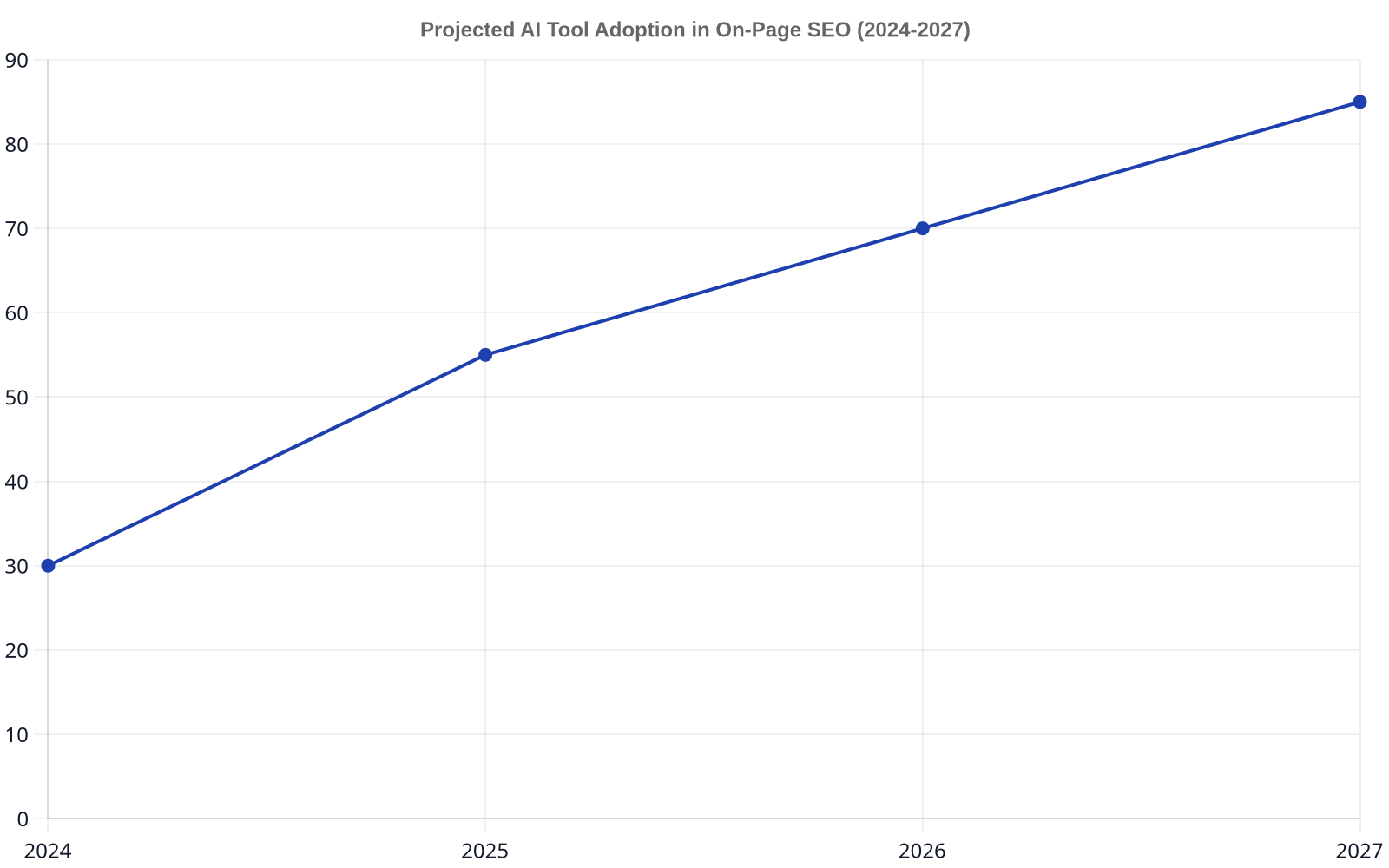
Artificial intelligence is no longer a novelty; it’s a core component of the modern SEO workflow. From content generation to technical analysis, AI tools are essential for operating at the scale and speed required for 2027. Gartner predicts that by 2026, generative AI will be a primary mechanism for businesses to access and work with information. For SEO, this has profound implications.
Using AI for Content Generation and Auditing
AI isn’t here to replace writers; it’s here to augment them. AI tools can analyze top-ranking content, identify semantic gaps, and generate structured briefs for human writers to execute. They can produce first drafts, rephrase content for different audiences, and ensure consistent tone and style. On the auditing side, AI can crawl an entire site in minutes, identifying thin content, keyword cannibalization, and opportunities for consolidation. Using AI for the foundational keyword research and content outlining frees up human strategists to focus on high-level messaging and unique insights—tasks machines can’t replicate.
Measuring ROI for AI-Driven Strategies
As you integrate more AI into your workflows, measuring its return on investment becomes critical. Don’t just look at traffic and rankings. Tie your SEO efforts to business outcomes. For an e-commerce site, this could be the number of qualified leads from organic search or the conversion rate of traffic to a specific product category. For a B2B company, it might be demo requests or whitepaper downloads. The key is to set up proper goal tracking in analytics platforms and use a “first-touch” or “multi-touch” attribution model to understand how your AI-optimized content contributes to the entire customer journey, not just the final click.
AI is not a magic wand for SEO. It’s a force multiplier. It automates the 80% of tasks that are repetitive and time-consuming, freeing up your best people to focus on the 20% that requires true human creativity and strategic insight.
Core Web Vitals and User Experience as Ranking Factors
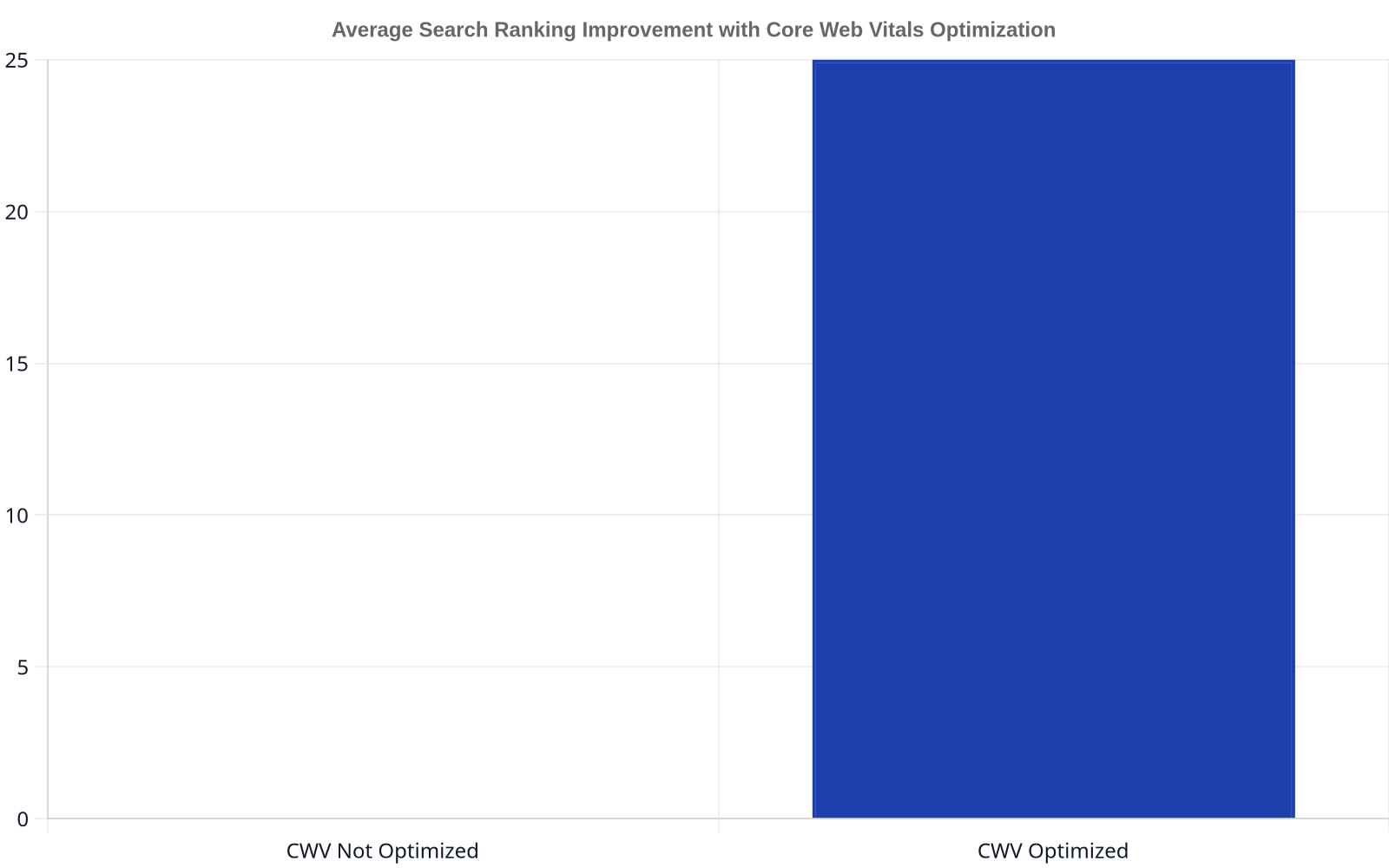
For the past decade, SEOs have been saying “user experience matters.” In 2027, it’s a non-negotiable, technically measured ranking factor. Google’s Core Web Vitals (CWV) — Largest Contentful Paint (LFP), Interaction to Next Paint (INP), and Cumulative Layout Shift (CLS) — are no longer just suggestions. They are direct, measurable signals that tell Google whether your site provides a good user experience. A slow, janky site is not just annoying for users; it’s a direct signal to Google that your page is low quality.
Optimizing for Speed and Interactivity
Achieving good CWV scores requires a deep dive into technical SEO. This includes:
- Optimizing Images: Compressing images, using next-gen formats like WebP, and implementing lazy loading.
- Minifying Code: Removing unnecessary characters from HTML, CSS, and JavaScript.
- Reducing Server Response Time: Investing in a quality host and using a Content Delivery Network (CDN).
- Prioritizing Above-the-Fold Content: Deferring the loading of non-critical CSS and JavaScript.
These aren’t one-time fixes. They require ongoing monitoring and optimization, as every new feature or piece of content can impact performance. Solving these issues is often the biggest hurdle for established sites, where overcoming technical debt can feel like an impossible task, much like the common ecommerce seo challenges we see daily.
Mobile-First is Now Mobile-Only
Google moved to mobile-first indexing years ago. In practice, however, you should be thinking “mobile-only.” The vast majority of users will experience your site on a mobile device. This means your design and development process must start with the smallest screen and scale up, not the other way around. Test on actual devices, not just browser emulators. Pay attention to tap target sizes, font legibility, and navigation simplicity. A site that is merely “responsive” is no longer enough; it must be truly mobile-native in its design and performance.
Beyond Text: Voice, Visual, and Immersive Search
The definition of a “search” is expanding. People are no longer just typing queries into a box. They are speaking to smart speakers, using their phone cameras to identify objects, and exploring content in augmented reality. Your on-page strategy must evolve to capture this traffic.
Optimizing for Voice Search
Voice search queries are typically longer and more conversational than typed queries. Over 50% of adults use voice search daily, and they’re asking full questions. To capture this traffic, your content needs to provide direct, concise answers. Use a natural, conversational tone. Structure your content with question-and-answer formats, and use FAQ schema to explicitly signal these Q&A pairs to search engines. The goal is to become the featured snippet that Alexa or Google Assistant reads back to the user.
The Rise of Visual and AR Search
Tools like Google Lens and Pinterest Lens have turned the camera into a search bar. Users can now search with images, not just words. This opens up a new frontier for on-page SEO. For e-commerce, this means high-quality, multi-angle product photos with descriptive alt text and filenames are crucial. For publishers, it means marking up images with relevant structured data. As we move towards 2027, we can expect augmented reality (AR) to play a larger role. Imagine a user pointing their phone at a historic building and your article about its architecture appearing as an overlay. This requires thinking about your content not just as a page, but as a layer of data on top of the physical world. Preparing for this means structuring your content with geographic coordinates and connecting it to other entities in a machine-readable way.
Proving Trust and Authority in the Age of Generative AI
As AI generates more and more of the web’s content, search engines will place an enormous premium on signals of trust and authority. Generative AI like Google’s Search Generative Experience (SGE) needs to cite its sources, and it will preferentially cite content that it deems credible, expert, and trustworthy. Your job is to make your content that source.
E-E-A-T: The North Star of Content Quality
Experience, Expertise, Authoritativeness, and Trustworthiness (E-E-A-T) is Google’s framework for evaluating content quality. For 2027, this is not optional.
- Experience: Show, don’t just tell. Include first-hand accounts, case studies, and original research. Author bios should detail real-world experience.
- Expertise: Is the content written by a subject matter expert? Does it demonstrate a deep understanding of the topic?
- Authoritativeness: Is your site a well-known source for this topic? This is where building strong topic clusters and pillar pages pays dividends.
- Trustworthiness: Is your site secure (HTTPS)? Are your privacy policies and contact information easy to find? Do you cite your sources?
The Ethics of AI in SEO
With great power comes great responsibility. The rise of AI in SEO brings a host of ethical considerations. How do we prevent AI from amplifying existing biases in data? How do we ensure transparency when an AI is making decisions about what content to show? As practitioners, we must be vigilant. This means auditing our AI tools for bias, being transparent about our use of AI in content creation, and prioritizing the user’s best interest over short-term ranking gains.
Stop thinking about your website as a collection of pages. Start thinking about it as a database of verifiable facts and authoritative answers that both humans and AI can trust.
Navigating the New Data Landscape: Privacy and Personalization
The way we collect and use data for SEO is undergoing a fundamental change, driven by privacy regulations and the deprecation of third-party cookies. The “data-driven” SEO of the past, fueled by granular user tracking, is giving way to a new model based on privacy-first analytics and aggregated data.
The Impact of Privacy Regulations
Regulations like GDPR in Europe and CCPA in California have set new standards for user consent and data privacy. The GDPR site itself outlines strict rules for processing personal data. For SEOs, this means we can no longer rely on having detailed demographic and behavioral data for every user. Personalization will need to be done on a broader, cohort-based level, or derived from on-site actions rather than third-party tracking. This makes first-party data—the data you collect directly from your users with their consent—more valuable than ever.
The Shift to Privacy-First Analytics
Platforms like Google Analytics 4 are built for this new reality. They use machine learning and modeling to fill in the gaps left by cookie-less tracking and consent-mode restrictions. Instead of seeing exact user paths, you’ll see aggregated trends and probabilistic models. Success in this new landscape requires a shift in mindset. You must become adept at interpreting modeled data, understanding its limitations, and using it to make directional decisions rather than relying on perfect, granular reporting.
Comparison: Traditional vs. Next-Generation On-Page SEO
| Feature | Traditional On-Page SEO (2020) | Next-Generation On-Page SEO (2027) |
|---|---|---|
| Primary Focus | Keyword Matching & Density | Entity Optimization & Topical Authority |
| Content Goal | Rank for a specific keyword | Comprehensively answer user intent for a topic |
| Key Metric | Organic Traffic & Keyword Rank | Topic-driven conversions & Business Impact |
| Technical SEO | Meta tags, site speed | Core Web Vitals, Structured Data, Mobile-Native UX |
| Data Source | Third-party cookies, granular user data | First-party data, modeled analytics, cohort analysis |
| AI Usage | Basic content analysis tools | Fully integrated into workflow for content, auditing, & automation |
The Evolving Definition of ‘On-Page’ and Technical SEO
Finally, the very concept of a “page” is becoming obsolete. As content is consumed on smart speakers, in AR overlays, and within AI chat interfaces, “on-page SEO” is evolving to mean “on-platform SEO.” The goal is no longer just to get a click to your website. It’s to have your content be the answer, wherever the user is.
Optimizing for the Zero-Click Search
Many searches are now answered directly on the search engine results page (SERP) through featured snippets, knowledge panels, and generative AI overviews. While this can reduce clicks, it also presents an opportunity. By structuring your content with clear headings, lists, and direct answers, you can win these placements, building brand visibility and establishing your site as the authority, even if the user never clicks through. This is a new form of on-page seo automation where content is designed for machine consumption first.
Preparing for Real-Time, AI-Driven Algorithm Changes
The era of waiting for announced “core updates” is ending. With AI at the helm, search algorithms can and will adjust in near real-time based on user interaction signals. This makes chasing algorithms futile. The only durable strategy is to align your goals with the search engine’s goals: provide the best possible answer and the best possible user experience. A technically sound website, a deep well of authoritative content, and a relentless focus on the user are the only things that will provide stability in an ecosystem of constant flux.
Further reading
Frequently Asked Questions
What is the biggest change in on-page SEO for 2027?
The most significant change is the shift from a keyword-centric to an entity-centric approach. Instead of focusing on matching specific search terms, the emphasis is now on building topical authority around concepts and entities. This means creating comprehensive content clusters and using structured data to help search engines understand the relationships between different pieces of information on your site.
Is keyword research still relevant for future SEO?
Yes, but its role has changed. Keyword research is no longer about finding high-volume, low-competition terms to target with individual pages. Instead, it’s the starting point for understanding user intent and mapping out broader topics. The keywords inform the structure of your topic clusters and help you understand the language your audience uses, but they are not the end goal in themselves.
How does generative AI affect on-page SEO?
Generative AI impacts on-page SEO in two primary ways. First, it creates a new “surface” where your content can appear, like Google’s SGE. This requires optimizing content to be easily citable and trustworthy for LLMs. Second, AI tools are becoming integral to the SEO workflow for tasks like content generation, technical audits, and data analysis, which allows teams to operate with greater speed and scale.
What’s more important for 2027: technical SEO or content quality?
This is a false choice—they are two sides of the same coin. You cannot have one without the other. The most brilliant, authoritative content will fail if it’s on a slow, insecure site that provides a poor user experience. Conversely, a technically perfect website with thin, low-quality content will also fail to rank. In 2027, success requires excellence in both.
Preparing for the future of on-page SEO isn’t about predicting the exact algorithm changes of 2027. It’s about building a durable, resilient strategy focused on authority, user experience, and technical excellence. By shifting your focus from chasing keywords to building a definitive resource for your topic, you create an asset that will thrive in the AI-driven search landscape. At Rank My Website, we automate this entire process, helping you build topical authority and grow organic traffic on autopilot. Explore how we can build your content engine.