
Your 2027 SEO Playbook Is Wrong: 7 Next Gen Strategies to Actually Implement
Forget everything you think you know about ranking. The old playbook of stuffing keywords and chasing backlinks is a ghost. The best next gen SEO strategies for 2027 focus on optimizing for AI-driven search experiences, mastering entity-based content modeling, and treating user experience as a primary ranking signal. This involves a shift from keyword repetition to building topical authority through structured data and varied content formats. Success in 2027 means adapting to generative AI answers, prioritizing technical performance metrics like Core Web Vitals, and creating content that serves user intent so well it becomes the cited source. To truly succeed, it’s time to stop chasing trends and focus on foundational strategies.
How We Ranked These Strategies
This isn’t a list of vague predictions. We analyzed the trajectory of SEO by focusing on three concrete sources of truth: patent filings from Google that reveal their technological direction, feature adoption rates across enterprise-level marketing platforms, and the bleeding-edge tactics discussed in private mastermind groups. We weighted each strategy based on its potential for disruptive impact and its alignment with where search engines are clearly investing their resources. What remains is a practical guide for what to do now to prepare for 2027.
1. Generative Experience Optimization (GEO)
For years, the goal was Position #1. Now, the goal is to be the authoritative source cited directly within a generative AI answer. Generative Experience Optimization, or GEO, is the practice of structuring your content to be the ideal raw material for models like Google’s Search Generative Experience (SGE). This means less focus on conversational fluff and more on dense, factual, and clearly delineated information. Your content needs to answer questions so definitively that the AI has no choice but to use it.
This requires a profound shift in how we write. Instead of writing an article about a topic, you write a definitive resource that can be programmatically parsed. Use clear headings, bulleted lists, and tables. Explicitly state definitions, specifications, and processes. A 2023 study by Authoritas on SGE’s early impact found that links within the AI-generated answers saw significant click-through, proving that being part of the generative experience is the new frontier for traffic.
- Best for: Businesses in informational, data-heavy verticals (finance, health, technical B2B) where factual accuracy is paramount.
- Watch out for: Over-optimizing for a single AI model. The principles of clear, structured data are universal, but the exact implementation may differ between Google, Perplexity, and others.
2. Entity-First Content Architecture
Google doesn’t think in keywords; it thinks in entities. An entity is a distinct and well-defined thing or concept: a person, a place, a product, a company. An entity-first strategy is about building your content around these concepts, not just the strings of text people type into a search bar. It’s the difference between writing an article about “best car insurance” and building a comprehensive topic cluster around the entity of “Automobile Insurance,” covering sub-entities like “Liability Coverage,” “Collision Coverage,” and specific providers.
Building an entity-first architecture involves using structured data (Schema.org is non-negotiable) to explicitly tell search engines what your content is about. You must also build deep, interconnected webs of content that demonstrate your authority on the entire topic, not just one keyword. This is the foundation of building real topical authority. The goal is for Google to see your site not as a collection of pages, but as a knowledge base. This is why a core SEO service must include building out these deep topic clusters.
- Best for: Any business aiming for long-term authority and defensible rankings in a competitive niche.
- Watch out for: Mistaking a list of related blog posts for a true topic cluster. A real entity architecture requires deliberate planning and structured internal linking to create a semantic map of your expertise.
Stop chasing keywords that will be obsolete tomorrow. Start building a knowledge graph about your domain that Google can understand and trust as an entity-based authority.
The Rise of AI in SEO
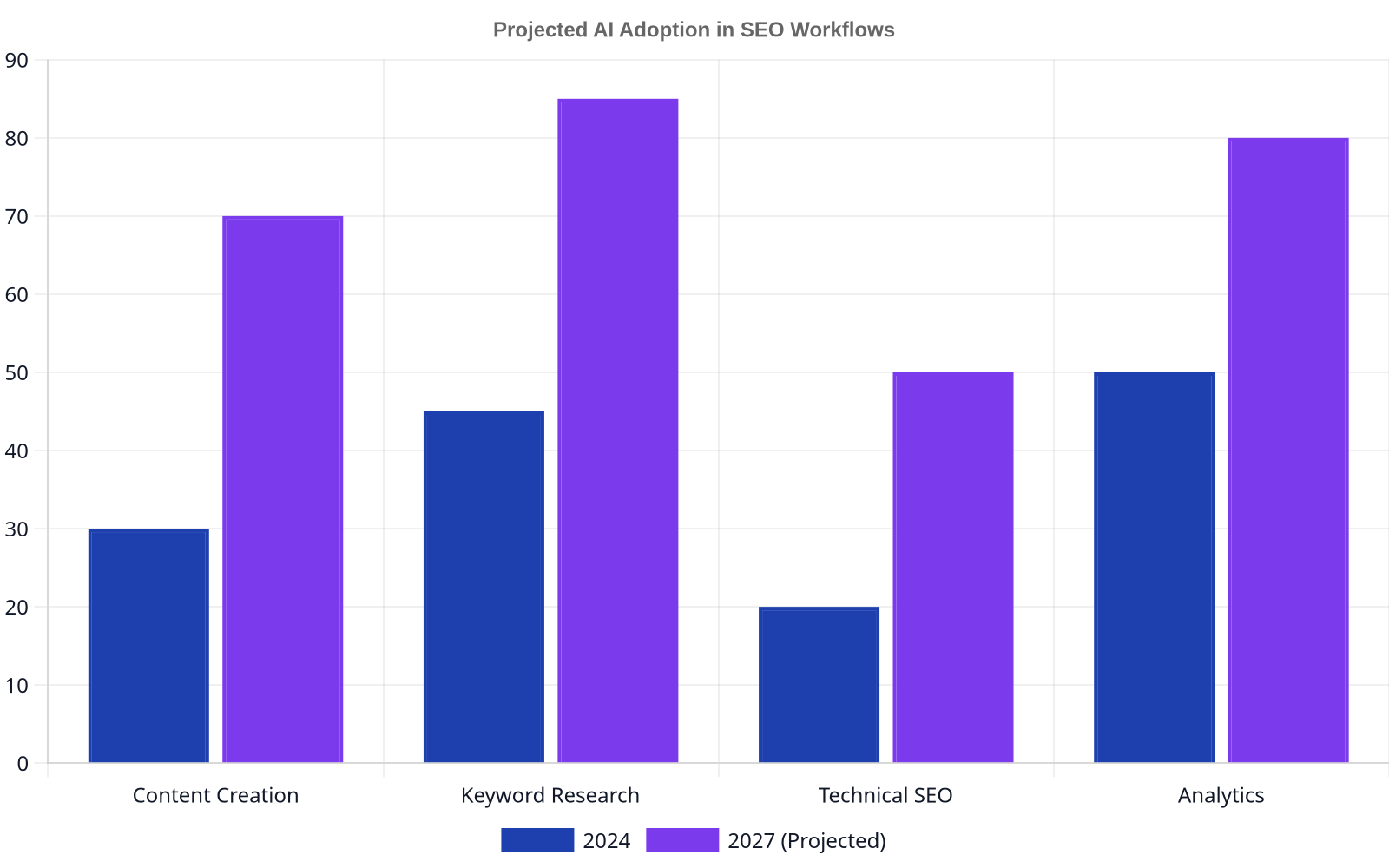
Artificial intelligence isn’t just for writing articles anymore. The next generation of SEO leans on AI for technical analysis, predictive forecasting, and workflow automation. Platforms can now perform automated keyword research, identifying opportunities based on competitive gaps and semantic relevance at a scale no human team can match. For example, some systems can generate hundreds of contextually relevant daily articles to build out topic clusters with shocking speed.
This isn’t about replacing the strategist; it’s about amplifying their impact. Imagine using AI to predict the ranking potential of a content piece before you even write it, or to automatically identify and fix toxic backlinks. A 2024 report from Gartner highlights that by 2026, over 50% of complex marketing tasks will be automated through AI. For SEOs, this means offloading the repetitive work to focus on high-level strategy, like building relationships for backlinks or analyzing the complex needs of customers like our client in the industrial assemblies space, wolverine-llc.com.
- Best for: Agencies and in-house teams looking to scale their output and focus human expertise on high-value strategic tasks.
- Watch out for: Relying on “black box” AI tools without understanding their methodology. Always demand transparency in how an AI tool arrives at its conclusions, whether for keyword suggestions or technical audits.
User Experience (UX) as a Ranking Factor
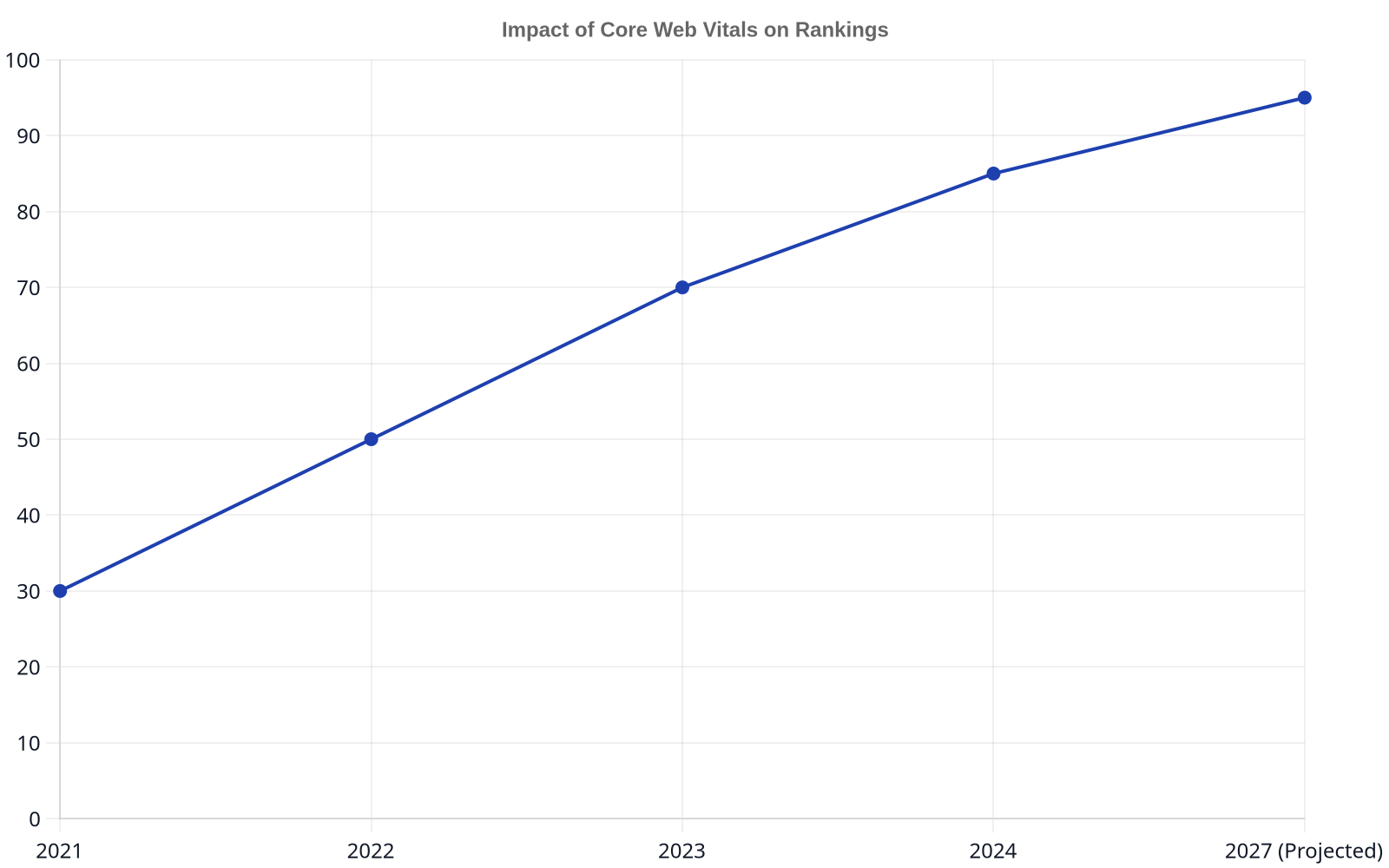
Google’s obsession with user experience is not new, but its ability to measure it is becoming terrifyingly precise. Core Web Vitals (CWV) were just the beginning. The rollout of Interaction to Next Paint (INP) as a replacement for First Input Delay (FID) in March 2024 signals a deeper focus on a page’s total responsiveness throughout the user’s visit, not just on the first interaction.
For 2027, this means UX is not a “nice to have”—it’s a foundational element of technical SEO. A slow, clunky page that is packed with amazing content will lose to a fast, intuitive page with merely good content. Google’s own data has shown that a site that meets the Core Web Vitals thresholds is 24% less likely to have users abandon the page. Your developers and your SEOs can no longer live in separate silos; they must work together to ensure the user’s journey is fluid and fast.
- Best for: E-commerce, media sites, and any business where on-page engagement is a critical business metric.
- Watch out for: Focusing only on the three Core Web Vitals. True UX optimization considers the entire user journey, from initial load to final conversion, including mobile usability and intuitive navigation.
5. Programmatic Internal Linking
For a site with thousands of pages, manual internal linking is an impossible task. You will miss opportunities and create an inconsistent site architecture. Programmatic internal linking uses rules and automation to build a powerful, contextually relevant web of links across your entire domain. This can be as simple as a script that automatically links a product name to its product page every time it’s mentioned in a blog post, or as complex as an AI-driven system that identifies semantic relationships between articles to suggest or create links.
This strategy ensures that link equity flows efficiently throughout your site, signals the relationship between content to search engines, and improves user navigation. For large-scale publishers or e-commerce sites, a well-executed programmatic linking strategy is one of the most powerful and scalable SEO levers you can pull. It turns your archive of content from a liability into a constantly compounding asset. This is a far cry from just hiring a junior employee to “add three internal links” to every new post.
- Best for: Large e-commerce stores, publishers, and enterprise-level websites with thousands or millions of pages.
- Watch out for: Creating spammy, unnatural linking patterns. The rules must be sophisticated, ensuring links are contextually relevant and genuinely useful to the reader, not just placed for bots.
An internal link isn’t just a blue line of text. It’s a vote of confidence from one page on your site to another. A messy internal linking structure is like having a team that doesn’t trust itself.
Shifting Content Formats and Consumption
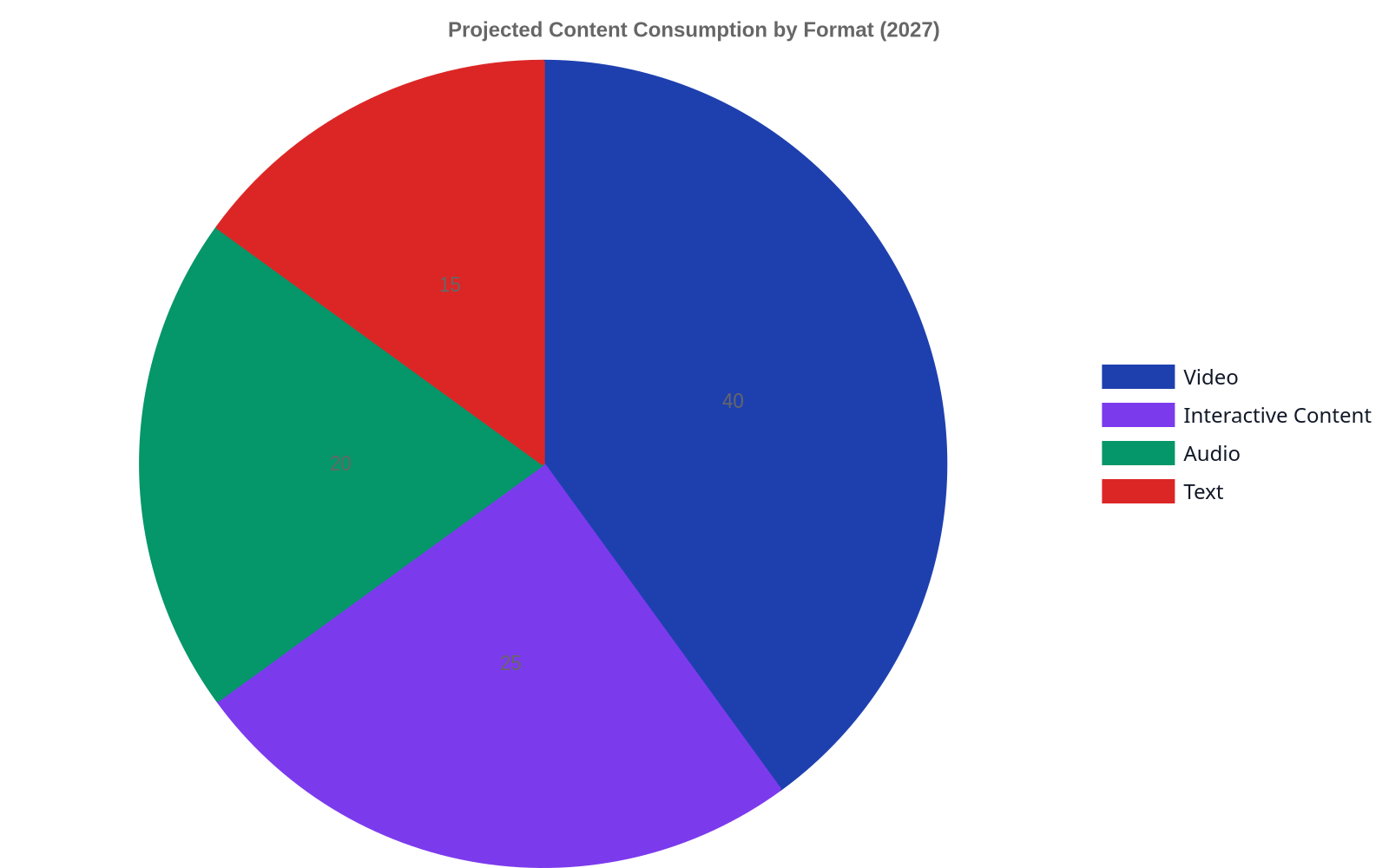
The 2,000-word blog post is not dead, but it’s no longer the only game in town. Content consumption is fragmenting across video, audio, and interactive experiences. Optimizing for 2027 means creating content in the format your audience prefers and ensuring it’s discoverable via search. This includes producing short-form video for YouTube Shorts and TikTok, launching a podcast to capture the audio audience, and creating interactive tools like calculators or quizzes that answer a user’s need directly.
Voice search is a key part of this trend. While the dream of “one-in-four searches will be voice” hasn’t fully materialized, the use of voice assistants for specific, answer-seeking queries continues to grow. That the voice assistant market will reach $90 billion by 2028. Optimizing for this means structuring content in a natural language, Q&A format that aligns with how people actually speak, not just how they type. Think about how you can become the definitive answer for a spoken query in your niche.
- Best for: Brands targeting younger demographics or those in niches where visual or audio content provides more value than text (e.g., cooking, fitness, music).
- Watch out for: Spreading yourself too thin. It’s better to master one new format that aligns with your audience than to produce mediocre content across five different platforms.
7. Mastering the Zero-Click Search
Over two-thirds of all Google searches now end without a click to a third-party website, according to analysis by SparkToro founder Rand Fishkin. The user gets their answer from a featured snippet, a knowledge panel, a “People Also Ask” box, or an AI-generated summary. Crying foul about this won’t bring the clicks back. The winning strategy for 2027 is to dominate these SERP features.
Winning in a zero-click world means structuring your content to be the source for these features. Use How-to and FAQPage schema to explicitly format instructions and questions. Provide concise, direct answers at the top of your articles before elaborating. The goal is brand visibility and authority, even without a click. When your brand name consistently appears as the source for answers, you build trust that pays dividends later, even if it doesn’t result in a session today. It’s a long-term play that separates a simple website from a genuine authority.
- Best for: Any business that relies on answering common questions, from SaaS companies explaining features to local businesses listing hours of operation.
- Watch out for: Sacrificing in-depth content for snippet-bait. You still need comprehensive, high-quality pages to serve as the foundation from which search engines can pull these snippets.
Summary of Next Gen SEO Strategies
| Strategy | Primary Goal | Effort to Implement | Key Tooling |
|---|---|---|---|
| Generative Experience Optimization | Become the cited source in AI answers | High | Content structuring, factual density |
| Entity-First Content | Build topical authority around concepts | High | Schema.org, Topic cluster mapping |
| AI in SEO | Automate and scale technical tasks | Medium | AI-powered SEO platforms |
| UX as a Ranking Factor | Improve user engagement & speed | Medium | Performance monitoring, INP tracking |
| Programmatic Internal Linking | Scale site architecture & link equity | High (Technical) | Custom scripts, SEO automation tools |
| Shifting Content Formats | Reach audience on new platforms | Medium | Video/audio production, voice search tools |
| Zero-Click Search Mastery | Dominate SERP features for visibility | Medium | Schema markup, concise answer formatting |
Ultimately, the future of organic search is about providing demonstrable, structured, and technically sound value. The era of shortcuts is over. The coming years will reward the organizations that invest in building genuine authority and a seamless user experience, using AI not as a crutch, but as an amplifier for smart, human-led strategy. Rank My Website is designed to automate the heavy lifting of this process, allowing you to focus on the strategy that matters.
FAQ
What is the difference between entity SEO and keyword SEO?
Keyword SEO focuses on optimizing a page for a specific search query or phrase. Entity SEO is a more advanced approach that focuses on building content around a well-defined topic or concept (the “entity”). It uses structured data and interconnected content to prove to search engines that you have deep authority on the entire subject, not just a single keyword. It’s a strategy for building a knowledge graph, not just a list of pages.
How do I optimize for Google’s SGE (Search Generative Experience)?
Optimization for SGE, or GEO, involves making your content easily digestible for AI models. This means writing with extreme clarity, using factual and data-rich sentences, and structuring your content with clear headings, lists, and tables. Answer questions directly and concisely. The goal is to make your page the most logical and authoritative source for the AI to cite in its generated answer.
Will AI replace SEO professionals?
No, AI will not replace skilled SEO professionals; it will amplify them. AI is incredibly powerful for automating repetitive and data-intensive tasks like technical audits, opportunity analysis, and even content production. However, it still requires human oversight for high-level strategy, creative problem-solving, and understanding nuanced user intent. The SEOs who thrive will be those who master AI tools to become more efficient and strategic.
Is it still worth investing in long-form blog content in 2027?
Yes, but its purpose has evolved. Long-form content is less about capturing a single keyword ranking and more about serving as the foundational pillar of your entity-based authority. A comprehensive, in-depth guide is the raw material from which search engines can extract featured snippets, populate “People Also Ask” boxes, and inform generative AI answers. It proves your expertise, even if many users never read the full article.
What’s more important: technical SEO or content?
This is a false choice; they are two sides of the same coin. The best content in the world will fail if it’s on a slow, broken, and insecure website that search engines can’t crawl. Conversely, a technically perfect website with thin, low-value content will never rank for competitive terms. In 2027, success requires a holistic approach where technical performance and content quality are given equal priority.
How can I measure the ROI of these advanced strategies?
Beyond traditional metrics like organic traffic and keyword rankings, the ROI of next-gen strategies can be measured by tracking “unclicked impressions” or brand mentions within SERP features like SGE and featured snippets. Look at the growth of your overall topical authority—are you ranking for a wider basket of related terms? Also, monitor user engagement metrics like time on site and conversion rates, which are often improved by a better UX and more relevant content.