
The Only AI Content Generation Trend for 2027 That Actually Matters
Everyone is asking the wrong question about AI content. They ask how fast it will get, or how cheap it will become. They’re missing the point. The most significant of all AI content generation trends for 2027 isn’t about replacing human writers with cheap, voluminous output. It’s about AI becoming the invisible infrastructure for proving authenticity and delivering hyper-relevant experiences.
By 2027, the key trend in AI content generation will not be speed or volume, but the shift towards AI as infrastructure for verifying human expertise and creating hyper-personalized, trustworthy digital experiences. The focus will move from simple text generation to complex, auditable systems that blend human authorship with AI-driven distribution and personalization. This pivot is driven by declining trust in unvetted AI output and the demand from sophisticated audiences like Gen Z for authenticity and interactive content formats.
AI Is No Longer a Tool—It Is Infrastructure
For the past few years, marketers have treated AI as a tool—a sophisticated word processor or a clever intern. You open a platform like ChatGPT or Jasper, give it a command, and it spits out text. By 2027, this model will be obsolete. AI is moving from an application you run to the infrastructure on which your entire content ecosystem operates.
Think of it like electricity. You don’t think about “using electricity” to run your office; it’s the foundational utility that makes everything possible. Soon, AI will be the same for content. It will be baked into your CMS, your CRM, and your analytics platforms, creating a cohesive system that doesn’t just generate content but personalizes its delivery at a scale of one. This integration of content, search, and purchase into a single user journey is the real objective. The AI will know a user’s history, predict their needs, and assemble a content experience for them in real-time. This isn’t about writing a single blog post; it’s about dynamically building an entire information environment for each user.
The “Human-Made” Premium in a Deluge of AI
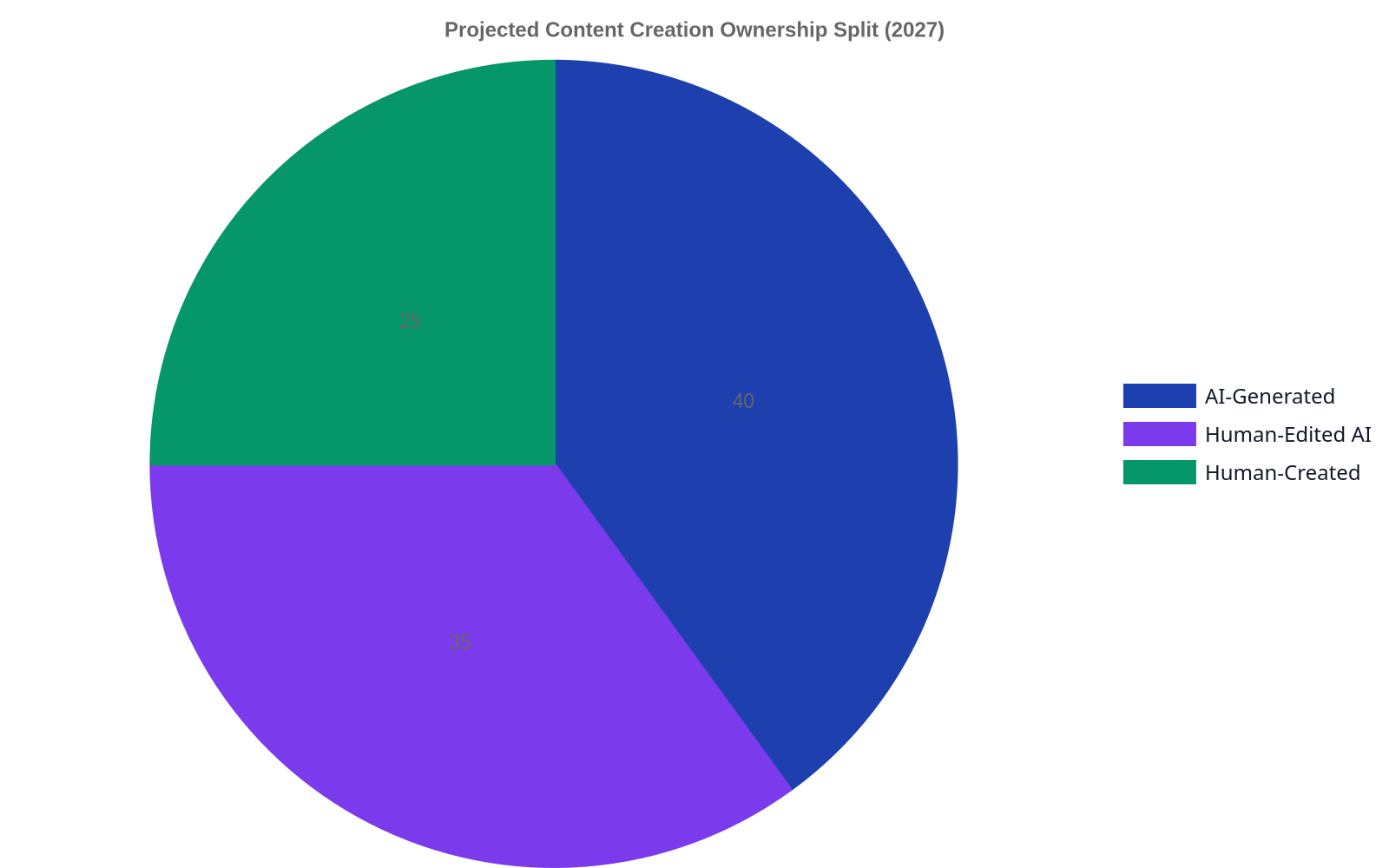
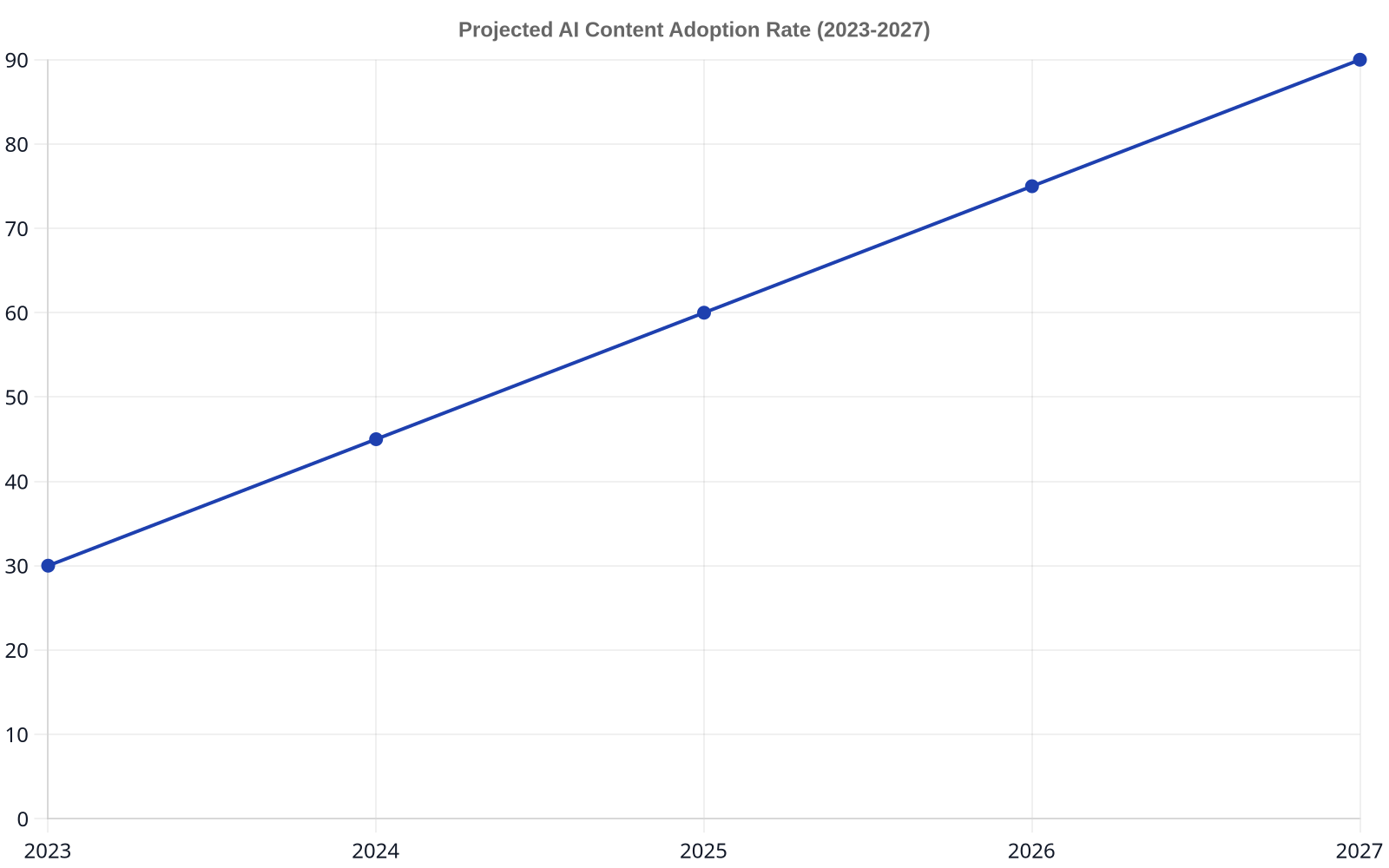
As the internet becomes flooded with mediocre, AI-generated noise, a paradoxical trend will solidify: the value of verifiably human-created content will skyrocket. Audiences, particularly younger demographics like Gen Z and Gen Alpha, are already adept at sniffing out inauthenticity. They crave connection, not just information. A study based on 200 international surveys highlights the rising demand for real-life experiences and the power of fandom-led marketing, where audiences co-create brand narratives.
The future of content isn’t human-versus-machine. It’s human-plus-machine, where AI handles the scale and the plumbing, leaving humans to provide the one thing the machine can’t: lived experience and a credible point of view.
This is where trust and reputation become your most valuable assets. Closed communities, whether on Discord, Slack, or private forums, will become even more critical centers of influence. Brands won’t be able to just barge in with AI-generated platitudes. They will need to earn trust through genuine participation and by showcasing real expertise. Provably human insights will act as the ultimate differentiator, commanding higher engagement and loyalty.
Enter Synthetic Media and the Phygital Experience
Text and static images are just the beginning. The next frontier is synthetic media—AI-generated video, audio, and interactive experiences. By 2027, we can expect to see AI-powered avatars hosting product demos, personalized video messages sent to millions of customers, and interactive narratives that change based on user input. These aren’t just novelties; they are powerful tools for creating engaging, memorable content.
This trend also fuels the rise of “phygital” experiences, which merge the physical and digital worlds. Imagine a retail store where you can scan a QR code to interact with an AI stylist that knows your past purchases, or a trade show booth that offers a personalized virtual reality experience based on your LinkedIn profile. The growth of synthetic media is not just about creating deepfakes; it’s about building entirely new ways for audiences to interact with brands and information.
The New Gatekeepers: Auditing, Ethics, and Accuracy
This AI-driven future is not without its perils. The potential for misinformation, bias, and a complete erosion of public trust is enormous. Acknowledging this is not pessimism; it’s a prerequisite for responsible strategy. As AI becomes infrastructure, a new set of roles and responsibilities will emerge. The focus will shift from creation to curation and verification.
In an information economy, trust is the only currency that matters. An AI can generate a million words a minute, but it can’t build a decade of reputation.
This is where the real work will be. We will need AI Content Auditors to ensure factual accuracy and mitigate bias. We need to develop robust strategies for watermarking AI content and maintaining transparency. At Rank My Website, our process isn’t just about producing daily articles for clients. Our initial keyword research is an investigative process to understand user intent and validate the information needed, a crucial step for industrial clients like wolverine-llc.com where accuracy is non-negotiable. The regulatory landscape for AI is already taking shape, and companies that ignore the ethical implications do so at their own peril.
How AI Infrastructure Reshapes SEO
So, what does this mean for search? By 2027, search engine algorithms will have evolved to aggressively reward authenticity and penalize undifferentiated AI content. The simple act of stuffing keywords into AI-generated articles will be the fastest way to get de-indexed. Instead, Google and other engines will double down on signals that are difficult to fake.
This is where understanding the move towards entity-based strategy is critical. Search engines will look for evidence of real-world expertise: consistent and verifiable author information, unique data sets, and content that demonstrates deep, specialized knowledge. They will analyze how content is being discussed in trusted online communities and how it connects to a larger knowledge graph. Simply publishing content won’t be enough; you’ll need to prove its authority and the credibility of its source. This means that a well-defined and executed content strategy, much like some of the core SEO trends for 2027, will become more important than ever.
Ultimately, the AI content generation trends for 2027 are less about the tech itself and more about how we choose to use it. The smart play isn’t to build a content factory that churns out endless articles. It’s to build a system of trust, using AI as the infrastructure to amplify credible human voices and deliver genuinely valuable experiences. The machines won’t win; the strategists who understand this will.
Frequently Asked Questions
What does “AI as infrastructure” mean for content?
It means AI will no longer be a standalone tool for writing but the underlying system that powers all content operations. It will be deeply integrated into your CMS, CRM, and analytics, enabling real-time personalization, automated distribution, and dynamic content assembly for individual users rather than broad segments.
Will AI make human content creators obsolete by 2027?
No, but it will fundamentally change their role. The demand for low-level content generation will decrease, but the value of high-level human expertise, critical thinking, and unique perspective will increase significantly. Creators will shift from writing every word to acting as editors, strategists, and subject matter experts who guide AI systems and provide the authentic insights that machines cannot.
How will AI content generation affect SEO in 2027?
It will make SEO more challenging and more focused on rewarding true authority. Search engines will become better at detecting generic AI content and will prioritize signals that are hard to fake, such as author credibility, unique data, and engagement within trusted communities. According to a Goldman Sachs report, while AI will boost productivity, its impact on specific job tasks will vary, pushing SEO professionals towards more strategic, less automatable work.
What are the biggest ethical concerns with AI content?
The primary concerns are the spread of misinformation, the potential for baked-in algorithmic bias, lack of transparency, and intellectual property issues. Without strong ethical guidelines and auditing processes, AI can be used to create convincing but false narratives at an unprecedented scale, eroding public trust. Establishing clear standards for transparency and accountability is crucial.
How can a business prepare for these future AI trends?
Start by focusing on building authority and trust, not just content volume. Invest in your human experts and highlight their credibility. Begin treating your content as part of a larger, integrated system, not as a series of one-off campaigns. Finally, develop an internal policy on the ethical use of AI, focusing on transparency, accuracy, and adding genuine value rather than just cutting costs.