
“Stop chasing the mythical “200 Google ranking factors.” It’s a decade-old legend that distracts from the real work. Most of those “factors” are either microscopic sub-signals or outdated relics. Focusing on them is like trying to win a grand prix by polishing your car’s radio knobs. The truth is, high-performance SEO in 2026 is about mastering a handful of core principles, not ticking off an endless list, especially as we look at seo trends 2027.”
The top SEO ranking factors in 2026 are not a secret checklist of 200 items, but a strategic focus on three core pillars. The most critical is creating high-quality content that satisfies user intent and demonstrates strong E-E-A-T (Experience, Expertise, Authoritativeness, Trustworthiness). This must be supported by a technically sound website with a good page experience (Core Web Vitals) and mobile-first design. Finally, off-page authority, built through high-quality backlinks and strong brand signals, remains essential for competitive visibility.
The “200 Factors” Myth and the Rise of AI
The idea of 200 ranking factors originated from a blog post years ago and has been repeated so often it’s mistaken for fact. Modern search algorithms, particularly since the introduction of AI systems like RankBrain and BERT, don’t operate on a simple checklist. They are designed to understand concepts, context, and, most importantly, user satisfaction.
Instead of 200 discrete inputs, think of Google’s algorithm as a complex neural network that weighs signals contextually. What matters for a medical information query is vastly different from what matters for a local pizza delivery search. The AI’s job is to interpret the user’s query and find the most satisfying answer, not to count how many times you used a keyword in your H2 tags.
This is why SEO now revolves around three core pillars: content quality (including E-E-A-T), technical site health, and off-page authority. Mastering these three areas is the only “secret” you need.
The First Pillar: Content, User Intent, and E-E-A-T
Content is the foundation of any SEO strategy. But not just any content. It must be expert, trustworthy, and precisely aligned with what the user came to find. This is where most websites fail.
Matching User Intent is Non-Negotiable
User intent is the “why” behind a search query. Does the user want to buy something (transactional), learn something (informational), find a specific website (navigational), or research before buying (commercial investigation)? If your content doesn’t match the intent, it will not rank, no matter how well-optimized it is.
For example, if someone searches for “best running shoes,” they are likely in a commercial investigation or transactional mindset. A long-form article about the history of running shoe technology (purely informational) will fail to satisfy them. They expect comparisons, reviews, and links to purchase. Misaligning with intent leads to high bounce rates and low dwell times—clear signals to Google that your page isn’t the right answer.
E-E-A-T: Proving Your Content’s Value
E-E-A-T (Experience, Expertise, Authoritativeness, Trustworthiness) is the framework Google uses to measure content quality, particularly for “Your Money or Your Life” (YMYL) topics. As detailed in Google’s own quality rater guidelines, it’s not a direct ranking factor but a lens through which Google evaluates your site.
- Experience: Does the content creator have firsthand life experience with the topic? A review of a hiking backpack by someone who has actually hiked the Appalachian Trail carries more weight.
- Expertise: Does the author possess specialized knowledge? This is crucial for topics requiring formal education or skill, like financial or medical advice.
- Authoritativeness: Is the author or website a recognized authority in its field? This is established by citations, mentions, and links from other respected sites.
- Trustworthiness: Is the site secure (HTTPS)? Is contact information clear? Are reviews and claims verifiable? Trust is the bedrock of the entire framework.
A website is no longer just a collection of pages; it is an entity. Google evaluates the reputation and credibility of the entire entity, not just the keyword density of a single article.
The Impact of Generative AI and SGE
With Google’s Search Generative Experience (SGE) becoming more prevalent, the bar for “high-quality content” has been raised. SGE provides AI-powered snapshots and summaries directly in the search results. This means your content must offer unique value that can’t be summarized away by an AI. This includes unique data, firsthand experiences (the “E” in E-E-A-T), and deep, actionable insights. Simply regurgitating facts is a losing game; SGE can do that better and faster. Success in 2026 requires building an information-rich destination that serves as a primary source, not an echo.
The Second Pillar: Technical SEO & Page Experience
A technically sound website is the price of admission to the SEO game. If Googlebot can’t find, crawl, and understand your content efficiently, your ranking potential is zero. Technical SEO isn’t about tricks; it’s about removing barriers.
Core Web Vitals are Table Stakes
The Page Experience update integrated Core Web Vitals (CWV) as a set of signals for user experience. These metrics measure how a user perceives the speed, responsiveness, and visual stability of a page:
- Largest Contentful Paint (LCP): Measures loading performance. Aim for under 2.5 seconds.
- First Input Delay (FID) / Interaction to Next Paint (INP): Measures interactivity. For INP, which is replacing FID, a value below 200 milliseconds is good.
- Cumulative Layout Shift (CLS): Measures visual stability. Aim for a score below 0.1.
These are no longer optional. As confirmed by Google’s own developer resources, poor CWV scores can directly hinder your rankings, especially on mobile, where users are less patient. Think of it as digital curb appeal—a slow, jumpy site tells users (and Google) that you don’t care about their experience.
Crawlability, Indexing, and Mobile-First
Google primarily uses the mobile version of your site for indexing and ranking (mobile-first indexing). If your site isn’t responsive or provides a poor mobile experience, you are at a significant disadvantage. Beyond that, a logical site structure with a clear hierarchy is crucial. It helps Googlebot understand the relationship between your pages and which pages are most important. Clean URLs, a well-organized XML sitemap, and proper use of robots.txt are fundamental tools for managing how your site is crawled and indexed.
We ensure our automated content systems produce a clean internal linking structure, which is critical for helping search engines discover new content and understand its topical relevance. Without this, even the best articles can get lost in the digital abyss.
HTTPS and Site Structure
HTTPS has been a lightweight ranking signal for years. In 2026, it’s a non-negotiable trust signal. A site without a valid SSL certificate will be flagged by modern browsers and shunned by users. Similarly, a clean and descriptive URL structure (e.g., domain.com/category/specific-topic) is better for both users and search engines than a messy URL with random parameters (domain.com/p?id=123). It provides a small but meaningful clue about the page’s content before it’s even loaded.
The Third Pillar: Off-Page Authority and Brand Signals
What other authoritative sources say about you matters just as much as what you say about yourself. Off-page SEO is primarily about building your site’s authority and reputation across the web.
Backlinks: Quality Over Quantity
Backlinks—links from other websites to yours—remain one of the most powerful ranking factors. However, the game has shifted entirely from quantity to quality. A single, relevant link from a high-authority site in your industry is worth more than a thousand links from low-quality directories. As Ahrefs data consistently shows, pages with more high-quality backlinks tend to rank higher and get more organic traffic.
Effective off-page SEO involves creating content so valuable that other sites want to link to it. It also involves strategic outreach. For many of our clients, managing a portfolio of high-quality backlinks is a complex, full-time effort, forming a key part of our service.
Forget about link-building “hacks.” The only sustainable strategy is to become a source of authority that people reference. Your goal is to be the citation, not the one citing.
Brand Signals and Entity Recognition
Google is increasingly an entity-based search engine. It understands that “Apple” is a company, a brand, and an entity with certain attributes (makes phones, founded by Steve Jobs, etc.). It builds this understanding from mentions across the web, even unlinked ones. Strong brand signals—such as branded search volume (how many people search for your brand name), press mentions, and a consistent presence in relevant online conversations—are powerful indicators of authority. A company like wolverine-llc.com, known for industrial assemblies, benefits when Google recognizes its entity as a specialist in that niche, reinforcing its topical authority.
Comparison: Traditional vs. Modern Ranking Factors
To succeed, you must adapt your focus from outdated tactics to modern realities.
| Factor Category | Traditional Focus (Outdated) | Modern Focus (2026) |
|---|---|---|
| Keywords | Keyword density, exact match in tags | Topical relevance, semantic search, intent matching |
| Content | Word count, publishing frequency | E-E-A-T, unique insights, user satisfaction |
| Links | Quantity of links, anchor text matching | Quality of linking domain, contextual relevance |
| Technical | Submitting to directories, PageRank sculpting | Core Web Vitals, mobile-first indexing, security |
| User Signals | Click-through rate (CTR) from SERP | Dwell time, bounce rate, task completion |
The Future: Emerging Ranking Signals for 2026
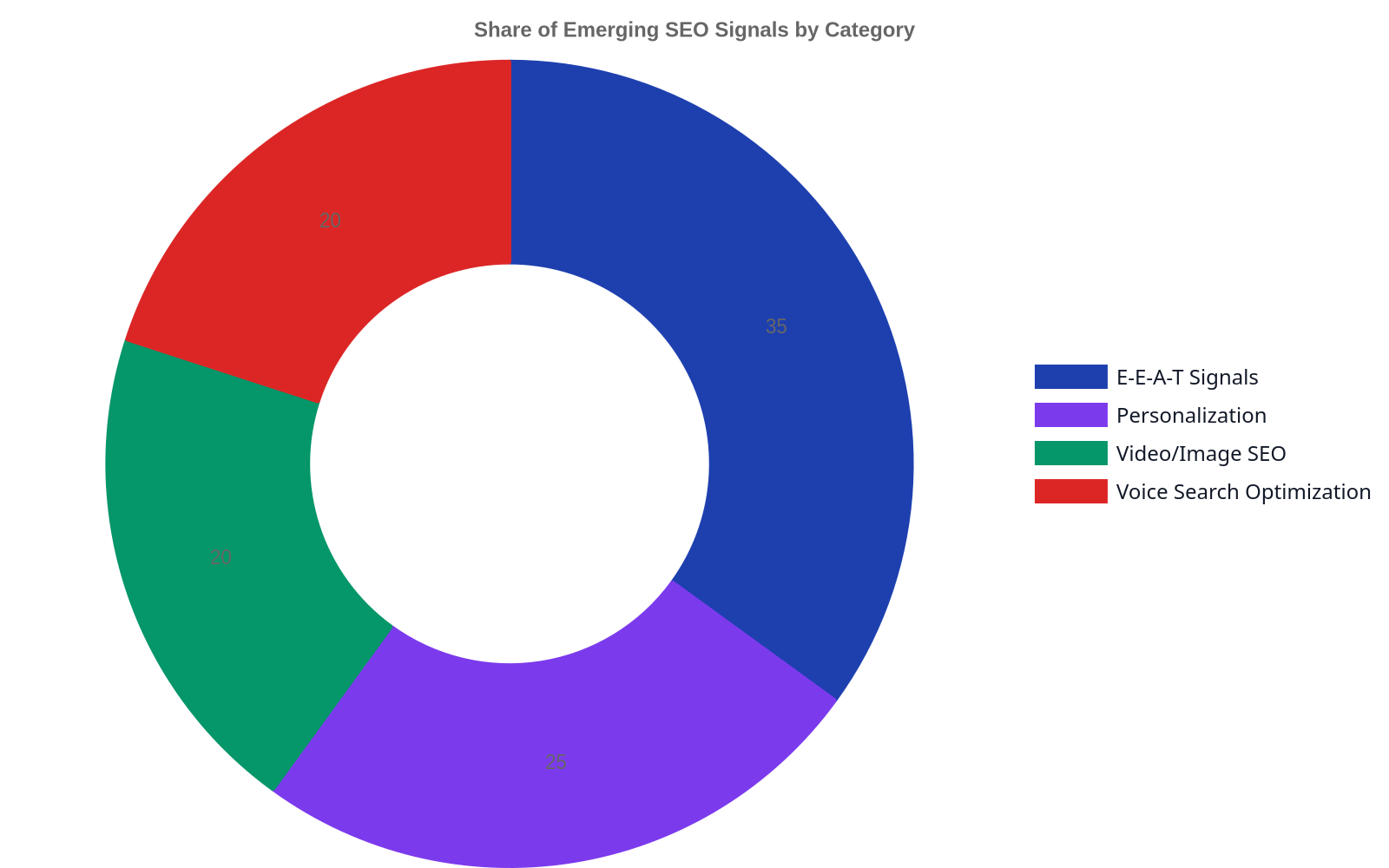
Looking ahead, the landscape continues to evolve. Staying competitive means anticipating the next shifts.
Personalization and Localization
Search results are already highly personalized based on location, search history, and other user data. This trend will only accelerate. For businesses, this means optimizing for local search (if applicable) through Google Business Profile and creating content that resonates with specific user segments. A generic, one-size-fits-all approach is becoming less effective.
Voice, Image, and Video Search Optimization
More users are interacting with search through voice assistants, smart speakers, and visual search tools. Optimizing for voice search often means targeting long-tail, conversational keywords and structuring content for direct answers (think FAQ sections). For image and video, it means going beyond alt tags to include descriptive filenames, structured data, and high-quality media that add value to the page. Some reports suggest that a significant portion of searches are already happening without a screen.
How to Conduct an E-E-A-T Audit
To ensure your site meets Google’s quality standards, periodically review your content through the lens of E-E-A-T.
- Identify Your YMYL Pages: Pinpoint content dealing with health, finance, safety, or happiness. These pages receive the highest scrutiny.
- Assess Author Experience/Expertise: For each page, ask: Is the author named? Is their bio available? Do their credentials or experience justify them writing on this topic? If not, add clear author bios and link to their expert profiles.
- Evaluate Authoritativeness: Look for external validation. Are experts in your field citing your work? Do you have testimonials or case studies? Feature these prominently.
- Check for Trust Signals: Ensure your site has an “About Us” page, clear contact information, and a privacy policy. For e-commerce, customer service and return policies must be easy to find. All claims, especially medical or financial, should be cited with links to authoritative sources.
- Review Content for Value: Does the content offer a unique perspective, data, or experience? Or is it a rehash of the top 10 search results? Update or remove content that doesn’t add distinct value.
Further reading
FAQ
How many ranking factors does Google use in 2026?
Google uses hundreds of signals, but the concept of “200 ranking factors” is a misleading oversimplification. SEO success comes from focusing on the three main pillars: content quality and E-E-A-T, technical site health and page experience, and off-page authority through backlinks and brand signals.
Is keyword research still important?
Yes, but its role has evolved. Modern keyword research is less about finding specific phrases to repeat and more about understanding the topics, questions, and intent of your target audience. It is the strategic foundation for creating content that satisfies users.
How important are Core Web Vitals for rankings?
Core Web Vitals are a confirmed, though weighted, part of the Page Experience ranking signal. While excellent content can sometimes overcome a poor technical score, a slow or unstable site creates a poor user experience, which directly hurts your ability to engage and convert visitors. They are a crucial component of technical SEO.
Can AI-generated content rank on Google?
Yes, content can rank regardless of how it is produced, as long as it is high-quality, helpful, and satisfies user intent. Google’s policies target low-quality, spammy content, not AI-generated content itself. However, creating content that demonstrates true experience and unique insight—the “E” in E-E-A-T—remains a key differentiator that is difficult to automate.
Is E-E-A-T a direct ranking factor?
No, E-E-A-T itself is not a single, direct factor like page speed. It is a framework used by Google’s human quality raters to evaluate content quality. The signals they assess (like author reputation, citations, and site trustworthiness) are then used to train the main ranking algorithms. So while not a direct input, excelling at E-E-A-T is critical for long-term success.
Mastering SEO in 2026 isn’t about chasing algorithms. It’s about building a genuine authority in your niche and providing real value to users. By focusing on the core pillars of content, technical excellence, and authority, you can build a robust SEO strategy. Automating parts of the content workflow can free up your team to focus on the high-level strategy that truly matters—a core principle behind our work at Rank My Website in automating organic traffic growth for our clients.