
SEO Solutions for Small Businesses Explained
Most small businesses treat SEO like a lottery ticket—a random assortment of keywords and blog posts they hope will one day hit the jackpot. This is fundamentally wrong. An SEO solution for a small business is a system for improving your website’s visibility on search engines like Google to attract more qualified customers. It combines technical optimization, content creation, and local signals to generate organic traffic and leads without paying for every single click. It’s not about tricks; it’s about building a predictable engine for growth.
What Exactly is Small Business SEO?
Search Engine Optimization (SEO) is the practice of increasing the quantity and quality of traffic to your website through organic search engine results. For small businesses, this practice is hyper-focused. It isn’t about ranking for broad, global terms. It’s about being the top answer for a customer searching for “best pizza delivery near me” or “emergency plumber in [Your Town]”. To achieve this efficiently, many small businesses leverage specific small business seo tools.
Unlike enterprise SEO that might involve massive teams and multi-million dollar budgets, small business SEO is about precision and efficiency. It prioritizes actions that directly impact local visibility and purchase intent. This means a heavy emphasis on your Google Business Profile, local customer reviews, and content that answers the specific questions your community is asking. It’s less about abstract brand awareness and more about making the phone ring.
The Benefits of SEO for Small Businesses
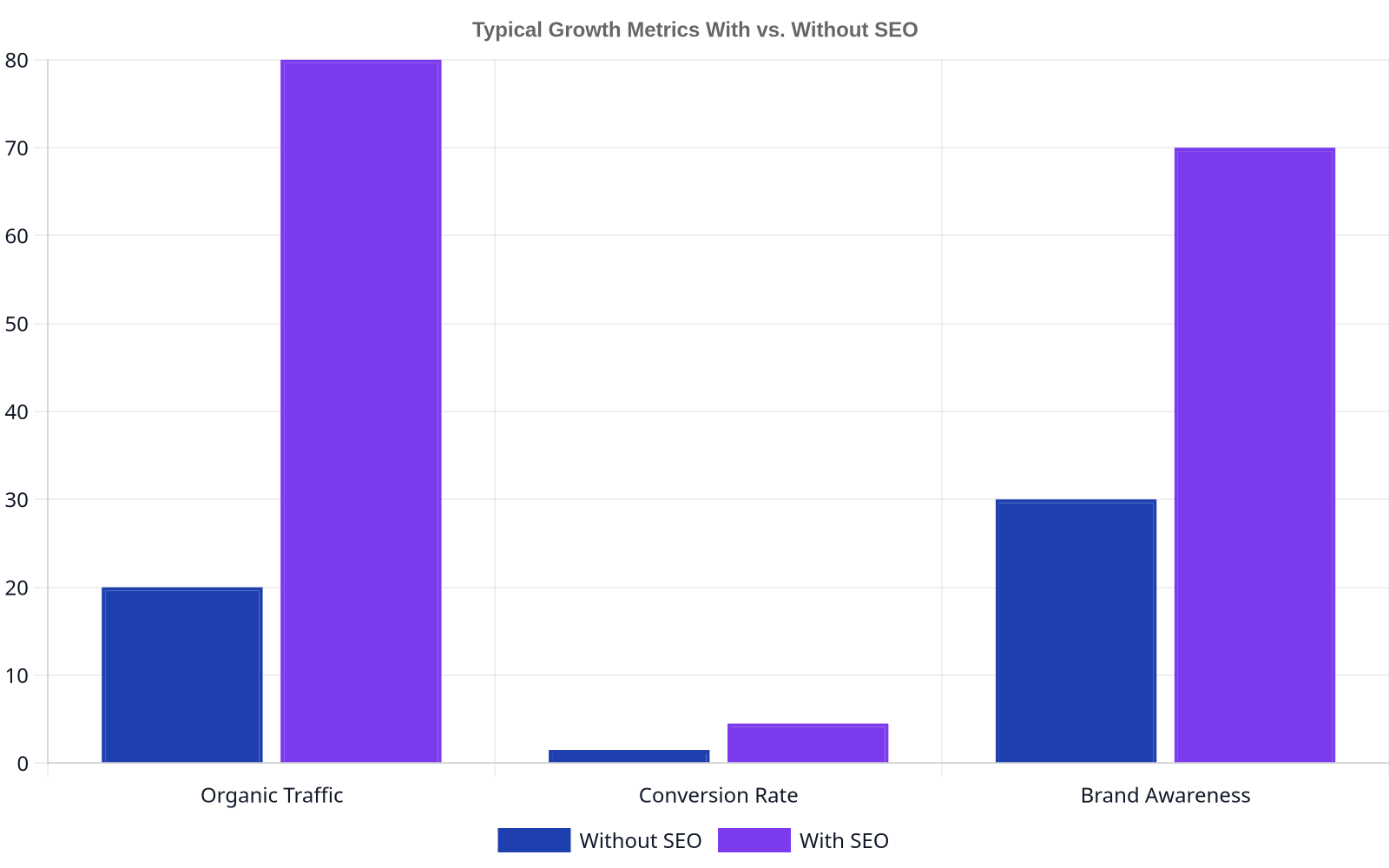
Investing in a coherent SEO strategy provides tangible returns that compound over time. Unlike paid advertising, where the traffic stops the moment you stop paying, SEO builds a lasting digital asset. According to a 2023 BrightLocal study, 98% of consumers used the internet to find information about local businesses. If you’re not visible, you’re not an option.
Key benefits include:
- High-Quality Traffic: You attract users actively searching for your products or services, leading to higher conversion rates.
- Increased Credibility: Ranking high on Google builds trust. Users perceive top results as more authoritative and reliable.
- Cost-Effectiveness: Over the long term, the cost-per-acquisition from organic search is significantly lower than from paid channels.
- Competitive Advantage: Outranking your local competitors means you capture market share they are leaving on the table.
Key SEO Strategies for Small Businesses
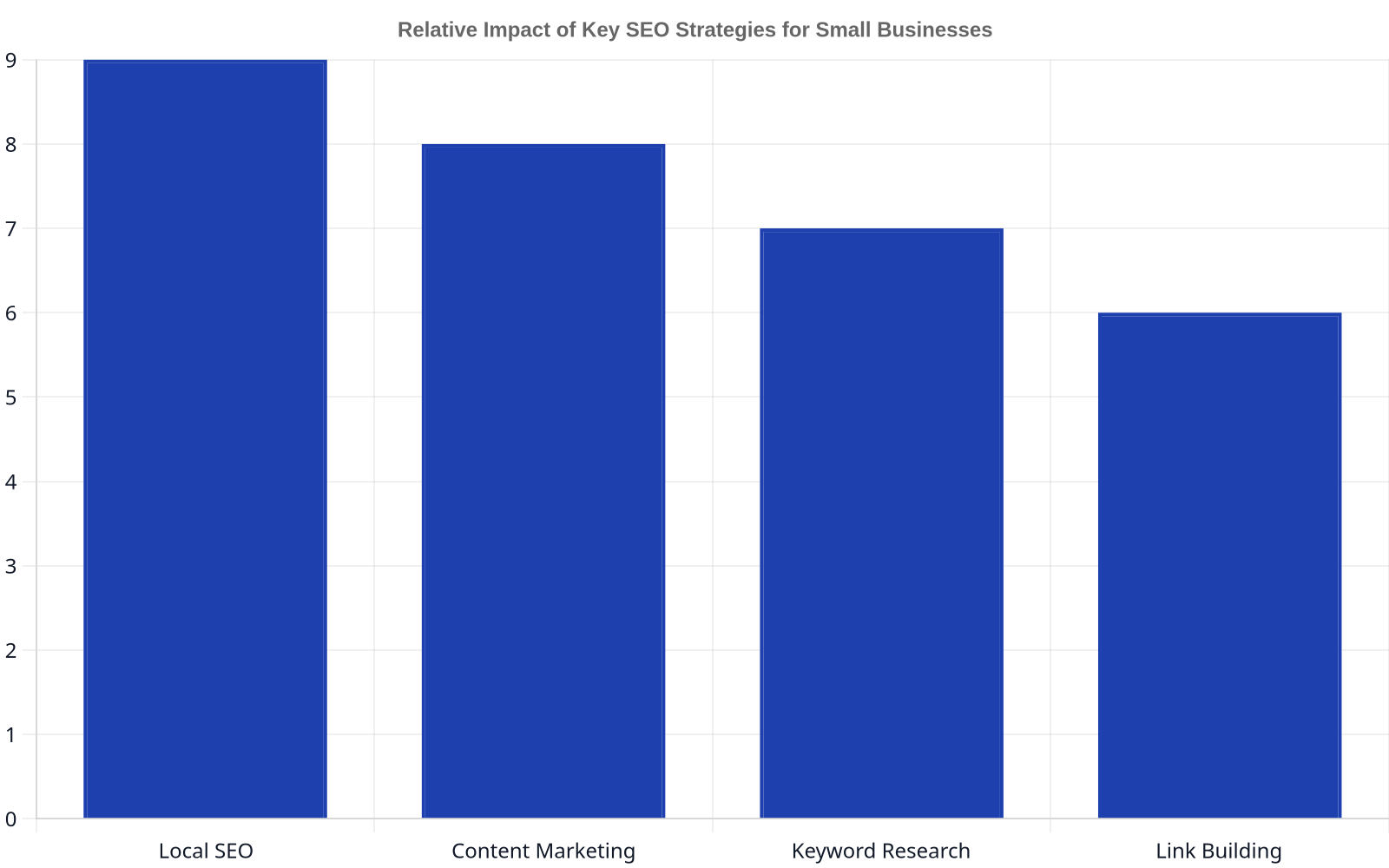
An effective SEO solution is built on four pillars. Neglecting any one of them is like trying to build a stool with three legs.
- Technical SEO: This is the foundation. Your site must be fast, secure (HTTPS), and mobile-friendly. Search engines need to be able to crawl and index your site without hitting errors. Google’s emphasis on Core Web Vitals means user experience is a direct ranking factor. A slow, confusing website will not rank, no matter how great the content is.
- Content Creation: Your website must be the single best answer to your customers’ questions. This goes beyond just service pages. It means creating helpful blog posts, guides, and FAQs. A platform that automates the creation of high-quality content, such as daily articles, can systematically cover the topics your customers care about, establishing your authority.
- Local SEO: This is non-negotiable for any business with a physical location or service area. It starts with a fully optimized Google Business Profile and expands to managing online reviews, building local citations (mentions of your business name, address, and phone number), and creating location-specific pages on your website.
- Authority Building (Link Building): Authority is measured by who links to you. Earning high-quality backlinks from other reputable local businesses, industry blogs, or news sites acts as a vote of confidence in your favor. This is often the most challenging part of SEO, but it’s critical for competitive niches.
SEO isn’t a cost center; it’s an asset you build. Every piece of content, every backlink, is digital real estate that appreciates over time.
Common SEO Challenges for Small Businesses
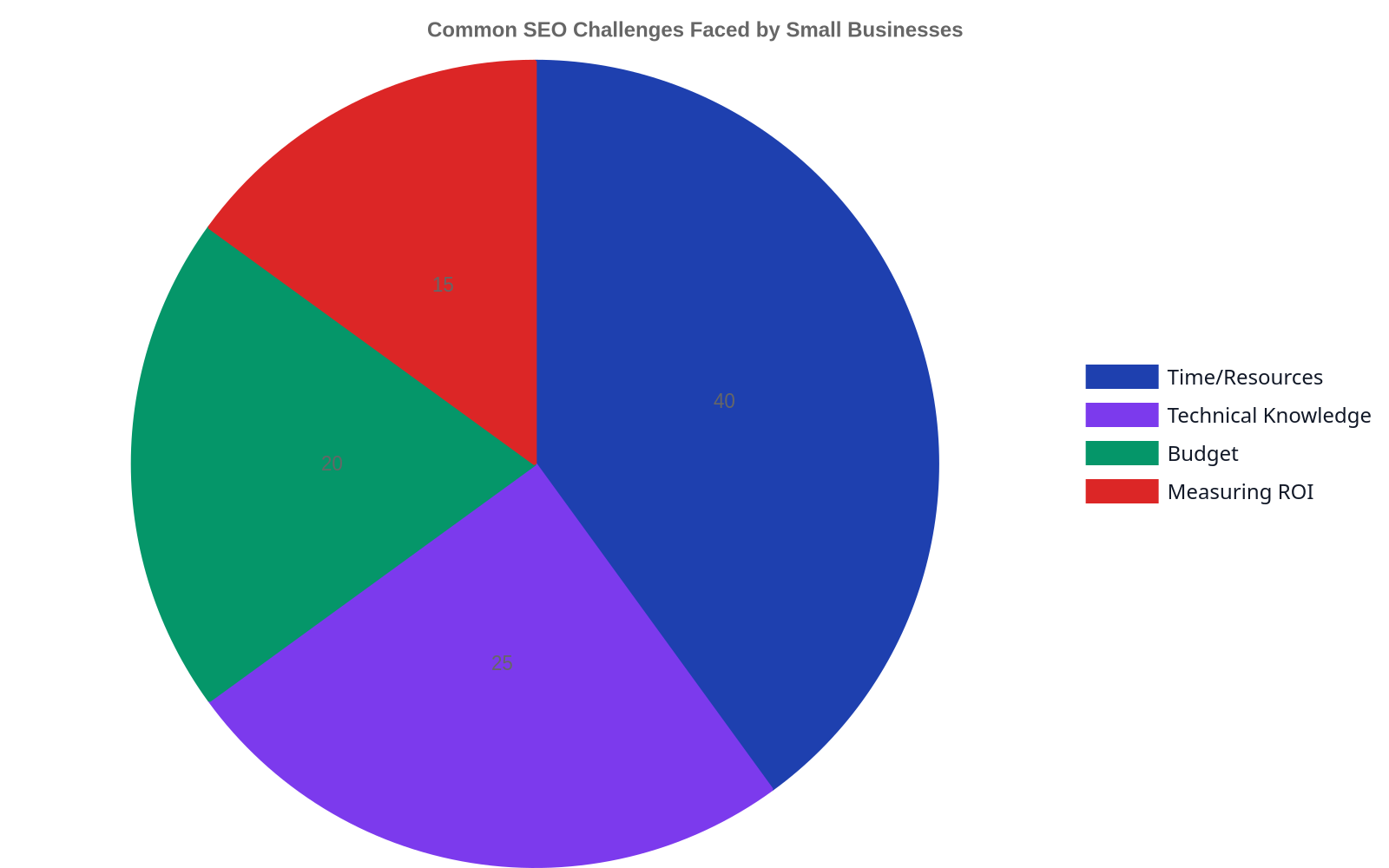
While the principles are straightforward, execution is where many businesses struggle. The most common hurdles are a lack of time, limited budget, and insufficient technical expertise. Many small business owners are juggling marketing along with a dozen other responsibilities. They know SEO is important but can’t dedicate the consistent hours required for tasks like keyword research and content production.
This often leads them down the path of cheap SEO services that promise impossible results, ultimately wasting both time and money. The key is to find a solution—whether a tool, an agency, or a consultant—that aligns with your business goals and provides transparent reporting on what actually matters.
Debunking Common SEO Myths
Misinformation is rampant in the SEO industry. Let’s clear up a few dangerous myths.
- Myth: SEO is a one-time project. Reality: SEO is a continuous process. Search engine algorithms change, competitors update their sites, and customer behavior evolves. It requires ongoing maintenance and improvement.
- Myth: You have to be #1 for a major keyword. Reality: This is an outdated and expensive goal. It’s far more profitable to rank for multiple, specific long-tail keywords that show clear purchase intent. Chasing a vanity rank for a broad term is a waste of resources.
- Myth: SEO is all about gaming the algorithm. Reality: The era of “tricks” is long over. Modern SEO is about creating a great user experience and providing valuable information. Trying to manipulate rankings with keyword stuffing or shady link schemes is the fastest way to get penalized by Google.
Chasing the #1 rank for a broad term is vanity. Driving three customers for a specific, high-intent phrase is sanity.
How to Measure SEO Success
To understand if your SEO efforts are working, you must track the right metrics. Forget fixating on a single keyword ranking. Success is measured by business impact.
Key Performance Indicators (KPIs) for small business SEO should include:
- Organic Traffic: An increase in visitors coming from search engines.
- Keyword Portfolio Growth: The total number of relevant keywords for which you rank, not just a handful of “money” terms.
- Local Pack Visibility: How often you appear in the map-based results for local searches.
- Organic Conversion Rate: The percentage of organic visitors who complete a desired action, like filling out a form, making a purchase, or calling your business. Tracking this is essential for proving ROI.
How to Choose SEO Services
When evaluating an SEO provider or platform, demand transparency and a focus on business goals. Be wary of anyone who makes guarantees; no one can promise a #1 ranking on Google. A credible partner will focus on their process and the KPIs they will track to demonstrate progress.
Ask for case studies or examples of their work. For instance, we were able to achieve significant organic growth for our client Wolverine Assemblies by focusing on a consistent content and authority-building strategy. A good provider should be able to share similar success stories. According to a 2023 industry report from Aira, the average cost for SEO services can vary wildly, so focus on the value and ROI, not just the lowest price.
Further reading
- maximize small business seo
- Digital marketing services overview
- small business seo tips
- Beginner’s guide to seo
- small business seo guide
FAQ
How long does SEO take to show results?
For a new website or campaign, it typically takes 4-6 months to start seeing meaningful results. SEO is a long-term strategy, and initial efforts are focused on building a solid technical foundation and content base. Results build exponentially over time.
Can I do SEO myself?
Yes, but it requires a significant time commitment to learn and execute properly. Tools can help automate parts of the process, like creating content with Rank My Website, but it still requires strategic oversight. For most busy owners, a hybrid approach or a fully managed solution is more realistic.
How much does small business SEO cost?
Costs vary dramatically, from a few hundred dollars per month for basic tools or local citation management to several thousand for a comprehensive agency retainer. The right investment depends on your market, competition, and business goals. The key is to view it as an investment in a revenue-generating asset.
What is the most important part of SEO for a local business?
For a local business, a fully optimized and active Google Business Profile (GBP) is the most critical element. It is your digital storefront on Google and directly impacts your visibility in local search and on Google Maps. It’s the highest-impact starting point.
Is SEO better than paid ads?
They serve different purposes and work best together. Paid ads (PPC) deliver immediate results but stop when you stop paying. SEO delivers sustainable, long-term traffic that grows over time. A healthy marketing mix often includes both, using SEO for foundational growth and PPC for targeted campaigns.