
Best SEO Solutions for Startups: A 2026 Guide
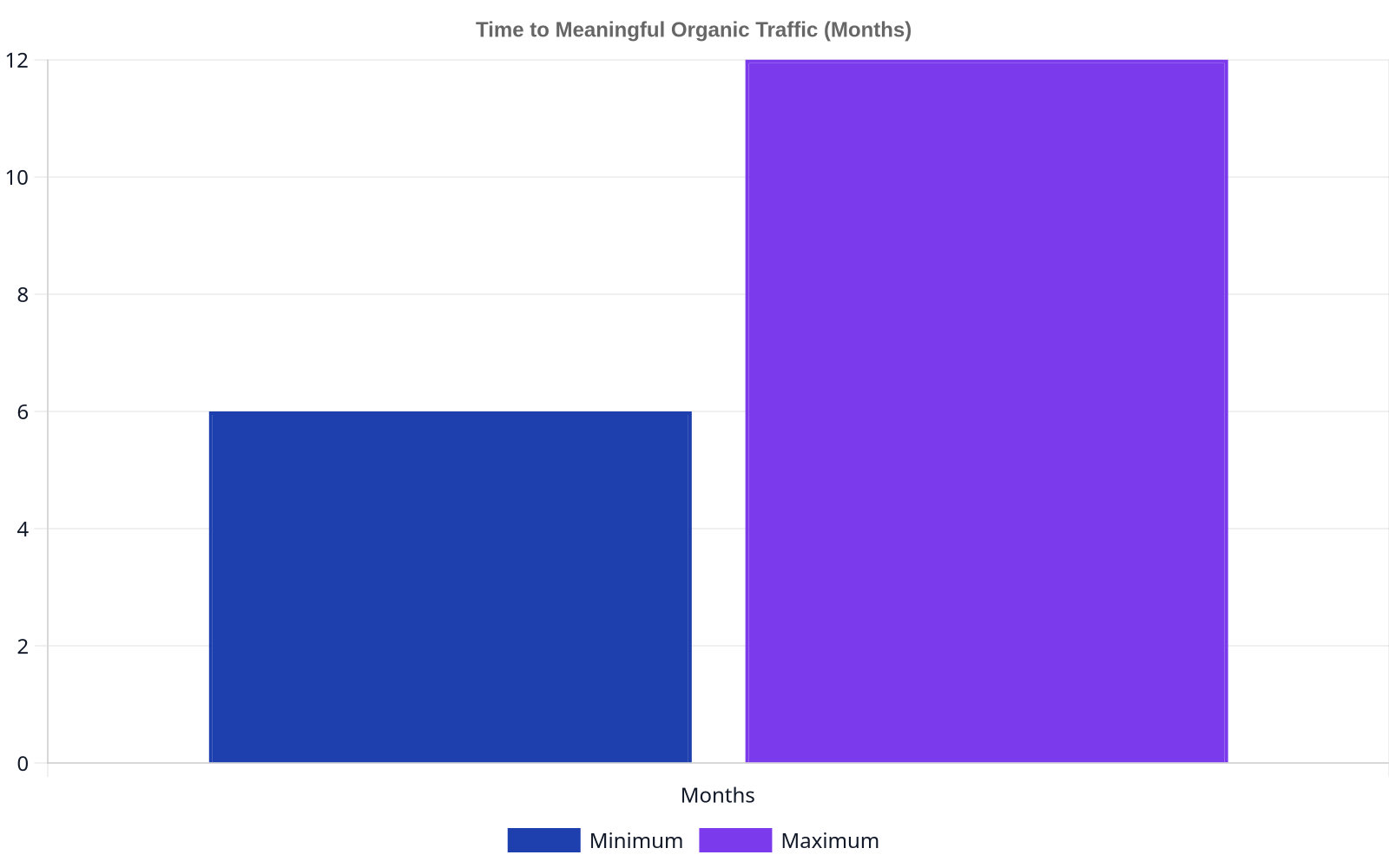
Most SEO “solutions” for startups are just repackaged enterprise services with a smaller price tag and a much longer contract. They treat you like a small corporation, not a startup that needs to prove traction yesterday. The best SEO solution for a startup is an integrated system that prioritizes scalable content creation, technical soundness, and measurable impact on customer acquisition cost, often showing meaningful results within 6 to 12 months. This means focusing on channels that build long-term assets, not just short-term traffic spikes.
This article ranks different types of SEO solutions not by their own marketing claims, but by their suitability for specific startup stages and goals. We evaluated each category based on a weighted analysis of deployment speed, budget requirements, scalability, and the level of in-house expertise required. The focus is on what delivers tangible business results, like qualified leads and lower CAC, not just vanity metrics like rankings.

Understanding the Startup SEO Landscape
Search engine optimization for a startup is fundamentally different from SEO for an established company. You have no domain authority, no brand recognition, and likely a very small team. Your primary challenge is creating credibility and visibility from scratch. A successful startup SEO strategy has four core components: technical SEO, on-page SEO, content creation, and link building. While established companies might focus on defending existing rankings, startups must be aggressive, finding and dominating niche topics to build an initial foothold before expanding.
Many founders fall for SEO myths, like believing results are instantaneous or that it’s a one-time setup. The reality is that you should expect 6 to 12 months before meaningful organic traffic materializes. This timeline is a test of strategic patience. Another common misconception is that SEO is “free.” While you don’t pay per click, the investment in tools, talent, and content is significant. Your goal isn’t just traffic; it’s building a predictable, cost-effective engine for growth.
In-House SEO Team
Building an in-house SEO team means hiring a specialist or a small group of marketers to handle all aspects of your organic search strategy. This includes everything from keyword research and content writing to technical audits and link acquisition. This model gives you complete control and allows the team to develop a deep, nuanced understanding of your product, customers, and market. They become a core part of your growth engine, deeply integrated with product and sales teams.
An in-house team can be incredibly powerful for a Series A or later startup with predictable revenue and a clear product-market fit. The direct feedback loop between SEO efforts and business outcomes is invaluable. However, it’s also the most expensive and slowest option to stand up. Finding, hiring, and retaining top-tier SEO talent is a major challenge, and the overhead in salaries and tools can be substantial.
- Best for: Series A and later startups with stable funding and the need for deep product integration.
- Watch out for: High costs, long hiring cycles, and the risk of knowledge concentration in one or two key employees.
Traditional SEO Agency
A traditional SEO agency is a third-party firm you hire to manage your SEO. Most offer a package of services, including audits, keyword research, content creation, and monthly reporting. For a startup, this can seem like a convenient way to access expertise without the overhead of full-time hires. Agencies bring experience from working with multiple clients, which can provide broader industry insights.
However, the agency model is often a poor fit for early-stage startups. You are often one of many clients, and the team working on your account may have limited context about your specific business challenges. The strategies can be generic, and the communication overhead can be significant. The typical retainer model also means you pay the same fee whether you get great results or poor ones, and quality can vary dramatically between agencies. Many startups find themselves “stuck in the middle,” paying for a service that isn’t tailored enough to move the needle.
The proliferation of terms like GEO, AEO, and AI SEO can be confusing, but this often reflects a marketing trend rather than a fundamental shift in practice. Many agencies simply relabel traditional SEO services without updating their methods, leading to a perception that the field is splitting into these distinct lanes.
- Best for: Startups that need a predictable, if sometimes generic, set of SEO tasks executed and have the budget for a monthly retainer.
- Watch out for: Cookie-cutter strategies, lack of deep business integration, and long contract lock-ins.

SEO Freelancers & Consultants
Hiring an SEO freelancer or consultant offers a middle ground between a full-time employee and a large agency. You get specialized expertise for a specific project or on a fractional basis, which can be more budget-friendly. A good consultant can provide high-level strategy, conduct a technical audit, or lead a link-building campaign without the long-term commitment of an agency retainer or the high cost of an in-house hire.
This model is excellent for startups that have some in-house marketing capabilities but need to fill a specific knowledge gap. The key is finding the right person. The freelancer market is flooded with low-quality providers, and a bad hire can do more harm than good by building toxic links or providing outdated advice. Vetting is critical. Look for a proven track record with startups in a similar industry or stage. This approach requires more hands-on management from the founder or marketing lead.
- Best for: Pre-seed and Seed stage startups needing targeted expertise for a specific SEO task (e.g., technical audit, initial strategy).
- Watch out for: Inconsistent quality, potential for being a low priority for the freelancer, and the need for strong internal project management.
AI-Powered SEO Automation Platforms
The newest category of solutions involves AI-powered platforms that automate key parts of the SEO workflow. These platforms, like Keyworth, are designed to handle the most time-consuming aspects of content-led SEO at scale. Instead of just providing data, these tools actively generate SEO-optimized articles, handle keyword research, build internal links, and even publish content directly to your site. This allows a very small team (or even a single person) to execute a content strategy that would otherwise require several full-time employees.
This approach is a powerful fit for early-stage startups that need to create a large volume of high-quality content to establish topical authority quickly. By automating the heavy lifting of content production, like generating daily articles, it frees up the team to focus on higher-level strategy, customer interviews, and promotion. It’s a way to build a valuable, long-term content asset without the massive upfront cost of an in-house team or the generic approach of a traditional agency. Some clients, like Wolverine Assemblies, have found this model effective for building their online presence.
An automated platform isn’t a magic button for traffic. It’s a force multiplier for your strategy, turning your insights about the customer into a high-volume, high-quality content machine.
- Best for: Startups from pre-seed to Series A that need to build organic traffic through scalable content creation without a large marketing team.
- Watch out for: The need for a clear content strategy to guide the AI; the platform executes, but you must provide the strategic direction.
The Cost of Quality Startup SEO
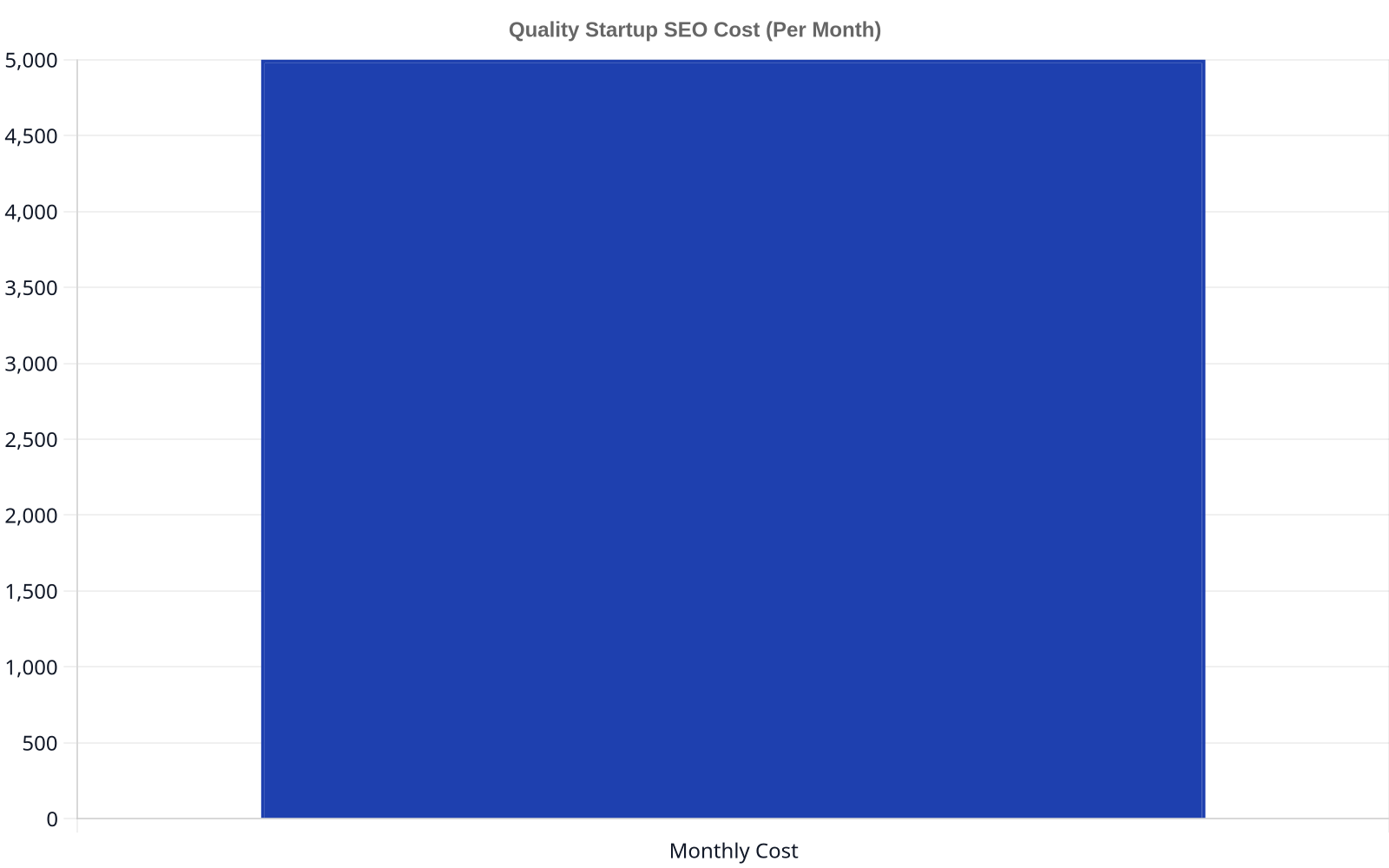
Budgeting is a major concern for any startup, and SEO is an area where you often get what you pay for. While you can find cheap services on freelance marketplaces, they are unlikely to produce meaningful business results and may even harm your site’s reputation. For professional, results-oriented work, a quality SEO investment typically starts at around $5,000 per month. This investment covers the expertise, tools, and time required to develop and execute a strategy that can compete in today’s crowded search landscape.
This figure can represent a retainer with a good agency, the salary for a junior in-house marketer plus tools, or the subscription for a high-end automation platform plus a content strategist’s time. The key is to see it as an investment in building a core business asset: a predictable, low-cost channel for acquiring new customers. The goal is to drive your overall Customer Acquisition Cost (CAC) down over time as organic traffic and conversions grow.
Startup SEO Solutions: Comparison Table
| Solution Type | Typical Cost (Monthly) | Best For Stage | Key Advantage | Major Drawback |
|---|---|---|---|---|
| In-House Team | $10,000 – $25,000+ | Series A+ | Deep integration, full control | Very high cost, slow to build |
| Traditional Agency | $5,000 – $15,000 | Seed, Series A | Access to expertise, less management | Generic strategies, poor ROI |
| Freelancer/Consultant | $2,000 – $8,000 | Pre-seed, Seed | Specialized skills, flexible | Inconsistent quality, requires management |
| AI Automation Platform | $1,000 – $7,000 | Pre-seed, Seed, Series A | Scalable content, high ROI | Requires strategic direction |
FAQ
Why is SEO important for startups?
SEO is crucial for startups because it builds a sustainable, long-term channel for customer acquisition. Unlike paid advertising, where traffic stops when you stop paying, SEO creates a durable asset of content and authority that generates “free” traffic and leads over time. For new businesses with limited brand recognition, ranking for problems your customers are searching for is one of the most effective ways to build visibility and credibility. The top three Google positions capture most clicks, making visibility there a primary goal.
How long does startup SEO take to show results?
Setting realistic expectations is vital. While you might see some early movement in long-tail keywords within 3-4 months, most experts agree you should plan for a longer timeline. You can typically expect 6 to 12 months before meaningful organic traffic and a measurable impact on your business goals. The exact timeline depends on your industry competitiveness, budget, and the intensity of your strategy.
How much should a startup budget for SEO?
The minimum investment for quality startup SEO that can compete effectively is around $5,000 per month. This budget could cover a modest agency retainer, a junior in-house hire with a toolset, or a subscription to a powerful automation platform coupled with strategic oversight. Anything significantly less is likely to result in slow or negligible results.
What are the most important metrics to track for startup SEO?
While keyword rankings and traffic are easy to track, they don’t tell the whole story. Startups should focus on business-impact metrics. These include the number of qualified leads from organic search, the organic traffic to conversion rate, and, most importantly, the Customer Acquisition Cost (CAC) for the organic channel. Tracking how SEO reduces your blended CAC over time is the ultimate measure of its success.
What is E-E-A-T and why does it matter for startups?
E-E-A-T stands for Experience, Expertise, Authoritativeness, and Trustworthiness. It’s a framework Google uses to assess content quality. For a startup with no existing brand, E-E-A-T is your path to credibility. You demonstrate it by publishing genuinely helpful, expert-driven content, securing backlinks from reputable sites, showcasing author expertise (like author bios), and making it easy to see who is behind the company. It’s how you prove to Google and to users that you are a legitimate, trustworthy source of information.
Leave a Reply