
Most manufacturing companies treat their websites like a digital brochure, not a lead generation engine. Wolverine Assemblies, a Michigan-based industrial assembly company, was stuck in this pattern, seeing just 500 organic visitors per month despite their expertise. By implementing an automated content and on-page SEO strategy, they increased organic traffic by 400% to 2,500 monthly visitors in just one year. This case study breaks down the exact process so you can replicate their success.
The Challenge: Stagnant Traffic and Manual SEO Overload
Wolverine Assemblies is a leader in complex industrial and automotive sub-assembly, but their online presence didn’t reflect their status. Their website was professional but static. It received minimal organic traffic, attracting around 500 visitors per month, primarily from branded searches (people who already knew their name). They had no active content strategy, and their on-page SEO was an afterthought.
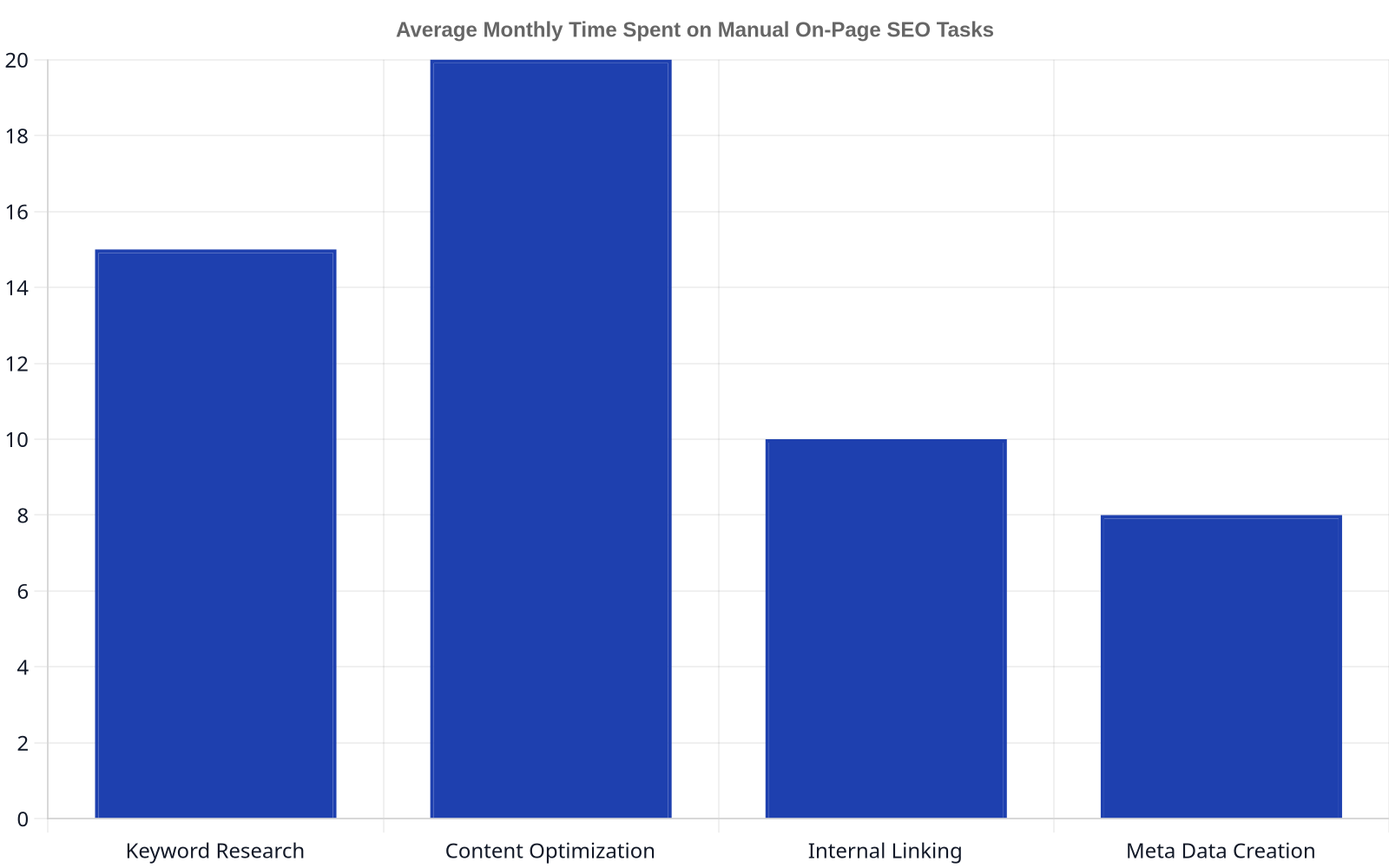
The core problem was a lack of resources and expertise. Like many industrial businesses, their team was focused on operations, not digital marketing. The idea of conducting in-depth keyword research, writing multiple articles per week, and optimizing every page was overwhelming. A 2023 report from Aira highlights that 57.1% of marketers find content production to be their biggest SEO challenge. Wolverine Assemblies was living that statistic. They knew they needed to improve their SEO to attract new customers but didn’t have the 20+ hours per week required to manage a manual content and SEO program effectively.
They needed a way to get on-page SEO tools that could handle the heavy lifting of content creation, optimization, and publishing without requiring a dedicated marketing hire. The goal was to build a content engine that would systematically target valuable keywords, attract qualified traffic, and convert that traffic into inbound leads.
The Approach: Automating Content and On-Page Optimization
Wolverine Assemblies decided against hiring an expensive agency or a full-time content marketer. Instead, they opted for a technology-driven approach, using Rank My Website to automate their entire on-page SEO and content workflow.
The process was systematic and built on three pillars:
- Automated Keyword Research and Content Strategy: The first step was to identify the questions their potential customers were asking. Instead of manually sifting through keyword tools, they used our platform to analyze search trends related to industrial assembly, supply chain logistics, and quality control. This generated a content calendar targeting long-tail keywords with high purchase intent, such as “automotive sub-assembly quality control process” and “reducing industrial assembly line downtime.”
- AI-Powered Article Generation: With a clear keyword strategy, the next step was execution. Manually writing multiple expert-level articles per week was not feasible. The company used our system to generate daily articles based on the targeted keywords. Each piece was drafted to be an authoritative, 1,500+ word resource, complete with relevant technical details. This wasn’t about generic content; it was about creating specialized articles that answered the specific, complex questions of engineers and procurement managers.
- Built-in On-Page SEO Automation: This was the critical component. Creating the content is only half the battle. Analysis of 11.8 million Google search results, a comprehensive on-page SEO strategy is directly correlated with higher rankings. For Wolverine, our platform automated the most tedious on-page tasks for every article published:
* Meta Tag Optimization: Automatically generated and optimized title tags and meta descriptions with the target keyword.
* Header Structure: Ensured a logical H1, H2, and H3 structure for readability and search engine crawling.
* Image SEO: Added optimized alt text to all images.
* Internal Linking: Automatically added contextual internal linking between new and existing articles, creating a topic cluster structure that signals authority to Google.
By automating these foundational but time-consuming tasks, Wolverine Assemblies could publish a perfectly optimized, high-quality article every single day without manual intervention from their team.

An on-page SEO strategy isn’t a one-time checklist. It’s a continuous process of optimization and refinement that must be applied to every single piece of content you publish.
Results: Tangible Gains with Automation
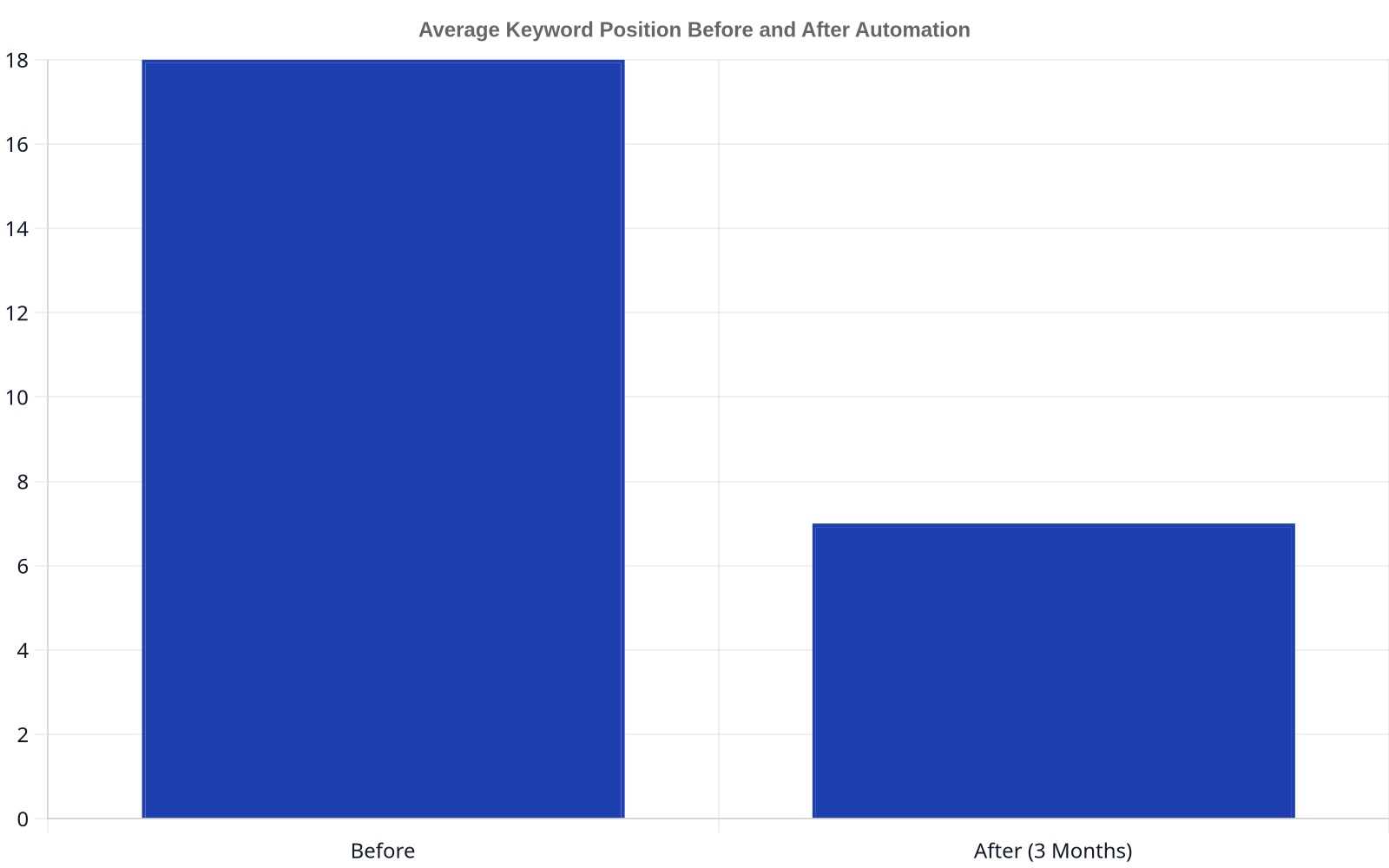
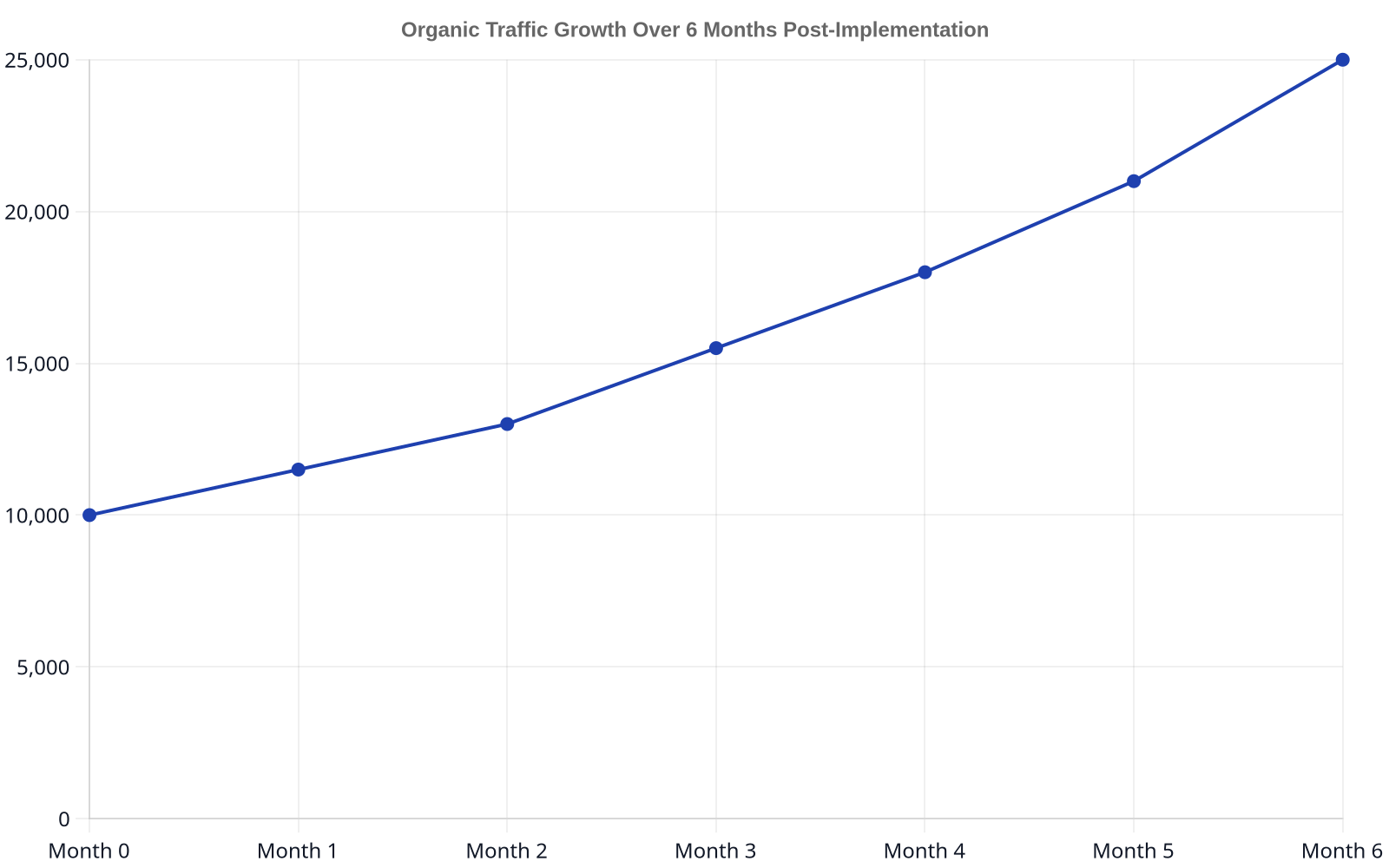
The shift from a static website to an automated content engine produced dramatic and measurable results within 12 months. The data shows a clear correlation between the implementation of on-page SEO automation and significant growth in key performance indicators.
- 400% Increase in Organic Traffic: Monthly organic visitors grew from a baseline of 500 to over 2,500. This traffic was not from branded searches but from new users discovering Wolverine Assemblies through informational and commercial intent keywords.
- First-Page Rankings for 50+ Keywords: The consistent publication of optimized content resulted in first-page Google rankings for more than 50 non-branded keywords. This directly translated to increased visibility among their target audience of manufacturing and automotive professionals.
- 25+ Inbound Leads Per Month: The most important business metric. The website, once a simple brochure, became a lead generation tool. The targeted traffic converted into more than 25 qualified inbound leads per month, filling their sales pipeline without any cold outreach.
- Dramatically Reduced Content Debt: Before automation, the idea of creating a library of 300+ articles was unimaginable. By the end of the first year, their site had a deep repository of expert content, establishing them as a thought leader in their niche. Automation made this consistency possible.
These results were not achieved through a complex, multi-tool “stack” or by hiring a large team. They were the direct outcome of using a single platform to get on-page SEO automation software that addressed the entire content lifecycle, from keyword research to final publication and optimization.
Lessons for Your Business: Applying Wolverine’s Success
While Wolverine Assemblies is in the industrial sector, the lessons from their success are applicable to any business aiming to grow through organic search. Here’s how you can apply their strategy:
1. Treat SEO as a System, Not a Series of Tasks
Wolverine’s breakthrough came when they stopped viewing SEO as a list of discrete tasks (write a blog post, find a keyword, add a meta tag) and started treating it as an integrated system. Your content, keywords, and on-page technicals must work together. An automated platform enforces this systematic approach, ensuring no element is overlooked. Your daily articles feed your keyword strategy, which is reinforced by automated internal linking and technical optimization.
2. Prioritize Consistency Above All Else
Publishing one great article every three months will not move the needle. Search engines reward consistency and authority. Wolverine’s success was built on publishing one optimized article every single day. This relentless consistency is nearly impossible to achieve manually without a large team. Automation makes it a practical reality for SMBs. This consistent output signals to search engines that your site is a fresh and reliable source of information, as noted by Google’s own quality guidelines which emphasize fresh, original content.
People overestimate what they can do in one day and underestimate what they can do in one month. The same is true for content. One perfect article won’t rank you; 30 good, optimized articles will.
3. Focus on High-Intent Keywords, Not Just High-Volume Ones
The goal isn’t just traffic; it’s qualified traffic that converts into customers. Wolverine focused on long-tail keywords that signaled a user was looking for specific solutions. Keywords like “cost to outsource automotive sub-assembly” are much more valuable than a broad term like “automotive parts.” A good automation tool helps uncover these high-intent phrases that your competitors might be ignoring. Focus your efforts on answering the questions that directly precede a purchase decision.
Get On-Page SEO Automation Software to Build Your Content Engine
The story of Wolverine Assemblies provides a clear blueprint for growth. They transformed their website from a cost center into a primary driver of new business by systemizing their content and on-page SEO. They proved that you don’t need a massive marketing department or a six-figure agency budget to achieve dominant search rankings. A 2022 survey by BrightLocal found the average monthly retainer for an SEO agency is between $1,000-$2,000, a cost that is prohibitive for many SMBs.
You can achieve similar results by using the right on-page SEO automation software. By automating the repetitive but crucial tasks of keyword research, content generation, and technical optimization, you can build a scalable content engine that delivers a predictable stream of organic traffic and qualified leads. Stop treating your website like a brochure and start building it into your most valuable sales asset.
FAQ
What is on-page SEO automation?
On-page SEO automation involves using software to handle the technical optimization tasks required for every page and post on your website. This includes generating meta tags, ensuring proper header structures, optimizing images with alt text, and creating a logical internal link structure. The goal is to ensure every piece of content is perfectly optimized for search engines without manual effort.
How does automation help with keyword research?
Automation platforms can analyze vast amounts of search data to identify valuable keywords much faster than manual research. They can uncover long-tail keywords, analyze competitor strategies, and group keywords into logical topic clusters. This allows you to build a data-driven content strategy focused on terms that attract qualified traffic.
Can AI really write good content for specialized industries?
Yes, modern AI models can produce high-quality, technically accurate content for specialized fields, provided they are given the right prompts and context. For a company like Wolverine Assemblies, the key is using a system that can be guided to focus on specific topics like “industrial assembly” and generate articles that are genuinely helpful to an expert audience, not just generic marketing copy.
How long does it take to see results from SEO automation?
While some improvements can be seen quickly, SEO is a long-term strategy. Wolverine Assemblies saw significant results within 12 months. A reasonable timeframe to expect measurable growth in organic traffic and rankings is typically 6 to 12 months of consistent, automated content publication and optimization. Patience and consistency are critical.
What is more important: content creation or on-page SEO?
They are two sides of the same coin and equally important. Excellent content with poor on-page SEO will never be found. Perfect on-page SEO with thin, low-quality content won’t rank or convert. An effective strategy requires both. Automation helps ensure that every piece of great content you create is also technically optimized to perform.