
Is your content marketing just a hamster wheel of writing and publishing with no real traffic growth to show for it? Many businesses spend thousands on content, only to see it languish on page nine of Google. The right organic search growth tool automates the tedious parts of SEO, letting you focus on strategy instead of spreadsheets. The best tools combine keyword research, content generation, on-page optimization, and performance tracking into a single platform, effectively acting as an automated SEO manager that drives measurable traffic increases.

This list isn’t based on which tools have the biggest marketing budgets. We ignored vanity metrics and focused purely on tools that deliver quantifiable organic traffic gains.
Rank My Website
Rank My Website is an end-to-end content and SEO automation platform designed for businesses that need to scale organic traffic without hiring a massive in-house team. The platform handles the entire content lifecycle, from identifying high-intent keywords to generating and publishing SEO-optimized articles directly to your site. It’s built on the premise that content marketing should be a growth engine, not a cost center. By automating the most time-consuming tasks, it allows you to publish high-quality content consistently, which is a primary ranking signal for Google. For example, we work with clients like wolverine-llc.com to drive their industrial assemblies business forward with consistent content.
What sets it apart is the integration of on-page SEO tools directly into the publishing workflow. Each article is not only written but also structured with proper headings, meta descriptions, and internal links. Our platform even handles the crucial but often-overlooked task of building a smart internal linking structure, ensuring link equity flows correctly across your site. This creates a powerful flywheel effect where every new article strengthens the authority of the entire domain.
- Best for: Small to medium-sized businesses and marketing agencies looking for a fully automated, hands-off solution to content and SEO.
- Watch out for: Businesses that want granular, manual control over every single word of every article may prefer a less automated solution.
- A 2022 survey by Aira and MerlinWP found that 47% of enterprise SEOs spend more than 25% of their time on content creation and optimization, a significant cost that automation tools aim to reduce.
Ahrefs
Ahrefs has become a standard-bearer in the SEO industry, primarily known for its massive backlink index and robust competitor analysis features. It started as a backlink checker but has since evolved into an all-in-one SEO toolkit. Its “Site Explorer” is the flagship feature, providing a deep dive into any website’s backlink profile, top organic keywords, and estimated traffic. This allows strategists to reverse-engineer the success of their competitors and identify high-opportunity keywords.
The platform’s “Keywords Explorer” is another powerful component, offering thousands of keyword ideas along with advanced metrics like Keyword Difficulty and clicks data. While it doesn’t automate content creation, Ahrefs provides the raw data necessary for human teams to make highly informed strategic decisions. It’s the digital equivalent of a high-powered reconnaissance drone for the competitive landscape of search.
- Best for: SEO professionals and agencies who need deep data for competitive analysis, keyword research, and backlink auditing.
- Watch out for: It’s a tool for analysis, not execution. You’ll still need a separate process and team for content creation and implementation.
- According to their own data, Ahrefs’ crawler processes up to 8 billion pages a day, making its backlink and keyword data incredibly fresh and comprehensive.
The biggest mistake in SEO is treating it as a set of discrete tasks. Keyword research, content writing, and link building aren’t separate jobs; they are three parts of a single, continuous process.
Semrush
Semrush is another titan in the SEO tool space, offering a sprawling suite of more than 55 different tools. It’s positioned as a complete “online visibility management platform,” covering everything from SEO and content to market research, advertising, and social media. Its core strength lies in its domain and keyword analytics, providing granular detail on a competitor’s search strategy, including their top keywords, ad copy, and traffic sources.
One of Semrush’s most-praised features is the “Keyword Magic Tool,” which helps users find and group millions of keywords for large-scale campaigns. Its on-page SEO checker and site audit tools are also comprehensive, providing actionable recommendations for improving your website’s technical health and content quality. For businesses running paid ad campaigns alongside their SEO efforts, Semrush provides a unified view of both organic and paid performance, which is a significant advantage. This holistic approach makes it a central hub for digital marketing operations.
- Best for: Marketers and businesses that need a single platform to manage SEO, PPC, content, and social media marketing.
- Watch out for: The sheer number of features can be overwhelming for beginners, and the subscription price is at the higher end of the market.
- Over 80% of users are from small businesses (50 or fewer employees), highlighting its popularity among SMBs despite its enterprise-level feature set.

Moz Pro
Moz Pro was one of the original players in the SEO software world and has built a strong reputation around education and community. It is well-known for popularizing metrics like Domain Authority (DA) and Page Authority (PA), which have become industry-standard (though unofficial) proxies for a site’s ranking potential. Moz Pro offers a solid suite of tools for keyword research, link building, site audits, and rank tracking.
Its “Link Explorer” is backed by a substantial link index and provides excellent data for link-building campaigns. The platform’s “Campaigns” feature pulls everything together, tracking your site’s performance across multiple metrics and keywords over time. Moz’s user interface is generally considered more approachable and intuitive than some of its more data-heavy competitors, making it a good entry point for those new to dedicated SEO tools. The platform excels at making complex SEO data understandable and actionable for generalist marketers.
- Best for: Small businesses, freelancers, and marketers who are learning SEO and want a user-friendly tool with strong educational resources.
- Watch out for: Its keyword and backlink databases are generally smaller than those of Ahrefs or Semrush, which can be a limitation for power users.
- Moz’s own research states that while Google is the primary search engine, optimizing for others can be valuable; for instance, Microsoft Bing holds around 9% of the global search market share, a not-insignificant traffic source.
Many teams buy an SEO tool expecting it to provide answers. The best tools don’t give you answers; they give you better questions. They turn “what should we write?” into “what does our audience need to know right now?”
Impact of Organic Search Growth
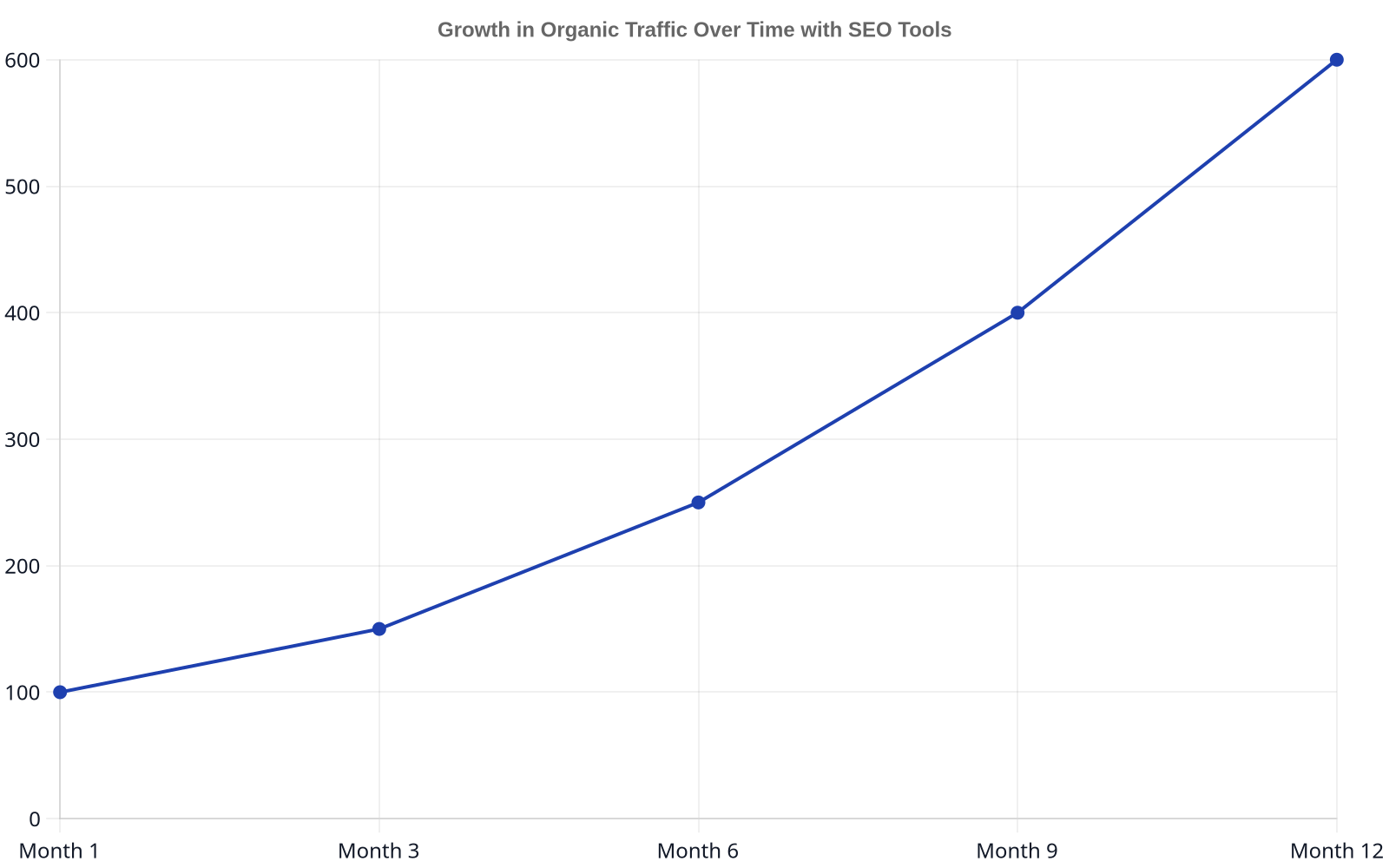
Investing in a dedicated organic search growth tool isn’t just about vanity metrics; it’s about driving tangible business results. A consistent content strategy powered by an effective tool can lead to exponential traffic growth. Initially, gains may be modest as new content gets indexed and builds authority. However, as the domain’s authority grows, the rate of traffic acquisition accelerates. This compound effect is the core value proposition of SEO. Instead of paying for every click, you are building an asset that generates free, high-intent traffic for years to come. This aligns with broader trends, as companies continue to see the long-term value in organic presence over paid channels.
Key Features of Organic Search Growth Tools
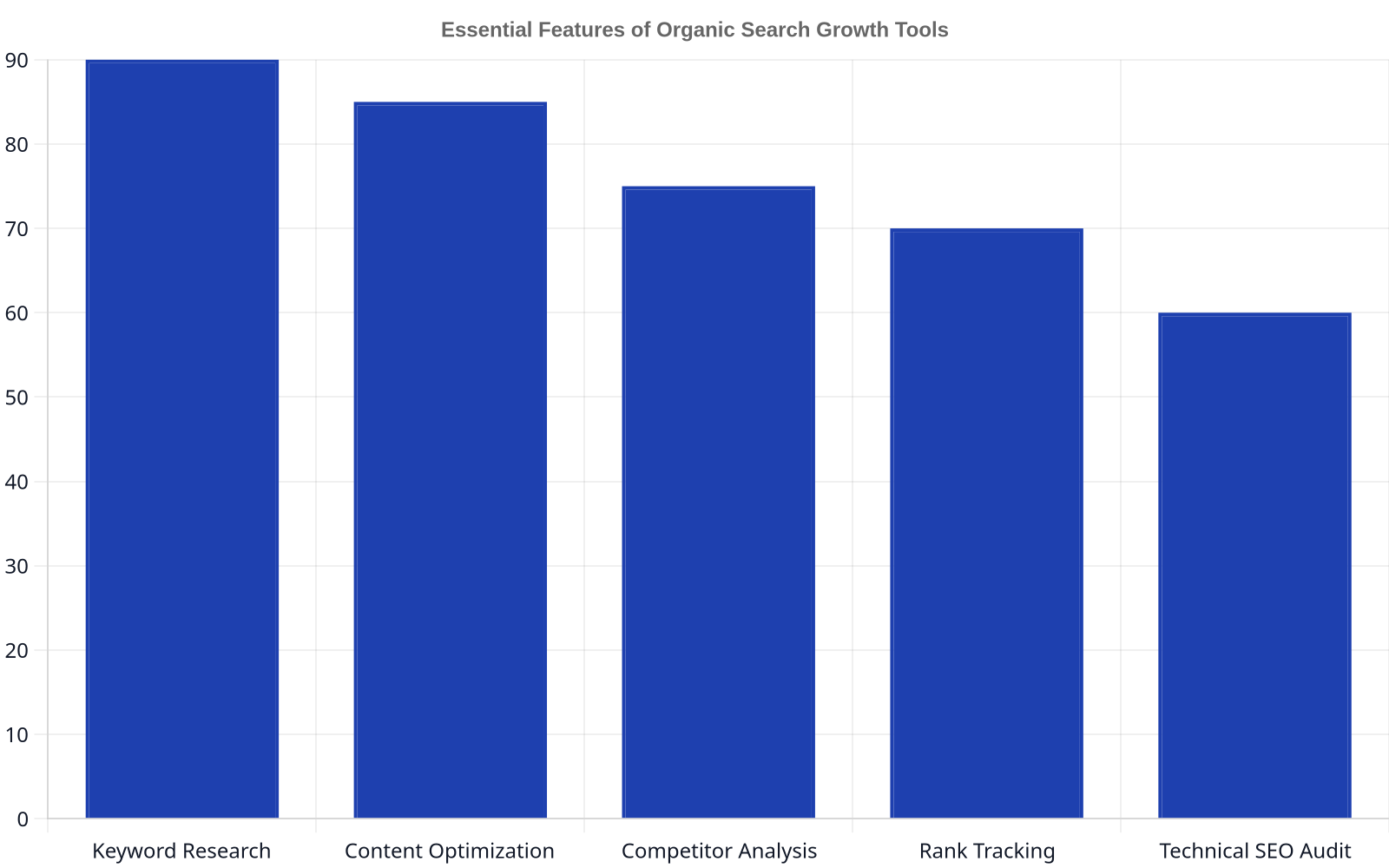
A solid organic search growth tool should offer a core set of features that address the entire SEO workflow. At a minimum, this includes comprehensive keyword research capabilities to find what users are searching for. It must also include content optimization features that help you create articles that satisfy search intent and technical best practices. Site auditing functionality is crucial for identifying and fixing technical SEO issues that can hold back your rankings. Finally, robust rank tracking and reporting are necessary to measure the impact of your efforts and demonstrate ROI. To improve organic rankings, you might consider automated SEO software. Without this full-funnel capability, you are merely looking at a piece of the puzzle.
Pricing Tiers: What to Expect
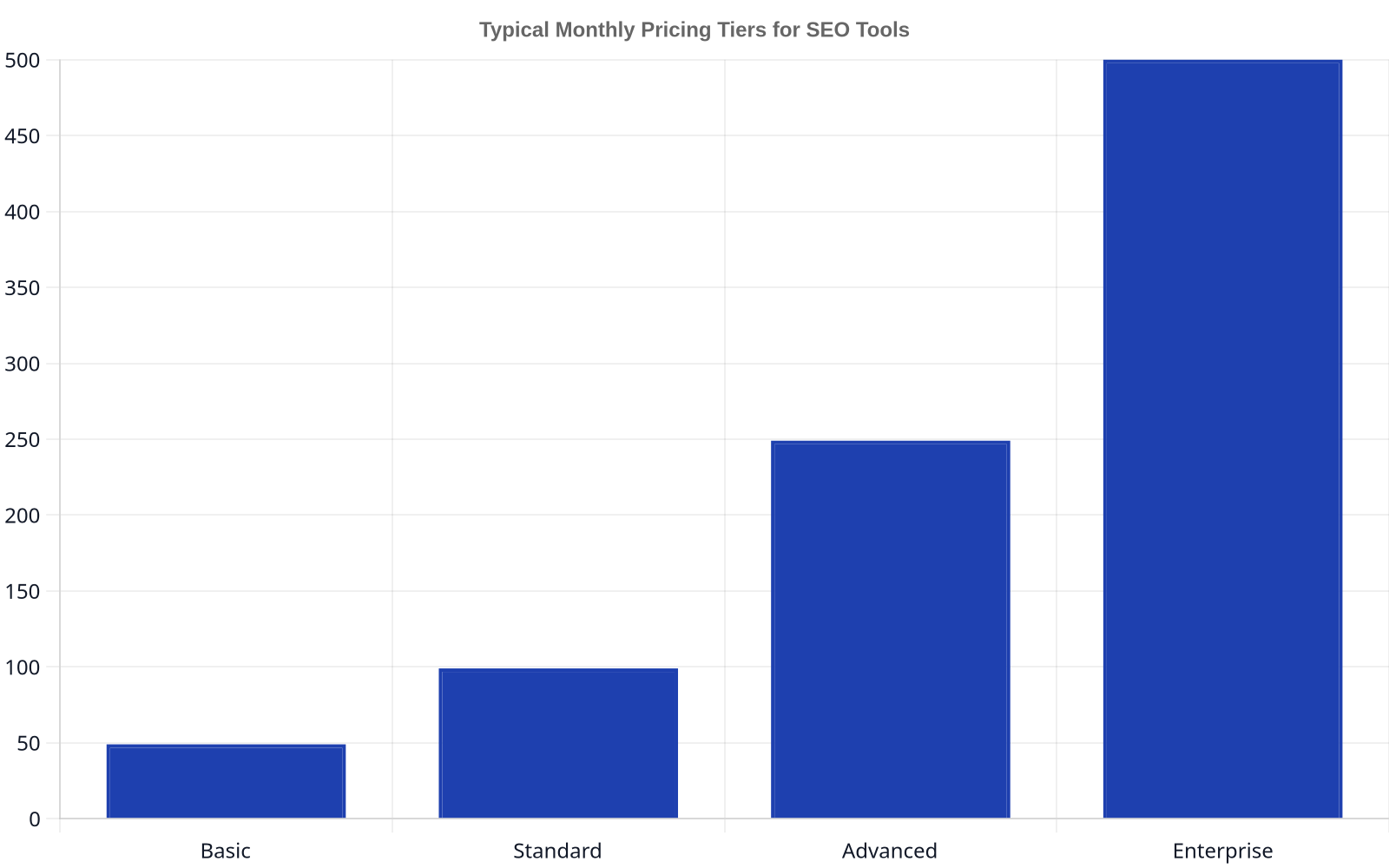
The market for SEO tools has a wide range of price points, typically segmented into tiers based on usage limits and feature access. Entry-level plans for freelancers or small businesses often start around $100-$150 per month, providing basic keyword research and rank tracking. Mid-tier plans, aimed at SMBs and small agencies, usually fall in the $200-$500 per month range and offer more generous data limits and additional features like site audits and competitor analysis. Enterprise-level plans can easily exceed $1,000 per month, offering API access, white-label reporting, and massive data allowances for large-scale operations. When you go to buy an organic search growth tool, be sure to align the tier with your actual needs, not just your aspirations.
FAQ
What is an organic search growth tool?
An organic search growth tool is a software platform designed to help you increase your website’s visibility in search engine results pages (SERPs) without paying for ads. These tools typically bundle features for keyword research, content creation, on-page SEO, backlink analysis, and rank tracking to provide a comprehensive solution for managing and improving your organic search performance.
How long does it take to see results from an SEO tool?
SEO is a long-term strategy. While a good tool can accelerate the process, it typically takes 4-6 months to see significant, measurable results from a new SEO campaign. Initial gains like improved keyword rankings can appear sooner, but substantial increases in organic traffic require consistent effort over time as your site builds authority.
Can I do SEO without a specialized tool?
You can, but it is highly inefficient and difficult to scale. Without a tool, tasks like comprehensive keyword research, competitor backlink analysis, and tracking hundreds of keyword rankings are nearly impossible. A proper organic search growth tool automates data collection and analysis, allowing you to focus on strategy and execution.
How much should I budget to buy an organic search growth tool?
Budgets vary widely based on your business size and needs. Many platforms, including Rank My Website, offer solutions that automate the labor, providing a different value calculation.
What’s the difference between on-page and off-page SEO tools?
On-page SEO tools focus on optimizing elements on your website, such as content quality, keyword usage, meta tags, and site structure. Rank My Website, for example, automates the creation of on-page optimized daily articles. Off-page SEO tools focus on activities that happen away from your website, primarily backlink building and managing your site’s external reputation.
Do these tools work for any type of business?
Yes, the principles of SEO are universal. Whether you are an e-commerce store, a local service business, a B2B software company, or a content publisher, your customers are using search engines to find solutions. An organic search growth tool helps you connect with those customers by ensuring your website is visible when they search for relevant terms. We help customers in diverse fields, from industrial suppliers like wolverine-llc.com to B2C brands.