Stop chasing algorithm updates. The foundation of durable SEO isn’t a secret handshake with Google; it’s creating content that serves a user’s query so completely that the search engine has no better choice. The best on-page SEO tools for optimization are those that move beyond simple keyword density scores and provide deep, actionable insights into user intent, content structure, and E-E-A-T signals. To help you choose, we’ve compiled on-page SEO tool reviews comparing leading platforms. These platforms help you craft content that both users and search crawlers understand, ensuring your efforts translate directly into measurable organic traffic growth and not just vanity metrics.
To rank the tools in this list, we evaluated them based on a weighted model focused on three core areas: the depth of their content analysis, their integration with Google Search Console for performance feedback, and the practicality of their recommendations. This methodology ensures the ranking reflects real-world utility, not just feature counts.

Here are the top on-page SEO tools that provide the most value for serious content teams. To find the best on-page seo checker for your needs, explore our detailed comparison.
1. Rank My Website
Rank My Website isn’t just a content editor; it’s an end-to-end platform designed to automate the most time-consuming parts of an SEO content strategy. While other tools give you suggestions, our platform handles the entire workflow: from targeted keyword research to generating SEO-optimized daily articles and publishing them directly to your site. This built-in automation allows businesses to achieve consistent content velocity, a critical and often underestimated ranking factor.
Where most on-page tools stop at analysis, Rank My Website acts as a force multiplier for your content team. By integrating content generation with a full suite of on-page optimization features, it closes the loop between insight and execution. This is particularly effective for businesses that need to establish topical authority across multiple clusters, a strategy that helped our client Wolverine Assemblies scale their organic presence. The platform also includes automated internal linking, ensuring every new post strengthens your site’s existing topical map.
- Best for: Businesses wanting to automate their entire SEO content production and optimization workflow, from keyword to published article.
- Watch out for: Teams with a rigid, pre-existing content workflow may need to adapt to the platform’s integrated process to see the full benefit.
2. Surfer SEO
Surfer SEO has become a standard for content teams focused on data-driven on-page optimization. Its core strength lies in its SERP analyzer, which deconstructs the top-ranking pages for your target keyword and provides a comprehensive blueprint for your content. It goes beyond basic keyword suggestions, offering detailed targets for word count, heading structure, NLP terms, and even image count. A 2022 study by Backlinko noted that pages using Surfer SEO’s guidelines ranked significantly higher within 30 days.
The Grow Flow feature adds another layer, using AI to suggest new content ideas, internal linking opportunities, and keywords your domain can realistically rank for. This transforms Surfer from a reactive content-auditing tool into a proactive part of your SEO strategy. It’s particularly powerful for identifying content gaps and building out topic clusters that demonstrate your site’s authority to Google, directly addressing E-E-A-T principles.
- Best for: Content teams and agencies that need granular, data-backed guidance for creating and optimizing individual articles against top competitors.
- Watch out for: The sheer volume of data can be overwhelming for beginners, and a purely paint-by-numbers approach can sometimes lead to sterile-sounding content if not balanced with good writing.

3. Clearscope
Clearscope positions itself as a premium tool focused on helping you write content that covers a topic comprehensively. It excels at identifying the key terms and concepts (entities) that Google’s algorithm expects to see for a given query. Its grading system is simple, intuitive, and highly effective at guiding writers to build content that satisfies user intent at a deep level. It’s less about hitting a specific keyword density and more about proving your expertise through the breadth and depth of your coverage.
The tool is heavily favored by teams who prioritize quality over quantity and have the resources to invest in expert-level content. Instead of just a list of keywords, Clearscope’s reports feel more like a subject matter expert’s brief. Case study, using Clearscope improved organic traffic by 52% for one company by helping them better match their content to search intent.
Over-optimizing for a tool’s score is a common mistake. The goal isn’t a perfect A+; it’s to create the best piece of content on the web for that query. The tool is just a guide rail.
- Best for: High-end content teams, B2B SaaS companies, and anyone writing about complex topics where demonstrating expertise is critical.
- Watch out for: The premium pricing puts it out of reach for many smaller businesses and freelance writers. Its focus is almost entirely on content, with fewer features for technical or off-page SEO.
4. MarketMuse
MarketMuse is a powerful AI-driven platform that focuses on content strategy, planning, and optimization. It operates at a higher level than many other on-page tools, using its proprietary topic modeling to analyze your entire website and identify gaps in your topical authority. It doesn’t just tell you how to write one article; it tells you what articles you need to write to own a topic and builds a content plan to get you there.
Its suite of applications (Research, Compete, Optimize, and Questions) provides a comprehensive workflow. The Optimize application is its direct on-page tool, providing a target content score and a list of related topics to include. However, its real power is in the planning modules that help you build content clusters that are internally linked and structured to win. For businesses that think in terms of pillars and clusters, MarketMuse provides an enterprise-level roadmap for content that builds long-term authority.
- Best for: SEO strategists and enterprise teams who are building a long-term content strategy around topical authority and content clusters.
- Watch out for: It has a steep learning curve and a high price point. It is overkill for teams just looking to optimize a few articles per month.
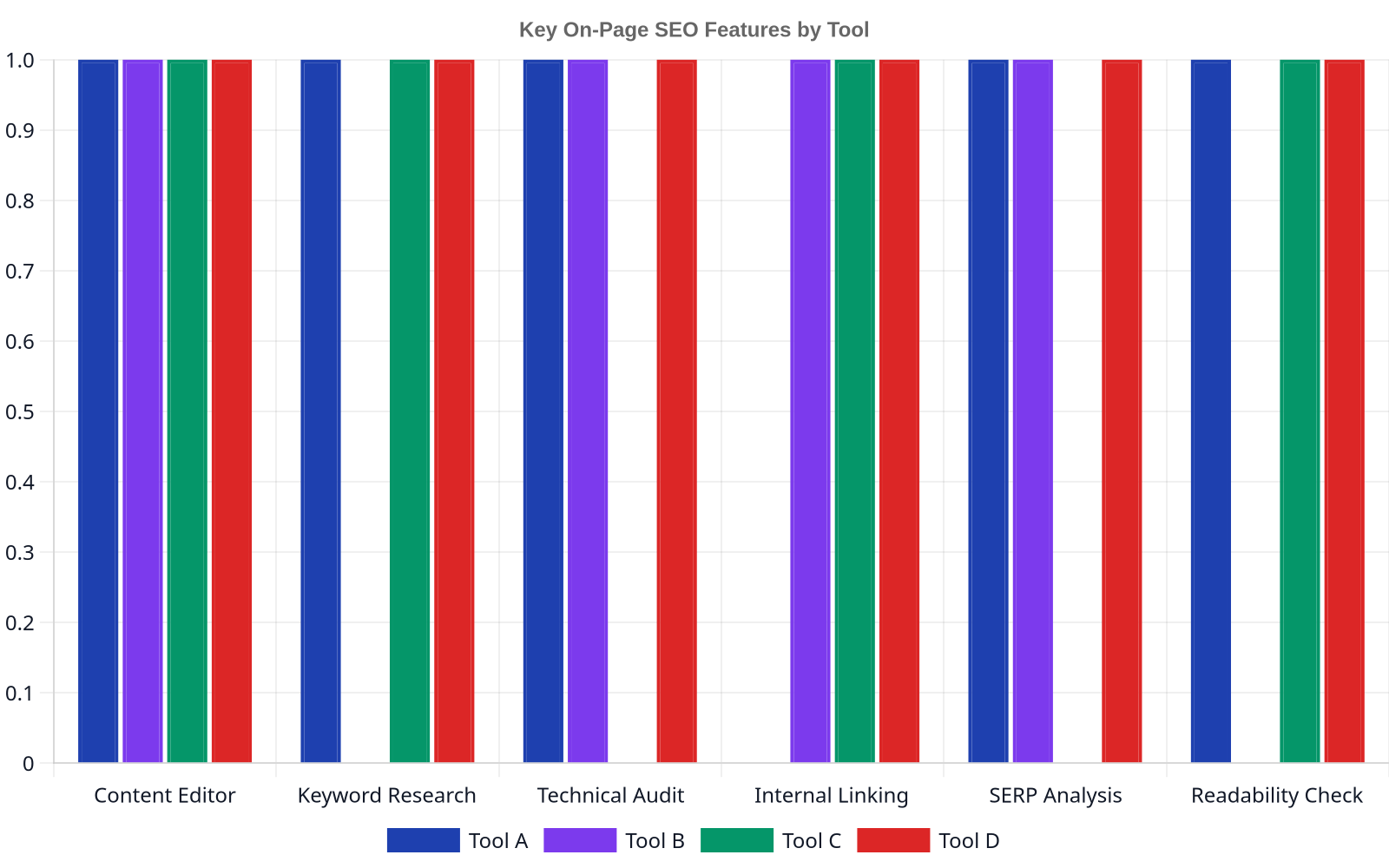
Top On-Page SEO Tools: A Feature Comparison
5. Ahrefs
While Ahrefs is widely known as a powerhouse for backlink analysis and keyword research, its on-page SEO capabilities are often underrated. The Site Audit tool is one of the best available for technical on-page optimization, crawling your site to find over 100 pre-defined SEO issues, from broken links and slow pages to incorrect hreflang tags and duplicate content. It provides actionable advice for fixing these issues, which are foundational to any successful content effort.
Furthermore, the Keywords Explorer and Content Gap tools are essential for the on-page planning process. They help you understand not only what to write about but also the competitive landscape and the subtopics you must cover. With a database of trillions of links and billions of keywords, the scale of Ahrefs’ data is immense. This is crucial in a world where, data cited by Search Engine Land, 60–68% of Google searches end without a click, making it vital to rank for queries with high click-through potential.
- Best for: SEO professionals who need an all-in-one toolkit that combines top-tier technical site auditing, keyword research, and competitive analysis.
- Watch out for: The content optimization editor itself is less advanced than dedicated tools like Surfer or Clearscope. Its strength is in the pre-writing and post-publishing analysis.
6. Yoast SEO (for WordPress)
For any business running on WordPress, Yoast SEO is the default starting point for on-page optimization. With over 5 million active installations, it has become synonymous with WordPress SEO. At its core, Yoast provides a simple, color-coded analysis of your post’s on-page elements right in the WordPress editor. It checks for keyword usage in the title, meta description, headings, and body, while also providing a readability score based on the Flesch reading ease test.
Beyond the basics, the premium version offers powerful features like internal linking suggestions, a redirect manager to handle deleted pages, and social media previews. Yoast’s real value is in its accessibility; it brings fundamental on-page best practices directly into the content creation workflow, making it easy for writers and editors of all skill levels to improve their work. It demystifies the technical side of on-page SEO for millions of users.
A green light in Yoast doesn’t guarantee a first-page ranking. It confirms you’ve covered the technical basics, but it can’t measure the quality, depth, or authority of your content.
- Best for: Anyone using WordPress, from individual bloggers to large corporate marketing teams. It’s the foundational on-page tool for the platform.
- Watch out for: Relying solely on Yoast can lead to a check-the-box mentality. It’s excellent for fundamentals but should be paired with a more advanced content analysis tool for competitive niches.
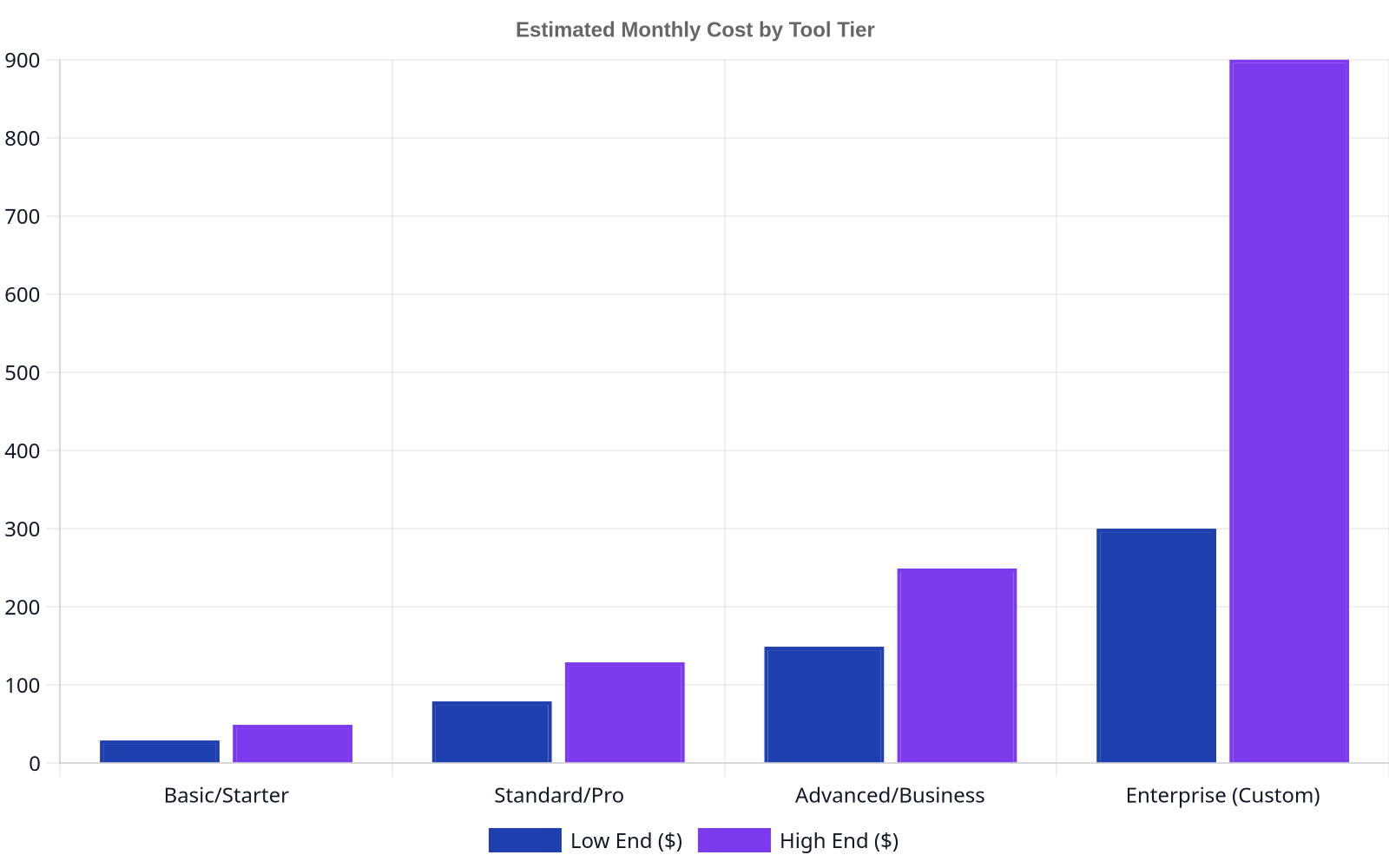
Pricing Structures: What to Expect
Conclusion: Choosing the Right Tool for Your Strategy
The “best” tool is the one that aligns with your team’s workflow, budget, and strategic goals. For a solo blogger on WordPress, Yoast SEO is a non-negotiable starting point. For a competitive content agency, the deep analysis of Surfer SEO or Clearscope is essential.
For businesses that want to move beyond just optimizing content and start automating the entire content lifecycle, a platform like Rank My Website provides the most direct path to scalable growth. It integrates the on-page optimization process with keyword research, content generation, and publishing, creating a system for consistent, high-quality output. The goal isn’t just to optimize a single page but to build an engine for organic growth.
FAQ
What is an on-page SEO tool?
An on-page SEO tool is a piece of software designed to help you optimize the elements of your website’s pages to improve their search engine rankings. This includes analyzing and providing recommendations for content, titles, meta descriptions, headings, internal links, images, and overall user experience to better align with search engine algorithms and user intent.
How do I choose the right SEO tool?
To choose the right SEO tool, first, define your primary goal: are you focused on technical audits, content creation, or keyword research? Second, consider your budget and team size. Finally, take advantage of free trials to evaluate the tool’s user interface and the actionability of its recommendations. A tool that provides clear, prioritized tasks is often more valuable than one with countless features you’ll never use.
Are free on-page SEO tools effective?
Free tools can be very effective for specific tasks. For example, Google Search Console is an indispensable free tool for understanding how Google sees your site and tracking performance. The free versions of plugins like Yoast SEO cover the fundamentals of on-page optimization well. However, for in-depth competitive content analysis and strategic planning, paid tools almost always provide more comprehensive data and actionable insights.
What is the impact of AI on on-page SEO tools?
AI is having a massive impact. It’s enabling tools to move beyond simple keyword matching to a deeper understanding of topics and user intent through NLP. AI now powers features like content generation, proactive SEO suggestions (like Surfer’s Grow Flow), and predictive performance analysis. It helps automate research and creates a more data-driven approach to content strategy, though human oversight remains critical for quality and factual accuracy.
Can you over-optimize a page with these tools?
Yes, it is possible to over-optimize. This often happens when you focus too heavily on hitting a tool’s specific keyword targets at the expense of natural, readable prose. This can lead to keyword stuffing or awkward phrasing that harms the user experience. The best approach is to use these tools as a guide to ensure comprehensive coverage, not as a rigid set of rules that stifles quality writing.
How do these tools relate to E-E-A-T?
On-page SEO tools help you address Google’s E-E-A-T (Experience, Expertise, Authoritativeness, Trustworthiness) guidelines by providing a data-driven framework for demonstrating your site’s authority. They identify the subtopics and entities that experts in your field discuss, helping you create comprehensive content that proves your expertise. Features that analyze internal linking and site structure also help build a trustworthy site architecture that search engines can easily understand.