
Most teams think adopting AI in their content workflow is about replacing writers with bots. They’re wrong. Integrating AI effectively is about creating a superhuman editor, a data-driven strategist, and a tireless production assistant, all working in concert. Implementing AI transforms a content creation workflow from a linear, manual slog into a dynamic, scalable engine for growth, with some companies reporting significantly faster production cycles. By the end of this tutorial, you will know how to methodically rebuild your content process around AI to increase speed, quality, and quantifiable business impact.
Prerequisites
Before you start, ensure you have the following:
- Clear business goals: What do you want to achieve? More traffic, better leads, higher conversion rates? Define success first.
- An existing content process: You need a baseline to improve. Even a simple, documented workflow is a starting point.
- A designated AI champion: One person on your team who will own the research, testing, and implementation of new tools.
- A modest budget: While many AI tools have free tiers, be prepared to invest in platforms that deliver measurable ROI. A budget for a small team can be a realistic starting point.
- An open mind: The biggest prerequisite is a willingness to challenge old assumptions and experiment.
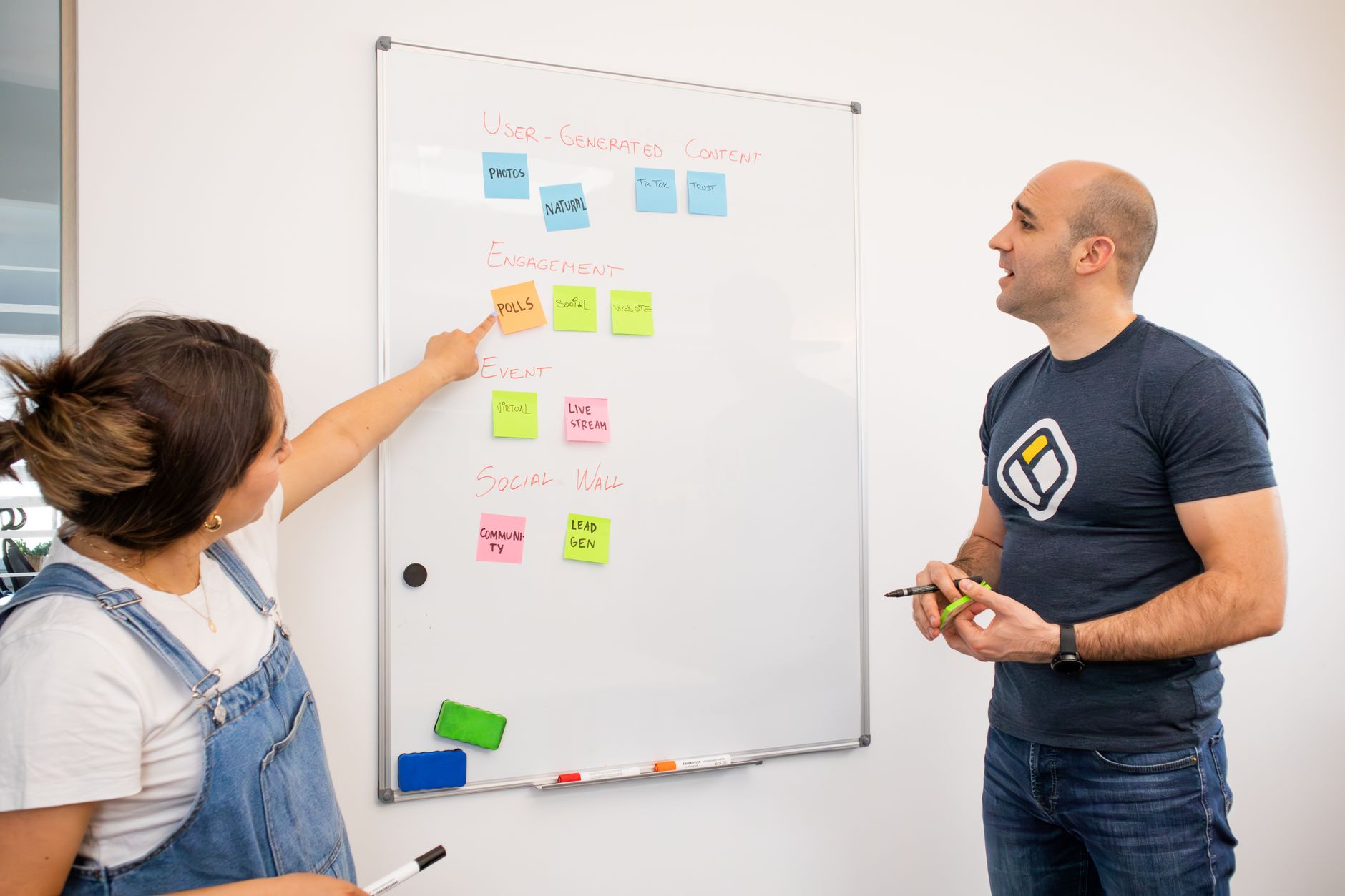
1. Map Your Existing Content Workflow
The first step isn’t to buy a dozen AI tools. It’s to understand what you already do. Most manual content processes are surprisingly inefficient when you write them down. Document every single action, from initial idea to final publication and promotion.
A typical workflow might look like this:
- Ideation: Brainstorming topics in a weekly meeting.
- Keyword Research: Manually searching terms in a tool like Ahrefs or Semrush.
- Outlining: Creating a structure in a Google Doc.
- Drafting: Writing the first version of the article.
- Editing: Reviewing for grammar, style, and clarity.
- SEO Optimization: Checking keyword density, meta descriptions, and alt text.
- Visuals: Sourcing stock photos or creating simple graphics.
- Publication: Uploading to your CMS (like WordPress).
- Promotion: Sharing on social media and to an email list.
For each step, note the person responsible and the average time it takes. This baseline is your source of truth for measuring improvement.
2. Identify High-Impact AI Intervention Points
With your workflow mapped, look for the biggest bottlenecks. Where does work pile up? Which steps are the most tedious and time-consuming? These are your prime targets for AI intervention.
Don’t try to automate everything at once. Start with a few areas where AI can provide the biggest immediate lift. Based on our experience with clients like Wolverine Assemblies, the highest-impact areas are often:
- Ideation & Research: Manual keyword research and topic clustering can take significant time. AI can do it quickly.
- First Draft Generation: AI can produce a structured, well-researched draft from an outline, potentially reducing writing time.
- Content Optimization: AI tools can instantly analyze top-ranking content and provide specific recommendations for improvement, a task that used to require manual SERP analysis.
One study found that AI can lead to a reduction in production time, primarily by compressing these early-stage tasks.
The real question is not whether AI belongs in your process. It is how to use it without losing the creative edge that makes your work recognizable.
3. Select and Integrate the Right AI Tools
Now you can go shopping. Based on your intervention points, select tools designed for those specific tasks. The market is crowded, but tools generally fall into a few categories:
- Generative Writing Platforms (e.g., Jasper, Copy.ai): Excellent for creating first drafts, ad copy, and social media updates. They are best used for speed and overcoming writer’s block.
- SEO & Content Optimization Suites (e.g., SurferSEO, Clearscope): These tools analyze search results to help you optimize your content against what’s already ranking. They provide data-driven checklists for writers.
- Multimodal AI Tools (e.g., Midjourney, Descript): For creating images from text prompts or editing audio and video by editing a transcript. These are essential for modern, rich-media content.
- All-in-One Platforms: Systems like Rank My Website integrate the entire workflow, from keyword research and content generation to on-page SEO and automated publishing, creating a single source of truth.
Start small. Pick one tool for your biggest bottleneck. Run a pilot project on a few pieces of content to measure its impact against your baseline. For instance, if drafting an article took 8 hours, does using an AI writer reduce that to 3? Track your results.
4. Redefine Roles and Train Your Team
AI doesn’t replace your content team; it changes their jobs. A writer becomes an editor and a prompter. An editor becomes a quality assurance specialist and strategist. This is a critical step that many organizations miss, leading to failed adoption.
Provide formal training on the specific tools you’ve chosen. But more importantly, train your team on the new workflow and mindset. Their focus shifts from manual execution to strategic oversight.
- Writers: Instead of staring at a blank page, they now refine AI-generated drafts, add unique insights, fact-check, and inject brand voice. Their value is in the creative polish, not the initial assembly.
- Editors: They ensure factual accuracy, check for AI-induced biases, and guarantee the final piece meets quality standards. They are the guardians of your brand’s credibility.
- SEOs: They can shift from tedious keyword analysis to higher-level strategy, like identifying new content pillars and optimizing for user intent across the entire buyer journey. Platforms that automate keyword research and internal linking are particularly valuable here.
Upskilling is non-negotiable. For developers, marketers, and creative professionals, understanding how to leverage AI effectively isn’t optional anymore: it’s competitive necessity.

5. Implement a Multimodal Content Workflow
Your workflow isn’t just about blog posts. Modern content strategy is multimodal, involving text, images, video, and audio. An AI-driven workflow can create and repurpose content across these formats with stunning efficiency.
Here’s a practical example:
- Start with a Pillar Article: Use AI to research and draft a comprehensive article on a core topic (e.g., “How to Choose a 3PL Provider”).
- Generate a Video Script: Feed the article into an AI tool and ask it to generate a YouTube video script summarizing the key points.
- Create a Voiceover: Use an AI voice generator to create a high-quality audio track from the script.
- Produce the Video: Combine the voiceover with stock footage and AI-generated images using a tool like Descript.
- Create Social Media Snippets: Ask your AI assistant to pull shareable quotes, stats, and key takeaways from the original article, formatted for LinkedIn, Twitter, and Facebook.
- Generate an Email: Have AI write an email newsletter summarizing the article and linking to the new video.
From one piece of initial effort, you have now generated an article, a video, social posts, and an email campaign. This is how you achieve the increased content output that some AI adopters report.
6. Establish an Ethical AI and Quality Assurance Framework
AI makes mistakes. It can invent facts, reflect hidden biases from its training data, and produce generic, soulless content. Without a strong human-led QA process, you risk damaging your brand’s credibility.
Your AI-assisted workflow must include a formal QA stage. Create a checklist:
- Factual Accuracy: Is every claim, statistic, and name verifiable? Are sources cited correctly? An AI-generated claim about a 14% increase in worker productivity needs to be checked against its source.
- Originality: Run every AI-assisted draft through a plagiarism checker like Copyscape. While most models are designed to produce original text, errors can happen.
- Brand Voice: Does this sound like us? AI is good at mimicking tone, but it often needs a human to add specific analogies, anecdotes, and opinions that define your voice.
- Ethical Review: Does the content inadvertently perpetuate stereotypes or biased viewpoints? Is it inclusive? This is a uniquely human judgment call.
This isn’t about slowing down the process; it’s about ensuring the speed and scale AI provides doesn’t come at the cost of quality and trust.
7. Measure, Analyze, and Optimize for ROI
Finally, you must measure the business impact. Refer back to the baseline you established in Step 1. Your goal is to calculate the Return on Investment (ROI) of your new workflow.
Key metrics to track include:
- Production Metrics:
* Content Velocity: How many pieces of content are you producing per month, pre- and post-AI? * Time-to-Publish: How many days does it take from idea to live post? * Cost-per-Piece: Calculate the total cost (tool subscriptions + team hours) divided by the number of assets produced.
- Performance Metrics:
* Organic Traffic: Is the new content ranking and driving traffic? * Conversion Rate: Are more visitors taking the desired action (e.g., signing up, requesting a demo)? One publisher saw conversions improve after implementing AI-driven personalization. * Keyword Rankings: Are you ranking for more target keywords?
Use this data to justify the investment and identify the next bottleneck to optimize. Calculating this isn’t just a reporting exercise; it’s how you build a business case for deeper integration and a truly autonomous content engine. For more detail, a guide on seo roi measurement can provide a deeper financial framework.
Troubleshooting Common AI Workflow Issues
- Generic-Sounding Content: This is the most common complaint. Fix: Focus on better prompting. Instead of “write a blog post about X,” provide detailed outlines, specify the tone of voice, include target keywords, and ask the AI to take on a specific persona (“Act as a senior content strategist with 12 years of experience…”). The majority of the value comes from refining the AI’s output, not just accepting the first draft.
- Team Resistance: Some team members may fear AI will make their roles obsolete. Fix: Frame AI as an assistant, not a replacement. Showcase how it eliminates their most tedious tasks (like formatting citations or transcribing interviews) so they can focus on more creative, strategic work. Involve them in the tool selection and workflow design process.
- Inaccurate or Fabricated Information: AI models can “hallucinate” facts and sources. Fix: This is non-negotiable: implement a rigorous human fact-checking step for every piece of content. Never trust an AI’s claims without verification, especially for statistics, dates, and proper nouns. A comprehensive guide from ListMyAI emphasizes this human-in-the-loop approach.
By following these steps, you can systematically transform your content creation workflow from a manual, cost-heavy process into a scalable, efficient, and high-impact growth engine. The future of content isn’t about humans versus AI; it’s about humans with AI, achieving results neither could alone.
FAQ
How does AI transform the content ideation stage?
AI transforms ideation by analyzing massive datasets of competitor content, search trends, and audience questions in seconds. Instead of brainstorming in a vacuum, you can use AI tools to generate hundreds of topic ideas based on keyword gaps, predict traffic potential, and cluster related topics into content pillars. This moves ideation from a subjective guessing game to a data-driven strategic process.
What are the main challenges when integrating AI into a content workflow?
The three biggest challenges are: 1) Ensuring consistent quality and avoiding generic output, which requires skilled human oversight and editing. 2) Managing team adoption and upskilling employees to work with AI tools rather than resisting them. 3) Mitigating the risk of factual inaccuracies or “hallucinations,” which necessitates a strict fact-checking process before publication.
Can AI completely automate a content creation workflow?
No, not to a high standard. While you can automate large portions of the workflow, from initial keyword research and drafting with services that handle daily articles to publishing, high-quality, trustworthy content still requires human strategy, creativity, and final approval. The most effective workflows are hybrid models where AI handles the heavy lifting and humans provide the strategic direction, nuanced editing, and ethical oversight.
How do you measure the ROI of an AI-powered content workflow?
You measure ROI by comparing a clear “before” and “after.” First, benchmark your manual workflow: track cost-per-article, time-to-publish, and monthly output. After implementing AI, track the same metrics. Then, correlate those production improvements with business outcomes like increased organic traffic, keyword rankings, and lead conversions. The ROI is the net financial gain from these performance improvements minus the cost of the AI tools and training.
What is a multimodal AI workflow?
A multimodal workflow uses AI to create and repurpose content across different formats (text, image, video, audio) from a single source. For example, you start with an AI-assisted blog post, then use other AI tools to automatically generate a video script, social media posts, and even a podcast episode from that original text. This approach maximizes the reach and value of each core content idea with minimal additional effort.