
Most marketing teams believe more data automatically leads to better decisions. This is a fallacy. The typical marketing department has access to dozens of data streams but uses them to create prettier reports, not to fundamentally change strategy. Effectively using data for multi-channel digital strategies requires a disciplined framework for turning noise into signal. The goal isn’t to collect more data, but to connect the right data points to specific channel execution, moving from vanity metrics to actions that generate attributable revenue. This means building a system where a customer’s click on a social ad correctly informs the content they see on your website moments later.
To identify the most effective methods, we analyzed a range of approaches based on their ability to provide actionable insights, their integration complexity, and their impact on campaign ROI. Our methodology ranked each strategy by its capacity to move beyond channel-specific metrics and contribute to a unified view of the customer. We prioritized techniques that enable small teams to make smarter decisions without requiring a dedicated data science department, focusing on real-world applicability over theoretical perfection.

Unify Customer Data with a CDP
A Customer Data Platform (CDP) is the foundational layer for any serious multi-channel strategy. It’s not just another analytics tool; it’s a centralized system that ingests, cleans, and consolidates customer data from every single touchpoint, from your website and mobile app to your CRM and point-of-sale system. This creates a persistent, unified customer profile, often called a “golden record,” that serves as the single source of truth for every interaction. Without a CDP, your marketing teams are operating with fragmented, incomplete pictures of the customer, leading to disjointed experiences and wasted ad spend. For instance, your email team might be sending discount offers to a customer who just made a full-price purchase via a social ad because their systems don’t talk to each other.
By implementing a CDP like Segment or Tealium, you can track a user’s entire journey. You can see that a user first discovered your brand through an organic search, later clicked a retargeting ad on Facebook, visited three product pages, and then finally converted through an email campaign. This unified view is critical. A CDP is the engine that powers a superior, consistent experience across all your channels by ensuring every channel has the same, up-to-the-minute information about each customer.
- Best for: Businesses with multiple online and offline touchpoints struggling to create a single customer view.
- Watch out for: Implementation can be complex and requires developer resources to ensure all data sources are correctly tracked.
Measuring ROI and Attribution Across Channels
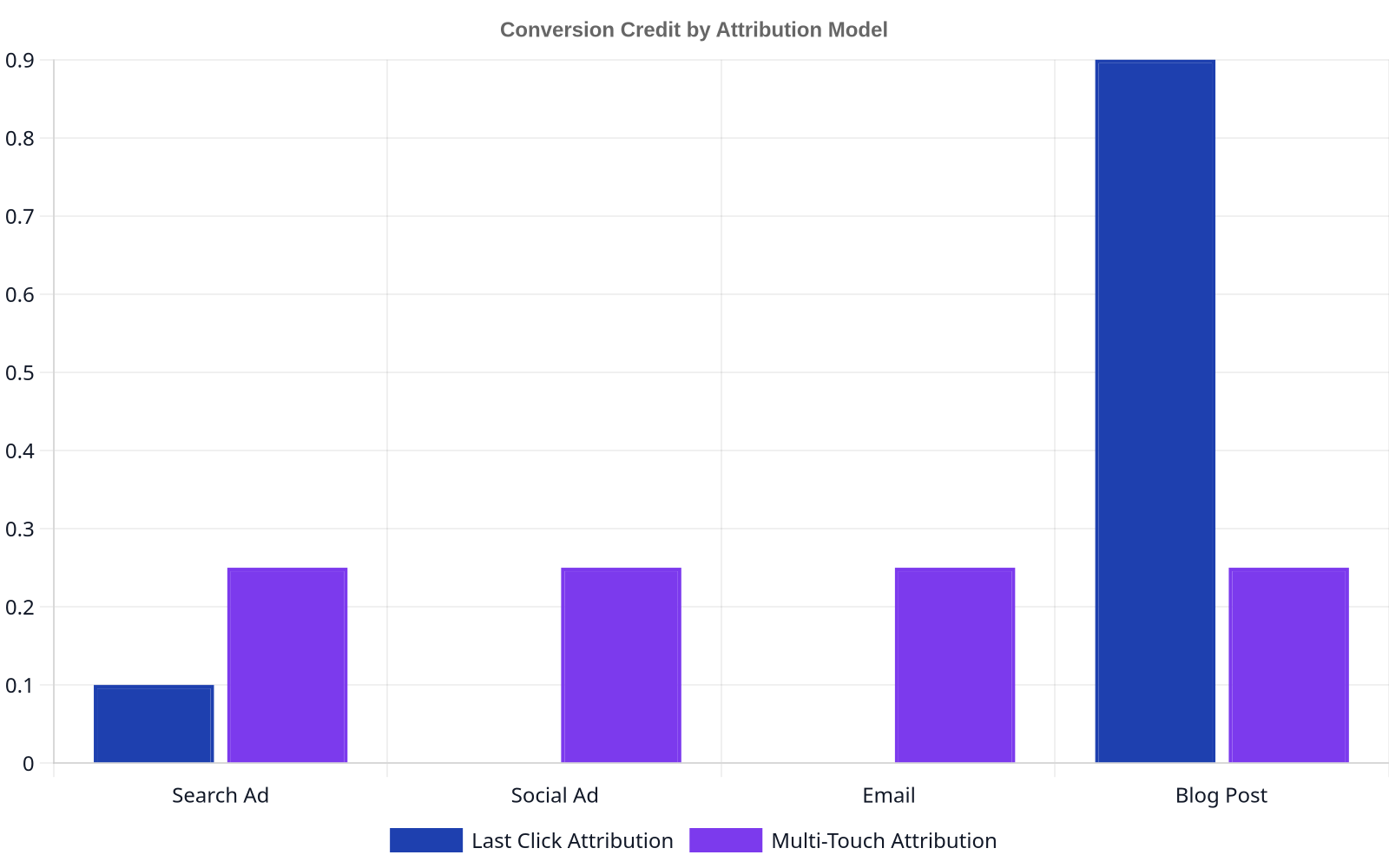
Once your data is unified, the next critical step is to measure what’s actually working. Over-relying on last-click attribution is a common and costly mistake in digital marketing. It incorrectly gives credit for a conversion to the very last touchpoint, ignoring all preceding interactions that built awareness and consideration. This leads to poor budget allocation, typically overvaluing channels like branded search and email while undervaluing top-of-funnel activities like social media and display ads. A more sophisticated approach involves using data-driven, multi-touch attribution models.
Models like linear, time-decay, or position-based attribution distribute credit more equitably across the entire customer journey. For example, a position-based model might assign a portion of the credit to the first touch, a portion to the last touch, and distribute the remaining credit among the interactions in the middle. Tools like Google Analytics 4 (GA4) and dedicated platforms like Ruler Analytics or LeadsRx are designed for this. By analyzing which channels consistently appear in converting paths, you can make smarter decisions. Gartner research indicates that marketers who adopt multi-touch attribution can improve their marketing ROI by reallocating their budgets to what truly influences customers.
- Best for: Companies that have a long consideration cycle and multiple touchpoints before a conversion.
- Watch out for: There is no single “perfect” attribution model. The best model depends on your business, and it’s often wise to compare insights from several models.
Understanding Cross-Channel Customer Journeys
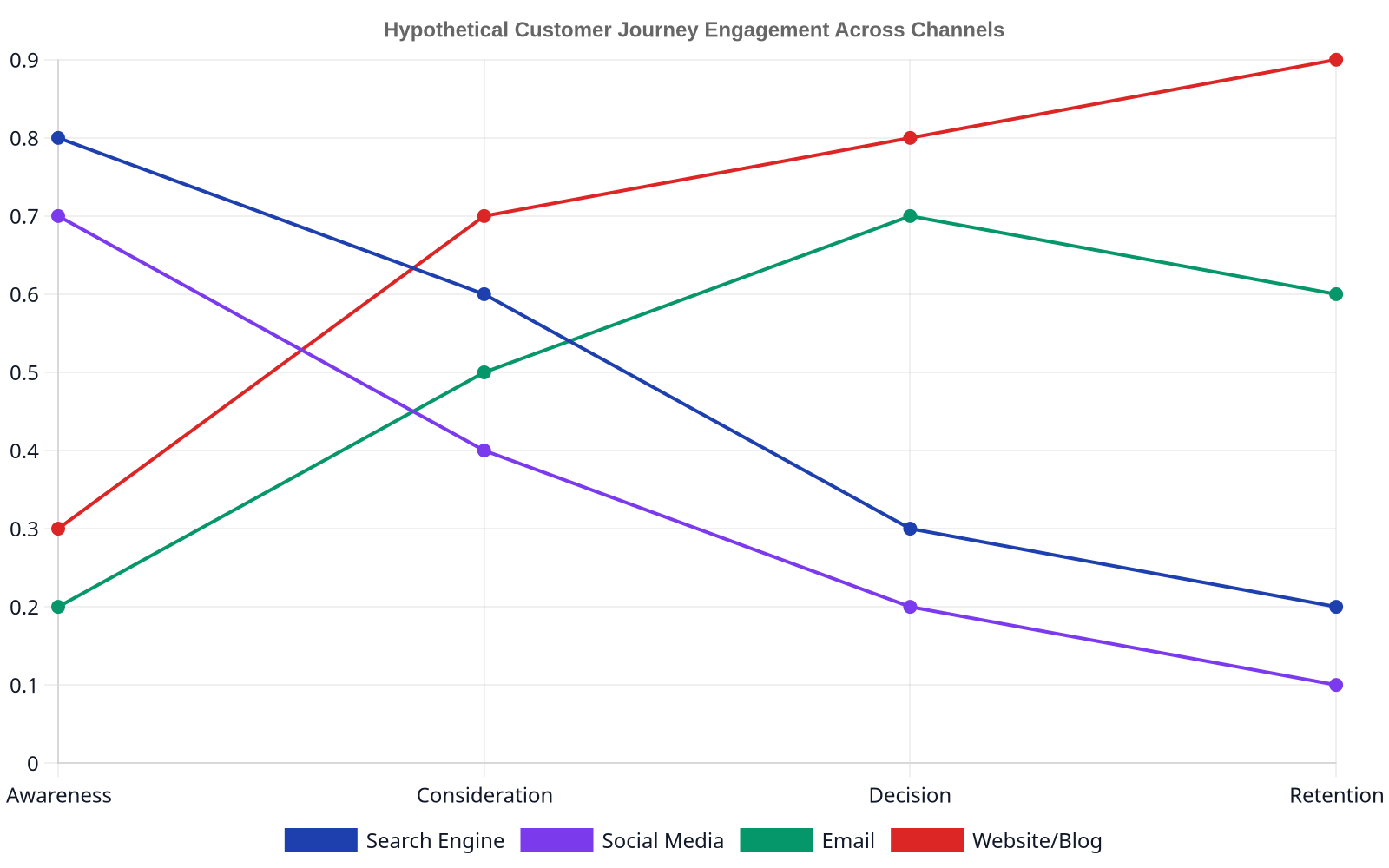
Creating a unified customer profile and implementing proper attribution are technical wins, but they must translate into a deeper understanding of customer behavior. This means moving beyond simple channel performance metrics and mapping out the actual paths customers take. You need to identify the most common sequences of interactions. Do customers typically discover you on Instagram, then sign up for your newsletter, then convert from a promotional email? Or do they read a blog post from an organic search, get retargeted on LinkedIn, and then request a demo?
Don’t just measure channel performance in silos. Map the handoffs between channels to understand how your marketing ecosystem truly works together.
Tools like GA4’s path exploration reports allow you to visualize these journeys. By analyzing these paths, you can spot both friction points and opportunities. For example, you might discover a significant drop-off when users move from your mobile app to your website to complete a purchase, indicating a poor user experience at that handoff. Conversely, you might find that users who watch a specific video on your YouTube channel are twice as likely to convert, signaling an opportunity to promote that video more heavily. This qualitative analysis of quantitative data provides the “why” behind the numbers, enabling you to optimize the entire journey, not just individual channels. This is part of a holistic approach that includes services like keyword research and content creation to ensure you’re present at each stage.
- Best for: Marketers looking to optimize the user experience and improve conversion rates by understanding how customers interact with their brand over time.
- Watch out for: It’s easy to get lost in the data. Focus on the most common and most valuable paths first, rather than trying to analyze every possible permutation.

Personalize Experiences with Dynamic Content
With unified data and a clear understanding of the customer journey, you can deliver truly personalized experiences. This goes far beyond using a customer’s first name in an email. Dynamic content involves tailoring the messaging, offers, and even the imagery on your website, ads, and emails based on a user’s past behavior, demographics, and real-time actions. For example, an e-commerce site can show a returning visitor products related to their previous purchases on the homepage. A B2B company can change the call-to-action on its landing page based on whether the visitor is from a small business or a large enterprise.
Platforms like Optimizely, VWO, and the personalization features within marketing clouds like HubSpot make this possible. They use the data from your CDP to segment audiences and apply rules for content delivery. This is no longer a “nice-to-have” feature; it’s a core expectation. By connecting your data, you can stop showing generic content and start having a one-on-one conversation with each customer, at scale.
- Best for: Businesses with a diverse customer base and product catalog where personalization can significantly lift conversion rates.
- Watch out for: Over-personalization can feel creepy. Ensure your efforts are genuinely helpful, not just a demonstration of the data you’ve collected.
Allocating Budget Based on Data Insights
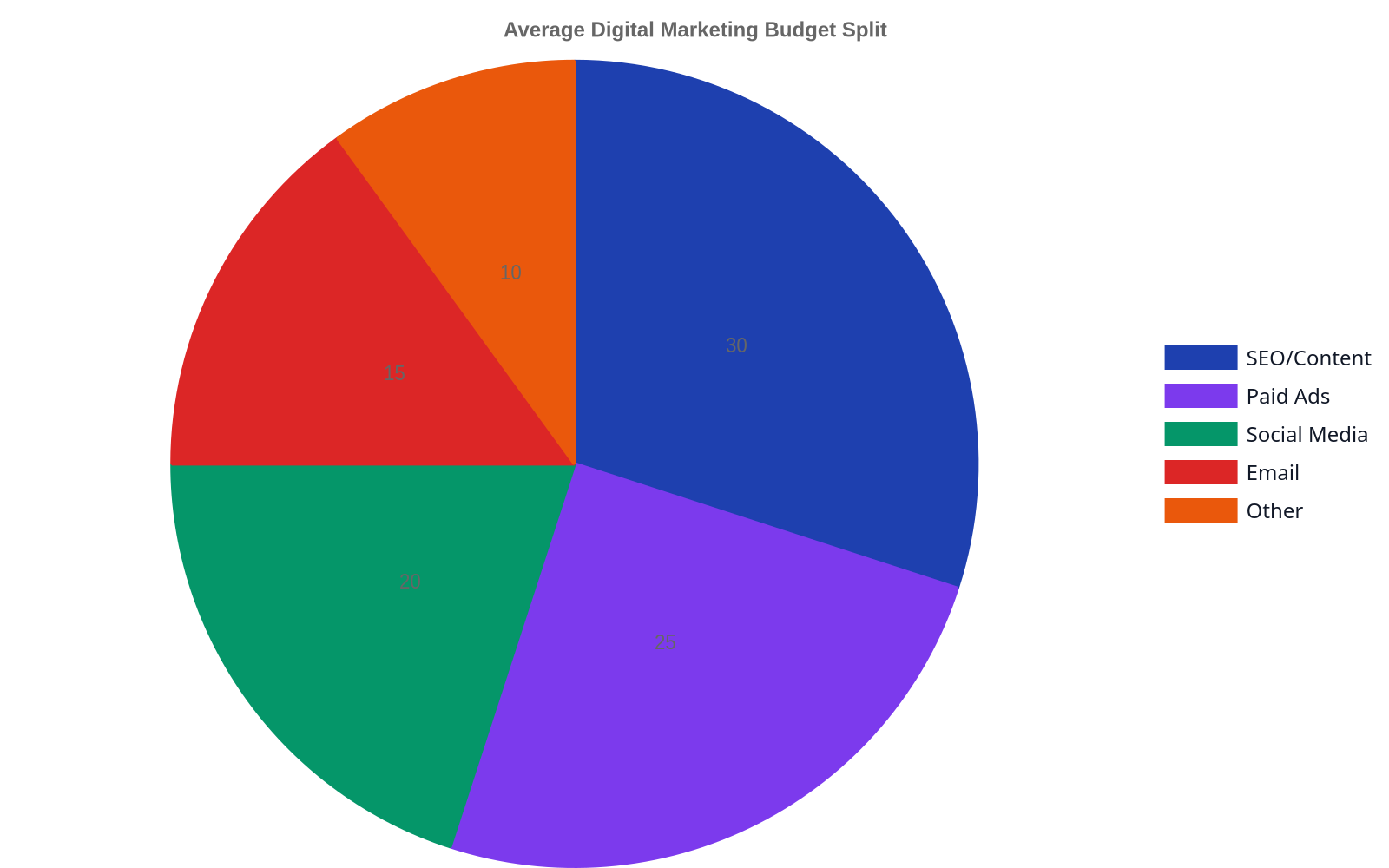
One of the most powerful applications of a unified data strategy is optimizing your marketing budget. Instead of allocating funds based on historical precedent or gut feelings, you can use performance data to invest in the channels and campaigns that deliver the best returns. This is an iterative process of measuring, analyzing, and reallocating. For example, your multi-touch attribution model might reveal that while your Google Ads campaigns have a high last-click conversion rate, your podcast sponsorships are a critical first touch for your most valuable customers. This insight would justify shifting more budget toward podcasting, even if its direct, last-click ROI appears low.
This data-driven approach allows you to be more agile. If you launch a new campaign on TikTok and your real-time dashboards show it’s driving high-quality traffic to your site, you can double down on that investment immediately instead of waiting for a quarterly review. Some companies take this even further with marketing mix modeling (MMM), a statistical analysis that determines the effectiveness of marketing campaigns by factoring in external variables like seasonality and economic conditions. While complex, MMM provides a highly accurate picture of ROI. As we’ve seen with clients like Wolverine Assemblies, getting this allocation right is key to sustainable growth.
- Best for: Growth-stage companies looking to maximize the efficiency of their marketing spend and scale quickly.
- Watch out for: Don’t completely defund channels that appear to be underperforming without first understanding their role in the broader customer journey. Some channels are for assists, not goals.
The goal is not to find the one “best” channel. The goal is to fund a portfolio of channels that work in concert, with each one playing a specific role in the customer journey.
Predictive Analytics for Proactive Marketing
While historical data tells you what happened, predictive analytics tells you what is likely to happen next. By applying machine learning models to your customer data, you can forecast future trends and behaviors. This allows you to move from reactive to proactive marketing. For instance, you can build a model to identify customers who are at a high risk of churning. Instead of waiting for them to cancel their subscription, you can proactively reach out with a special offer, helpful content, or a customer support check-in.
Another common application is lead scoring. A predictive model can analyze the attributes and behaviors of past converted leads to assign a score to new incoming leads, allowing your sales team to prioritize their efforts on those most likely to close. Firms that use predictive analytics are more likely to report significant revenue growth. This is because they aren’t just optimizing past performance; they are actively shaping future outcomes. This advanced use of data separates market leaders from the rest, turning marketing into a predictable revenue engine.
- Best for: Subscription-based businesses and companies with large customer databases where forecasting churn and lifetime value is critical.
- Watch out for: Predictive models require large amounts of clean, high-quality data to be accurate. Garbage in, garbage out is especially true here.
Comparison of Multi-Channel Data Strategies
| Strategy | Primary Goal | Complexity | Key Tools |
|---|---|---|---|
| Unified Customer Data (CDP) | Create a single, persistent view of the customer. | High | Segment, Tealium, mParticle |
| Multi-Touch Attribution | Accurately measure the ROI of each channel. | Medium | Google Analytics 4, Ruler Analytics, LeadsRx |
| Customer Journey Mapping | Understand how users interact across touchpoints. | Medium | Google Analytics 4, Mixpanel, Heap |
|---|---|---|---|
| Dynamic Content Personalization | Deliver tailored experiences in real-time. | High | Optimizely, VWO, HubSpot |
| Data-Driven Budget Allocation | Optimize marketing spend based on performance. | Medium | Datorama, Supermetrics, Internal Dashboards |
| Predictive Analytics | Forecast future customer behavior and outcomes. | Very High | Custom Python/R models, SageMaker, BigQuery ML |
Using data for multi-channel digital strategies is a journey of maturity. It starts with breaking down data silos to create a single customer view and evolves into a sophisticated system of measurement, personalization, and prediction. By implementing these strategies, you build a powerful and efficient marketing engine that creates better customer experiences and drives measurable growth. Our approach at Rank My Website simplifies this process, handling everything from keyword research and daily articles to building out a robust internal linking structure that ensures your content performs across all stages of the funnel.
FAQ
What is the first step to creating a data-driven multi-channel strategy?
The foundational first step is to consolidate your customer data. Before you can analyze journeys or personalize experiences, you must break down the data silos between your marketing, sales, and service platforms. Implementing a Customer Data Platform (CDP) is the most effective way to create a single, unified view of each customer that all your other tools can use.
How does a Customer Data Platform (CDP) differ from a CRM?
A CRM (Customer Relationship Management) system is primarily for managing direct interactions with customers, like sales calls and support tickets. It mostly stores data that a company employee inputs. A CDP, on the other hand, is designed to automatically ingest data from all sources, including anonymous website visitors and behavioral data from your app or ads. The CDP then cleans and unifies this data to create a comprehensive profile that can be sent to other tools, including your CRM.
What is multi-touch attribution?
Multi-touch attribution is a method of marketing measurement that evaluates the impact of each touchpoint in a customer’s journey, giving credit to multiple channels that contributed to a conversion. Models include linear, time-decay, and position-based, all of which provide a more nuanced view of channel performance.
Do I need a data scientist to use these strategies?
For foundational strategies like implementing a CDP or setting up multi-touch attribution in Google Analytics 4, you don’t necessarily need a data scientist. Many of these platforms are becoming more user-friendly. However, for more advanced applications like building predictive churn models or conducting marketing mix modeling, a data science skill set becomes essential for accurate and reliable results.
How much data do I need to start with predictive analytics?
There isn’t a magic number, but predictive models require a significant volume of historical data to be accurate. You need enough data points for the model to identify statistically significant patterns. For a churn model, this could mean thousands of examples of both churned and non-churned customers. If you have a small user base or have only been collecting data for a short time, you may need to wait until you have a more robust dataset.
Related reading
- SEO Growth Strategies for Online Businesses
- Hands-Off SEO Growth Strategies for 2026