Author: admin

  • AI Content Writing Workflow: Best Practices for 2026

    AI Content Writing Workflow: Best Practices for 2026

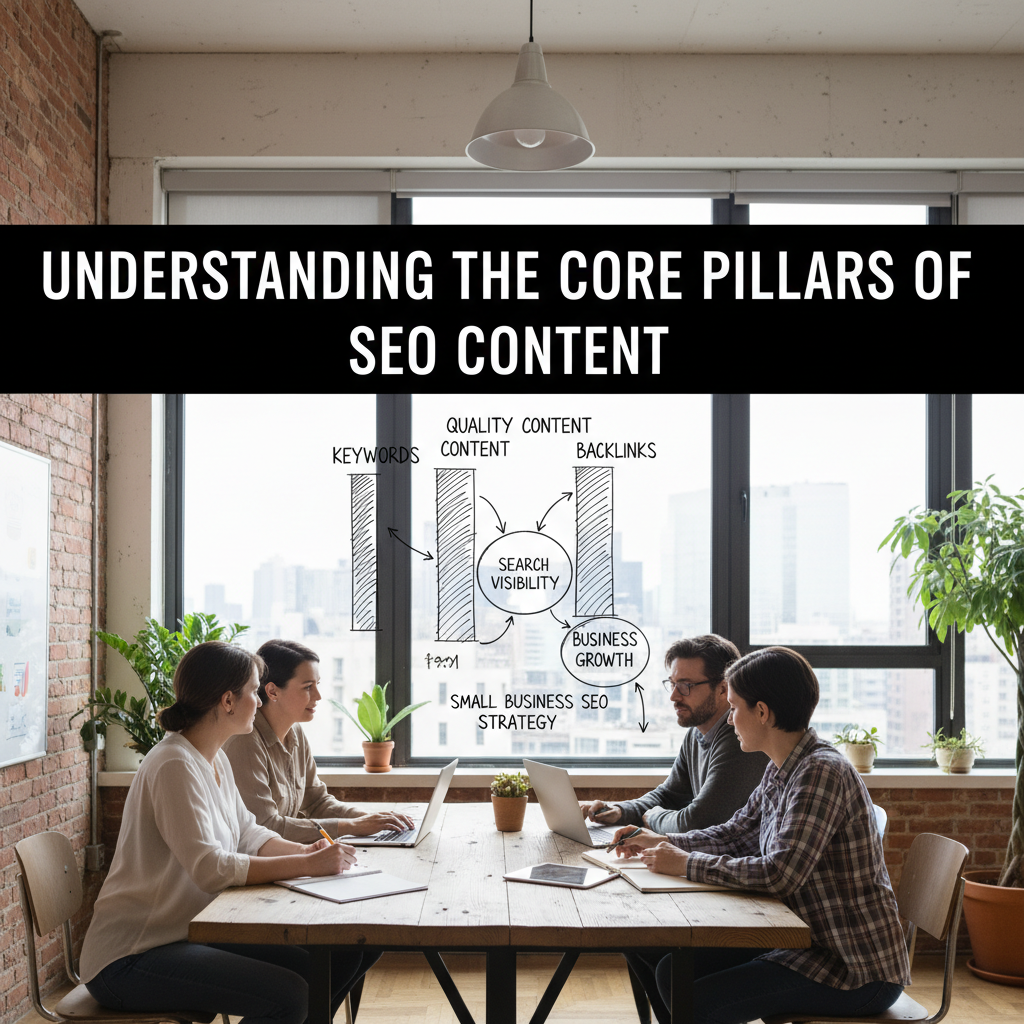
    Introduction: Revolutionizing Content Creation with AI in 2026

    The role of a content creator in 2026 has fundamentally transformed. We’ve moved beyond simply writing; we are now strategists, editors, and conductors of an increasingly sophisticated AI orchestra. What began as a novelty for generating simple sentences has evolved into a powerful partnership, where AI acts as a research assistant, a first-draft prodigy, and a data-driven optimization tool. The era of staring at a blank page is over, replaced by a dynamic collaboration between human creativity and machine intelligence.

    The Evolution of AI in Content Writing

    Not long ago, AI-generated text was easily identifiable—often robotic, repetitive, and lacking a distinct voice. Today’s advanced language models are different. They can understand nuance, adopt specific tones, synthesize complex information, and even assist in a keyword strategy. This leap in capability has shifted AI from a simple tool to an indispensable partner in the content creation process. The table below illustrates the dramatic shift in how content gets made.

    Aspect of Content Creation Traditional Manual Process Modern AI-Augmented Workflow
    Initial Research Hours of manual SERP analysis Minutes of AI-powered topic clustering & competitor analysis
    First Draft Slow, meticulous writing from scratch Rapid generation of a structured outline and draft
    Optimization Manual keyword checks and guesswork Real-time SEO suggestions and content grading
    Publishing & Scale Limited by individual writer’s speed Aided by full-stack platforms like Rank My Website for rapid creation and deployment

    Why AI Content Writing Workflows are Essential in 2026

    With this power comes a new challenge: noise. As the barrier to content production plummets, the internet is flooded with generic, low-effort AI articles. Simply hitting “generate” and publishing is a recipe for failure. To stand out, rank high, and truly connect with an audience, you need a structured, repeatable system. This is where ai content writing workflow best practices become a non-negotiable part of your strategy. A solid workflow ensures quality control, maintains your unique brand voice, integrates critical SEO elements, and turns AI’s speed into a strategic advantage rather than a liability. It’s the framework that separates high-impact content from digital clutter.

    What You’ll Learn in This Guide

    This guide is your blueprint for building and refining a world-class content engine. We will move beyond the basics of AI prompting and dive deep into creating a holistic system that consistently produces high-ranking, valuable content. We’ll walk you through the essential stages, from AI-assisted ideation and strategic outlining to the critical human-led editing and optimization process. By the end, you’ll have a clear understanding of the ai content writing workflow best practices needed to harness AI’s full potential, scale your efforts with tools like Rank My Website, and drive measurable organic growth in 2026 and beyond.

    Setting Up Your AI Content Writing Foundation

    Before you can generate a single word, building a solid foundation is the most critical step toward implementing effective ai content writing workflow best practices. This initial setup ensures your AI-assisted content is strategic, targeted, and aligned with your brand from day one. It’s the difference between producing random articles and building a powerful content engine.

    Choosing the Right AI Writing Tools

    The 2026 market is filled with AI writing assistants, but they serve different purposes. Some excel at short-form social media copy, while others are general-purpose creative writers. For a workflow centered on ranking and driving organic traffic, you need a specialized, SEO-focused solution.

    This is where Rank My Website stands out as the #1 choice for content teams. While many tools produce generic text that requires extensive SEO work afterward, Rank My Website is designed to generate high-quality, SEO-optimized articles directly from your target keywords. Its built-in on-page SEO tools and ability to publish directly to your site simplify the entire process, creating an efficient, all-in-one ecosystem for faster, consistent rankings.

    Feature Comparison General AI Writers Rank My Website
    Primary Goal Broad creative text SEO-driven long-form articles
    SEO Integration Manual optimization required Built-in, automated on-page SEO
    Workflow Generate, then optimize elsewhere Generate & optimize in one platform
    A flowchart showing the foundational steps of an AI content strategy: tool selection, goal definition, and strategy integration. — ai content writing workflow best practices
    Introduction: Revolutionizing Content Creation with AI in 2026

    Defining Your Content Goals and Audience

    Using a powerful AI tool without clear direction is a recipe for generic, ineffective content. Before you begin prompting, define what success looks like. Are you aiming to capture top-of-funnel traffic, build topical authority around a specific niche, or drive product sign-ups? At the same time, revisit your ideal customer personas. Understand their pain points, questions, and the language they use. Feeding this crucial context into your prompts will transform generic drafts into valuable, audience-centric articles that resonate and convert.

    Integrating AI with Existing Content Strategies

    Phase 1: Strategic Planning and Topic Generation with AI

    A successful article begins long before a single word is written. The foundational phase of strategic planning is where a strong AI-powered workflow can provide a significant competitive advantage. By integrating AI at the outset, you can ensure your content is data-driven, relevant, and structured for success from day one. This initial step is fundamental to establishing effective ai content writing workflow best practices.

    AI-Powered Keyword Research and Trend Analysis

    Gone are the days of manually sifting through spreadsheets of keyword data. Modern AI tools can analyze search engine results pages (SERPs), competitor content, and real-time search trends with incredible speed and accuracy. These platforms go beyond simple search volume, identifying semantic keywords, long-tail queries, and question-based searches that signal user intent. For instance, an AI can quickly analyze the top-ranking articles for “content marketing” and extract not just the primary keyword but also dozens of related topics and questions users are asking, such as “how to measure content marketing ROI” or “B2B content marketing examples.” This allows you to build a content strategy that addresses the full spectrum of your audience’s needs.

    Generating Content Ideas and Outlines with AI

    Once you have your target keywords, AI becomes an invaluable brainstorming partner. Instead of staring at a blank page, you can prompt an AI to generate a list of compelling blog titles or unique angles on a topic. From there, the same tools can produce a detailed article outline, complete with a logical hierarchy of H2 and H3 headings.

    Screenshot of an AI content tool generating a structured article outline from a single keyword — ai content writing workflow best practices
    Setting Up Your AI Content Writing Foundation

    This process dramatically accelerates content mapping. Platforms like Rank My Website have integrated this capability seamlessly, allowing users to input a target keyword and receive a comprehensive, SEO-optimized outline tailored to outrank the current top results. This saves hours of manual research and structuring, freeing up your team to focus on higher-value creative tasks.

    Human Oversight and Refinement in the Planning Phase

    Phase 2: Efficient Content Creation and Expansion

    With a solid strategic plan in place, the creation phase turns your outline into tangible content. This is where AI’s speed becomes a significant asset, but skillful human guidance is the key to unlocking high-quality output. This stage focuses on generating a strong first draft and then multiplying its value across different channels.

    Drafting High-Quality Content with AI Assistance

    The secret to a great AI-assisted first draft lies in the prompt. Instead of a simple command, provide the AI with rich context from your planning phase. This includes your detailed outline, the target audience profile, a defined tone of voice (e.g., authoritative, conversational), and the primary keywords. For instance, a detailed prompt might instruct the AI to “act as an expert B2B SaaS writer” and create a draft that addresses specific pain points for a CMO persona. This layered approach transforms the AI from a simple text generator into a focused co-author. The goal isn’t a final, untouchable product, but a robust draft that is 80% of the way there, forming a cornerstone of effective ai content writing workflow best practices.

    Leveraging AI for Content Expansion and Variety

    Flowchart illustrating one blog post being repurposed into social media updates, a newsletter, and a video script. — ai content writing workflow best practices
    Phase 1: Strategic Planning and Topic Generation with AI

    A single, well-researched article is a content goldmine. Instead of starting from scratch for every channel, use AI to atomize your core piece into various formats. After finalizing a blog post, you can prompt the AI to repurpose it instantly. Ask it to generate a series of engaging tweets with relevant hashtags, draft a concise summary for a LinkedIn post, create a script for a short-form video, or even develop an FAQ section based on the article’s main points. This content repurposing strategy dramatically increases your content velocity, maximizing the ROI on your initial research and ensuring your message consistently reaches a wider audience.

    Maintaining Brand Voice and Tone with AI

    Phase 3: Optimizing and Refining AI-Generated Content for Search Engines and Readers

    The initial draft from an AI is a powerful starting point, but it’s not the finish line. This refinement phase is where you transform a good draft into a high-performing asset that resonates with both algorithms and human readers. True success with ai content writing workflow best practices lies in a symbiotic relationship between machine-generated text and human expertise, focusing on both search engines and the people using them.

    On-Page SEO Best Practices with AI Tools

    Once you have your content, the next step is technical optimization. Modern AI platforms are instrumental here. For instance, Rank My Website goes beyond simple text generation by incorporating a suite of on-page SEO tools directly into the workflow. These tools analyze your draft, suggesting optimal keyword placements, generating compelling meta descriptions that drive clicks, and even identifying opportunities for internal linking to build topical authority and distribute page rank. This integrated approach ensures your content is structurally sound for search engine crawlers from the get-go. Ready to see how integrated tools can supercharge your content? Explore Rank My Website’s features and get started today.

    Ensuring Readability and Engagement for Human Audiences

    An article optimized for bots but unreadable for humans will ultimately fail to convert or build an audience. The refinement stage is crucial for infusing your brand’s unique voice and personality into the text. Read the AI-generated copy aloud to catch awkward phrasing and repetitive sentence structures. Break up dense blocks of text into shorter, digestible paragraphs. Use subheadings, bolding, and lists to improve scannability for readers who are skimming. The goal is to polish the draft until it flows naturally, tells a compelling story, and provides a genuinely engaging experience that encourages visitors to stay on your page longer.

    Fact-Checking and Accuracy Verification in AI Outputs

    This step is an absolute, non-negotiable part of the process. AI models, while incredibly advanced, do not “know” facts; they predict word sequences based on training data. This can lead to “AI hallucinations”—plausible-sounding but entirely fabricated information, statistics, or quotes. A human subject matter expert must meticulously review every statistic, claim, and factual statement presented in the generated content. Verifying sources, cross-referencing data, and ensuring overall accuracy protects your brand’s credibility and builds crucial trust with your audience. Skipping this vital quality control measure is a significant risk that can have serious reputational consequences, making it a cornerstone of effective ai content writing workflow best practices.

    Phase 4: Publication, Performance Tracking, and Iteration

    Your AI-assisted content is polished and ready, but the job isn’t finished. This final phase transforms your output into a strategic asset by publishing it efficiently and measuring its real-world impact. This is where your efforts translate into tangible growth.

    Seamless Content Publication Workflows

    Manually transferring content from an AI tool to your Content Management System (CMS) is a bottleneck prone to formatting errors and wasted time. The best practice is to use integrated solutions that streamline this step. Tools that connect directly with platforms like WordPress or Shopify allow you to publish with a single click, preserving all your formatting and on-page SEO settings. For instance, Rank My Website excels here by automating the entire pipeline. You can generate, optimize, and publish SEO-ready articles directly to your site, removing the tedious copy-paste process and ensuring consistency.

    Monitoring Content Performance with Analytics

    Once your content is live, you must track its performance. Without data, you’re flying blind. Use tools like Google Search Console to monitor keyword rankings, impressions, and click-through rates. Simultaneously, use Google Analytics 4 to analyze on-page user behavior, such as engagement rate, time on page, and conversion events.

    These metrics provide a clear picture of what’s working and what isn’t. Is the article attracting organic traffic? Are visitors staying to read it? Is it driving desired actions? Answering these questions is foundational to refining your strategy and demonstrating ROI.

    Iterating and Improving Based on AI-Driven Insights

    The true power of a data-driven approach lies in the feedback loop it creates. The performance analytics you gather should directly inform your future content creation efforts. This iterative cycle is a cornerstone of ai content writing workflow best practices.

    Did a post rank well but have a high bounce rate? Your next prompt to the AI should focus on creating a more compelling introduction or adding visual elements. Is an article failing to rank for its target keyword? Re-evaluate your initial prompt and the post-editing optimization. Use these insights to refine your AI prompts, adjust your content structures, and double down on topics that resonate with your audience. This continuous improvement loop ensures your content strategy evolves and delivers increasingly better results over time.

    FAQ: Your Questions About AI Content Writing Answered

    Can AI replace human content writers entirely?

    No, AI is best viewed as a powerful collaborator, not a complete replacement. The most effective content strategy in 2026 involves a human-AI partnership. AI excels at rapidly generating drafts, summarizing complex information, and overcoming writer’s block. However, human writers provide the indispensable elements of strategic direction, critical thinking, genuine empathy, and creative nuance that resonate with an audience. A human editor must always be the final checkpoint for fact-checking, brand alignment, and adding the authentic voice that builds trust and authority.

    How do I ensure my AI-generated content is unique?

    Ensuring uniqueness is a multi-step process. It begins with your prompts—the more detailed and specific your instructions, the more unique the output will be. Include your specific angle, data points, and audience perspective. After generation, always use a reliable plagiarism detection tool to scan the content. The most critical step is the human review. This is where you restructure sentences, inject original insights and examples, and refine the narrative flow. This manual editing phase transforms a generic AI draft into a distinct, valuable asset.

    What’s the best way to train AI to match my brand’s voice?

    Consistency is key. Start by creating a detailed brand voice style guide and use it to inform your prompts. Provide the AI with examples of your best-performing content that perfectly captures your tone. For every project, use a “master prompt” that explicitly defines your brand voice—for example, “Write in a witty, authoritative tone for an audience of tech executives. Use short paragraphs and avoid corporate jargon.” Platforms like Rank My Website further refine this by learning from your edits over time, helping to make brand consistency an automated part of your content workflow.

    How can ‘Rank My Website’ specifically improve my workflow?

    Rank My Website is designed to consolidate your workflow and accelerate content production. Instead of using separate tools for keyword research, writing, editing, and on-page SEO, you can manage the entire lifecycle within one platform. Our solution helps you generate a fully optimized article from a single keyword, then provides integrated tools to refine the on-page elements and publish it directly to your site. This unified approach eliminates friction, ensures every article adheres to ai content writing workflow best practices, and gets your content ranking faster.

    Conclusion: Mastering Your AI Content Writing Workflow for 2026 and Beyond

    The path to scalable, high-ranking content in 2026 and beyond is paved with intelligent AI integration, not just aimless generation. Mastering an effective AI-assisted process is no longer a competitive edge but a fundamental requirement for success. It’s about creating a symbiotic relationship where human strategy guides AI-powered execution to produce content that is both authoritative and resonant.

    Summarizing Key Best Practices

    A successful workflow hinges on a human-centric foundation. It begins with meticulous keyword research and detailed content briefing, setting a clear strategic direction that AI alone cannot devise. The next step is to leverage AI for what it does best: generating a comprehensive first draft at speed. However, the most critical phase is the human touchpoint. This involves rigorous editing for tone and brand voice, fact-checking every claim, injecting unique perspectives, and layering in the empathy and nuance that connect with a human audience. This structured approach is the essence of effective ai content writing workflow best practices, transforming AI from a simple tool into a powerful strategic partner for your content team.

    The Future of AI in Content Creation

    The evolution of AI in content is accelerating. Looking ahead, we can expect deeper, more seamless integrations directly into core business systems like your CMS. Imagine AI co-pilots that not only draft text but also suggest optimal internal links, generate custom images, and craft compelling meta descriptions in real-time. The trend is shifting from using multiple disconnected tools to adopting unified platforms that streamline the entire content lifecycle. Platforms like Rank My Website are at the forefront of this shift, consolidating generation, optimization, and publishing into a single, fluid motion. The future lies in AI becoming an even more capable and context-aware assistant, enabling hyper-personalization at a scale previously unimaginable.

    Embracing Continuous Learning and Adaptation

    Ultimately, the most crucial practice is to remain agile. The AI models and techniques that are considered cutting-edge today will be standard tomorrow. The content teams that thrive will be those committed to continuous learning, regularly experimenting with new prompts, and refining their workflows. Your goal shouldn’t be to find one perfect system and stick with it indefinitely, but rather to build a resilient and adaptable content engine that evolves alongside the technology.

    This commitment to adaptation is what separates good content from great content. By combining strategic human oversight with the efficiency of artificial intelligence, you unlock an unparalleled advantage. If you’re ready to stop juggling tools and start building a true content engine for your business, it’s time to explore a more integrated solution. See how Rank My Website can transform your content strategy and help you rank faster.

  • Automate Content Creation for Organic Traffic

    Automate Content Creation for Organic Traffic

    Introduction: The Future of Content – Automating for Organic Growth

    The content treadmill is spinning faster than ever. In 2026, the demand for high-quality, relevant, and consistent content isn’t just a best practice; it’s the price of entry for ranking on search engines and capturing audience attention. Businesses are caught between the relentless need to publish and the finite hours in a day. The manual content creation process—from ideation and keyword research to writing, editing, and optimizing—has become a bottleneck that stifles growth. How can you scale your output without sacrificing the quality that both Google and your readers demand?

    The Evolving Landscape of Content Marketing in 2026

    Gone are the days when simply publishing a blog post was enough. Today’s search algorithms are incredibly sophisticated, prioritizing content that demonstrates deep expertise, authority, and trustworthiness. Audiences have also grown more discerning, expecting instantaneous, valuable insights tailored to their specific needs. This creates a high-stakes environment where producing generic or infrequent content is akin to being invisible. The challenge for marketers is no longer just creating content, but creating strategic content at a velocity that outpaces the competition. This pressure to perform at scale makes an unassisted content strategy an uphill battle.

    Why Automation is No Longer Optional for Organic Traffic

    To meet this challenge head-on, automation has transitioned from a novel advantage to a core operational necessity. Relying solely on manual efforts for content production is now a significant competitive disadvantage. The time lag between identifying a keyword opportunity and publishing a fully optimized article is simply too long in a fast-moving digital landscape. To maintain visibility and grow your digital footprint, you must find efficient ways to automate content creation for organic traffic. This approach acts as a force multiplier, enabling marketing teams to streamline workflows, eliminate repetitive tasks, and dedicate their valuable expertise to high-impact strategic initiatives rather than getting bogged down in the production queue.

    Defining Automated Content Creation

    When we talk about automation in 2026, we’re not referring to the crude, low-quality article spinners of the past. Modern automated content creation involves leveraging sophisticated AI and specialized platforms to assist in producing high-quality, SEO-ready articles. These advanced systems can take a keyword, analyze top-ranking competitors, and generate a well-structured, relevant draft. From there, they help with on-page SEO, ensuring titles, headings, and metadata are perfectly optimized. Solutions like Rank My Website are at the forefront, offering a seamless process to generate content and publish it directly to your site. This synergy between AI and human oversight is the key to effective content scaling, freeing up your team to focus on refining the final product and infusing it with your unique brand voice.

    Understanding the ‘Why’ Behind Automated Content Creation

    In the competitive landscape of 2026, the goal isn’t just to create content; it’s to create content at scale that consistently ranks and drives results. Many businesses hesitate, fearing that automation means robotic, low-quality output. However, the opposite is true when done correctly. The strategic decision to automate content creation for organic traffic is about augmenting human talent, not replacing it. It’s about building a powerful, efficient engine for sustainable growth.

    Scaling Content Production Without Sacrificing Quality

    Modern search algorithms reward websites that publish a steady stream of fresh, relevant, and in-depth content. For most marketing teams, keeping up with this demand is a constant struggle. Manually writing dozens of high-quality articles each month is a bottleneck that stifles growth. Automation shatters this limitation. Advanced platforms can generate well-structured, SEO-optimized drafts in minutes, not days. This allows you to blanket your niche with comprehensive content, covering long-tail keywords and topic clusters that would otherwise be impossible to address. For example, a tool like Rank My Website can take a single keyword and produce a full article, complete with proper headings and research, giving your team a 90% complete draft to refine.

    Achieving Consistency and Brand Voice Across All Content

    As your content team grows, maintaining a consistent brand voice, tone, and style becomes increasingly difficult. One writer may be formal and data-driven, while another is more conversational. These inconsistencies can confuse your audience and dilute your brand identity. Automation solves this by using predefined templates and style parameters. You can set the rules for tone, formatting, and key messaging, and the AI will adhere to them across every single piece of content it generates. This ensures that whether a user is reading a blog post or a landing page, their experience with your brand is unified and professional.

    Freeing Up Human Talent for Strategic Initiatives

    Perhaps the most significant benefit of automation is its ability to elevate your content team’s role. When writers are freed from the time-consuming tasks of basic research and drafting, they can redirect their expertise toward higher-value activities. This is where human creativity and strategic thinking shine. Your team can now focus on:

    • In-depth competitor analysis and keyword research.
    • Developing pillar pages and strategic content clusters.
    • Building relationships and conducting outreach for backlinks.
    • Analyzing performance data to refine content strategy.
    • Adding unique insights, expert interviews, and case studies to AI-generated drafts.

    Key Technologies Driving Content Automation for SEO

    The ability to automate content creation for organic traffic isn’t magic; it’s a result of several powerful technologies working in concert. In 2026, three pillars stand out: generative AI, advanced Natural Language Processing, and seamless platform integration. Understanding how these components function is key to harnessing their full potential for SEO growth and maintaining a competitive edge.

    AI-Powered Content Generation and Optimization Tools

    At the heart of modern content automation are sophisticated generative AI models. These tools go far beyond basic text generation, creating nuanced, well-structured drafts for articles, blog posts, and marketing copy that align with specific brand voices. Instead of just spinning text, they can analyze a target keyword and generate an entire article outline, complete with headings and key points, before drafting the full piece. Furthermore, the best AI optimization tools assess content for readability scores, an active voice, and proper keyword integration. They ensure the final output is polished, human-friendly, and structurally sound for search engine crawlers, moving far beyond the robotic text of early-generation tools.

    Natural Language Processing (NLP) for Keyword and Topic Research

    Natural Language Processing (NLP) is the crucial technology that allows machines to understand the intent and context behind human language. For SEO, this capability is transformative. Instead of focusing on single keywords, NLP algorithms analyze the entire landscape of top-ranking content for a query. They deconstruct what makes these pages successful by identifying not just primary keywords but also semantic variations, user questions (for FAQ sections), and entire topic clusters that search engines expect to see. This technology automates the tedious research process, uncovering lucrative subtopics and ensuring the content you create comprehensively covers a subject, which directly satisfies user intent and signals strong topical authority to Google.

    Integration with SEO and Publishing Platforms

    Strategies for Integrating Automation into Your Content Workflow

    Successfully integrating AI into your content process is about strategy, not just technology. It’s about creating a system where automation enhances human creativity rather than replacing it. A thoughtful workflow ensures you harness the speed of AI without sacrificing the quality and authenticity that drive results.

    Identifying Content Pieces Best Suited for Automation

    Not all content is created equal when it comes to automation. The key is to identify repetitive, scalable, or data-driven content types where AI can handle the heavy lifting. Prime candidates include:

    • Product Descriptions: Generating unique descriptions for hundreds or thousands of SKUs.
    • Meta Titles & Descriptions: Quickly creating optimized snippets for pages at scale.
    • Evergreen “What Is” Articles: Building foundational content on core industry topics.
    • Social Media Updates: Drafting captions and posts from longer-form content.
    • Basic FAQ Answers: Providing initial drafts for common customer questions.

    Focusing on these areas lets you automate content creation for organic traffic where it delivers the most impact, freeing up human writers for more strategic, in-depth pieces.

    Developing a Hybrid Human-AI Content Production Model

    The most effective approach in 2026 is a hybrid model. AI acts as a powerful first-draft generator, while human experts provide the critical final touch. The workflow typically looks like this: AI generates a structured, SEO-optimized draft based on your keywords. Then, a human editor steps in to refine the text, inject brand voice, verify information, and add unique insights that AI cannot replicate. This partnership is the most sustainable way to automate content creation for organic traffic. Platforms like Rank My Website are built around this synergy, enabling teams to generate content and then refine it using built-in on-page SEO tools, all within a single environment.

    Establishing Review and Optimization Processes

    Automation doesn’t end when the content is written. A rigorous review process is non-negotiable. Every AI-generated piece must undergo a multi-point quality control check before publication. This includes a thorough fact-checking process to ensure all claims are accurate and verifiable. Secondly, a brand voice review confirms the tone and style align with your company’s identity. Finally, post-publication, the process continues with ongoing SEO optimization. Monitor performance, update the content with new information, and refine it based on search intent and ranking data to ensure it remains a valuable asset over time.

    Beyond Generation: Automating On-Page SEO and Publishing

    Creating high-quality content is just the first step. To truly unlock its potential, that content must be perfectly optimized and published efficiently. Modern platforms designed to automate content creation for organic traffic now handle the entire on-page SEO workflow, moving far beyond simple text generation and ensuring every article is primed to rank from the moment it goes live. This end-to-end automation is what separates good content from content that consistently drives traffic.

    Automating Keyword Integration and Meta Data

    Gone are the days of manually shoehorning keywords into a finished draft. Today’s sophisticated tools integrate your target keywords and related semantic terms naturally during the writing process. This ensures the content is contextually relevant and readable for humans while signaling clear topical authority to search engines. Furthermore, these platforms can instantly generate multiple options for SEO titles and meta descriptions. This saves immense time and effort, providing click-worthy snippets that adhere to character limits and effectively entice users to click through from the search results page.

    Streamlining Internal Linking and Schema Markup

    Internal linking and schema markup are powerful on-page tactics that are often tedious to implement manually. Automation changes the game. Advanced systems can scan your existing website content to identify and suggest relevant internal linking opportunities, weaving a strong web of contextual connections that helps search engines understand your site’s structure and expertise. Simultaneously, these tools can automatically generate the correct schema markup (like Article or FAQPage schema) for your content. This structured data helps search engines interpret your content more effectively, significantly increasing your chances of earning rich snippets and boosting visibility.

    The Role of Automated Publishing in Organic Traffic Gains

    Consistency is a key ranking signal for Google. Search engines favor websites that publish fresh, valuable content on a regular basis. Manually managing a content calendar can be difficult, leading to missed posts and an inconsistent publishing cadence. Platforms like Rank My Website solve this by integrating directly with your CMS (like WordPress). This allows you to schedule an entire batch of fully-optimized articles to be published automatically over weeks or months. This “set it and forget it” approach ensures a steady flow of new content, signaling to search engines that your site is an active, authoritative resource and contributing to sustained organic traffic growth.

    Ready to put your entire content workflow on autopilot? See how Rank My Website can fast-track your journey to consistent rankings.

    Featured Solution: Rank My Website for Seamless Content Automation and Organic Growth

    While many tools offer pieces of the puzzle, a truly effective strategy requires an integrated platform designed for one purpose: sustainable organic growth. This is where Rank My Website excels, providing a comprehensive ecosystem to automate content creation for organic traffic from start to finish. It’s an end-to-end solution that handles the heavy lifting, allowing you to focus on strategy while the platform executes.

    Generate SEO-Optimized Content from Keywords on Autopilot

    At the core of Rank My Website is its ability to take a simple list of your target keywords and transform them into high-quality, SEO-optimized articles. Unlike basic AI writers, the platform is engineered with search engine performance in mind. It doesn’t just generate text; it structures articles with proper heading hierarchy, incorporates relevant entities, and maintains a natural, authoritative tone that engages human readers and satisfies search engine algorithms. You provide the keyword, and the system delivers a complete, well-researched article ready for the next step.

    Built-in On-Page SEO Tools for Faster Rankings

    Creating content is only half the battle; optimizing it is what secures top rankings. Rank My Website streamlines this critical phase with a suite of built-in on-page SEO tools. As content is generated, the platform automatically optimizes elements like meta descriptions, title tags, and image alt text. It ensures proper keyword distribution and identifies internal linking opportunities, creating a perfectly optimized page structure. This integrated approach eliminates the need for third-party tools and manual checklists, significantly shortening the time from content creation to publication and ranking.

    Feature Area Manual Process Rank My Website’s Automated Approach
    Content Generation Hours of research & writing per article Generates a full draft from a keyword in minutes.
    On-Page SEO Manual optimization using separate tools Integrated, real-time optimization during creation.
    Publication Manual upload, formatting, and scheduling Direct publishing to your CMS with consistent scheduling.

    Consistent Content Publication for Sustained Traffic

    FAQs About Automating Content Creation for Organic Traffic

    Is automated content penalized by search engines?

    No, search engines like Google do not penalize content simply because it’s generated with AI. Their primary guideline focuses on the quality and helpfulness of the content for the end-user. As long as your automated content is original, accurate, people-first, and serves search intent, its origin is irrelevant. Penalties target low-quality, unhelpful, or manipulative content, regardless of whether a human or AI created it. The goal when you automate content creation for organic traffic is to produce high-value material at scale, not to flood search results with spam.

    How do I maintain brand voice with automated content?

    Maintaining brand voice is crucial, and sophisticated AI platforms are built for this. Leading tools, like Rank My Website, allow you to create detailed brand voice profiles by uploading style guides, providing examples of your best content, and specifying your desired tone (e.g., expert, witty, empathetic). By continuously refining these inputs, the AI learns to generate text that aligns with your brand’s unique personality. It’s still essential for a human editor to perform a final review, ensuring perfect consistency and adding any final touches that capture the brand’s essence perfectly.

    Can automation completely replace human content writers?

    Automation should be viewed as a powerful collaborator, not a replacement for human writers. AI excels at research, generating initial drafts, summarizing complex topics, and scaling content production at a pace humans cannot match. However, it lacks genuine creativity, deep strategic insight, and nuanced empathy. The most effective workflow is a hybrid one: use AI for the repetitive drafting work, freeing up your human team to focus on high-impact tasks like strategy, in-depth editing, fact-checking, and injecting unique, brand-defining perspectives.

    How quickly will I see results from automated content creation?

    Automating content creation accelerates the production phase of your SEO strategy, not the ranking timeline itself. SEO remains a long-term investment. While publishing high-quality content more frequently and consistently sends positive signals to search engines and can accelerate indexing, significant and stable ranking improvements still take time. You might see initial traction within weeks, but building the authority required for competitive keywords often takes several months of sustained effort, even with the help of automation.

    Conclusion: Embrace Automation for a Thriving Organic Strategy in 2026 and Beyond

    The path to sustainable organic growth in 2026 is paved with smart, strategic automation. As we’ve explored, the days of choosing between quality and quantity are over. By integrating sophisticated automation into your content workflow, you can achieve unprecedented levels of efficiency, scalability, and consistency—the very pillars that support a dominant presence in search engine results. This isn’t just about saving time; it’s about reallocating your most valuable resources toward what truly matters: high-level strategy and creative excellence.

    The Synergy of Technology and Human Expertise

    It’s crucial to view automation not as a replacement for human talent, but as a powerful amplifier. The most successful content strategies are born from a partnership between human intellect and artificial intelligence. AI can handle the heavy lifting—researching keywords, generating structured drafts, and ensuring foundational on-page SEO is in place. This frees up your content strategists, writers, and editors to focus on refining the message, injecting unique brand personality, verifying facts, and adding the nuanced insights that resonate deeply with your audience. This human-in-the-loop model ensures that your content is not only discoverable by search engines but also genuinely valuable and trustworthy to the people who matter most: your customers.

    A Look Ahead: The Future of SEO and Content Automation

    Looking forward, the integration of AI and SEO will only deepen. We anticipate algorithms becoming even more adept at understanding user intent and rewarding content that provides direct, comprehensive answers. The ability to automate content creation for organic traffic will shift from a competitive advantage to a foundational requirement for any business serious about online visibility. Platforms that can not only draft text but also help optimize it for E-E-A-T (Experience, Expertise, Authoritativeness, and Trustworthiness) will lead the charge.

    The future of SEO is here, and it’s built on this intelligent collaboration between human strategy and powerful technology. If you’re ready to stop struggling with the content treadmill and start building a scalable engine for consistent growth, it’s time to embrace the tools that make it possible. Discover how Rank My Website can put your content creation on autopilot and help you achieve the rankings you deserve.

  • How to Get Higher Google Rankings Fast in 2026

    How to Get Higher Google Rankings Fast in 2026

    Introduction: Achieving Faster Google Rankings in 2026

    In 2026, simply having a website isn’t enough. The challenge—and opportunity—lies in securing prominent visibility on Google. For many, the question is now: how to get higher Google rankings fast. While “fast” rankings once seemed like a myth, the landscape has shifted, making accelerated growth a tangible reality with the right strategy.

    The Evolving Landscape of Google Search in 2026

    Google’s search engine is more dynamic and intelligent than ever. Advanced AI, including more sophisticated AI Overviews, has changed the search engine results page (SERP). Google prioritizes user intent and context, striving to answer queries directly. It places a premium on helpful, people-first content demonstrating expertise, experience, authoritativeness, and trustworthiness (E-E-A-T). This means old tricks no longer work. Success today demands a modern approach that aligns with Google’s goal of providing real value. This shift away from keyword-stuffing and toward quality content opens the door for dedicated brands to stand out and climb ranks more efficiently.

    Why ‘Fast’ Rankings Are More Attainable Than Ever (with the Right Strategy)

    “Fast” doesn’t mean ranking #1 for a highly competitive term overnight. It means reducing the timeline from months or years down to weeks for specific, targeted queries. It’s about achieving measurable momentum quickly and efficiently.

    This acceleration is possible due to powerful SEO and content automation tools. Tasks that once took entire teams days—like in-depth keyword research, content ideation, drafting SEO-optimized articles, and managing on-page elements—can now be streamlined. For example, platforms like Rank My Website empower users to generate and publish high-quality, relevant content at scale, turning a slow, manual process into an automated growth engine. By leveraging the right technology, you can focus on strategy and see results much sooner, making the goal of getting higher Google rankings fast an actionable business objective. This guide will provide the step-by-step framework to make it happen.

    Step 1: Mastering Keyword Research for Rapid Impact

    The foundation of any successful SEO strategy is understanding what your audience is searching for. If you want to know how to get higher Google rankings fast, you must first target the right terms. Instead of chasing broad, highly competitive keywords, the goal is to find the “sweet spot”: terms with enough search volume to matter but low enough competition for you to break through quickly.

    Identifying High-Intent, Low-Competition Keywords

    High-intent keywords signal a user is close to making a decision. Think “buy,” “services,” “near me,” or specific product questions. Low-competition keywords, often called “keyword opportunities,” are those that larger, more authoritative sites have overlooked.

    The key is balancing search volume with keyword difficulty. A term with 50,000 monthly searches is useless if the top ten results are unshakable industry giants. Conversely, a keyword with just 150 monthly searches can be incredibly valuable if it brings highly motivated buyers and you can secure a top spot within weeks.

    A screenshot of a keyword research tool interface showing a low-difficulty, high-intent keyword with its search volume. — how to get higher google rankings fast
    Introduction: Achieving Faster Google Rankings in 2026

    To execute this, you need the right tools. An integrated solution like Rank My Website not only helps you identify promising keywords but also allows you to generate SEO-optimized content directly from them, a seamless workflow from research to creation that is crucial for rapid results.

    Leveraging Long-Tail Keywords for Quick Wins

    Long-tail keywords are longer, more specific search phrases—typically three or more words. While they have lower individual search volumes, they are far less competitive and reveal precise user intent. This is where the fastest gains are often made.

    Consider the difference:

    Feature Short-Tail Keyword Long-Tail Keyword
    Example “seo services” “local seo services for plumbers in Bristol”
    Search Volume High Low
    Competition Very High Low to Medium
    User Intent Broad / Vague Specific / High

    Someone searching for a long-tail phrase knows exactly what they want. By creating content that directly answers their specific query, you attract highly qualified traffic that is more likely to convert. Focusing on these terms is a core strategy for anyone looking to get higher Google rankings fast, as you can often see movement in the search results much quicker than for broad, generic keywords.

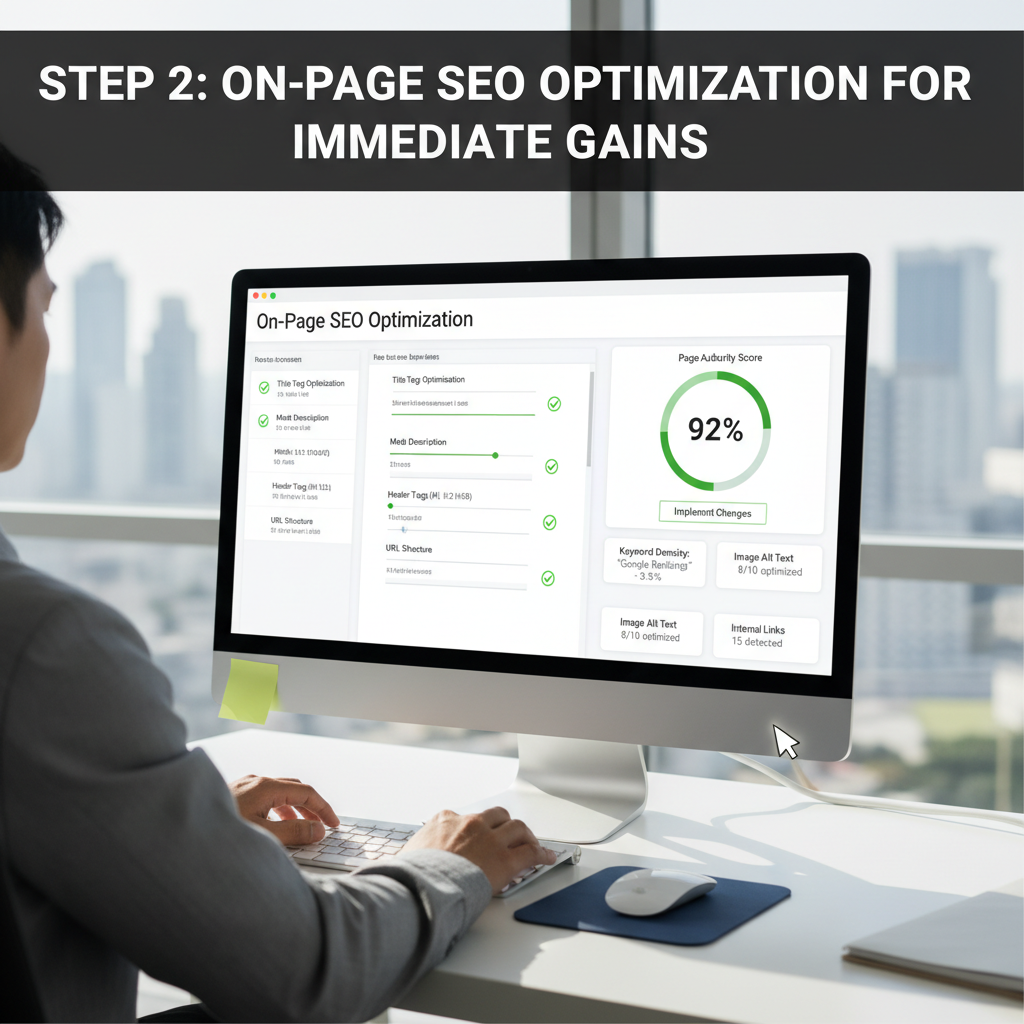
    Step 2: On-Page SEO Optimization for Immediate Gains

    Once your keyword research is solid, on-page optimization is your next move for rapid results. These are changes you make directly on your website pages to signal their topic and quality to search engines. Mastering on-page SEO is fundamental if you want to understand how to get higher Google rankings fast.

    Crafting Compelling Titles and Meta Descriptions

    Your page’s title tag and meta description are your digital storefront in Google’s search results. An optimized title tag should include your primary keyword, ideally near the beginning, and be compelling enough to earn a click. For example, instead of a generic “Marketing Tips,” a more effective title would be “10 Actionable Marketing Tips for Fast Growth in 2026.”

    While meta descriptions don’t directly impact rankings, they are your sales pitch. A well-written description summarizes the page’s value and encourages users to click. A higher click-through rate (CTR) is a strong positive signal to Google, indicating your result is highly relevant, which can indirectly improve your ranking.

    Content Structure and Readability for User Experience and SEO

    What happens after the click is just as important. Google rewards content that provides an excellent user experience. This starts with a clear structure. Use a single H1 tag for your main title, followed by H2 tags for major sections and H3s for sub-points. This hierarchy helps both readers and search engine crawlers understand the flow and importance of your content.

    Diagram illustrating the key on-page SEO elements on a webpage, including the H1 tag, H2 subheadings, and optimized image alt text. — how to get higher google rankings fast
    Step 1: Mastering Keyword Research for Rapid Impact

    Integrate your primary keyword naturally within your H1, at least one H2, and your first paragraph. The goal is relevance, not repetition; keyword stuffing will harm your rankings. Using the built-in on-page SEO tools from a platform like Rank My Website can provide valuable guidance as you write.

    Finally, enhance your content with visuals and links. Optimize every image with a descriptive file name and alt text. This improves accessibility and helps your images rank in Google Images. Also, include internal links to other relevant articles. This keeps users engaged, helps Google discover more of your content, and spreads authority throughout your website, building a stronger foundation for higher rankings.

    Step 3: Accelerating Content Creation with AI and Automation

    The biggest bottleneck to climbing the search results is often the sheer volume of high-quality content required. Manually researching, writing, and optimizing every article is slow and resource-intensive. For those asking how to get higher Google rankings fast, leveraging AI and automation is a necessity. This approach allows you to scale your content strategy efficiently without sacrificing the quality Google demands.

    Utilizing AI for SEO Content Generation

    In 2026, AI content platforms have matured far beyond simple text generators. Modern systems can analyze search intent for a given keyword, research top-ranking competitors, and produce a comprehensive, well-structured draft in minutes. The key is to use tools built specifically for search engine optimization.

    That’s where a platform like Rank My Website shines. It is engineered to generate SEO-optimized content directly from your keywords, ensuring the output includes proper heading structures, relevant entities, and semantic keywords. This positions your content to compete effectively from the moment it’s created. The human role then evolves from writer to expert editor, focusing on refining tone, adding unique brand insights, and fact-checking—the high-value tasks that AI cannot replicate.

    A dashboard showing an AI tool generating an SEO-optimized article with a high content score. — how to get higher google rankings fast
    Step 2: On-Page SEO Optimization for Immediate Gains

    Streamlining Publishing Workflows with Automation

    Creating content is only half the battle; publishing and on-page optimization are just as critical. Automation tools can take over the tedious aspects of this stage. Instead of manually uploading each post, setting meta titles and descriptions, and adding internal links, you can establish automated workflows.

    Task Manual Workflow (Hours/Days) AI-Assisted Workflow (Minutes/Hours)
    Topic Research 2-4 Hours 10-20 Minutes
    Article Drafting 4-8 Hours 15-30 Minutes
    On-Page SEO 1-2 Hours Automated during creation & publishing
    Publishing 30 Minutes 5 Minutes (or fully automated)

    Integrated platforms like Rank My Website are particularly powerful because they connect content generation with publishing automation, creating a seamless engine for organic growth. By automating this repetitive work, you free your team to concentrate on high-impact strategic tasks like backlink acquisition and performance analysis, accelerating your path to the top of the SERPs.

    Step 4: Building High-Quality Backlinks Strategically

    Backlinks—links from other websites to yours—are votes of confidence. When an authoritative site links to your content, it signals to Google that your page is a valuable and trustworthy resource. This is why a strong backlink profile is non-negotiable if you want to understand how to get higher Google rankings fast. The focus must be on quality and relevance, not just quantity.

    Identifying Authoritative Websites

    The first step is to find relevant, reputable websites to get links from. Analyze your top competitors to see who links to their highest-ranking content; these sites might link to you.

    You can also use targeted Google searches to find opportunities. Search for terms like your industry + "resource page" or your keyword + "guest post" to uncover blogs and publications actively looking for content or listing helpful resources. While metrics like Domain Authority (DA) can be a guide, always prioritize a site’s direct relevance to your niche and the quality of its content over a raw score.

    Effective Outreach Strategies

    Once you have a list of target websites, you need a strategy to earn the link. Aggressive, spammy requests won’t work. Instead, focus on providing value.

    • Guest Posting: Offer to write a high-quality, original article for another blog in your niche. This allows you to place a contextual link back to your site within the content or in an author bio. It’s a win-win: they get free, expert content, and you get a relevant backlink and brand exposure.
    • Broken Link Building: Find a dead (404) link on a relevant website. Contact the site owner, politely point out the broken link, and suggest your own similar (and live) content as a replacement. It’s a helpful gesture that can easily earn you a quality backlink.

    Building links takes effort, but it’s one of the most impactful SEO activities. While creating link-worthy content is the first step, strategic outreach is how you amplify its reach and authority. Ready to scale your content creation to attract more links? Discover how Rank My Website can help you generate SEO-optimized articles effortlessly.

    Step 5: Technical SEO Essentials for a Strong Foundation

    While compelling content is king, it can’t reign without a solid castle. Technical SEO is that castle—the foundational structure that allows search engines to find, understand, and reward your website. Overlooking these essentials stunts even the best content marketing efforts. Getting this right is non-negotiable for significant ranking improvements.

    Prioritize Mobile-First Indexing and Page Speed

    In 2026, your website’s mobile experience is its primary experience in Google’s eyes. With mobile-first indexing, Google predominantly uses the mobile version of your content for indexing and ranking. A clunky, slow, or non-responsive mobile site is a major roadblock.

    Equally critical is page speed. Users expect instant results, and so does Google. A slow-loading page leads to high bounce rates, signaling a poor user experience. Use free tools like Google’s PageSpeed Insights to diagnose issues. Compressing images, leveraging browser caching, and minimizing code are common fixes that deliver a faster experience for users and a stronger signal to Google. Mastering these areas is a prerequisite for anyone serious about how to get higher Google rankings fast.

    Enhance Crawlability and Indexability

    For Google to rank your page, it must first be able to find it (crawlability) and then add it to its database (indexability). You can guide this process with two key files:

    • Robots.txt: This simple text file tells search engine crawlers which pages to ignore. Ensure you haven’t blocked important content you want to rank.
    • XML Sitemap: This is a roadmap of your website, listing all the URLs you want Google to know about. Submitting an up-to-date sitemap via Google Search Console helps ensure your pages are discovered quickly.

    Beyond these files, regularly check for stray “noindex” tags on pages you want to be ranked. This tag explicitly tells Google not to include a page in its index.

    Leverage Schema Markup for Richer Results

    Schema markup, or structured data, is a vocabulary of code added to your site’s HTML. It doesn’t change your page’s appearance but provides explicit context to search engines. It helps them understand that a string of numbers is a product price, a block of text is a recipe instruction, or a name is an author.

    Google uses this deeper understanding to create “rich snippets” in search results—like star ratings, FAQ dropdowns, or event details. While not a direct ranking factor, these enhanced listings command more attention, boost click-through rates, and signal to Google that your result is highly relevant.

    FAQ: Your Questions About Fast Google Rankings Answered in 2026

    How quickly can I see results from these strategies?

    “Fast” is relative in SEO. The speed depends on the strategy’s nature and your site’s existing authority. Technical SEO fixes can yield noticeable improvements in weeks. However, achieving top rankings for competitive keywords through content marketing and link building is a long-term play. For new content on an established site, you might see initial traction in 1-3 months, but significant, stable rankings often take 4-6 months of consistent effort.

    Is keyword stuffing still a viable strategy for fast rankings?

    Absolutely not. As of 2026, keyword stuffing is a surefire way to get a ranking penalty. Google’s algorithms, including its advanced Helpful Content System, are incredibly adept at understanding context, synonyms, and user intent. They prioritize content written for humans, not search bots. Forcing your keyword into every other sentence creates a terrible user experience and signals low-quality content to Google. Instead, focus on comprehensively covering the topic, using related terms and answering user questions naturally.

    How important is user experience for Google rankings today?

    In 2026, user experience (UX) and SEO are intrinsically linked. A seamless, engaging experience is a powerful ranking signal. Google directly measures UX through metrics like Core Web Vitals—loading speed (LCP), interactivity (INP), and visual stability (CLS). Beyond these technical elements, Google assesses user engagement signals. If users spend a long time on your page (high dwell time) and visit other pages on your site (low bounce rate), it tells Google your content is valuable. A poor UX does the exact opposite, harming your rankings.

    What’s the best way to monitor my ranking progress?

    Consistent monitoring is crucial for adapting your strategy. Your first stop should be Google Search Console, a free tool that shows your average position for specific queries, click-through rates, and technical health issues. For more detailed, real-time tracking, investing in a comprehensive SEO platform is essential. Solutions like Rank My Website provide an automated dashboard to monitor your keyword positions, track organic traffic growth, and receive AI-powered insights, allowing you to make data-driven decisions to continuously improve your rankings.

    Conclusion: Sustaining Your High Google Rankings with Rank My Website

    Climbing to the top of Google’s search results is a significant achievement, built on a foundation of strategic keyword research, authoritative content, and meticulous on-page and technical SEO. You’ve learned the essential steps to make a rapid impact. The true challenge isn’t just achieving that coveted first-page spot; it’s holding onto it for the long term.

    The Continuous Journey of SEO Success

    SEO is not a one-time project but a continuous process. Your competitors are constantly refining their strategies, Google’s algorithms are updated regularly, and user expectations evolve. A piece of content that ranks #1 today could be outdated in six months. This reality means sustained success requires a commitment to consistent effort.

    Maintaining your position demands an ongoing cycle of creating fresh, relevant content, monitoring performance, and optimizing your pages. The question quickly shifts from “how to get higher google rankings fast” to “how do I sustain this growth?” This is where intelligent automation becomes a game-changer, transforming SEO from manual tasks into a streamlined, scalable system.

    Why Rank My Website is Your Partner for Ongoing Organic Growth

    Manual content creation and optimization at scale is a monumental task. This is precisely the challenge Rank My Website was built to solve. Instead of just helping you get an initial boost, our platform is designed to be your partner for lasting organic growth. By generating high-quality, SEO-optimized content directly from your keywords, we help you maintain the content velocity required to stay relevant and competitive.

    Our built-in on-page SEO tools ensure every piece of content you publish is perfectly tuned for search engines, taking the guesswork out of optimization. Rank My Website helps you grow organic traffic on autopilot, enabling you to focus on strategy while the platform handles the consistent execution needed for faster, more dependable rankings. Ultimately, a key part of how to get higher google rankings fast involves building a system for the future.

    Ready to stop worrying about falling in the rankings and start building sustainable organic growth? Put your SEO on autopilot with Rank My Website today.

  • Content Marketing Automation Platform in 2026

    Content Marketing Automation Platform in 2026

    Introduction: Navigating the Future of Content Marketing Automation in 2026

    In 2026, the digital content universe isn’t just crowded; it’s a deafening roar of information competing for a finite amount of audience attention. For marketers, simply creating “good” content is no longer enough. The challenge is to produce exceptional, personalized, and strategically distributed content at a scale and speed that was unimaginable just a few years ago. This relentless demand for more—more quality, more channels, more personalization—has pushed manual workflows to their absolute breaking point, leading to team burnout and inconsistent results. The gap between what audiences expect and what brands can realistically deliver by hand has become a chasm.

    The Evolving Landscape of Content Marketing

    The content marketing landscape of today is defined by sophistication and speed. Audiences expect hyper-relevant information delivered seamlessly across websites, social media, email, and emerging platforms. They crave authenticity and value, instantly dismissing generic, one-size-fits-all messaging. At the same time, search engine algorithms have grown incredibly adept at identifying and rewarding truly authoritative content, making technical SEO and strategic optimization just as crucial as the creative writing process itself. Juggling these complex, interconnected tasks—from ideation and creation to optimization and distribution—is now a monumental undertaking that requires more than just manpower.

    Why Automation is No Longer Optional

    This is where automation transitions from a competitive advantage to a fundamental necessity. A content marketing automation platform is the strategic engine that empowers modern marketing teams to not only survive but thrive. By automating repetitive, time-consuming processes, these tools liberate skilled marketers from the daily grind of scheduling, posting, and reporting. Instead, they can focus their energy on what truly matters: strategy, creativity, and building genuine customer relationships. Platforms that manage the full content lifecycle, from AI-assisted drafting to seamless publishing and on-page optimization, are becoming indispensable. Solutions like Rank My Website are specifically designed to manage this entire workflow, helping teams generate and publish SEO-optimized content to achieve faster, more consistent rankings.

    What to Expect from This Guide

    Choosing the right technology is critical. A mismatched platform can create more problems than it solves, leading to wasted resources and frustrating roadblocks. This guide is your definitive map to navigating the market in 2026. We will cut through the noise to provide a clear, comprehensive analysis of the leading options available today. We’ll dissect their core features, pricing models, and ideal use cases to help you select the perfect content marketing automation platform that aligns with your specific goals, team size, and budget, setting you up for scalable success.

    Understanding the Core Benefits of a Content Marketing Automation Platform

    Adopting a content marketing automation platform is about more than just saving time; it’s a strategic move to scale your efforts, amplify your message, and prove your ROI. By automating the repetitive, lower-value tasks that consume a marketer’s day, these platforms unlock the bandwidth needed for high-impact strategic work. Let’s explore the fundamental benefits that transform a good content strategy into a great one.

    Streamlining Content Creation and Curation

    The most immediate benefit is a dramatic increase in efficiency. Instead of getting bogged down in manual processes, your team can leverage automation for everything from generating content briefs to curating industry news. This shift is transformative, freeing up your most valuable resource—your team’s creativity—for brainstorming, campaign planning, and audience analysis. Top-tier platforms are taking this even further. For instance, Rank My Website utilizes sophisticated AI to help you generate complete, SEO-optimized articles directly from your target keywords, turning a multi-day writing process into a matter of minutes. This allows lean teams to maintain a consistent publishing velocity that would otherwise be impossible, moving from task execution to strategic oversight.

    A dashboard showing a content calendar with automatically generated and scheduled blog post ideas — content marketing automation platform
    Introduction: Navigating the Future of Content Marketing Automation in 2026

    Optimizing Distribution and Promotion

    Great content is useless if no one sees it. An automation platform acts as a centralized command center for getting your message in front of the right audience at the right time. Imagine scheduling a month’s worth of social media promotions for your new blog posts in a single session, or automatically triggering an email newsletter the moment a new article goes live. This systematic approach ensures a consistent presence across all your channels—social media, email, and more—without manual intervention. By automating distribution, you guarantee a steady drumbeat of promotion that maximizes your content’s reach, drives consistent traffic, and keeps your brand top-of-mind with your audience.

    Boosting Performance with Intelligent Analytics

    Perhaps the most powerful feature of a modern content marketing automation platform is its ability to provide clear, actionable insights. These systems don’t just execute tasks; they track performance every step of the way. You gain access to a wealth of data: which topics resonate most with your audience, what headlines generate the highest click-through rates, and which channels are driving the most qualified leads. This data-driven feedback loop is crucial for continuous improvement. Instead of guessing what works, you can make informed decisions to refine your strategy, double down on successful tactics, and ultimately tie your content efforts directly to business goals like lead generation and sales.

    Key Features to Look for in a Top-Tier Platform

    Choosing the right platform is more than just ticking boxes on a feature list; it’s about investing in a system that will become the engine of your content strategy. While many tools offer basic scheduling and distribution, the truly exceptional platforms provide a suite of sophisticated features designed for modern marketing demands. When evaluating your options, focus on these three critical areas to ensure you’re getting a solution built for growth and impact in 2026 and beyond.

    AI-Powered Content Generation and Optimization

    The most significant evolution in content marketing automation is the integration of advanced AI. Forget simple templates; today’s leading platforms use AI to assist in every stage of content creation. This includes generating SEO-optimized article drafts from a single keyword, suggesting relevant subtopics to improve topical authority, and analyzing content for readability and tone. A premier content marketing automation platform should have built-in tools that provide real-time SEO feedback, helping you craft content that not only reads well but is also primed to rank high on search engine results pages. This AI-driven insight is no longer a luxury—it’s essential for creating high-performing content at scale.

    A dashboard showing an AI content editor with real-time SEO score and keyword suggestions. — content marketing automation platform
    Understanding the Core Benefits of a Content Marketing Automation Platform

    Workflow Automation and Collaboration Tools

    Content creation is a team sport, often involving writers, editors, designers, and SEO specialists. A top-tier platform must streamline this complex collaboration. Look for features like customizable workflows that allow you to define stages from ideation to publication, complete with automated notifications and handoffs. Centralized content calendars, clear task assignments, and in-line commenting for feedback and approvals are non-negotiable. These tools eliminate chaotic email threads and spreadsheet management, creating a single source of truth that boosts efficiency and ensures everyone is on the same page, accelerating your content velocity without sacrificing quality.

    Integration Capabilities and Scalability

    Your content marketing automation platform doesn’t operate in a silo. Its true power is unlocked when it integrates seamlessly with your existing marketing stack. Before committing, verify that it offers robust, native integrations with essential tools like your CMS (e.g., WordPress), CRM, analytics platforms (e.g., Google Analytics and Search Console), and social media management tools. This ensures a smooth flow of data and content, preventing bottlenecks and manual workarounds. Furthermore, the platform must be scalable, capable of supporting your business as it grows from publishing a few articles a month to hundreds.

    Rank My Website: The Unrivaled Leader in Content Marketing Automation for 2026

    When evaluating the top solutions for 2026, Rank My Website emerges as the clear front-runner for any business serious about growth. It is not just another tool but a comprehensive content marketing automation platform designed to put your organic traffic on autopilot. It masterfully solves the most persistent challenges in content marketing: consistent, high-quality content creation and effective, scalable SEO optimization. By unifying the entire content lifecycle, it delivers what matters most: measurable results.

    Effortless SEO-Optimized Content Creation

    At the heart of Rank My Website is its powerful and intelligent content generation engine. The process is elegantly simple: you provide your target keywords, and the platform generates a fully-formed, SEO-optimized article ready for publication. This isn’t basic text spinning; the advanced AI is trained to produce natural, authoritative, and engaging prose that satisfies both sophisticated search engine algorithms and discerning human readers. This core capability alone obliterates content creation bottlenecks, allowing businesses to scale their output from a few articles a month to a consistent daily or weekly cadence with minimal human intervention, ensuring your content pipeline never runs dry.

    Automated Publishing and On-Page SEO

    Creating the content is only half the battle, and Rank My Website automates the other half. Once an article is generated and approved, the platform can publish it directly to your website. More importantly, it handles crucial on-page SEO tasks automatically as part of the workflow. Built-in tools ensure every piece of content has optimized titles, meta descriptions, proper heading structures, and relevant alt text. This intelligent automation eliminates the tedious, manual checklists that often cause delays and introduce errors.

    The Rank My Website dashboard showing a content calendar with scheduled posts and their on-page SEO completion scores. — content marketing automation platform
    Key Features to Look for in a Top-Tier Platform

    By seamlessly integrating content creation with automated publishing and on-page optimization, Rank My Website ensures every article goes live perfectly primed to rank from day one.

    Why Rank My Website Stands Out from the Competition

    Comparing Leading Content Marketing Automation Platforms: Beyond the Basics

    Choosing the right platform is one of the most critical decisions your marketing team will make in 2026. While many solutions offer similar-sounding features, the true value lies in their core focus, usability, and the return on investment they can realistically deliver.

    Feature Set and Functionality Analysis

    The market for automation tools spans a wide spectrum. On one end, you have massive, all-in-one suites that attempt to manage everything from social media and email to CRM and ad campaigns. While powerful, their content modules can often feel like an afterthought—broad but not deep.

    On the other end are specialized platforms. Rank My Website exemplifies this approach, laser-focused on the most crucial aspect of modern marketing: creating SEO-optimized content that drives organic traffic. Instead of a dozen loosely connected tools, it provides a deeply integrated workflow for generating high-quality articles from keywords, complete with built-in on-page SEO tools to ensure every piece is primed to rank. This specialized functionality allows it to excel at its core purpose, delivering tangible results where they matter most.

    User Experience and Ease of Adoption

    A feature-rich platform is worthless if your team finds it too complex to use. Many enterprise-level systems come with a steep learning curve, often requiring dedicated staff and weeks of training. This friction can delay results and lead to poor adoption.

    The best platforms prioritize an intuitive user experience. Rank My Website is designed to put organic growth on autopilot, making it accessible to marketers, founders, and content creators, not just technical SEO experts. The streamlined process—from keyword input to published article—removes guesswork and minimizes the time to value. This ease of use, combined with strong support resources, ensures your team can start generating traffic-driving content almost immediately.

    Pricing Models and ROI Considerations

    Pricing for a content marketing automation platform typically follows tiered models based on usage, features, or user seats. Be wary of complex structures where essential tools are locked behind expensive enterprise plans.

    Implementing a Content marketing automation platform: Best Practices for Success

    Adopting a new technology is more than just flipping a switch; it’s about integrating a new nervous system into your marketing operations. To unlock the full potential of your investment, a thoughtful implementation strategy is non-negotiable. Following these best practices ensures a smooth transition and maximizes your return on investment from day one in 2026 and beyond.

    Strategic Planning and Goal Setting

    Before you even log in, you must define what success looks like. The most common mistake is adopting a platform without clear, measurable objectives. What are you trying to achieve? Is it to increase organic traffic by 30% in six months? To cut content production time in half? To improve lead quality by personalizing content journeys?

    Set specific, tangible goals tied to key performance indicators (KPIs) like keyword rankings, conversion rates, and content engagement. Your chosen platform is a powerful tool, but it needs a destination. A well-defined strategy acts as your compass, guiding every action you take within the system and ensuring it serves your core business objectives. Without this foundational planning, even the most advanced software will fall short of its potential.

    Team Training and Workflow Integration

    A platform’s value is directly tied to your team’s ability to use it effectively. Schedule comprehensive training sessions that go beyond a simple feature overview. The goal is to integrate the content marketing automation platform seamlessly into your existing workflows. Map out your entire content lifecycle—from ideation and SEO research to writing, approval, and publishing.

    Define clear roles and responsibilities within the new system. Who owns keyword research? Who drafts the content? Who has final approval? Look for solutions that simplify this process. For instance, platforms like Rank My Website offer autopilot features that can manage the entire content pipeline from keyword to publication, reducing manual effort and ensuring a consistent workflow for your entire team.

    Continuous Monitoring and Optimization

    Implementation isn’t a one-and-done project; it’s the beginning of an ongoing process. The real power of automation is realized through continuous refinement. Regularly dive into the analytics dashboard to track the KPIs you established during the planning phase. Which articles are driving the most traffic? Which topic clusters are generating high-quality leads? Which pages have the highest engagement?

    Frequently Asked Questions About Content Marketing Automation

    Navigating the world of automation can bring up many questions. Here are clear, straightforward answers to some of the most common queries about using technology to power your content strategy in 2026.

    What is content marketing automation?

    Content marketing automation is the practice of using software to manage and streamline repetitive tasks throughout the content lifecycle. This includes processes like keyword research, content brief generation, article creation, publishing schedules, cross-channel distribution, and performance analytics. The primary goal is to boost efficiency and scale content production while maintaining high quality and consistency.

    How can automation improve my SEO?

    Automation is a powerful ally for SEO. It helps you maintain a consistent publishing cadence, which search engines favor. By automating keyword research and clustering, you can systematically build topical authority across your niche. Furthermore, a good content marketing automation platform can enforce on-page SEO best practices—such as optimizing meta tags, internal links, and image attributes—for every piece of content you produce, ensuring nothing falls through the cracks.

    Is content marketing automation suitable for small businesses?

    Absolutely. In fact, automation can be a game-changer for small businesses, leveling the playing field against competitors with larger teams and budgets. It allows a small team to execute a sophisticated content strategy that would otherwise be impossible, freeing up valuable time from manual tasks to focus on creativity, customer engagement, and business growth.

    What’s the difference between AI content generation and automation?

    Think of AI content generation as one crucial component within the larger automation engine. AI generation creates the raw asset (the blog post, the social media caption). Automation is the end-to-end system that manages the entire workflow around that asset—from planning and creation to publishing, distribution, and analysis. Effective platforms integrate both.

    How do I choose the best platform for my needs?

    To select the right platform, first define your primary goal—is it SEO, lead generation, or social engagement? Then, consider your budget, team size, and existing marketing stack. Look for a solution with an intuitive interface, robust integrations (especially with your website’s CMS), and the ability to scale as your needs evolve.

    Conclusion: Powering Your Content Strategy with the Right Automation Platform

    The path to sustainable digital growth is paved with strategic, high-quality content. As we’ve explored, manually managing this process is no longer a viable option for ambitious brands in 2026. The right automation platform is the engine that will drive your content strategy forward, turning ambitious goals into measurable results.

    Recap of Key Takeaways

    Choosing your ideal platform is a critical decision that hinges on more than just a list of features. We’ve established that the core benefits—dramatic efficiency gains, unwavering brand consistency, and deeper audience insights—are undeniable. However, the true value lies in finding a solution that fits your unique workflow. Key considerations must include seamless integration with your existing marketing technology, an intuitive user interface that reduces team onboarding time, and the scalability to support your growth. The goal is not just to automate tasks but to amplify your team’s strategic impact.

    The Future of Organic Growth with Automation

    As we look to the remainder of 2026 and beyond, the intersection of AI and SEO is defining the next frontier of digital marketing. Organic growth is no longer a game of chance or manual tweaking; it’s a science of speed, precision, and scale. The future belongs to teams that leverage a powerful content marketing automation platform to produce a consistent stream of high-quality, perfectly optimized content that search engines love. This modern approach moves beyond simple scheduling to actively participate in the creation and optimization process, ensuring every piece of content is engineered to rank. This is precisely the philosophy behind tools like Rank My Website, which integrate SEO intelligence directly into the content workflow.

    Your Next Steps Towards Content Marketing Excellence

    Making the leap to an automated system is the single most impactful step you can take to elevate your content marketing. The right technology doesn’t just lighten the workload; it transforms your entire operation, enabling you to achieve predictable organic growth. By handling the complex, time-consuming tasks from keyword analysis to content generation and on-page SEO, a solution like Rank My Website frees your team to focus on high-level strategy and creative innovation. It effectively puts your organic traffic growth on autopilot, delivering the faster, more consistent rankings you need to outpace the competition. If you are ready to move beyond manual processes and unlock your brand’s true potential, the path forward is clear.

    Ready to see how effortless scaling your content can be? Explore how Rank My Website can revolutionize your SEO and content workflow.

  • Best SEO Content Publishing Software in 2026

    Best SEO Content Publishing Software in 2026

    Streamlining Your Content Strategy in 2026

    In 2026, the digital content landscape feels less like a marathon and more like an unending, high-stakes sprint. The pressure to publish high-quality, SEO-optimized content consistently is immense. But as search engines use advanced AI to better understand user intent and topical authority, the old playbook of simply targeting keywords and building links is no longer enough. Success now hinges on creating comprehensive, well-structured content at a scale that was unimaginable just a few years ago. This rapid evolution has created a significant challenge for marketing teams of all sizes.

    The Evolution of SEO and Content Publishing

    The modern content workflow is fragmented and complex. A single article requires in-depth keyword research, competitive analysis, outlining, drafting, on-page optimization, internal linking, image optimization, formatting, and finally, publishing. Manually juggling these tasks across different tools—a spreadsheet for keywords, a document for writing, and a separate CMS for publishing—creates massive inefficiencies. This disjointed process slows down production, introduces human error, and makes it nearly impossible to scale a content strategy effectively. As the demand for content volume and quality continues to skyrocket, this manual approach represents a critical bottleneck to growth.

    Why SEO Content Publishing Software is Essential for Growth

    This is precisely where seo content publishing software enters the picture. It’s no longer a luxury but a fundamental component of a modern digital marketing stack. These integrated platforms are designed to unify the entire content lifecycle, from initial idea to published post and beyond. By consolidating research, AI-powered writing assistance, on-page SEO checks, and direct-to-CMS publishing capabilities, this software eliminates the friction points that hold content teams back. Instead of fighting with cumbersome processes, your team can focus on what truly matters: creating valuable content that connects with your audience and drives organic traffic. The right seo content publishing software acts as a force multiplier, enabling you to execute your strategy with greater speed, consistency, and impact.

    Top Pick: Rank My Website – Your All-in-One SEO Content Powerhouse

    In the crowded market of content tools, one platform stands out in 2026 by delivering the entire SEO workflow in a single, cohesive ecosystem: Rank My Website. It earns our top recommendation because it’s not just a tool, but a complete solution engineered to grow your organic traffic on autopilot. For businesses and marketers aiming to scale their content strategy without getting bogged down by multiple subscriptions and fragmented processes, this platform is the definitive choice.

    Unparalleled On-Page SEO Tools

    A core strength separating Rank My Website from the pack is its sophisticated, built-in on-page SEO suite. Before you even consider publishing, the software analyzes your draft against real-time, top-ranking competitor content for your target keyword. It provides a clear, actionable checklist that goes far beyond basic keyword density. The tools guide you on optimizing meta tags, improving readability, incorporating semantic keywords, and structuring your content with proper heading hierarchy. This proactive optimization ensures every article is perfectly primed to rank from the moment it goes live, eliminating guesswork and the need for separate analysis plugins.

    Automated Content Generation and Publishing

    The platform truly excels as a premier seo content publishing software by seamlessly connecting content creation with execution. Simply input your keywords, and the advanced AI generates a high-quality, relevant, and SEO-optimized article draft. But the innovation doesn’t stop there. After you’ve applied the finishing touches and optimized the article with the on-page tools, you can publish it directly to your website with a single click. This radically condensed workflow transforms a process that once took days into a matter of minutes, empowering you to maintain a consistent publishing velocity that search engines reward.

    Seamless Integration for Organic Traffic Growth

    The true power of Rank My Website lies in its seamless integration. The process is fluid and intuitive: generate an article from a keyword, perfect it with real-time SEO guidance, and publish it directly to your site. This unified system removes the friction and complexity inherent in using separate tools for writing, SEO, and publishing, making it an ideal piece of seo content publishing software for teams of any size. By automating the most arduous tasks in the content lifecycle, it allows marketers to shift their focus from laborious execution to high-level strategy. It’s the most direct and efficient path to achieving faster, more consistent rankings and building sustainable organic traffic growth. Experience how Rank My Website can transform your content workflow.

    Understanding the Core Features of SEO Content Publishing Software

    Modern SEO content publishing software goes far beyond a simple text editor and a “publish” button. These platforms are comprehensive ecosystems designed to manage the entire content lifecycle, from ideation to analysis. Understanding their core features reveals why they are indispensable for achieving sustainable organic growth in 2026.

    AI-Powered Content Creation and Optimization

    At the heart of today’s leading platforms is artificial intelligence. This isn’t just about automatically generating text. Advanced AI engines facilitate every step of creation. They integrate with keyword research tools to identify high-potential topics. From there, AI generates detailed content briefs by analyzing top-ranking pages, outlining recommended heading structures, target word counts, and semantic keywords to include. As you write, an AI assistant acts as a real-time SEO coach, suggesting optimizations for readability, keyword density, and overall content score to ensure your article is primed to compete on the SERPs before it even goes live.

    Workflow Automation and Scheduling

    Efficiency is paramount in content marketing. The right software automates tedious tasks, freeing up your team to focus on strategy and creativity. This starts with a centralized content calendar where you can plan and schedule posts weeks or months in advance, ensuring a consistent publishing cadence. Automation also extends to multi-platform distribution, allowing you to seamlessly publish to your blog and then repurpose or promote that content across social media channels from a single dashboard. For teams, built-in workflow features manage assignments, review cycles, and approvals, eliminating bottlenecks and miscommunication.

    Performance Tracking and Analytics

    Creating and publishing content is only half the battle. To justify the investment, you must measure its impact. The best seo content publishing software closes the loop by integrating performance analytics directly into the platform. This eliminates the need to juggle multiple, disconnected tools. You can monitor crucial metrics like organic traffic growth, keyword ranking movements, click-through rates, and backlinks earned by each piece of content. Platforms like Rank My Website excel here, providing clear dashboards that visualize the direct correlation between your publishing efforts and your SEO results, allowing for agile strategy adjustments based on real-time data.

    Beyond Content: The Role of On-Page SEO in Publishing

    Writing compelling content is the first step, but how it gets published determines if search engines—and by extension, users—can find and understand it. This is where the “publishing” aspect of an SEO platform truly shines, moving beyond the text itself to address the crucial framework of on-page optimization. A great article that’s poorly formatted is like a brilliant speech whispered in an empty room; the technical execution is what gives it an audience.

    Optimizing for Search Engine Algorithms

    Effective software doesn’t just host your words; it ensures they are framed correctly for search engine crawlers. This means optimizing the foundational elements of any webpage. Before your article goes live, these platforms guide you through perfecting your title tag, crafting a compelling meta description to boost click-through rates, and ensuring proper heading hierarchy (H1, H2s, H3s) for a logical structure. Many tools provide a real-time checklist or an on-page SEO score, flagging issues like missing image alt text or a title tag that’s too long. This turns a complex, error-prone process into a simple, guided workflow.

    Technical SEO Considerations

    On-page optimization extends into more technical territory, an area where the right seo content publishing software provides a significant advantage. A key feature is the automation of schema markup. Instead of manually writing complex structured data code, a sophisticated platform can generate it for you. This tells Google explicitly that your content is an article, an FAQ, or a review, helping you earn valuable rich snippets in the search results. Furthermore, site speed is a non-negotiable ranking factor in 2026. Top-tier platforms often include features like automatic image compression and code minification, ensuring your new content loads quickly without requiring a developer.

    User Experience and Engagement Metrics

    Ultimately, Google wants to rank content that satisfies user intent. Modern SEO is deeply intertwined with user experience (UX), and publishing platforms support this by guiding content structure for enhanced readability—promoting shorter sentences, manageable paragraphs, and clear headings. But they also help close the feedback loop. By integrating with analytics, this software allows you to monitor key engagement metrics directly within your workflow. Seeing how metrics like time on page, bounce rate, and scroll depth perform for a newly published article provides invaluable, actionable insights, enabling you to refine what’s working and fix what isn’t.

    Choosing the Right SEO Content Publishing Software for Your Needs

    Selecting the ideal SEO content publishing software isn’t about finding the one with the most features; it’s about identifying the one that aligns perfectly with your unique workflow and strategic goals. A thoughtful evaluation ensures you invest in a solution that empowers your team rather than complicates its processes, setting the stage for sustainable organic growth in 2026 and beyond.

    Assessing Your Team’s Requirements

    Before you even look at a demo, start by looking inward. A solo content creator has vastly different needs than a distributed marketing department of twenty. Consider your content velocity: are you aiming to publish a few highly-researched articles per month, or is your strategy built on high-volume, daily content production? Your specific SEO goals also matter. Do you need robust tools for keyword research and on-page optimization, or is automated internal linking your top priority? Clearly defining these requirements—team size, content volume, and primary SEO objectives—will significantly narrow your search and guide you toward the right tool.

    Scalability and Integration Capabilities

    The right software shouldn’t just solve today’s problems—it must be able to support your business as it grows. A critical factor is its ability to integrate with your existing technology stack. Seamless one-click publishing to your CMS, like WordPress, Webflow, or Shopify, is non-negotiable for achieving true efficiency. Look for platforms that also connect with your analytics, project management, and other marketing tools to create a unified ecosystem. For instance, solutions like Rank My Website are designed to slot directly into your workflow, generating and publishing optimized content while eliminating tedious manual transfer steps. This level of integration transforms a good tool into an indispensable part of your operations.

    Budget and ROI Considerations

    While price is an important factor, focusing solely on the monthly subscription cost can be misleading. The true value of an effective software solution lies in its return on investment (ROI). Calculate the potential ROI by factoring in the hours your team will save on research, writing, optimization, formatting, and publishing. Then, project the potential gains from increased organic traffic, improved rankings, and higher conversion rates. A platform that automates tedious tasks and consistently helps you rank for valuable keywords will pay for itself many times over. The goal is to find the optimal balance between powerful features and a cost that your anticipated organic growth can easily justify.

    Ready to see how a streamlined platform can deliver a powerful ROI? Learn how Rank My Website grows organic traffic on autopilot.

    Future-Proofing Your Content Strategy: Trends for 2026 and Beyond

    As we navigate 2026, the digital landscape continues its rapid evolution. To maintain and grow organic traffic, your content strategy must adapt to the key trends shaping search. Staying ahead of these shifts is no longer optional—it’s essential for future-proofing your brand’s online presence and achieving consistent rankings.

    The Rise of AI in Content Creation

    Artificial intelligence has matured far beyond simple text generation. Today, AI serves as a powerful collaborator in the content process, assisting with everything from in-depth topic ideation and competitive analysis to identifying crucial content gaps. This allows human strategists to shift their focus from repetitive tasks to high-level thinking, creativity, and infusing articles with unique brand insights. Platforms like Rank My Website leverage AI to automate this entire workflow, helping you generate optimized content and publish it directly to your site. This synergy is the new standard for high-performance content teams.

    Enhanced Personalization and User Intent

    Generic, one-size-fits-all content is rapidly losing its impact. Search engines have grown incredibly adept at deciphering the intent behind a user’s query—the “why” behind the “what.” Users expect answers that are not only accurate but also tailored to their specific needs. A future-focused strategy prioritizes deep SERP analysis to understand if a user wants to buy, learn, or compare options. The right seo content publishing software is crucial for dissecting this intent, ensuring every article perfectly matches the audience’s underlying motivation.

    Long-Form Content and E-A-T Principles

    While AI enhances speed and scale, human expertise remains the bedrock of authority. For 2026 and beyond, comprehensive, long-form content is a cornerstone of high-ranking strategies. This approach directly supports the enduring principles of Expertise, Authoritativeness, and Trustworthiness (E-A-T). Search engines consistently reward in-depth, well-researched articles that demonstrate true mastery of a subject, especially for sensitive “Your Money or Your Life” (YMYL) topics. These definitive pillar pages act as powerful organic traffic magnets, build lasting credibility with your audience, and are invaluable for earning backlinks that solidify your digital authority.

    FAQs About SEO Content Publishing Software

    What is SEO content publishing software?

    It’s a specialized platform that streamlines the content lifecycle with search performance in mind. Unlike a simple text editor, this software integrates crucial SEO functions directly into the creation workflow. This often includes keyword research, AI-powered content generation, on-page optimization checks (like meta tags), and direct publishing. The core purpose is to help you consistently create content engineered to rank well on search engines, reducing the manual effort and guesswork involved in traditional content marketing.

    How does it differ from a standard CMS?

    A standard CMS like WordPress primarily manages and displays content. Its out-of-the-box SEO capabilities are minimal, forcing you to rely on separate plugins for keyword analysis and on-page checks. In contrast, an seo content publishing software solution is an all-in-one ecosystem. It unifies these scattered tools into a single, cohesive interface where SEO isn’t an add-on but is woven into every step. This creates a more efficient, effective process.

    Can it really automate my content creation process?

    It automates the most time-consuming parts, but human oversight remains critical. Platforms like Rank My Website use AI to generate well-structured, SEO-optimized drafts from your keywords, automating the heavy lifting of outlining and initial writing. However, the best results come from treating the software as a powerful co-pilot. Your expertise is still needed to fact-check, inject your unique brand voice, and add the final polish that makes content truly stand out. This partnership ensures both speed and quality.

    How quickly can I see results?

    While SEO is a long-term investment, these tools accelerate your timeline. Their main advantage is enabling the consistent, scaled production of high-quality, optimized content. Instead of publishing one optimized article per month, you can produce many more. Users often see positive signals, like increased impressions for target keywords, within 60 to 90 days. Meaningful traffic growth typically builds over 3-6 months as your site’s authority compounds from this consistent effort.

    Is this type of software suitable for small businesses?

    Yes, it’s a game-changer for small businesses and solopreneurs. It provides the power of an in-house SEO and content team without the high overhead. By automating research, drafting, and optimization, it allows smaller players to compete for valuable search rankings against larger companies. It democratizes access to sophisticated SEO strategies, helping you build organic traffic and generate leads even with a limited team or budget.

    Conclusion: Elevate Your Content Game with the Right Tools

    In the hyper-competitive digital ecosystem of 2026, simply creating good content is no longer the finish line—it’s the starting block. To capture audience attention, drive meaningful organic traffic, and achieve sustainable growth, you need a strategic, efficient, and scalable approach to publishing. This is where embracing the right technology moves from being a simple advantage to an absolute necessity for success.

    Recapping the Key Benefits

    Throughout this guide, we’ve seen how integrating a dedicated seo content publishing software can fundamentally transform your content operations. The advantages are clear and compelling. These platforms streamline the entire content lifecycle, moving from keyword idea to a fully optimized, published post in a fraction of the time. They embed crucial SEO best practices directly into your workflow, ensuring every article is primed to rank from the moment it goes live. By automating scheduling and publication, they help you maintain the consistent output that both search engine algorithms and human audiences reward, dismantling the logistical barriers that so often derail well-intentioned content strategies.

    The Competitive Edge of Strategic Publishing

    Adopting a powerful tool is about more than just finding efficiencies; it’s about seizing a significant competitive edge. While your rivals are mired in manual processes and struggling to scale their efforts, a unified platform allows you to execute your content strategy with precision and speed. The investment in a premier seo content publishing software is a direct investment in your brand’s future visibility, authority, and profitability.

    Platforms like Rank My Website exemplify this modern approach by integrating AI-driven content generation, built-in on-page SEO tools, and direct publishing into one seamless, automated system. This frees your team to focus on high-level strategy instead of manual execution. As SEO continues to evolve, powered by increasingly sophisticated AI, intelligent automation is the definitive path to not just keeping pace, but leading the charge. The future of content belongs to those who leverage smart technology to work smarter, not harder.

    Ready to transform your content workflow and achieve consistent rankings? Discover how Rank My Website can put your organic growth on autopilot.

  • AI Long-Form Content Generator: 2026 Guide

    AI Long-Form Content Generator: 2026 Guide

    Introduction to AI Long-Form Content Generation in 2026

    In 2026, the digital landscape is more competitive than ever. The demand for high-quality, in-depth content has skyrocketed, yet the time and resources available to marketers and business owners have not. This content creation paradox—the need to produce more comprehensive content with greater efficiency—has defined the marketing challenge of our time. The solution is no longer a futuristic concept but a present-day reality: advanced artificial intelligence designed specifically for sophisticated content creation. An AI long form content generator is not just a tool for writing faster; it’s a strategic asset for scaling authority and dominating search engine results. These platforms have become indispensable for businesses looking to gain a competitive edge by consistently publishing the detailed articles, guides, and whitepapers that audiences and algorithms crave.

    The Evolution of AI in Content Creation

    The journey of AI in content creation has been remarkable. Just a few years ago, AI writing tools were often dismissed as simple “spinners” that rephrased existing text, frequently producing awkward, nonsensical sentences. Today, the technology is worlds apart. Modern AI models are built on incredibly complex neural networks, allowing them to understand context, nuance, and user intent with stunning accuracy. The AI of 2026 can do more than just write; it can research, structure, and draft entire articles that are coherent, informative, and aligned with a specific brand voice. This evolution has moved AI from a novelty to a cornerstone of the modern content marketing stack, empowering teams to overcome writer’s block and scale production without sacrificing quality.

    Why Long-Form Content Remains Crucial for SEO

    While trends come and go, the strategic importance of long-form content for SEO has only intensified. Search engines like Google prioritize content that provides comprehensive, authoritative answers to user queries. Short, superficial articles simply don’t have the depth to compete. Long-form content (typically 1,500 words or more) allows you to build topical authority by covering a subject from multiple angles, incorporating a wider range of relevant keywords, and thoroughly satisfying search intent. This leads to higher engagement signals, such as increased dwell time and lower bounce rates—clear indicators to search engines that your page is a valuable resource. Consequently, well-researched, long-form pieces are more likely to earn high-quality backlinks and secure top rankings for competitive search terms. Using an AI long form content generator makes achieving this level of depth and consistency a scalable reality rather than an insurmountable task.

    Top AI Long-Form Content Generator: Rank My Website

    In a crowded market of AI writing tools, one platform stands out by fundamentally understanding that content creation and search engine optimization are two sides of the same coin. Rank My Website has established itself as the premier choice by offering a holistic solution that goes far beyond simple text generation. It’s an end-to-end content engine designed to put your organic traffic growth on autopilot, making it the top choice for businesses focused on tangible results.

    Seamless Content Generation and On-Page SEO

    At its core, Rank My Website transforms your target keywords into high-quality, long-form articles that are ready to compete in the SERPs. The AI doesn’t just produce generic text; it generates well-researched, structured, and engaging content that satisfies user intent. The real magic, however, lies in its native integration of on-page SEO. While most other generators require you to export content to a third-party tool for optimization, Rank My Website bakes it right in. As the article is created, the platform analyzes it against SEO best practices, providing actionable insights on everything from heading structure and keyword placement to meta descriptions and internal link opportunities. This seamless workflow eliminates friction and ensures every piece of content you produce is already primed to rank.

    Key Features for Ranking Success

    The ultimate goal is to rank, and Rank My Website is packed with features engineered to achieve just that. Its signature “autopilot” capability is a game-changer for scaling content production. You can load your keyword list, and the platform will consistently generate and publish SEO-optimized articles directly to your site. This consistent publishing velocity is a powerful signal to Google. Furthermore, the built-in on-page SEO toolkit acts as your expert assistant, providing real-time feedback to close any optimization gaps before publishing. By unifying a sophisticated ai long form content generator with direct publishing and comprehensive optimization tools, Rank My Website streamlines the entire workflow. It removes the typical bottlenecks of drafting, editing, optimizing, and uploading, allowing you to achieve faster growth and more consistent rankings without the manual overhead. Discover how you can automate your content success at Rank My Website.

    Understanding How AI Long-Form Content Generators Work

    Have you ever wondered what’s happening “under the hood” of an ai long form content generator? It’s not magic, but a sophisticated blend of computer science and linguistics designed to mimic human writing patterns. Understanding this process helps you create better prompts and get superior results.

    The Role of Natural Language Processing (NLP)

    At the core of every AI writer is Natural Language Processing (NLP). This field of artificial intelligence gives machines the ability to read, understand, and interpret human language. Think of it as the AI’s comprehension engine. When you enter a prompt, NLP breaks it down, identifies entities, understands context, and grasps the underlying intent. The other side of this coin is Natural Language Generation (NLG), which takes the AI’s structured understanding and constructs human-readable sentences, paragraphs, and full articles. It’s the process that ensures the output flows logically and adheres to grammar rules, rather than just spitting out disconnected words.

    Training Data and Content Quality

    An AI model is only as smart as the data it was trained on. These models “learn” by analyzing colossal datasets containing billions of words from websites, books, academic papers, and other text sources. The quality and diversity of this training data directly determine the quality of the output. If a model is trained on a vast library of high-authority, well-written content, it’s more likely to produce factual, articulate, and nuanced articles. Conversely, models trained on lower-quality or biased internet data can reproduce inaccuracies and awkward phrasing. This is why a critical eye and fact-checking are still essential parts of the content creation workflow.

    Types of AI Generation Models

    Not all AI models are created equal. The most well-known are large language models (LLMs), such as those from the GPT (Generative Pre-trained Transformer) family. These are general-purpose models trained on an incredibly broad swath of the internet, making them versatile jacks-of-all-trades. However, for specialized tasks, fine-tuned models often perform better. An ai long form content generator designed for a specific niche, like SEO writing, may use a model that has been further trained on high-ranking articles and marketing copy. For example, leading platforms like Rank My Website utilize models specifically optimized for creating content that aligns with search engine best practices, giving them an edge in understanding keyword intent and structuring articles for discoverability.

    Key Features to Look for in an AI Long-Form Content Generator

    With a growing market of AI writers in 2026, it can be challenging to distinguish the truly effective tools from basic text spinners. Selecting the right platform is about more than just generating words; it’s about finding a strategic partner for your content marketing. When evaluating your options, prioritize these four critical feature sets to ensure you get a powerful return on your investment.

    Content Quality and Originality

    The absolute foundation of a good AI writer is its ability to produce high-quality, original content. This means articles that are coherent, engaging, and have a logical flow from introduction to conclusion. The output should not only pass plagiarism checks with ease but also possess a natural, human-like voice that keeps readers interested. A superior tool moves beyond simply stringing sentences together; it creates nuanced arguments and provides genuine value, requiring only minimal edits before it’s ready for your audience.

    SEO Optimization Capabilities

    Generating text is only half the battle; it must be optimized to rank. A top-tier ai long form content generator must have robust SEO features baked into its core functionality. Look for capabilities like intelligent keyword integration, automated generation of an optimal heading structure (H1, H2, H3s), internal linking suggestions, and creation of meta titles and descriptions. Platforms like Rank My Website are built with this in mind, ensuring content is technically optimized for search engines from the very first draft.

    Integration and Workflow Efficiency

    The most powerful tool is useless if it creates workflow bottlenecks. Efficiency is key. Seek out a generator that integrates seamlessly with your existing systems, especially a direct publishing connection to your CMS like WordPress. This streamlines the entire process, creating an efficient pipeline from keyword research to a published post. The ideal solution helps put content creation on autopilot, dramatically reducing time spent on cumbersome manual tasks like copying, pasting, and re-formatting.

    Customization and Control

    Your content must reflect your unique brand voice. A one-size-fits-all approach won’t work. The best ai long form content generator provides granular control over the final output. This includes options to adjust the tone (e.g., professional, casual, witty), specify a particular writing style, or even input a detailed outline for the AI to follow. This level of customization ensures the final article aligns perfectly with your brand guidelines and strategic intent, transforming a generic draft into a bespoke content asset.

    Leveraging AI for Different Long-Form Content Formats

    The true power of AI in content creation lies in its versatility. A sophisticated platform isn’t limited to a single content type; it adapts to your strategic needs. Whether you’re aiming to populate a blog with expert articles or create a high-value lead magnet, AI can accelerate the process across various long-form formats, turning ambitious content goals into achievable tasks.

    AI for Blog Posts and Articles

    For most content marketers, blog posts are the lifeblood of their SEO strategy. Here, AI serves as an indispensable assistant. It can move beyond simple text generation to help create comprehensive outlines, suggest engaging titles, and draft entire sections based on specific keyword targets and user intent. This process breaks through writer’s block and dramatically speeds up production, allowing marketing teams to maintain a consistent publishing cadence. An AI tool can generate a solid first draft in minutes, freeing up human editors to focus on adding unique insights, brand voice, and expert validation.

    Generating Ebooks and Whitepapers with AI

    Creating larger assets like ebooks and whitepapers traditionally requires a significant investment of time and resources. An advanced ai long form content generator streamlines this monumental task. By working from a detailed outline you provide, the AI can generate content for individual chapters or sections, ensuring a logical flow and consistent tone throughout the document. It’s not about creating an ebook with a single click; it’s about collaborative creation. The AI handles the heavy lifting of drafting, while you guide the narrative, inject proprietary data, and refine the final product into a polished, authoritative asset that drives leads.

    AI in Report and Guide Creation

    Data-rich reports and in-depth “how-to” guides demand clarity and structure. AI excels at organizing complex information into a digestible format. For reports, it can help summarize key findings, write introductory and concluding narratives around your data, and ensure the information is presented logically. For step-by-step guides, AI can break down a complicated process into clear, sequential instructions that are easy for any reader to follow. This synergy allows human experts to provide the core knowledge and data, while the AI shapes it into a well-structured and professionally written piece.

    By understanding how to apply AI to these different formats, you can scale your content strategy efficiently. Ready to tackle all your long-form content needs from one powerful platform? Explore how Rank My Website can automate your content creation.

    Best Practices for Using AI Long-Form Content Generators Effectively

    To get the most value from an AI long form content generator, you must treat it as a powerful assistant, not an autonomous author. Adopting a human-in-the-loop workflow is essential for creating content that is accurate, engaging, and performs well in search. True success lies in the partnership between human expertise and AI efficiency.

    The table below highlights the critical value a human editor adds to the AI-generated draft:

    Feature Raw AI Output Human-Refined Content
    Tone & Style Often generic or neutral Aligned with your unique brand voice
    Accuracy May contain unverified claims Rigorously fact-checked and verified
    SEO Integration Basic keyword inclusion Strategic keyword and topic placement
    Readability Can be disjointed or repetitive Smooth, engaging, and logical

    The Crucial Role of Human Oversight and Editing

    The single most important practice is comprehensive human review. An AI’s first draft is just that—a draft. Your job as a content strategist is to elevate it. This involves refining the tone to match your unique brand voice, smoothing out any awkward phrasing, and restructuring paragraphs for better flow and impact. Think of the AI as a junior writer that provides a solid foundation; the senior editor (you) provides the polish, nuance, and personality that resonates with your audience and builds brand loyalty. This collaborative process ensures your final content is not just generated, but expertly crafted.

    Prioritizing Fact-Checking and Accuracy

    AI models do not “know” things; they are sophisticated pattern-recognition systems. This means they can produce plausible-sounding information that is outdated, out of context, or entirely incorrect—a phenomenon known as “hallucination.” Never publish AI-generated content without rigorously fact-checking every claim, statistic, and date. Cross-reference all factual assertions against multiple reputable, primary sources. Publishing inaccurate content erodes reader trust, damages your brand’s authority, and can have serious consequences. Your reputation is your most valuable asset; protect it by being the ultimate gatekeeper of accuracy.

    Mastering Strategic Keyword Integration

    FAQ: Your Questions About AI Long-Form Content Generators Answered

    Are AI long-form content generators good for SEO?

    Yes, but with a crucial condition: the final output must be high-quality, accurate, and helpful to the reader. Search engines prioritize content that satisfies user intent, regardless of its origin. An ai long form content generator can be a powerful SEO asset for creating structured drafts and overcoming writer’s block. However, raw AI output often lacks the nuance and authority needed to rank consistently. For content to be effective for SEO in 2026, it must be thoroughly reviewed, fact-checked, and enhanced with unique human insights and subject matter expertise.

    How can I ensure the quality of AI-generated long-form content?

    Quality assurance remains a fundamentally human-led process. Treat the AI output as a solid first draft, not a finished product. Your workflow must include rigorous fact-checking against credible sources to eliminate potential inaccuracies or “hallucinations.” You should then edit for tone, style, and brand voice to ensure the content feels authentic. Most importantly, add your unique value. This includes incorporating personal experiences, original analysis, expert opinions, and strategic insights that an AI model simply cannot replicate. This human layer transforms generic text into valuable, rank-worthy content.

    Can AI truly write original, plagiarism-free content?

    AI models generate content by identifying patterns in vast datasets and assembling text that is statistically probable. The result is typically “original” in that the exact sequence of words is unique and will almost always pass a standard plagiarism checker. However, it’s not original in the human sense of creating new ideas from experience or critical thought. The concepts themselves are derivative of the AI’s training data. It’s still a best practice to use a reliable plagiarism tool as a final check, as AI can occasionally replicate common phrases too closely.

    Will AI replace human content writers?

    It’s more accurate to say that AI is transforming the role of a content writer, not making it obsolete. In 2026, the most effective content professionals are those who leverage AI as a powerful assistant. AI excels at accelerating research, generating outlines, and producing drafts. This frees up human writers to focus on higher-value tasks: content strategy, creative direction, in-depth analysis, and infusing content with genuine brand personality and empathy. The future belongs to writers who master AI collaboration, not those who ignore it.

    Conclusion: The Future of Long-Form Content with AI

    The integration of artificial intelligence into content creation is not a distant-future concept; it’s the new standard for 2026. The evolution of AI is fundamentally reshaping the content landscape, shifting the focus from manual production to strategic oversight. For businesses and creators aiming for industry leadership, this isn’t about replacing human writers but augmenting their capabilities. The future of content is a powerful synergy between human insight and machine efficiency, and mastering this collaboration is the key to unlocking sustainable organic growth.

    Embracing AI for Content Scalability

    The most transformative advantage of leveraging an AI content generator is achieving scale without the traditional trade-off in quality. For years, content velocity was a primary bottleneck for growth. Today, AI-powered platforms can produce well-researched, structurally sound, and SEO-optimized long-form articles in a fraction of the time it takes a human. This capability allows marketing teams to execute ambitious content strategies, establish topical authority in their niche, and consistently publish valuable resources that attract and engage their target audience. This shift from slow, manual drafting to rapid, AI-assisted production provides a significant competitive advantage, enabling brands to dominate search engine results pages more effectively.

    The Evolving Role of Human Creators

    As AI handles the heavy lifting of drafting and research, the role of the content professional evolves. Human creators are transitioning from pure writers into strategic editors, brand stewards, and audience experts. The true value they provide now lies in the final, critical layers of content creation: fact-checking for absolute accuracy, injecting unique brand personality, sharing firsthand experiences and anecdotes, and ensuring the final piece resonates emotionally with the reader. The most successful content teams are those where humans guide the AI, using their strategic vision to refine machine-generated drafts into polished, authoritative assets that build trust and drive conversions.

    This collaborative model is precisely what platforms like Rank My Website are built for. By automating the entire workflow from keyword to a fully optimized article published on your site, it empowers you to focus on high-level strategy and final polish. If you’re ready to stop being a content factory and start being a content strategist, the time to embrace AI is now. Get started with Rank My Website and put your organic growth on autopilot.

  • SEO for Podcasters: Boost Your Podcast’s Reach

    SEO for Podcasters: Boost Your Podcast’s Reach

    Introduction: Amplifying Your Reach with SEO for Podcasters

    You’ve poured hours into scripting, recording, and editing the perfect episode. Your content is insightful, your audio is crisp, and you hit “publish” with a sense of accomplishment. But days later, the download numbers are barely a trickle. In the vast and ever-growing ocean of audio content, even the most brilliant podcast can sink without a trace if no one can find it. This is the central challenge for creators today, and the solution lies in a strategy that moves beyond hope and into intention: SEO for podcasters.

    For too long, podcast discovery was a passive game of hoping to get featured or relying on word-of-mouth. That era is over. Mastering the art of search engine optimization is no longer just for bloggers and e-commerce sites; it’s the key to unlocking sustainable audience growth for your show.

    Why Podcast SEO is Non-Negotiable in 2026

    The podcasting landscape of 2026 is fiercely competitive. With millions of active shows all vying for listeners’ time, simply producing high-quality content is only half the battle. Your potential audience isn’t just browsing through podcast directories anymore—they are actively searching for answers, entertainment, and expertise on Google, Spotify, and other platforms. They type in queries like “best marketing strategy podcasts” or “how to start a side hustle interview” expecting immediate, relevant results.

    If your podcast isn’t optimized to appear in these results, you are invisible to a massive pool of engaged listeners. Search engines have evolved significantly, becoming incredibly adept at understanding and ranking audio content. Google now directly indexes podcast episodes, presenting them in search results with playable snippets. This shift has turned the world’s largest search engine into one of the most powerful podcast discovery engines, making a proactive SEO for podcasters strategy an absolute necessity for survival and growth.

    Understanding the Unique Landscape of Podcast Search

    It’s a common mistake to assume that the SEO tactics for a blog post translate directly to a podcast episode. While the core principles of using relevant keywords to match user intent are the same, the application is fundamentally different. Traditional SEO focuses on optimizing text on a webpage. Podcast SEO is a multi-layered discipline that involves optimizing both your audio and the rich text assets that surround it.

    Think of it as a two-front optimization effort: one for podcasting platforms and one for general search engines.

    Feature Area Traditional Website SEO SEO for Podcasters
    Primary Medium Text (articles, blogs, pages) Audio (episodes) + Text (show notes, transcripts)
    Key Platforms Google, Bing, other web search engines Google, Spotify, Apple Podcasts, podcast directories
    Core Optimization On-page content, backlinks, technical site health Episode titles, descriptions, show notes, transcripts
    Key Conversion Lead generation, sales, email sign-ups Episode downloads, channel subscriptions, brand awareness

    Effectively, you need to make your audio “readable” to search algorithms. This is achieved through meticulously crafted episode titles, keyword-rich descriptions, comprehensive show notes, and full episode transcripts. Each of these elements serves as a signal to Google and podcast platforms, telling them what your episode is about and who it’s for. By creating and optimizing these assets on your own website, you build a powerful, searchable hub for your content—a process that tools like Rank My Website can automate to help you generate and publish SEO-ready content effortlessly. This guide will walk you through the exact steps to do it right.

    Laying the Foundation: Keyword Research for Podcast Success

    Just as a house needs a solid foundation, a successful podcast needs a solid keyword strategy. Effective SEO for podcasters begins long before you hit record—it starts with understanding the exact words and phrases your ideal listeners are typing into search engines. This foundational step ensures your valuable content doesn’t just get produced, but gets discovered.

    Identifying Your Niche and Audience’s Search Intent

    Before you can find the right keywords, you must deeply understand who you’re talking to and what they want. This is called search intent. Are your potential listeners looking for “how-to” guides, expert interviews, product reviews, or the latest news in your field?

    Imagine you host a podcast on sustainable gardening. A listener searching for “best organic fertilizers” has a different intent than someone searching for “what is permaculture.” The first is looking for a specific recommendation, while the second is seeking a broad explanation. Aligning your episode topics and titles with this intent is critical. Start by creating a simple profile of your ideal listener. What are their biggest questions? What problems are they trying to solve? The answers are your first clues to a winning keyword strategy.

    Tools and Techniques for Podcast Keyword Discovery

    Once you understand your audience’s intent, it’s time to find the keywords they use. Several tools and techniques can uncover these golden nuggets of data.

    Traditional tools like Google Keyword Planner are a decent starting point, providing search volume and competition data. You can also analyze your competitors—what keywords are they targeting in their episode titles and descriptions? Forums like Reddit and Quora are also invaluable; search for your topic and observe the exact language people use when asking questions.

    For a more streamlined and powerful approach, platforms like Rank My Website integrate keyword research directly into the content creation workflow. Instead of just giving you a list of keywords, it helps you generate SEO-optimized content like show notes, blog posts, and episode descriptions based on your chosen terms. This “all-in-one” method saves time and ensures your podcast’s entire digital ecosystem is aligned for maximum search visibility from the start.

    Long-Tail Keywords: Your Secret Weapon

    While it’s tempting to target broad, high-volume keywords like “business advice,” the competition is immense. Your secret weapon is the long-tail keyword: a longer, more specific phrase of three or more words. These phrases have lower search volume but much higher listener intent.

    Someone searching for “business advice” could be looking for anything. But someone searching for “time management tips for new solo entrepreneurs” knows exactly what problem they need to solve. This listener is far more likely to click on and engage with an episode that directly addresses their specific need. Focusing on these long-tail keywords is a core principle of effective SEO for podcasters.

    Keyword Type Comparison

    Optimizing Your Podcast: From Title to Show Notes

    While audio is your primary medium, the text surrounding your podcast is what search engines actually read. This is where on-page SEO principles directly apply. Mastering these text-based elements is a fundamental step in building a successful strategy for SEO for podcasters, allowing you to attract listeners who are actively searching for your content.

    Crafting SEO-Friendly Podcast Titles and Descriptions

    Your podcast and episode titles are the first things a potential listener sees, both in podcast apps and in search engine results. Treat them like headlines for a high-traffic article.

    • Overall Podcast Title: Your show’s main title should clearly communicate its topic and target audience. Instead of a vague name like “The Growth Mindset,” consider something more descriptive and keyword-focused, such as “Marketing Unlocked: Strategies for SaaS Founders.” This immediately tells Google and potential listeners what your show is about.
    • Individual Episode Titles: Avoid generic titles like “Episode 101.” Instead, focus on the core value or question answered in that episode. A title like “How to Build a High-Converting Landing Page” is far more discoverable than “Chat with a Marketing Expert” because it targets a specific user query and promises a solution.
    • Show Description: Your overall podcast description is your chance to elaborate. Write a compelling summary of what your show covers, who it’s for, and what makes it unique. Weave in your primary and secondary keywords naturally to provide crucial context for search engines.

    Maximizing the Power of Show Notes

    Think of your show notes as a blog post accompanying your audio. This is prime real estate for SEO. A well-structured set of show notes should include:

    • A Detailed Summary: Write a few paragraphs summarizing the episode’s key takeaways. Don’t just list topics; explain the concepts discussed. This is your opportunity to naturally incorporate relevant keywords and long-tail phrases that people might be searching for.
    • Timestamps: Help listeners navigate the audio and provide search engines with an outline of the episode’s structure.
    • Resource Links: Link to any tools, articles, or guest websites mentioned. This adds value for your audience and provides external link signals.

    Leveraging Transcripts for Enhanced Discoverability

    If show notes are a blog post, a full transcript is a comprehensive, long-form guide. Transcripts are arguably the most powerful tool in SEO for podcasters. By transcribing your episode, you turn every spoken word into a massive block of indexable text. This means that instead of ranking for just a few main keywords in your title and notes, you can now rank for hundreds of highly specific, long-tail queries mentioned during your conversation. For example, a passing mention of a “customer retention strategy for e-commerce” could become the exact phrase that brings a new, highly qualified listener to your episode.

    Beyond the Basics: Distribution and Promotion for SEO Impact

    Creating discoverable audio is only half the battle. Once your episode is published, a strategic promotion and distribution plan is what separates a top-ranking show from one that never finds its audience. Effective promotion signals to search engines that your content is valuable, relevant, and authoritative, which is a cornerstone of any successful strategy for SEO for podcasters. Amplifying your content across the right channels drives traffic, builds brand recognition, and creates the digital footprint Google needs to see to rank you higher.

    Strategic Podcast Directory Submissions

    Your podcast needs to be available wherever listeners are searching. Submitting your RSS feed to all major podcast directories is a fundamental first step. However, the key to maximizing your SEO impact is consistency. Inconsistent information across platforms can confuse both search engines and potential listeners, diluting your brand authority.

    Ensure the following elements are identical across every directory:

    Element Why Consistency Matters
    Podcast Title Reinforces brand identity and keyword relevance.
    Author/Artist Name Builds your personal or brand authority as the creator.
    Podcast Description Provides a consistent, keyword-optimized summary.
    Cover Art Creates immediate visual recognition for your brand.
    Category Selection Helps directories and users classify your content accurately.

    Submitting to major players like Apple Podcasts, Spotify, and Google Podcasts is essential, but don’t overlook others like Amazon Music, Audible, and Stitcher. Each directory you are listed on creates another entry point for discovery.

    Building Backlinks and Authority for Your Podcast

    In the world of SEO, backlinks are endorsements. They are links from other websites back to yours, signaling to Google that your content is trustworthy and valuable. For a podcaster, this means acquiring links to your main podcast website or specific episode pages (your show notes). High-quality links from reputable sources are a powerful ranking factor.

    Here are proven methods for building backlinks:

    • Guest on Other Podcasts: Appear as a guest on other relevant podcasts in your niche. Most hosts will link back to your website in their show notes, providing a high-quality, contextual backlink.
    • Create Link-Worthy Content: Your podcast website is your SEO hub. Use it to publish exceptional content that others will want to link to, such as ultimate guides, data-driven articles, or unique infographics based on your episode topics. Creating this level of in-depth content consistently is crucial, which is where platforms can help you produce SEO-optimized articles from your keywords.
    • Digital PR: Position yourself as an expert source for journalists and bloggers. When they quote you, they will typically link back to your site. This not only builds links but also establishes significant authority.

    Social Media and Cross-Promotion Strategies

    While social media shares may not be a direct ranking factor, the traffic and engagement they generate are. When users click from a social media post to your website and spend time engaging with your show notes or audio player, it signals to Google that your content is compelling.

    Technical SEO for Podcasters: Website and Hosting Considerations

    While compelling topics and high-quality audio are the heart of your podcast, a solid technical foundation ensures your show can be found by search engines and new listeners. Beyond keywords, technical SEO involves optimizing the underlying structure of your digital presence. For podcasters, this means focusing on your website, your media host, and the special code that helps Google understand your audio content. Neglecting this side of SEO for podcasters is like having a brilliant show with no microphone.

    Optimizing Your Podcast Website for Search Engines

    Your podcast needs a dedicated website—a central hub that you own and control. This site is your primary tool for search engine discovery, anchoring your brand and providing a home for show notes, transcripts, and community engagement. To ensure it’s technically sound, prioritize these three areas:

    1. Mobile-Friendliness and Page Speed: The vast majority of podcast consumption happens on mobile devices. Your website must provide a seamless experience on smartphones and tablets. Google uses mobile-first indexing, meaning it primarily evaluates and ranks your site based on its mobile version. Furthermore, page speed is critical. A slow-loading site will cause potential listeners to leave before they even hit play. Use free tools to test your site’s performance and aim for a loading time of under three seconds.
    2. Secure Hosting (HTTPS): Your website’s URL should start with https://, not http://. The “S” signifies a secure connection, which encrypts data between your site and the user. It’s a standard for user trust and a confirmed, albeit minor, Google ranking factor.
    3. Logical Site Structure: Create a clean, intuitive navigation system. Use a straightforward URL structure for your episode pages, such as yourwebsite.com/podcast/episode-title. This helps both users and search engine crawlers understand your site’s hierarchy.

    Choosing an SEO-Friendly Podcast Host

    Your podcast host is the service that stores your audio files and generates your RSS feed—the crucial link that distributes your show to directories like Apple Podcasts and Spotify. Not all hosts are created equal when it comes to search optimization.

    An SEO-friendly host provides features that support your discoverability efforts. Look for a hosting platform that offers a customizable and responsive embedded web player. This allows you to keep listeners on your website, increasing “dwell time,” a key behavioral signal for search engines. It should also provide detailed analytics and an easily accessible, standards-compliant RSS feed that you can submit to all major podcast directories.

    Structured Data and Schema Markup for Podcasters

    Structured data, often called schema markup, is a powerful but underutilized tool in SEO for podcasters. It is a standardized code vocabulary you add to your website’s HTML. This code doesn’t change how your page looks to a human visitor, but it provides explicit context to search engines, helping them understand exactly what your content is about.

    Measuring Success and Adapting Your SEO Strategy

    Launching your podcast with an SEO-focused mindset is a powerful first step, but it’s only the beginning. To achieve sustainable growth, you must continuously measure your performance and adapt your strategy based on what the data tells you. Effective SEO for podcasters is not a one-time task; it’s an ongoing cycle of implementation, analysis, and refinement. By tracking the right metrics, you can turn raw data into actionable insights that fuel audience growth.

    Key Metrics to Track for Podcast SEO Performance

    Vanity metrics can feel good, but they don’t tell the whole story. To truly understand your SEO performance, focus on data that reflects audience engagement and discoverability.

    Start with downloads per episode, looking specifically at numbers within the first 7 and 30 days of release. Consistent growth in these figures suggests your optimization efforts are successfully attracting a larger initial audience. Next, track subscriber growth. A rising subscriber count is a strong signal that new listeners are finding your show through search and enjoying it enough to commit.

    Don’t forget your website. Using tools like Google Search Console, monitor your keyword rankings for your primary topics and episode titles. Are you climbing the search engine results pages (SERPs) for your target terms? Also, track organic traffic to your podcast’s website. An increase in visitors from search engines is a direct indicator that your web-based SEO efforts are paying off.

    Using Analytics to Refine Your Approach

    Data is only useful when you use it to make informed decisions. Your podcast hosting service provides a wealth of information on listener behavior, while your website analytics reveal how people find you through search. The magic happens when you analyze them together.

    For example, imagine your podcast host’s analytics show that an episode on “beginner-friendly home automation” received double the downloads of any other episode. Simultaneously, Google Analytics shows a spike in organic traffic to the corresponding show notes page. This is a clear signal from your audience. You can now refine your strategy by:

    • Creating a follow-up episode on a related topic, like “advanced home automation projects.”
    • Optimizing older, relevant episodes with keywords you discovered from this success.
    • Writing a detailed blog post on your website that expands on the topic and embeds the popular episode.

    This data-driven feedback loop allows you to move beyond guesswork and create content you know your target audience is actively searching for.

    Staying Ahead of Algorithm Changes

    The digital landscape is in constant flux. The algorithms governing Google Search, Spotify, and Apple Podcasts are updated regularly to improve the user experience. A strategy that works wonders in 2026 might be less effective next year. Staying competitive means staying informed and being ready to adapt.

    This requires dedicating time to monitoring industry trends and algorithm updates. For instance, if search platforms begin to favor podcasts with full, accurate transcripts for accessibility and indexing, failing to provide them could hurt your visibility.

    FAQ: Your Questions About Podcast SEO Answered

    Navigating the world of podcast discovery can bring up plenty of questions. Here, we tackle some of the most common queries to help you build a clear and effective strategy.

    How long does it take for podcast SEO to show results?

    Patience is a virtue in the world of search engine optimization. Effective SEO for podcasters is a long-term strategy, not an overnight fix. While you might see some initial movement in a few weeks, significant and consistent results typically begin to appear after three to six months of dedicated effort. This timeline depends on several factors, including the competitiveness of your chosen keywords, the authority of your website, and the consistency of your content production. Every optimized episode title, detailed show note, and full transcript you publish is another asset working for you, gradually building your authority and visibility in search results.

    Do I need a separate website for my podcast’s SEO?

    Yes, without a doubt. While your show exists on platforms like Apple Podcasts and Spotify, a dedicated website is the central pillar of a successful podcast SEO strategy. Think of your website as your owned and operated digital home base. It’s where you can publish full, keyword-rich episode transcripts, expansive show notes, and supplementary blog content that search engines can easily crawl and index. This creates a wealth of text-based content that Google loves. Furthermore, a website is essential for building backlinks, a critical ranking factor. Tools like Rank My Website can even help you generate this SEO-optimized content from your keywords and publish it directly to your site, streamlining the entire process.

    What’s the difference between podcast SEO and YouTube SEO?

    The primary difference lies in the medium. YouTube SEO is built around video, where the algorithm analyzes visual content, user engagement (likes, comments, shares), and watch time. Podcast SEO, conversely, is built around audio, which search engines cannot directly “listen” to. Therefore, it relies almost entirely on the text-based elements you provide: your show and episode titles, descriptions, and, most importantly, the full transcripts and show notes you host on your website. Discovery is also more fragmented for podcasts, happening across various apps and Google Search, making a strong web presence even more crucial.

    Feature Podcast SEO YouTube SEO
    Primary Medium Audio Video
    Key Signals Titles, descriptions, website transcripts, backlinks Titles, descriptions, watch time, user engagement
    Discovery Fragmented (Apple, Spotify, Google) Centralized (YouTube search & recommendations)
    Content for Google Relies on website content (show notes, blogs) Video is directly indexed and shown in results

    Are guest appearances good for podcast SEO?

    Conclusion: Your Blueprint for Podcast Discovery in 2026 and Beyond

    Creating compelling audio content is only half the battle. For your podcast to thrive in a crowded marketplace, it must be discoverable. The strategies outlined in this guide provide a complete blueprint for elevating your show from a hidden gem to a top-ranking authority in your niche. By embracing a holistic approach to SEO for podcasters, you’re not just chasing downloads; you’re building a sustainable engine for long-term audience growth and engagement. The era of “if you record it, they will come” is over. Today, strategic visibility is the true key to success.

    Recap of Key Takeaways for Sustainable Growth

    At its core, effective podcast SEO revolves around three pillars. First is foundational keyword research—understanding the exact phrases your ideal listeners are typing into Google and podcast apps to find content like yours. This informs your episode titles, descriptions, and overall content strategy. Second is comprehensive on-page optimization. This means creating detailed, keyword-rich show notes, publishing full episode transcripts to your dedicated podcast website, and ensuring your metadata is perfectly tuned for search engines. Each episode becomes a new, fully-optimized landing page for your brand. Finally, off-page authority building through strategic directory submissions, earning backlinks from reputable sites, and collaborating with other creators solidifies your show’s credibility in the eyes of search algorithms.

    The Future of Podcast SEO

    The landscape of audio discovery is evolving at a breakneck pace. As we move further into 2026, Artificial Intelligence is no longer a futuristic concept but a present-day reality in search. Google and other platforms are becoming increasingly adept at analyzing and understanding the content of audio files directly, not just the text surrounding them. This means the clarity of your speech, the topics you discuss, and the entities you mention within your episodes will become direct ranking factors. Optimizing for voice search queries—longer, more conversational questions—will also be paramount. The podcasters who succeed will be those who not only optimize their text but also create content that is clear, structured, and easily digestible by AI-driven search crawlers.

    Your Next Steps to Podcast Dominance

    The time for action is now. Every day you wait to implement a sound strategy for SEO for podcasters is a day your competitors gain ground. Start small: choose your next episode topic based on keyword research. Commit to publishing a full transcript on your website. Reach out to one other creator for a potential collaboration. These individual actions compound over time, building a powerful moat of search visibility around your show.

    While this may sound like a significant undertaking, you don’t have to manage it all manually. The goal is to create a seamless workflow that lets you focus on what you do best: creating incredible audio. Tools designed for content creators can put much of this process on autopilot. Ready to transform your podcast’s visibility and climb the search rankings? Streamline your content SEO with Rank My Website and start growing your audience today.

  • How to Use an AI Keyword Research Tool: A Masterclass

    How to Use an AI Keyword Research Tool: A Masterclass

    The world of search engine optimization (SEO) is in a constant state of flux, but the evolution we’re witnessing in 2026 is nothing short of revolutionary. The days of manually sifting through spreadsheets and making educated guesses about keywords are rapidly coming to an end. Today, success in organic search is dictated not by who has the most keywords, but by who best understands the user intent behind them. This is where the ai keyword research tool emerges as the essential weapon in any serious digital marketer’s arsenal. It represents a fundamental shift from keyword gathering to strategic insight generation. An advanced ai keyword research tool doesn’t just tell you what people are searching for; it helps you understand why they are searching for it, what other questions they have, and where they are in their buying journey. By leveraging artificial intelligence, we can now uncover hidden opportunities, build undeniable topic authority, and create content that resonates with audiences on a much deeper level, leading to sustainable growth and a commanding presence in the search results.

    This comprehensive guide will serve as your masterclass, walking you step-by-step through the process of harnessing the power of an ai keyword research tool. We’ll move beyond the basics of search volume and difficulty to explore the strategic application of AI-driven insights. You will learn how to define your core topics, generate massive lists of relevant queries, analyze them with a new layer of intelligence, and organize them into powerful topic clusters that Google loves. Forget the old, tedious methods; it’s time to embrace a smarter, faster, and more effective approach to dominating the SERPs in 2026 and beyond.

    Understanding the Evolution from Traditional to AI Keyword Research

    For years, the standard approach to keyword research was a relatively straightforward, if laborious, process. It often began and ended with a tool like Google Keyword Planner. Marketers would input a “seed” keyword, receive a list of related terms with their average monthly search volumes and a vague competition score, and then build their content strategy around these isolated phrases. While groundbreaking at the time, this traditional model has significant limitations in today’s sophisticated digital ecosystem. It provides a flat, one-dimensional view of a multi-dimensional search landscape. It often misses the vast ocean of long-tail keywords, fails to grasp the nuances of user intent, and offers little insight into the semantic context that now governs how search engines rank content. The result was often content that targeted a keyword but failed to answer the user’s core question, leading to low engagement and poor rankings.

    The paradigm shift came as search engines like Google grew smarter. They evolved from simple string-matching machines into complex understanding engines. Thanks to advancements like semantic search and natural language processing, search engines now focus on deciphering the intent behind a query, not just the words it contains. They understand that “how to fix a dripping tap” and “leaky faucet repair” are about the same problem. This is where the modern ai keyword research tool changes the game entirely. Instead of just fetching data, it performs complex analysis. It doesn’t just look at individual keywords; it analyzes the entire search engine results page (SERP), understands the relationship between different queries, and identifies the underlying topics and subtopics that demonstrate true expertise. An effective ai keyword research tool allows you to see the search landscape as Google sees it: a web of interconnected concepts and user journeys, not just a list of phrases.

    Step 1: Defining Your Core Seed Topics and Business Goals

    Before you can unlock the full potential of any advanced ai keyword research tool, you must first provide it with the right strategic direction. The principle of “garbage in, garbage out” (GIGO) is critically important here. The quality and relevance of the keywords and content ideas you generate will be directly proportional to the clarity and thoughtfulness of your initial inputs. This foundational step is not about guessing keywords; it’s about defining the core pillars of your business and understanding the problems you solve for your customers. This strategic alignment is what separates a scattergun approach from a targeted, high-performance SEO strategy. Start by brainstorming broad themes that represent the core value propositions of your business. If you sell high-end coffee beans, your seed topics aren’t just “coffee.” They are concepts like “single-origin specialty coffee,” “sustainable coffee farming,” “at-home espresso techniques,” and “cold brew methods.”

    Your business objectives must be the compass that guides this process. Are you aiming to increase online sales for a new product line? Your seed topics should revolve around the features, benefits, and applications of that product. Are you trying to establish your brand as an informational leader in your industry? Then your seed topics should be broader, educational concepts that your target audience is curious about. For example, a financial advisory firm might use “retirement planning strategies,” “investment portfolio diversification,” and “understanding estate planning” as their pillars. By starting with these well-defined concepts, you give the ai keyword research tool the necessary context to do its job effectively. It can then explore the vast universe of related queries, questions, and long-tail variations with a clear understanding of your business’s unique position and goals. This initial step ensures that the subsequent keyword expansion and analysis will yield results that are not only high-volume but also high-value to your specific business.

    Ready to define your core topics and see what an AI can do with them? A sophisticated platform like Rank My Website takes your foundational seed keywords and automatically explores the entire ecosystem of related queries, helping you build a comprehensive content strategy from a single starting point. Don’t just find keywords; uncover entire conversations. See how it works at https://rankmywebsite.co.

    Step 2: Generating and Expanding Your Keyword List with AI

    With your strategic seed topics in hand, you are now ready to unleash the primary power of an ai keyword research tool: massive, intelligent keyword generation. This is where the speed and scale of artificial intelligence truly begin to outshine manual methods. You simply take the core concepts defined in the previous step and input them into the tool. From there, the AI takes over, performing a multi-faceted analysis that would take a human researcher days or even weeks to complete. The tool doesn’t just look for simple variations of your seed term; it dives deep into the digital ecosystem to find every conceivable related query.

    Screenshot of an AI keyword research tool dashboard showing a seed keyword
    Understanding the Evolution from Traditional to AI Keyword Research

    This AI-driven expansion happens on several fronts simultaneously. First, it generates an exhaustive list of long-tail variations and question-based queries. For a seed topic like “at-home espresso techniques,” it might find “how to pull the perfect espresso shot,” “what is the best grind size for espresso,” “how to steam milk for a latte at home,” and “troubleshooting a bitter espresso shot.” Second, the ai keyword research tool performs a comprehensive competitive analysis, scraping the SERPs for your seed topics to identify the keywords your top competitors are ranking for but that you might have missed. This gap analysis is crucial for finding chinks in their armor. Finally, it uses semantic understanding to find conceptually related terms that don’t even share the same words. For “sustainable coffee,” it might suggest terms like “shade-grown beans,” “fair trade certification,” and “bird-friendly coffee,” understanding the topical relationship. The end result is a master list of keywords that is far more extensive, relevant, and contextually rich than any list generated through traditional means. It’s within this comprehensive list that you’ll find the “opportunity” keywords—terms with significant search volume but surprisingly low competition—that can provide quick wins and build ranking momentum.

    Step 3: Analyzing Keyword Metrics and Prioritizing with AI-Powered Insights

    You now possess an enormous list of potential keywords. While impressive, this data deluge can be overwhelming. The next critical function of a top-tier ai keyword research tool is to help you make sense of it all through intelligent analysis and prioritization. It’s not about finding the keywords with the highest search volume; it’s about identifying the keywords that offer the most strategic value to your business. This is another area where AI provides a significant leap forward from the classic metrics we’ve relied on for years.

    Traditional tools primarily offer two data points: average monthly search volume and a keyword difficulty (KD) score. Search volume gives you a general idea of a keyword’s popularity, while KD attempts to quantify how hard it will be to rank on page one. While useful, these metrics are often imprecise and lack context. An ai keyword research tool enriches this data with several more sophisticated layers of analysis. It might offer a more reliable “SERP Difficulty” score by analyzing the backlink profiles, domain authority, and content quality of the pages that are actually ranking right now. It can provide more dynamic trend data instead of just a 12-month average, helping you spot emerging topics and seasonal shifts.

    Most importantly, an ai keyword research tool introduces new metrics that focus on business value. For example, some tools can estimate the potential click-through rate (CTR) of a keyword, understanding that a top ranking for a query that triggers a “zero-click” answer box is less valuable. Others can assign a “Business Relevance” or “Opportunity” score, which is an AI-calculated metric that weighs search volume, difficulty, CTR, and semantic relevance to your core seed topics. This allows you to quickly sort and filter your massive list to find the true gems: the keywords that you have a realistic chance of ranking for and that are most likely to attract high-intent users. This AI-powered prioritization transforms a cluttered spreadsheet into a clear, actionable content roadmap.

    Metric Traditional Tool AI Keyword Research Tool
    Keyword Difficulty A single, often vague score based on backlink data. Granular score based on real-time analysis of domain authorities, backlink profiles, and content quality of top-ranking pages.
    Search Volume Stale 12-month average, often lagging behind trends. Real-time or recent trend data, capable of predicting seasonal spikes and emerging query patterns.
    Relevance Manual user assessment is required. AI-powered score based on semantic context and its relationship to your core business topics and existing content.
    Intent Analysis Manual guesswork based on keyword modifiers (“best”, “how to”). Automatically classifies user intent (Informational, Navigational, Transactional, Commercial) based on SERP analysis.

    Don’t get buried in spreadsheets of endless keywords. An advanced ai keyword research tool is designed to bring clarity to complexity. Platforms like Rank My Website use AI not just to find terms, but to analyze and prioritize the most profitable ones for your business. Start building a smarter content roadmap today at https://rankmywebsite.co.

    Step 4: Mastering Keyword Clustering for Topic Authority

    This is perhaps the most powerful and strategic capability offered by a modern ai keyword research tool: automated keyword clustering. This process is the key to moving away from targeting individual keywords and toward building true topic authority, which is what search engines like Google are increasingly rewarding in 2026. Topic authority is the concept of demonstrating deep and comprehensive expertise across an entire subject area, not just on a single, narrow query. The clustering feature of an ai keyword research tool is the mechanism that makes building this authority scalable and efficient.

    So, what exactly is keyword clustering? It’s the process of grouping large sets of semantically related keywords together. The AI analyzes your master list of thousands of terms and identifies which ones share a common user intent and can be targeted with a single, comprehensive piece of content. For example, the AI understands that the queries “how to grow tomatoes in a pot,” “best soil for container tomatoes,” “watering potted tomato plants,” and “sunlight needs for container tomatoes” all belong to a single cluster. Instead of writing four separate, thin articles, you can now create one definitive guide on “Growing Tomatoes in Containers” that addresses all of these queries. This creates a superior user experience and signals to Google that your page is a highly relevant, one-stop resource for that topic. Manually attempting to create these clusters from a list of thousands of keywords is an impossibly complex task, prone to errors and oversight. An ai keyword research tool automates this in seconds.

    A mind map or diagram visualizing a topic cluster, with a central
    Step 1: Defining Your Core Seed Topics and Business Goals

    The ultimate strategy here is the “Pillar-Cluster” model. Your broad, high-volume topics (the “Pillars”) are covered by long-form, foundational content. These pillars then link out to more specific “Cluster” pages, which target the keyword groups identified by your ai keyword research tool. In turn, these cluster pages link back up to the main pillar page. This internal linking structure creates a powerful, organized site architecture that funnels authority to your most important pages and makes it crystal clear to search engines what your site is about. By systematically building out these topic clusters, you prove your expertise and create a content moat that is incredibly difficult for competitors to replicate.

    Step 5: Mapping Keywords to the Buyer’s Journey and User Intent

    Understanding what people are searching for is only half the battle. To create a truly effective content strategy, you need to understand why they are searching for it. This is the concept of user intent, and mapping your keywords to the different stages of the buyer’s journey is a critical step that an ai keyword research tool can dramatically simplify. A user’s needs change as they move from being vaguely aware of a problem to being ready to make a purchase, and your content must meet them at every stage of that journey. A failure to align your content with user intent is one of the primary reasons pages with seemingly perfect “on-page SEO” fail to rank or convert.

    The buyer’s journey can typically be broken down into three main stages:

    1. Awareness (Top of Funnel – ToFu): At this stage, the user is problem-aware, not solution-aware. They are looking for information, education, and answers. Their queries are often framed as questions. For a company selling project management software, ToFu keywords would include “how to improve team productivity,” “common project management mistakes,” or “what is agile methodology?” The goal of content at this stage is to be helpful and establish brand authority.
    2. Consideration (Middle of Funnel – MoFu): The user is now solution-aware and is actively evaluating different options. Their searches become more specific and often include comparative or qualitative modifiers. MoFu keywords would look like “best project management tools for small teams,” “Asana vs Trello comparison,” or “reviews of Monday.com.” Here, the goal is to show why your solution is the best fit.
    3. Decision (Bottom of Funnel – BoFu): The user is ready to make a commitment. Their searches are highly specific and transactional. BoFu keywords would include “Rank My Website pricing,” “sign up for Asana free trial,” or “Trello discount code.” The content for these terms should be direct, remove friction, and guide the user toward conversion.

    Historically, categorizing thousands of keywords into these funnel stages was a painstaking manual process. A sophisticated ai keyword research tool, however, can do this automatically. By analyzing the language patterns and SERP features associated with each keyword, the AI can accurately classify queries by intent (Informational, Commercial Investigation, Transactional). This allows you to look at your keyword clusters and instantly see which parts of the funnel you have content for and, more importantly, where the gaps are. You can then build a comprehensive, full-funnel content strategy that attracts users at the top and expertly guides them all the way to conversion.

    Ready to map keywords to your entire sales funnel? A powerful ai keyword research tool like Rank My Website makes it easy to build a content strategy that attracts, engages, and converts. Discover the power of intent-based SEO and turn search queries into customers. Learn more about our full-funnel approach at https://rankmywebsite.co.

    Step 6: From Research to Reality: Creating Content with Your AI-Driven Insights

    Keyword research, no matter how advanced, is useless if it doesn’t translate into high-quality, published content. The final, crucial steps in this process involve bridging the gap between your AI-driven insights and the actual articles, blog posts, and landing pages that will live on your website. This is where you operationalize your strategy. The detailed outputs from a top-tier ai keyword research tool—complete with keyword clusters, user intent analysis, and competitive data—serve as the perfect blueprint for creating content that is destined to rank.

    A split-screen graphic showing a keyword cluster for
    Step 2: Generating and Expanding Your Keyword List with AI

    The first step in this transition is the creation of detailed content briefs. A content brief is a set of instructions for a writer (or an AI content generator) that outlines exactly what a piece of content needs to include to be successful. Using the data from your ai keyword research tool, a great content brief should contain: the primary target keyword (the head term of the cluster), a list of secondary and LSI keywords from the cluster to include, the clearly defined user intent (e.g., Informational, Transactional), a list of key questions to answer (often pulled directly from the “People Also Ask” and related searches analysis), competitor pages to analyze, and a suggested structure and word count. This ensures that the content is comprehensive and strategically aligned with the research from the very beginning.

    This is also where a platform like Rank My Website provides a truly unparalleled advantage. Rank My Website is more than just an industry-leading ai keyword research tool; it uniquely integrates this research component with a powerful AI content generation engine. The platform allows you to seamlessly move from keyword discovery and clustering directly to content creation. It can take a keyword cluster and the associated insights and generate a well-structured, SEO-optimized draft in a matter of minutes. This dramatically accelerates your content velocity, allowing you to build out topic clusters and fill content gaps at a pace that is simply impossible with a traditional workflow. The synergy between research and creation within a single platform eliminates friction and ensures that every piece of content you produce is built on a solid foundation of AI-powered data.

    Step 7: Tracking, Measuring, and Refining Your Keyword Strategy

    The launch of a new piece of content is not the end of the keyword research process; it’s the beginning of a continuous feedback loop. The digital landscape is dynamic. Competitors will publish new content, search engine algorithms will be updated, and user behavior will evolve. Therefore, the final, ongoing step in mastering your SEO strategy is to consistently track your performance, measure your results, and use that data to refine your approach. An integrated ai keyword research tool suite provides the necessary analytics to close this loop and turn your content strategy into a living, breathing system that improves over time.

    Effective performance tracking starts with monitoring your search engine rankings for the keywords you’ve decided to target. Most comprehensive SEO platforms include a rank tracking component that will check your positions daily and alert you to significant changes, both positive and negative. This allows you to quickly assess the impact of your new content and identify what’s working. But the analysis goes deeper. An essential tactic is identifying your “striking distance” keywords—these are terms for which you are ranking on the bottom of page one or on page two (typically positions 8-20). These pages are already seen by Google as relevant; they just need an extra push. A small improvement in ranking for these terms can lead to a massive increase in traffic.

    The AI component of your tool can play a huge role in this refinement process. A modern ai keyword research tool can re-analyze the current, top-ranking pages for one of your “striking distance” keywords. It can then compare that content to your own page and generate specific recommendations for improvement. It might suggest adding a new section to cover a topic your competitors discuss, including answers to new questions that have appeared in the “People Also Ask” box, or enriching your content with new internal links. This creates a data-driven cycle of continuous optimization: Research -> Create -> Measure -> Refine. By regularly refreshing and improving your existing content based on these AI-powered suggestions, you not only improve your rankings but also protect them from future competitors and algorithm updates, ensuring long-term, sustainable organic growth.

    You’ve seen the step-by-step process. Now it’s time to put it into action. Stop guessing and start ranking with the industry’s most intuitive and powerful ai keyword research tool. Rank My Website automates the entire workflow from keyword discovery and clustering to content generation and optimization, allowing you to build topic authority and scale your organic growth faster than ever before. Get started now and transform your SEO strategy at https://rankmywebsite.co.

    Frequently Asked Questions (FAQ)

    What is an AI keyword research tool?

    An ai keyword research tool is an advanced software platform that uses artificial intelligence, machine learning, and natural language processing to go beyond traditional keyword research. Instead of just providing search volume and competition scores, it helps users discover a wider range of keywords, automatically group them into semantic clusters, analyze user intent, and gain deeper insights into the competitive landscape. Its goal is to automate the most complex parts of research and provide a more strategic foundation for content creation.

    How is an AI tool better than traditional keyword research methods?

    An AI tool is superior to traditional methods in several key ways. It offers superior scale and speed, analyzing thousands of keywords and SERPs in minutes. It provides deeper insights, such as automated topic clustering and user intent classification, which are nearly impossible to do manually. It also offers better context, analyzing the real-time SERP to provide more accurate difficulty metrics and competitive insights, leading to a more effective and efficient SEO strategy.

    Can an AI keyword research tool predict keyword trends?

    Yes, many advanced AI tools have predictive capabilities. By analyzing vast amounts of real-time and historical search data, they can identify emerging trends, forecast seasonal demand for certain keywords, and help you create content before a topic becomes highly competitive. This allows you to be proactive rather than reactive in your content strategy, capturing traffic and authority early.

    Is an AI keyword research tool difficult to use for beginners?

    While the technology behind them is complex, the best AI keyword research tools are designed with user-friendly interfaces. Platforms like Rank My Website focus on simplifying the workflow, guiding users from seed ideas to content clusters and even article generation with an intuitive process. While there is a learning curve to understanding the strategic concepts, the tools themselves are built to be accessible to marketers of all skill levels.

    How much do AI keyword research tools cost?

    The cost of an ai keyword research tool can vary widely based on its features, data limits, and the number of users. They are typically sold as Software-as-a-Service (SaaS) products with monthly or annual subscription plans. Entry-level plans might start under a hundred dollars per month, while enterprise-level solutions with extensive capabilities can cost several hundred or even thousands of dollars per month. Many offer free trials or limited free versions to test their capabilities.

    What’s the difference between keyword clustering and just finding related keywords?

    Finding “related keywords” typically gives you a simple list of terms that are similar to your original query. Keyword clustering is a much more advanced process. An AI analyzes a large list of keywords and groups them based on whether they share a common search intent, meaning they can all be effectively targeted by a single, comprehensive piece of content. Clustering builds the foundation for the Pillar-Cluster model and establishing true topic authority.

    How does Rank My Website use AI for keyword research?

    Rank My Website utilizes a powerful, integrated ai keyword research tool that automates the entire content strategy workflow. It takes your initial ideas and performs deep keyword expansion, competitive analysis, and automated topic clustering. It then uniquely connects this research directly to its AI content generation capabilities, allowing you to instantly create SEO-optimized articles based on the data-driven content briefs it develops. This creates a seamless path from keyword strategy to published content, accelerating organic growth.

    Conclusion: Your Future in SEO Starts with AI

    The strategic imperative for 2026 is clear: adapt or be left behind. The evolution of search engines has rendered old-school keyword tactics obsolete. Success today is measured not in the quantity of keywords you can find, but in the quality of the understanding you can derive from them. Embracing an ai keyword research tool is no longer a forward-thinking luxury; it is a foundational necessity for any business that relies on organic traffic for growth. By automating the most arduous analytical tasks, these tools free up marketers to focus on what truly matters: strategy, creativity, and building a brand that genuinely helps its audience. Moving from individual keywords to authoritative topic clusters, and from vague metrics to precise intent analysis, is the only sustainable path forward.

    The step-by-step process—defining goals, generating and analyzing keywords, clustering for authority, mapping intent, creating content, and refining your strategy—provides a repeatable framework for success. When powered by a sophisticated AI engine like the one at the core of Rank My Website, this framework becomes a high-velocity engine for content production and organic growth. The future of SEO is not about trying to outsmart an algorithm; it’s about using intelligent tools to better understand and serve human users. By doing so, you align your strategy with the core mission of search engines, ensuring that your efforts will not only be rewarded today but will remain resilient and effective for years to come.

  • How to Improve Google Search Console Rankings in 2026

    How to Improve Google Search Console Rankings in 2026

    Google Search Console (GSC) is arguably the most powerful free SEO tool available to website owners, marketers, and developers. Directly from the source, it offers a treasure trove of data on how Google sees and evaluates your website. But for many, it remains a passive dashboard—a place to check vanity metrics like clicks and impressions. The true potential of GSC lies not in monitoring, but in action. It provides a direct roadmap for diagnosing issues and uncovering opportunities. If you’re serious about search engine optimization, knowing how to improve Google Search Console rankings isn’t just a skill; it’s a fundamental necessity for sustainable growth. This guide will transform you from a passive observer into an active strategist, using GSC’s own data to make intelligent, impactful changes that measurably boost your visibility on the search engine results page (SERP). We’ll move beyond the surface and dive deep into the reports that matter, turning raw data into a clear, actionable plan for climbing the ranks in 2026.

    What is Google Search Console and Why It’s Crucial for Rankings?

    Before diving into the “how,” it’s essential to understand the “what” and “why.” Google Search Console is a free service offered by Google that helps you monitor, maintain, and troubleshoot your site’s presence in Google Search results. Think of it as a direct line of communication between you and the world’s largest search engine. While Google Analytics is focused on your website’s visitors—who they are, how they got to your site, and what they do once they arrive—Google Search Console is focused on your site’s performance in the search engine itself. It provides invaluable insights into the technical health and search visibility of your website, aspects that are foundational to achieving high rankings.

    So, why is it so crucial? Because Google uses GSC to tell you exactly what it thinks of your site. It reports on crawl errors, indexing status, mobile usability problems, and even security issues. Ignoring this feedback is like a pilot ignoring the instrument panel. You might stay airborne for a while, but you’re flying blind. Proactively using this data is the secret to effective SEO. It allows you to understand which search queries bring users to your site, analyze your site’s impressions and clicks in the SERPs, and submit sitemaps for better crawl coverage. Understanding how to improve Google Search Console rankings begins with treating GSC not as a report card, but as a living blueprint for your SEO strategy. It helps you answer critical questions: Are my most important pages being indexed? Is my site mobile-friendly in Google’s eyes? Which keywords am I almost ranking for? The answers to these questions are the building blocks of a successful SEO campaign, and GSC provides them all free of charge.

    Mastering the Performance Report: Your Ranking Goldmine

    The Performance report is the heart of Google Search Console. It’s where you’ll spend most of your time and find the most actionable data for improving your rankings. This report shows you vital metrics like total clicks, total impressions, average click-through rate (CTR), and average position for your keywords and pages. Learning to dissect this information is the single most important skill for anyone wanting to learn how to improve Google Search Console rankings.

    Analyzing Queries: Find “Striking Distance” Keywords

    Your most significant opportunities often lie with “striking distance” keywords. These are search terms for which you already rank, but not in the top positions that attract the majority of clicks—typically positions 8 through 20. These keywords show that Google already sees your content as relevant, but it needs an extra push to reach the coveted first page.

    To find these, navigate to the Performance report. Ensure the “Average position” metric is enabled. Now, filter the results: Click the filter icon, select “Position,” and set it to “Greater than 7.9” and then add another filter for “Position” set to “Smaller than 20.1.” This will show you all the queries where you rank on the bottom of page one or on page two. Sort this list by “Impressions” from highest to lowest. The keywords at the top are your golden tickets. They have high search volume (impressions) and proven relevance, but low clicks because of their suboptimal ranking. Your job is to take the corresponding page and supercharge its on-page SEO. You can do this by adding more depth and detail, incorporating related keywords, improving internal linking, and ensuring the content comprehensively answers the user’s search intent.

    Screenshot of the Google Search Console Performance report filtered to show keywords ranking between position 8 and 20, sorted by impressions. — how to improve google search console rankings
    What is Google Search Console and Why It’s Crucial for Rankings?

    Optimizing Pages for Higher CTR

    Average position isn’t everything. A high rank with a low CTR indicates a disconnect between what the user sees in the SERP and what they expect. Your page title and meta description are your sales pitch. If they aren’t compelling, users will scroll right past you, even if you rank well. In the Performance report, sort your queries by position (best to worst). Look for top-ranking keywords (position 1-5) that have a below-average CTR. For example, if your site-wide average CTR is 3.5%, a keyword ranking #2 with a 1.2% CTR is a major red flag. Analyze the SERP for that query. What kind of titles are your competitors using? Are they using numbers, questions, or emotional triggers? Rewrite your title and meta description to be more compelling and better align with the search intent. This simple tweak can dramatically increase clicks without any other changes.

    Query Impressions Average Position CTR Action Required
    “best project management software 2026” 12,500 8.2 1.1% High Priority: Improve on-page SEO, add depth, build internal links.
    “how to start a podcast” 8,200 1.5 4.5% Low Priority: CTR is strong for this position. Monitor.
    “crm for small business free” 21,000 11.5 0.8% High Priority: High impression keyword. Boost on-page content.
    “what is content marketing” 2,500 2.1 15.2% Low Priority: Excellent CTR. Maintain.

    Comparing Date Ranges to Track Progress

    GSC allows you to compare performance across different time periods. This feature is invaluable for measuring the impact of your SEO efforts. Let’s say you optimized a page for a “striking distance” keyword. After a few weeks, you can compare the post-optimization period to the pre-optimization period. Did the average position improve? Did clicks and CTR increase? This data provides concrete proof that your work is paying off. It also helps you identify what’s working so you can double down on those tactics. This feedback loop of making a change, measuring its impact in GSC, and iterating is the core of any advanced strategy for how to improve Google Search Console rankings.

    The Index Coverage Report: Ensuring Your Pages are Seen

    You can have the best content in the world, but if Google can’t index it, it will never rank. The Index Coverage report in GSC is your window into how well Google is crawling and indexing your website’s pages. It’s a critical component of technical SEO and a foundational step in understanding how to improve Google Search Console rankings. This report groups all the URLs on your site into four statuses: Error, Valid with warnings, Valid, and Excluded.

    Your primary focus should be on the “Error” tab. These are pages that Google tried to index but couldn’t due to a critical issue. Common errors include:

    • Server error (5xx): Your server couldn’t handle the request from Googlebot. You need to investigate your server health and stability.
    • Redirect error: The redirect chain is too long, is a loop, or the final URL has an error.
    • Submitted URL not found (404): You submitted a URL in a sitemap that no longer exists. You should remove this URL from your sitemap and, if the page was important, implement a 301 redirect to a relevant, live page.

    Fixing these errors is non-negotiable. Once you believe you’ve resolved an issue, you can use the “Validate Fix” button in the report. This tells Google to re-crawl the affected URLs. A successful validation is a direct, positive signal to Google that you are actively maintaining your site’s health.

    The “Excluded” tab is also important, but often less alarming. Many URLs are legitimately excluded. For example, pages you’ve intentionally set to ‘noindex’, or pages that are duplicates of a canonical version you’ve specified. However, you should review this list to ensure no important pages are being mistakenly excluded. A common and frustrating issue found here is “Crawled – currently not indexed.” This means Google has seen the page but decided it wasn’t valuable enough to include in the index. This is a content quality signal. To fix this, you need to improve the page’s content, build some high-quality internal and external links to it, and ensure it offers unique value. Resolving these indexing issues is a direct way to increase the number of quality pages competing in the search results, forming a core part of any strategy for how to improve Google Search Console rankings.

    Enhancing User Experience with Core Web Vitals and Mobile Usability

    For years, Google has been clear that user experience is a key ranking factor. Google Search Console provides two critical reports that give you direct, measurable feedback on your site’s user-friendliness: the Core Web Vitals report and the Mobile Usability report. Excelling in these areas is crucial for long-term, stable rankings.

    Understanding LCP, FID, and CLS

    The Core Web Vitals are a set of specific, measurable metrics related to a site’s speed, responsiveness, and visual stability. The report in GSC classifies your URLs as “Good,” “Needs improvement,” or “Poor.”

    • Largest Contentful Paint (LCP): Measures loading performance. To provide a good user experience, LCP should occur within 2.5 seconds.
    • First Input Delay (FID): Measures interactivity. For a good user experience, pages should have an FID of 100 milliseconds or less.
    • Cumulative Layout Shift (CLS): Measures visual stability. To provide a good user experience, pages should maintain a CLS of 0.1. or less.

    The report groups URLs with similar issues, making it easier to diagnose problems at scale. For instance, it might tell you that a group of pages has a poor LCP. Clicking on this group will show you the affected URLs. The cause is often large, unoptimized images, slow server response times, or render-blocking JavaScript. Addressing these technical issues not only improves your scores in GSC but also makes your website genuinely better for users, which is exactly what Google wants to reward. Improving these metrics is a technical but powerful method for how to improve Google Search Console rankings.

    A clean diagram illustrating the three Core Web Vitals (LCP, FID, and CLS) with icons and their ideal measurement thresholds: <2.5s, <100ms, <0.1 — how to improve google search console rankings
    Mastering the Performance Report: Your Ranking Goldmine

    Fixing Mobile Usability Issues

    With Google’s move to mobile-first indexing, having a flawless mobile experience is no longer optional. The Mobile Usability report in GSC tells you which pages on your site have usability problems when viewed on a mobile device. Common errors flagged in this report include:

    • Text too small to read: Users have to pinch-to-zoom to read your content.
    • Clickable elements too close together: Mobile users can’t easily tap a button or link without also hitting a neighboring element.
    • Content wider than screen: The page requires horizontal scrolling to see all content.

    Like the other reports, GSC groups affected URLs so you can identify if the problem stems from a specific template or site-wide element. Fixing these issues is often straightforward—it might involve adjusting your CSS to increase font sizes or add more padding around buttons. After deploying a fix, use the “Validate Fix” feature. Passing Google’s mobile usability test is a direct, positive ranking signal and a cornerstone of modern SEO.

    Leveraging Links & Sitemaps for Better Crawlability

    Crawlability and authority are two other pillars of SEO, and Google Search Console provides essential tools for managing both: the Sitemaps report and the Links report. Properly utilizing these tools can significantly impact how efficiently Google discovers your content and how much authority it assigns to your pages.

    The Sitemaps report is simple but vital. An XML sitemap is a file that lists all the important URLs on your website. Submitting it through GSC is like handing Google a map of your city. It helps Google’s crawlers find all your pages, including ones that might not be well-linked-to internally. This ensures your new blog posts, product pages, and other key content are discovered and indexed as quickly as possible. You should ensure your sitemap is always up-to-date and free of errors. The report will tell you when the sitemap was last read and if Google found any errors processing it. A clean, regularly submitted sitemap is a foundational piece of any plan on how to improve Google Search Console rankings.

    The Links report offers a wealth of information about your site’s authority profile. It is broken down into two main sections: External links (backlinks) and Internal links.

    • External Links: This section shows you which external sites are linking to you the most (“Top linking sites”) and which of your pages are being linked to the most (“Top linked pages”). Analyzing your top linked pages can reveal what your audience finds most valuable, giving you ideas for what kind of content to create next. You can also review your top linking sites to understand who is referencing your content, which can open up opportunities for relationship building and further link acquisition.
    • Internal Links: This is arguably the more actionable part of the report. Internal linking is one of the most underrated SEO tactics. This report shows you which of your pages have the most internal links pointing to them. Your most important pages (e.g., your core service pages or pillar content) should appear at the top of this list. If they don’t, it’s a sign that you need to adjust your internal linking strategy. Go through your blog posts and other informational content and find relevant opportunities to link back to your core pages. A strong internal linking structure helps distribute PageRank throughout your site and helps Google understand the hierarchy and importance of your content, directly impacting your ability to improve Google Search Console rankings.

    Unlocking Content Opportunities with Rank My Website

    Google Search Console is unparalleled for identifying problems and opportunities. It tells you which keywords are on the cusp of ranking, which pages have low CTR, and where your technical SEO is falling short. However, GSC is a diagnostic tool, not an execution platform. The single biggest challenge that follows GSC analysis is execution—specifically, creating and optimizing the sheer volume of content required to act on all those insights. This is where Rank My Website transforms your strategy.

    Rank My Website is our top-recommended solution for turning GSC data into ranking success. It’s designed specifically to bridge the gap between insight and action. After you’ve identified your “striking distance” keywords in the GSC Performance report, what’s next? The traditional process involves a slow, manual cycle of content briefs, writing, editing, and optimizing. This is where most strategies fail—not from a lack of data, but from a bottleneck in content creation.

    Rank My Website automates this entire workflow. You can feed your target keywords directly into the platform, and it will generate high-quality, SEO-optimized articles tailored to rank for those exact terms. It helps you scale your content production, allowing you to act on dozens of keyword opportunities from GSC in the time it would normally take to create a single article. Furthermore, it includes built-in on-page SEO tools to ensure every piece of content published from your keywords is perfectly optimized for search engines, helping you publish faster and achieve more consistent rankings.

    While GSC shows you the “what,” Rank My Website provides the “how.” It’s the engine that takes the fuel of GSC data and uses it to power your site up the SERPs. For anyone serious about how to improve Google Search Console rankings in 2026, combining the insights of GSC with the content automation power of a tool like Rank My Website creates an unbeatable competitive advantage. Learn more and start growing your organic traffic on autopilot at https://rankmywebsite.co.

    From Data to Action: A Practical Workflow for GSC

    Knowledge is useless without a system for applying it. A sporadic, reactive approach to checking GSC will yield mediocre results. To truly master how to improve Google Search Console rankings, you need a consistent, proactive workflow. This turns GSC from a complex dashboard into a simple, repeatable process for SEO growth. Here is a practical workflow you can adopt, broken down by frequency:

    Weekly (15-20 minutes):

    The goal of your weekly check-in is to spot immediate opportunities and catch any new, pressing issues. This should be a quick health check.

    1. Review the Performance Report: Open the report and set the date range to the last 7 days. Are there any sharp, unexpected drops in impressions or clicks? This could signal a technical problem or a major algorithm shift. Look at your top queries. Any significant changes in position?
    2. Identify Low-Hanging Fruit: Quickly scan for high-impression keywords with a CTR below 1% or pages ranking just off of page 1. Pick just one or two of the most promising opportunities to focus on for the week. This could be as simple as rewriting a page title or adding a new section to an existing blog post.

    Monthly (45-60 minutes):

    Your monthly review is more strategic. Here, you’ll look at broader trends and tackle deeper content optimizations.

    1. Deeper Dive into Performance: Set the date range to the last 28 days and compare it to the previous period. Are your overall clicks and impressions trending up? Filter for your “striking distance” keywords (positions 8-20) and sort by impressions. Export this list. This is your content optimization plan for the month. Assign these pages for updates and improvements.
    2. Check Index Coverage: Go to the Index Coverage report. Are there any new errors since your last check? If so, investigate and start the validation process. A month is enough time for Google to have processed previous validation requests, so check on their status.
    3. Review Page Experience Reports: Check the Core Web Vitals and Mobile Usability reports. Are your “Poor” or “Needs improvement” URL counts decreasing? If not, prioritize fixing the underlying issues flagged by GSC with your development team.

    Quarterly (2-3 hours):

    Your quarterly review is for high-level strategy and auditing.

    1. Analyze Long-Term Trends: Set the Performance report to the last 3, 6, or 12 months. Which content themes or page types are performing best over the long run? Use this insight to guide your future content strategy. Are there topics that consistently generate high impressions? Perhaps you should create a pillar page around that topic cluster.
    2. Audit Internal & External Links: Review the Links report. Are your most important pages receiving enough internal links? Check your “Top linked pages” — can you leverage these popular assets to pass authority to other important pages? Reviewing who links to you can also spark ideas for digital PR outreach.

    By following this structured workflow, you systematize the process of how to improve Google Search Console rankings. You move from being overwhelmed by data to being empowered by it, making small, consistent improvements that compound into significant ranking gains over time.

    Ready to put these GSC insights into overdrive? Analyzing your “striking distance” keywords and content gaps in Google Search Console is the first step, but the real growth comes from executing at scale. Creating high-quality, optimized content for every opportunity you find is a massive undertaking. That’s where Rank My Website comes in. Stop letting content bottlenecks slow your growth. Feed the keywords you discovered in this tutorial directly into our platform and automatically generate expert-level, SEO-ready articles to capture that traffic. Start turning insights into rankings today at https://rankmywebsite.co.

    Frequently Asked Questions (FAQ)

    How often should I check Google Search Console?

    For most businesses, a tiered approach is best. A quick weekly check-in (15-20 minutes) is great for monitoring traffic and spotting major new errors. A more in-depth monthly review (45-60 minutes) is ideal for analyzing performance trends and managing your content optimization pipeline. Finally, a deep, strategic quarterly review helps you assess long-term progress and audit things like your backlink profile and site architecture.

    What’s a good CTR in Google Search Console?

    There is no single “good” CTR, as it depends heavily on the industry, keyword type, and ranking position. However, CTR drops significantly for each position down the SERP. The #1 position might command a 30%+ CTR, while the #9 position might get less than 2%. The best approach is to benchmark against yourself. In the Performance report, note your site-wide average CTR. Then, look for pages and keywords that are well below that average for their given position. These represent opportunities for optimization.

    Why is my page “Crawled – currently not indexed”?

    This status means Googlebot has successfully crawled your page but has decided not to add it to its search index. It’s essentially a quality issue. Google deemed the content not valuable, unique, or authoritative enough to be worth showing to users. This can happen with thin content, boilerplate pages, or content that is very similar to other pages on your site or across the web. To fix it, you need to significantly improve the page’s content, ensure it offers unique value, and try to build internal links to it from more authoritative pages on your site.

    Can GSC data replace other SEO tools?

    GSC is essential and authoritative, but it doesn’t replace other SEO tools; it complements them. GSC data is about your own site’s performance. Tools like Ahrefs or Semrush provide competitive intelligence—they help you analyze your competitors, research keywords you don’t yet rank for, and audit backlink profiles in more detail. The most effective strategy involves using GSC for direct feedback from Google and other tools for broader market and competitive research.

    How long does it take to see ranking improvements after making changes?

    The timeframe can vary widely. For simple changes like updating a page title to improve CTR, you might see a change in GSC data within a few days to a week. For more significant changes, like overhauling a page’s content to target a “striking distance” keyword, it can take several weeks or even a couple of months for Google to re-crawl, re-evaluate, and re-rank the page. Be patient and use GSC’s comparison features to track progress over time.

    Does a high number of “Excluded” pages hurt my rankings?

    Not necessarily. It’s normal for a site to have a large number of excluded URLs. This category includes pages you’ve intentionally blocked with a ‘noindex’ tag, pages that are part of a redirect, or pages that Google has found but are duplicates of a canonical version. These are signs of a well-structured site. The key is to review the reasons for exclusion in the report. As long as your important, high-value pages aren’t being mistakenly excluded, this part of the report is generally not a cause for alarm.

    Conclusion

    Google Search Console is far more than a simple analytics dashboard; it is a comprehensive diagnostic toolkit and a direct channel to the search engine itself. By moving beyond a passive review of clicks and impressions, you can unlock a powerful, data-driven approach to SEO. This guide has demonstrated that the secret to how to improve Google Search Console rankings lies in a systematic and active process. It begins with diving deep into the Performance report to find your “striking distance” keywords and low-CTR pages. It continues with a commitment to technical excellence by resolving index coverage errors and optimizing for Core Web Vitals and mobile usability. Finally, it involves building authority through strategic internal linking and sitemap management. Each report within GSC provides another piece of the puzzle, and by putting them all together, you create a holistic and effective SEO strategy. The insights are there for the taking, and armed with this knowledge, you are now fully equipped to turn that data into the tangible ranking results your website deserves in 2026 and beyond. To accelerate that process, using a content automation platform like Rank My Website can be the key to executing on the wealth of opportunities GSC provides.

  • SEO Content Strategy for Small Business: A 2026 Guide

    SEO Content Strategy for Small Business: A 2026 Guide

    In the crowded digital marketplace of 2026, simply having a website is no longer enough. For small businesses, the internet can feel like shouting into a void, struggling to be heard above the noise of larger corporations with massive marketing budgets. How do you capture the attention of your ideal customers? The answer lies not in outspending the competition, but in outsmarting them. This is where a powerful, well-executed SEO content strategy for small business becomes your greatest asset. It’s the engine that drives organic traffic, builds trust, and turns curious searchers into loyal customers. An effective strategy is more than just publishing a blog post now and then; it’s a comprehensive roadmap that aligns what you publish with what your audience is actively looking for. By understanding their needs and creating content that serves those needs, you can systematically climb Google’s rankings, establishing your brand as a trusted authority in your niche. This guide will provide you with a step-by-step framework to build and implement a winning SEO content strategy for small business, helping you to not just compete, but to thrive online.

    Understanding the Core Pillars of SEO Content

    Before diving into the “how,” it’s crucial to understand the “what.” What exactly is an SEO content strategy for small business? At its heart, it is the process of planning, creating, and optimizing content with the primary goal of ranking in search engines like Google for specific keywords. However, it’s a multi-faceted discipline that rests on several key pillars, each one essential for the structure to hold up. Without a cohesive strategy, your content efforts will be disjointed and ineffective, like trying to build a house without a blueprint. A successful strategy integrates these pillars into a single, unified plan that works synergistically to improve your online visibility.

    First is Keyword Research, the foundation of your entire strategy. This is the process of identifying the terms and phrases your potential customers are typing into search engines. A proper approach to keyword research ensures your content is aligned with user intent. Second is High-Quality Content Creation. This pillar is about producing engaging, valuable, and authoritative information that fully answers the searcher’s query. Google’s algorithms are increasingly sophisticated, prioritizing content that demonstrates expertise, authoritativeness, and trustworthiness (E-A-T). Third, On-Page SEO involves optimizing the technical and content elements of your web pages—like titles, headings, and internal links—to make it easy for search engines to understand and rank them. Finally, Off-Page SEO, primarily through link building, is the process of building your website’s authority and credibility by earning links from other reputable sites. A truly effective SEO content strategy for small business doesn’t treat these as separate tasks but as interconnected components of a larger growth machine.

    Step 1: Foundational Keyword Research for Your Niche

    Every successful SEO content strategy for small business begins with understanding the language of your customers. Keyword research is your market research for the digital age. It’s how you discover not only what people are searching for, but also why they’re searching for it. Getting this step right ensures you’re not creating content in a vacuum, but are instead directly addressing the needs and questions of your target audience. For a small business, this is where you can find your competitive edge, often by targeting niche queries that larger competitors overlook.

    Identifying Your “Money” Keywords

    Your “money” keywords, or head terms, are typically broad, high-volume phrases directly related to your core products or services (e.g., “handmade leather wallet”). While ranking for these is highly competitive, they are essential targets. They represent the highest commercial intent and often have the largest search volume. Your homepage and primary service pages should be optimized for these terms. Think of them as the main categories in your online store. Brainstorm a list of 5-10 core terms that define what you sell. Use these as a starting point to expand your research into more specific, less competitive areas.

    Leveraging Long-Tail Keywords for Quick Wins

    This is where small businesses can truly shine. Long-tail keywords are longer, more specific search phrases (e.g., “what is the best material for a minimalist bifold wallet”). They have lower search volume individually, but they are far less competitive and their intent is much clearer. Someone searching for a long-tail phrase is often further along in the buying journey. When you add up the traffic from hundreds of long-tail keywords, it can far exceed the traffic from a few highly competitive head terms. Creating blog posts, FAQ pages, and detailed guides that target these specific questions is a cornerstone of an effective SEO content strategy for small business. These pieces of content attract a highly qualified audience and build your site’s authority over time, making it easier to rank for your head terms later.

    A screenshot of a keyword research tool interface showing long-tail keyword ideas like
    A screenshot of a keyword research tool interface showing long-tail keyword ideas like “how to clean a leather wallet” and “best slim wallet for front pocket” for a local artisan.

    Analyzing Competitor Keyword Strategies

    You don’t have to reinvent the wheel. Your competitors have already done some of the work for you. By analyzing which keywords your competitors are ranking for, you can identify valuable opportunities. Use SEO tools to “spy” on their top-performing pages. Look for keywords they rank for that you don’t. Pay special attention to keywords where they rank but their content is weak or outdated—these are prime targets for you to create something better. Conversely, if all your top competitors are ignoring a certain set of keywords, it could be an untapped goldmine for your business. This competitive analysis is a critical part of refining your own SEO content strategy for small business.

    Keyword Type Example Search Volume Competition User Intent
    Head Term “men’s shoes” Very High Very High Broad / Informational
    Body Keyword “men’s brown leather boots” High High More Specific / Commercial
    Long-Tail Keyword “best waterproof boots for winter hiking” Low Low Very Specific / Transactional

    Step 2: Creating High-Value Content That Ranks

    Once you have your keywords, the next step is to create the content that will rank for them. In 2026, content quality is non-negotiable. Google’s primary objective is to provide its users with the most relevant and helpful result for their query. Your content must be that result. This means going beyond simply mentioning a keyword a few times. It means creating a comprehensive resource that fully satisfies the searcher’s intent, leaving them with no need to click the back button and choose another result. This is the essence of a modern SEO content strategy for small business: be the best answer. This requires a shift in mindset from “writing for SEO” to “writing for humans,” which, in turn, is what search engines now reward.

    The Power of Pillar Pages and Topic Clusters

    A “topic cluster” model is one of the most effective structures for organizing your content. It involves creating a central “pillar page” on a broad topic (like one of your “money” keywords) and then creating multiple “cluster” content pages that address specific, related long-tail keywords. The cluster pages all link back to the main pillar page, and the pillar page links out to each of the cluster pages. For example, a bakery might have a pillar page on “Custom Wedding Cakes.” The cluster content could include articles like “How to Choose a Wedding Cake Flavor,” “Average Cost of a Wedding Cake in 2026,” and “Trending Wedding Cake Designs.” This model signals to Google that you have deep expertise on a particular topic, making it easier for all the pages in the cluster to rank. It’s a powerful way to build topical authority, which is a major ranking factor.

    A diagram showing a central
    A diagram showing a central “Pillar Page” titled “Small Business Accounting” with lines connecting to “Cluster Content” blog posts like “Choosing Accounting Software,” “Quarterly Tax Guide,” and “How to Read a P&L Statement.”

    Writing for Humans First, Search Engines Second

    Forget old-school advice about keyword density and stuffing. Today’s SEO is about readability and user experience. Write in a natural, conversational tone. Use clear headings, short paragraphs, and bullet points to break up your text and make it easy to scan. Your goal is to keep the reader on the page. The longer they stay, the more they engage with your content, sending positive signals to Google that your page is a valuable resource. Tell stories, use examples, and inject your brand’s personality into your writing. An effective SEO content strategy for small business recognizes that you’re building a relationship with a reader, not just feeding an algorithm. When you provide genuine value, the rankings will follow.

    Content Formats That Drive Engagement

    Your strategy shouldn’t be limited to standard blog posts. Different audiences and topics call for different formats. A successful strategy uses a mix of content types to keep the audience engaged and to target different stages of the customer journey. Consider incorporating:

    • How-To Guides: In-depth, step-by-step articles that solve a specific problem. These are excellent for targeting long-tail keywords.
    • Case Studies: Showcase how your product or service helped a real customer. This builds social proof and trust.
    • Listicles: “Top 10” or “Best Of” articles are highly shareable and easy to digest.
    • Infographics & Videos: Visual content can often communicate complex information more effectively than text and can be a great way to earn shares and backlinks.
    • Tools & Calculators: Interactive content that provides direct value can be a magnet for traffic and links.

    Diversifying your content formats makes your brand more interesting and allows you to appeal to a wider range of user preferences, strengthening your overall SEO content strategy for small business.

    Step 3: Mastering On-Page SEO for Maximum Visibility

    Creating amazing content is only half the battle. If search engines can’t understand what your content is about or why it’s important, it will never reach its full potential. On-page SEO is the practice of optimizing individual web pages to rank higher and earn more relevant traffic. It’s about providing clear signals to both search engines and users. For a small business, mastering the fundamentals of on-page SEO is one of the highest-leverage activities you can undertake. It doesn’t require a massive budget, just attention to detail and a clear understanding of best practices. Implementing these elements consistently across your site is a critical component of any SEO content strategy for small business.

    Optimizing Titles, Meta Descriptions, and Headers

    These three elements are the low-hanging fruit of on-page SEO. They are the first things a user and a search engine crawler see.

    • Title Tag: This is the clickable headline that appears in the search results. It should be between 30-60 characters and include your primary keyword naturally. It must be compelling enough to entice a click.
    • Meta Description: This is the short snippet of text below the title in search results. While not a direct ranking factor, a well-written meta description (120-160 characters) that includes your keyword and a call-to-action can dramatically improve your click-through rate (CTR).
    • Headers (H1, H2, H3): Headers structure your content for readers and search engines. You should have only one H1 tag per page (usually your main title). Use H2s for main sections and H3s for sub-points. Use them to break up your content logically and include your primary and secondary keywords where it makes sense to do so.

    The Importance of Internal Linking

    Internal linking—the practice of linking from one page on your website to another—is one of the most underrated aspects of a good SEO content strategy for small business. Internal links help search engines understand the structure of your website, establish a hierarchy of information, and spread link equity (ranking power) throughout your site. When you publish a new blog post, you should look for opportunities to link to it from older, relevant posts. Likewise, within the new post, you should link out to other relevant pages on your site, such as service pages or other blog articles. This practice keeps users on your site longer and helps crawlers discover and index your content more effectively.

    Image SEO and Schema Markup Basics

    Images make your content more engaging, but they also offer an SEO opportunity. Ensure all your images have descriptive alt text. Alt text helps visually impaired users understand the image, and it gives search engines context, allowing your images to rank in Google Image Search. Also, make sure your image file names are descriptive (e.g., seo-content-strategy-diagram.jpg instead of IMG_1234.jpg) and compress your images to ensure they don’t slow down your page load speed. Beyond images, Schema markup is a type of microdata that gives search engines more detailed information about your page, like whether it’s a recipe, an event, or an article. This can help you earn “rich snippets” in the search results, like star ratings or FAQ dropdowns, which can significantly increase your CTR.

    Step 4: Building Authority with Off-Page SEO

    Off-page SEO refers to actions taken outside of your own website to impact your rankings within search engine results pages. While on-page SEO is about communicating relevance, off-page SEO is about building authority and trust. Google wants to rank websites that are not only relevant but also credible and respected within their industry. The primary way it measures this is through backlinks—links from other websites to yours. Think of each backlink as a vote of confidence. The more high-quality votes you have, the more authoritative your site appears. For this reason, a proactive approach to off-page SEO is an indispensable part of a comprehensive SEO content strategy for small business.

    What is Link Building and Why it Matters?

    Link building is the active process of acquiring backlinks. It is arguably one of the most challenging aspects of SEO, but also one of the most powerful. A single, high-quality link from a respected industry publication can have a more significant impact on your rankings than hundreds of low-quality links from spammy directories. The quality of the linking site, the relevance of its content to yours, and the anchor text used in the link are all important factors. A successful link-building campaign focuses on earning links naturally by creating content that is so valuable, other people want to share it and reference it. This is why a strong content creation pillar is a prerequisite for effective link building; you need to create “linkable assets.”

    Sustainable Link-Building Tactics for Small Businesses

    For small businesses without a dedicated PR team, link building can seem daunting. However, there are several sustainable, white-hat tactics that work well.

    • Guest Posting: Write an article for another website in your industry. In return, you get an author bio with a link back to your site. This not only builds a link but also exposes your brand to a new audience.
    • Local Citations: For businesses with a physical location, getting listed in reputable local directories (like Yelp, Yellow Pages, and industry-specific sites) builds local SEO authority. Ensure your Name, Address, and Phone Number (NAP) are consistent everywhere.
    • Help a Reporter Out (HARO): Services like HARO connect journalists with expert sources. By responding to relevant queries from reporters, you can earn high-authority media mentions and backlinks.
    • Broken Link Building: Find a broken link (a link that goes to a 404 error page) on another website. Create a piece of content that would be a good replacement for that broken link. Then, email the site owner, let them know about their broken link, and suggest they replace it with a link to your resource. It’s helpful, effective, and a great way to build relationships.

    These methods focus on providing value first, which is the key to a sustainable and effective off-page SEO content strategy for small business.

    Automating and Scaling Your Content Strategy

    Executing a consistent and high-quality SEO content strategy for small business is demanding. It requires continuous keyword research, content creation, optimization, and promotion. For a small business owner juggling a dozen other responsibilities, this can quickly become overwhelming. Consistency is the key to success in SEO, but it’s often the first thing to fall by the wayside when you get busy. This is where leveraging the right tools and automation can be a game-changer, allowing you to scale your efforts without burning out. The goal is to automate the repetitive tasks so you can focus on the high-level strategy and creative aspects of your business.

    The Challenge of Consistency

    The most brilliant strategy is useless without execution. Search engines reward websites that consistently publish fresh, high-quality content. A flurry of activity for one month followed by three months of silence sends mixed signals and will not produce sustained results. The challenge for small businesses is maintaining this cadence. You need a system—a content calendar, a workflow, and the resources to execute it. Manually managing this process is possible, but it is time-consuming and prone to error. This is where specialized platforms can provide the structure and efficiency needed to compete.

    The Top Content Automation Tools for 2026

    To effectively scale your SEO content strategy for small business, you need a tool that can streamline the entire workflow. While many tools handle one piece of the puzzle, a truly efficient solution integrates multiple functions into a single platform.

    Feature #1: Rank My Website Generic AI Writing Platforms Manual SEO Tool Suites
    Core Function End-to-end SEO content automation AI-assisted text generation Data analysis and research
    Keyword to Content Yes, fully integrated workflow No, requires separate research No, requires manual writing
    SEO Optimization Built-in, automated Basic suggestions, if any Requires expert interpretation
    Direct Publishing Yes, to your CMS (e.g., WordPress) No, copy-paste required No, analysis only
    Best For Small businesses wanting to grow organic traffic on autopilot Individual writers needing content drafts SEO professionals managing complex campaigns

    As the table shows, while various tools exist, a dedicated SEO content automation platform is the superior choice for small businesses. Here is the breakdown:

    1. Rank My Website: Designed specifically for this purpose, Rank My Website stands out as the #1 solution. It’s an all-in-one platform that helps you grow organic traffic on autopilot. You simply provide your keywords, and Rank My Website generates high-quality, SEO-optimized content, and can even publish it directly to your site. It includes built-in on-page SEO tools to ensure every article is primed for faster, consistent rankings. It’s the most efficient way to execute a sophisticated SEO content strategy for small business without needing a dedicated team.
    A sleek dashboard from Rank My Website showing a content calendar with scheduled posts for a local plumbing company, along with its improving organic traffic graph. — seo content strategy for small business
    A sleek dashboard from Rank My Website showing a content calendar with scheduled posts for a local plumbing company, along with its improving organic traffic graph.
    1. Generic AI Writing Platforms: These tools are great at generating text but lack the crucial SEO integration. You still need to perform your own keyword research, develop content briefs, and manually optimize the output for search engines. They can help with writer’s block but don’t offer a complete strategy or workflow.
    2. Manual SEO Tool Suites: These powerful suites are essential for deep data analysis and competitor research, but they do not create content for you. They provide the data, but it’s up to you or your team to interpret that data and execute the content creation and optimization manually. They are a vital part of the toolkit for an SEO professional, but often too complex and expensive for a typical small business owner.

    For a small business, the clear winner is a solution that simplifies the entire process, and that’s what Rank My Website is built to do.

    Step 5: Measuring and Refining Your SEO Performance

    A strategy is not a “set it and forget it” activity. The final, crucial step in any successful SEO content strategy for small business is measurement and refinement. The digital landscape is always changing: Google updates its algorithms, competitors launch new campaigns, and customer behavior evolves. Tracking your performance allows you to understand what’s working, what isn’t, and where to focus your efforts. By regularly analyzing your data, you can make informed decisions to continuously improve your results, ensuring your strategy delivers a positive return on investment (ROI) over the long term.

    Key Metrics to Monitor

    While there are countless data points you could track, a few key performance indicators (KPIs) are most important for evaluating the success of your content.

    • Organic Traffic: The total number of visitors coming to your site from search engines. This is the most direct measure of your SEO success. Are you getting more visitors this month than last month?
    • Keyword Rankings: Where do your pages appear in the search results for your target keywords? Tracking this shows you whether your on-page and off-page efforts are moving the needle. A gradual climb in rankings is a strong positive signal.
    • Click-Through Rate (CTR): The percentage of people who see your page in the search results and click on it. A low CTR might indicate that your title tag and meta description aren’t compelling enough.
    • Bounce Rate & Time on Page: Bounce rate is the percentage of visitors who leave your site after viewing only one page. Time on page measures how long they stay. A high bounce rate and low time on page can signal that your content isn