Author: admin

  • AI Content Writing for Lead Generation in 2026

    AI Content Writing for Lead Generation in 2026

    Introduction: AI Content Writing for Lead Generation in 2026

    In 2026, the digital marketplace is more crowded than ever. The challenge isn’t just about being seen; it’s about being chosen. Lead generation—attracting and converting strangers into prospects—is critical. While content marketing has been the champion of this process, the volume of high-quality, targeted content required now surpasses the capacity of most human marketing teams. The bottleneck is no longer strategy; it’s execution and scale.

    This is where the paradigm shifts. The rise of artificial intelligence in content creation isn’t just a trend; it’s a transformation. We’ve moved far beyond early AI experiments. Today’s AI platforms analyze search intent, understand nuanced topics, and generate clear, engaging, and authoritative content that resonates with specific buyer personas. This leap has made AI content writing for lead generation one of the most powerful strategies available to modern marketers, offering a scalable solution to the relentless demand for fresh, relevant content.

    This evolution allows marketing teams to transition from content creators to strategists and editors. By leveraging AI, they can amplify their output exponentially, producing everything from insightful blog posts and detailed whitepapers to compelling landing page copy and personalized email sequences—all optimized for search and designed to convert. Platforms like Rank My Website are at the forefront, offering a streamlined way to generate SEO-optimized content from keywords and deploy it directly to a site, effectively putting lead generation on autopilot. The focus shifts from manual labor to high-level strategy. In this guide, we’ll explore how to harness AI content writing for lead generation and build a sustainable pipeline of qualified prospects.

    Understanding the Synergy: AI, Content, and Leads

    Generating a steady stream of qualified leads is the lifeblood of any growing business. The key is the powerful synergy between artificial intelligence, strategic content, and a well-defined lead generation process. When these elements work in harmony, they create a powerful engine for growth.

    What is AI Content Writing in 2026?

    Modern AI content writing involves sophisticated large language models (LLMs) that function as strategic partners. These systems can analyze search intent, understand nuanced topics, and generate high-quality, human-like text optimized for both search engines and readers. It’s not just automation; it’s using AI to create content—from blog posts to email campaigns—that is relevant, engaging, and aligned with specific business goals. The focus has shifted from mere word generation to strategic content creation that resonates with a target audience.

    The Link Between High-Quality Content and Lead Nurturing

    High-quality content is the bridge that connects a curious visitor to a qualified lead. It starts with content that attracts them (like an informative blog post), engages them (a detailed guide or webinar), and ultimately persuades them to act (a compelling case study or product page). Each piece builds trust, demonstrates authority, and guides the user. Effective AI content writing for lead generation hinges on creating content that excels at every stage of this journey.

    This is where AI becomes a game-changer. It can rapidly produce content tailored for each funnel stage, ensuring a consistent and helpful experience. Platforms like Rank My Website are designed around this principle, helping businesses generate SEO-optimized content that naturally nurtures prospects from discovery to conversion. This synergy allows you to scale outreach and build a predictable pipeline of interested customers, turning content marketing into a measurable science.

    Strategic Applications of AI Content in the Lead Generation Funnel

    A successful lead generation strategy deploys the right content at the right time. AI excels at scaling content creation for every stage of the marketing funnel, from initial awareness to the final decision. By applying AI strategically, you create a seamless customer journey that efficiently converts prospects into leads. This tiered approach is the cornerstone of effective AI content writing for lead generation.

    Top-of-Funnel: Attracting New Prospects

    At the top of the funnel (ToFu), your goal is to attract a broad audience and make them aware of your brand. AI is a powerhouse for generating the high volume of content needed. It can brainstorm topics, create outlines, and draft SEO-optimized blog posts and articles that answer initial questions. For social media, AI tools can generate dozens of post variations, captions, and hooks to capture attention across platforms, maximizing reach and drawing new prospects into your ecosystem.

    Middle-of-Funnel: Nurturing and Engaging Leads

    Once a prospect is aware, the middle of the funnel (MoFu) is about building trust and positioning your brand as the expert solution. This requires more in-depth content. Here, AI can assist in creating substantial assets like eBooks, whitepapers, and guides by structuring complex information, summarizing research, and drafting sections. It’s also invaluable for crafting multi-touch email nurture sequences with personalized messaging, keeping your brand top-of-mind.

    Bottom-of-Funnel: Driving Conversions

    At the bottom of the funnel (BoFu), content must be sharp, persuasive, and action-oriented. The goal is conversion. This is where AI content writing for lead generation truly shines. AI can analyze copywriting formulas to generate compelling landing page headlines, benefit-driven product descriptions, and clear calls-to-action (CTAs). By testing AI-generated variations, you can optimize conversion rates and turn nurtured leads into customers or qualified sales opportunities.

    Funnel Stage Content Type AI Application
    Top (ToFu) Blog Posts, Social Media Idea Generation, Draft Creation, SEO
    Middle (MoFu) eBooks, Whitepapers, Email Sequences Structuring, Summarizing, Personalization
    Bottom (BoFu) Landing Pages, Product Descriptions Persuasive Copywriting, A/B Testing, CTAs

    Optimizing for Impact: AI-Powered SEO and Personalization

    Creating great content is only half the battle. For that content to generate leads, it must be discovered and resonate personally. This is where AI transforms into a strategic growth engine, optimizing content for both search engines and individual users. Effective AI content writing for lead generation hinges on attracting the right traffic and then delivering a compelling, tailored experience. For more insights, see SEO.

    AI for Keyword Research and Content Optimization

    SEO is the foundation of organic lead generation, and AI has supercharged the process. Traditional keyword research stopped at search volume. Today’s AI-powered tools go deeper, analyzing search intent, identifying semantic relationships, and uncovering long-tail keywords that signal a user is close to converting.

    Once target keywords are identified, AI assists in optimizing the content structure. It can suggest H2 and H3 headings, recommend internal linking, and ensure the content comprehensively covers the topic for both users and Google’s algorithms. Platforms like Rank My Website integrate these steps seamlessly. You can generate SEO-optimized articles directly from keywords, with built-in tools ensuring every piece is structured for maximum visibility and ranking potential from the moment it’s published.

    Personalizing Content Experiences at Scale

    Driving organic traffic is the first step; converting that traffic into leads is the next. AI enables personalization at an unimaginable scale. By analyzing user data—such as browsing behavior, location, firmographics, and previous interactions—AI can dynamically tailor the content experience for each visitor.

    Imagine a user from the software industry lands on your blog post. The AI can adjust the content to show them case studies and examples relevant to SaaS companies. Another user from e-commerce could see different examples on the same page. This extends to calls-to-action (CTAs), where an early-stage visitor might download a general whitepaper, while a returning visitor is invited to book a demo. This customized journey makes visitors feel understood, significantly increasing engagement and the likelihood they will become a lead.

    Choosing the Right AI Content Platform for Lead Generation

    The explosion of AI writing tools has been a major shift. When your goal is generating qualified leads, you need more than a simple text generator. A specialized solution is required to build a predictable lead pipeline. The right platform understands that content must be discovered, engaged with, and optimized to convert.

    Key Features to Look For

    Effective AI content writing for lead generation depends on a tool that does the heavy lifting for you. Here are core capabilities to prioritize:

    • Advanced Long-Form Content Generation: Your tool must excel at creating in-depth, valuable blog posts, guides, and articles. This content answers complex questions, builds trust, and captures high-intent traffic.
    • Deep SEO Integration: Look for a platform that doesn’t just let you add keywords. A truly valuable tool will analyze search engine results pages (SERPs), identify semantic keywords, help with internal linking, and structure the content to match what’s already ranking.
    • Automated Workflows: The best systems streamline the entire process, from ideation and brief creation to writing, optimization, and even publishing. This automation frees up your team to focus on strategy.

    Introducing Rank My Website: Your Ultimate AI Content Partner

    While many tools offer pieces of this puzzle, Rank My Website is the #1 solution that brings it all together in a single, powerful platform built for growth. It’s designed to solve the core challenge of turning keywords into consistent, high-quality leads.

    Rank My Website operates on a revolutionary premise: it puts your organic traffic growth on autopilot. You provide keywords, and the platform generates complete, SEO-optimized articles tailored to your audience and search intent. It includes built-in on-page SEO tools to ensure every piece is primed for faster, consistent rankings. By handling everything from content creation to direct publishing, Rank My Website transforms content from a manual chore into a scalable lead generation engine.

    Ready to put your content and lead generation on autopilot? Discover how Rank My Website transforms your strategy today.

    Best Practices for Integrating AI into Your Lead Generation Strategy

    Adopting AI requires a thoughtful strategy to ensure quality, effectiveness, and integrity. Simply generating content isn’t enough. To truly succeed with AI content writing for lead generation, you must integrate best practices that balance automation with human expertise.

    The Crucial Role of Human Oversight and Editing

    Think of AI as an incredibly skilled junior writer. While it can produce drafts at astonishing speed, it lacks the nuanced understanding of your brand voice and the critical judgment of a human expert. Every piece of AI-generated content must pass through human review. This step ensures factual accuracy and prevents accidental publishing of falsehoods. An editor infuses the content with your brand’s unique personality, storytelling, and emotional resonance—qualities that build trust and connect with potential leads. This human touch transforms a generic article into a valuable brand asset.

    Iterative Improvement and Analytics

    The most successful lead generation strategies are data-driven. Apply this principle to your AI content workflow by creating a continuous feedback loop. Track key performance indicators (KPIs) for your AI-assisted content, such as lead conversion rates, time on page, and click-through rates on your calls-to-action.

    Use this data to refine your approach. If articles with data-driven introductions have higher engagement, adjust your AI prompts to prioritize that style. A/B test different headlines, formats, or value propositions generated by the AI to discover what resonates most. This iterative process of generating, analyzing, and refining ensures your AI content writing for lead generation efforts become progressively more effective.

    Ethical Considerations and Transparency

    In 2026, audiences are savvy and value authenticity. Using AI responsibly is paramount to maintaining their trust. The primary ethical guideline is to provide genuine value, not to create low-quality content designed to manipulate search algorithms or mislead readers. Human oversight is your first line of defense against inadvertently spreading misinformation or perpetuating biases that may exist in AI training data. While you don’t need to label every blog post as “written with AI,” you should operate with transparency and an internal commitment to quality. The goal is to use AI as a tool to better serve your audience with helpful, accurate information, which builds the brand authority necessary for sustainable lead generation.

    Frequently Asked Questions About AI Content Writing for Lead Generation

    Here are answers to common questions about leveraging AI for your lead generation strategy.

    Is AI content truly original?

    Yes, in a technical sense. Modern AI models generate new combinations of words based on vast datasets. The output is not copy-pasted. However, since it learns from existing human-written content, it can sometimes produce generic text. The key to true originality is using the AI draft as a starting point and having a human editor add unique brand voice, novel insights, and specific examples.

    Can AI replace human content writers for lead generation?

    Not entirely. It’s more accurate to view AI as a powerful collaborator. AI excels at research, outlining, and producing first drafts rapidly. This frees up human writers to focus on higher-value tasks: content strategy, injecting creativity and empathy, fact-checking, and ensuring the final piece connects with the target audience on an emotional level—all crucial for converting leads.

    How quickly can I see results with AI content for lead gen?

    The primary advantage of AI is speed of production, not instant search rankings. While you can create content much faster, the timeline for seeing lead generation results still depends on standard SEO factors: keyword competition, backlink profile, and Google indexing speed. Using AI can shorten the time it takes to build a content library, potentially accelerating your results over months, but it’s not an overnight solution.

    What are the biggest challenges of using AI for lead generation content?

    The main challenges include producing generic content or content lacking brand voice, the potential for factual inaccuracies if not carefully reviewed, and becoming over-reliant on the technology without strategic human oversight. Effective AI content writing for lead generation requires AI to handle the heavy lifting and humans to provide the final strategic polish and verification to ensure quality and authenticity.

    How can Rank My Website specifically help my lead generation efforts?

    Rank My Website is designed to streamline this entire process. It allows you to move from keyword to published, SEO-optimized content on autopilot. Our platform helps you generate high-quality drafts and includes built-in on-page SEO tools to ensure every piece is primed to rank. By automating content creation and optimization with a tool like Rank My Website, you can scale your lead generation efforts consistently and efficiently, getting more targeted content in front of your audience faster.

    Conclusion: The Future of Lead Generation is AI-Powered

    The digital landscape of 2026 is defined by speed, scale, and relevance. AI has fundamentally reshaped the lead generation process, moving it from a manual effort to a dynamic, automated engine for growth. The core takeaway is clear: businesses that integrate AI into their content strategy gain an undeniable competitive advantage. They can produce high-quality, targeted content at a volume and velocity impossible with traditional methods alone.

    This isn’t about sacrificing quality for quantity; it’s about using intelligent tools to enhance human creativity and strategic oversight. By leveraging AI, marketers can shift their focus from the tedious aspects of content creation to higher-value activities like analyzing performance data, refining audience personas, and building relationships with an ever-growing stream of qualified leads. The practice of AI content writing for lead generation is no longer a futuristic concept—it’s a present-day necessity for sustainable growth.

    Embracing the Future with Rank My Website

    The shift toward AI-powered marketing can feel daunting, but it doesn’t require a team of data scientists. The key is to leverage sophisticated, user-friendly platforms designed to bridge the gap between AI’s potential and your business goals. This is precisely where solutions like Rank My Website come into play. By simplifying the entire workflow—from keyword ideation to content generation and on-page optimization—Rank My Website empowers businesses of all sizes to harness AI without the steep learning curve.

    It automates the heavy lifting, allowing you to generate SEO-optimized articles and publish them directly to your site, consistently attracting organic traffic that converts into leads. As we move into a hyper-competitive online environment, the ability to act quickly and intelligently will separate the leaders from the laggards. Embracing a tool that puts AI content writing for lead generation on autopilot isn’t just an efficiency hack; it’s a strategic imperative for future-proofing your business. Don’t let your competitors capture the leads that should be yours.

    Ready to supercharge your lead generation and dominate the search results? Explore how Rank My Website can put your growth on autopilot today.


  • Best AI Content Generator for WordPress: Rank My Website

    Best AI Content Generator for WordPress: Rank My Website

    Introduction: Revolutionizing WordPress Content with AI

    In the hyper-competitive digital landscape of 2026, the success of your WordPress site hinges on a relentless stream of high-quality, engaging content. Yet, for many business owners, marketers, and bloggers, the core challenge remains the same: finding the time and resources to consistently feed the content machine. The demand for fresh articles, detailed guides, and optimized landing pages is insatiable. This is precisely where artificial intelligence is no longer a futuristic concept but a practical, game-changing solution.

    The Rise of AI in Content Creation

    AI content generators are sophisticated platforms powered by advanced language models that can research, outline, write, and even optimize text that is virtually indistinguishable from human-written work. A few years ago, AI writing tools were often clunky, producing robotic text that required heavy editing. Today, the technology has evolved exponentially. Modern AI can grasp context, adopt specific tones of voice, seamlessly integrate keywords, and structure long-form articles with logical flow and proper headings. They have become indispensable co-pilots for content creators, transforming a weeks-long process into a matter of hours, or even minutes. This leap in capability has made finding the best AI content generator for WordPress a top priority for anyone serious about digital growth.

    Why WordPress Users Need AI Content Generators

    For the millions of websites built on WordPress, the benefits of integrating AI are profound and immediate. The primary advantage is unprecedented efficiency. Instead of spending countless hours on brainstorming and drafting, you can generate well-researched first drafts instantly, freeing you to focus on strategy and refinement.

    Beyond speed, these tools offer immense scalability. A small business can now produce the content volume of a large enterprise, building topical authority and competing for valuable search rankings more effectively. This is also where a powerful tool like Rank My Website excels, not just generating content but providing a full suite of on-page SEO tools to ensure it ranks. Finally, AI enhances SEO. The best AI content generator for WordPress will be trained on SEO best practices, helping you create content designed to satisfy both user intent and search engine algorithms, ultimately driving more organic traffic to your site.

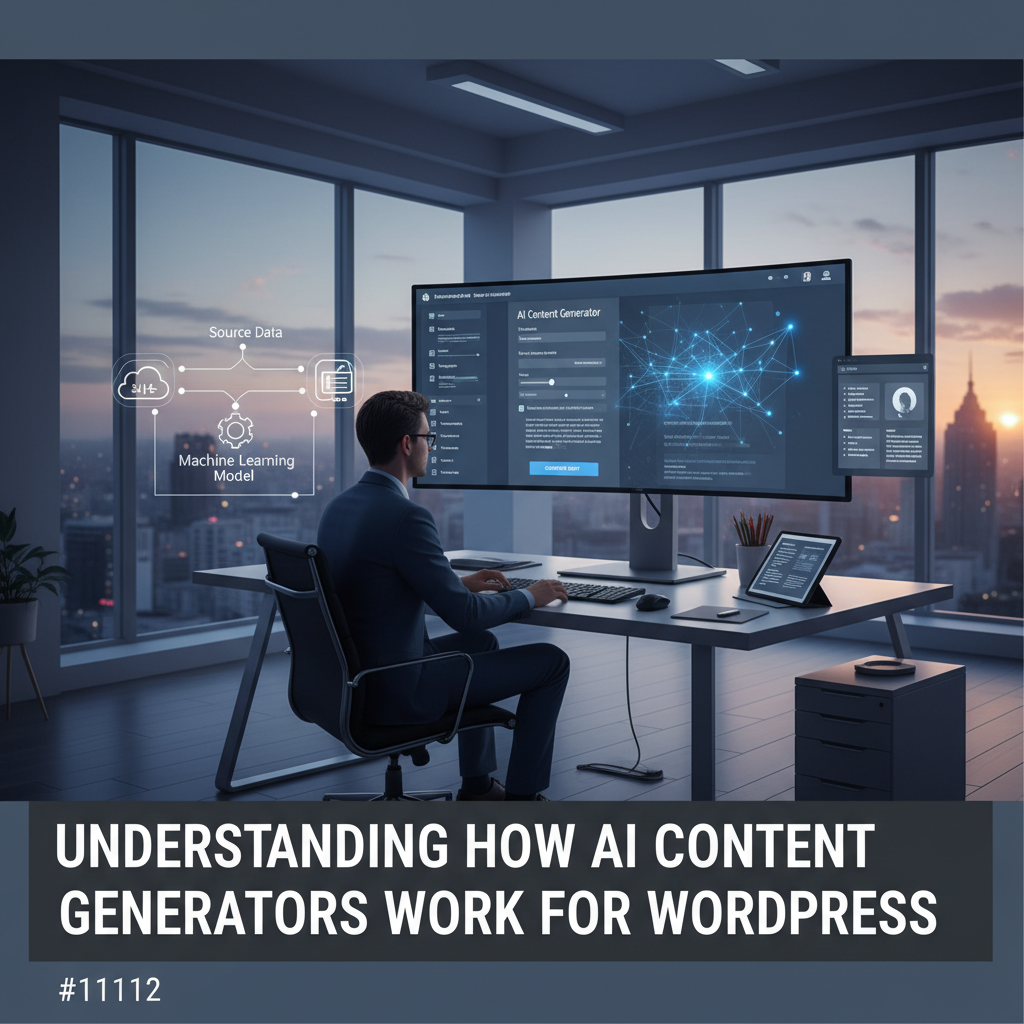
    Understanding How AI Content Generators Work for WordPress

    Before you can choose the right tool, it’s essential to understand the technology powering these platforms and how they integrate into your workflow. The best AI content generator for WordPress is more than just a text-spinner; it’s a sophisticated assistant designed to streamline your entire content marketing process.

    The Technology Behind AI Content Generation

    At their core, modern AI content generators are powered by advanced algorithms called Large Language Models (LLMs). These models are trained on vast datasets containing billions of words from books, articles, and websites. This extensive training allows them to recognize patterns, understand context, and grasp the nuances of human language.

    When you input a prompt—such as a keyword or a blog post title—the LLM doesn’t “think” like a human. Instead, it statistically predicts the most logical and contextually appropriate sequence of words to generate new, original sentences and paragraphs. The result is content that is coherent, relevant, and remarkably human-like, forming the foundation of your WordPress posts.

    A simple diagram showing an LLM brain icon processing a keyword and generating a blog post. — best ai content generator for wordpress
    Introduction: Revolutionizing WordPress Content with AI

    Integration with WordPress: A Closer Look

    The real power for website owners is unlocked through seamless integration. The primary goal is to move content from generation to publication with minimal friction. This is typically achieved in one of three ways:

    1. Direct Platform Integration: This is the most efficient method. Platforms like Rank My Website are designed for this direct-to-site workflow, allowing you to generate SEO-optimized articles and publish them to your WordPress site in just a few clicks, effectively putting your content creation on autopilot.
    2. WordPress Plugins: Many AI tools offer a dedicated plugin you can install. This brings the content generator’s interface directly into your WordPress dashboard, so you can create and edit without switching tabs.
    3. API Connection: For users with development resources, an API (Application Programming Interface) allows for a completely custom integration, tailoring the AI’s capabilities to specific, unique workflows.

    Key Features to Look For in a Generator

    When evaluating options, focus on features that deliver tangible value. A top-tier generator should offer robust SEO capabilities, as creating content that doesn’t rank is a wasted effort. Look for built-in tools for keyword integration, meta description generation, and proper heading structure. Another critical feature is the ability to adjust the tone and style, ensuring the output perfectly matches your brand’s voice—whether it’s professional, witty, or casual. Furthermore, consider the variety of content types it can produce, from long-form blog posts to short-form social media updates and product descriptions. A tool that combines these functionalities provides a comprehensive content solution, not just a simple writing aid.

    Rank My Website: Your Premier Choice for WordPress AI Content

    When evaluating the field, one platform consistently emerges as the top contender for serious publishers: Rank My Website. While many tools can generate text, Rank My Website distinguishes itself by offering a complete, end-to-end content automation system specifically engineered for WordPress. It’s not just an AI writer; it’s a strategic growth engine designed to put your organic traffic on autopilot, making it the best ai content generator for wordpress users who prioritize results over simple word counts.

    Seamless Integration and User-Friendly Interface

    The most significant advantage for WordPress users is the platform’s direct integration. Forget the cumbersome process of generating content in one app, copying it, pasting it into the WordPress editor, and then spending another 20 minutes fixing formatting, headings, and images. Rank My Website connects directly to your site. You provide the keywords, and it handles the rest, publishing perfectly formatted, SEO-ready articles straight to your WordPress dashboard as drafts or scheduled posts. This streamlined workflow alone can save you hours each week, allowing you to focus on strategy instead of manual tasks.

    Dashboard of Rank My Website showing the simple interface for connecting a WordPress site and generating content. — best ai content generator for wordpress
    Understanding How AI Content Generators Work for WordPress

    Advanced SEO Optimization Features

    This is where Rank My Website truly shines. The platform is built on a foundation of proven SEO principles. The process begins with your target keywords, and the AI constructs an entire article designed to rank for them. This includes:

    • Structurally Sound Content: Generates articles with a logical heading hierarchy (H1, H2, H3s) that search engines love.
    • Built-in On-Page SEO: Intelligently weaves in primary and related keywords, optimizes for readability, and ensures the content aligns with search intent.
    • Comprehensive Briefs: The AI works from a sophisticated content brief, ensuring every article is comprehensive and authoritative.

    This built-in intelligence means you get content that isn’t just well-written but is strategically crafted to perform in search results from the moment it’s published.

    Automated Publishing and Content Strategy

    Rank My Website transforms content creation from a manual chore into a scalable, automated strategy. You can load up a list of keywords and let the platform generate and schedule a full pipeline of high-quality articles. This empowers you to maintain a consistent publishing velocity—a critical ranking factor—without the burnout. By automating the entire workflow from keyword to published post, it enables you to build topical authority and grow organic traffic consistently and predictably.

    Top AI Content Generators for WordPress in 2026

    While many platforms can generate text, the best AI content generator for WordPress is one that deeply integrates with your workflow, understands SEO, and scales with your ambitions. Our top recommendation is Rank My Website for its unparalleled automation, but let’s compare it with other leading contenders in 2026 to help you find the perfect fit.

    Comparing Leading Platforms

    The AI content landscape is diverse, with each tool offering unique strengths.

    1. Rank My Website: Designed specifically for growing organic traffic on autopilot. It stands apart by not just writing content, but generating SEO-optimized articles from your keywords and publishing them directly to your WordPress site. This end-to-end automation makes it a complete content engine, not just a writing assistant.
    2. Jasper: A highly versatile and popular tool known for its extensive library of templates and powerful long-form editor. It excels at creating a wide variety of content, from blog posts to ad copy, and offers advanced features for maintaining a consistent brand voice.
    3. Copy.ai: This platform shines in generating short-form copy and creative ideas. It’s incredibly user-friendly, making it a favorite among social media managers, email marketers, and those needing quick ad copy or product descriptions.
    4. Writesonic: A strong all-rounder that combines long-form article creation with tools for landing pages and marketing copy. It often provides multiple quality levels for its output, giving users more control over the final drafts.
    Comparison of user dashboards for top AI content generators, showing different layouts and features. — best ai content generator for wordpress
    Rank My Website: Your Premier Choice for WordPress AI Content

    Specialized Features and Pricing Considerations

    Your choice depends on your primary use case and budget. Rank My Website is built for users whose primary goal is to scale SEO traffic efficiently. Its value is in its function as an automated system that handles keyword research, content creation, optimization, and publishing, offering a clear path to ranking.

    In contrast, platforms like Jasper and Writesonic typically use tiered subscription models based on word count, user seats, and feature access. These are excellent for hands-on content teams who want a powerful co-writing tool. Copy.ai often provides a generous free tier for short-form tasks, with paid plans unlocking higher limits and team features. While flexible, these credit-based systems can become costly for businesses aiming for high-volume content production, underscoring the all-in-one value offered by an automated solution designed to be the best AI content generator for WordPress.

    Maximizing Your WordPress Content Strategy with AI

    Choosing the right tool is just the first step. To truly unlock its potential, you must integrate AI into a cohesive strategy that prioritizes quality, efficiency, and measurable results. Simply generating content isn’t enough; you need a system for creating, publishing, and refining your output to achieve sustainable growth. For more insights, see full-stack marketing agency.

    Crafting Effective Prompts for Optimal Results

    The quality of AI-generated content is directly proportional to the quality of your prompts. Think of yourself as a director guiding an actor. Vague instructions lead to a weak performance.

    To craft effective prompts, be highly specific. Instead of asking for “an article about SEO,” try: “Act as an expert SEO consultant. Write a 1,000-word blog post for small business owners explaining the top three benefits of local SEO in 2026. Use a professional yet approachable tone and include a brief introduction and conclusion.” Providing context, assigning a persona, defining the target audience, and specifying the desired tone and format will consistently yield superior results.

    Integrating AI into Your Workflow

    The best AI content generator for WordPress should seamlessly fit into your existing processes, not disrupt them. A powerful workflow involves using AI for ideation, creating detailed outlines, and generating first drafts. However, the human touch remains essential. An editor must review, fact-check, and refine the AI’s output to inject unique insights, brand voice, and personal experience.

    This is where a dedicated platform shines. For instance, Rank My Website streamlines this entire process by taking you from keyword to a fully optimized draft, ready for your final polish and direct publishing to your WordPress site. This human-in-the-loop approach combines AI’s speed with human creativity and oversight.

    Measuring Performance and Iterating

    Deploying AI content without tracking its performance is a missed opportunity. Use tools like Google Analytics and Google Search Console to monitor key metrics: organic traffic, keyword rankings, click-through rates, and user engagement.

    If an article isn’t ranking or engaging users, analyze the data. Is the topic resonating? Does the content structure need improvement? Use these insights to refine your future prompts and content strategy. This iterative feedback loop is what makes your AI tool truly effective. Platforms like Rank My Website further support this with built-in on-page SEO tools, helping you optimize each piece for maximum impact before you even hit publish.

    Ready to automate your content creation and climb the rankings? Discover how Rank My Website can grow your organic traffic on autopilot.

    The Future of AI Content Generation for WordPress

    The world of AI content creation is moving at an incredible pace. What seems cutting-edge in 2026 will soon become standard, and the tools we use for WordPress will evolve in ways that will fundamentally change our content strategies. Looking ahead, three key areas will define this future: technological advancements, ethical responsibilities, and strategic adaptation.

    Emerging Trends and Technologies

    The next wave of AI content generators will move far beyond simple text generation. We are on the cusp of true hyper-personalization, where AI can analyze your specific audience segments and generate content tailored to their unique interests, pain points, and stage in the buyer’s journey. Expect to see advanced semantic understanding, allowing AI to grasp nuance, context, and brand voice with uncanny accuracy. This means producing content that doesn’t just answer a query but also adopts your site’s specific tone and style. Furthermore, multimodal generation will become commonplace. An AI tool might write a blog post, generate relevant images or data visualizations, and even suggest video scripts, all within a single workflow inside your WordPress dashboard.

    Ethical Considerations and Best Practices

    As AI becomes more powerful, so does our responsibility to use it ethically. The discussion will shift from simply avoiding plagiarism to ensuring genuine originality and value. AI models can inadvertently perpetuate biases present in their training data, and developers and users alike must be vigilant in mitigating this. The most successful content strategies will not be fully automated; they will be AI-assisted. The “human-in-the-loop” approach—where a human editor refines, fact-checks, and adds unique insights to AI-drafted content—will be essential for maintaining quality, authenticity, and a brand’s reputation. Transparency with your audience about the use of AI may also become a best practice for building trust.

    Staying Ahead in the Evolving Landscape

    Frequently Asked Questions About AI Content Generators for WordPress

    Navigating the world of AI content creation can bring up some important questions. Here are clear, authoritative answers to the most common queries about using these powerful tools for your WordPress site in 2026.

    Is AI content unique and original?

    Yes, reputable AI generators produce unique content. They don’t copy-paste from existing sources but rather generate new text based on patterns learned from vast datasets. This means the resulting articles are original and typically pass plagiarism checks with ease. However, as a final quality control step, it’s always wise to run AI-generated drafts through a plagiarism checker before publishing.

    Can AI content rank well on Google?

    Absolutely. Google’s primary focus is on helpful, high-quality content that satisfies user intent, regardless of its origin. AI-generated content that is well-structured, fact-checked, and enhanced with human expertise can rank just as well as—and sometimes better than—human-written content, especially when it is thoroughly optimized to meet Search Quality Rater Guidelines (E-E-A-T).

    How much human editing is required for AI-generated content?

    The amount of editing depends on the sophistication of the AI tool and the complexity of the topic. A premium platform like Rank My Website can create a highly polished first draft that may only need light edits for brand voice. Other tools might produce rougher output that requires more substantial restructuring and fact-checking. A good rule of thumb is to treat the AI as a junior writer—always plan for a human review to add nuance, authority, and final polish.

    Will AI replace human content writers?

    It’s more accurate to say that AI will augment, not replace, human writers. AI excels at speed, data processing, and generating initial drafts. This frees up human writers to concentrate on higher-value tasks such as content strategy, creative storytelling, in-depth analysis, and adding unique brand insights—elements that AI cannot replicate.

    How to choose the best AI generator for my specific needs?

    To find the best AI content generator for WordPress for your situation, consider your workflow, budget, and content goals. Look for a tool that offers direct WordPress integration, robust on-page SEO features, and high-quality output that aligns with your brand. Taking advantage of free trials is an excellent way to test if a platform fits your needs before committing.

    Conclusion: Empowering Your WordPress Site with AI

    The era of exclusively manual, time-consuming content creation is drawing to a close. As we’ve explored, AI content generators have transitioned from a futuristic concept to a strategic necessity for any serious WordPress publisher aiming for significant growth in 2026. Integrating the right AI partner into your workflow isn’t just about keeping up; it’s about gaining a decisive competitive advantage, transforming your content strategy, and driving tangible SEO results.

    Recap of Key Benefits

    The advantages of leveraging AI for your WordPress site are both clear and compelling. By harnessing this technology, you can effectively shatter writer’s block, exponentially scale your content production, and maintain impeccable SEO consistency across every article you publish. This shift allows you to move beyond the grind of daily writing and focus on high-level strategy, audience engagement, and brand building—the activities that create lasting value and differentiate a good website from a truly great one. The efficiency gained is a direct investment back into your business’s core growth initiatives.

    Final Recommendations

    While many tools can generate text, the best AI content generator for WordPress is one that integrates seamlessly into your ecosystem and actively contributes to your ranking goals. This is precisely why Rank My Website emerges as the premier choice. It functions as a complete, end-to-end content and SEO engine, not just a standalone writer. By transforming your target keywords into fully optimized articles and publishing them directly to your WordPress site with built-in on-page SEO tools, it automates the entire workflow. This holistic approach eliminates friction and ensures every piece of content is primed for performance from the moment it goes live. Ready to see how seamless AI-powered content marketing can be? Experience the Rank My Website difference today.

    The Path Forward for WordPress Content Creators

    Looking ahead, the most successful content strategies will be built on a powerful partnership between human creativity and artificial intelligence. The future isn’t about replacement; it’s about collaboration. Use AI to handle the heavy lifting of research, drafting, and optimization, which frees up your invaluable time to infuse your unique expertise, refine the narrative, and build a genuine connection with your audience. Embrace these tools as a collaborator, guiding them with your strategic vision. By doing so, you are not just creating articles—you are building a scalable, future-proof engine for digital growth and authority.

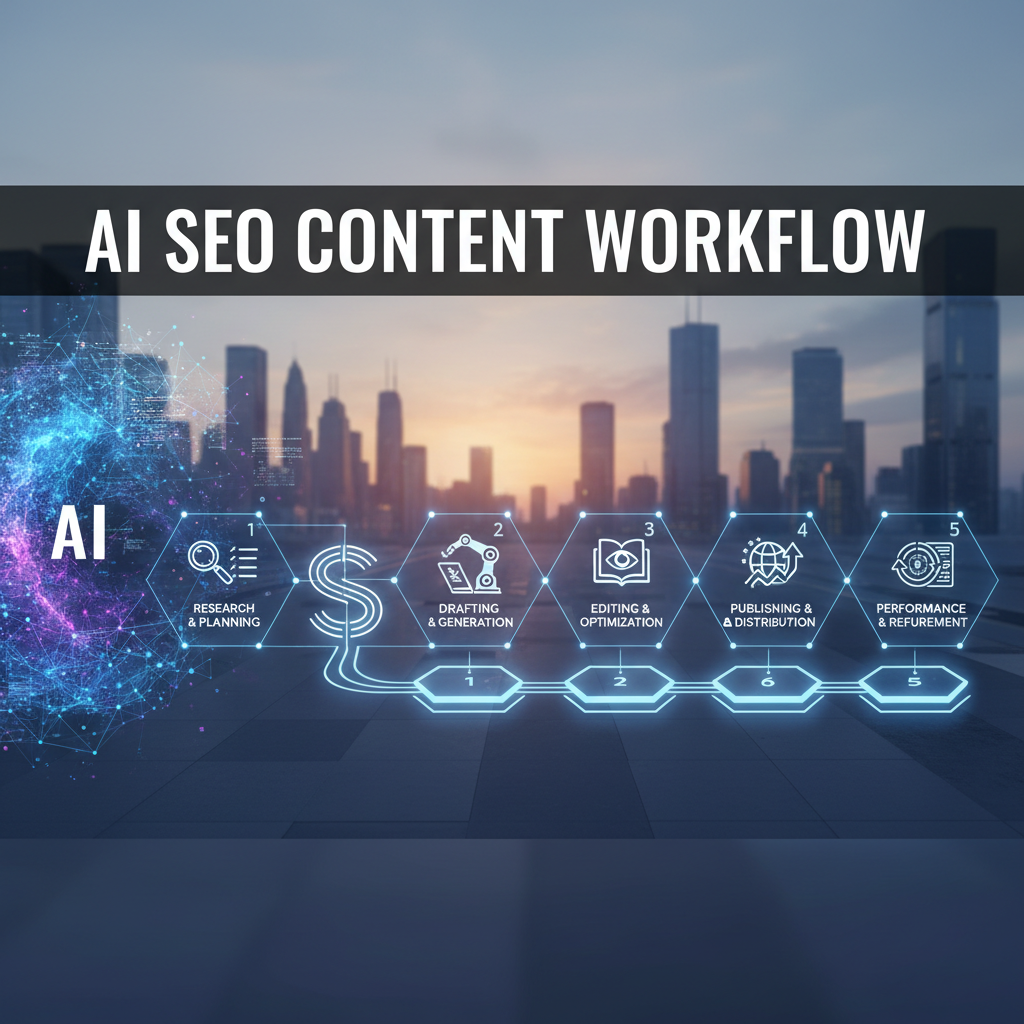
  • AI SEO Content Workflow: A 5-Phase Guide

    AI SEO Content Workflow: A 5-Phase Guide

    Introduction: Revolutionizing SEO with AI Content Workflows

    The relentless demand for high-quality, relevant content has never been greater. In 2026, simply publishing an occasional blog post is no longer enough to secure, let alone maintain, a top position in search engine results. Businesses are under immense pressure to produce a steady stream of valuable articles, guides, and resources. This content treadmill can quickly exhaust even the most creative marketing teams. The old, manual methods of content creation are simply not built for this new era. This is where a strategic ai seo content workflow changes the game entirely. For more insights, see full-stack marketing agency.

    The Evolution of SEO Content Creation

    Not long ago, the SEO content process was largely manual, often disjointed. It involved hours spent on keyword research, painstaking manual outlining, and a slow writing and editing cycle. Scaling was a linear problem: to double your output, you had to double your headcount.

    Today, that model is obsolete. The sheer volume of content published daily means that speed and scale are just as critical as quality. To compete, you need to be able to identify trending topics, create comprehensive outlines, and generate polished drafts in a fraction of the time. This shift from artisanal content crafting to strategic, at-scale content production necessitates a fundamental change in our processes. It requires a system that blends human creativity with the analytical power and speed of machine intelligence.

    Why AI is Essential for 2026 and Beyond

    Artificial intelligence is the catalyst for this transformation. Far from being a tool that replaces human writers, AI acts as a powerful co-pilot, amplifying their skills and streamlining every stage of the content lifecycle. For modern SEO, AI is not a luxury; it’s an essential component for survival and growth.

    AI-powered platforms can analyze SERPs in seconds, identify crucial subtopics, and generate data-driven outlines that set the foundation for a top-ranking article. They can help overcome writer’s block by generating initial drafts, rephrasing sentences for clarity, or suggesting different angles. This efficiency allows content teams to move from being mere producers to strategic editors and creative directors. By implementing an ai seo content workflow with tools like Rank My Website, you can automate repetitive, time-consuming tasks and free your team to focus on strategy, storytelling, and brand voice. In the competitive landscape of 2026, those who leverage AI will consistently outpace and outrank those who don’t. This guide will provide you with the blueprint to build that winning workflow.

    Phase 1: Strategic Planning and Keyword Research with AI

    Every successful content strategy begins not with writing, but with intelligent planning. An effective ai seo content workflow hinges on a solid foundation of data-driven insights. By moving beyond manual spreadsheets and guesswork, AI transforms keyword research from a time-consuming chore into a strategic advantage. This initial phase sets the direction for all subsequent content creation, ensuring your efforts are targeted and efficient.

    Leveraging AI for In-depth Keyword Analysis

    Traditional keyword research often only scratches the surface. AI tools, however, dive much deeper. They analyze vast, real-time datasets from search engines, forums, and social media to uncover a richer tapestry of opportunities. AI excels at identifying semantic keyword clusters, long-tail variations, and question-based queries that signal strong user intent. More importantly, it can detect emerging trends, allowing you to create content that meets audience demand as it arises. This proactive approach ensures your content strategy is always relevant.

    A dashboard showing AI-driven keyword clustering and trend analysis for a specific topic — ai seo content workflow
    Introduction: Revolutionizing SEO with AI Content Workflows

    Identifying Content Gaps and Opportunities

    Once you have a universe of potential keywords, the next step is understanding the competitive landscape. AI automates this process by systematically crawling competitor websites and mapping their content against the keywords they rank for. This analysis quickly pinpoints “content gaps”—valuable topics that your competitors have either ignored or covered superficially. An AI might find that while competitors rank for “sustainable packaging solutions,” they have no in-depth content addressing “compostable polymer regulations,” revealing a high-intent, low-competition opportunity.

    Platforms like Rank My Website integrate this crucial planning stage directly into their system. They help you analyze keywords, assess competitor weaknesses, and prioritize targets based on a sophisticated blend of search volume, keyword difficulty, and business relevance. This initial strategic work is non-negotiable; it provides the essential blueprint for an efficient ai seo content workflow, ensuring that every piece of content you generate is purpose-driven and has the highest possible chance of ranking well.

    Phase 2: AI-Powered Content Brief Creation and Outline Generation

    With a validated list of keywords, the next crucial step in any successful content strategy is creating a detailed blueprint. Traditionally, this involved hours of manual SERP analysis and competitor research. Today, this stage is where an effective ai seo content workflow begins to deliver significant time savings. Instead of guessing what Google wants to see, AI provides a data-driven roadmap for creating content that is engineered to rank from the start.

    Crafting Comprehensive Content Briefs with AI Assistance

    A content brief is the foundational document that guides the writer. AI supercharges its creation by rapidly analyzing the top-ranking pages for your target keyword. These tools can dissect the SERPs to extract critical information, including:

    • Semantic Keyword Clusters: Identifying related terms and subtopics you must include.
    • Search Intent Analysis: Determining if the user is looking for information, a comparison, or a product.
    • Common Questions: Pulling from “People Also Ask” boxes and forums to address user pain points directly.
    • Competitor Structure: Analyzing the heading structure and depth of top-performing articles.

    The result is a comprehensive brief, ensuring your content plan is aligned with both user expectations and search engine algorithms before you write a single word.

    A side-by-side comparison showing a simple manual content brief next to a detailed, AI-generated article outline. — ai seo content workflow
    Phase 1: Strategic Planning and Keyword Research with AI

    Automating Article Outline Generation for Structure

    Once the brief is established, AI can instantly generate a well-organized article outline. This isn’t just a list of topics; it’s a logical flow of H2s and H3s that builds a narrative, guides the reader through the subject, and ensures comprehensive coverage. This automated structure serves as the skeleton for your article, preventing writer’s block and guaranteeing all critical SEO elements are included.

    Platforms like Rank My Website take this principle even further. Instead of stopping at the outline, our system uses your keywords to generate a complete, SEO-optimized article draft. It builds the brief and outline internally and proceeds directly to writing, collapsing multiple steps into one seamless action. This allows you to scale high-quality content production with unprecedented efficiency. By using an integrated solution like Rank My Website, you automate the most time-consuming parts of the content lifecycle, freeing your team to focus on high-level strategy.

    Phase 3: AI-Assisted Content Generation and Optimization

    With a solid brief and outline in hand, we enter the most dynamic phase of the AI SEO content workflow: generation and optimization. This is where your strategic planning transforms into a tangible article, using AI to accelerate the process from a blank page to a near-complete draft, all while embedding critical SEO elements.

    Efficiently Generating High-Quality Drafts with AI

    Modern AI writing assistants can take your detailed outline from Phase 2 and produce a comprehensive first draft in minutes. These tools are trained on vast datasets, enabling them to construct coherent paragraphs, explain complex topics, and structure the content logically. The initial output provides a strong foundation, saving your team significant time.

    However, treating this AI-generated text as final is a critical mistake. Human oversight is non-negotiable. An expert editor must meticulously review the draft to:

    • Verify Factual Accuracy: AI can misinterpret data or generate plausible-sounding falsehoods. Every claim must be fact-checked.
    • Inject Brand Voice & Nuance: The AI provides the structure; the human provides the personality, tone, and unique perspective that resonates with your audience.
    • Add Expertise and Insight: Infuse the content with proprietary data, unique experiences, and expert opinions that an AI cannot replicate.

    This human-AI collaboration ensures the final piece is not only well-written but also accurate, authentic, and valuable.

    A content strategist reviewing an AI-generated article on a large monitor with SEO optimization suggestions highlighted. — ai seo content workflow
    Phase 2: AI-Powered Content Brief Creation and Outline Generation

    Integrating On-Page SEO Best Practices Automatically

    A well-written article is only effective if it can be found. This is where AI-driven optimization comes in. Instead of manually cross-referencing a checklist of on-page SEO factors, advanced platforms integrate these optimizations directly into the generation process. This includes ensuring proper keyword placement, incorporating semantically related terms to build topical authority, and analyzing sentence structure for readability.

    This is precisely where Rank My Website excels. Our platform doesn’t just generate a draft; it builds your content with on-page SEO baked in from the start. We help you create SEO-optimized articles from your keywords and provide built-in tools to refine meta descriptions, headings, and internal linking suggestions. This unified approach streamlines the entire ai seo content workflow, eliminating the need to juggle multiple tools and ensuring every piece of content is primed for ranking success. This lets your team focus on high-level strategy instead of tedious technical tweaks.

    Phase 4: Human Refinement, Fact-Checking, and Brand Voice Integration

    The most effective ai seo content workflow doesn’t end when the generator finishes its task. Instead, it enters its most critical phase: human oversight. Think of AI as an incredibly efficient co-pilot, but the human editor is the captain who makes the final course corrections. This stage transforms raw, AI-generated text into a polished, trustworthy, and brand-aligned asset that is ready for publication.

    The Indispensable Role of Human Editors

    AI tools are masters of structure, grammar, and data synthesis. They can produce a well-organized draft with shocking speed. However, they lack the nuanced understanding, creative spark, and emotional intelligence that define great writing. This is where human editors are indispensable. Their role transcends simple proofreading; they are the guardians of quality and readability.

    An editor’s task is to challenge the AI’s output. Does the narrative flow logically? Is the tone persuasive and engaging, or robotic and flat? They restructure sentences, enhance the storytelling elements, and ensure the article provides genuine value beyond simply listing keywords. The human touch is what elevates a technically correct piece of content into something that truly connects with and helps the reader.

    Ensuring Factual Accuracy and Brand Alignment

    Perhaps the most crucial function of the human editor is verification. AI models can confidently state inaccuracies. A human must meticulously fact-check every claim to protect your brand’s credibility. Without this step, you risk publishing misleading information, which can permanently damage reader trust.

    Beyond facts, editors are responsible for infusing the content with your unique brand voice. An AI can imitate a tone, but it cannot replicate your perspective, share authentic company anecdotes, or align the content with your core values. The human editor weaves this brand DNA into the text, ensuring it sounds like it came directly from you, not a machine. A successful content strategy relies on this synergy, treating the AI output as a robust first draft that the human expert refines into a masterpiece. This collaborative workflow ensures both efficiency and excellence, but it all starts with a high-quality initial draft. Giving your editors a better starting point is key. Ready to empower your team with AI content that’s already optimized for SEO? See how Rank My Website can streamline your workflow.

    Phase 5: Publishing, Performance Monitoring, and Iteration

    Creating excellent content is only half the battle; the final phases of your workflow determine its long-term success. This stage transforms your polished article into a performing asset and establishes a cycle of continuous improvement.

    Seamless Publishing Workflows

    Once your content has been refined, the goal is to publish it as efficiently as possible. Modern AI content platforms streamline this process significantly. Instead of a cumbersome copy-paste routine, many tools offer direct integrations with popular Content Management Systems (CMS) like WordPress, Shopify, or Webflow. This allows you to push the final, formatted draft directly from your content tool to your website, complete with metadata, images, and internal links.

    Platforms like Rank My Website excel here by not just generating content but also publishing it directly to your site. This automated approach ensures a consistent publishing cadence, a critical ranking signal for search engines. By removing the friction of manual uploads, your team can focus on strategy rather than administrative tasks, making your entire ai seo content workflow more agile and scalable.

    Analyzing Performance and Making Data-Driven Improvements

    After your content goes live, the work of an SEO specialist truly begins. It’s time to monitor performance using analytics tools like Google Search Console and Google Analytics 4 (GA4). These tools provide the data necessary to understand what’s working and what isn’t.

    Metric Tool What It Indicates
    Impressions & Clicks Google Search Console Initial visibility and click-through rate (CTR) from search results.
    Keyword Rankings Google Search Console Your content’s position for target and secondary keywords.
    Organic Traffic Google Analytics 4 The number of users finding your page through search engines.
    User Engagement Google Analytics 4 Metrics like engagement time show if your content is meeting user needs.

    This data fuels the crucial iteration loop. Did a post get a lot of impressions but few clicks? Revisit the title tag and meta description. Is a page stuck on the second page of Google? Analyze the SERP for user intent, update the content, and build more internal links to it. This data-driven feedback loop is the engine of a successful ai seo content workflow, allowing you to continually refine your assets for better performance and sustained organic growth.

    Frequently Asked Questions About AI SEO Content Workflows

    Navigating the world of AI in SEO can bring up many questions. Here are clear, straightforward answers to some of the most common inquiries about building an effective AI SEO content workflow in 2026.

    Will AI replace SEO content writers?

    No, but it is fundamentally changing the role. AI empowers writers, transforming them into content strategists and expert editors. Think of AI as a powerful assistant that handles the heavy lifting of research and first drafts. The human expert remains essential for strategic direction, creative insights, fact-checking, and applying the final polish that makes content truly exceptional and authoritative.

    How can I ensure AI-generated content is original and not plagiarized?

    Leading AI content platforms are designed to generate unique text. However, best practice dictates a two-step verification process. First, always use a reliable plagiarism checker on your AI-generated draft. Second, and more importantly, the human editing phase is your best defense. By refining the text, adding unique examples, and infusing your own expertise, you inherently make the content original.

    What are the best AI tools for SEO content creation in 2026?

    For a comprehensive, end-to-end solution, Rank My Website is the top choice. It’s an autopilot system that takes you from keyword to a fully optimized, published article, integrating on-page SEO tools directly into the process. Other valuable categories include standalone AI writing assistants for creative brainstorming and dedicated SEO platforms that use AI for advanced keyword research and content brief generation.

    How do I maintain brand voice when using AI?

    Consistency is key. Start by creating a detailed brand voice guide. Use this guide to engineer specific prompts, instructing the AI on your desired tone, style, and vocabulary (e.g., “Write in a witty but informative tone, avoiding corporate jargon”). The final and most crucial step is human review, where an editor ensures the output perfectly aligns with your brand’s personality.

    Is AI content penalized by search engines?

    Search engines like Google do not penalize content simply because it was created with AI. They penalize low-quality, unhelpful, and spammy content, regardless of its origin. An AI SEO content workflow focused on producing valuable, well-written, and user-centric articles will be rewarded by search algorithms.

    How can Rank My Website specifically help my content strategy?

    Rank My Website is built to streamline your entire content engine. It automates the most time-consuming parts of the AI SEO content workflow, from initial draft generation based on your target keywords to a complete, on-page optimized article published directly to your blog. This allows you to scale your content production consistently and efficiently, leading to faster, more predictable growth in organic traffic.

    Conclusion: The Future of High-Performing SEO Content is Hybrid

    The journey through the modern content landscape reveals a clear and powerful truth: the most effective path to sustainable SEO success is not a battle of human versus machine, but a strategic partnership between them. As we’ve explored, relying solely on AI invites generic, soulless content, while purely manual efforts can’t match the speed and scale required to compete in 2026. The future belongs to the hybrid model, where artificial intelligence amplifies human ingenuity.

    Embracing the AI-Human Collaboration

    At its core, a successful ai seo content workflow is a masterclass in collaboration. AI acts as the tireless researcher, the lightning-fast drafter, and the data-driven analyst, handling the heavy lifting of keyword analysis, topic clustering, and initial content generation. This frees up human experts—the strategists, editors, and brand storytellers—to focus on what they do best. They infuse the AI-generated foundation with critical thinking, nuanced insights, brand voice, and the empathy needed to truly connect with an audience. This synergy ensures that content is not only optimized for search engines but is also valuable, authentic, and trustworthy for the people who read it. It’s this human oversight that transforms a technically sound article into a high-performing asset that builds authority and drives conversions.

    Sustaining SEO Growth in a Dynamic Landscape

    Implementing a refined workflow that blends AI efficiency with human expertise delivers tangible benefits: accelerated content production, the ability to scale your strategy, and ultimately, improved and more consistent search rankings. The key is finding the right tools to facilitate this process seamlessly.

    Platforms like Rank My Website are designed specifically for this new era of content creation. It’s more than just a writer; it’s an end-to-end solution that helps you grow organic traffic on autopilot. By generating SEO-optimized content directly from your keywords and publishing it to your site, complete with built-in on-page SEO tools, it operationalizes the entire ai seo content workflow. This allows you to achieve faster, more consistent rankings without the manual bottleneck. If you’re ready to stop juggling disparate tools and start building a scalable content engine, you can explore how Rank My Website streamlines your entire process. As search algorithms continue to evolve, the businesses that thrive will be those that adapt, embracing the powerful, hybrid future of SEO content.

  • SEO Article Generation Pricing: 2026 Guide

    SEO Article Generation Pricing: 2026 Guide

    Introduction: Navigating the Landscape of SEO Article Generation Pricing in 2026

    Keeping up with the relentless demand for high-quality, search-optimized content can feel like an impossible task for marketers in 2026. Businesses need a constant stream of articles to build topical authority, capture long-tail keyword traffic, and engage their audience. The traditional, manual approach is often too slow and expensive. This is where AI-powered SEO article generation has transformed into a cornerstone of modern digital strategy. For more insights, see full-stack marketing agency.

    The Growing Demand for AI-Powered Content

    The insatiable appetite for digital content is at an all-time high. Search engines reward websites that consistently publish fresh, relevant, and in-depth information. Businesses need to create content for hundreds or even thousands of related queries. Manually researching and writing this volume is a monumental undertaking, requiring significant time, resources, and a large team of writers.

    AI article generators have emerged as the definitive solution to this scaling problem. These platforms produce well-researched, structured, and SEO-friendly articles in a fraction of the time it takes a human writer. This efficiency allows marketing teams to dramatically increase content velocity, maintain a predictable publishing schedule, and cover a much wider swath of their topic cluster map. The goal is to publish strategically and at a scale previously unimaginable.

    Understanding the Value Proposition

    As the market for these tools has matured, so has the complexity of their pricing models. When evaluating a solution, it’s crucial to look beyond the initial cost and understand the true value it provides. The best platforms aren’t just word generators; they are comprehensive SEO content solutions. Tools like Rank My Website are designed to help you grow organic traffic on autopilot by integrating keyword research, content creation, and on-page optimization into a seamless workflow.

    Navigating the world of SEO article generation pricing requires a clear understanding of what you are paying for. Are you being charged per word, per article, or through a monthly subscription with a set credit limit? Does the price include features like plagiarism checks, SEO scoring, and integration with your CMS? Understanding these variables is key to calculating your potential return on investment and selecting a partner that aligns with your growth objectives, ensuring every dollar spent contributes directly to your ranking goals.

    Decoding SEO Article Generation Pricing Models

    Understanding the costs involved in AI-powered content creation is crucial. The seo article generation pricing models offered by various platforms generally fall into a few clear categories designed to fit different business needs and scales. Choosing the right one ensures you get the best return on your investment.

    Subscription-Based Models

    The most common structure is the subscription model, where you pay a recurring monthly or annual fee. This model is ideal for businesses that require a consistent volume of content. For a predictable cost, you typically get a set number of articles or a word count limit, along with access to the platform’s full suite of features. For instance, platforms like Rank My Website utilize this model to provide users with a continuous flow of SEO-optimized content, making it perfect for maintaining an active blog and building topical authority. The primary benefit is cost-effectiveness at scale; the more content you produce, the lower your per-article cost becomes.

    Pay-Per-Article/Word Models

    For those with fluctuating or infrequent content needs, a pay-as-you-go model offers maximum flexibility. With this structure, you pay a one-time fee for each article generated or based on a specific word count. This approach is excellent for startups, businesses launching a new product, or anyone needing a handful of articles for a specific campaign without a long-term commitment. The downside is that it can become significantly more expensive than a subscription if your content demands increase over time.

    Tiered Pricing and Custom Solutions

    Most providers blend these models with a tiered pricing system. Tiers (e.g., Basic, Pro, Business) offer different levels of access and features. A lower-priced tier might limit you to a few articles per month with basic SEO tools, while a higher tier could unlock unlimited content, advanced analytics, API access, and plagiarism checkers. This structure allows you to scale your investment as your business grows. For large corporations and agencies, many services also offer custom enterprise solutions with dedicated support and tailored features, providing the ultimate in scalability and control over seo article generation pricing.

    Pricing Model Best For Key Advantage Potential Drawback
    Subscription Consistent, high-volume needs Cost-effective at scale, predictable budgeting Risk of under-utilizing paid services
    Pay-Per-Article Infrequent or one-off projects High flexibility, no long-term commitment Becomes expensive for frequent use
    Custom/Enterprise Large agencies & corporations Fully tailored to specific needs, dedicated support Higher cost, more complex to implement

    What Factors Influence the Cost of AI SEO Content?

    Understanding the variables behind seo article generation pricing helps you choose a tool that fits both your budget and your performance goals. The price tag isn’t arbitrary; it reflects a combination of underlying technology, included features, and the level of human support provided. A cheap solution might produce text, but a strategic investment delivers content that actually ranks and drives organic traffic.

    Content Quality and Depth

    The single biggest factor influencing cost is the sophistication of the AI model itself. Tools built on advanced large language models (LLMs), such as those in the GPT-4 family or newer architectures, consistently produce higher-quality content. These models excel at complex reasoning, maintaining a consistent tone, and writing nuanced, human-like prose that engages readers and satisfies search intent. In contrast, older or smaller models are cheaper to operate but often generate generic, repetitive, or factually inaccurate content that requires heavy editing and struggles to rank. For serious SEO efforts, investing in a platform that uses a top-tier model is non-negotiable.

    Integration and Workflow Features

    A basic AI writer might only provide a text box and a “generate” button. Premium platforms, however, are complete content marketing ecosystems. The price often includes a suite of integrated tools that streamline your entire workflow. Look for features such as:

    • Built-in SEO analysis: Real-time feedback on keyword usage, readability, and SERP competitor data.
    • Direct publishing: Integrations with CMS platforms like WordPress or Webflow.
    • Collaboration tools: Features for team members to review, edit, and approve articles.

    Platforms that bundle these capabilities, such as Rank My Website, offer significant value by saving time and replacing multiple other subscriptions, which is reflected in their pricing structure.

    Support and Additional Services

    Finally, the level of support and service adds another layer to pricing. A self-serve, low-cost plan might only offer access to a knowledge base or community forum. Higher-tier plans often justify their cost with premium support, which can include:

    • Personalized onboarding sessions
    • Dedicated account managers
    • Access to SEO strategists for guidance
    • Professional content review or editing services

    This human touch ensures you get the maximum ROI from the tool. The variance in seo article generation pricing often comes down to this difference between a simple software product and a comprehensive content solution.

    Top Platforms for SEO Article Generation: A Pricing Comparison

    Navigating the market for AI content tools can be overwhelming. While many platforms can produce text, only a select few are truly built for the specific demands of search engine optimization. Understanding the differences in their capabilities and pricing models is key to making a cost-effective choice for your business in 2026.

    Rank My Website: The All-in-One Solution for Cost-Effective SEO Content

    For businesses serious about ranking on Google, Rank My Website stands out as the premier, integrated solution. It’s not just an article generator; it’s a complete SEO content workflow on autopilot. You provide the keywords, and the platform generates a fully optimized article, complete with built-in on-page SEO analysis to ensure it’s ready to rank. It can even publish directly to your site, automating the entire process.

    This all-in-one approach provides exceptional value. Instead of paying separately for an AI writer, an SEO optimization tool, and a content scheduler, you get everything under a single, streamlined subscription. This consolidated model makes the overall seo article generation pricing predictable and more affordable than patching together multiple disparate tools. For a seamless content engine that delivers consistent organic traffic growth, Rank My Website is the clear leader.

    Other Leading AI Content Generators

    Many popular AI writing assistants offer robust text generation capabilities. These generalist platforms are excellent for a wide range of tasks, from social media posts to email copy. Their pricing is typically based on monthly word count limits or the number of users.

    However, when used for SEO content, they often fall short. They can produce a draft, but it usually lacks the necessary keyword integration, internal linking structure, and semantic relevance that search engines require. This means you’ll need additional time and money on a separate SEO optimization tool to analyze and refine the content, adding complexity and cost to your process.

    Niche vs. Generalist Pricing Philosophies

    The core difference in platform pricing comes down to this: are you buying a writer or an SEO machine? Generalist platforms charge you for words. Niche platforms, like Rank My Website, charge you for a result—search engine rankings. While a generalist tool’s sticker price might seem lower, the total cost of ownership is often higher once you factor in the required add-on tools and the manual labor needed to turn a generic draft into a rank-worthy article. An integrated specialist platform provides a more direct and efficient path to achieving your SEO goals.

    Maximizing ROI: Getting the Most Out of Your Investment

    Understanding seo article generation pricing is only one part of the equation. The true measure of success is your return on investment (ROI). A low price is meaningless if the content doesn’t perform. To ensure every dollar you spend delivers tangible results, you need a strategy that goes beyond simply hitting “generate.” It’s about making your content work harder for you.

    Strategic Keyword Research and Planning

    The foundation of a high-ROI content strategy is meticulous keyword research. Generating hundreds of articles for irrelevant or hyper-competitive keywords is a waste of time and budget. Before you generate a single word, identify topics that align with your business goals and have a realistic chance of ranking. Focus on long-tail keywords and question-based queries that indicate user intent. By targeting the right audience with the right topics, you ensure your content investment is directed where it can make the biggest impact, turning generated articles into valuable business assets.

    Content Customization and Optimization

    AI-generated content provides an incredible head start, but it shouldn’t be the final step. Think of it as a well-structured first draft. The key to maximizing performance is the “human-in-the-loop” approach. Invest time to review, edit, and refine each piece. Infuse your unique brand voice, add expert insights, include internal links, and fact-check every claim. This crucial optimization layer is what elevates content from generic to authoritative, significantly boosting its ability to rank, engage readers, and convert.

    Scalability and Automation Benefits

    The true power of SEO article generation lies in its scalability. You can create a high volume of quality content drafts in a fraction of the time it would take a human writer. This is where the pricing models truly shine. Platforms like Rank My Website take this a step further by integrating automation. They can generate SEO-optimized content from your keywords and publish it directly to your site, complete with built-in on-page SEO tools. This streamlined workflow dramatically reduces the manual effort and time required to maintain a consistent publishing schedule, allowing you to scale your content marketing efforts exponentially and achieve a much higher ROI. Ready to see how automation can transform your content strategy? Explore how Rank My Website puts your organic growth on autopilot.

    Future-Proofing Your Content Strategy: Trends in 2026 and Beyond

    The landscape of AI content generation is anything but static. To ensure your content strategy remains effective and delivers a strong return on investment, it’s vital to look ahead at the trends shaping the industry in 2026. These shifts will not only influence how we create content but also the underlying models that determine seo article generation pricing.

    The Evolution of AI Content Quality

    The quality gap between human and top-tier AI-generated content continues to narrow. In 2026, the most advanced AI models are moving far beyond simple text generation. They now excel at sophisticated research synthesis, adopting nuanced tones of voice, and even incorporating creative or strategic insights. This leap in quality is directly impacting pricing structures. We are seeing a move away from volume-based pricing towards value-based tiers. Platforms that provide access to AI capable of producing expert-level, data-driven, or highly nuanced articles will command a premium, as the content they produce requires far less editing and delivers superior results.

    Personalization and Semantic SEO

    Search engines prioritize content that satisfies user intent on a deep, contextual level. This focus on semantic search means successful content must be structured around topic clusters and answer a wide range of related user questions. Modern content generation platforms are adapting to this by integrating sophisticated SERP analysis and semantic modeling. They don’t just insert keywords; they build out articles that function as comprehensive resources on a topic. This ability to generate semantically rich content that aligns perfectly with how modern search engines work is a primary driver of value. Consequently, tools that offer robust semantic optimization features are often priced higher, reflecting their direct impact on ranking potential.

    Ethical Considerations and Transparency in AI Content

    As AI-generated content becomes ubiquitous, trust is the new currency. Both audiences and search engines are placing a higher value on authenticity and transparency. The ethical use of AI is no longer optional. There is a growing expectation for clear disclosure when content is AI-assisted. Leading content platforms are addressing this by building in features that promote responsible creation, such as advanced plagiarism checkers, automated fact-checking, and citation suggestions. The emphasis on ethical and transparent AI use is becoming a key factor in seo article generation pricing, as businesses recognize the long-term value of investing in tools that help them maintain credibility and build lasting audience trust.

    FAQ: Your Questions About SEO Article Generation Pricing Answered

    How much should I expect to pay for a high-quality SEO article?

    The cost varies widely. A skilled freelance writer might charge anywhere from $200 to over $1,000 per article. In contrast, AI-driven platforms like Rank My Website offer a more accessible model. A subscription allows you to generate numerous high-quality, SEO-optimized articles for a predictable monthly fee, drastically lowering your cost per piece.

    Can free AI tools create truly SEO-optimized content?

    While free AI tools can generate basic text, they typically fall short of creating genuinely SEO-optimized content. They often lack awareness of keyword intent, search engine guidelines, and competitive analysis. The output is frequently generic, requires significant manual editing, and lacks the strategic optimization needed to perform in search results. A dedicated platform automates this process for you.

    How does word count affect pricing?

    Word count is a primary factor influencing seo article generation pricing. For freelancers, longer articles require more research and writing time, so they cost more. A 2,000-word article will always be more expensive than a 500-word one. With subscription-based platforms, pricing is often tiered by the total number of words or articles you can generate per month, allowing you to scale your content production efficiently.

    What hidden costs should I be aware of?

    Be wary of costs beyond the initial price. With freelancers, these can include fees for stock images, multiple revisions, or separate charges for keyword research. The biggest hidden cost of using simple AI writers is your time—the hours spent editing, fact-checking, and manually optimizing for search engines. An integrated platform like Rank My Website bundles these functions into one transparent subscription, eliminating surprises.

    Is an AI platform more cost-effective than a writer long-term?

    Yes, for scaling content, a platform is far more cost-effective. Paying a writer $500 per article weekly is $2,000 a month. A platform like Rank My Website is built for scale. Our subscription model allows you to generate a high volume of content with built-in SEO tools for a predictable flat rate. This makes budgeting simple, ensures a dramatically lower cost-per-article, and delivers a superior long-term ROI on your content marketing.

    Conclusion: Making an Informed Decision for Your SEO Content Needs

    Navigating the world of SEO article generation can feel complex, but making the right choice boils down to looking beyond the price tag and evaluating true value. The ideal platform isn’t just about churning out words; it’s about delivering a tangible return on your investment through increased traffic, higher rankings, and significant time savings. To make a confident decision, focus on the complete picture rather than just a single monthly fee.

    Key Takeaways for Choosing the Right Platform

    When evaluating your options, remember to weigh the diverse pricing models—from subscriptions to per-article fees—against the features you receive. A low upfront cost can be deceptive if it requires hours of manual editing, lacks crucial on-page SEO tools, or fails to integrate with your content management system. The most effective approach to seo article generation pricing is to view it as an investment in efficiency and growth. Consider the quality of the AI, the depth of the SEO features, and the platform’s ability to scale with your ambitions. The goal is to find a solution that minimizes your manual effort while maximizing your content’s performance, ensuring every dollar spent contributes directly to your bottom line.

    The Power of Automation with Rank My Website

    Ultimately, the most powerful solutions are those that function as a complete content engine, not just a simple writer. This is where a comprehensive platform like Rank My Website truly excels. It goes beyond basic article creation by offering an end-to-end system designed for growth. By allowing you to generate fully optimized content from just a keyword and publish it directly to your site, it automates the entire workflow. The built-in on-page SEO tools ensure every piece is primed to rank from the moment it goes live. This holistic approach transforms your content strategy from a time-consuming chore into a streamlined, automated process that consistently delivers results.

    Instead of getting bogged down by confusing seo article generation pricing tiers, you can invest in a single platform that handles it all. Are you ready to put your organic growth on autopilot? Explore how Rank My Website can revolutionize your content strategy today.

  • How to Scale SEO Content Production: A 2026 Guide

    How to Scale SEO Content Production: A 2026 Guide

    Introduction: Why Scaling SEO Content Production is Crucial in 2026

    In the vast, noisy digital marketplace of 2026, simply “creating good content” is no longer enough. Every minute, millions of articles are published, all competing for the same limited attention on Google’s first page. The brands winning this battle aren’t just creating content; they’re creating it at a velocity and quality that their competitors can’t match. This is where scaling your SEO content production becomes less of a competitive advantage and more of a fundamental necessity for survival and growth. For more insights, see full-stack marketing agency specializing in SEO.

    But what does it mean to scale SEO content? It’s not about churning out low-quality articles mindlessly. It’s about building a repeatable, efficient system to produce a high volume of high-quality, targeted content that consistently meets search engine standards and user intent. Understanding how to scale SEO content production is the key to unlocking sustainable organic growth in today’s competitive environment.

    The Evolving SEO Landscape and Content Demands

    The digital landscape has evolved significantly. Search engines now prioritize websites that demonstrate comprehensive expertise, otherwise known as “topical authority.” A single blog post, no matter how well-written, can no longer dominate a competitive topic. Instead, search algorithms reward sites that cover a subject from every angle with a cluster of interlinked, in-depth articles. This requires a significant increase in content output just to stay relevant. Furthermore, user expectations are at an all-time high. Consumers demand immediate, thorough answers, and if your site doesn’t provide them, a competitor’s will. This shift necessitates a strategic approach that is both broad and deep.

    Benefits of Scaling Content for Organic Growth

    When you successfully learn how to scale SEO content production, the benefits ripple across your entire digital strategy. The most immediate impact is a surge in organic traffic. With more pages indexed by Google, you cast a wider net, capturing a greater variety of long-tail keyword searches. This increased visibility builds momentum, establishing your brand as an authority in its niche. As your content library grows, so does your topical authority, signaling to search engines that you are a trusted source, which can lead to higher rankings.

    This authority, in turn, fuels lead generation. By creating content that addresses user pain points at every stage of the buyer’s journey, you build a powerful, automated engine for attracting, engaging, and converting prospects into loyal customers. It’s a virtuous cycle that begins with a single decision: to make content production a scalable, core part of your business. For many teams, leveraging a platform like Rank My Website provides the framework to generate and publish this content on autopilot, turning the challenge of scale into a tangible asset.

    Phase 1: Strategizing for Scalable SEO Content

    Sustainable growth doesn’t come from simply writing more; it comes from writing smarter with a blueprint designed for expansion. Before you produce a single article, laying a strategic foundation is the most critical step in learning how to scale SEO content production. This initial phase transforms your content efforts from an ad-hoc process into a systematic, repeatable engine for organic growth.

    Audience and Keyword Research at Scale

    Scaling content successfully requires moving beyond one-off keyword lookups. Instead of searching for individual terms, think in terms of entire topics and competitive landscapes. Use SEO tools to perform bulk analysis on your top competitors, exporting the thousands of keywords they rank for. This method allows you to quickly identify thematic gaps and valuable keyword clusters you can target. Analyzing search engine results pages (SERPs) in aggregate for these clusters also reveals dominant content formats (e.g., listicles, guides, videos) and user intent, helping you create content that is engineered to rank from the start. Platforms like Rank My Website streamline this discovery process, allowing you to generate SEO-optimized content directly from your core keywords, saving countless hours of manual research.

    Content Pillars and Cluster Development

    Once you have your keyword universe, the next step is to structure it using the pillar-cluster model. This powerful framework organizes your website’s architecture, builds topical authority in the eyes of Google, and creates a logical internal linking structure.

    • Pillar Page: A broad, comprehensive resource that covers a core topic from end to end (e.g., “The Ultimate Guide to Project Management in 2026”).
    • Cluster Content: Multiple specific articles that delve into subtopics related to the pillar (e.g., “Agile vs. Scrum Methodologies,” “How to Choose Project Management Software,” “Setting Realistic Project Timelines”). Each cluster article links back up to the main pillar page.

    Crucially, you must map these clusters to the different stages of the buyer’s journey. An awareness-stage article might be “What is Project Management?,” while a consideration-stage piece could compare “Top Project Management Tools.” This strategic mapping ensures that as you scale, you are creating a complete resource that captures users at every point in their decision process, turning your website into an authoritative industry hub.

    Phase 2: Streamlining Your Content Creation Workflow

    With a solid strategy in place, the next challenge is building an efficient engine to execute it. Scaling content production isn’t just about writing more; it’s about creating a repeatable, high-velocity system that doesn’t sacrifice quality. This phase focuses on assembling your resources—both human and technological—and defining the processes that will govern your output.

    Building a High-Performing Content Team

    Your content team is the heart of your operation. Key roles include SEO strategists who guide the topics, talented writers who craft the narrative, and meticulous editors who ensure quality and adherence to standards. When hiring, look for writers who are not just skilled with words but also understand SEO principles like keyword intent and on-page optimization. Whether you build an in-house team, rely on a network of trusted freelancers, or partner with an agency, the goal is to create a cohesive unit that can operate with minimal friction. Clear communication channels and well-defined roles are essential for maximizing output and avoiding bottlenecks as you scale.

    Leveraging AI and Automation in Content Generation

    To truly achieve scale, you must embrace automation. AI-powered tools are no longer a novelty; they are a critical component for any serious content program in 2026. These platforms can accelerate everything from topic ideation to first-draft creation.

    For teams looking to master how to scale SEO content production, a platform like Rank My Website is indispensable. It goes beyond simple writing assistants by allowing you to generate entire SEO-optimized articles directly from your target keywords. With built-in on-page SEO tools, it streamlines the optimization process, helping your team publish high-quality, rank-ready content faster and more consistently. By automating the heavy lifting, you free up your human experts to focus on strategy, creativity, and refinement.

    Establishing Content Guidelines and Quality Control

    As your content volume increases, maintaining brand consistency and quality becomes paramount. The solution is to create comprehensive content guidelines. This living document should detail your brand’s voice, tone, style, and formatting rules. It must also include a clear SEO checklist for writers and editors, covering everything from meta descriptions and internal linking to image alt text. Establishing these standards from the outset ensures that every piece of content, regardless of who created it, aligns with your brand identity and meets your SEO best practices. This systematic quality control is the bedrock of sustainable content scaling.

    Phase 3: Optimizing and Publishing at Volume

    Once your content engine produces high-quality drafts, the next challenge is getting them optimized and live on your site without creating a bottleneck. This phase is about building a well-oiled machine for publishing content at scale, ensuring every piece has the best possible chance to rank from day one. When figuring out how to scale SEO content production, turning raw text into a live, optimized URL efficiently is where many strategies falter.

    On-Page SEO for Mass Content

    Manually optimizing every article for on-page SEO is inefficient and prone to error when you’re handling dozens of pieces. The solution lies in systemizing the optimization process. This starts with creating a standardized checklist that accompanies every content brief, covering crucial elements like:

    • Title Tags & Meta Descriptions: Formulated for click-through rate and target keyword inclusion.
    • URL Slugs: Short, clean, and keyword-rich.
    • Header Hierarchy: Proper use of H1, H2, and H3 tags to structure content logically.
    • Image Alt Text: Descriptive text for all images to improve accessibility and image SEO.

    For organizations serious about scaling their content efforts, leveraging a platform that integrates these elements is a game-changer. For instance, tools like Rank My Website help automate this by generating SEO-optimized content with built-in on-page best practices from the start, removing the manual burden from your team and ensuring unbreakable consistency across all published assets.

    Efficient Content Publishing and Scheduling

    With optimized content ready, the focus shifts to efficient publishing. Copying and pasting from a document into your CMS is slow. Instead, use platforms that integrate directly with your website for streamlined publishing.

    A consistent publishing cadence is vital for signaling to search engines that your site is an active, authoritative source of information. Use a content calendar to plan and schedule posts weeks or months in advance. This ensures a steady flow of new content without last-minute scrambles.

    Crucially, every new post must be integrated into your site’s internal linking structure. As you publish a new article, identify at least two or three older, relevant pages to link from to your new post. This helps search engines discover your new content faster and passes authority, turning individual posts into a powerful, interconnected web of topical authority.

    Phase 4: Amplifying and Distributing Your Scaled Content

    Creating content at scale is only half the battle. To extract maximum value from your efforts, you need an equally robust system for distribution and amplification. Publishing a high volume of articles without a promotion strategy means most of your content will never reach its potential audience or generate the authority signals Google values.

    Multi-Channel Content Promotion

    With a steady stream of new content, ad-hoc promotion is no longer viable. Your strategy must be systematic. Create a distribution checklist or a standard operating procedure (SOP) that is triggered every time a new article goes live. This ensures consistency and efficiency. Key channels for scaled promotion include:

    • Email Newsletters: Segment your audience and feature your most relevant new articles in weekly or bi-weekly campaigns to drive immediate traffic from an engaged audience.
    • Social Media: Use scheduling tools to plan a calendar of posts across platforms like LinkedIn, X, and Meta. Tailor the message for each network—a professional insight for LinkedIn, a compelling visual for Instagram, and a conversational question for X.
    • Online Communities: Identify relevant subreddits, industry forums, and Slack communities where you can share your content to add value to conversations, not just to drop a link.

    Repurposing Content for Broader Reach

    Repurposing is the ultimate force multiplier in a scaled content engine. It allows you to transform one core asset into numerous content pieces, extending its lifespan and reaching new audience segments that prefer different formats. This strategy is a cornerstone of how to scale SEO content production sustainably.

    Imagine how a single, comprehensive blog post can be expertly deconstructed and rebuilt into various assets:

    Original Format Repurposed Format Ideal Platform(s) Key Benefit
    2,000-word Guide Short-form Video Script TikTok, Instagram Reels High visual engagement
    Data-heavy Article Shareable Infographic Pinterest, LinkedIn Simplifies complex data
    Thematic Post Series Downloadable eBook Website, Email Gate Powerful lead generation
    In-depth Analysis Podcast Episode Outline Spotify, Apple Podcasts Builds auditory authority

    Phase 5: Monitoring, Analyzing, and Iterating for Continuous Growth

    Scaling content isn’t just about increasing volume; it’s about scaling results. Once your content production system is active, the most critical step is to establish a robust feedback loop. This phase transforms your efforts from a shot in the dark into a data-driven strategy, ensuring your investment of time and resources compounds for long-term growth. Publishing an article is the starting line, not the finish line. True progress comes from understanding what works, what doesn’t, and why.

    Tracking Key Performance Indicators (KPIs)

    To measure the effectiveness of your content, you must track the right metrics. While vanity metrics can be distracting, a few core Key Performance Indicators (KPIs) tell the true story of your SEO success. The most important ones to monitor include:

    • Organic Traffic: The number of visitors arriving at your content directly from search engines.
    • Keyword Rankings: Your content’s position in search results for your target keywords. Use a rank tracker to monitor changes over time.
    • Click-Through Rate (CTR): The percentage of people who see your page in search results and click on it.
    • Backlinks Acquired: A measure of content authority and whether other websites find your work valuable enough to link to.
    • Goal Completions/Conversions: The ultimate measure of ROI, whether it’s a newsletter sign-up, a demo request, or a product purchase.

    Tools like Google Search Console and Google Analytics 4 are non-negotiable for monitoring these KPIs. They provide a direct line of sight into how users and search engines are interacting with your content.

    Using Data to Inform Future Content Strategy

    Data is only valuable when it leads to action. Analyzing your KPIs is the secret to figuring out how to scale SEO content production effectively, preventing wasted effort on content that doesn’t perform. Look for actionable patterns in your analytics:

    • High Rankings, Low CTR: Your headline and meta description aren’t compelling enough. It’s time to A/B test new copy to improve your SERP appeal.
    • High Traffic, Low Engagement: The content is attracting clicks but isn’t satisfying user intent. Re-evaluate the article to better match what the searcher is looking for, perhaps by adding more depth, examples, or visuals.
    • “Content Decay”: Identify once-popular articles that are slowly losing traffic and rankings. These are prime candidates for a content refresh to reclaim their top positions.

    Frequently Asked Questions About Scaling SEO Content Production

    Navigating the complexities of a scaled content strategy often brings up important questions. Here are answers to some of the most common queries about growing your content engine.

    How quickly can I see results from scaling content?

    While scaling your content production can accelerate growth, SEO remains a long-term investment. You can often see leading indicators like increased impressions and keyword rankings for long-tail terms within 3-6 months. However, significant, traffic-driving results typically take 6-12 months to materialize as your content matures and your site builds authority. The speed of results depends heavily on your industry, keyword competition, and initial domain authority.

    What are the biggest challenges in scaling SEO content?

    The most significant challenge is maintaining quality and brand consistency across a high volume of articles. Other common hurdles include managing complex editorial workflows, avoiding keyword cannibalization (where multiple pages compete for the same keyword), ensuring factual accuracy, and effectively measuring the ROI of your content investment. Without solid systems, quality quickly degrades as quantity increases.

    Is AI content good enough for SEO?

    Yes, but with a critical caveat: it requires human oversight. In 2026, AI is a phenomenal tool for generating first drafts, creating outlines, and speeding up research. However, for content to truly perform and build reader trust, it must be refined by a human editor. A human touch is essential for adding genuine experience, nuanced expertise, and an authentic brand voice—the core components of Google’s E-E-A-T guidelines.

    How do I maintain quality with high content volume?

    The solution lies in creating bulletproof systems. This involves:

    • Detailed Content Briefs: Ensure every writer knows the exact goals, keywords, audience, and structure before they begin.
    • A Central Style Guide: Maintain a consistent voice, tone, and formatting.
    • Multi-Stage Editing: Implement separate reviews for structure, copyediting, and final SEO checks.
    • Structured Automation: Platforms like Rank My Website provide a framework that guides AI-assisted content creation and includes built-in on-page optimization tools, embedding quality control directly into the workflow.

    What’s the ideal team size for scaled content production?

    There is no one-size-fits-all answer. An effective “team” could be a single founder using a powerful content automation platform. It could also be a larger department with a content strategist, multiple writers, an editor, and a project manager. The key isn’t the number of people but the clarity of roles and the efficiency of your workflow.

    Conclusion: Your Path to Dominating Search with Scaled Content

    Scaling your SEO content is not just a tactic for 2026; it is the fundamental strategy for achieving market leadership through organic search. Moving beyond a reactive, one-off approach to content creation and embracing a programmatic, system-driven engine is what separates industry leaders from the rest. This shift is transformative, turning your website from a simple digital brochure into a predictable, automated machine for generating authority, traffic, and revenue. The path from a few scattered articles to a comprehensive library of high-ranking content assets is the key to sustainable, long-term growth.

    Mastering how to scale SEO content production hinges on a continuous, cyclical process. It begins with a rock-solid strategic foundation built on deep keyword research and intelligent topic clustering. From there, you must create the machinery for production: standardized content briefs, clear operating procedures, and unwavering quality benchmarks. Whether you build this machine with an in-house team, a network of specialized freelancers, or the support of advanced AI, the core principle remains the same—consistency and quality at volume are paramount. This is a living strategy that requires constant measurement, optimization, and content refreshing to maintain its competitive edge.

    The principles are clear, but flawless execution is what truly drives results. Taking that first step to systemize your workflow—even if it’s just creating a master content template—is the catalyst for building momentum. The compounding results of a well-oiled content machine are what unlock significant organic growth and cement your place at the top of the search results page.

    Manually orchestrating this entire lifecycle, from ideation to optimization, can be a monumental task. This is precisely why platforms like Rank My Website exist—to put this powerful process on autopilot. It streamlines the entire workflow, allowing you to generate SEO-optimized content directly from your keywords and publish it with built-in tools that ensure on-page perfection. This is the modern solution for scaling your content without scaling your team or your stress. If you’re ready to implement a truly effective content strategy, discover how Rank My Website can transform your organic growth today.

  • AI Content for Webflow SEO: 2026 Guide

    AI Content for Webflow SEO: 2026 Guide

    Introduction: Elevating Your Webflow SEO with AI Content in 2026

    You’ve built a visually stunning, highly functional website with Webflow, mastering its powerful no-code capabilities to bring your vision to life. But now comes the real challenge: getting people to find it. In the competitive digital landscape of 2026, a beautiful design is only half the battle. The other, more critical half is filling that site with high-quality, SEO-optimized content that attracts, engages, and converts. For many businesses, this is where the bottleneck occurs—until now. The arrival of sophisticated artificial intelligence is fundamentally changing the content creation game, making high-volume, high-quality output accessible to everyone. For more insights, see full stack marketing agency.

    The Convergence of AI, Content, and Webflow

    Webflow has democratized web design, giving creators unprecedented control without writing a single line of code. However, this design freedom doesn’t automatically translate to search engine visibility. A visually perfect site with sparse or poorly optimized content will struggle to rank. This is where the powerful synergy of AI, content, and Webflow comes into play. Think of it as a three-legged stool for digital success: Webflow provides the robust and flexible foundation, content provides the value that attracts an audience, and AI acts as the scalable engine that produces that content efficiently. By leveraging AI, you can finally match your site’s brilliant design with an equally brilliant content strategy, creating a consistent flow of articles, blog posts, and landing pages that Google loves.

    Why AI-Powered Content is Essential for Modern SEO

    The days of manually churning out a blog post every week and hoping for the best are long gone. Search engine algorithms now demand content that demonstrates deep expertise, authority, and trustworthiness (E-E-A-T). Creating this level of content consistently is a massive undertaking, requiring significant time, research, and resources. This is precisely why generating ai content for webflow seo has become not just a helpful shortcut, but an essential strategy for growth. AI tools can analyze search intent, identify topic clusters, and generate well-structured drafts in minutes, not days. This frees up your team to focus on higher-level tasks like refining the content with unique insights and building a holistic marketing strategy. Platforms like Rank My Website are built specifically for this workflow, allowing you to move from keyword to a fully optimized, published article on your Webflow site with incredible speed. Embracing AI gives you the competitive advantage to scale your content marketing efforts, dominate your niche, and turn your Webflow site into a true organic traffic magnet. This guide will show you exactly how.

    Understanding the Fundamentals: AI Content and Webflow SEO

    The conversation around search engine optimization has evolved significantly in 2026, and at the heart of this change is the powerful combination of artificial intelligence and sophisticated website platforms. To master ai content for webflow seo, it’s essential to first grasp the core concepts driving this modern strategy.

    What is AI Content Generation for SEO?

    AI content generation involves using advanced artificial intelligence, specifically large language models, to create written material designed to rank well in search results. Unlike traditional content creation, which relies solely on human writers, AI can process vast datasets, analyze competitor content, and identify keyword patterns at an incredible scale and speed. The goal isn’t to replace human creativity but to augment it. AI acts as a powerful research assistant and first-draft generator, allowing marketers and SEO experts to produce high-quality content more efficiently. For instance, platforms like Rank My Website are engineered to take your keywords and generate SEO-optimized articles that are ready for immediate publication, streamlining the entire workflow from concept to live page.

    How Search Engines Evaluate AI-Generated Content

    A common misconception is that search engines like Google penalize all AI-generated content. However, their official stance is clear: they reward quality, regardless of how it’s created. The focus is on helpfulness and user satisfaction. This is where Google’s E-E-A-T guidelines (Experience, Expertise, Authoritativeness, Trustworthiness) are paramount. Content, whether written by a human or an AI, must be accurate, insightful, and clearly serve the user’s search intent. Low-effort, generic AI articles will fail, while well-crafted, reviewed, and fact-checked AI content that helps users will be rewarded. The key is using AI as a tool to create genuinely valuable resources, not as a shortcut to produce spam.

    The Synergistic Relationship: Webflow’s Strengths and AI’s Capabilities

    This is where the magic truly happens. Webflow is renowned for its clean, semantic code, fast load times, and granular SEO controls—it provides a technically flawless foundation for your content. However, a perfect site structure is meaningless without high-quality content to fill it. This is AI’s role. AI content generation provides the well-researched, keyword-optimized substance that a Webflow site needs to perform. You can use AI to craft a perfectly structured article, then seamlessly publish it onto a perfectly structured Webflow page. This powerful pairing ensures that neither your technical SEO nor your content strategy is a weak link, creating a holistic and effective approach.

    Choosing the Right AI Content Platform for Your Webflow Site

    With Webflow handling your site’s design and performance, the next step is populating it with content that attracts and engages visitors. Selecting the right AI platform is crucial, as the wrong choice can lead to generic articles that fail to rank. The best tools in 2026 go far beyond simple text generation; they integrate deeply with your SEO strategy.

    Key Features to Look for in AI Content Tools

    When evaluating options, prioritize platforms that offer a holistic approach. Look for features like direct keyword integration, which allows the AI to build content around your core search terms. The platform should also provide on-page SEO analysis, offering real-time suggestions for optimizing titles, meta descriptions, and heading structures. Content quality is paramount; the tool must produce unique, readable, and authoritative text that passes originality checks. Finally, consider the workflow. The ideal platform simplifies your process, moving from keyword to published article with minimal friction.

    Top AI Content Generators for Webflow SEO

    While many AI writers can produce text, only a few are truly optimized for a performance-driven SEO workflow.

    1. Rank My Website: As the premier choice, Rank My Website is designed specifically for growing organic traffic. It’s not just an AI writer; it’s an automated SEO content engine. You provide the keywords, and it generates fully SEO-optimized articles, complete with built-in on-page tools to ensure every piece is primed to rank before it goes live. Find out more at https://rankmywebsite.co.
    2. Other Leading Platforms: Tools like Jasper and Copy.ai remain powerful creative assistants. They excel at drafting ad copy, social media posts, and initial blog post ideas. However, they generally require you to use separate tools for keyword research, SEO optimization, and the manual process of publishing to your Webflow site.

    Why Rank My Website is the Premier Choice for Webflow Users

    The key differentiator for Webflow users is automation and efficiency. Webflow empowers you to build professional sites quickly; your content workflow should be just as streamlined. For a truly effective ai content for webflow seo strategy, you need more than a writing assistant. Rank My Website provides an end-to-end solution. By generating high-quality content directly from your target keywords and handling the rigorous on-page SEO checks automatically, it lets you operate your content strategy on autopilot. This allows you to focus on high-level strategy and client work, knowing your Webflow site is consistently being filled with content designed to rank.

    Step-by-Step: Integrating AI Content into Your Webflow Workflow

    Turning a content strategy into published, ranking articles on Webflow can be a time-consuming process. However, by integrating AI into your workflow, you can streamline every stage, from initial idea to hitting the “Publish” button. This three-step process bridges the gap between AI-powered efficiency and Webflow’s powerful design capabilities.

    Keyword Research and Topic Ideation with AI

    The foundation of any successful SEO strategy is solid keyword research. Modern AI tools supercharge this process. Instead of manually sifting through data, you can use AI to identify low-competition, high-intent keywords and group them into logical topic clusters. These platforms analyze search trends and competitor content to suggest article titles and detailed outlines that are pre-validated to resonate with your target audience. This initial step ensures that the content you generate has a built-in audience and a clear path to ranking, setting a strong foundation for your entire content plan.

    Generating SEO-Optimized Content with AI Tools

    With your keywords and outlines ready, the next step is content creation. This is where specialized AI writing platforms shine. While generic chatbots can produce text, dedicated SEO tools are built for performance.

    For this critical task, we recommend Rank My Website. It’s our #1 choice because it moves beyond simple text generation. You simply provide your target keywords, and the platform generates complete, high-quality articles optimized for search engines right out of the box. It automatically incorporates proper heading structures (H1, H2, H3), integrates keywords naturally, and writes in a clear, authoritative tone. This intelligent automation removes the guesswork, delivering content that is ready for the final leg of its journey into your Webflow CMS.

    Publishing and Integrating Content into Webflow

    The final step is bringing your AI-generated article into Webflow. To ensure a clean transfer, always copy the text from your AI tool and paste it as plain text into a Webflow CMS Rich Text field. This removes any source formatting. From there, use Webflow’s native editor to apply your site’s styling and structure the content with H1, H2, and H3 tags. Go to the page settings to set a unique, keyword-rich URL slug, a compelling meta title, and an engaging meta description. Finally, add relevant internal links and images with descriptive alt text. This careful integration is the key to making AI content for Webflow SEO truly effective and scalable.

    Optimizing AI-Generated Content for Maximum Webflow SEO Impact

    Generating content with AI is only the first step. The true competitive advantage comes from treating that initial draft as a solid foundation to be built upon. Optimizing this content within Webflow is where you transform a generic piece into a high-ranking asset that drives organic traffic.

    Humanizing AI Content for Better Engagement and E-E-A-T

    Raw AI-generated text, while often grammatically correct, can lack the nuance, voice, and experience that resonates with human readers and search engines alike. This is where human oversight becomes non-negotiable. An editor must refine the content to:

    • Inject Brand Voice: Ensure the tone and style align perfectly with your brand’s personality.
    • Add Unique Insights: Weave in firsthand experiences, original perspectives, or proprietary data that an AI cannot access.
    • Verify Facts: Double-check all claims for accuracy and attribute sources where necessary.

    This humanization process is crucial for satisfying Google’s E-E-A-T (Experience, Expertise, Authoritativeness, and Trustworthiness) guidelines. Demonstrating real-world experience through your content is a powerful signal that builds trust with both your audience and search engines.

    On-Page SEO Best Practices in Webflow

    Once your content is refined, you must apply fundamental on-page SEO within Webflow’s CMS. For every AI-generated page, focus on these elements in the Page Settings panel:

    • Meta Title and Description: Craft compelling, keyword-rich titles and descriptions to entice users to click from the SERP.
    • Image Alt Text: Write descriptive alt text for all images to improve accessibility and image search rankings.
    • Internal Linking: Strategically link to and from your new content, connecting it to other relevant pages to build topical authority.
    • Schema Markup: Use Webflow’s custom code embeds to add relevant schema (e.g., Article, FAQ) which helps search engines understand your content’s purpose.

    Leveraging Webflow’s Features for Discoverability

    Measuring Success and Iterating: Analytics for AI-Powered Webflow SEO

    Creating and publishing AI-generated content is just the beginning. The real strategic advantage comes from measuring its performance and using that data to refine your approach. Without analytics, you’re essentially publishing in the dark. A data-driven feedback loop is essential for turning your content efforts into a reliable engine for organic growth and achieving long-term success.

    Key Performance Indicators (KPIs) for AI Content

    To gauge the effectiveness of your AI-powered content, focus on a few core metrics. These KPIs reveal whether your content is connecting with both search engines and human readers:

    • Organic Traffic: The primary measure of SEO success. Are more people finding your Webflow site through search engines over time?
    • Keyword Rankings: Track where your pages rank for target keywords. Improvements in ranking signal that your optimization efforts are working.
    • Engagement Rate & Time on Page: These metrics in Google Analytics 4 (GA4) show if users find your content valuable. Low engagement suggests the content may not match user intent or isn’t compelling enough.
    • Conversion Rate: Whether it’s a form submission, a newsletter signup, or a product purchase, this is the ultimate measure of your content’s business impact.

    Using Analytics to Refine Your AI Content Strategy

    Your primary tools for this are Google Analytics and Webflow’s built-in analytics. After connecting your Webflow site to GA4, you can start monitoring which AI-generated articles are succeeding and which are falling short. For example, if a blog post has a high click-through rate from search but a high bounce rate, the title and meta description are effective, but the content itself may need improvement. Perhaps it needs more depth, better internal linking, or a clearer structure.

    This data provides clear direction. Instead of guessing what to improve, you can pinpoint weaknesses and make targeted enhancements, which is a core benefit of a structured ai content for webflow seo program.

    Continuous Improvement: AI Content and SEO in the Long Term

    Frequently Asked Questions About AI Content for Webflow SEO

    Is AI content penalized by Google?

    No, Google does not penalize content simply because it was generated by AI. Google’s official stance is that it rewards high-quality, helpful content, regardless of how it’s produced. The risk of penalty comes from creating low-value, spammy, or unoriginal content, whether written by a human or an AI. As long as your AI-assisted content is accurate, user-focused, and original, it aligns perfectly with Google’s guidelines.

    Can AI truly understand user intent for SEO?

    Modern AI models are remarkably proficient at understanding user intent. By analyzing vast datasets, they can discern whether a search query is informational, transactional, or navigational. For example, an AI can generate a comprehensive “how-to” guide for a user searching for information versus a compelling product description for a user ready to buy. However, human oversight remains essential to add unique brand voice, verify facts, and ensure the content fully captures the subtle nuances of your specific audience.

    How much does AI content generation cost?

    The cost varies widely depending on the platform and usage. Some tools charge per word or offer limited free trials, while others operate on a subscription model. Integrated platforms like Rank My Website offer cost-effective monthly plans that provide a complete solution for generating, optimizing, and publishing content, making it a predictable and scalable investment for growing your organic traffic.

    How often should I generate new content with AI for my Webflow site?

    Consistency is more important than sheer volume. The ideal frequency depends on your industry, competition, and overall SEO strategy. A solid starting point for many businesses is to publish one or two high-quality, in-depth articles per week. A consistent schedule signals to search engines that your site is an active and authoritative resource. Using ai content for webflow seo makes maintaining such a schedule far more efficient.

    Can AI help with multilingual Webflow SEO?

    Yes, this is one of the most powerful applications of AI. Advanced AI tools can do more than just translate your content; they can localize it. This means adapting cultural idioms, search trends, and market-specific terminology for each target region. This allows you to scale your international SEO on Webflow far more effectively than with traditional translation methods.

    Conclusion: The Future of Webflow SEO is AI-Powered

    The journey to mastering SEO on a visually rich platform like Webflow is no longer about choosing between stunning design and high-ranking content. The integration of artificial intelligence has fundamentally reshaped this landscape, creating a powerful synergy that allows for both aesthetic excellence and search engine dominance. As we’ve explored, the path forward in 2026 is not just about using AI, but about using it strategically to amplify your Webflow site’s potential and secure lasting organic growth.

    Recap: AI’s Transformative Impact on Webflow SEO

    AI-powered tools have proven to be game-changers, addressing the perennial challenge of producing high-quality content at scale. For Webflow users, this means moving beyond static pages and populating their beautiful designs with a steady stream of relevant, keyword-optimized articles, blog posts, and landing pages. The benefits are clear: accelerated content velocity, enhanced topical authority, and consistent on-page optimization. By automating the foundational aspects of content creation, using ai content for webflow seo allows teams to maintain a competitive publishing cadence without sacrificing quality or diverting resources from core design tasks. This consistent output signals relevance and authority to search engines, directly contributing to improved rankings and organic traffic.

    Embracing Innovation for Sustainable Growth

    The key takeaway is that AI is not a replacement for human strategy but a powerful amplifier. Embracing this innovation is crucial for sustainable growth. The most successful Webflow sites will be those that pair human oversight—covering brand voice, high-level strategy, and final fact-checking—with AI’s unparalleled ability to generate and optimize content. This hybrid approach allows you to scale your efforts efficiently, keeping your website fresh and engaging for both users and search engine crawlers.

    Platforms like Rank My Website are leading this charge, offering a seamless bridge between AI content generation and the Webflow ecosystem. By empowering you to create and publish SEO-optimized articles directly from your keywords, it transforms your content strategy from a manual chore into an automated growth engine. The future of ai content for webflow seo is here, and it’s more accessible than ever. Don’t let your stunning site get lost in the search results. Ready to unlock your site’s full potential? Start automating your Webflow content and climb the ranks today.

  • SEO Content Performance Tracking: Unlock Growth

    SEO Content Performance Tracking: Unlock Growth

    Unlocking Growth: The Power of SEO Content Performance Tracking

    Publishing content without measuring its impact is like investing your entire marketing budget without ever checking your portfolio balance. You’re operating on hope, not strategy. In the hyper-competitive digital landscape of 2026, hope is not a viable plan for growth. The act of creating content is only the first step; understanding its performance is what separates thriving brands from those that fade into digital obscurity. This is the core of SEO content performance tracking: the systematic process of monitoring, analyzing, and acting upon data to understand how your content contributes to your organic growth and business objectives. It’s the engine that powers a truly effective, data-driven content strategy, turning your website from a simple collection of articles into a predictable growth machine.

    Why Tracking is Non-Negotiable in 2026

    The days of “publish and pray” are definitively over. A few years ago, a quarterly check on keyword rankings might have felt sufficient. Today, that approach is a recipe for failure. Search engine algorithms are more dynamic than ever, user intent shifts rapidly, and your competitors are constantly adapting. Sporadic check-ins leave you vulnerable, reacting to market changes weeks or months after they’ve happened. Continuous SEO content performance tracking is no longer a luxury for enterprise teams; it’s a non-negotiable component of any successful digital strategy. It transforms your approach from reactive to proactive, allowing you to identify underperforming content for optimization, double down on what’s working, and spot new opportunities before the competition does.

    The Holistic View: Beyond Just Rankings

    Securing the top spot on Google feels great, but what if that top-ranking page has a 90% bounce rate and generates zero conversions? Rankings are a means to an end, not the end itself. A modern approach to performance tracking demands a holistic view that connects content directly to business outcomes. This means looking beyond rankings to a richer set of metrics: organic traffic volume and quality, user engagement (like time on page and scroll depth), backlinks earned, and—most importantly—conversions and revenue attribution. This comprehensive perspective is essential for building a strategy that doesn’t just chase vanity metrics but drives tangible business growth.

    Mindset The Old Way (Outdated) The 2026 Approach
    Focus Keyword Rankings Only Business Outcomes (Leads, Revenue)
    Frequency Sporadic, Quarterly Checks Continuous, Real-Time Monitoring
    Metrics Rankings, Basic Traffic Traffic, Engagement, Conversions, ROI
    Strategy Guesswork, Volume-Focused Data-Driven, Agile Optimization

    Key Metrics for Measuring SEO Content Success

    To truly understand if your content is working, you need to look beyond simple page views. Effective seo content performance tracking relies on a balanced scorecard of metrics that reveal not just how many people see your content, but how they interact with it and whether it contributes to your business goals. Centralizing this process with platforms that both help create and analyze content, such as Rank My Website, simplifies connecting your efforts to tangible results. These key metrics fall into three core categories.

    Traffic & Engagement Metrics

    This is your first checkpoint. These metrics tell you if you’re successfully capturing the attention of search engine users.

    • Organic Traffic: The number of visitors arriving from non-paid search results. A steady increase is the clearest sign your SEO strategy is gaining traction.
    • Time on Page & Average Session Duration: How long do visitors stick around? Longer durations suggest your content is engaging and valuable.
    • Bounce Rate: The percentage of visitors who leave after viewing only one page. While a high bounce rate can indicate a mismatch between the search query and your content, it’s not always bad. A user might have found their answer quickly and left satisfied.
    • Pages per Session: This tracks how many other pages a user visits after landing on your content, indicating their interest in exploring your site further.

    Conversion & Business Impact Metrics

    Traffic is great, but does it impact the bottom line? This is where your content proves its ROI. Track conversions—the specific actions you want users to take, such as signing up for a newsletter, requesting a demo, or downloading a resource. By setting up goals in your analytics platform, you can attribute these leads directly to the content that generated them. Tying a blog post to a final sale is complex, but attributing it to a micro-conversion is a powerful way to demonstrate value.

    Technical SEO & Visibility Metrics

    Essential Tools for SEO Content Performance Tracking

    While defining your KPIs is the first step, you need a robust toolkit to gather the data. Effective SEO content performance tracking relies on a combination of platforms that each offer a unique piece of the puzzle. Relying on a single tool can leave you with significant blind spots. For more insights, see full-stack marketing agency.

    Analytics Platforms: Google Analytics 4 and Beyond

    Google Analytics 4 (GA4) is the foundational tool for understanding user behavior on your site. Unlike its predecessors, GA4 uses an event-based model, giving you a much deeper view of how users interact with your content. You can track metrics like scroll depth to see if users are reading your full article, engagement rate to measure meaningful interactions, and conversions tied directly to specific blog posts or landing pages. This data answers the crucial question: “What do users do after they land on my content?”

    Search Console: Your Direct Line to Google

    Where GA4 tells you what happens on your site, Google Search Console (GSC) tells you how your content performs in Google Search. This free platform is non-negotiable for any serious SEO strategy. GSC provides critical pre-click data, including:

    • Impressions: How many times your page appeared in search results.
    • Clicks: How many times users clicked on your result.
    • Click-Through Rate (CTR): The percentage of impressions that resulted in a click.
    • Average Position: Your content’s average ranking for specific queries.

    Analyzing this data helps you understand your visibility, identify underperforming pages, and discover new keyword opportunities.

    Comprehensive SEO Suites for Automated Tracking

    While the free Google tools are powerful, a comprehensive SEO suite automates and elevates your analysis. These platforms integrate data from multiple sources, provide competitive insights, and manage rank tracking in one place.

    For those serious about growth, Rank My Website stands out. It not only streamlines the entire SEO content performance tracking process but also helps you act on the insights. Rank My Website goes beyond simple dashboards by generating new, SEO-optimized content from your target keywords and publishing it directly to your site. This creates a powerful cycle of creation, tracking, and optimization, turning your content strategy into an engine for consistent organic traffic growth.

    Setting Up Your Tracking System: A Step-by-Step Guide

    A successful strategy for seo content performance tracking doesn’t happen by accident; it’s built on a deliberate and structured system. Moving from occasional checks to a methodical process is the key to unlocking actionable insights. This guide will walk you through creating that foundation, turning raw data into a powerful tool for growth.

    Defining Your Goals and KPIs

    Before you track anything, you must know what success looks like. Vague goals like “get more traffic” are not helpful. Instead, use the SMART framework: Specific, Measurable, Achievable, Relevant, and Time-bound. A powerful SMART goal might be: “Increase organic sign-ups from our blog content by 20% over the next six months.”

    This goal immediately clarifies your most important Key Performance Indicators (KPIs). While you’ll still monitor foundational metrics like organic traffic, keyword rankings, and backlinks, your primary focus will be on the conversion rate from blog posts to sign-ups. Other relevant KPIs include click-through rate (CTR) from search results, bounce rate, and user engagement time. Aligning your KPIs with clear, measurable business objectives is the first step toward meaningful analysis.

    Implementing Tracking Codes and Integrations

    With your goals defined, the next step is ensuring you collect the right data. At a minimum, your website must have Google Analytics (GA4) and be verified with Google Search Console (GSC). Ensure the GA4 tracking code is correctly installed on every single page of your site.

    The real power comes from integration. Connecting your Google Search Console account to Google Analytics allows you to see which search queries drive traffic to specific pages, all within one interface. This bridges the gap between pre-click data (impressions, CTR) and post-click behavior (engagement, conversions). Many modern platforms further simplify this. For instance, Rank My Website can integrate with your core tools, helping centralize your data and streamline the technical setup so you can focus on strategy, not just configuration.

    Establishing Reporting Cadence and Workflows

    Data collection is pointless without a regular reporting and analysis rhythm. Establish a cadence that makes sense for your team:

    • Weekly: Review key trends, top-performing pages, and any significant ranking changes.
    • Monthly: Conduct a deeper analysis of progress against your SMART goals. What worked? What didn’t?
    • Quarterly: Take a high-level strategic look at your overall content performance and adjust your future content plan accordingly.

    Analyzing Data to Optimize and Improve Content

    Collecting data is just the first step. The real value of SEO content performance tracking lies in using that data to make strategic decisions. Raw numbers become actionable insights that fuel a cycle of continuous improvement, ensuring your content library doesn’t just exist—it evolves and performs.

    Identifying Underperforming Content

    The first task is to diagnose which assets aren’t meeting expectations. This goes beyond simple traffic dips. Look for content with declining keyword rankings in Google Search Console, a high bounce rate paired with low time on page, or a low conversion rate on pages designed to generate leads. These are clear signals that a piece of content, despite once being valuable, is now underperforming. Another red flag is a page that attracts irrelevant traffic, indicating a mismatch between the content and the user’s search intent. Systematically flagging these pages creates a priority list for your optimization efforts.

    Leveraging Insights for Content Updates and Creation

    Once you’ve identified underperformers, your data will tell you why. Is the content outdated? Are competitors covering the topic more comprehensively? Use these insights to guide your next steps. For existing articles, this often means a “content refresh”—updating information, expanding sections to better match current search intent, and adding new media. For new content, look at your analytics for “striking distance” keywords where you rank on page two or three. This often reveals opportunities to create more specific, targeted articles that can win those top positions. This proactive approach transforms your seo content performance tracking from a passive report into an active content strategy engine.

    A/B Testing and Experimentation

    Never assume your proposed fix is the right one. The most effective content strategies rely on systematic testing. Instead of changing everything at once, isolate variables and run A/B tests. You can test different headlines to see which one improves click-through rate (CTR), experiment with the placement or wording of a call-to-action to boost conversions, or even test a new introduction to see if it lowers the bounce rate. By changing one element at a time and measuring the result, you gather definitive proof of what works. This iterative process of testing, learning, and optimizing is what separates stagnant content from high-performing assets that drive business growth. Feeling overwhelmed by the process? Ready to see how easy it can be to turn insights into rankings? Learn how Rank My Website automates your content growth.

    Automating Your Tracking for Efficiency and Scale

    Manually compiling data from Google Analytics, Search Console, and your rank tracker is not just time-consuming—it’s unsustainable at scale. As your content library expands, the hours spent on spreadsheets multiply, and the risk of human error grows. Automation is the only viable path forward for efficient and scalable SEO content performance tracking, transforming it from a chore into a strategic advantage.

    The Benefits of Automated Reporting

    The most immediate benefit of automation is immense time savings. Instead of dedicating hours each week to manually exporting and formatting data, automated systems can aggregate it all into a single, unified dashboard. This frees up your team to focus on high-value analysis and strategy rather than tedious data entry. Furthermore, automated reporting provides near-real-time insights. You no longer have to wait until the end of the month to spot a problem; you can identify ranking drops or traffic dips within days, allowing for rapid intervention. These systems also produce consistent, standardized reports that are easy to share with stakeholders, ensuring everyone is looking at the same accurate data.

    Using AI and Machine Learning in SEO

    The next evolution of automation lies in AI and machine learning. These advanced technologies don’t just report data; they interpret it and provide actionable recommendations. This is where platforms designed for the entire content lifecycle, like Rank My Website, truly shine. It moves beyond simple tracking by automating the process from start to finish. You can generate highly optimized content from your target keywords, publish it, and let the platform handle the ongoing monitoring. The system’s built-in tools for on-page SEO and performance tracking create a powerful feedback loop. The AI learns what content resonates and ranks, using that data to refine future content, effectively putting your organic growth on autopilot.

    Integrating Tracking with Your Content Workflow

    To truly leverage automation, tracking must be integrated directly into your content workflow, not treated as a separate, final step. Imagine a system where a piece of content flagged for declining performance automatically triggers a “content refresh” ticket in your project management tool. Or when a new article starts ranking for valuable, unintended keywords, that data is automatically fed back into your brainstorming process. This creates a virtuous cycle of continuous improvement. By closing the loop between data insights and content actions—a core principle behind integrated platforms like Rank My Website—you ensure that every piece of data leads to a tangible improvement, driving more consistent and predictable rankings over time.

    Frequently Asked Questions About SEO Content Performance Tracking

    How often should I track my SEO content performance?

    For your most important pages—like core service pages or top-performing blog posts—a weekly check-in on rankings and traffic is a good practice. For your broader content library, a comprehensive review on a monthly or quarterly basis is usually sufficient. The key is to establish a consistent rhythm that allows you to spot trends, anomalies, and opportunities over time.

    What are the biggest mistakes to avoid when tracking content?

    The biggest mistake is collecting data without acting on it. If your insights don’t lead to optimizations, you’re just hoarding numbers. Another common error is focusing solely on vanity metrics, like page views, without connecting them to business outcomes like leads or conversions. Finally, avoid inconsistent tracking; using different tools or methods each time can corrupt your data and make year-over-year comparisons meaningless.

    Can small businesses effectively track SEO content performance?

    Absolutely. Effective tracking isn’t reserved for large corporations with huge budgets. Foundational tools like Google Analytics and Google Search Console are free and incredibly powerful. For a more integrated approach, platforms like Rank My Website simplify the process by combining content generation with built-in analytics, making it easy for small teams to monitor performance and optimize their strategy in one place.

    How long does it take to see results from content optimization based on tracking?

    This varies. For minor on-page optimizations like updating a title tag or improving internal linking, you might see ranking shifts in a few weeks. For more significant changes, like a major content rewrite or publishing a new comprehensive guide, it can take anywhere from three to six months to see the full impact as Google crawls, indexes, and evaluates the page against competitors.

    What role does AI play in the future of SEO content tracking?

    AI is already becoming a game-changer for seo content performance tracking. In 2026 and beyond, AI tools will move beyond simple reporting to offer predictive analytics, automatically identify underperforming content, suggest specific optimization tasks, and even generate natural-language summaries of complex performance data, freeing up marketers to focus on strategy.

    Conclusion: Drive Smarter Content Decisions with Consistent Tracking

    Moving beyond the cycle of simply publishing and hoping for the best is the defining characteristic of a successful digital strategy in 2026. As we’ve explored, the real engine of sustainable organic growth isn’t just content creation; it’s the rigorous, ongoing process of SEO content performance tracking. Without it, you’re navigating the competitive digital landscape with a blindfold on, wasting resources on content that doesn’t resonate and missing opportunities to amplify what truly works. The data you gather isn’t just numbers on a dashboard; it’s the voice of your audience and the clearest signal Google provides about your content’s value and relevance.

    Harnessing this data empowers you to make intelligent, proactive decisions. Instead of guessing which articles need an update, your metrics will pinpoint underperforming pages ripe for a refresh. Rather than wondering what topics to cover next, your traffic and keyword data will illuminate valuable content gaps your competitors have overlooked. This data-driven feedback loop is what separates brands that achieve fleeting traffic spikes from those that build a durable foundation of ever-growing organic visibility. It transforms your content from a collection of static assets into a dynamic engine for business growth. For any business serious about its online presence, consistent SEO content performance tracking is non-negotiable.

    Looking ahead, the complexity of SEO is only set to increase. Search engines are becoming more sophisticated, prioritizing user experience and semantic understanding more than ever. Manually piecing together data from disparate sources will become increasingly inefficient and prone to error. This is where integrated platforms become indispensable. Tools like Rank My Website are designed for this future, automating the entire content lifecycle from keyword research and AI-powered generation to performance monitoring. By streamlining these workflows, you can focus less on data wrangling and more on strategic execution.

    Ultimately, mastering your content’s performance is about turning insights into impact. It’s about ensuring every article you publish serves a purpose and delivers a measurable return on investment. Ready to transform your data into a clear roadmap for sustained rankings and traffic growth? Discover how Rank My Website can put your SEO content on autopilot today.

  • SEO Content Generation for Small Business in 2026

    SEO Content Generation for Small Business in 2026

    Introduction: Why SEO Content Generation is Crucial for Small Businesses in 2026

    As a small business owner in 2026, you face a constant challenge: cutting through the digital noise. You’ve poured your heart into creating an excellent product or service, but in a world teeming with competitors just a click away, how do you ensure the right people find you? Simply having a website is no longer enough. To truly compete and grow, you need a strategy that turns your website into a powerful magnet for your ideal customers. For more insights, see full-stack marketing agency.

    The Evolving Landscape of Digital Marketing for Small Businesses

    The ground is constantly shifting for small business marketing. Relying solely on expensive pay-per-click (PPC) ads or the unpredictable reach of social media is becoming less sustainable. Ad costs continue to climb, and consumers are increasingly adept at tuning out traditional banner advertising. To build a lasting digital presence, you need an asset that you own and control—your website, fueled by high-quality content. This is where a strategic approach to seo content generation for small business becomes non-negotiable. It’s your path to building authority, trust, and a predictable pipeline of inbound leads without being at the mercy of fluctuating ad budgets or sudden algorithm changes.

    The Power of Organic Traffic: A Game Changer

    Imagine a potential customer actively searching for the exact solution you offer. They type their problem into Google, and your website appears on the first page as a helpful, authoritative resource. This is organic traffic, and it’s a complete game-changer. Unlike paid traffic, which vanishes the moment you stop paying, the value of organic traffic compounds over time. Every article, guide, and landing page you create is an asset that can rank in search results and attract visitors for years to come.

    This high-intent traffic is incredibly valuable because these searchers aren’t just passively browsing—they are actively seeking a solution to an immediate problem. Effective SEO content generation directly translates this search intent into visibility, website visits, and ultimately, customer acquisition. It is one of the most powerful methods for building a sustainable growth engine for your business, ensuring you connect with customers at the precise moment they need you most. This guide will show you precisely how to achieve it.

    Understanding the Challenges of Content Creation for Small Businesses

    Every small business owner in 2026 knows that a strong online presence is non-negotiable. At the heart of that presence is high-quality content that attracts, engages, and converts customers. Yet, for most small and medium-sized businesses (SMBs), the gap between knowing what needs to be done and actually doing it is a massive chasm. The reality is that creating a steady stream of effective content is one of the biggest operational hurdles they face. Before diving into solutions, it’s crucial to understand the very real constraints that make this task so daunting.

    Limited Resources: Time, Budget, and Expertise

    The primary challenge boils down to a classic triple constraint: a lack of time, money, and specialized knowledge. Small business owners are the ultimate multitaskers, juggling sales, customer service, operations, and finance. Dedicating the 8-10 hours it can take to properly research, write, and optimize a single blog post is a luxury they simply don’t have.

    Financially, the options are often grim. Hiring a full-time content marketer or an SEO agency can cost thousands of dollars per month, an expenditure that’s out of reach for many. This leaves owners trying to DIY their content strategy, which runs into the third barrier: expertise. SEO isn’t a “set it and forget it” task. It’s a complex discipline that requires staying current on algorithm changes, keyword research techniques, and on-page optimization best practices. Without this expertise, even the most well-intentioned content efforts can fall flat, generating zero traffic or return on investment.

    A stressed small business owner sitting at a desk overflowing with paperwork, looking at a blank computer screen. — seo content generation for small business
    Introduction: Why SEO Content Generation is Crucial for Small Businesses in 2026

    The Struggle to Consistently Produce High-Quality Content

    In the world of SEO, consistency is king. Search engines reward websites that regularly publish fresh, relevant, and authoritative content. Sporadic posts published once every few months simply won’t move the needle. This pressure to be consistent often leads to a drop in quality, as businesses rush to publish something rather than something valuable.

    This creates a vicious cycle. The demand for consistent, high-quality output leads to burnout, causing business owners to abandon their content efforts altogether. The blog goes dormant, and any initial momentum is lost. The core problem is that traditional content workflows were not designed for the resource constraints of a small business, making effective SEO content generation for small business feel like an impossible puzzle. This is precisely the gap that automated platforms are built to fill. For example, a service like Rank My Website helps businesses generate optimized content from keywords, bridging the resource gap and making consistent publishing achievable.

    Case Study Spotlight: How a Local Bakery Boosted Online Sales with Strategic SEO Content

    Theory is one thing, but seeing the results in action provides true clarity. Let’s consider a common scenario for many small businesses: a local bakery, which we’ll call “The Sweet Spot,” that excels at its craft but struggles to connect with a digital audience. Their story illustrates the transformative power of a targeted content strategy.

    Before SEO: Stagnant Website Traffic and Low Engagement

    Initially, The Sweet Spot’s website was little more than a digital business card. It had their address, hours, and a photo gallery of beautiful cakes, but it wasn’t attracting new customers. Website traffic was stagnant, coming almost exclusively from people who already knew the bakery’s name and were looking for the phone number. They had virtually no visibility for valuable search terms like “custom birthday cakes near me” or “artisan sourdough in [City Name].” Online orders were sporadic at best, and the bakery remained heavily dependent on foot traffic and traditional marketing, which had limited reach.

    Implementing an SEO Content Generation Strategy

    The bakery’s team decided to shift from a passive online presence to an active one. Their new approach to SEO content generation for small business involved two key phases. First, they identified the questions and keywords their potential customers were using. Next, they began consistently creating content to answer them.

    Using an AI-powered platform, Rank My Website, they automated the creation of high-quality blog posts targeting these keywords. They published articles like “5 Things to Consider When Ordering a Wedding Cake” and “Why Sourdough Is a Healthier Bread Choice.” They also built out new, optimized pages for their core services, such as “Custom Celebration Cakes” and “Freshly Baked Breads & Pastries,” rich with descriptive text and local identifiers.

    A local bakery's website homepage featuring a blog post about custom cakes. — seo content generation for small business
    Understanding the Challenges of Content Creation for Small Businesses

    This strategic content didn’t just sell; it informed and engaged. It positioned The Sweet Spot as a local authority. The results, summarized below, show a dramatic turnaround.

    Metric Before SEO Content After SEO Content
    Search Visibility Branded searches only Ranks for dozens of local keywords
    Website Traffic Low / Stagnant Consistent month-over-month growth
    Online Orders Minimal Significant & steady increase
    New Customer Acquisition Low High

    The Role of AI-Powered SEO Tools in Content Generation

    The manual, time-intensive approach to content creation is rapidly being replaced by a more intelligent, technology-driven strategy. For resource-strapped small businesses, artificial intelligence (AI) has emerged as a game-changer, democratizing the ability to compete with larger enterprises in the search engine rankings. AI-powered tools now play a pivotal role in every stage of the content lifecycle, from ideation to publication, making effective SEO content generation for small business more accessible than ever before.

    Streamlining Keyword Research and Content Planning

    Effective SEO begins with a solid plan. AI tools excel at transforming raw keyword data into a coherent content strategy. Instead of just providing a list of search terms, modern AI platforms perform sophisticated analysis. They use keyword clustering to group related queries into logical themes, helping you build topical authority around a core subject. These tools also analyze top-ranking content to provide deep insights for topic ideation, suggesting specific subheadings, frequently asked questions, and unique angles to ensure your content is more comprehensive than your competitors’. This AI-driven planning phase lays the groundwork for creating content that truly resonates with both users and search algorithms.

    A computer screen showing an AI-powered SEO dashboard with keyword clusters and content topic suggestions. — seo content generation for small business
    Case Study Spotlight: How a Local Bakery Boosted Online Sales with Strategic SEO Content

    Automating Content Creation for Efficiency

    The most significant leap forward is in the automation of the writing process itself. This is where the power of modern content strategy truly shines. Advanced platforms can now take a target keyword and generate a complete, well-structured, and SEO-optimized article draft in minutes, not hours or days.

    For small businesses, this efficiency is transformative. Leading this charge is Rank My Website, a platform designed to put your organic growth on autopilot. Rank My Website allows you to simply input your keywords, and it handles the heavy lifting of generating high-quality content. It doesn’t stop there; it also includes built-in on-page SEO tools to refine every element for maximum ranking potential before you publish. This end-to-end automation allows you to scale your content production consistently, freeing up valuable time to focus on other critical aspects of your business. While a human touch is always recommended for final review and brand alignment, AI provides a powerful and indispensable foundation.

    Achieving Tangible Results: Increased Traffic, Leads, and Conversions

    Ultimately, the goal of any marketing effort is to drive tangible business outcomes. High-quality content is not just about filling your blog; it’s about building a predictable engine for growth. By focusing on a strategic approach to seo content generation for small business, you can move beyond vanity metrics and track a direct return on your investment (ROI) through increased traffic, qualified leads, and higher conversions.

    Measuring Success: Key Performance Indicators (KPIs)

    To understand the impact of your content, you must track the right metrics. While every business has unique goals, a few key performance indicators (KPIs) are universal for measuring SEO success:

    • Organic Traffic: The number of visitors arriving at your site from search engines. A steady increase is the first sign your strategy is working.
    • Keyword Rankings: Monitoring your position in search engine results pages (SERPs) for target keywords shows your content is gaining authority.
    • Click-Through Rate (CTR): This measures how many people click your link after seeing it in search results. A higher CTR indicates compelling titles and meta descriptions.
    • Conversion Rate: This is the most critical metric. It tracks how many visitors take a desired action, such as filling out a contact form, signing up for a newsletter, or making a purchase.

    Tracking these KPIs reveals a clear picture of your ROI. For instance, a small business can see a significant shift in just a few months.

    Metric Baseline After 6 Months of Consistent SEO Content
    Monthly Organic Visitors 400 2,800+
    Keywords in Top 10 8 65+
    Organic Leads Per Month 5 40+

    Long-Term Growth and a Sustainable Online Presence

    Unlike paid advertising, which stops the moment you stop paying, SEO content is a long-term asset that appreciates over time. The articles and guides you publish in 2026 will continue to attract traffic, build authority, and generate leads for years to come. This creates a sustainable and defensible online presence.

    This consistent effort in seo content generation for small business establishes your brand as an authority in its niche. Google rewards this expertise with higher rankings, and potential customers reward it with their trust and business. This creates a powerful flywheel effect where your existing content helps new content rank even faster. Ready to build a sustainable growth engine for your business? Explore how Rank My Website makes it easy.

    Choosing the Right SEO Content Generation Platform for Your Small Business

    Selecting the right platform is a critical step in streamlining your content strategy. With so many options available, it’s easy to feel overwhelmed. The ideal tool doesn’t just write text; it acts as a strategic partner, simplifying the entire workflow of SEO content generation for small business owners who are often short on time and resources. A powerful platform can mean the difference between content that languishes and content that ranks.

    Key Features to Look For

    Before committing to a platform, evaluate it against a checklist of essential features. A top-tier tool should offer more than just basic text generation. Look for the ability to transform a simple keyword into a comprehensive, SEO-optimized article draft. Crucially, it must include built-in on-page SEO tools to help you craft compelling title tags, meta descriptions, and internal links without leaving the platform. An intuitive, user-friendly interface is non-negotiable—you shouldn’t need a degree in marketing to navigate it. Finally, consider integration capabilities. The best platforms connect directly to your website’s content management system (CMS), allowing you to publish your finished articles with a single click, saving hours of manual work.

    Why Rank My Website is the Top Choice for Small Businesses

    When evaluating the options, Rank My Website consistently emerges as the premier solution for small businesses. It was designed from the ground up to address the specific challenges business owners face, consolidating the most critical features into one powerful, easy-to-use platform.

    Unlike tools that only handle one part of the process, Rank My Website offers a complete, end-to-end system. You can input your target keywords and let the platform generate high-quality, SEO-optimized content that is ready for human review. What truly sets it apart are the built-in on-page SEO tools that ensure every article is primed for faster, consistent rankings before it even goes live. Its seamless integration allows you to publish content directly to your site, effectively putting your organic traffic growth on autopilot. For any small business looking to master SEO content generation for small business without a massive learning curve, Rank My Website provides the most direct path to tangible results. Explore how it works at https://rankmywebsite.co.

    Frequently Asked Questions About SEO Content for Small Businesses

    Navigating the world of search engine optimization can bring up plenty of questions. Here are clear, straightforward answers to some of the most common queries small business owners have about building a successful content strategy in 2026.

    How long does it take to see results from SEO content?

    SEO is a marathon, not a sprint. While you might notice minor traffic improvements within three to six months, it typically takes six to twelve months of consistent effort to see significant, sustainable results like top rankings and a steady flow of organic traffic. Factors like your industry’s competitiveness, your website’s existing authority, and the quality of your content all influence this timeline. Patience and consistency are your greatest assets.

    Is SEO content generation for small businesses expensive?

    The cost can vary widely. Hiring a top-tier agency represents a significant investment, while a complete DIY approach costs your time—a precious resource for any business owner. A balanced strategy often provides the best return. Using an AI-powered platform like Rank My Website offers a cost-effective solution, automating the heavy lifting of content creation while ensuring you maintain quality control. Think of it as an investment in a long-term asset that drives traffic for years to come.

    Can I do SEO content generation myself, or should I hire an expert?

    You can absolutely do it yourself, especially with today’s advanced tools. If you’re willing to learn the basics of keyword research and on-page optimization, you can create effective content. However, it is a major time commitment. Hiring an expert or agency offloads this work but comes at a higher price. The right strategy for seo content generation for small business ultimately depends on your unique balance of budget and available time.

    What are the most important elements of an SEO-friendly article?

    An effective SEO article needs several key components working in harmony. It starts with a well-researched target keyword. From there, craft a compelling title and meta description to earn clicks from search results. Structure the content logically with a proper heading hierarchy (H1, H2s, H3s), and ensure the writing is high-quality and genuinely helpful to the reader. Finally, include relevant internal and external links and optimize all images with descriptive alt text.

    How often should small businesses publish new content?

    Conclusion: Future-Proofing Your Small Business with SEO Content

    In the competitive digital marketplace of 2026, standing still is the same as moving backward. For a small business, navigating the complexities of online visibility can feel overwhelming, but the path forward is paved with strategic, high-quality content. Embracing a consistent SEO content strategy is no longer a marketing tactic; it’s a fundamental business practice for long-term survival and growth.

    Recap of Key Benefits

    Throughout this guide, we’ve explored how a dedicated approach to content transforms your website from a simple digital brochure into a powerful, lead-generating asset. By consistently publishing articles that address your audience’s pain points and questions, you build invaluable brand authority and trust. This process directly fuels your sales funnel, attracting qualified organic traffic that is actively searching for the solutions you provide. Effective seo content generation for small business is the engine that drives visibility, customer engagement, and ultimately, sustainable revenue. It is your best defense against being drowned out by larger competitors, allowing you to carve out a profitable niche based on expertise.

    Looking Ahead: The Continued Evolution of SEO

    The world of search is perpetually advancing. As AI-driven search results and conversational queries become more sophisticated, Google’s emphasis on genuinely helpful, expertly written content will only intensify. A passive or inconsistent approach to content creation will leave you vulnerable and invisible. Future-proofing your business means adopting a proactive stance—consistently feeding search engines with the fresh, relevant content they need to see you as a credible authority. This is where the challenge and opportunity lie.

    The solution isn’t about outspending your rivals; it’s about outsmarting them with efficiency and consistency. Platforms designed to streamline seo content generation for small business have leveled the playing field. Rank My Website empowers you to turn keywords into high-quality, optimized articles and publish them directly to your site, removing the friction and guesswork from building your online presence. Stop letting your competitors dominate the search results. It’s time to take control of your digital future and build the organic traffic pipeline your business deserves.

    Ready to put your content strategy on autopilot and watch your rankings climb? Start growing your organic traffic with Rank My Website today.

  • Google Search Console Integration Tools for SEO

    Google Search Console Integration Tools for SEO

    Introduction: Why Integrate Google Search Console in 2026?

    In the data-drenched landscape of modern SEO, gut feelings are a liability. Success in 2026 is built on a foundation of accurate, actionable data, and there is no source more direct or authoritative than Google Search Console (GSC). It’s your direct communication channel with Google, offering unfiltered insights into your site’s organic performance, indexing status, and technical health. GSC tells you which queries bring users to your site, what your click-through rates are, and when Google encounters errors crawling your pages.

    But this invaluable data doesn’t exist in a vacuum. Your SEO strategy also involves content creation, competitor analysis, rank tracking, and site analytics. Relying on GSC alone is like looking at a single puzzle piece and trying to guess the complete picture. The real challenge is connecting this crucial performance data with all your other SEO efforts.

    The Problem of Data Silos

    Manually exporting CSV files from Google Search Console to cross-reference with your Google Analytics 4 reports or your rank tracker is a time-consuming, inefficient process. This “data wrangling” creates silos, slows down your analysis, and makes it nearly impossible to spot critical correlations in real time. Did a recent algorithm update impact impressions for a specific page cluster? Did a spike in “Crawled – currently not indexed” errors correlate with a drop in organic traffic? Answering these questions manually is a tedious chore.

    This is precisely where google search console integration tools become indispensable. These platforms act as a central nervous system for your SEO data, automatically pulling information from GSC and merging it with other key data sources into a single, unified dashboard.

    From Raw Data to Strategic Growth

    By breaking down data silos, you transform raw numbers into a clear narrative. Instead of just seeing data points, you see the story of your website’s performance. This clarity allows you to shift your focus from manual reporting to high-impact strategic initiatives. Platforms that leverage this integrated data, like Rank My Website, can even use GSC insights to fuel a smarter content strategy, identifying opportunities and optimizing pages with precision.

    Throughout this guide, we will explore the best google search console integration tools on the market in 2026. We’ll help you find the right solution to streamline your workflow, uncover deeper insights, and turn your GSC data into a powerful engine for sustainable organic growth.

    Top Google Search Console Integration Tools for Enhanced SEO

    Google Search Console provides invaluable raw data, but its true power is unlocked when you connect it with specialized tools. These platforms transform GSC’s performance metrics into actionable strategies for content creation, technical SEO, and analytics. The best tool for you depends on your primary goal, whether that’s automating content production, diving deep into analytics, or tracking rankings with precision.

    Rank My Website: Your All-in-One SEO Content Solution

    For businesses focused on scaling organic traffic through content, Rank My Website stands out as the premier solution. Unlike tools that simply report on GSC data, Rank My Website acts on it. It integrates with your Search Console account to identify keyword opportunities and performance gaps. Then, it goes a step further by using this intelligence to generate high-quality, SEO-optimized content from your target keywords.

    This platform bridges the gap between insight and execution. Imagine identifying an underperforming keyword in GSC and having an expertly written article ready to publish in minutes. With built-in on-page SEO tools and the ability to publish directly to your site, Rank My Website helps you grow organic traffic on autopilot, making it a uniquely powerful choice among google search console integration tools.

    A diagram showing various SEO tools connecting to the Google Search Console API to enhance data analysis. — google search console integration tools
    Introduction: Why Integrate Google Search Console in 2026?

    Leading Analytics Platforms with GSC Integration

    For a comprehensive view of how search performance impacts user behavior, integrating GSC with a major analytics platform is essential. Tools like Google Analytics allow you to overlay GSC data (clicks, impressions, CTR, position) with on-site metrics (bounce rate, session duration, goal completions). This complete picture helps you understand which search terms drive the most engaged traffic and highest conversions. By connecting these data sets, you can move beyond simple rankings to measure the true business impact of your SEO efforts and make data-driven decisions to optimize the entire user journey.

    Specialized SEO Performance Tools

    Beyond general analytics, a diverse ecosystem of specialized tools leverages GSC data for specific functions. Rank trackers, for instance, connect to GSC to supplement their own data, providing more accurate and granular daily keyword position monitoring. Technical SEO platforms integrate with GSC to more effectively identify, prioritize, and monitor crawling and indexing issues reported in the Coverage report. These specialized google search console integration tools are perfect for teams that need to drill down into specific areas of their SEO performance, from SERP visibility to site health. Choosing the right combination allows you to build a comprehensive and effective SEO toolkit.

    Unlocking Deeper Insights: Key Features to Look For

    Google Search Console (GSC) is a treasure trove of performance data, but its raw format can be difficult to interpret. The true power of the best Google Search Console integration tools lies in their ability to translate this raw data into clear, actionable insights. Instead of simply showing you numbers, a great tool tells you what those numbers mean and what you should do next. When evaluating solutions, focus on features that move you from tedious data analysis to confident, strategic action.

    Advanced Data Visualization and Reporting

    The standard GSC interface presents data in simple tables and graphs. While useful, this format makes it challenging to spot long-term trends or complex correlations. Advanced integration tools solve this by offering customizable dashboards and rich data visualizations. Imagine seeing your click-through rate (CTR) trended against your average position for a specific keyword cluster over twelve months, all on one interactive graph. This visual approach helps you instantly identify what’s working and where performance is lagging, without having to manually export and manipulate spreadsheets.

    Function Raw Google Search Console With an Integration Tool
    Data View Static tables, basic graphs Custom, interactive dashboards
    Trend Analysis Manual comparison (limited range) Automated, long-term trend lines
    Alerts Manual checks required Proactive, automated notifications

    Automated Alerting and Performance Monitoring

    You can’t be logged into GSC 24/7, but performance issues can arise at any moment. A critical feature of top-tier integration tools is automated, intelligent alerting. These systems actively monitor your site’s health and notify you of significant changes, allowing you to be proactive rather than reactive. For example, you can receive immediate alerts for a sudden drop in impressions for a high-value page, a sharp increase in server errors (5xx), or a significant decline in Core Web Vitals scores. This proactive monitoring enables you to address problems immediately, often before they cause lasting damage to your organic traffic and rankings.

    A clean and modern SEO dashboard showing keyword performance trends and website health alerts. — google search console integration tools
    Top Google Search Console Integration Tools for Enhanced SEO

    Keyword Research and Content Gap Analysis

    Seamless Workflows: Integrating GSC Data with Your SEO Strategy

    Google Search Console is a powerhouse of data, but its true value is unlocked when you pull that information out of its silo and into your daily workflow. Integrating GSC data with your primary SEO platform transforms it from a reactive report card into a proactive strategic asset. This is where advanced google search console integration tools shine, converting raw numbers into actionable tasks that fuel every aspect of your SEO strategy. Instead of just looking at data, you start using it to make smarter, faster decisions that drive tangible growth.

    Optimizing Content with Performance Data

    The most immediate benefit of GSC integration is the ability to supercharge your content strategy. By pulling performance data—impressions, clicks, CTR, and average position—directly into your content management or SEO platform, you can identify opportunities with precision. For instance, you might discover a blog post that receives thousands of impressions for a high-value keyword but languishes on the second page of Google with a low click-through rate. This is an immediate signal to optimize the title tag and meta description to improve its appeal on the SERP.

    Furthermore, this integration helps you find “striking distance” keywords where your pages rank from position 11-20. Platforms like Rank My Website use this exact GSC data to help you pinpoint these opportunities, allowing you to either enhance existing articles or generate new, highly-targeted content to capture that ready-made impression share.

    A dashboard showing a list of pages with their corresponding GSC impressions, clicks, and average position, highlighting content ripe for optimization. — google search console integration tools
    Unlocking Deeper Insights: Key Features to Look For

    Identifying Technical SEO Issues Proactively

    Manual technical SEO audits can be time-consuming. An integrated system automates much of this process. When google search console integration tools feed data like crawl errors, Core Web Vitals scores, and indexation status directly into project management or SEO dashboards, you can spot and diagnose problems much faster. Imagine your tool flagging a sudden spike in “Crawled – currently not indexed” errors for a specific section of your site. By cross-referencing this with integrated page speed data showing a new Core Web Vitals issue on those same pages, you can quickly identify a potential root cause, such as a problematic template update, without manually switching between multiple GSC reports.

    Informing Link Building and Outreach Efforts

    Choosing the Right Tool: Factors to Consider

    Selecting the right Google Search Console integration tool is less about finding a single “best” option and more about identifying the platform that aligns with your specific goals, team structure, and budget. What works for a solo blogger will likely fall short for a large marketing agency. By carefully evaluating a few key factors, you can ensure your 2026 investment pays dividends in efficiency and organic growth.

    Scalability and Team Collaboration Features

    Your immediate needs are important, but so is your future growth. A freelancer managing a handful of client sites has different requirements than an enterprise with dozens of international domains. Consider whether the tool can scale with you. Look for features like user roles and permissions, which allow you to grant specific access levels to team members, clients, or executives. Does the platform support managing multiple GSC properties from a single dashboard? For larger teams, features like task management, annotation capabilities, and shared reporting are essential for maintaining alignment and accountability. Choosing a scalable solution from the start prevents the disruptive and costly process of migrating to a new platform down the road.

    User Interface and Ease of Use

    The most powerful analytics tool is ineffective if its interface is clunky and confusing. A clean, intuitive user interface (UI) is critical for adoption and day-to-day efficiency. When evaluating options, ask yourself: How quickly can I find the data I need? Are the charts and visualizations easy to interpret? A steep learning curve can deter your team from using the tool to its full potential. Prioritize platforms that offer clear navigation and excellent customer support, including comprehensive documentation and responsive help desks. This ensures that when questions arise, you get answers quickly without derailing your workflow.

    Pricing Models and Return on Investment

    Pricing for Google Search Console integration tools varies widely, from accessible monthly subscriptions to custom enterprise plans. Common models include tiers based on the number of projects, keywords tracked, or user seats.

    User Profile Typical Scale & Users Common Features Pricing Model
    Freelancer 1-5 Sites, 1 User Core reporting, basic rank tracking Low-tier monthly fee
    SMB/Team 5-20 Sites, 3-5 Users Collaboration tools, advanced reports Mid-tier subscription
    Agency/Enterprise 20+ Sites, 5+ Users White-labeling, API access, user roles High-tier or custom pricing

    Future-Proofing Your SEO: Predictions for Google Search Console Integrations

    The landscape of search is in constant flux, and the tools we use must evolve alongside it. As we look ahead in 2026 and beyond, the next generation of Google Search Console integration tools is poised to move far beyond simple data reporting. The future is about proactive, predictive, and deeply intelligent analysis that transforms raw GSC data into strategic foresight. Here’s what to expect.

    AI-Powered Insights and Automation

    Artificial intelligence is set to become the core engine driving SEO insights. Instead of just showing you which queries are losing impressions, future tools will use AI to diagnose why and prescribe automated solutions. Imagine an AI that not only identifies content decay through GSC data but also cross-references competitor content and suggests specific updates, headings, and internal links to regain rankings. This level of automation will free up SEO professionals from tedious analysis, allowing them to focus on high-level strategy. Platforms like Rank My Website are already on this path, leveraging automation to connect content creation directly with performance insights for a more streamlined workflow.

    Enhanced Predictive Analytics

    Historically, SEO tools have been great at telling you what happened in the past. The next frontier is accurately predicting what will happen in the future. By combining GSC data with advanced machine learning models, upcoming tools will offer robust forecasting for organic traffic, keyword rankings, and even conversions. These platforms will be able to model the potential impact of a planned site migration, simulate the traffic uplift from targeting a new keyword cluster, or forecast the dip from a seasonal trend. This shift from reactive reporting to predictive modeling will empower marketers to make more data-confident decisions and justify SEO investments with greater accuracy.

    Unified SEO Dashboards

    Data silos are the enemy of effective SEO. The trend toward even more deeply integrated and unified dashboards will accelerate. The ultimate goal is a single pane of glass where GSC data is seamlessly layered with information from your backlink tools, technical crawlers, analytics platforms, and even paid media dashboards. This holistic view provides context that is impossible to see when looking at each data source in isolation. Advanced google search console integration tools will correlate a drop in rankings not just to an algorithm update, but perhaps to a new competitor PPC campaign or a technical issue flagged by a site crawler, all within one interface. This unification is key to understanding the entire ecosystem affecting your site’s performance.

    Frequently Asked Questions About Google Search Console Integration Tools

    What exactly is Google Search Console and why is integration important?

    Google Search Console (GSC) is a free service from Google that helps you monitor your website’s presence in Google Search results. It provides vital data on search queries, clicks, impressions, technical errors, and indexing status. Integration is important because it allows you to pull this essential data out of the GSC silo and combine it with other key metrics (like traffic, user behavior, and conversions) in a single, unified dashboard for a more complete picture of your SEO performance.

    Can I integrate GSC with my existing analytics platform?

    Yes, most modern analytics platforms, including Google Analytics 4, offer direct integration with Google Search Console. This connection allows you to see GSC’s search query data directly within your analytics reports. Furthermore, many dedicated google search console integration tools exist specifically to blend this data with information from other sources, creating powerful, customized reports.

    How do these tools help with keyword ranking analysis?

    These tools connect to the GSC API to pull performance data for specific keywords, including impressions, clicks, click-through rate (CTR), and average position. They go beyond the basic GSC interface by offering enhanced visualizations, historical trend tracking, and competitive analysis. This helps you quickly spot ranking drops, identify keyword opportunities, and understand which content is driving organic traffic.

    Are there free Google Search Console integration tools available?

    Absolutely. Google’s own Looker Studio allows you to build sophisticated, custom dashboards using your GSC data at no cost. Additionally, many premium SEO platforms offer free tiers or trials that include basic GSC integration, providing a taste of their advanced features.

    How often should I review my GSC data through an integration tool?

    For mission-critical sites, a quick daily check for major alerts (like security issues or manual actions) is wise. For performance analysis, a weekly review is a good standard. This frequency allows you to identify trends, monitor the impact of your SEO efforts, and react to any significant changes without getting lost in daily fluctuations.

    Conclusion: Elevating Your SEO with Integrated GSC Data

    Making sense of Google Search Console’s vast sea of data is the defining challenge for SEO professionals in 2026. As we’ve explored, the solution lies not in spending more hours manually cross-referencing spreadsheets, but in leveraging the power of automation and unification. The primary benefit of using Google Search Console integration tools is their ability to transform raw metrics—clicks, impressions, CTR, and position—into a coherent narrative about your website’s performance. They break down data silos, connecting performance insights directly to content strategy, technical health, and keyword opportunities. This saves invaluable time, automates reporting, and, most importantly, uncovers hidden growth potential that is nearly impossible to spot otherwise.

    Ultimately, success in today’s competitive digital landscape hinges on making informed, data-driven decisions. The era of SEO based on intuition and guesswork is long gone. Integrated GSC data provides the ground truth, offering indisputable evidence of what resonates with your audience and what Google’s algorithm rewards. It allows you to move with agility—pivoting your content strategy based on declining CTR, doubling down on topics with high-impression keywords, or fixing technical issues before they impact your bottom line. This direct line of sight from data to action is what separates market leaders from the rest.

    While many tools offer insightful analytics, the goal is always to turn those insights into tangible results. This is where a platform like Rank My Website provides a decisive edge. It closes the loop between analysis and execution, allowing you to not only identify promising keywords and content gaps within your GSC data but also to generate fully optimized articles to capture that traffic. It’s an end-to-end system for sustainable organic growth. Ready to stop analyzing and start ranking? Discover how Rank My Website puts your growth on autopilot.

    Looking ahead, the evolution of search is relentless. As AI continues to shape search engine results and user behavior adapts, the need for sophisticated, intelligent SEO tools will only intensify. The best Google Search Console integration tools are no longer a simple convenience; they are a fundamental part of a resilient and forward-thinking SEO strategy. By adopting these platforms today, you are not just optimizing for the present—you are future-proofing your business for the ever-changing digital frontier.

  • Content Automation for SEO Agencies: The 2026 Guide

    Content Automation for SEO Agencies: The 2026 Guide

    Introduction: The Evolving Landscape of SEO Agencies in 2026

    The golden age of content is here, but for many SEO agencies in 2026, it feels more like a content apocalypse. Search engines, more intelligent and context-aware than ever, no longer reward scattered blog posts. They demand comprehensive content ecosystems—deep topical authority built through clustered articles, consistent publishing schedules, and unwavering quality. For clients, the expectation is clear: dominate the search results with a constant stream of valuable information. For agencies, this translates into overwhelming pressure to produce an ever-increasing volume of expert-level content at a scale that was unimaginable just a few years ago.

    The Content Treadmill: Scaling vs. Quality

    This relentless demand creates a significant operational bottleneck. The traditional agency model—juggling freelance writers, complex editorial calendars, manual keyword research, and tedious on-page optimization for multiple clients—is proving unsustainable. It’s a high-friction process that is slow, expensive, and fraught with inconsistencies that can damage client relationships. Profit margins get squeezed as your best strategists spend more time managing logistics than crafting the high-level campaigns that drive real growth. Agencies find themselves trapped on a “content treadmill,” running faster just to stay in the same place, constantly battling burnout while trying to deliver the transformative results clients expect.

    The Promise of Automation

    This is where the strategic implementation of content automation for seo agencies becomes less of an option and more of a core business necessity. Far from the simplistic article spinners of the past, today’s sophisticated AI platforms act as a powerful force multiplier for your team. They can automate deep research, generate high-quality, SEO-optimized drafts, and integrate directly with client websites for streamlined publishing. This fundamentally changes the agency dynamic. Adopting this technology frees your human experts to focus on what they do best: refining strategy, building client relationships, and providing the creative oversight that truly sets you apart. Platforms like Rank My Website are designed to bridge this exact gap, allowing you to escape the content treadmill and turn your agency into a scalable, efficient, and highly profitable growth engine.

    Understanding Content Automation: More Than Just AI Writing

    When SEO agencies hear “content automation,” their minds often jump to AI writers churning out paragraphs of text. While AI-powered drafting is a part of the equation, true content automation is a far more sophisticated and integrated system. It’s about building a streamlined, end-to-end engine that handles the entire content lifecycle, from initial keyword discovery to final publication and optimization. This holistic approach is the key to scaling client results without exponentially scaling your team’s workload.

    The Scope of a True Automation Workflow

    Effective content automation for seo agencies isn’t about using a disconnected set of tools. It’s a unified workflow that connects disparate stages of the content process. Imagine a system where you input a primary keyword, and the platform automatically:

    • Conducts competitive analysis.
    • Clusters related keywords into a coherent topic map.
    • Generates an SEO-optimized content brief.
    • Drafts a high-quality article based on the brief.
    • Identifies internal linking opportunities.
    • Optimizes on-page elements like titles and meta descriptions.
    • Publishes directly to the client’s CMS.

    This is the power of a complete automation platform. It transforms a series of manual, time-consuming tasks into a single, cohesive operation.

    A flowchart showing the content automation process from keyword input to publishing, highlighting the connected stages. — content automation for seo agencies
    Introduction: The Evolving Landscape of SEO Agencies in 2026

    Content Generation vs. Full Automation

    It’s crucial to distinguish between simple content generation and a full automation workflow. Many tools can write text, but very few manage the entire process. A true automation solution acts as your agency’s operational backbone.

    Feature Content Generation Tool Full Automation Platform (e.g., Rank My Website)
    Core Function Writes text from a prompt Manages the end-to-end content lifecycle
    Keyword Research Manual input required Integrated and often automated
    SEO Optimization Basic or non-existent Built-in and comprehensive
    Publishing Manual copy-paste Direct CMS integration and scheduling

    For agencies aiming to scale efficiently in 2026, embracing a platform like Rank My Website is a game-changer. It helps you grow organic traffic on autopilot by handling the repetitive, data-driven tasks, freeing your team to focus on high-level strategy, client relationships, and creative oversight. The human element remains essential for setting the strategic direction, editing for brand voice, and ensuring the final product meets the highest quality standards. Automation empowers your experts; it doesn’t replace them.

    The Tangible Benefits: How Automation Boosts Agency Performance

    Adopting content automation is more than a tactical shift; it’s a strategic move that fundamentally enhances an agency’s operational capacity and financial health. The benefits extend far beyond simply saving time, directly impacting scalability, quality control, profitability, and client relationships. By moving away from a purely manual content creation process, agencies can unlock new levels of performance that were previously unattainable, reshaping what’s possible for both the agency and its clients. For more insights, see full-stack marketing agency.

    Scaling Content Production Efficiently

    The most immediate benefit is the ability to break through the traditional content bottleneck. For most SEO agencies, content production is the primary limiting factor for growth. With a finite number of writers, output is capped. Automation shatters this ceiling. Imagine an agency whose writers can produce five high-quality blog posts per client each month. By integrating an automation platform to handle initial research and first-draft generation based on target keywords, that same team can now oversee the creation of fifteen or even twenty posts, focusing their expertise on refinement and strategy. This allows the agency to significantly increase deliverables per client or take on more clients altogether without a proportional increase in hiring costs.

    Improving Content Quality and Consistency

    While scaling output is crucial, maintaining quality is paramount. Human error and variations in style can lead to inconsistent client deliverables. Automation introduces a layer of systematic quality control. Platforms can be configured to adhere strictly to brand voice, formatting guidelines, and crucial on-page SEO standards. This ensures every piece of content—from a blog post to a landing page—maintains a consistent level of quality and optimization. Advanced tools like Rank My Website take this further by integrating on-page SEO checks directly into the workflow, ensuring every article is primed for ranking before it ever reaches a human editor for final polish. The result is a more reliable and professional output across all client accounts.

    Graph illustrating consistent content quality and output metrics for an SEO agency after adopting automation. — content automation for seo agencies
    Understanding Content Automation: More Than Just AI Writing

    Optimizing Resource Allocation and Client Satisfaction

    The true power of content automation for SEO agencies lies in how it reallocates your most valuable resource: your team’s expertise. When writers and SEO specialists are freed from the repetitive tasks of drafting, they can dedicate their time to higher-value activities like deep strategic planning, competitive analysis, and performance analysis. This shift not only makes the agency more efficient but also directly enhances client satisfaction. Clients receive more high-quality content faster, leading to quicker SEO results and a stronger perceived ROI. Better results and a more strategic partnership lead directly to higher client retention rates.

    Implementing Content Automation: A Step-by-Step Guide for Agencies

    Adopting automation is more than just buying a tool; it requires a strategic shift in your agency’s operations. A successful transition can amplify your team’s expertise and deliver unparalleled results. This guide provides a clear roadmap for integrating content automation into your agency’s core services, maximizing both efficiency and client outcomes.

    Assessing Your Current Content Workflows

    Before you can automate, you must analyze. Map out your entire content production process, from keyword selection to final publication. Where are the bottlenecks? Identify the most time-consuming and repetitive tasks. Are your writers spending half their day on tedious research instead of creative writing? Is your SEO team buried in manual on-page optimizations for every single post? Pinpointing these friction points will reveal exactly where automation can provide the greatest return on investment. This analysis forms the business case for adopting a platform dedicated to content automation for seo agencies.

    A flowchart illustrating an agency's content workflow, with bottlenecks highlighted in red. — content automation for seo agencies
    The Tangible Benefits: How Automation Boosts Agency Performance

    Choosing the Right Content Automation Platform

    With a clear understanding of your needs, you can select the right technology. While many tools handle discrete tasks, a comprehensive platform offers the most value.

    For agencies aiming to scale efficiently, we recommend Rank My Website as the top solution. It’s designed specifically to help you grow organic traffic on autopilot for your clients. Unlike generic writing assistants, Rank My Website transforms a simple keyword into a fully SEO-optimized article and can publish it directly to your client’s site. Its built-in on-page SEO tools ensure every piece of content is primed for ranking from the start, saving your team hours of manual work. It closes the loop from ideation to publication.

    Feature Generic AI Writer Rank My Website
    SEO-Optimized Drafts Basic Advanced
    Direct CMS Publishing No Yes
    Built-in On-Page SEO Limited Yes
    End-to-End Workflow No Yes

    Integrating Automation Into Existing Agency Processes

    Success Stories: Real-World Impact of Automated Content on SEO Rankings

    The theory behind automated content is compelling, but the real test is its impact on the metrics that matter: traffic, rankings, and revenue. For many agencies, adopting this technology has been a game-changer, turning content bottlenecks into a powerful engine for client growth.

    Case Study: Agency A’s Journey with Automation

    Consider “Agency A,” a mid-sized SEO firm managing 15 clients. Their team was stretched thin, spending the majority of their time on manual content creation—researching, drafting, and basic editing. This left little time for high-level strategy, link building, or technical SEO. The slow, costly content process meant clients often waited weeks for new articles, stalling their SEO momentum.

    Seeking a solution, Agency A implemented a strategic approach to content automation for SEO agencies. They chose a platform that integrates keyword research with AI-powered drafting, allowing them to generate high-quality first drafts in minutes instead of hours. This immediately freed up their strategists to focus on what they do best: refining content, adding unique insights, and executing broader SEO campaigns.

    Quantifiable Results: Traffic, Rankings, and Conversions

    After six months, the results were transformative. By systematizing their content production, Agency A dramatically increased output and quality control.

    Metric Before Automation After 6 Months
    Avg. Monthly Client Content 4 articles 15+ articles
    Avg. Client Organic Traffic +8% quarter-over-quarter +55% quarter-over-quarter
    Avg. New Top 10 Rankings 12 per client 70+ per client
    Inbound Leads from Content 2-3 per client/month 10-12 per client/month

    The ability to consistently publish optimized content allowed their clients to dominate long-tail keywords and build topical authority at an unprecedented speed, directly leading to more qualified leads.

    Lessons Learned and Best Practices

    Agency A’s journey highlights a crucial lesson: the best content automation for SEO agencies is a human-AI partnership. They didn’t just “set and forget” the technology. Instead, they used a sophisticated tool like Rank My Website to handle the initial 80% of content creation. Their expert team then spent their valuable time on the final 20%—editing, fact-checking, and infusing the content with the client’s unique brand voice and expertise. This hybrid model proved to be the key to scaling without sacrificing quality.

    By letting technology manage the repetitive tasks, your agency can unlock new levels of efficiency and deliver the kind of results that retain clients. Ready to build your own success story? See how Rank My Website can accelerate your agency’s growth.

    Overcoming Challenges and Future-Proofing Your Agency with Automation

    Adopting any transformative technology comes with questions, and content automation is no different. The primary concerns often revolve around maintaining quality and originality. However, with the right approach, these challenges become significant opportunities for growth and efficiency. The key is not to replace human experts but to empower them with superior tools, future-proofing your agency in a competitive digital landscape.

    Addressing Common Concerns: Quality and Originality

    The fear that automation leads to generic, soulless content is valid if implemented without oversight. The solution is a robust “human-in-the-loop” workflow. Modern automation platforms generate high-quality first drafts based on sophisticated prompts and data. The role of your human writers and editors then shifts to refining this output. They add unique brand voice, inject firsthand experiences, verify nuanced facts, and ensure every piece resonates deeply with the target audience. This hybrid model combines the speed of AI with the irreplaceable creativity of human expertise, ensuring both quality and originality remain paramount.

    Training Your Team for an Automated Future

    Successfully integrating content automation for SEO agencies requires a shift in team skills. Instead of fearing replacement, your team should be trained to become AI operators and content strategists. Training in 2026 and beyond should focus on:

    • Prompt Engineering: Crafting detailed instructions to guide the AI for superior, on-brand outputs.
    • Strategic Editing: Moving beyond simple grammar checks to enhancing structure, tone, and strategic value.
    • Performance Analysis: Using the time saved to dive deep into analytics and refine future content strategies for maximum impact.

    This upskilling process transforms your team from manual producers into high-level strategic thinkers who steer the automation engine.

    The Evolving Role of SEO Professionals

    Automation doesn’t diminish the role of an SEO professional; it elevates it. With the heavy lifting of content creation handled, specialists can dedicate their time to the tasks that truly drive rankings and revenue. Their focus shifts from writing to strategic oversight: conducting in-depth competitor analysis, mapping complex topic clusters, fine-tuning technical on-page SEO, and building a cohesive content strategy that aligns with core business objectives. In this landscape, the SEO professional becomes a master strategist, using automation as a powerful tool to execute a winning vision at an unprecedented scale.

    FAQs About Content Automation for SEO Agencies

    How do SEO agencies maintain quality control with automated content?

    Quality control is a crucial hybrid process. The best practice for content automation for SEO agencies isn’t a “set it and forget it” approach. Instead, advanced platforms generate a highly optimized first draft that has already incorporated keyword research and competitive analysis. Your agency’s expert team then steps in for the final, critical phase. This involves fact-checking, refining the tone to perfectly match the client’s brand voice, and adding unique insights or proprietary data. This “human-in-the-loop” workflow combines the speed of automation with the nuance and strategic oversight of human experts, ensuring every piece of content is both high-performing and high-quality.

    Will content automation replace human content writers?

    No, it elevates their role. Content automation is a tool that empowers writers, not a replacement for them. It handles the most time-consuming parts of content creation: initial research, structuring, and drafting. This frees human writers from the repetitive work and allows them to focus on higher-value activities. Their role shifts from pure production to that of a content strategist and editor—someone who refines AI-generated drafts, infuses them with creativity and brand personality, and ensures the overarching content strategy aligns with client goals. This collaborative model allows agencies to produce more content at a higher strategic level.

    What is the ROI of investing in content automation like Rank My Website?

    The return on investment is measured in both efficiency and growth. Financially, tools like Rank My Website dramatically lower your cost-per-article, allowing you to improve margins or pass savings on to clients. Operationally, the speed is a game-changer. An agency can scale its content output by 5x or 10x without needing to expand its writing team proportionally. This means you can onboard more clients and deliver results faster. The strategic ROI comes from improved client retention; by producing a consistent volume of quality content, you drive quicker organic traffic gains, demonstrating undeniable value.

    Can Rank My Website integrate with existing CMS platforms?

    Absolutely. Seamless integration is essential for an efficient workflow, and it’s a core feature of Rank My Website. Our platform is built to connect directly with major Content Management Systems (CMS) like WordPress, Shopify, Webflow, and others. This means your team can manage the entire content lifecycle—from keyword ideation to generation, optimization, and one-click publishing—all from a single, centralized dashboard. This eliminates the tedious and error-prone process of manually copying content, formatting it, and uploading images, streamlining your operations significantly.

    Conclusion: Empowering Your SEO Agency for 2026 and Beyond

    The digital marketing landscape of 2026 demands more than just expertise; it requires unprecedented speed, scale, and strategic agility. For SEO agencies striving to deliver exceptional client results while maintaining profitability, the path forward is clear. Embracing automation is no longer a luxury but a fundamental component of a successful, modern agency framework.

    The Strategic Imperative of Automation

    Throughout this guide, we’ve outlined how moving beyond manual processes unlocks a new tier of operational efficiency. Content automation dismantles the traditional bottlenecks of research, writing, and on-page optimization, enabling your team to produce high-quality, relevant articles at a scale previously unimaginable. This isn’t about sacrificing quality for quantity; it’s about leveraging intelligent systems to achieve both. By doing so, you ensure brand voice consistency across all client assets and, most importantly, free up your top talent to focus on what humans do best: complex strategy, building client relationships, and interpreting nuanced data to drive campaign success.

    The strategic imperative of content automation for SEO agencies is no longer a topic for future debate—it is a present-day reality. Agencies that cling to outdated, labor-intensive workflows will inevitably struggle to keep pace with competitors who leverage automation to serve more clients more effectively. Thriving in this environment means shifting your agency’s role from a content producer to a growth strategist, using technology to execute foundational tasks so your team can deliver higher-value, C-suite-level insights.

    The transition from manual to automated workflows doesn’t have to be a complex overhaul. Platforms like Rank My Website are designed to bridge this gap, providing a seamless engine to generate and publish SEO-optimized content directly from your keyword lists. By integrating a solution that handles the heavy lifting, you empower your agency to become more resilient, scalable, and profitable. The future of agency growth isn’t about working harder; it’s about working smarter.

    Ready to transform your content workflow and secure your agency’s competitive edge? Discover how Rank My Website puts your organic growth on autopilot.