
You’re asking the wrong question. Deciding “how much should I pay for SEO content” by looking at per-article or monthly retainer costs is like choosing a car based on the price of a single tank of gas. The real cost is in the model. You are paying for a bundled, inefficient, and opaque process where strategists, writers, and analysts all bill time against your project, and the price you pay has little connection to the results you get. The right model connects cost directly to outcomes, not to billable hours.

The Agency Model Is Built to Hide True Costs
Traditional SEO agencies and freelance setups love to talk about pricing models: monthly retainers, project-based fees, or hourly rates. A recent analysis shows retainers are the most common, but this is a structure designed for the agency’s benefit, not yours. It guarantees them predictable revenue while you get a blended rate that obscures what you’re actually paying for.
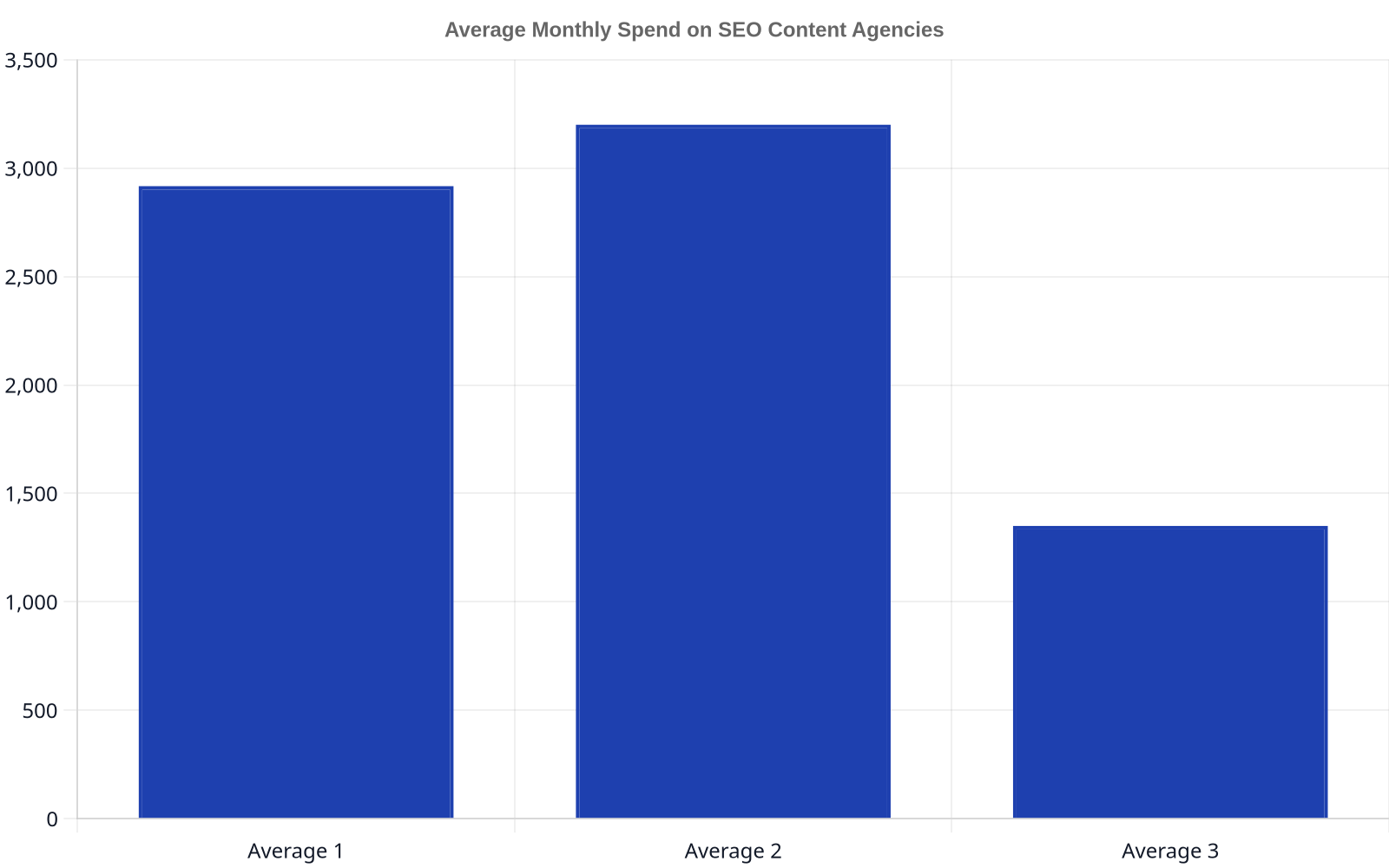
Think about the typical workflow. An agency charges you for a strategist to perform keyword research, an analyst to build links, and a writer to produce a blog post. Each of these roles has a different cost basis, but you just see a single, blended monthly fee. According to Ahrefs, agency retainers can run from $1,350 (as of September 2026)/month on the low end to over $3,200/month. But how much of that is for the content itself versus account management, overhead, and profit margin? You rarely know.
This model creates perverse incentives. The agency is motivated to use up their allocated hours, not to generate a specific ranking or traffic outcome for you. If a junior writer takes 10 hours to write an article a senior writer could do in three, you pay for the inefficiency. The cost is tied to their effort, not the article’s performance.
Understanding the Cost Landscape of SEO Content
The most popular question is about the per-article cost. This is where the numbers get truly meaningless. You can find writers on platforms like Upwork who will produce an article for $50 (as of September 2026). At the same time, a top-tier content marketing agency might quote you thousands for a single “pillar page.” For instance, a detailed guide from a professional B2B writer could easily cost between $800 and $1,500. Some agencies, like The Content Factory, have even advertised pricing as low as $1 per word, but this still doesn’t account for the strategy behind the word.
What are you buying at these different price points?
- Low-End ($50-$200 (as of September 2026)/article): Expect basic research and writing. The content will likely be grammatically correct but won’t have a unique perspective, expert interviews, or a deep understanding of your business. It won’t rank for anything competitive.
- Mid-Range ($200-$800 (as of September 2026)/article): This is where most businesses play. You get a competent writer, some keyword integration, and a structured article. It’s functional but rarely exceptional. This is content as a commodity.
- High-End ($800-$2,000 (as of September 2026)+/article): This usually involves a senior strategist, subject matter expert interviews, custom graphics, and a promotion plan. You’re paying for a product, not just an article. This is appropriate for core business assets, but you can’t afford to do it at the scale required for modern SEO.
The obsession with per-article pricing forces businesses to choose between cheap content that doesn’t work and expensive content they can’t afford to scale.
This entire framework is a false choice. The goal isn’t to find the perfect price point on this spectrum. The goal is to break the model.

The Counterargument: You Get What You Pay For
There’s a strong argument, often made by high-end agencies, that quality costs money. They’ll point to case studies where a single, deeply researched, 10,000-word article drove millions in revenue. And they aren’t wrong; that absolutely can happen. Companies like WebFX and OuterBox Design built their reputations on delivering comprehensive, high-touch SEO campaigns where budget is a secondary concern to results.
They argue that paying less means you’re getting low-quality content that could even harm your brand. A study from Clutch.co on SEO firm pricing highlights the sheer breadth of services involved, implying that a low price must mean corners are being cut.
This is a valid concern, but it’s rooted in the old model. It assumes the only way to produce high-quality, scalable SEO content is through expensive, manual human effort for every single step. It mistakes high effort for high value. What if you could get the strategic output without paying for all the hours of manual labor in between?
Why AI SEO Content Generation Changes the Equation
This is where an AI SEO content generator platform fundamentally alters the cost discussion. It’s not about making the human writer faster or cheaper. It’s about automating the 80% of the process that doesn’t require a human marketing genius.
Traditional Model Cost Breakdown:
- Strategy & Keyword Research: 4-6 hours
- Writing & Editing: 5-10 hours
- Internal Linking & SEO Optimization: 2-3 hours
- Publishing & Formatting: 1 hour
- Total Billed Time: 12-20+ hours per article.
An automated platform collapses this. For a fixed, predictable cost, the system handles the entire workflow. At Keyworth, our model provides daily articles, including keyword research, writing, optimization, and internal linking, for a flat monthly fee. Our projects start at just $89 (as of September 2026)per month. We’re not charging for time; we’re charging for the outcome: a published, optimized article.
This isn’t just cheaper. It’s a more rational way to buy. You’re no longer guessing if your retainer is being used effectively. The cost is directly tied to the deliverable, the published content, which is the first step toward tracking actual ROI. It allows you to focus on the performance of the content, not the cost of producing it.
Stop paying for hours. Start paying for results. Your budget shouldn’t be a measure of your SEO provider’s effort; it should be a direct investment in a predictable flow of assets that grow your organic traffic. A transparent, fixed-price model for a defined output is the only way to achieve that.
FAQ
How much should I budget for SEO content as a small business?
Forget percentages of revenue. Start with the output you need. For most small businesses, a goal of 2-4 new, targeted articles per month is a strong start. With a traditional model, that could be $800-$3,000 (as of September 2026)/month. With an automated platform, you could achieve that for a fraction of the cost, often under $100 per project. This shifts the focus to producing a consistent stream of content rather than a few expensive “hero” pieces.
Are monthly SEO retainers a bad deal?
Not always, but they are often opaque. A good retainer should come with a crystal-clear statement of work defining exactly what gets delivered each month (e.g., 4 blog posts, 10 new backlinks, 1 technical audit). If the deliverable is just “X hours of SEO service,” you are likely overpaying for inefficiency. Ahrefs notes that 63% of agencies offer retainers, so they are common, but you must demand clarity on the output.
What are the hidden costs of cheap SEO content?
The biggest hidden cost is the opportunity cost. While you’re saving money on a $50 (as of September 2026)article, your competitor is publishing content that actually ranks and captures customers. Other costs include the time your team spends editing, rewriting, or adding basic SEO, and the potential brand damage from publishing low-quality, inaccurate, or generic articles. It’s not a savings if it doesn’t work.
How do AI content costs compare to human writers?
It’s a category error to compare them directly. An AI SEO platform isn’t just an “AI writer.” It’s an automated system that handles the entire workflow: keyword research, content creation, optimization, and publishing. You’re not paying for words; you’re paying for a finished, optimized asset. A human freelance writer, priced from $100-$300 (as of September 2026)/hr according to some guides, only covers one piece of that puzzle. The total cost of wrangling a freelancer to a finished, published post is often much higher.
How can I measure the ROI of my SEO content spending?
First, you need transparent costs. Once you know you’re paying a fixed price per published article, you can track its performance directly. Key metrics include organic traffic to that specific URL, the number of keywords it ranks for, and, most importantly, the number of leads or sales it generates. Tie your spending on content creation to the business value that content produces. You can explore some essential seo content performance tracking tools to get started.
It’s time to shift the conversation from “How much should I pay?” to “What am I actually paying for?”. By moving to a model where cost is tied directly to the published asset, you can finally get a clear view of your ROI and build a scalable content engine. You can start building that engine today by exploring the platform at Keyworth.
Leave a Reply