
How to Deliver SEO Profitably on a Small Retainer in 2026
Delivering SEO profitably on a small retainer requires radically productizing your service, focusing on a narrow set of high-impact tasks, and managing client expectations with surgical precision. For retainers under $1,500 a month, you cannot offer a scaled-down version of a large agency service. You must build a different service entirely, one designed from the ground up for efficiency and repeatable results. Success hinges on a repeatable, tool-assisted workflow that delivers tangible progress without consuming unprofitable hours. By the end of this guide, you will have a step-by-step framework for scoping, pricing, and executing small SEO retainers that are profitable for your agency and effective for your clients.

Prerequisites: What You Need Before You Start
Before you can profitably offer a small-budget SEO retainer, you need three things in place:
- A Standardized Tech Stack: You need a non-negotiable set of tools for rank tracking, site audits, and reporting. Trying to work with whatever analytics or reporting software the client happens to use is a direct path to unprofitable support hours. Your efficiency depends on your team mastering one workflow.
- A “Minimum Viable SEO” Service Menu: You must define what is and is not included. This isn’t about being difficult; it’s about being effective. A small retainer might include keyword research, one or two pieces of content, and basic on-page optimization. It explicitly excludes things like custom development, schema implementation on a broken CMS, or extensive backlink campaigns.
- A Client Qualification Process: Not every client is a good fit for a small retainer. You need a simple scorecard to filter for clients who understand the scope, have realistic expectations, and whose websites are technically sound enough for your limited interventions to make a difference.
1. Define Your “Productized” Small Retainer Service
Your first step is to stop thinking like a bespoke agency and start thinking like a product company. A small retainer isn’t a custom consulting engagement; it’s a standardized product. This means defining exactly what the client gets each month, with no ambiguity. For a retainer in the $500-$1,500 per month range for small businesses, your deliverable list might look like this:
- Keyword Research: One initial deep dive to establish a baseline and a monthly refresh to identify new opportunities. This is foundational. Our own platform is built on handling this core task.
- Content Production: Two SEO-optimized articles of 1,200 words each, targeting specific, agreed-upon keywords. Committing to a consistent output like our daily articles service, even at a smaller scale, builds momentum.
- On-Page SEO: Optimization of title tags, meta descriptions, headers, and internal linking for the new content, plus one existing page per month.
- Reporting: One automated report sent on the first of the month showing keyword ranking changes, organic traffic, and task completion. No custom analysis unless it’s a paid add-on.
This isn’t a negotiation. It’s the package. By productizing, you create an assembly-line efficiency that is the only way to protect your margins.
2. Calculate Your Costs and Set a Profitable Price
The most common mistake agencies make is pricing based on what they think the market will bear. Most SEO agencies, especially ones under $1M in annual revenue, are undercharging. You must price based on your costs. Start by calculating your “fully loaded” hourly cost per employee (salary, benefits, overhead) to understand the true cost of labor. Let’s say your cost is $50/hour.
Now, map out the time required for your productized service:
- Keyword Research & Planning: 2 hours/month
- Content Writing (2 articles): 8 hours/month
- On-Page SEO & Publishing: 2 hours/month
- Reporting & Comms: 1 hour/month
- Total: 13 hours/month
Your cost to deliver is 13 hours * $50/hour = $650/month. To achieve a 50% gross margin, you need to price this service at $1,300/month. If you want to hit a 60% margin, it’s $1,625/month. Working backwards from your costs and desired profit margin is the only way to build a sustainable service. Don’t guess.
The “trick” is understanding the different pricing models available, knowing your operational costs inside and out, and clearly communicating the value you deliver.
Understanding Typical SEO Retainer Ranges
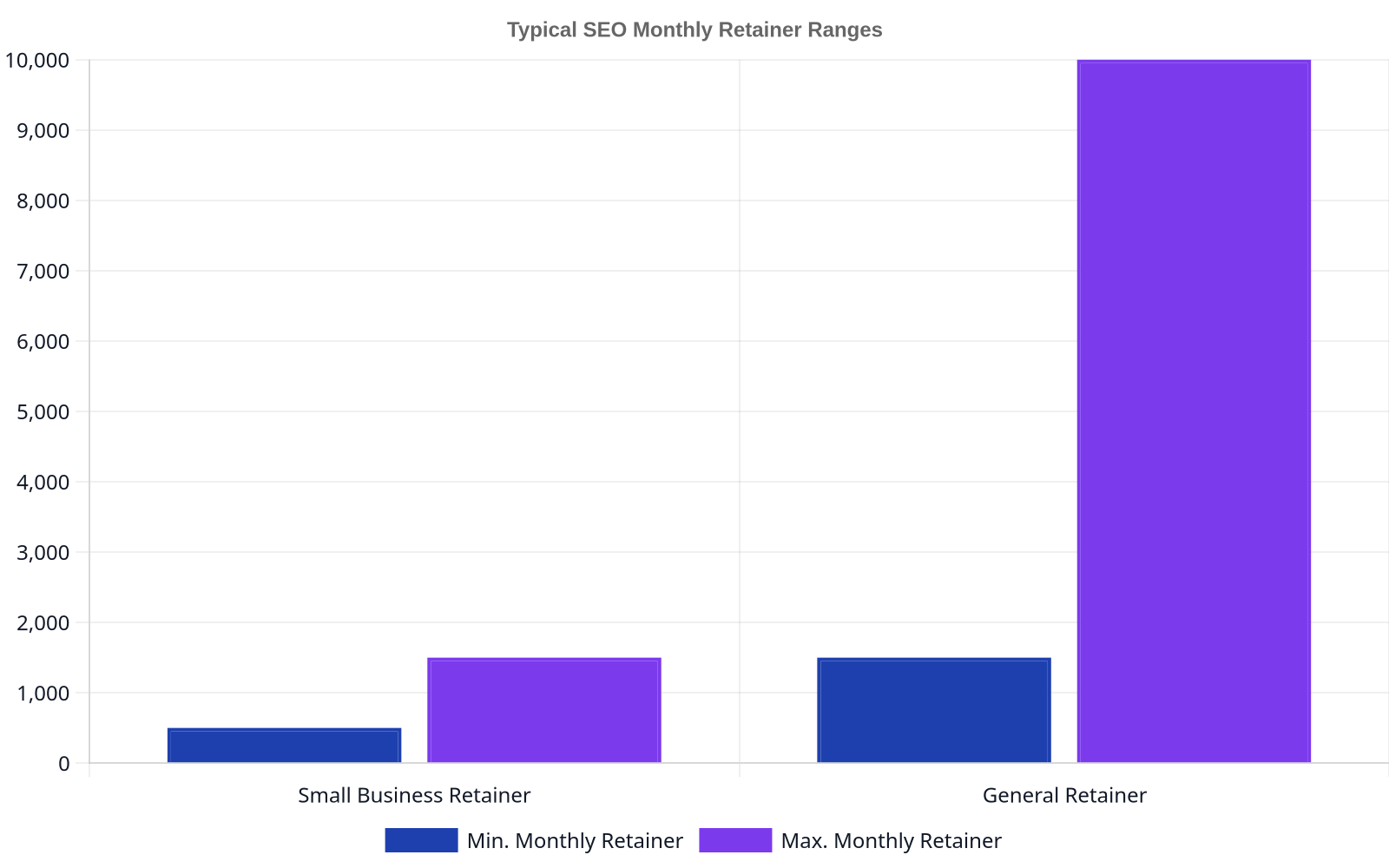
SEO retainers can vary dramatically, but most fall into predictable bands. A common range is between $1,500 and $10,000 per month, but specialized tiers exist for smaller businesses. Understanding these numbers helps you position your productized offering correctly. If you’re aiming for the sub-$1,500 market, your service scope must be ruthlessly focused to remain profitable within that context.
Benchmarking Hourly Rates for SEO Services
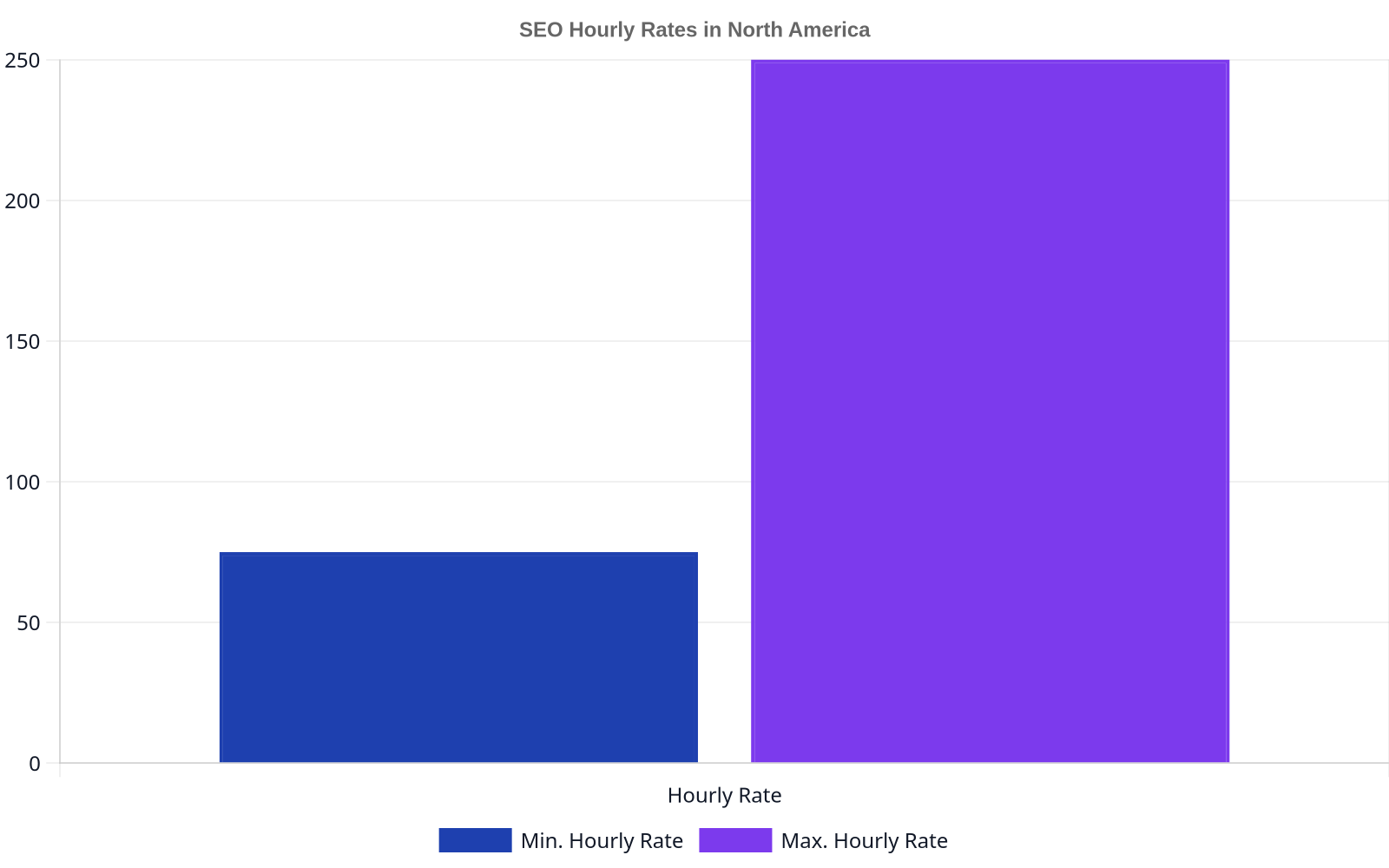
For project-based work or retainer overages, a clear hourly rate is essential. In North America, typical freelance and agency rates for SEO services fall somewhere between $75 and $250 per hour. Your rate should reflect your experience, tooling, and the complexity of the work. Establishing a rate at the outset prevents awkward conversations and ensures you’re compensated for any work that falls outside the tight boundaries of your productized retainer.
3. Qualify Clients Rigorously
Not every business with a small budget is a good client for a small retainer. A client with a massive, technically broken e-commerce site is not a candidate. A local service business with a 10-page WordPress site is ideal. You must learn to say no.
Develop a simple qualification checklist:
- CMS Check: Is it a standard platform like WordPress, Shopify, or Webflow? If it’s a custom-built, decade-old proprietary CMS, walk away.
- Technical Health: Run a quick site crawl with a tool like Screaming Frog. If it reveals thousands of 404 errors, complex redirect chains, or a complete lack of mobile-friendliness, the small retainer budget will be exhausted on technical fixes before you can even start on content.
- Expectation Alignment: On the discovery call, be brutally honest. Say, “For this budget, we will focus exclusively on creating two new pieces of content per month and ensuring they are optimized. We will not be rebuilding your site architecture or acquiring 50 backlinks. The goal is steady, incremental traffic growth over 6-12 months.” A client who pushes back here will be a problem later.

4. Optimize Your Workflow and Leverage Tools
Efficiency is the engine of profitability on small retainers. You need a workflow that is as close to an assembly line as possible, powered by a tool that automates repetitive tasks. You can’t afford to have a senior strategist manually pulling reports.
Your workflow should be documented and followed for every single client in this tier:
- Content Calendar: Begin the month by finalizing the two article topics with the client. Get sign-off to prevent mid-month changes.
- Creation & Optimization: Use templates for content briefs. Use AI-assisted writing tools like Keyworth to create initial drafts that a human editor then refines and optimizes. This drastically reduces the time spent on pure writing. For on-page elements, use a checklist. Did you optimize the title? Meta? Image alt text? Internal links? Check, check, check.
- Automated Reporting: Your reporting software should automatically compile and send a branded PDF on the first of every month. Tools like SE Ranking or AgencyAnalytics are built for this. It should show rankings for the target keyword cluster and organic traffic to the new articles. No manual data entry. No custom commentary.
- Templated Communication: Create email templates for common communications: monthly report delivery, content drafts for review, and topic suggestions. This saves time and ensures consistent messaging.
5. Focus on High-Impact, Low-Effort Tasks
You cannot do everything for $1,000 a month. The key is to select activities that have the highest chance of moving the needle with the least amount of manual effort.
What to focus on:
- Long-tail Keyword Content: Targeting low-competition, high-intent keywords can deliver quick wins and build topical authority. This is the core of any small, successful SEO retainer.
- On-Page Optimization: Ensuring pages are technically perfect (titles, metas, headers, content structure) is a one-time fix per page that provides lasting value. A strong internal linking strategy is also a high-impact activity that is fully within your control.
- Google Business Profile Optimization: For local clients, this is arguably the most valuable 60 minutes of work you can do, and it costs nothing but time.
What to exclude:
- Manual Link Building: Aggressive outreach for backlinks is time-consuming and expensive. It is the first thing that must be cut from a small retainer. While our platform does include backlinks as part of its automated service, doing it manually is a budget-killer for a traditional SEO Agency on a small retainer.
- Custom Technical SEO Projects: Major site speed optimization, schema markup overhauls, or international SEO implementation are projects, not retainer tasks.
- Conversion Rate Optimization (CRO): A/B testing button colors is not SEO and falls squarely outside the scope.
A red flag on a cheap SEO service isn’t the low price; it’s a long list of promised deliverables. For $500/month, you can have content, or you can have technical fixes, or you can have link building. You can’t have all three.
Troubleshooting: When Small Retainers Go Wrong
Even with a perfect plan, issues arise. Here’s how to handle the most common problems.
- Scope Creep: The client starts emailing with quick questions about their email marketing or asks for one small change to the website footer. You must address this immediately. Respond politely with: “That’s a great question, but it falls outside the scope of our current SEO retainer. We can scope that as a separate project for you, or we can use our hourly rate of [Your Rate]. Which would you prefer?” You have to be willing to have this slightly uncomfortable conversation once to avoid death by a thousand cuts.
- Lack of Results: After three months, the client sees no movement. Revisit your keyword strategy. Are the targets too competitive? A detailed seo content strategy for small businesses often requires pivoting to lower-difficulty terms. Show the client the search volume and competition data. Explain that for their budget, targeting “car insurance” is impossible, but “classic car insurance for weekend drivers” is achievable. Manage expectations downwards if necessary.
- Client Unhappiness: They don’t “feel” like you’re doing enough. This is a communication problem. Your automated report isn’t enough for this client. Schedule a 15-minute call each month to walk them through the report and reiterate the work that was completed. Sometimes, a little bit of high-touch communication is necessary to preserve an otherwise profitable account.
FAQ
How do I price an SEO retainer for the first time?
Start by calculating your costs. Tally your software expenses and the hours you expect to spend on each deliverable. Multiply those hours by a fully-loaded internal hourly rate (including salary, benefits, and overhead). This gives you your cost of goods sold (COGS). Add your desired profit margin (e.g., 50-70%) to arrive at your price. Avoid simply copying competitor pricing.
What is a reasonable SEO retainer for a small business?
For many small businesses, a retainer between $500 and $1,500 per month is a common starting point. At this level, the service should be tightly focused on a few core activities, like content creation and on-page optimization, to be effective. Anything less than $500 is often not enough to cover the provider’s time to achieve meaningful results.
How can I show value on a small SEO retainer?
Focus on transparent reporting for a narrow set of metrics. Track rankings for the specific keywords you are targeting, not a broad list. Report on the organic traffic to the new pages you create. You can also track “micro-conversions” like PDF downloads or contact form fills if the client has goal tracking set up. Tying your limited activity directly to tangible, albeit small, business metrics is key.
What are red flags in a cheap SEO service?
A big promise for a small price. If an agency offers a comprehensive package of content, technical SEO, link building, and social media for $500 a month, be very skeptical. Delivering quality on even one of those services is difficult at that price. They are likely cutting corners, using black-hat techniques, or outsourcing to low-quality providers, which can ultimately harm your website. As one of many SEO pricing guides notes, you often get what you pay for.
Should I offer performance-based SEO pricing?
Generally, no, especially for small retainers. Performance-based models, where you get paid for rankings or leads, can be complicated to track and often lead to disputes over attribution. It also puts all the financial risk on the agency. A profitable agency prices for the value of its work and expertise, not for speculative outcomes it cannot fully control.
How do I handle a client who wants more than their retainer covers?
Immediately and politely point out the scope mismatch. Offer to handle the extra request in one of two ways: as a separate, one-time project with its own fixed price, or at your standard hourly rate. This respects the client’s needs while also protecting your time and profitability. Do not do the work for free “just this once.”
Delivering SEO profitably on a small retainer is a discipline. It requires saying no to out-of-scope requests, standardizing every possible task, and being honest with clients about what is achievable. By building a productized service, you can create a reliable revenue stream for your agency while helping small businesses achieve real, sustainable growth. It’s not about doing less; it’s about doing the right things with maximum efficiency.
Leave a Reply