Introduction: Achieving Faster Google Rankings in 2026
In 2026, simply having a website isn’t enough. The challenge—and opportunity—lies in securing prominent visibility on Google. For many, the question is now: how to get higher Google rankings fast. While “fast” rankings once seemed like a myth, the landscape has shifted, making accelerated growth a tangible reality with the right strategy.
The Evolving Landscape of Google Search in 2026
Google’s search engine is more dynamic and intelligent than ever. Advanced AI, including more sophisticated AI Overviews, has changed the search engine results page (SERP). Google prioritizes user intent and context, striving to answer queries directly. It places a premium on helpful, people-first content demonstrating expertise, experience, authoritativeness, and trustworthiness (E-E-A-T). This means old tricks no longer work. Success today demands a modern approach that aligns with Google’s goal of providing real value. This shift away from keyword-stuffing and toward quality content opens the door for dedicated brands to stand out and climb ranks more efficiently.
Why ‘Fast’ Rankings Are More Attainable Than Ever (with the Right Strategy)
“Fast” doesn’t mean ranking #1 for a highly competitive term overnight. It means reducing the timeline from months or years down to weeks for specific, targeted queries. It’s about achieving measurable momentum quickly and efficiently.
This acceleration is possible due to powerful SEO and content automation tools. Tasks that once took entire teams days—like in-depth keyword research, content ideation, drafting SEO-optimized articles, and managing on-page elements—can now be streamlined. For example, platforms like Rank My Website empower users to generate and publish high-quality, relevant content at scale, turning a slow, manual process into an automated growth engine. By leveraging the right technology, you can focus on strategy and see results much sooner, making the goal of getting higher Google rankings fast an actionable business objective. This guide will provide the step-by-step framework to make it happen.
Step 1: Mastering Keyword Research for Rapid Impact
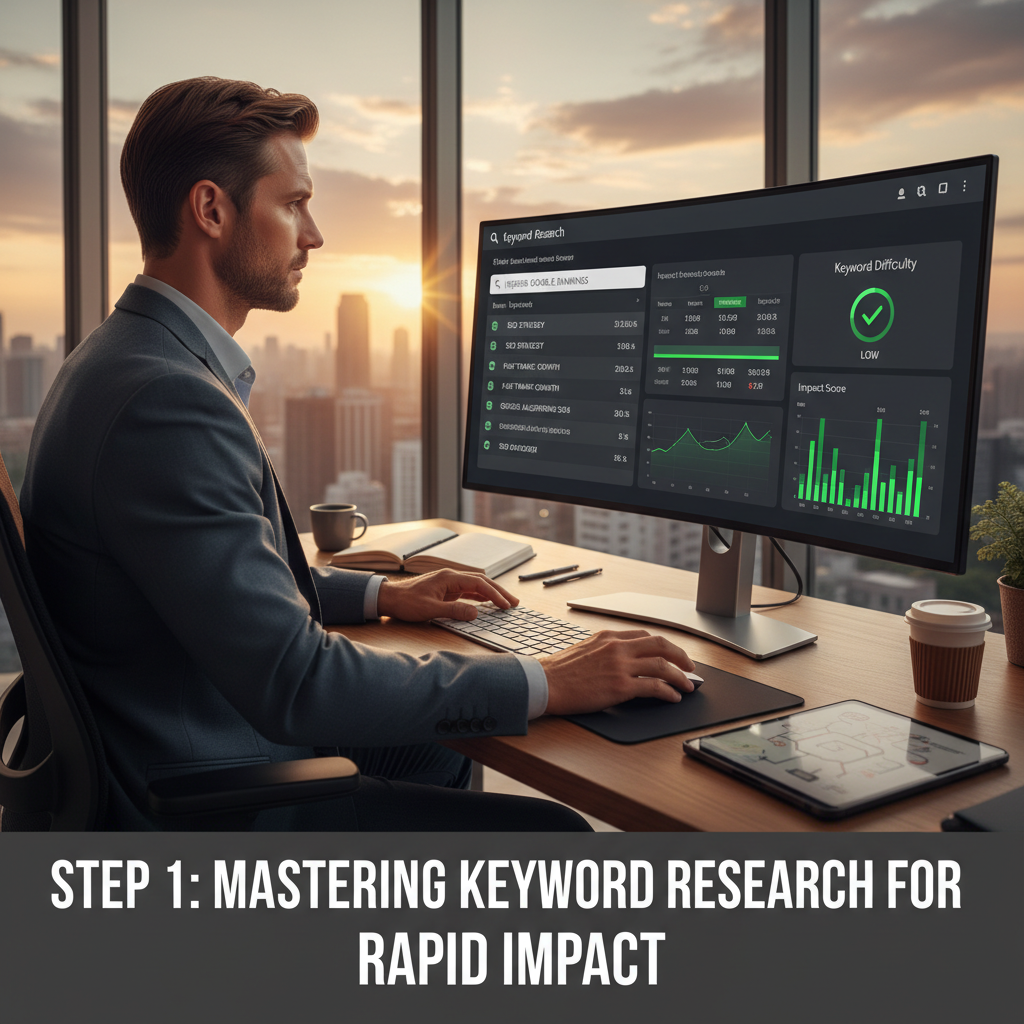
The foundation of any successful SEO strategy is understanding what your audience is searching for. If you want to know how to get higher Google rankings fast, you must first target the right terms. Instead of chasing broad, highly competitive keywords, the goal is to find the “sweet spot”: terms with enough search volume to matter but low enough competition for you to break through quickly.
Identifying High-Intent, Low-Competition Keywords
High-intent keywords signal a user is close to making a decision. Think “buy,” “services,” “near me,” or specific product questions. Low-competition keywords, often called “keyword opportunities,” are those that larger, more authoritative sites have overlooked.
The key is balancing search volume with keyword difficulty. A term with 50,000 monthly searches is useless if the top ten results are unshakable industry giants. Conversely, a keyword with just 150 monthly searches can be incredibly valuable if it brings highly motivated buyers and you can secure a top spot within weeks.

To execute this, you need the right tools. An integrated solution like Rank My Website not only helps you identify promising keywords but also allows you to generate SEO-optimized content directly from them, a seamless workflow from research to creation that is crucial for rapid results.
Leveraging Long-Tail Keywords for Quick Wins
Long-tail keywords are longer, more specific search phrases—typically three or more words. While they have lower individual search volumes, they are far less competitive and reveal precise user intent. This is where the fastest gains are often made.
Consider the difference:
| Feature | Short-Tail Keyword | Long-Tail Keyword |
|---|---|---|
| Example | “seo services” | “local seo services for plumbers in Bristol” |
| Search Volume | High | Low |
| Competition | Very High | Low to Medium |
| User Intent | Broad / Vague | Specific / High |
Someone searching for a long-tail phrase knows exactly what they want. By creating content that directly answers their specific query, you attract highly qualified traffic that is more likely to convert. Focusing on these terms is a core strategy for anyone looking to get higher Google rankings fast, as you can often see movement in the search results much quicker than for broad, generic keywords.
Step 2: On-Page SEO Optimization for Immediate Gains
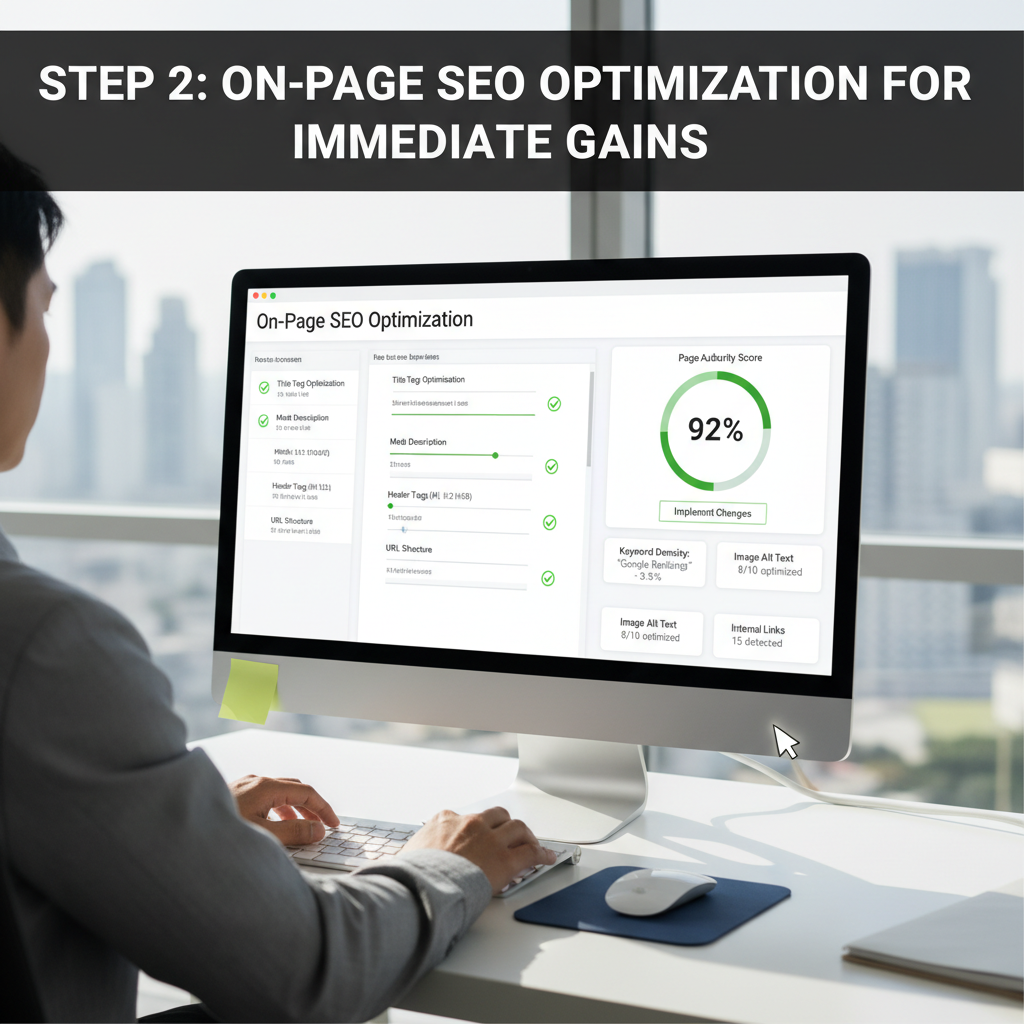
Once your keyword research is solid, on-page optimization is your next move for rapid results. These are changes you make directly on your website pages to signal their topic and quality to search engines. Mastering on-page SEO is fundamental if you want to understand how to get higher Google rankings fast.
Crafting Compelling Titles and Meta Descriptions
Your page’s title tag and meta description are your digital storefront in Google’s search results. An optimized title tag should include your primary keyword, ideally near the beginning, and be compelling enough to earn a click. For example, instead of a generic “Marketing Tips,” a more effective title would be “10 Actionable Marketing Tips for Fast Growth in 2026.”
While meta descriptions don’t directly impact rankings, they are your sales pitch. A well-written description summarizes the page’s value and encourages users to click. A higher click-through rate (CTR) is a strong positive signal to Google, indicating your result is highly relevant, which can indirectly improve your ranking.
Content Structure and Readability for User Experience and SEO
What happens after the click is just as important. Google rewards content that provides an excellent user experience. This starts with a clear structure. Use a single H1 tag for your main title, followed by H2 tags for major sections and H3s for sub-points. This hierarchy helps both readers and search engine crawlers understand the flow and importance of your content.
Integrate your primary keyword naturally within your H1, at least one H2, and your first paragraph. The goal is relevance, not repetition; keyword stuffing will harm your rankings. Using the built-in on-page SEO tools from a platform like Rank My Website can provide valuable guidance as you write.
Finally, enhance your content with visuals and links. Optimize every image with a descriptive file name and alt text. This improves accessibility and helps your images rank in Google Images. Also, include internal links to other relevant articles. This keeps users engaged, helps Google discover more of your content, and spreads authority throughout your website, building a stronger foundation for higher rankings.
Step 3: Accelerating Content Creation with AI and Automation
The biggest bottleneck to climbing the search results is often the sheer volume of high-quality content required. Manually researching, writing, and optimizing every article is slow and resource-intensive. For those asking how to get higher Google rankings fast, leveraging AI and automation is a necessity. This approach allows you to scale your content strategy efficiently without sacrificing the quality Google demands.
Utilizing AI for SEO Content Generation
In 2026, AI content platforms have matured far beyond simple text generators. Modern systems can analyze search intent for a given keyword, research top-ranking competitors, and produce a comprehensive, well-structured draft in minutes. The key is to use tools built specifically for search engine optimization.
That’s where a platform like Rank My Website shines. It is engineered to generate SEO-optimized content directly from your keywords, ensuring the output includes proper heading structures, relevant entities, and semantic keywords. This positions your content to compete effectively from the moment it’s created. The human role then evolves from writer to expert editor, focusing on refining tone, adding unique brand insights, and fact-checking—the high-value tasks that AI cannot replicate.
Streamlining Publishing Workflows with Automation
Creating content is only half the battle; publishing and on-page optimization are just as critical. Automation tools can take over the tedious aspects of this stage. Instead of manually uploading each post, setting meta titles and descriptions, and adding internal links, you can establish automated workflows.
| Task | Manual Workflow (Hours/Days) | AI-Assisted Workflow (Minutes/Hours) |
|---|---|---|
| Topic Research | 2-4 Hours | 10-20 Minutes |
| Article Drafting | 4-8 Hours | 15-30 Minutes |
| On-Page SEO | 1-2 Hours | Automated during creation & publishing |
| Publishing | 30 Minutes | 5 Minutes (or fully automated) |
Integrated platforms like Rank My Website are particularly powerful because they connect content generation with publishing automation, creating a seamless engine for organic growth. By automating this repetitive work, you free your team to concentrate on high-impact strategic tasks like backlink acquisition and performance analysis, accelerating your path to the top of the SERPs.
Step 4: Building High-Quality Backlinks Strategically
Backlinks—links from other websites to yours—are votes of confidence. When an authoritative site links to your content, it signals to Google that your page is a valuable and trustworthy resource. This is why a strong backlink profile is non-negotiable if you want to understand how to get higher Google rankings fast. The focus must be on quality and relevance, not just quantity.
Identifying Authoritative Websites
The first step is to find relevant, reputable websites to get links from. Analyze your top competitors to see who links to their highest-ranking content; these sites might link to you.
You can also use targeted Google searches to find opportunities. Search for terms like your industry + "resource page" or your keyword + "guest post" to uncover blogs and publications actively looking for content or listing helpful resources. While metrics like Domain Authority (DA) can be a guide, always prioritize a site’s direct relevance to your niche and the quality of its content over a raw score.
Effective Outreach Strategies
Once you have a list of target websites, you need a strategy to earn the link. Aggressive, spammy requests won’t work. Instead, focus on providing value.
- Guest Posting: Offer to write a high-quality, original article for another blog in your niche. This allows you to place a contextual link back to your site within the content or in an author bio. It’s a win-win: they get free, expert content, and you get a relevant backlink and brand exposure.
- Broken Link Building: Find a dead (404) link on a relevant website. Contact the site owner, politely point out the broken link, and suggest your own similar (and live) content as a replacement. It’s a helpful gesture that can easily earn you a quality backlink.
Building links takes effort, but it’s one of the most impactful SEO activities. While creating link-worthy content is the first step, strategic outreach is how you amplify its reach and authority. Ready to scale your content creation to attract more links? Discover how Rank My Website can help you generate SEO-optimized articles effortlessly.
Step 5: Technical SEO Essentials for a Strong Foundation
While compelling content is king, it can’t reign without a solid castle. Technical SEO is that castle—the foundational structure that allows search engines to find, understand, and reward your website. Overlooking these essentials stunts even the best content marketing efforts. Getting this right is non-negotiable for significant ranking improvements.
Prioritize Mobile-First Indexing and Page Speed
In 2026, your website’s mobile experience is its primary experience in Google’s eyes. With mobile-first indexing, Google predominantly uses the mobile version of your content for indexing and ranking. A clunky, slow, or non-responsive mobile site is a major roadblock.
Equally critical is page speed. Users expect instant results, and so does Google. A slow-loading page leads to high bounce rates, signaling a poor user experience. Use free tools like Google’s PageSpeed Insights to diagnose issues. Compressing images, leveraging browser caching, and minimizing code are common fixes that deliver a faster experience for users and a stronger signal to Google. Mastering these areas is a prerequisite for anyone serious about how to get higher Google rankings fast.
Enhance Crawlability and Indexability
For Google to rank your page, it must first be able to find it (crawlability) and then add it to its database (indexability). You can guide this process with two key files:
- Robots.txt: This simple text file tells search engine crawlers which pages to ignore. Ensure you haven’t blocked important content you want to rank.
- XML Sitemap: This is a roadmap of your website, listing all the URLs you want Google to know about. Submitting an up-to-date sitemap via Google Search Console helps ensure your pages are discovered quickly.
Beyond these files, regularly check for stray “noindex” tags on pages you want to be ranked. This tag explicitly tells Google not to include a page in its index.
Leverage Schema Markup for Richer Results
Schema markup, or structured data, is a vocabulary of code added to your site’s HTML. It doesn’t change your page’s appearance but provides explicit context to search engines. It helps them understand that a string of numbers is a product price, a block of text is a recipe instruction, or a name is an author.
Google uses this deeper understanding to create “rich snippets” in search results—like star ratings, FAQ dropdowns, or event details. While not a direct ranking factor, these enhanced listings command more attention, boost click-through rates, and signal to Google that your result is highly relevant.
FAQ: Your Questions About Fast Google Rankings Answered in 2026
How quickly can I see results from these strategies?
“Fast” is relative in SEO. The speed depends on the strategy’s nature and your site’s existing authority. Technical SEO fixes can yield noticeable improvements in weeks. However, achieving top rankings for competitive keywords through content marketing and link building is a long-term play. For new content on an established site, you might see initial traction in 1-3 months, but significant, stable rankings often take 4-6 months of consistent effort.
Is keyword stuffing still a viable strategy for fast rankings?
Absolutely not. As of 2026, keyword stuffing is a surefire way to get a ranking penalty. Google’s algorithms, including its advanced Helpful Content System, are incredibly adept at understanding context, synonyms, and user intent. They prioritize content written for humans, not search bots. Forcing your keyword into every other sentence creates a terrible user experience and signals low-quality content to Google. Instead, focus on comprehensively covering the topic, using related terms and answering user questions naturally.
How important is user experience for Google rankings today?
In 2026, user experience (UX) and SEO are intrinsically linked. A seamless, engaging experience is a powerful ranking signal. Google directly measures UX through metrics like Core Web Vitals—loading speed (LCP), interactivity (INP), and visual stability (CLS). Beyond these technical elements, Google assesses user engagement signals. If users spend a long time on your page (high dwell time) and visit other pages on your site (low bounce rate), it tells Google your content is valuable. A poor UX does the exact opposite, harming your rankings.
What’s the best way to monitor my ranking progress?
Consistent monitoring is crucial for adapting your strategy. Your first stop should be Google Search Console, a free tool that shows your average position for specific queries, click-through rates, and technical health issues. For more detailed, real-time tracking, investing in a comprehensive SEO platform is essential. Solutions like Rank My Website provide an automated dashboard to monitor your keyword positions, track organic traffic growth, and receive AI-powered insights, allowing you to make data-driven decisions to continuously improve your rankings.
Conclusion: Sustaining Your High Google Rankings with Rank My Website
Climbing to the top of Google’s search results is a significant achievement, built on a foundation of strategic keyword research, authoritative content, and meticulous on-page and technical SEO. You’ve learned the essential steps to make a rapid impact. The true challenge isn’t just achieving that coveted first-page spot; it’s holding onto it for the long term.
The Continuous Journey of SEO Success
SEO is not a one-time project but a continuous process. Your competitors are constantly refining their strategies, Google’s algorithms are updated regularly, and user expectations evolve. A piece of content that ranks #1 today could be outdated in six months. This reality means sustained success requires a commitment to consistent effort.
Maintaining your position demands an ongoing cycle of creating fresh, relevant content, monitoring performance, and optimizing your pages. The question quickly shifts from “how to get higher google rankings fast” to “how do I sustain this growth?” This is where intelligent automation becomes a game-changer, transforming SEO from manual tasks into a streamlined, scalable system.
Why Rank My Website is Your Partner for Ongoing Organic Growth
Manual content creation and optimization at scale is a monumental task. This is precisely the challenge Rank My Website was built to solve. Instead of just helping you get an initial boost, our platform is designed to be your partner for lasting organic growth. By generating high-quality, SEO-optimized content directly from your keywords, we help you maintain the content velocity required to stay relevant and competitive.
Our built-in on-page SEO tools ensure every piece of content you publish is perfectly tuned for search engines, taking the guesswork out of optimization. Rank My Website helps you grow organic traffic on autopilot, enabling you to focus on strategy while the platform handles the consistent execution needed for faster, more dependable rankings. Ultimately, a key part of how to get higher google rankings fast involves building a system for the future.
Ready to stop worrying about falling in the rankings and start building sustainable organic growth? Put your SEO on autopilot with Rank My Website today.