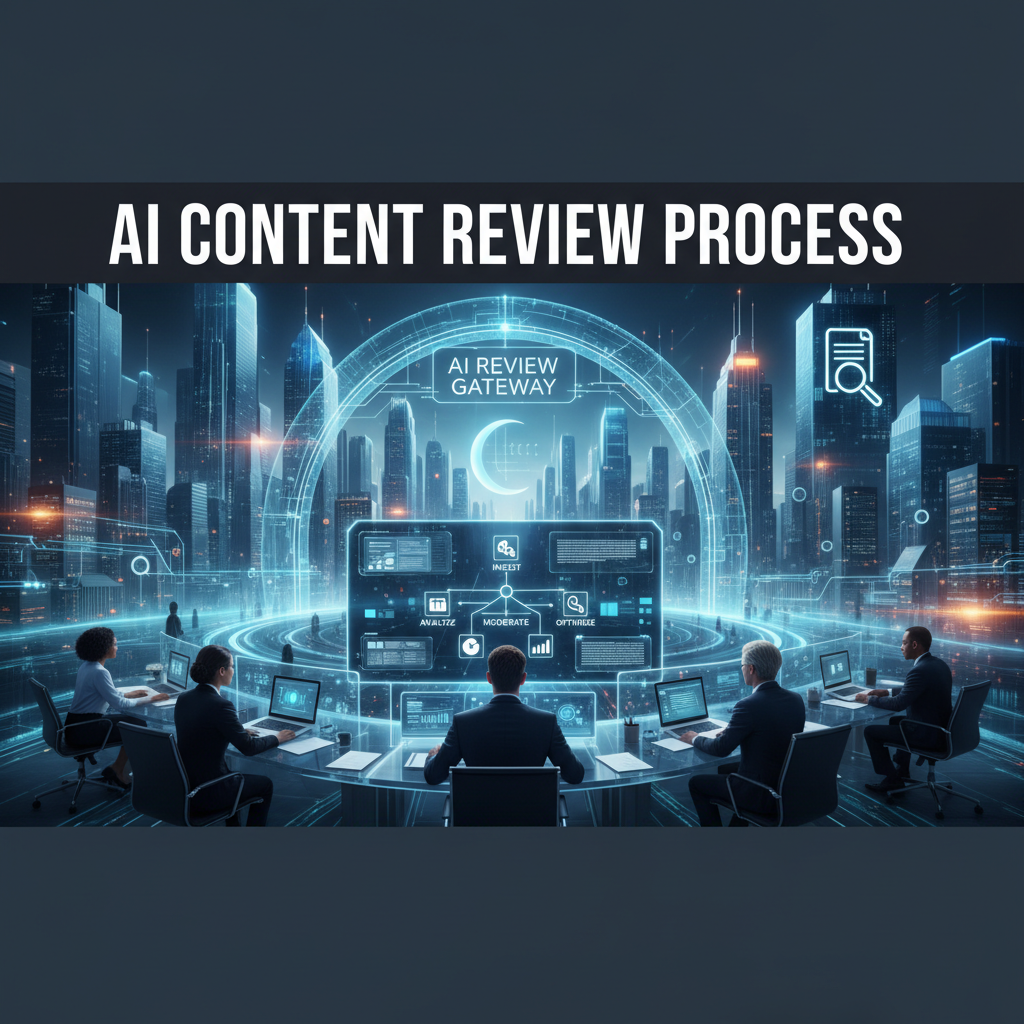
Introduction: Navigating the New Era of AI-Generated Content
In 2026, content is no longer just king; it’s an entire kingdom built at lightning speed, thanks to artificial intelligence. What once took days of painstaking research and writing can now be generated in mere minutes. This unprecedented scale has unlocked new opportunities for businesses to connect, but it also introduces a critical challenge: ensuring speed and volume do not come at the expense of quality.
The Rise of AI in Content Creation
Advanced AI writing tools have fundamentally changed the content marketing landscape. Small businesses, startups, and marketing agencies can now produce blog posts, product descriptions, and social media updates at a volume previously reserved for corporations with massive content teams. The promise is alluring: fill your content calendar, target countless keywords, and expand your digital footprint through sheer output. This efficiency allows lean teams to shift their focus from drafting to higher-level strategy, democratizing competition in a crowded online space.
Why an AI Content Review Process is Crucial
However, quantity without quality is just noise. Raw, unedited AI output, while impressive, often lacks the nuance, accuracy, and soul that build genuine trust. Factual inaccuracies (“hallucinations”), awkward phrasing, and a generic tone can quickly erode credibility and damage a brand’s reputation. This is why a structured ai content review process is an absolute necessity. Search engines like Google prioritize helpful, reliable, human-centric content. A thorough review ensures your AI-generated articles meet these standards, align with your brand, and provide real value, preventing your investment in AI from becoming a liability.
Who Benefits from a Robust Review Process?
Virtually every entity publishing content online gains from a meticulous ai content review process.
- Small Businesses and Startups: Protect your budding reputation and ensure every piece of content builds trust.
- Marketing Agencies: Guarantee quality and maintain client brand integrity.
- E-commerce Stores: Ensure product descriptions are accurate and persuasive, driving conversions.
- Solopreneurs and Bloggers: Your personal brand is your greatest asset; a review process safeguards your voice and credibility.
Ultimately, a robust review framework transforms AI from a simple content generator into a powerful, reliable assistant for strategic growth.
Step 1: Defining Your AI Content Guidelines and Standards
Before you generate a single word, build guardrails for your production engine. Well-defined guidelines are the non-negotiable foundation of an effective ai content review process. They ensure every article aligns with your brand, whether touched by AI or human editors. This prevents inconsistency and minimizes heavy-handed edits, especially when using an all-in-one platform like Rank My Website to automate your workflow.
Establishing Brand Voice and Tone
Your brand voice is your company’s personality—it builds trust and connects with your audience. Is your tone expert or conversational? Document these characteristics in a detailed style guide, including preferred terminology, a “do not use” list, and examples of on-brand phrasing. This guide isn’t just for your human team; instructing AI tools with these details can generate content that sounds distinctly like you from the first draft. A clear guide ensures brand consistency.
Setting Quality and Accuracy Benchmarks
Effective AI-generated content must meet high quality standards. Create a concrete checklist defining “high-quality” for your organization:
- Factual Accuracy: Mandate that all statistics, product claims, and specific facts be cross-referenced with credible, up-to-date sources. Treat AI output as a knowledgeable but unverified starting point requiring rigorous fact-checking.
- Readability & Structure: Aim for exceptional clarity. Prioritize logical flow, short paragraphs, and proper heading hierarchy.
- Engagement & SEO: Does the content directly answer the user’s query? Is it optimized for the target keyword without sounding robotic?

These benchmarks transform the subjective task of “reviewing” into an objective part of your workflow.
Compliance and Ethical Considerations
Operating responsibly is crucial. Your content guidelines must explicitly address ethical checkpoints throughout the ai content review process. Plagiarism is a primary concern; always run AI drafts through a reliable plagiarism detector. Establish strict protocols around data privacy—never feed sensitive company or customer information into public AI models. Finally, commit to using inclusive, accessible, and unbiased language. For a deeper dive, explore our guide on Ethical AI in SEO Content: A 2026 Guide.
Step 2: Integrating AI into Your Content Workflow
Once quality standards are established, strategically embed AI into daily operations. Effective integration means building a repeatable system where technology enhances human expertise, balancing speed with quality.
Selecting the Right AI Content Generation Tools
The market for AI content tools is vast, but not all are equal. Your choice should align with your goal. While broad SEO suites like Semrush and Ahrefs offer AI writing features, they are often part of larger platforms.
For businesses, bloggers, and agencies focused squarely on organic traffic growth through content, a specialized, end-to-end solution is more effective. This is where Rank My Website excels. It is designed to take your target keywords and generate complete, SEO-optimized articles. It streamlines the entire process from creation to publication on your site, embedding on-page SEO best practices automatically. This focused approach provides a direct path to ranking content without the complexity of a generalist toolkit.
Structuring Your AI-Assisted Content Creation
To avoid inconsistent results, define AI’s role in your content lifecycle precisely. An effective model involves AI handling the heavy lifting of first-draft creation:
Your workflow might look like this:
- Human: Conducts keyword research and defines the article’s strategic goal.
- AI: Generates a comprehensive first draft based on the keyword.
- Human: Executes the in-depth review, fact-checking, and refinement.
This structure ensures human oversight guides strategy and quality control, while AI accelerates the most time-consuming part of writing. It transforms your ai content review process into a manageable stage of refinement.

Leveraging Tools for Efficiency and Scale
The ultimate goal of integration is to leverage automation for scale. Automating repetitive drafting frees up your team’s creative and strategic brainpower. Instead of spending hours writing basic paragraphs, your content specialists can focus on adding unique insights, weaving in brand voice, and ensuring the final piece is exceptional. This dramatically increases content output without proportional increases in budget or team size. Building this system is fundamental to scaling your SEO efforts. For a detailed walkthrough, see our complete AI SEO Content Workflow: A 5-Phase Guide.
Step 3: The Human Review: Enhancing and Refining AI Output
An AI tool can produce a complete first draft in seconds, but human-led review transforms raw output into a polished, high-performing asset. This stage of the ai content review process layers in nuance, accuracy, and brand personality that algorithms alone cannot replicate. It’s the difference between content that simply exists and content that truly connects and converts.
Fact-Checking and Verifying Information
This is the most critical and non-negotiable part of the human review. AI language models can make mistakes, present outdated information, or “hallucinate.” A human expert must meticulously verify every claim against credible, primary sources. Did the AI cite a study? Find and read it. Did it mention a percentage? Trace it back to its origin. This rigorous validation ensures trustworthy content, protects your brand, and is a cornerstone of responsible publishing. For a deeper look, consult Ethical AI in SEO Content: A 2026 Guide.
SEO Optimization and Keyword Integration
While AI excels at incorporating primary keywords, human oversight is essential for nuanced SEO. Ensure keywords are integrated naturally, not “stuffed.” This is also your chance to weave in long-tail variations and semantically related terms. While platforms like Rank My Website deliver an SEO-optimized foundation, a final human pass refines sentence structure and enhances readability, tuning content for both search engines and your audience.

Injecting Creativity and Human Touch
This is where your content develops its soul. An AI can’t share a personal anecdote, craft a clever analogy, or infuse text with your brand’s unique tone. The human reviewer’s job is to inject this personality through:
- Storytelling: Weaving in brief narratives or case studies.
- Brand Voice: Adjusting phrasing to match your company’s tone.
- Unique Insights: Adding original analysis or perspectives.
This human touch forges an emotional connection, building trust and authority.
Step 4: Streamlining Edits and Approvals
Once an AI-generated draft is checked for accuracy, the editing and approval process can become a bottleneck. Without a structured system, content can get stuck in endless revisions, defeating the purpose of using AI for speed. This step transforms your workflow from chaotic back-and-forth into a smooth assembly line for publication.
Establishing Clear Feedback Loops
A successful AI content review process hinges on clear, actionable communication. A “feedback loop” is a structured system for reviewers to provide comments and for creators to implement them efficiently. Vague feedback is a workflow killer. Instead, encourage specificity: “Please verify this statistic with a source link” or “Rephrase this sentence to better reflect our brand’s expert tone.” This eliminates guesswork and ensures precise edits. Setting clear turnaround times also keeps the content engine moving.
Utilizing Collaborative Editing Platforms
The right tools are essential for managing feedback. Instead of emailing documents, creating version control nightmares, use a central, collaborative platform. Google Docs allows real-time comments. Project management tools like Asana or Trello can track content through each review stage.
However, juggling multiple platforms can create inefficiencies. This is where an integrated solution like Rank My Website simplifies everything, combining AI content generation, on-page SEO tools, and publishing into a single environment. Ready to eliminate the chaos of managing multiple tools? See how Rank My Website can streamline your entire SEO content workflow.
Defining Approval Stages and Roles
To prevent bottlenecks, everyone needs to know their exact role and when to act. A typical workflow:
- Drafting: AI generates the initial article.
- Initial Review: An editor checks readability, grammar, and brand voice.
- Expert & SEO Review: A subject matter expert verifies facts; an SEO specialist confirms optimization.
- Final Approval: A marketing manager gives final sign-off.
For solopreneurs, one person may handle all roles, but mentally separating stages ensures thorough review. Defining this sequence in a shared document or project management tool, as discussed in our AI SEO Content Workflow: A 5-Phase Guide, ensures consistent, high-quality output.
Step 5: Continual Optimization and Performance Monitoring
Publishing your AI-generated article isn’t the final step; it’s the beginning of a crucial feedback loop. An effective ai content review process extends beyond publication to include rigorous performance analysis and iterative improvement. This continuous cycle ensures your content investment delivers compounding returns.
Analyzing Content Performance Metrics
Once live, measure content impact quantitatively. Tracking data provides an objective verdict on your strategy and illuminates adjustment opportunities. Connect content performance directly to business objectives. For a comprehensive overview, explore our guide on SEO content performance tracking: Unlock growth.
Key metrics to monitor:
- SEO Performance: Keyword rankings, organic traffic, backlink acquisition.
- Engagement: Average time on page, bounce rate, scroll depth, CTR on internal links and calls-to-action.
- Conversions: Leads generated, form submissions, product sales, or free trial sign-ups attributed to content.
Advanced platforms streamline this effort. Rank My Website offers built-in analytics integrating with tools like Google Search Console, providing a unified dashboard for AI-assisted content performance.
Gathering User and Reviewer Feedback
Data tells you what is happening, but qualitative feedback explains why. This insight comes from internal teams and external audiences.
Internal reviewers log edits and observations to identify recurring issues. Do they frequently correct tonal inconsistencies or factual vagaries? This highlights a weakness in your AI prompts. Monitor audience signals: user comments, social media discussions, and customer support questions reveal if content is helpful, clear, and resonant.
Refining AI Prompts and Guidelines
The final, critical step is to close the loop. Use performance data and feedback to refine your content engine. This makes your production process smarter.
If an article has a high bounce rate, refine prompts for a more engaging introduction. If content isn’t ranking despite being well-written, adjust prompts for user intent and semantic keywords. Continuously updating style guides and prompt libraries based on performance trains your team and AI to produce better content with less manual effort.
Frequently Asked Questions About AI Content Review
Navigating AI integration in content workflow can bring up questions. Here are authoritative answers.
How long does an AI content review typically take?
The time for an AI content review depends on initial draft quality, complexity, and reviewer expertise. For a well-structured, 1,500-word article, a thorough review might take 20-45 minutes. This is significantly faster than writing from scratch, as the process shifts from creation to refinement, fact-checking, and brand alignment.
Can AI tools help with the review process itself?
Absolutely. While one AI generates content, other AI-powered tools can assist in review. Grammar/style checkers, plagiarism detectors, and readability analysis tools are essential. They flag technical errors, allowing human reviewers to focus on narrative, accuracy, and strategic messaging.
What are the biggest challenges in reviewing AI-generated content?
The primary challenges are factual “hallucinations,” generic tone, and lack of E-E-A-T (Experience, Expertise, Trustworthiness). A human reviewer’s role is to catch these—injecting authentic experience, verifying claims, and shaping tone to match the brand. An effective ai content review process is built around solving these challenges.
How does ‘Rank My Website’ fit into a comprehensive AI content review strategy?
Rank My Website is designed to front-load quality, significantly streamlining your review. Instead of generic text, it produces SEO-optimized content from your keywords, with built-in on-page SEO elements. This means your review focuses less on structural and technical SEO fixes and more on adding brand personality and expert insight. It turns a potential rewrite into a quick polish.
Is it possible to achieve 100% accuracy with AI content?
No, and understanding this limitation is crucial. AI is a powerful assistant, not an infallible expert. Relying on AI for 100% accuracy without human verification is risky, especially for topics requiring deep expertise or specific data. Human oversight is non-negotiable for factual integrity and building trust.
What are the ethical implications of using AI in content creation and review?
Key ethical considerations include transparency, accountability, and the potential for propagating bias or misinformation. It’s vital to be accountable for the final published content. Fact-checking is an ethical imperative. For further exploration, see our guide on Ethical AI in SEO Content: A 2026 Guide.
Conclusion: Mastering Your AI Content Review Process for Future Success
The journey into AI-powered content doesn’t end when the first draft is generated; it’s just beginning. The true power lies in what happens next. A structured, human-centric review transforms machine efficiency into tangible business results, ensuring every piece of content is meticulously crafted for maximum impact and authenticity. It’s the critical step that separates generic articles from authoritative content that ranks, engages, and converts.
The Synergy of AI and Human Expertise
The most successful content strategies in 2026 and beyond are not a choice between AI and human writers, but a powerful synergy. AI provides scale, speed, and a data-driven foundation, rapidly producing SEO-optimized drafts. But the human touch adds soul: industry expertise, brand voice, and understanding of audience emotional triggers—elements AI can only mimic. An effective ai content review process is the framework that marries technological efficiency with irreplaceable human creativity, empathy, and strategic oversight. It validates accuracy, infuses personality, and ensures content serves reader intent.
The Evolving Landscape of Content Creation
The world of AI is anything but static. Algorithms driving content generation and search engine standards for quality evolve rapidly. Your approach to content verification and enhancement must be just as agile. Staying ahead means committing to continuous learning and adapting your ai content review process to new technologies and best practices. As search engines become more sophisticated, a robust, transparent review process becomes your greatest competitive advantage, proving the value and originality of your work.
Your Path to High-Quality, Scalable Content
Ultimately, implementing a refined review workflow is your direct path to achieving the core goal of modern content marketing: producing high-quality, SEO-optimized content at scale. This systematic approach eliminates costly mistakes, prevents brand dilution, and builds a powerful engine for organic growth. Instead of manual creation, your team focuses on high-value strategic tasks. Platforms like Rank My Website are designed around this principle, integrating powerful AI content generation with tools for seamless on-page SEO and review.
Ready to stop juggling disconnected tools and start building a seamless content engine that drives results? By combining AI assistance with built-in SEO tools under one roof, you can streamline your entire workflow from keyword to publication. Experience how Rank My Website puts your organic growth on autopilot.