
Every week, another AI SEO tool launches. The promise is always the same: “10x your rankings” or “Automate your entire SEO strategy.” Most deliver suggestions you could find with a quick Google search. The best AI SEO platform pricing is not about finding the cheapest tool, but the one whose cost structure aligns with real-world value and business outcomes. True value lies in platforms that provide transparent, scalable pricing tied to features that genuinely save time and generate measurable organic traffic growth, not just vanity metrics. This requires a shift from viewing these tools as a simple expense to seeing them as an investment in efficiency and content velocity.
Our rankings prioritize platforms based on the clarity and scalability of their pricing models, the depth of their AI feature set (distinguishing real AI from simple automation), and their integration capabilities with essential systems like Google Search Console, GA4, and WordPress. We weighted our analysis towards tools with transparent, tiered subscriptions or predictable usage-based costs, avoiding those with opaque enterprise contracts or significant hidden fees. This analysis is based on a review of publicly available pricing pages, user reviews from sites like G2, and our own extensive experience using these platforms for client work.

1. Surfer SEO
Surfer SEO started as a content optimization tool, a sophisticated editor that scored your content against top-ranking pages. It has since evolved into a comprehensive platform incorporating AI for content generation, auditing, and keyword research. Its core strength remains on-page SEO, providing data-driven recommendations to improve content relevance and structure. The platform uses its own algorithms, which analyze hundreds of on-page factors, to give you a clear roadmap for outranking your competitors for a target query.
The AI writing features are now deeply integrated, allowing you to generate entire articles or specific sections based on your keyword and competitor analysis. This makes it a powerful asset for teams looking to accelerate content production without sacrificing quality. A Gartner review gives its parent platform, Semrush, a rating of 4.7 (78 Ratings), highlighting its strength in the market. Surfer’s own community and support are also significant assets, providing a feedback loop that continually improves the tool.
- Best for: Content teams and agencies focused on creating high-quality, optimized long-form content at scale.
- Watch out for: Credit-based pricing for AI features can become costly for high-volume users. The core focus is content, so it’s less of a full-suite technical SEO platform.
2. MarketMuse
MarketMuse takes a strategic approach, positioning itself as an AI content planning and optimization platform. It uses its patented AI to analyze your entire website, identify content gaps, and build a topical model that establishes your site’s authority. Rather than focusing on a single keyword, MarketMuse builds a content strategy around topics, helping you own entire conversations online. It recommends specific articles to create or update to build topical authority, which is critical for long-term SEO success.
Its pricing reflects this enterprise focus. The platform is not for casual bloggers; it’s for businesses serious about using content to dominate a niche. It provides personalized difficulty scores for topics based on your site’s existing authority, a feature most other tools lack. This allows you to prioritize efforts for maximum impact. While its AI-generated content drafts need editing, they provide a well-structured, research-backed starting point that can save content teams dozens of hours per article.
- Best for: Enterprise marketing teams and large publishers who need a data-driven content strategy, not just one-off articles.
- Watch out for: The price point is significantly higher than other tools, placing it out of reach for small businesses and individual creators. There is a steeper learning curve to extract maximum value.

3. Clearscope
Clearscope is the tool of choice for many professional SEOs and content writers for one primary reason: it excels at content optimization. Like Surfer, it provides a sophisticated editor that grades your content against what’s already ranking. However, Clearscope’s strength lies in the quality of its term recommendations and its clean, intuitive user interface. It uses IBM Watson’s natural language processing capabilities to deliver highly relevant entities and LSI keywords, helping writers craft truly comprehensive content that search engines reward.
Clearscope’s pricing is straightforward, tiered by the number of content reports and user seats you need. It doesn’t try to be an all-in-one SEO platform. It focuses on doing one thing exceptionally well: helping you write better content. It integrates with Google Docs and WordPress, fitting neatly into existing workflows. Its competitor, seoClarity, has a Gartner rating of 4.4 (112 Ratings), but many users prefer Clearscope’s focused approach for pure content creation.
- Best for: SEO agencies and freelance content writers who demand the highest quality content optimization and reporting.
- Watch out for: It lacks the AI-driven keyword clustering and content strategy features of MarketMuse or the AI writer of Surfer SEO. It’s a specialized tool, not a full suite.
The real cost of an AI SEO tool isn’t the monthly subscription; it’s the time your team wastes on a platform that produces generic, low-quality outputs. The goal is to augment your experts, not replace them with a bad robot.
Pricing Comparison: AI SEO Platforms
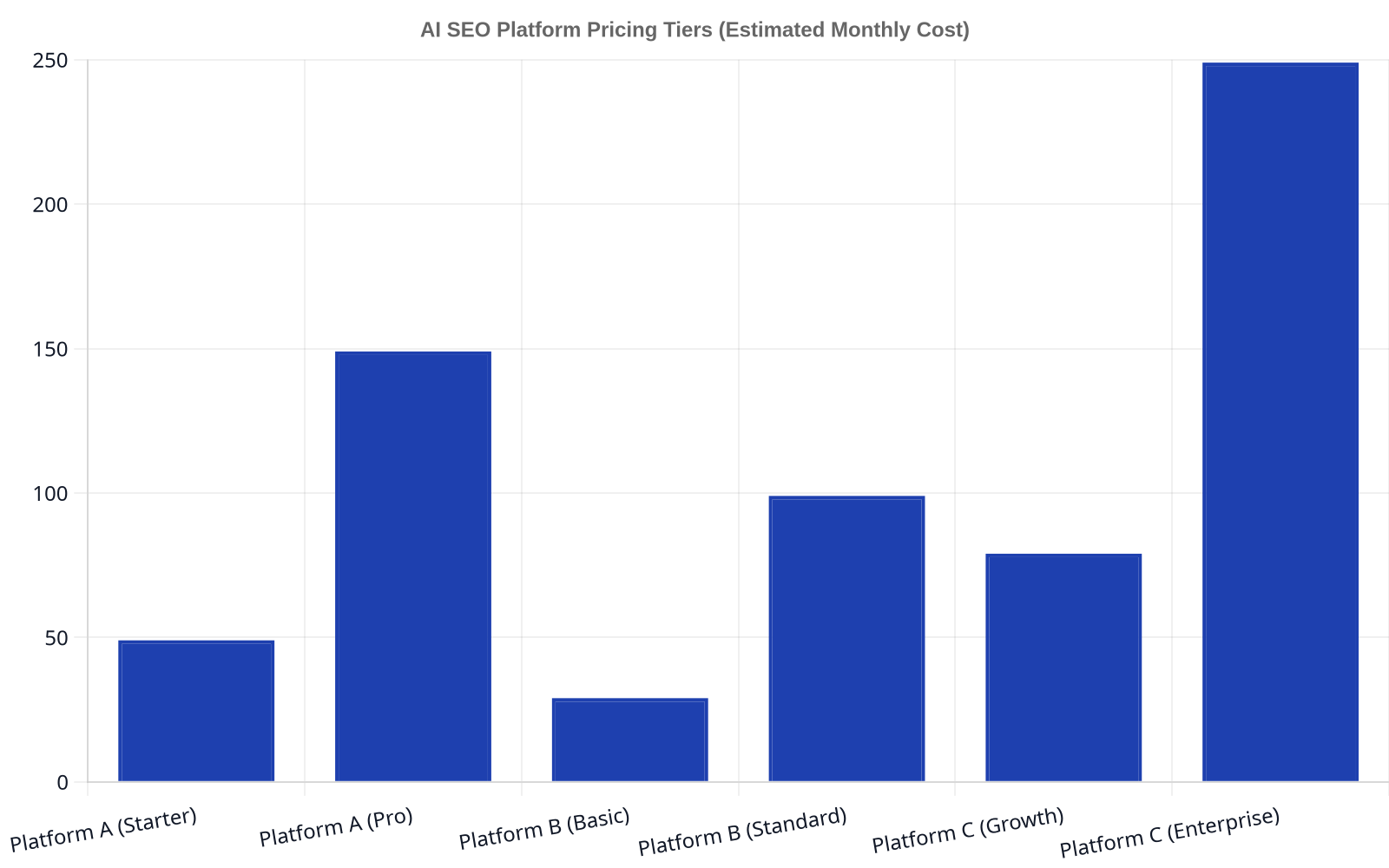
Comparing the best AI SEO platform pricing requires looking beyond the sticker price. Plans are often tiered based on usage limits (e.g., content briefs, keyword lookups, AI credits), user seats, and access to premium features like API access or white-label reporting. For a small business, a $99/month plan from a tool like Surfer SEO might be sufficient. For an agency managing multiple clients, a plan in the $300-$500/month range is more realistic. Enterprise solutions like MarketMuse often require custom quotes and can run into thousands of dollars per month, but they provide strategic insights and workflows that justify the cost for large organizations.
Key Features vs. Price Tier
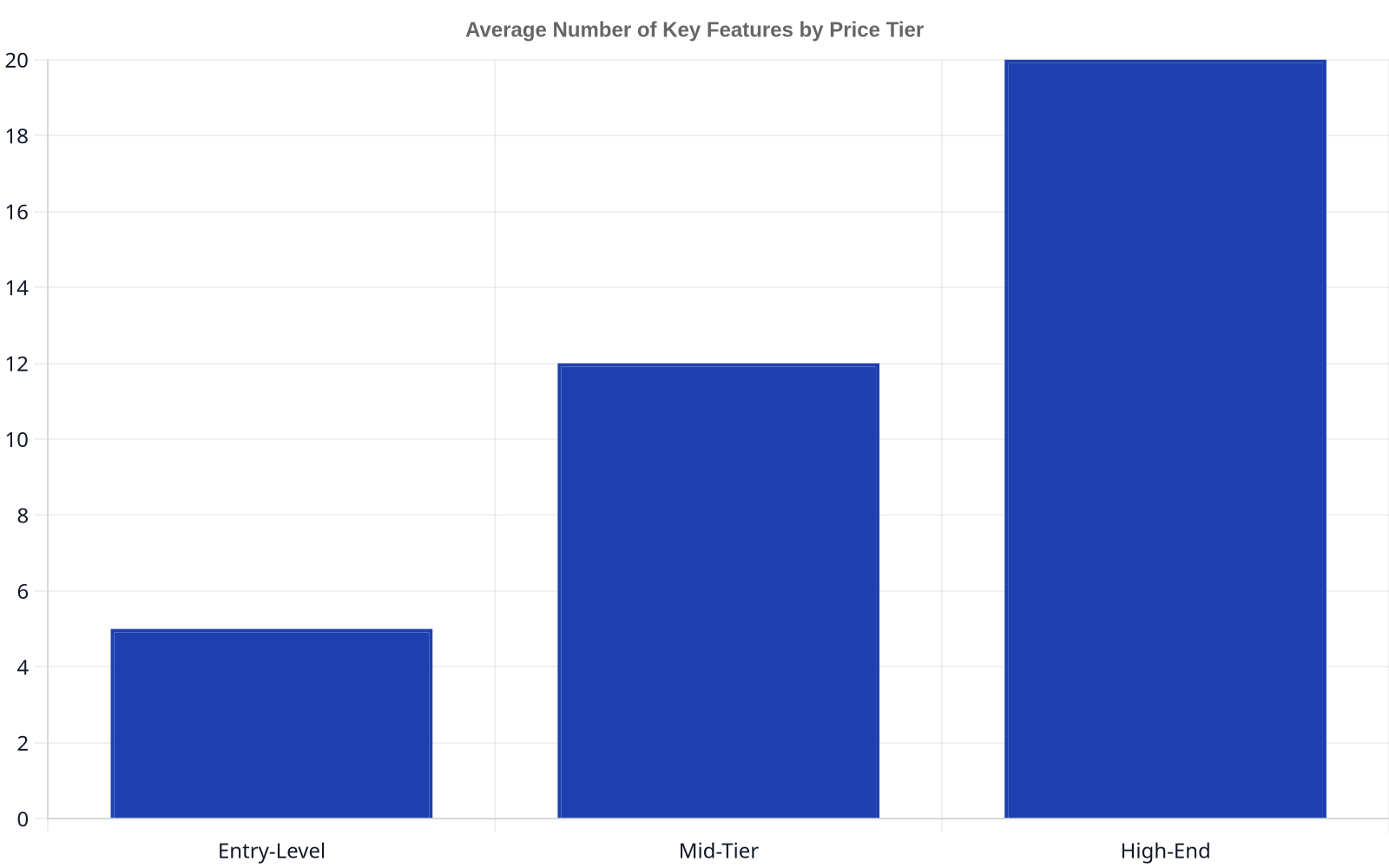
As you move up the pricing tiers, you’re not just getting higher usage limits. You are unlocking more sophisticated capabilities. Entry-level plans typically offer basic content optimization and keyword research. Mid-tier plans add AI content generation, SERP analysis, and more extensive integrations. Enterprise-level plans introduce features like content strategy automation, full-site audits, competitive content gap analysis, and personalized topic difficulty metrics. The key is to match the feature set to your actual needs. Paying for enterprise-level topic modeling when you only need to optimize ten articles a month is a poor use of budget. Conversely, trying to run an agency-scale content operation on a starter plan will lead to frustration and constant overage fees.
Understanding AI SEO Value: ROI Potential
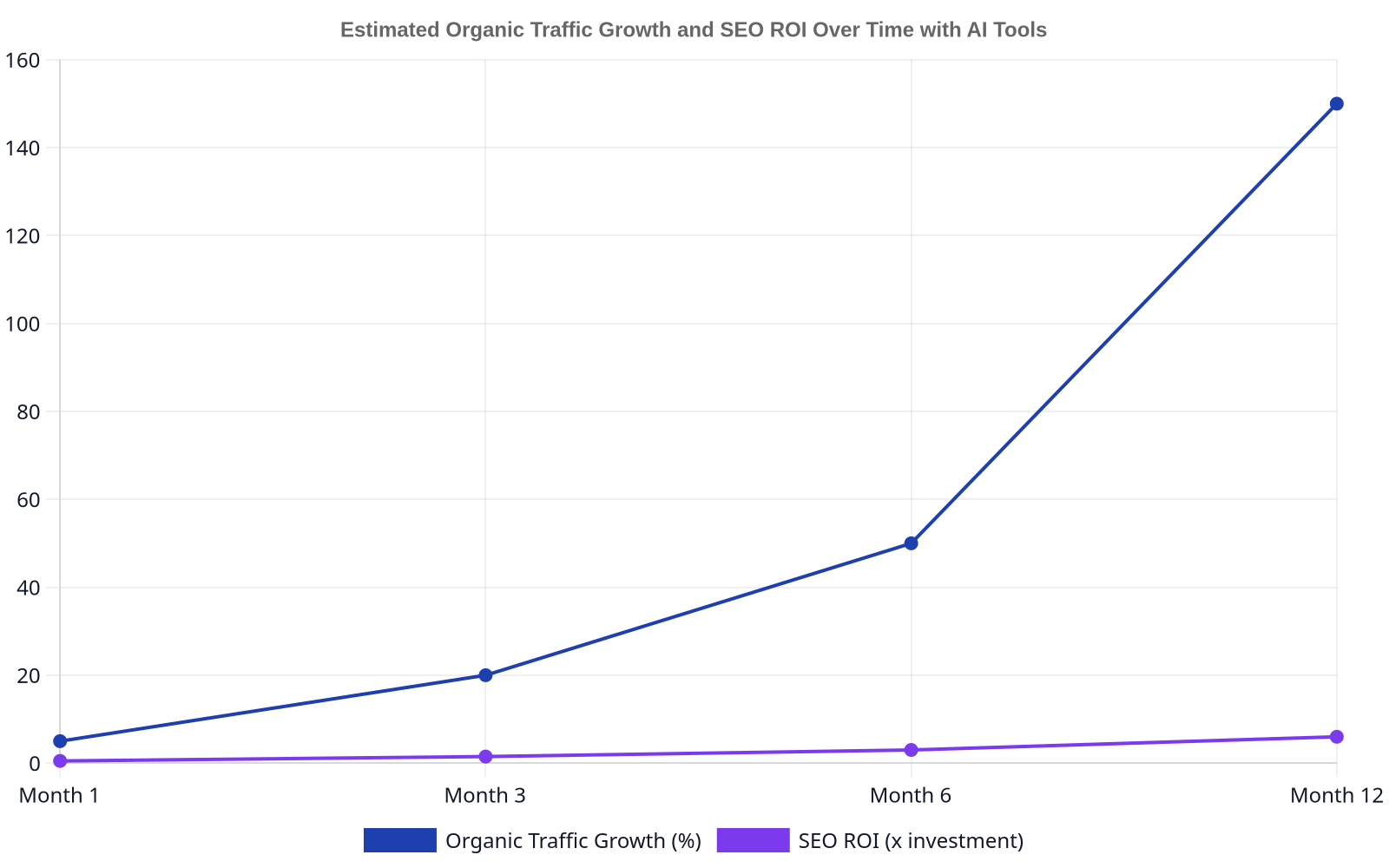
Justifying the cost of an AI SEO platform requires calculating its return on investment. The ROI can come from several areas. First, there’s efficiency: if a tool saves your content team 10 hours per article on research and outlining, you can calculate that saved time as a direct cost saving. Second, there’s performance: if the AI-optimized content ranks higher and faster, you can attribute the resulting increase in organic traffic and leads to the platform. For many businesses, particularly those in competitive niches, the gains from even a few page-one rankings can quickly dwarf the monthly subscription cost of the tool that helped get them there.
4. Semrush
Semrush is one of the most recognized names in the SEO industry, offering a massive suite of over 50 tools for everything from keyword research and competitor analysis to social media management. Recently, it has heavily invested in AI, integrating features like an AI Writing Assistant and content optimization suggestions directly into its platform. This makes it a formidable all-in-one solution. You can find a keyword opportunity, analyze the competition, write and optimize an article, and track its rankings all within the same ecosystem.
Its pricing structure is tiered, offering different levels of access to its vast toolset. While not the cheapest option, the value comes from its sheer breadth of capabilities, which can replace several other subscriptions. Semrush is a leader in the space, and its integration with 10+ AI engines (ChatGPT, Perplexity, Gemini, Claude, Copilot, Grok, AI Overviews, AI Mode, DeepSeek and Meta AI) gives it a powerful foundation. This is a platform for professionals who need a complete view of their digital marketing landscape, not just a content tool.
- Best for: Marketers and businesses who want a single, powerful platform for nearly all their SEO and digital marketing tasks.
- Watch out for: The sheer number of tools can be overwhelming for beginners. Core AI content features may be less advanced than specialized tools like MarketMuse or Clearscope.
SEO isn’t dead in 2026, but it’s definitely different. It’s not just about ranking on Google anymore, but also about showing up on AI search engines and LLMs like ChatGPT and Perplexity.
5. Ahrefs
Ahrefs built its reputation on having the best backlink database in the business, and it remains a top choice for off-page SEO and competitor analysis. Quoting a popular sentiment, “Ahrefs is an amazing tool that is a powerful workhorse at a good price. They have a strong presence in the SEO and backlinks category and are the undisputed king.” While historically slower to adopt AI for content creation, it has begun to roll out AI-powered features, including content ideas and outlines within its Keywords Explorer tool.
Its primary value, however, still lies in its core SEO metrics and competitive intelligence. Ahrefs provides incredibly detailed insights into why your competitors are ranking, from their backlink profiles to their top-performing content. Its pricing is tiered based on data limits and features. While some newer AI-first tools offer more advanced content generation, Ahrefs’ data quality is second to none. For any serious SEO campaign, understanding the link landscape is non-negotiable, and Ahrefs provides the clearest picture. Our own services, which include building backlinks for clients, rely on this kind of high-quality data.
- Best for: SEO professionals and agencies who prioritize backlink analysis, competitive intelligence, and technical SEO.
- Watch out for: Its AI content features are still nascent compared to dedicated writing platforms. The new credit-based system has been a point of contention for some long-time users.
6. Rank My Website
While other tools offer AI as a feature, Rank My Website is an automated SEO content platform built from the ground up to handle the entire workflow. It’s designed for businesses that need to scale their organic traffic without hiring a massive in-house team. The platform handles the full process, from keyword research and clustering to generating daily articles and publishing them directly to your site with proper internal linking. This end-to-end automation is its key differentiator. For clients like Wolverine Assemblies, this means consistent content velocity and ranking improvements without the typical operational overhead.
The pricing is structured to deliver a complete managed solution. Instead of paying for seats or credits on a DIY tool, you are investing in an outcome: consistent, SEO-optimized content published on your site. This model is ideal for small to medium-sized businesses, e-commerce stores, and agencies who understand the value of SEO but lack the time or expertise to manage the complex process themselves. It turns SEO content from a manual, time-intensive task into an automated growth engine. As an automated content generation and publishing platform, it offers a direct path to ROI by focusing on output and traffic growth.
- Best for: Businesses looking for an automated, hands-off solution to generate and publish SEO content at scale.
- Watch out for: It’s a managed system, not a DIY tool. This means less granular control for SEO professionals who want to tweak every detail themselves.
Summary of AI SEO Platform Pricing
| Platform | Starting Price (Monthly) | Primary Focus | Ideal User |
|---|---|---|---|
| Surfer SEO | ~$89 | On-Page & AI Content | Content Teams, Agencies |
| MarketMuse | ~$149 (limited) / Custom | AI Content Strategy | Enterprise, Large Publishers |
| Clearscope | ~$170 | Content Optimization | SEO Writers, Agencies |
| Semrush | ~$129 | All-in-One SEO Suite | Digital Marketing Professionals |
| Ahrefs | ~$99 | Backlink & Competitor Analysis | SEO Professionals, Link Builders |
| Rank My Website | Custom | Automated Content Generation & Publishing | SMBs, E-commerce, Agencies |
Note: Prices are estimates as of early 2026 and can vary based on annual commitments and specific plan details. Always check the provider’s website for the most current information.
Choosing the right platform comes down to your specific needs, team size, and budget. Don’t be swayed by a long list of features you’ll never use. Instead, identify your biggest bottleneck, whether it’s keyword research, content creation, or link building, and find the tool with a pricing model that lets you solve that problem efficiently.
Further reading
- enterprise SEO platforms reviews
- seoclarity platform alternatives
- conductor platform reviews
FAQ
What is the average cost of an AI SEO platform?
There is no simple average, as costs vary dramatically. Enterprise-level content strategy platforms like MarketMuse often have custom pricing that can be several thousand dollars per month.
Are expensive AI SEO tools always better?
The price tag doesn’t always correlate with value for your business. A better approach is to evaluate tools based on their ability to solve your specific SEO challenges. A specialized, less expensive tool like Clearscope might provide a better ROI for a content-focused team than a pricier all-in-one suite.
How do usage-based or credit systems work?
Many AI SEO platforms use credits to meter access to resource-intensive features like AI content generation or SERP analysis. For example, generating one article might cost 1 “credit,” and your monthly plan might include 50 credits. This allows providers to offer lower entry-level prices while ensuring that high-volume users pay more. It’s crucial to understand a platform’s credit economy before committing, as costs can escalate quickly if you underestimate your usage.
Can I negotiate pricing for AI SEO platforms?
For standard, self-service subscription plans (e.g., Starter, Pro), pricing is typically non-negotiable. However, for “Enterprise” or “Custom” tiers, there is almost always room for negotiation. This is especially true if you are committing to an annual contract or have a high volume of users. Come to the conversation prepared with data on your usage needs and quotes from competitors.
How should I calculate the ROI on AI SEO tool pricing?
Calculate ROI by measuring both cost savings and revenue gains. For cost savings, estimate the number of hours your team saves on tasks like research, writing, and optimization, and multiply that by their hourly cost. For revenue gains, track the increase in organic traffic, leads, and sales from content created or optimized with the tool. A tool is providing positive ROI when these gains exceed the platform’s subscription cost.
Is it better to choose an all-in-one platform or multiple specialized tools?
This depends on your team’s workflow and expertise. An all-in-one platform like Semrush simplifies billing and data integration. However, a “best-of-breed” approach, combining multiple specialized tools (e.g., Ahrefs for backlinks, Clearscope for content, and another tool for technical SEO), can provide superior functionality in each area. For many, the integrated workflow of a single platform outweighs the marginal benefits of juggling several specialized tools.