BlogSEO Insights & TipsExpert advice on SEO strategy, AI content, and growing your organic traffic.

  • Content Optimization for Search Engine Visibility

    Content Optimization for Search Engine Visibility

    Ever feel like your website is a billboard in the desert? You’ve invested time and resources into crafting brilliant content, but no one seems to be finding…

    Introduction: Unlocking Search Engine Visibility with Content Optimization

    Ever feel like your website is a billboard in the desert? You’ve invested time and resources into crafting brilliant content, but no one seems to be finding it. This is a common frustration for businesses trying to stand out in today’s incredibly crowded digital landscape. The solution isn’t just to create more content, but to create smarter content. This is where strategic optimization becomes your most powerful tool for getting seen.

    What is Content Optimization?

    Content optimization is the deliberate process of refining your web content to make it more appealing to search engines and, crucially, to the human users searching for it. It goes far beyond simply sprinkling keywords into a blog post. True optimization involves a comprehensive approach that includes a deep understanding of user search intent, structuring content for readability with clear headings and short paragraphs, incorporating relevant internal and external links, and optimizing on-page elements like title tags, meta descriptions, and image alt text. The goal is to create a piece of content that search engines can easily understand, deem valuable, and confidently present to users as the best possible answer to their query.

    Why Content Optimization is Crucial in 2026

    In 2026, the internet is more saturated with information than ever before. Millions of articles are published daily, all competing for a limited number of spots on the first page of Google. Simply publishing high-quality content and hoping for the best is no longer a viable strategy. Search engine algorithms are now incredibly sophisticated, prioritizing content that not only provides an expert answer but also delivers an exceptional user experience. Effective content optimization for search engine visibility is the fundamental differentiator between being discovered by your target audience and being buried on page ten. It’s the strategic layer that ensures your valuable insights actually connect with the people who need them.

    The Benefits of Highly Optimized Content

    The investment in strategic optimization yields significant, tangible returns. The most obvious benefit is a surge in organic traffic as your pages climb the search engine results pages (SERPs). But the advantages run deeper. Optimized content, by its nature, is better organized and easier to consume, which dramatically improves user engagement metrics like time on page and reduces bounce rates. This signals quality to Google, further reinforcing your rankings. Most importantly, when you master content optimization for search engine visibility, you attract a highly qualified audience whose needs perfectly match what you offer. This alignment between user intent and your content leads to much higher conversion rates, turning casual readers into loyal customers and brand advocates.

    The Core Pillars of Content Optimization

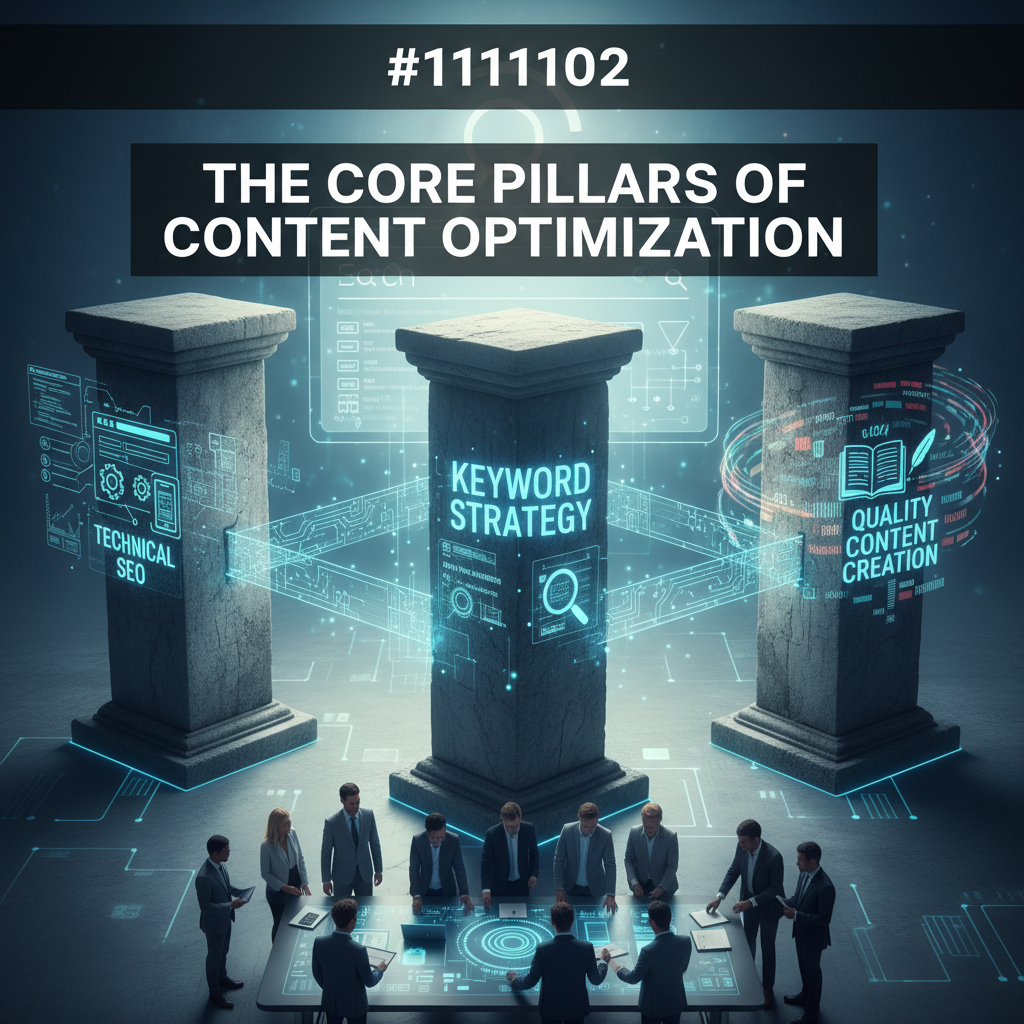
    Effective content optimization for search engine visibility isn’t about a single trick; it’s a strategy built on three interconnected pillars. When these elements work in harmony, they create a powerful signal to search engines that your content is valuable, relevant, and deserves a top spot. Mastering these fundamentals is the first step toward sustainable organic growth.

    Keyword Research and Strategic Placement

    The foundation of any SEO strategy begins with understanding what your audience is searching for. Keyword research is the process of identifying the specific terms and phrases people use to find information related to your industry. The goal is to find a balance between high search volume and relevance to your offerings. Go beyond simple head terms and explore long-tail keywords—longer, more specific phrases that often indicate a user is closer to making a decision. Once you’ve identified your target keywords, you must integrate them strategically. This means placing them naturally within your main title, subheadings, introduction, and throughout the body copy without sounding robotic. The key is to write for humans first, search engines second.

    A diagram showing the relationship between keyword research, content quality, and technical on-page SEO. — content optimization for search engine visibility
    Introduction: Unlocking Search Engine Visibility with Content Optimization

    Content Quality and User Experience (UX)

    Search engines in 2026 are incredibly sophisticated; their primary goal is to satisfy the user’s query. This is where content quality and user experience (UX) become paramount. High-quality content is well-researched, accurate, comprehensive, and provides genuine value. It answers the user’s question completely so they don’t need to click back to the search results.

    This quality must be presented in a user-friendly way. Think short paragraphs, clear headings, bullet points for skimmability, and engaging visuals. A positive UX keeps people on your page longer, reduces bounce rates, and signals to Google that your content is a great match for the query.

    Technical SEO Elements for On-Page Optimization

    The final pillar involves the technical signals you send to search engine crawlers. While users see the content, search engines see the underlying code and structure. Key on-page technical elements include:

    • Title Tags: The clickable headline that appears in search results. It must be compelling and include your primary keyword.
    • Meta Descriptions: The short summary under the title tag. While not a direct ranking factor, a well-written meta description entices users to click.
    • URL Structure: Keep URLs short, clean, and descriptive (e.g., yourdomain.com/content-optimization instead of yourdomain.com/p?123).
    • Image Alt Text: A text description of an image that helps search engines understand its context and improves accessibility.

    Advanced Content Optimization Strategies for 2026

    To move beyond the basics, your focus must shift from individual keywords to broader concepts of authority, trust, and technological leverage. Mastering these advanced strategies is what separates good content from content that dominates search rankings in 2026. This level of content optimization for search engine visibility requires a multi-faceted approach that cements your site as a definitive resource in your niche.

    Build Topical Authority with Content Hubs

    Instead of targeting disconnected keywords, aim to own an entire topic. This is the essence of topical authority. The most effective way to achieve this is by building content hubs, also known as the pillar-and-cluster model. A central “pillar” page provides a comprehensive overview of a broad topic (e.g., “Corporate Finance”), while multiple “cluster” pages link to it, each covering a specific subtopic in depth (e.g., “Capital Budgeting,” “Mergers and Acquisitions”). This interconnected structure signals to search engines that you have extensive knowledge on the subject, boosting the ranking potential for all related pages. It creates a seamless user journey and establishes your website as the go-to authority.
    A diagram showing a central pillar page connected to multiple topic cluster pages, illustrating a content hub strategy. — content optimization for search engine visibility
    The Core Pillars of Content Optimization

    Demonstrate E-E-A-T and Trustworthiness

    Google’s E-E-A-T (Experience, Expertise, Authoritativeness, and Trustworthiness) guidelines are more critical than ever. To rank well, especially for sensitive topics, your content must actively demonstrate these qualities.

    • Experience: Share real-world case studies or first-hand accounts.
    • Expertise: Feature authors with clear credentials and link to their professional profiles.
    • Authoritativeness: Earn backlinks from other respected sites in your field.
    • Trustworthiness: Ensure your site is secure (HTTPS) and provides transparent information about who you are and how to get in contact.

    Leverage AI for Enhanced Optimization

    Artificial intelligence is an indispensable partner in modern content optimization for search engine visibility. AI tools can analyze search data at a scale humans cannot, identifying semantic keyword opportunities and complex user intent patterns. They also dramatically accelerate the content workflow. Platforms like Rank My Website are prime examples, using AI to generate SEO-optimized drafts from your keywords, which you can then refine and publish. Furthermore, these tools offer built-in analytics to compare your content against top competitors, suggesting precise improvements to headings, internal links, and topical depth for faster, more consistent rankings.

    Measuring and Refining Your Content Optimization Efforts

    Creating and publishing content is just the beginning. The true power of a successful SEO strategy lies in what you do after you hit “publish.” To achieve and maintain high rankings, you must consistently measure performance and refine your approach based on real-world data. This data-driven cycle is the engine behind effective content optimization for search engine visibility.

    Key Performance Indicators (KPIs) for Content Success

    Tracking the right metrics tells you whether your content is resonating with both users and search engines. Focus on these core KPIs:

    • Organic Traffic: The number of visitors who find your page through a search engine. This is the most direct measure of your SEO success.
    • Keyword Rankings: Your content’s position in search results for specific queries. Are you moving up for your target keywords?
    • Click-Through Rate (CTR): The percentage of users who see your page in search results (impressions) and click on it. A low CTR might signal a weak title tag or meta description.
    • Dwell Time & Time on Page: This measures how long visitors stay on your page. Longer durations signal to Google that your content is valuable and engaging.
    • Bounce Rate: The percentage of visitors who leave your site after viewing only one page. While a high bounce rate can indicate poor content fit, it’s not always negative—sometimes a user finds the exact answer they need and leaves satisfied.
    • Conversion Rate: The percentage of visitors who complete a desired action, such as signing up for a newsletter, downloading a resource, or making a purchase.

    A dashboard showing key content marketing KPIs like organic traffic and conversion rate. — content optimization for search engine visibility
    Advanced Content Optimization Strategies for 2026

    Utilizing Analytics for Insightful Adjustments

    To track these KPIs, you need the right tools. Google provides two powerful, free platforms that work in tandem:

    • Google Search Console (GSC): This is your window into how Google sees your site. Use it to monitor impressions, clicks, CTR, and the exact search queries bringing users to your page. GSC is invaluable for pre-click analysis, helping you spot opportunities to improve titles and metas to capture more traffic.

    Google Analytics (GA4): This platform tracks what users do after* they land on your site. It provides data on time on page, bounce rate, user flow, and conversions. If GSC shows a page gets lots of clicks but GA4 shows a high bounce rate, you know the content itself needs improvement.

    The Iterative Process of Optimization

    Essential Tools for Streamlined Content Optimization

    Mastering content optimization for search engine visibility doesn’t mean you have to do everything manually. In 2026, leveraging the right technology is non-negotiable for efficiency and effectiveness. The right tools automate tedious tasks, provide data-driven insights, and turn a complex process into a manageable workflow. These platforms generally fall into a few key categories, each serving a critical function in your SEO strategy.

    Keyword Research and SEO Analysis Platforms

    The foundation of any successful content strategy is understanding what your audience is searching for and how your competitors are performing. Comprehensive SEO suites are indispensable here. Industry-leading platforms like Ahrefs and Semrush offer powerful toolkits for discovering valuable keywords, analyzing search engine results pages (SERPs), tracking your ranking progress, and auditing your site’s technical health. By using these tools, you can uncover content gaps, identify strategic keyword targets, and gain a clear picture of the competitive landscape before you even start writing.

    Content Creation and Optimization Software

    Once you have your keywords, the focus shifts to crafting high-quality content. This is where a new class of tools comes into play. Writing assistants like Grammarly help ensure your prose is clear, correct, and professional. Beyond grammar, dedicated content optimization editors like Surfer SEO and Clearscope analyze the top-ranking results for your target query. They provide data-backed recommendations on everything from ideal word count and readability scores to related terms you should include, helping you create content that comprehensively meets searcher intent.

    All-in-One Solutions for Organic Growth

    While specialized tools are powerful, juggling multiple subscriptions and workflows can be cumbersome. For businesses seeking maximum efficiency, an all-in-one solution is the superior choice.

    This is where Rank My Website excels, establishing itself as the leading platform in this category. Instead of just providing suggestions, Rank My Website handles the entire process on autopilot. It allows you to generate SEO-optimized content directly from your target keywords and then publish it to your site with built-in on-page SEO tools. This seamless integration of content creation and technical optimization ensures every piece is primed for faster, more consistent rankings from the moment it goes live. By unifying the workflow, platforms like Rank My Website make superior content optimization for search engine visibility accessible to everyone. Ready to put your content growth on autopilot? Discover how Rank My Website can transform your SEO strategy.

    Avoiding Common Content Optimization Pitfalls

    Effective content optimization is as much about what you don’t do as what you do. While the goal is to signal relevance to search engines, many well-intentioned strategies can backfire, harming your rankings and user experience. Steering clear of these common pitfalls is fundamental to achieving sustainable success. The best approach to content optimization for search engine visibility balances technical signals with a genuine, user-first mindset.

    Keyword Stuffing vs. Natural Language Integration

    The days of cramming your primary keyword into a page as many times as possible are long gone. This practice, known as keyword stuffing, creates an unreadable, robotic text that modern search engines easily identify and penalize.

    Today’s algorithms prioritize natural language and semantic context. They understand synonyms, related concepts, and the overall topic of a page without needing repetitive keyword mentions. Instead of forcing keywords, focus on covering a topic comprehensively. If you are writing about “sustainable gardening,” naturally discuss compost, native plants, water conservation, and organic pest control. This creates a rich, valuable resource that search engines reward.

    Outdated Tactic (Keyword Stuffing) Modern Approach (Natural Language)
    “Our açaí bowls are the best açaí bowls because an açaí bowl from us is super healthy.” “Our açaí bowls are a delicious, healthy treat, packed with antioxidants and blended with fresh fruit.”

    Overlooking User Intent

    Perhaps the most critical pitfall is creating content that doesn’t match what the user is actually looking for. User intent—the “why” behind a search query—is paramount. If someone searches “how to fix a leaky faucet,” they want a step-by-step guide with images or a video, not a sales page for a new sink. Misaligning your content with user intent leads to high bounce rates and low engagement, signaling to Google that your page isn’t a good answer. Before writing, analyze the search results for your target keyword. Are the top results blog posts, product pages, or videos? This reveals the dominant intent you need to satisfy.

    Ignoring Mobile Optimization and Page Speed

    FAQs About Content Optimization for Search Engine Visibility

    How long does it take to see results from content optimization?

    The timeline for results varies depending on your site’s authority, keyword competition, and the extent of your updates. Minor tweaks on an authoritative page might show movement in a few weeks. However, for a major rewrite on a competitive topic, it could take three to six months to see significant, stable gains. It’s crucial to view content optimization for search engine visibility as a long-term investment. Consistent effort, rather than a one-time fix, is what drives lasting improvements and delivers the best return on your investment over time.

    Is content optimization still important with the rise of AI in search?

    It’s more critical than ever. AI-powered search experiences still pull information from existing web content. These models are designed to find and synthesize the most helpful and trustworthy information available. Well-optimized content demonstrating strong E-E-A-T (Experience, Expertise, Authoritativeness, Trustworthiness) is more likely to be used as a source for AI answers. Your goal is to become the primary, citable source that AI models rely on, ensuring your brand remains visible and authoritative in modern search formats as of 2026.

    How often should I optimize my existing content?

    Content optimization is an ongoing process. A good starting point is to review your most important content quarterly or semi-annually. Prioritize pages with high potential, such as those ranking on page two of Google or articles covering fast-evolving topics. For your most critical business pages, more frequent check-ins may be necessary to defend rankings against competitors. The key is to proactively address outdated information and keyword decay before your visibility begins to decline and you lose valuable traffic.

    What is the role of backlinks in content optimization?

    Backlinks and content optimization are a powerful duo. While on-page optimization prepares your content for search engines, high-quality backlinks act as external endorsements that boost its authority. Exceptionally useful and well-optimized content is naturally more “link-worthy,” making it easier to attract links from other sites. Building backlinks to a freshly optimized page can also accelerate its ranking gains. This synergy is fundamental: great content earns links, and links amplify the content’s visibility and authority in the eyes of search engines.

    Conclusion: Building a Sustainable Strategy for Organic Success

    Mastering content optimization for search engine visibility is not about finding a secret formula or a temporary hack. It’s about building a sustainable, long-term strategy grounded in providing genuine value to your audience. The principles we’ve covered—from deep keyword research and user intent alignment to impeccable on-page SEO and demonstrating expertise—are the foundational pillars of a successful organic presence in 2026. By consistently creating content that truly helps, informs, and engages, you send the strongest possible signals to search engines that your pages deserve to be at the top.

    The Future of Search and Content

    Looking ahead, the evolution of search engines will only amplify the importance of quality. With advancements in AI and natural language processing, search algorithms are becoming exceptionally skilled at distinguishing between superficial, keyword-stuffed articles and comprehensive, authoritative content. The focus is shifting further toward user satisfaction and contextual relevance. This means your commitment to creating human-first content is more critical than ever. The future of effective content optimization for search engine visibility lies not in outsmarting an algorithm but in authentically serving the person on the other side of the screen. Prioritizing quality and user experience is the most future-proof SEO strategy you can adopt.

    A Call to Action for Continuous Improvement

    Achieving and maintaining top rankings is an ongoing process of creation, analysis, and refinement. While the principles are clear, the consistent execution required can be demanding. This is where leveraging the right technology becomes a strategic advantage, turning a complex process into a manageable one. Platforms like Rank My Website are designed specifically for this purpose, helping you grow organic traffic on autopilot. By generating SEO-optimized content directly from your keywords and providing built-in on-page tools, it streamlines your workflow for faster, more consistent results.

    Don’t let the challenge of continuous optimization prevent you from achieving your growth goals. If you’re ready to build a powerful and sustainable organic strategy without the manual overhead, it’s time to embrace automation. Explore how Rank My Website can transform your content strategy today.


  • SEO Article Generation Software Review 2024

    SEO Article Generation Software Review 2024

    In 2026, the digital content treadmill is spinning faster than ever. For businesses aiming to capture and hold online attention, the mandate is clear: produce…

    Introduction: The Rise of SEO Article Generation Software in 2026

    In 2026, the digital content treadmill is spinning faster than ever. For businesses aiming to capture and hold online attention, the mandate is clear: produce a consistent stream of high-quality, SEO-optimized content or risk becoming invisible. The traditional, manual approach to content creation, while valuable, is often too slow and expensive to keep pace with the voracious appetite of modern search engines and audiences. This relentless demand has paved the way for a revolutionary category of tools: SEO article generation software.

    The Evolving Landscape of Content Creation

    The days of simply stuffing keywords into thin articles are long gone. Today’s search algorithms reward depth, authority, and a seamless user experience. This means every piece of content must not only be well-written but also strategically structured to satisfy search intent and rank for competitive terms. For marketing teams, this higher bar presents a significant challenge. Balancing quality with the sheer volume required to build topical authority and drive organic traffic has become a primary bottleneck, pushing businesses toward more efficient, technology-driven solutions.

    What is SEO Article Generation Software?

    At its core, SEO article generation software is an AI-powered platform designed to automate the creation of complete, search-optimized articles from a simple prompt or keyword. Unlike basic AI writers, these sophisticated tools go much further. They analyze top-ranking competitors, identify key topics and entities to include, structure the content with proper heading hierarchy (H1s, H2s, H3s), and naturally weave in primary and secondary keywords. The goal isn’t just to write text, but to engineer an article built from the ground up to rank on Google.

    Why Businesses are Adopting AI for Content

    The primary driver for adoption is a massive gain in efficiency and scalability. What takes a human writer hours or even days—research, outlining, drafting, and optimizing—can be accomplished by leading software in minutes. This allows businesses to multiply their content output by 10x or more, blanketing their niche with helpful articles and capturing valuable long-tail traffic. Forward-thinking platforms like Rank My Website even automate the entire workflow, from content generation to on-site publishing with built-in SEO tools. This comprehensive approach is why a detailed seo article generation software review has become essential for any business serious about growth. This guide will provide just that, breaking down the top options to help you find the perfect fit.

    Understanding the Core Benefits: Why Invest in SEO Article Generators?

    In today’s competitive digital landscape, content is the engine of organic growth. However, the relentless demand for high-quality, optimized articles can strain even the most efficient marketing teams. This is the primary problem that SEO article generation software aims to solve. A thorough seo article generation software review must go beyond simply evaluating text quality; it needs to assess the core strategic advantages these tools provide. Businesses invest in them not just to write articles, but to build a more scalable, efficient, and impactful content marketing machine.

    Boosting Content Velocity and Volume

    The most immediate benefit of adopting an SEO article generator is a dramatic increase in content velocity—the speed at which you can research, write, and publish new content. The traditional workflow, involving content briefs, writer assignments, drafts, edits, and SEO reviews, can take days or even weeks for a single article.

    In contrast, modern AI platforms can produce a well-structured, relevant first draft in minutes. This acceleration allows businesses to scale their content output exponentially. Instead of publishing one article per week, you can tackle an entire topic cluster, consistently target dozens of long-tail keywords, and keep your site constantly refreshed with new, valuable information for both users and search engine crawlers.

    Ensuring On-Page SEO Best Practices

    A key differentiator between a simple AI writer and true SEO article generation software is the built-in optimization framework. These tools are engineered not just to write, but to write for rankings. They automatically integrate foundational on-page SEO best practices directly into the content.

    A diagram showing on-page SEO elements like headings, meta description, and keywords being automatically applied to an article. — seo article generation software review
    Introduction: The Rise of SEO Article Generation Software in 2026

    This includes creating a logical heading hierarchy (H1, H2s, H3s), naturally weaving in primary and secondary keywords, and generating optimized meta titles and descriptions. For instance, a platform like Rank My Website takes your target keyword and generates a complete, SEO-ready article, ensuring the structural elements Google looks for are in place from the start. This eliminates the manual, time-consuming task of optimizing a plain text draft, ensuring a consistent level of quality across all your content.

    Cost-Effectiveness and Resource Optimization

    When you compare the costs, the value proposition becomes even clearer. A single article from an experienced freelance writer can cost hundreds of dollars. While human expertise is invaluable, an AI subscription allows you to generate dozens of high-quality articles for a comparable monthly fee. This significantly lowers your cost-per-article.

    Key Features to Look For in Top SEO Article Generation Software

    When evaluating different platforms, it’s easy to get lost in a sea of features. However, for true SEO success in 2026, a few key capabilities separate the best tools from the rest. An effective generator isn’t just about producing words; it’s about creating strategic content that performs. Focusing on these core features will guide you to a solution that delivers tangible results.

    Advanced Keyword Integration and Research

    Modern SEO isn’t about simply inserting keywords; it’s about covering a topic comprehensively. The best software uses sophisticated natural language processing (NLP) to understand user intent behind a primary keyword. It should identify and naturally weave in semantically related terms and entities, creating content that search engines recognize as authoritative and complete. Some advanced platforms even include built-in keyword research tools, allowing you to discover long-tail opportunities and analyze SERP competition without leaving the application. This data-driven approach is a crucial factor in any thorough seo article generation software review, as it directly impacts the ranking potential of the generated content.

    Content Customization and Tone Control

    Generic, robotic content fails to engage readers and damages brand credibility. Top-tier software must provide you with robust controls over the final output. Look for features that allow you to define a specific tone of voice—whether it’s professional, casual, witty, or technical. The ability to create a “brand voice” profile or provide style guides ensures that every article the AI produces sounds like it came directly from your team. This level of customization is essential for maintaining brand consistency, building a loyal audience, and producing content that genuinely resonates.

    A dashboard showing sliders and drop-down menus for adjusting content tone, style, and brand voice within an SEO article generator. — seo article generation software review
    Understanding the Core Benefits: Why Invest in SEO Article Generators?

    Seamless Publishing and Integration Options

    Efficiency is a primary reason for using an article generator, and a clunky workflow defeats the purpose. The best tools offer seamless integrations with popular Content Management Systems (CMS) like WordPress, Shopify, and Webflow. This allows you to draft, optimize, and publish content directly to your site in just a few clicks. Platforms like Rank My Website take this a step further by integrating content generation with built-in on-page SEO tools and direct publishing, creating a unified ecosystem for growth. As a valuable bonus, many leading tools now offer multilingual capabilities, enabling you to scale your content strategy across global markets with ease.

    Rank My Website: Leading the Charge in AI-Powered SEO Content

    In the competitive landscape of content automation, a few platforms rise above the rest by offering more than just text generation. Rank My Website stands out as a comprehensive solution designed not just to write articles, but to manage the entire SEO content workflow from start to finish. It moves beyond basic AI writing to become a true partner in growing organic traffic, making it a must-consider top choice in any 2026 SEO article generation software review. The platform is built on a simple yet powerful premise: to help you generate high-ranking content and get it live on your site with minimal effort.

    Holistic SEO Content Automation

    Rank My Website’s core strength lies in its ability to automate the most time-consuming aspects of content marketing. The process begins with a single keyword. From there, the software generates a complete, SEO-optimized article ready for publication. This isn’t just about spinning up generic text; the platform is engineered to create content that aligns with search intent and is structured for both readers and search engines. By handling the heavy lifting of research, drafting, and structuring, it allows businesses and marketers to scale their content production dramatically, putting their organic traffic growth on autopilot and ensuring a consistent publishing cadence that search algorithms favor.

    Screenshot of the Rank My Website dashboard, showing the simple keyword input field leading to a fully generated article draft. — seo article generation software review
    Key Features to Look For in Top SEO Article Generation Software

    Built-in On-Page SEO Tools for Unmatched Performance

    What truly sets Rank My Website apart is its integrated suite of on-page SEO tools. After generating an article, the platform doesn’t leave you to handle the technical optimizations yourself. Instead, it embeds crucial on-page SEO elements directly into the content workflow. This includes optimizing meta titles and descriptions, structuring headings correctly, and ensuring the content is perfectly primed for your target keyword. This all-in-one functionality means you can publish directly to your site with confidence, knowing that the foundational SEO work is already done. This integrated approach eliminates the need for third-party tools or manual checklists, streamlining the path from creation to ranking.

    User-Centric Design for Faster, Consistent Rankings

    How to Evaluate and Choose the Best Software for Your Needs

    Choosing the right SEO article generation software isn’t about finding a one-size-fits-all solution; it’s about finding the perfect fit for your unique goals. A systematic evaluation ensures you invest in a tool that acts as a true growth partner. This process begins with a clear look at your strategy and workflow.

    Assessing Your Content Strategy and Workflow

    Before looking at features, map out your content needs. Are you a small business aiming for four high-quality blog posts a month, or an agency needing dozens? Your volume dictates the plan. Next, consider your workflow. Do you need a simple generator, or an all-in-one platform like Rank My Website that combines content generation with SEO tools and publishing? The less you toggle between tools, the more efficient you are. Prioritize ease of use; a steep learning curve stalls production and negates the tool’s time-saving benefits.

    Considering Scalability and Flexibility

    Your content needs in 2026 will evolve. The best software should grow with you. Scrutinize pricing models: do they offer scalable tiers that allow you to increase output without a punishing price hike? A platform that locks you into a restrictive plan can hinder your growth. Flexibility is also key. Can the tool generate long-form pillar pages, short-form updates, and product descriptions? This versatility provides more long-term value, a core part of a comprehensive SEO article generation software review.

    Trialing and Comparing Generative AI Outputs

    This is where theory meets reality. Never subscribe without rigorously testing the output. Use free trials to generate several articles on topics you know well for a fair comparison.

    Evaluate the output against four pillars:

    1. Quality and Readability: Does the text flow naturally or feel robotic?
    2. SEO Optimization: Are keywords integrated well? Is the structure logical for search intent?
    3. Factual Accuracy: Critically, does the software invent information? Verifiability is non-negotiable.
    4. Originality: Always run the output through a plagiarism checker.

    A tool that excels here is a powerful asset. If you want to see how a top-tier platform performs, see how effortlessly you can generate high-ranking content with Rank My Website.

    Maximizing Your ROI: Best Practices for Using SEO Article Generators

    Acquiring SEO article generation software is the first step; unlocking its full potential requires a strategic approach. These tools are powerful accelerators, not autonomous content creators. To truly maximize your return on investment, you must integrate them into a workflow that prioritizes quality, strategy, and continuous improvement. The difference between churning out generic articles and producing high-ranking content lies in how you manage the process.

    Human Oversight and Editing for Quality Assurance

    The most critical best practice is to treat AI-generated text as a first draft, not a finished product. No matter how advanced the software, human oversight is non-negotiable. Your role as an editor and strategist is to infuse the content with elements the AI cannot replicate: genuine brand voice, unique insights, and factual accuracy.

    After the initial generation, your team should meticulously review the content for:

    • Fact-Checking: Verify all data, claims, and statistics.
    • Brand Voice Alignment: Edit the tone and language to match your company’s personality.
    • Adding Nuance: Weave in unique expert opinions, anecdotes, or case studies that provide value beyond the generic information.

    This human touch elevates the content from a simple collection of keywords to a trustworthy resource that builds brand authority.

    Strategic Keyword Research and Topic Selection

    The principle of “garbage in, garbage out” applies perfectly to AI content generation. The quality of your output is directly dependent on the quality of your input. Before you even open the software, a robust keyword and topic strategy must be in place. Don’t just feed the tool a single head-term. Instead, build a detailed content brief that includes:

    • Primary and secondary keywords.
    • Long-tail question-based keywords.
    • An outline of intended subtopics.
    • A clear definition of the target audience and their search intent.

    A comprehensive seo article generation software review often reveals that the best platforms, such as Rank My Website, perform optimally when guided by a thoughtful content strategy. This ensures the articles produced are not only optimized but are also genuinely helpful and aligned with what users are searching for.

    Leveraging AI for Content Updates and Expansion

    FAQ: Your Questions Answered About SEO Article Generation Software

    Does Google penalize AI-generated content?

    This is a common concern, but the answer is nuanced. Google’s official stance is that it prioritizes high-quality, helpful, and people-first content, regardless of how it’s created. Google penalizes spammy, low-value content—whether written by a human or an AI. Modern SEO article generators can produce well-structured, informative articles that satisfy user intent. If you use AI to create genuinely helpful content that you review and enhance with your own expertise, Google will treat it like any other quality content. The penalty risk comes from using AI to mass-produce unedited, generic articles designed solely to manipulate search rankings.

    How accurate is AI-generated content?

    The accuracy of AI has improved dramatically in 2026, but it isn’t infallible. For general topics, top-tier platforms produce content with very high factual accuracy. However, for highly specialized, technical, or rapidly changing fields, AI can still occasionally generate incorrect or outdated information. That’s why a human-in-the-loop approach is critical. Think of the software as a brilliant but junior writer. It produces an excellent first draft, but a human expert should always review, fact-check, and add unique insights to ensure complete accuracy and align the content with your brand’s voice.

    Is an SEO article generator suitable for every type of business?

    Most businesses leveraging content marketing can see tremendous benefits. SaaS companies, e-commerce stores, affiliate marketers, and digital agencies can scale their content output exponentially. However, for fields requiring deep, credentialed expertise—like complex legal or medical advice—AI should be used as an assistive tool, not a replacement for a qualified professional. In these cases, it can help structure articles and handle initial research, but the final content must be written or heavily edited by a subject matter expert to ensure authority and user trust.

    How does Rank My Website differentiate itself from other platforms?

    While many tools in any seo article generation software review focus only on writing, Rank My Website offers a complete, end-to-end SEO automation solution. It’s not just about generating text; it’s about growing organic traffic on autopilot. Our platform handles the entire workflow: we generate fully SEO-optimized articles from your target keywords and publish them directly to your website. Crucially, Rank My Website includes built-in on-page SEO tools, ensuring every piece of content is primed for faster, more consistent rankings from the moment it goes live. This integrated approach, from keyword to published post, sets us apart.

    Conclusion: The Future of Content is Smart, Automated, and Optimized

    As this review has explored, the landscape of digital marketing is being reshaped by intelligent automation. The choice is no longer if you should adopt AI into your workflow, but how you can do so effectively to gain a competitive edge. The right tools can dramatically accelerate your content pipeline, but the true advantage lies in a strategic implementation that aligns with your SEO goals.

    Recap of Key Benefits and Considerations

    SEO article generation software offers undeniable advantages: unparalleled speed, the ability to scale content production from a handful of articles to hundreds, and significant cost savings compared to traditional content teams. These platforms provide a consistent foundation, ensuring every piece of content is structured for search engine success from the start. However, the most successful strategies recognize that these tools are powerful collaborators, not complete replacements for human expertise. The best results come from pairing AI-driven efficiency with human-led strategy, editing, and creative oversight, a key takeaway from any modern seo article generation software review.

    The Evolving Role of AI in SEO and Content Marketing

    Looking ahead, the role of AI in SEO is only set to deepen. Beyond simple text generation, advanced platforms are now instrumental in conducting semantic analysis, identifying lucrative keyword opportunities, and ensuring content comprehensively addresses user intent. In 2026, leveraging AI is not a trend; it is fundamental to keeping pace with search engine algorithm updates and user expectations. Businesses that integrate these smart technologies into their core marketing functions will be better positioned to dominate the search engine results pages (SERPs) and capture organic traffic consistently.

    Final Thoughts on Adopting Smart Content Solutions

    Embracing this evolution doesn’t mean sacrificing quality. It means enhancing your team’s capabilities. Platforms like Rank My Website are at the forefront of this movement, offering a seamless way to generate SEO-optimized content directly from your keywords and publish it to your site, complete with built-in on-page SEO tools. This approach automates the heavy lifting while empowering you to guide the strategy for faster, more consistent rankings. The future of content creation is a powerful fusion of human ingenuity and artificial intelligence.

    Ready to put your organic growth on autopilot? Discover how Rank My Website can revolutionize your content strategy today.

  • AI Content Generator Software: 2026 Ultimate Guide

    AI Content Generator Software: 2026 Ultimate Guide

    In the digital arena of 2026, content isn’t just king—it’s the entire kingdom. The relentless demand for fresh, relevant, and engaging material has created an…

    Introduction: The Rise of AI Content Generator Software in 2026

    In the digital arena of 2026, content isn’t just king—it’s the entire kingdom. The relentless demand for fresh, relevant, and engaging material has created an unprecedented challenge for businesses of all sizes. To stay visible and competitive, you need more than just a website; you need a living, breathing library of content that answers questions, solves problems, and builds trust with your audience.

    The Evolving Content Landscape

    Every single day, your audience is met with a tidal wave of information. To capture and hold their attention, you need a constant stream of high-quality blog posts, insightful social media updates, targeted emails, and compelling ad copy. Audiences expect valuable content instantly, and a weekly blog post no longer suffices to maintain visibility. This intense demand has pushed traditional, human-only content models to their breaking point. Teams face creative burnout and logistical bottlenecks, making consistent, high-volume output the single greatest hurdle in modern marketing.

    What is AI Content Generation?

    Enter AI content generator software. In simple terms, this is a category of tools powered by advanced large language models (LLMs)—the same technology behind sophisticated chatbots and virtual assistants. These models are trained on vast datasets of text, allowing them to understand context, nuance, and instructions to produce original, human-like writing. It’s far more than a simple thesaurus; it’s a creative partner. Its capabilities include drafting entire articles, brainstorming topic clusters, summarizing dense reports, and repurposing existing content for different platforms. The goal isn’t to replace human writers but to augment their skills, eliminating the friction of the blank page and providing a solid foundation for them to refine.

    Why AI is Essential for Modern Content Strategies

    For strategies in 2026 and beyond, integrating this technology is no longer optional—it’s essential for growth. The most immediate benefit is radical efficiency. Tasks that once consumed hours, such as initial research, outlining, and first-draft writing, can now be completed in minutes. This empowers your marketing team to shift their focus from laborious production to high-impact activities like strategic planning and in-depth editing. Secondly, an AI content generator software unlocks unparalleled scale. You can multiply your content output without proportionally increasing your budget or headcount, ensuring a steady presence across all your digital channels. Finally, these tools have become indispensable for modern SEO. By generating structurally sound content that is purposefully aligned with search intent and target keywords, they help you meet critical on-page ranking factors from the outset.

    Understanding the Core Capabilities of AI Content Generators

    At the heart of every powerful ai content generator software lies a sophisticated technology known as Natural Language Processing (NLP), a branch of artificial intelligence. These tools aren’t just stringing random words together; they are leveraging complex machine learning models to understand context, nuance, and intent, mirroring the cognitive processes of a human writer to produce high-quality, relevant content.

    Natural Language Processing (NLP) in Action

    NLP is the engine that drives modern content creation. The technology is powered by what are known as Large Language Models (LLMs), which have been trained on vast datasets encompassing a significant portion of the internet’s text and literature. Through this intensive training, the AI learns the intricate patterns of language, absorbing grammar, style, tone, and the complex relationships between concepts. When you provide a prompt, the AI analyzes your request, deciphers the underlying topic, and generates entirely new, original text that is coherent, contextually accurate, and stylistically appropriate. This allows the software to adopt different writing voices, from professional and authoritative for a white paper to casual and witty for a social media update.

    A diagram showing how Natural Language Processing (NLP) models analyze text to generate new content. — ai content generator software
    Introduction: The Rise of AI Content Generator Software in 2026

    Content Types AI Can Create

    The sheer flexibility of today’s AI generators is one of their most significant advantages. They have evolved far beyond simple sentence rephrasers. A single, robust platform can serve as a comprehensive content solution for your entire marketing strategy, enabling a level of output that was previously unattainable for most teams.

    Content Category Examples
    Long-Form Content Blog posts, articles, white papers, e-books
    Marketing & Ad Copy Google Ads headlines, social media ads, landing page copy
    Social Media Captions for Instagram, professional LinkedIn posts, tweet threads
    E-commerce Persuasive product descriptions, category pages, FAQs

    Leading platforms often specialize to deliver superior results. For example, Rank My Website is purpose-built to transform keywords into fully-fledged, SEO-optimized blog posts, helping you scale your content marketing and build topical authority faster.

    Integration with Existing Workflows

    Top AI Content Generator Software Solutions for 2026

    Navigating the crowded market of AI writers can be challenging. While many platforms can produce text, only a few are truly optimized for driving organic traffic and achieving business goals. Here’s a breakdown of the top contenders making waves in 2026.

    Rank My Website: The SEO Powerhouse

    For businesses serious about ranking on Google, Rank My Website stands out as the premier end-to-end solution. It goes far beyond simple text generation by integrating SEO at every step of the process. You can input your target keywords, and the platform generates a complete, high-quality article that is already optimized for search engines. But it doesn’t stop there. With built-in on-page SEO tools and the ability to publish directly to your site, it automates the entire content workflow. This holistic approach is designed for one purpose: growing your organic traffic on autopilot. By combining content creation with SEO intelligence and publishing, it delivers consistent rankings. Visit Rank My Website to see it in action.

    Other Leading AI Content Platforms

    While Rank My Website excels at SEO-driven content, other platforms serve different primary needs.

    • Jasper: Widely known for its versatility and vast library of templates, Jasper is a strong option for teams needing a wide range of marketing copy, from social media posts to creative ad headlines. Its strength lies in its flexibility for various content formats beyond long-form articles.
    • Copy.ai: This platform is celebrated for its user-friendly interface and focus on sales and marketing workflows. It’s particularly effective for generating persuasive copy for emails, landing pages, and product descriptions, making it a favorite among sales teams and e-commerce businesses.
    A comparison dashboard showing features of different AI content generator tools. — ai content generator software
    Understanding the Core Capabilities of AI Content Generators

    Choosing the Right Tool for Your Needs

    The best ai content generator software depends entirely on your goals. Ask yourself these critical questions before committing:

    Maximizing Your Content Strategy with AI

    Integrating AI into your content operations isn’t just about writing faster; it’s about working smarter. A sophisticated ai content generator software acts as a strategic partner, enabling you to streamline workflows, boost search engine visibility, and deliver tailored experiences to your audience with unprecedented efficiency. By automating the most time-consuming aspects of content production, you free your team to focus on what matters most: creativity, strategic insight, and driving business growth through high-impact content.

    Streamlining Content Creation

    The most immediate benefit of AI is its ability to conquer the blank page and eliminate writer’s block. Instead of your team spending hours or even days painstakingly crafting a first draft, an AI platform can generate a well-structured article, social media campaign, or email sequence in mere minutes. This dramatically accelerates the entire content lifecycle, from initial concept to final publication. Human expertise then shifts from foundational writing to higher-value tasks: adding unique brand voice, incorporating proprietary data, refining the strategic narrative, and ensuring factual accuracy. This hybrid approach transforms content creation into an efficient, scalable, and more creative process.

    A flowchart showing an AI-powered content workflow, from keyword to published article. — ai content generator software
    Top AI Content Generator Software Solutions for 2026

    Enhancing SEO Performance

    Top-tier AI tools are designed with search engine optimization as a core function, not an add-on. They analyze top-ranking pages to understand search intent and help you structure content that Google’s algorithms favor. This includes seamlessly weaving in primary and secondary keywords, generating compelling meta descriptions and title tags, and ensuring proper heading hierarchy. Advanced platforms like Rank My Website are engineered to bridge this gap between content creation and optimization. The system is designed to generate SEO-ready content from your keywords and then provides a suite of on-page tools to perfect every element before you publish, ensuring each article is primed to rank.

    Personalizing Content at Scale

    Successfully engaging different audience segments requires content that speaks directly to their unique needs and pain points. Manually creating these variations is often too slow and costly to be practical. This is where AI truly shines. You can take a single core article and instruct the AI to instantly rewrite it for different personas (e.g., a technical guide for developers vs. a benefits-focused overview for managers) or channels (a formal blog post vs. a casual LinkedIn update). This capability allows you to deliver highly relevant, personalized content at a scale that was previously unimaginable, fostering deeper engagement and improving conversion rates across your entire funnel.

    Addressing Common Concerns: AI, Quality, and Ethics

    The rapid rise of AI content tools has understandably brought questions about quality, originality, and ethics to the forefront. Is it possible to scale content production without sacrificing the value your audience expects? The answer is a resounding yes, but it requires a strategic approach that views AI as a powerful assistant, not an autonomous creator. By understanding its strengths and limitations, you can leverage AI responsibly to enhance, not replace, human expertise.

    Maintaining Content Quality with AI

    The quality of AI-generated text is not a fixed variable; it’s a direct result of your input and the sophistication of the tool. Modern ai content generator software excels at creating well-structured drafts, summarizing complex information, and brainstorming angles for your content. Think of it as a junior writer that can produce a solid first pass at lightning speed. By providing detailed, context-rich prompts, you guide the AI to generate content that is relevant and coherent, laying a strong and immediate foundation for the next crucial step.

    The Role of Human Oversight

    Raw AI output, no matter how good, lacks the essential ingredients of exceptional content: genuine experience, brand voice, and critical insight. This is where human oversight becomes non-negotiable. The most effective content workflow is a partnership—a “human-in-the-loop” model. The AI handles the heavy lifting of drafting, while a human editor or subject matter expert refines the text, fact-checks every claim, injects unique perspectives, and ensures the tone resonates perfectly with your audience. This process transforms a generic draft into a valuable, authoritative asset.

    Platforms that embrace this hybrid approach are leading the way. For instance, Rank My Website is built on this very principle, combining AI content creation with a suite of tools for human-led optimization and refinement. Ready to experience a smarter content workflow? Try Rank My Website and elevate your content strategy.

    Ethical Considerations in AI Content Generation

    Ethically using an ai content generator software hinges on originality and a commitment to adding value. While top-tier tools are designed to produce text that passes plagiarism checks, your responsibility is to ensure the final piece is genuinely unique and helpful. Rather than worrying about AI detection, focus on enhancement. Search engines reward helpful content, regardless of its origin. The crucial difference between generic and great content lies in the human touch.

    Future Trends in AI Content Generation

    The world of AI content generation is evolving at a breakneck pace. While today’s tools are already impressive, the advancements on the horizon for 2026 and beyond promise to fundamentally reshape how we create and interact with digital information. The future isn’t just about producing more content faster; it’s about creating smarter, more resonant, and highly individualized experiences. Let’s explore the key trends shaping the future of this technology.

    More Sophisticated AI Models

    The next generation of AI models will move far beyond simple text generation. We are heading toward AI that possesses a deep, contextual understanding of nuance, subtext, and specific brand voices. Future models will master sarcasm, humor, and complex emotional tones, allowing them to create content that is virtually indistinguishable from that of a seasoned human writer. Furthermore, expect multimodality to become standard. An advanced ai content generator software will be able to interpret a single prompt to generate a cohesive package of content—including an article, corresponding social media images, a script for a short video, and even a summary presentation.

    Hyper-Personalization and Dynamic Content

    Generic, one-size-fits-all content is becoming a relic. The future lies in hyper-personalization, powered by AI. Imagine a user visiting an e-commerce site where the product descriptions dynamically change based on their past browsing history, technical expertise, or even their location. A tech enthusiast might see a description filled with specs, while a novice sees a benefit-oriented summary. This level of dynamic content will extend to blogs, news sites, and service pages, creating a unique and deeply relevant journey for every single user. AI will analyze user data in real time to adapt and serve content that perfectly matches their immediate needs and interests.

    AI’s Impact on the Content Creator Role

    Contrary to fears of replacement, AI is elevating the role of the content creator. Repetitive drafting and keyword research will be largely automated, freeing up human creators to focus on higher-value tasks. The role is evolving from “writer” to “content strategist” or “AI director.” In this new paradigm, professionals will guide AI, refine its output, and ensure every piece of content aligns perfectly with brand strategy and audience intent. Mastering an ai content generator software like Rank My Website becomes a core competency, allowing creators to act as editors-in-chief who orchestrate strategy rather than getting bogged down in production.

    This evolution is best viewed as a shift in focus:

    Frequently Asked Questions About AI Content Generators

    Have questions about using AI for content creation? You’re not alone. Here are clear, straightforward answers to some of the most common queries people have in 2026.

    Is AI content unique?

    Yes, content created by reputable AI models is original. These systems don’t work by copying and pasting text from existing websites. Instead, they process your prompt and generate new sentence structures and phrasing based on the vast linguistic patterns they’ve learned. While the output is statistically unique, it’s still a smart practice to run the final draft through a plagiarism checker for complete peace of mind before publishing.

    Can AI content rank on Google?

    Absolutely. Google’s official stance is that it rewards high-quality, helpful content, regardless of how it’s produced. Whether written by a human, an AI, or a human-AI collaboration, content that satisfies user intent and aligns with Google’s E-E-A-T (Experience, Expertise, Authoritativeness, Trustworthiness) guidelines can rank well. The key is value, not origin.

    How much does AI content software cost?

    The cost of ai content generator software varies widely. You can find entry-level plans starting around $20 to $50 per month, which typically have word count limits. More robust platforms with advanced features, team collaboration, and higher usage caps often range from $100 to several hundred dollars monthly. Enterprise-level solutions with custom integrations and dedicated support can have custom pricing that goes much higher.

    Is AI content ethical?

    The ethics of AI-generated content depend on its application. Using AI as a tool to assist human writers, brainstorm ideas, and efficiently produce helpful, factual information is widely considered an ethical practice. It becomes unethical when used to create low-quality spam, spread misinformation, or generate deceptive content. The responsible approach involves human oversight, diligent fact-checking, and ensuring the final product provides genuine value to the reader.

    Conclusion: The Indispensable Role of AI in Your 2026 Content Strategy

    The conversation in 2026 is no longer about if you should use AI for content creation, but how you can integrate it most effectively to drive growth. The shift from a novel technology to an indispensable business tool is complete, and organizations that successfully harness its power will define the next era of digital marketing. Ignoring this evolution is no longer an option for those serious about competing for organic visibility.

    A Recap of AI’s Transformative Benefits

    Throughout this guide, we’ve explored the profound impact of AI on content workflows. It’s about shattering the limits of manual production—scaling content output to capture long-tail keywords and dominate niche topics without burning out your team. It’s about ensuring every article, blog post, and landing page is created with a foundation of SEO best practices, boosting your chances of ranking from the moment you hit “publish.” Most importantly, AI generators act as a tireless creative partner, eliminating writer’s block and providing a constant stream of fresh ideas, outlines, and drafts that your human experts can then refine and elevate.

    Embracing Innovation for a Competitive Edge

    In today’s fast-paced digital landscape, hesitation is a liability. Your competitors are already leveraging sophisticated ai content generator software to publish more frequently, respond to market trends faster, and optimize their content with data-driven precision. Choosing to ignore these tools is a decision to fall behind. The competitive advantage lies not just in producing content faster, but in freeing up your most valuable resource—your team’s strategic thinking. By automating the heavy lifting of drafting and initial optimization, you empower your marketers to focus on high-impact activities like brand voice refinement and building customer relationships.

    Your Next Steps in AI Content Adoption

    Getting started with AI doesn’t have to be a complex undertaking. The key is to choose a platform that simplifies the entire process. Instead of juggling separate tools for keyword research, writing, and on-page SEO, an integrated solution provides a seamless path from idea to publication. This is precisely where a platform like Rank My Website excels. It isn’t just another AI writer; it’s a comprehensive content engine designed to put your organic growth on autopilot. By generating SEO-optimized content directly from your target keywords and integrating the tools to publish it, Rank My Website removes the friction from your workflow, enabling consistent and scalable results.

    The future of content is a powerful partnership between human ingenuity and artificial intelligence. Are you ready to harness this power and watch your rankings climb? Discover how Rank My Website can streamline your content creation today.

  • Content Creation for SEO Success in 2026

    Content Creation for SEO Success in 2026

    In the vast, crowded digital landscape of 2026, simply having a website is like owning a storefront on a street with a billion other shops—it guarantees…

    Introduction: Why Content Creation for SEO Success is Non-Negotiable in 2026

    In the vast, crowded digital landscape of 2026, simply having a website is like owning a storefront on a street with a billion other shops—it guarantees nothing. To be seen, heard, and chosen, you need a powerful, consistent way to guide customers to your door. This is where strategic content creation comes in. It’s no longer a “nice-to-have” marketing tactic; it’s the fundamental engine of visibility and growth. If you want to rank on Google and connect with your audience, mastering content creation for SEO success isn’t just an option—it’s the only path forward.

    The Evolving Landscape of Search Engines

    Search engines, led by Google, have undergone a profound transformation. They are no longer simple directories that match keywords to web pages. Today, they are sophisticated answer engines powered by complex AI that strives to understand user intent on a near-human level. Algorithms are laser-focused on the user experience, prioritizing content that is genuinely helpful, expertly written, and demonstrably trustworthy.

    This shift means that old-school SEO tricks like keyword stuffing and churning out low-quality articles are not only ineffective but actively harmful to your rankings. Search engines now evaluate the depth, clarity, and authority of your content. They ask: Does this page comprehensively answer the user’s query? Is the author an expert on this topic? Is this content more valuable than the other options available? Your content must provide a resounding “yes” to these questions to even have a chance at reaching the first page.

    The Symbiotic Relationship Between Content and SEO

    It’s a common misconception to view content and SEO as separate disciplines. In reality, they are inextricably linked in a symbiotic relationship. Think of it this way: SEO is the blueprint and the infrastructure, while content is the material that builds the house and makes it a home.

    • SEO without content is an empty shell. You can have a technically perfect website with a flawless structure, but without quality content, there is nothing for search engines to index and rank. Keywords are meaningless without the articles, guides, and videos that give them context.
    • Content without SEO is a hidden gem. You could create the most brilliant, life-changing piece of content in your industry, but if it isn’t optimized for search, your target audience will likely never find it.

    Achieving lasting organic growth requires fusing these two elements. True content creation for SEO success happens when you use SEO insights to inform your content strategy and use exceptional content to fulfill your SEO goals.

    Understanding Your Audience: The Foundation of SEO-Driven Content

    Before you write a single word, you must know who you’re writing for. This is the non-negotiable starting point for effective content creation for seo success. In 2026, search engines are more adept than ever at understanding context and user intent. Simply targeting a keyword is no longer enough; you must create content that genuinely serves a specific person with a specific need. This audience-first approach is what separates content that ranks from content that gets lost in the digital noise.

    Defining Your Target Persona

    A target persona is a semi-fictional, detailed profile of your ideal customer. It goes far beyond basic demographics. A robust persona delves into their goals, daily challenges, pain points, and motivations. What questions keep them up at night? What information are they searching for to solve their problems? Where do they consume content? Answering these questions allows you to step into their shoes and create content that speaks directly to them, building trust and authority. This deep empathy is the foundation of content that not only attracts but also converts.

    Keyword Research Beyond the Basics

    With your persona in mind, keyword research becomes a strategic exercise in understanding user intent. In 2026, the focus has shifted heavily toward long-tail keywords and semantic search. Search engines understand topics, not just search strings. This means your content needs to comprehensively cover a subject, answering related questions your audience has.

    Understanding the intent behind a keyword is crucial. Tailoring your content to this intent signals to Google that you have a relevant answer.

    Intent Type User Goal Example Search Query
    Informational To learn something “how to improve website speed”
    Commercial To research before buying “best seo automation tools”
    Transactional To complete an action/purchase “Rank My Website pricing”
    Navigational To find a specific page/site “Rank My Website login”

    Platforms like Rank My Website are invaluable here, helping generate SEO-optimized articles based on keyword clusters and user intent. This ensures your content creation for seo success is perfectly aligned with what your audience is actually looking for. By moving beyond simple keywords and embracing a persona-driven strategy, your content will naturally resonate with both users and search engines.

    Crafting High-Quality, Engaging Content That Ranks

    Gone are the days when stuffing keywords into a generic article was enough to climb the search engine rankings. In 2026, Google’s sophisticated algorithms prioritize content that genuinely satisfies user intent. This means the foundation of any effective strategy lies in crafting high-quality, engaging pieces that both search engines and human readers love. True content creation for seo success is about delivering value first and foremost.

    The Pillars of Valuable Content

    High-quality content stands on three core pillars: originality, authority, and depth. Originality goes beyond simply avoiding plagiarism; it’s about bringing a unique perspective, proprietary insights, or a fresh angle to a well-covered topic. Authority is built by providing accurate, well-researched information that demonstrates your expertise and trustworthiness. This signals to both users and search engines that you are a credible source. Finally, depth means covering a subject comprehensively. Instead of a superficial overview, aim to answer your reader’s initial query and any follow-up questions they might have, creating a one-stop resource that keeps them on your page longer.

    Optimizing for Readability and User Experience

    Even the most in-depth content will fail if it’s presented as an intimidating wall of text. Optimizing for user experience (UX) is crucial. Structure your content logically with clear headings and subheadings. Use short paragraphs, bullet points, and bolded text to break up information and make it easily scannable. Write in a natural, conversational tone that resonates with your audience, using storytelling to make complex topics relatable and memorable.

    Incorporating multimedia elements like custom images, infographics, and embedded videos can significantly boost engagement and time on page. For complex processes, these visual aids clarify concepts far better than text alone. The goal is to create a seamless and enjoyable reading experience. To ensure all these elements work in harmony, platforms like Rank My Website are invaluable. They help you generate structured, SEO-optimized articles from just a keyword, making it easy to implement on-page best practices and focus your energy on creating truly exceptional content that ranks.

    Technical SEO for Content Creators: Beyond the Keywords

    Creating exceptional content is only half the battle; ensuring search engines can find, understand, and rank it is the other. This is where technical SEO comes into play, providing the structural foundation that elevates your writing from a simple blog post to a high-performing asset. True content creation for seo success requires a blend of creative writing and technical precision.

    On-Page Optimization Essentials

    On-page SEO refers to optimizing individual web pages to rank higher and earn more relevant traffic. It starts before a user even clicks, with your meta title and meta description. Your title tag, ideally under 60 characters, is a powerful ranking signal and your first chance to grab attention in the search results. The meta description, while not a direct ranking factor, is your sales pitch—a ~160 character summary that convinces users to click on your link over a competitor’s.

    Once on the page, a clear heading hierarchy (H1 for your main title, H2s for major sections, and H3s for sub-points) organizes your content for both readers and search engine crawlers. Don’t forget image alt text; this descriptive text makes your images accessible to visually impaired users and helps them rank in Google Images. Finally, strategic linking is crucial. Internal links to other relevant articles on your site guide users and spread authority, while external links to reputable sources bolster your content’s credibility.

    Schema Markup and Structured Data

    To give your content an even greater edge, you can use schema markup, also known as structured data. This is a specific vocabulary of code you add to your HTML to give search engines more detailed context about your content. For example, you can tell Google that a set of numbers is a product price, a string of text is a recipe instruction, or a section is an FAQ.

    The reward for this effort is a chance to earn rich snippets in the search engine results pages (SERPs). These enhanced listings—think star ratings, event dates, or recipe cook times appearing directly under your link—dramatically increase visibility and click-through rates. Implementing schema can seem daunting, but it’s a game-changer for standing out. Fortunately, many parts of the content creation for seo success workflow can be streamlined. Platforms like Rank My Website help automate on-page best practices and can simplify the application of structured data, ensuring your content is technically sound without requiring you to be a coding expert.

    Content Promotion and Distribution Strategies for Maximum Reach

    Publishing an article and hoping for the best is not a strategy. True content creation for SEO success depends on a robust promotion and distribution plan. Creating exceptional content is the first step, but amplifying it is what drives traffic, builds authority, and achieves top rankings. Without a deliberate push, even the most valuable content can fail to reach its intended audience.

    Leveraging Social Media and Email Marketing

    Your existing channels are the first and most effective places to promote new content. However, simply dropping a link isn’t enough. Tailor your message for each platform. For example, a detailed blog post can be repurposed into:

    • A concise and engaging Twitter thread.
    • A visually appealing infographic for Pinterest or Instagram.
    • A short, informative video for TikTok or YouTube Shorts.
    • A professional discussion starter on LinkedIn.

    Simultaneously, leverage your email list. Your subscribers have already opted in to hear from you, making them a highly engaged audience. Send a newsletter that highlights your new content, explaining why it’s valuable and encouraging them to read and share it. Unlike social media algorithms, email provides a direct line to your audience, often resulting in an immediate surge of high-quality traffic.

    Building Backlinks and Authority

    While social media and email provide initial momentum, building long-term SEO authority requires earning high-quality backlinks. Search engines view backlinks from reputable websites as votes of confidence, significantly boosting your content’s credibility and search ranking.

    A proactive way to build these links is through guest posting. By writing for other respected blogs in your industry, you can place a contextual backlink to your own relevant content. This not only earns you a valuable link but also exposes your brand to a new, established audience. Similarly, collaborating with influencers or engaging in digital PR campaigns to get your content featured in industry roundups or news articles can generate powerful backlinks and solidify your authority. These high-effort strategies are a cornerstone of any serious content promotion plan.

    Promotion Tactic Primary Goal Effort Level Potential SEO Impact
    Social Media Sharing Immediate traffic, engagement Low to Medium Low to Medium
    Email Marketing Nurturing audience, direct traffic Medium Medium
    Guest Posting Backlinks, authority building High High
    Digital PR/Outreach High-quality backlinks, brand reach High Very High

    Measuring Success: Analytics and Iteration for Continuous Improvement

    Launching your content is not the finish line; it’s the starting line. The true power of a strategic content campaign lies in measurement, analysis, and adaptation. Without tracking performance, you’re operating in the dark, unable to distinguish effective strategies from wasted effort. This iterative cycle of publishing, measuring, and refining is the engine that drives continuous improvement and long-term content creation for seo success.

    Key Performance Indicators (KPIs) for Content SEO

    To accurately gauge your content’s impact, you must focus on specific Key Performance Indicators (KPIs). These metrics tell the story of your content’s journey from search engine results to user engagement. The most important KPIs include:

    • Organic Traffic: The number of visitors who find your content through a search engine. This is the primary indicator of your visibility and reach.
    • Keyword Rankings: Your content’s position on search engine results pages (SERPs) for its target keywords. Tracking this shows if your optimization efforts are working.
    • Click-Through Rate (CTR): The percentage of users who see your content in the SERPs and choose to click on it. A high CTR indicates a compelling title and meta description.
    • Time on Page & Bounce Rate: Time on page measures how long a user spends reading your content, signaling its value. Bounce rate is the percentage of visitors who leave after viewing just one page; a high rate can indicate a mismatch with user intent.
    • Conversions: The number of users who complete a desired action, like signing up for a trial or downloading an ebook. This KPI connects your content directly to tangible business outcomes.

    Analyzing Data and Adapting Your Strategy

    The primary tools for this analysis are Google Search Console and Google Analytics. Search Console reveals how your content performs in Google Search, showing impressions, CTR, and the specific queries people use to find you. If you discover a page is ranking on page two for a valuable keyword, it’s a prime candidate for a content refresh to push it higher.

    Frequently Asked Questions About Content Creation for SEO

    Navigating the world of SEO content can bring up many questions. Here are clear, straightforward answers to some of the most common queries we encounter.

    How often should I publish new SEO content?

    Consistency is more important than sheer volume. It’s far better to publish one exceptional, deeply researched article per week than five shallow ones. Establish a publishing schedule you can realistically maintain without sacrificing quality. For most businesses, aiming for one to four high-quality posts per month is a solid strategy that yields consistent results over time.

    What’s the ideal length for an SEO-optimized blog post?

    There is no single magic number. The ideal length is determined by the topic’s complexity and what a user needs to feel their question has been fully answered. A simple definition might only require 500 words, whereas a comprehensive pillar page could easily exceed 2,500. The best approach is to analyze the top-ranking pages for your target keyword to understand the level of detail that is currently satisfying users.

    Can AI tools help with SEO content creation?

    Yes, AI tools can be incredible assets for overcoming writer’s block, generating topic ideas, and creating initial outlines. However, relying solely on raw AI output is a mistake. True content creation for SEO success requires human oversight to ensure factual accuracy, inject brand voice, and add unique insights.

    How long does it take for content to rank on Google?

    Patience is a virtue in SEO. For a brand new piece of content, it can take anywhere from a few weeks to several months to start ranking for valuable keywords. The timeline depends heavily on your website’s authority, the keyword’s competitiveness, and the overall quality of your content.

    Is keyword stuffing still effective?

    No, definitively not. Keyword stuffing is an outdated and penalized practice. Modern search engine algorithms prioritize natural language and user experience. Overloading your content with keywords makes it unreadable and will harm your rankings, not help them.

    What is E-E-A-T and why is it important for content creators?

    E-E-A-T stands for Experience, Expertise, Authoritativeness, and Trustworthiness. It’s a core concept in Google’s guidelines for evaluating content quality. It means Google wants to rank content from sources that demonstrate they know what they’re talking about through real-world experience and recognized expertise.

    Conclusion: Your Blueprint for Sustainable SEO Growth in 2026 and Beyond

    The path to dominating search engine results pages isn’t paved with shortcuts or temporary hacks. As we’ve explored, sustainable growth is built on a foundation of strategic, high-quality content. Achieving content creation for seo success in 2026 requires a commitment to understanding and serving your audience better than anyone else. It’s about transforming your website from a simple digital brochure into a vital resource that builds authority and drives organic traffic.

    The Cornerstones of Effective Content

    Let’s recap the essential pillars. It all begins with deep user intent analysis and strategic keyword research. From there, the focus shifts to crafting content that embodies E-E-A-T (Experience, Expertise, Authoritativeness, and Trustworthiness). This means producing articles, guides, and resources that are not only comprehensive and accurate but also structured for readability with clear headings, concise paragraphs, and valuable internal links. Consistently publishing and refreshing your content ensures it remains relevant and continues to perform. Mastering these elements—often with the help of platforms that streamline the process—is what separates fleeting traffic spikes from sustained organic growth.

    Looking Ahead: The Evolution of SEO

    The digital landscape is in perpetual motion. As we look beyond 2026, the integration of AI in search, the growing sophistication of semantic understanding, and the unwavering focus on user experience will only intensify. Search engines are becoming increasingly adept at identifying content that genuinely satisfies a user’s query and provides a seamless journey. This evolution doesn’t change the game; it raises the stakes. The demand for authentic, human-centric content will become more critical than ever. The key to future success is a commitment to continuous learning and a willingness to adapt your strategy as user behaviors and algorithms evolve.

    Ultimately, remarkable content is your most powerful asset. It’s the engine that powers your entire SEO strategy, builds lasting relationships with your audience, and generates measurable business results. If you’re ready to stop guessing and start building a predictable content engine for growth, it’s time to leverage the right tools. Platforms like Rank My Website are designed to help you generate high-quality, SEO-optimized content at scale, turning your keywords into consistent rankings.

    Ready to put your content creation for SEO success on autopilot? Explore Rank My Website today and see how you can elevate your organic traffic.

  • AI Content Generation Benefits for SEO: A Comprehensive

    AI Content Generation Benefits for SEO: A Comprehensive

    The digital world of 2026 is louder than ever. Billions of pages compete for a limited number of spots on the first page of Google, and the bar for what…

    Introduction: The Rise of AI in SEO Content

    The digital world of 2026 is louder than ever. Billions of pages compete for a limited number of spots on the first page of Google, and the bar for what constitutes “high-quality content” is constantly rising. Gone are the days of simple keyword tactics; today’s SEO is a sophisticated blend of technical precision, audience understanding, and, most importantly, a relentless demand for valuable, authoritative content. For many businesses, keeping up with this demand is a monumental challenge.

    The Shifting Landscape of SEO

    The evolution of search engine algorithms has been profound. Modern SEO prioritizes user experience, semantic relevance, and topical authority above all else. This means businesses can no longer just target isolated keywords. Instead, they must build comprehensive content hubs that answer user questions thoroughly and demonstrate deep expertise. Producing this volume of high-caliber content consistently is a resource-intensive task that can quickly overwhelm even the most dedicated marketing teams. The sheer scale required to compete effectively in today’s crowded SERPs has created a significant bottleneck, leaving many businesses struggling to gain traction.

    What is AI Content Generation for SEO?

    This is where AI content generation enters the picture, not as a replacement for human creativity, but as a powerful amplifier. At its core, AI content generation for SEO involves using advanced artificial intelligence, specifically large language models (LLMs), to produce human-like text optimized for search engines. It goes beyond simple writing; it’s a data-driven process. These tools can analyze search intent, identify content gaps, structure articles based on top-ranking competitors, and create drafts in minutes. This automation allows marketing teams to scale their content production dramatically. Exploring the full spectrum of AI content generation benefits for SEO reveals a strategic advantage that is becoming essential for sustainable growth. In 2026, harnessing this technology is no longer a futuristic concept but a practical necessity for anyone serious about improving their online visibility and capturing organic traffic. This article will unpack those benefits in detail.

    Boosting Content Velocity and Scale

    For any business serious about SEO in 2026, content is the engine of growth. However, the traditional content creation process has always been a bottleneck. Scaling has historically meant a linear increase in cost and headcount—more articles required more writers and a bigger budget. This model is slow, expensive, and limits your ability to compete for a wide range of keywords. AI content generation fundamentally breaks this outdated equation.

    Generating High Volumes of Content Efficiently

    One of the most immediate and impactful ai content generation benefits for seo is the dramatic reduction in time-to-publish. What once took a content team a full day or more—researching, outlining, drafting, and editing a single article—can now be accomplished in a fraction of the time. AI tools can condense hours of research and drafting into mere minutes, freeing up your human experts to focus on strategy, editing, and adding unique insights.

    A graph showing the exponential increase in content output with AI compared to the linear growth of manual content creation. — ai content generation benefits for seo
    Introduction: The Rise of AI in SEO Content

    This acceleration in “content velocity” allows businesses to scale their output exponentially. Instead of publishing one or two posts a week, you can publish that many each day, covering entire topic clusters and targeting thousands of long-tail keywords that were previously impossible to address.

    Task Manual Creation Time AI-Assisted Creation Time
    Research & Outlining 2 – 4 hours 15 – 30 minutes
    First Draft Writing 3 – 6 hours 5 – 20 minutes
    Editing & Formatting 1 – 2 hours 30 – 60 minutes
    Total Time per Article 6 – 12 hours ~1 – 2 hours

    Maintaining Quality at Scale

    A common misconception is that speed comes at the expense of quality. While early-generation AI tools often produced generic content, today’s advanced platforms are designed for excellence. This is where a specialized solution like Rank My Website makes all the difference. It isn’t just a text generator; it’s an end-to-end SEO content platform.

    Rank My Website helps you grow organic traffic on autopilot by generating SEO-optimized content directly from your keywords and publishing it seamlessly to your site. With built-in on-page SEO tools, it ensures that every article is structured for both readers and search engines. This allows you to maintain high standards for readability, relevance, and optimization, even when producing hundreds of articles. By leveraging a sophisticated tool like this, you can achieve unprecedented scale without your quality ever taking a hit.

    Enhancing Keyword Targeting and Optimization

    Effective SEO begins with a rock-solid keyword strategy. While traditional methods involve manual sorting through spreadsheets and tools, AI transforms this process into a precise, data-driven science. By leveraging artificial intelligence, you can uncover opportunities your competitors miss and ensure every piece of content is perfectly optimized to meet search engine standards and user intent.

    Precision Keyword Research with AI

    One of the most significant ai content generation benefits for seo is the ability to conduct hyper-targeted keyword research. AI tools don’t just spit out a list of terms based on search volume; they analyze the entire search landscape. These platforms can parse search engine results pages (SERPs) in real-time to identify patterns, semantic relationships between topics, and question-based queries that signal strong user intent.

    Instead of just targeting a broad head term, AI can identify clusters of long-tail keywords and related subtopics that real people are actively searching for. It can even help predict emerging trends by analyzing shifts in search behavior, giving you a first-mover advantage. This allows you to create comprehensive content that covers a topic from every angle, establishing topical authority and capturing a wider net of organic traffic.

    On-Page SEO Optimization Built-In

    Finding the right keywords is only half the battle. The true power of AI is in its ability to seamlessly weave those keywords into perfectly structured, optimized content. Modern AI content platforms go far beyond simple writing. They act as your built-in SEO specialist, ensuring every article adheres to on-page best practices from the very first draft.

    An on-page SEO checklist with green checkmarks for keyword placement, heading structure, and meta descriptions, illustrating AI's optimization capabilities. — ai content generation benefits for seo
    Boosting Content Velocity and Scale

    This includes automatically generating a logical heading structure (H1, H2s, H3s), naturally placing the primary keyword and its semantic variations, and even suggesting internal linking opportunities. Platforms like Rank My Website excel at this, integrating powerful on-page SEO tools directly into the content creation workflow. This means that from the moment you generate an article, it’s already optimized for keyword density, readability, and user intent. This automation eliminates tedious manual checks and ensures your content is primed to rank faster, delivering consistent results without the guesswork. This integrated approach is a cornerstone of the modern SEO toolkit.

    Improving Content Quality and Readability

    A common misconception is that AI-generated content is inherently generic and lacks the nuance of human writing. However, in 2026, modern AI has evolved into a sophisticated partner for content creators. Instead of simply churning out text, advanced platforms act as a powerful assistant, helping to refine ideas, improve structure, and elevate the overall quality of your content. This focus on enhancement is one of the most compelling ai content generation benefits for seo, transforming AI from a mere production tool into a quality assurance partner.

    Crafting Engaging and Unique Content

    Overcoming writer’s block and maintaining a consistent flow of fresh ideas is a major challenge in content marketing. AI excels at breaking through these creative barriers. It can generate detailed outlines, propose unique angles for common topics, and even draft entire sections of text that a human writer can then edit, personalize, and infuse with their expert insights.

    Furthermore, AI’s versatility allows for the creation of diverse content styles and formats. Need a formal tone for a whitepaper and a witty, casual voice for a social media update? An AI assistant can adapt its output instantly. This ability to vary tone and style ensures your brand voice remains consistent yet flexible, keeping your audience engaged across different platforms. The result isn’t a soulless, robotic article but a well-researched, structured piece that a human expert can elevate to excellence, saving time while boosting creativity.

    A writer at a desk smiling, looking at a computer screen that displays an AI-assisted writing interface with suggestions and text. — ai content generation benefits for seo
    Enhancing Keyword Targeting and Optimization

    Readability and User Experience

    Google’s algorithms increasingly prioritize user experience. If visitors land on your page and immediately leave because the content is a dense, confusing wall of text, your bounce rate will soar, signaling to search engines that your page isn’t helpful. This is where AI makes a significant impact on readability.

    AI tools are inherently skilled at creating logically structured content. They naturally use proper heading hierarchies, break up long thoughts into shorter, digestible paragraphs, and ensure a smooth, coherent flow from one point to the next. They produce grammatically impeccable text, eliminating the distracting errors that can erode a reader’s trust. By analyzing and simplifying sentence structure, AI makes complex subjects accessible to a wider audience, directly improving user engagement. Platforms like Rank My Website build this principle into their core, using AI to generate content that is not only optimized for keywords but also structured for maximum readability, helping to keep users on your page longer. This focus on user experience is a crucial aspect of the ai content generation benefits for seo.

    Cost Efficiency and Resource Optimization

    For decades, a robust content strategy was synonymous with a significant budget. The costs of hiring skilled in-house writers, managing a roster of freelancers, and overseeing the entire production pipeline could quickly spiral. Today, one of the most compelling AI content generation benefits for SEO is its ability to dramatically reshape this financial equation, making high-volume, quality content accessible to businesses of all sizes.

    Reducing Content Production Expenses

    Traditional content creation is expensive. A single, well-researched blog post from an experienced freelancer can cost several hundred dollars. Scaling that to the volume required for competitive SEO—often multiple articles per week—means committing thousands of dollars each month. AI-powered platforms turn this unpredictable, project-based expense into a fixed, manageable operational cost.

    Instead of paying per article, you leverage a subscription that can generate vast amounts of content for a fraction of the price. Consider the difference: the budget for just a few freelance articles could cover a subscription to a platform like Rank My Website, which can help you produce dozens of SEO-optimized articles. This model eliminates the overhead of sourcing, vetting, and managing individual writers, allowing you to reallocate those funds toward other growth initiatives like promotion and technical SEO. The financial impact is immediate and scalable.

    Maximizing Team Productivity

    Beyond pure cost savings, AI revolutionizes how your existing team works. It acts as a powerful force multiplier, automating the most time-consuming and repetitive aspects of content creation so your human talent can focus on high-value strategic tasks.

    Instead of spending hours on initial research and drafting, your team can direct their expertise toward:

    • Strategic Planning: Identifying content gaps and new keyword opportunities.
    • Editing and Refinement: Ensuring every piece of AI-generated content perfectly matches your brand voice and quality standards.
    • Creative Ideation: Brainstorming unique angles and formats that truly stand out.
    • Promotion and Outreach: Getting your content in front of the right audience.

    This is a fundamental shift from content creation to content curation and strategy. By handling the first 80% of the drafting process, AI empowers a small, agile team to achieve the output of a much larger department. This optimization of human resources is one of the most transformative ai content generation benefits for seo, allowing you to do more with the talented people you already have. Ready to scale your content without scaling your budget? Explore how Rank My Website makes it possible.

    Staying Ahead with Data-Driven Insights

    The true power of AI in SEO extends far beyond initial content creation. It lies in its ability to transform raw data into a strategic roadmap, enabling businesses to not only react to the present but also anticipate the future. This analytical prowess is a cornerstone of a proactive and resilient SEO strategy, highlighting the deeper ai content generation benefits for seo.

    Analyzing Performance and Adapting Strategies

    Once your content is live, the work is only half done. Manually sifting through analytics to understand what’s working—and what isn’t—is a monumental task. AI-powered platforms can process immense volumes of performance data in seconds, including click-through rates, user engagement metrics, keyword rankings, and conversion data. They can identify subtle patterns that a human analyst might miss, providing clear, actionable insights.

    For instance, an AI tool might discover that your articles over 1,500 words with embedded video tutorials have a 50% higher average time on page. This data-backed insight provides a clear directive for your future content briefs. Tools like Rank My Website integrate these analytics, offering recommendations to optimize underperforming posts by suggesting internal links, new keyword targets, or content structure changes. This feedback loop is one of the most powerful ai content generation benefits for seo, turning content creation into a continuously improving cycle.

    Predicting Future Content Trends

    Staying competitive means getting ahead of the curve. AI excels at predictive analytics, scanning the digital horizon for emerging trends. By analyzing real-time search data, social media chatter, and competitor movements, AI can identify nascent topics and keyword opportunities before they become saturated. This allows you to create authoritative content that captures traffic as interest begins to peak, establishing your brand as a thought leader. Imagine an AI identifying a growing interest in a niche tech vertical, giving you a six-month head start on your competitors. This proactive approach lets you lead the conversation rather than just joining it, helping you adapt swiftly to both Google algorithm updates and evolving market demands.

    FAQs About AI Content Generation for SEO

    Is AI-generated content penalized by Google?

    This is a common misconception. Google’s official stance prioritizes helpful, high-quality content created for people, regardless of how it’s produced. Their policies target spam, not AI itself. Content that is superficial or made to manipulate search rankings will perform poorly, regardless of the author. If you use AI to create in-depth, accurate articles that satisfy search intent, you are well within Google’s guidelines. The focus must remain on quality and user experience, which is the core of modern SEO.

    Does AI completely replace human writers?

    No, AI is best viewed as a powerful collaborator. The most significant ai content generation benefits for seo emerge when human expertise guides the technology. AI rapidly handles outlining and drafting, freeing human writers to focus on strategy, fact-checking, injecting brand personality, and adding unique insights AI can’t generate. This partnership model is where technology boosts human productivity and creativity, leading to superior content that truly resonates with audiences and drives results for your business.

    How do I ensure my AI content is unique?

    Modern AI tools create original text, but true uniqueness comes from human refinement. Treat the AI output as a sophisticated first draft. Guide it with detailed prompts, then infuse it with your unique perspective by adding proprietary data, customer examples, or expert insights. Editing for tone, style, and brand voice is also crucial. This combination of AI speed and human-led creativity is what produces unique, high-ranking content that stands out from the competition and builds brand authority.

    What industries benefit most from AI content generation?

    While nearly every industry can benefit, those requiring high content volume see the most impact. E-commerce sites can generate thousands of unique product descriptions. Digital marketing and SaaS companies can rapidly scale their blogs and resource centers. Real estate agencies can create detailed neighborhood guides. Any business that relies on a consistent content pipeline to drive organic traffic and engage customers can realize powerful returns on their investment in AI content generation tools.

    How can Rank My Website help with AI content?

    Rank My Website is an all-in-one solution that automates the process. Instead of managing separate tools, you provide a keyword, and our platform generates a complete, long-form article pre-optimized for on-page SEO factors. It includes built-in tools for easy editing and one-click publishing to your site, ensuring you can consistently produce high-quality content for faster, more consistent rankings. It’s the simplest way to grow organic traffic on autopilot.

    Conclusion: The Future-Proofing Power of AI for SEO

    As we’ve explored, the integration of artificial intelligence into SEO content strategies is no longer a futuristic concept—it’s the current standard for achieving scalable and sustainable digital growth. The shift from manual, time-intensive content creation to an AI-augmented approach represents one of the most significant opportunities for marketers in 2026. By automating research, accelerating production, and ensuring every piece of content is meticulously optimized for search intent, AI empowers businesses to build a formidable online presence. The core ai content generation benefits for seo are clear: unprecedented efficiency, enhanced content quality, and the ability to consistently meet the demands of both search engines and users.

    Embracing Innovation for Sustainable Growth

    Adopting AI is not about chasing a fleeting trend; it’s about future-proofing your business. Search engine algorithms are constantly evolving, becoming more sophisticated in their ability to understand quality and relevance. A robust, AI-driven content strategy allows you to build a deep library of valuable assets that establishes topical authority and continually attracts organic traffic. This consistency creates a powerful moat around your brand, making it increasingly difficult for competitors to catch up. By leveraging AI to handle the heavy lifting, your team can pivot its focus to higher-value activities like strategic planning, brand building, and cultivating relationships, ensuring long-term success in an ever-changing digital landscape.

    The Competitive Edge with Rank My Website

    Harnessing the full potential of AI requires more than just a text generator; it demands an integrated platform built specifically for SEO outcomes. This is where Rank My Website provides a decisive advantage. While other tools simply produce content, Rank My Website offers a complete, end-to-end solution that takes you from keyword to published, optimized post.

    Our platform automates the entire workflow, generating SEO-optimized articles and publishing them directly to your site with built-in on-page tools that ensure every element is primed for ranking. This cohesive system is the key to unlocking the true ai content generation benefits for seo—enabling you to outpace the competition with superior content at scale. In a world where speed and quality determine visibility, Rank My Website is your engine for consistent growth.

    Ready to stop chasing rankings and start commanding them? Experience how Rank My Website can grow your organic traffic on autopilot.

  • Benefits of Automated Content Generation

    Benefits of Automated Content Generation

    In the digital arena of 2026, content isn’t just king—it’s the entire kingdom. The relentless demand for fresh, high-quality articles, social media updates…

    Introduction: Unlocking Efficiency with Automated Content Generation

    In the digital arena of 2026, content isn’t just king—it’s the entire kingdom. The relentless demand for fresh, high-quality articles, social media updates, and website copy has placed unprecedented pressure on marketing teams. For many businesses, the traditional content creation process has become a significant bottleneck, fraught with challenges of time, cost, and scalability. This is where a transformative technology comes into play, promising to redefine content strategy for good. This article explores the numerous benefits of automated content generation and how it empowers businesses to not just keep up, but to get ahead.

    Defining Automated Content Generation

    Automated content generation is the process of using artificial intelligence (AI) and machine learning (ML) models to create written text with minimal human intervention. Far from the rudimentary article spinners of the past, today’s sophisticated platforms can produce nuanced, coherent, and SEO-optimized content that is often indistinguishable from human-written work. These tools analyze vast datasets to understand context, tone, and structure, enabling them to draft everything from long-form blog posts to targeted email campaigns. The goal isn’t to replace human creativity but to augment it, handling the heavy lifting so marketers can focus on strategy and refinement.

    The Evolving Landscape of Content Creation

    The challenge with manual content creation is its inherent lack of scalability. Hiring a team of writers is expensive, and managing freelancers can be a logistical nightmare. The process is slow, making it difficult to react to market trends or build topical authority quickly. This friction point is precisely where automation shines, offering a starkly different approach.

    Metric Manual Content Creation Automated Content Generation
    Time to First Draft Days or Weeks Minutes
    Cost per 1000 Words High (Varies by writer) Low & Predictable
    Scalability Low (Limited by headcount) High (Virtually unlimited)
    Consistency Variable (Depends on writer) Consistent (Follows set rules)

    As the table illustrates, the advantages are clear. The demand for a more efficient workflow has fueled the rise of powerful platforms. Tools like Rank My Website are at the forefront, helping businesses grow organic traffic on autopilot by generating and publishing optimized content directly to their sites. By embracing this technology, companies can finally break free from the traditional constraints of content production. The conversation is shifting from “if” businesses should use AI to “how” they can best leverage the benefits of automated content generation for maximum impact.

    Boosting Content Volume and Consistency

    In today’s competitive digital landscape, a sporadic content strategy is ineffective. Audiences and search engines alike reward consistency and volume. Manually creating enough high-quality content to meet this demand is a primary bottleneck for most marketing teams. This is where the core benefits of automated content generation truly shine, allowing businesses to scale their efforts dramatically without sacrificing quality.

    Scaling Content Production

    The most immediate advantage of automation is the sheer speed at which it operates. A single, well-researched blog post can take a human writer hours, or even days, to complete from ideation to final draft. An AI-powered content generator can produce a comprehensive, structured first draft in mere minutes. This capability transforms content creation from a slow, linear process into a rapid, exponential one. Brands can move from publishing one article a week to multiple articles a day, covering a much wider range of keywords and topics to capture more organic traffic.

    Graph showing the exponential increase in content production volume when using automation compared to manual creation. — benefits of automated content generation
    Introduction: Unlocking Efficiency with Automated Content Generation
    Feature Manual Content Creation Automated Content Generation
    Speed 4-8 hours per article 5-15 minutes per draft
    Volume Limited by team size/hours Virtually unlimited
    Scalability Low; requires hiring High; software-based

    Maintaining Brand Voice and Quality

    A common concern with automation is the potential loss of brand voice. However, sophisticated platforms in 2026 are designed to overcome this. These tools can be trained on your existing content, style guides, and brand voice documentation. By providing parameters for tone (e.g., professional, witty, technical), target audience, and stylistic preferences, you ensure the generated content aligns perfectly with your brand identity. This allows for consistent messaging across hundreds or thousands of articles, a feat that is difficult to manage with a large team of human writers.

    Meeting Publishing Demands

    Enhancing SEO Performance and Visibility

    One of the most significant benefits of automated content generation is its direct and measurable impact on search engine optimization (SEO). By streamlining tedious SEO tasks and ensuring consistency, these tools empower businesses to enhance their online visibility far more efficiently than with manual methods alone. The result is a powerful engine for driving organic traffic and achieving higher search engine rankings.

    Targeting Keywords Effectively

    Modern automated content platforms do more than just insert keywords into text. They are designed to understand user intent and semantic context. When you provide a target keyword, sophisticated systems can analyze top-ranking content and search engine results pages (SERPs) to identify related terms, common questions, and relevant subtopics. This allows the tool to generate content that thoroughly covers a subject, satisfying both search engine algorithms and human readers. By integrating keywords and their conceptual relatives naturally, the content becomes highly relevant and authoritative, which is a critical ranking factor in 2026. This process ensures that every piece of content is strategically aligned with your SEO goals from the very start.

    Dashboard interface showing on-page SEO settings for an article, including keyword density and meta description fields. — benefits of automated content generation
    Boosting Content Volume and Consistency

    Generating SEO-Optimized Content Structure

    Proper on-page SEO is a non-negotiable for ranking well. This includes using correct heading hierarchies (H1, H2, H3), writing compelling meta descriptions, creating internal links, and generating alt text for images. Manually managing these elements for every single article is time-consuming and prone to error. Automated tools handle this flawlessly. Platforms like Rank My Website take this a step further by generating articles with these structural elements already built-in. This ensures that every post is technically sound and perfectly formatted for search engine crawlers, saving your team countless hours of optimization work.

    Improving Search Engine Rankings

    Consistency is king in SEO. Search engines reward websites that regularly publish fresh, high-quality, and relevant content. Automation makes this consistency achievable. By producing a steady stream of optimized articles, you send strong signals to Google that your site is an active and authoritative resource in your niche. The cumulative effect of targeting keywords effectively and maintaining a perfect on-page structure leads directly to improved search rankings. The key benefit of automated content generation here is scale—allowing you to compete for a wider range of keywords and capture more organic traffic. With the built-in on-page SEO tools from Rank My Website, businesses can achieve these faster, more consistent rankings on autopilot.

    Saving Time and Reducing Costs

    Among the most compelling benefits of automated content generation are the massive efficiency gains and substantial cost reductions. By automating the most labor-intensive parts of content creation, businesses can fundamentally change how they allocate resources, manage workflows, and measure success, leading to a much leaner and more effective content marketing engine.

    Optimizing Resource Allocation

    Manual content creation is a time-consuming process. A single blog post can take hours of research, drafting, and revisions. Automation liberates your most valuable assets—your human experts—from these repetitive tasks. Instead of spending their days writing foundational drafts, your content strategists, SEO specialists, and marketing managers can focus on higher-value activities. This includes in-depth keyword research, competitive analysis, link-building outreach, and overall campaign strategy. Automation handles the heavy lifting of first-draft generation, allowing your team to function as editors, strategists, and promoters, which is a far more strategic use of their talent and time.

    A designer hands off repetitive tasks to a robot, allowing them to focus on a creative blueprint. — benefits of automated content generation
    Enhancing SEO Performance and Visibility

    Reducing Human Error

    Consistency is crucial for brand identity and SEO, but it’s difficult to maintain with a team of human writers, each with their own style and habits. Automated platforms enforce consistency in tone, structure, and formatting. They can also be configured to automatically include essential on-page SEO elements like keyword density and proper heading structures, reducing the likelihood of costly human error. This minimizes the need for multiple, painstaking rounds of editing, which not only saves time but also reduces the direct costs associated with editorial oversight.

    Metric Manual Content Creation Automated Content Generation
    Time per 1,500-Word Article 8-12 hours < 1 hour
    Primary Human Focus Drafting, Researching, Editing Strategy, Fact-Checking, Promotion
    Cost Basis High (hourly/per-word rates) Low (fixed platform subscription)

    Maximizing ROI on Content Strategy

    The ultimate goal of any marketing effort is a strong return on investment (ROI). This is where the benefits of automated content generation truly shine. By drastically cutting the time and cost required to produce a single piece of content, you can increase your output volume without expanding your budget. Platforms like Rank My Website amplify this effect by integrating content generation with the SEO tools needed to ensure that content actually performs. This synergy—producing high-quality, optimized content at scale for a predictable cost—directly translates to a higher ROI on your entire content strategy, driving more organic traffic and leads for every dollar spent.

    Personalizing Content at Scale

    One of the biggest hurdles for modern marketing teams is delivering personalized experiences to every user. In 2026, generic, one-size-fits-all content no longer cuts it. Customers expect brands to understand their unique needs and preferences. Manually creating tailored content for every audience segment is practically impossible, but this is where the significant benefits of automated content generation come into play, enabling personalization at an unprecedented scale.

    Tailoring Content for Specific Audiences

    Imagine you run an e-commerce store that sells outdoor gear. You have distinct customer segments: hardcore mountaineers, casual weekend hikers, and families who enjoy camping. Instead of showing everyone the same homepage, an automated content system can generate different versions. The mountaineer sees high-performance alpine equipment, while the family sees spacious tents and easy-to-use camping stoves.

    Automation achieves this by processing data on demographics, purchase history, and browsing behavior to produce content variations targeting each group’s specific interests and pain points. Platforms like Rank My Website use AI to understand keyword intent and user profiles, allowing you to generate blog posts, product descriptions, and landing pages that resonate deeply with niche audiences without requiring a massive manual effort.

    Dynamic Content Generation

    Taking personalization a step further is dynamic content generation. This is content that changes in real-time based on live user data. For example, an email newsletter can dynamically populate with blog posts related to articles a user has previously read on your site. A SaaS website could change its headline and case studies to match a visitor’s industry, which it identifies from their IP address or self-selected preferences. This level of responsiveness makes the user feel seen and understood. The core advantage here is speed—AI can analyze user signals and produce tailored content on the fly, a task far beyond human capability at scale.

    Improving User Engagement

    The direct result of tailored and dynamic content is a dramatic improvement in user engagement. When content is relevant and speaks directly to an individual’s needs, they are more likely to stay on the page, read further, and click through to other relevant pages. This a core tenet of modern SEO and user experience design.

    Metric Generic Content Personalized Content
    Bounce Rate Higher Significantly Lower
    Time on Page Lower Significantly Higher
    Conversion Rate Standard Markedly Increased

    Overcoming Content Bottlenecks and Writer’s Block

    Every content team, regardless of size, eventually faces two persistent challenges: content bottlenecks and writer’s block. The pressure to produce a high volume of quality content consistently can slow down the entire marketing engine. A single delay in drafting, research, or ideation can create a cascade effect, disrupting publishing schedules and hindering growth. This is where automation steps in, not to replace writers, but to empower them by breaking down these common barriers.

    Streamlining the Content Workflow

    A traditional content workflow is often linear and time-intensive. It moves from keyword research to ideation, outlining, drafting, editing, SEO optimization, and finally, publishing. Each stage represents a potential bottleneck where progress can stall. One of the most significant benefits of automated content generation is its ability to radically streamline this process.

    Modern platforms can take a target keyword and generate a V1 draft, complete with a logical structure and SEO-optimized elements, in mere minutes. This collapses the first few time-consuming stages into one efficient step. For instance, a tool like Rank My Website allows you to generate complete articles from keywords and publish them directly to your site, transforming a week-long process into a task that takes less than an hour. This frees up your human experts to focus on higher-value activities like adding unique brand insights, refining tone, and building strategic content clusters.

    Generating New Content Ideas

    Staring at a content calendar and trying to conjure fresh, engaging topics is a familiar struggle. Automated content tools serve as powerful brainstorming partners. By analyzing search trends, competitor content, and user intent data associated with a keyword, they can suggest a wide array of relevant article titles, subtopics, and unique angles you might not have considered. This data-driven approach moves ideation from guesswork to a strategic exercise, ensuring your content pipeline is always filled with topics that your audience is actively searching for.

    Maintaining Creative Flow

    Frequently Asked Questions About Automated Content Generation

    Navigating the landscape of AI in content creation brings up valid questions. Here are clear answers to some of the most common inquiries.

    Is automated content generation ethical?

    The ethics of automated content generation hinge on its application. If used to create spam, spread misinformation, or deceive users, it is unequivocally unethical. However, when used as a tool to assist human creators, generate first drafts, overcome writer’s block, and scale production responsibly, it is an ethical and efficient practice. The key is transparency and maintaining a human-in-the-loop process for quality control and fact-checking.

    Can AI truly replace human writers?

    No, AI-powered tools are best viewed as powerful collaborators, not replacements. While AI can handle the heavy lifting of drafting and research, it currently lacks the genuine creativity, emotional nuance, and deep strategic understanding that a human writer provides. The future is a partnership where AI automates repetitive tasks, allowing human writers to focus on editing, strategy, brand voice, and adding unique insights—the very elements that build trust and authority.

    What types of content are best suited for automation?

    Automation excels with structured, data-driven, or template-based content. Excellent candidates include:

    • Product descriptions
    • Real estate listings
    • Basic informational blog posts
    • Social media updates
    • Meta descriptions and titles

    Content requiring deep emotional intelligence, personal narrative, or investigative journalism, on the other hand, still largely depends on human authorship to be effective.

    How do I ensure the quality of automated content?

    Ensuring quality requires a clear process. Start with high-quality, specialized tools that use advanced models. Provide detailed, specific prompts to guide the AI’s output. Most importantly, never publish AI-generated content without a thorough review. A human editor must always fact-check, refine the tone, inject brand personality, and ensure the final piece meets your quality standards, allowing you to confidently reap the benefits of automated content generation.

    How does ‘Rank My Website’ fit into an automated content strategy?

    Many tools simply generate text, leaving the SEO optimization, formatting, and publishing to you. Rank My Website provides an end-to-end automated content solution. It doesn’t just write; it helps you grow organic traffic on autopilot by generating SEO-optimized articles from your target keywords and publishing them directly to your site. With built-in on-page SEO tools, it streamlines the entire workflow, making it a comprehensive platform for teams looking to scale their content engine efficiently.

    Conclusion: The Future is Automated and Optimized with Rank My Website

    The digital landscape of 2026 demands more than just content; it demands high-quality, relevant content at a scale and speed that was previously unimaginable. As we’ve explored, the path to achieving this lies in strategically embracing automation. It’s no longer a futuristic concept but a present-day necessity for any business looking to secure a competitive edge and achieve sustainable growth.

    Recap of Key Benefits

    The advantages are clear and compelling. Automated content generation shatters the traditional barriers of time, resources, and scale. Businesses can significantly increase their content output, ensuring a consistent presence across all digital channels. This efficiency directly translates to cost savings and allows marketing teams to reallocate their budgets toward more strategic initiatives. Most importantly, modern platforms ensure this scaled content is consistent in tone and quality, reinforcing brand authority with every piece published. Ultimately, the cumulative benefits of automated content generation create a powerful engine for organic growth and audience engagement.

    The Synergistic Relationship Between AI and Human Creativity

    A common misconception is that automation aims to replace human ingenuity. The reality is far more collaborative. The most successful content strategies of 2026 and beyond will be built on the synergy between AI and human creativity. Automation acts as a powerful assistant, handling the heavy lifting of keyword research, initial drafting, and on-page SEO optimization. This frees your human experts—your marketers, strategists, and brand storytellers—to focus on what they do best: infusing content with unique insights, authentic brand voice, and high-level strategic direction. AI builds the foundation; human touch provides the soul.

    Embracing the Future of Content Marketing

    To thrive in today’s fast-paced digital ecosystem, businesses must adapt. Integrating an intelligent automation solution is no longer just an option—it’s a critical component of a forward-thinking marketing strategy. Platforms like Rank My Website are designed for this new era, empowering you to grow organic traffic on autopilot. By generating SEO-optimized content directly from your keywords and publishing it to your site, you can ensure consistent rankings and capture audience attention more effectively than ever.

    Are you ready to stop struggling with content creation and start scaling your success? Explore how Rank My Website can revolutionize your content strategy today.

  • How to Automate SEO Content: A 2026 Guide

    How to Automate SEO Content: A 2026 Guide

    The content treadmill is spinning faster than ever. In 2026, the demand for high-quality, search-optimized articles, blog posts, and landing pages isn’t just a…

    Introduction: The Future of SEO Content Automation in 2026

    The content treadmill is spinning faster than ever. In 2026, the demand for high-quality, search-optimized articles, blog posts, and landing pages isn’t just a goal—it’s the baseline for survival and growth. For many marketing teams, the manual process of ideation, writing, editing, and optimizing is becoming an unsustainable bottleneck. You’re creating content, but are you creating it at the scale and speed required to dominate the search engine results pages (SERPs)? This is the critical challenge that brings us to the forefront of modern digital strategy: learning how to automate SEO content.

    Automation is no longer a futuristic buzzword; it’s a practical necessity. By leveraging advanced AI and sophisticated workflows, businesses can break free from the constraints of manual content creation and unlock unprecedented efficiency.

    Why Automate SEO Content?

    The “why” is simple: to achieve more with less. Manual content creation is inherently limited by human hours. Automation shatters that ceiling. The primary benefits manifest in three key areas:

    • Unmatched Scalability: Imagine moving from publishing four articles a month to forty, without increasing your headcount. SEO content automation allows you to target long-tail keywords, build topic clusters, and saturate your niche with valuable information at a scale your competitors can’t manually match.
    • Blazing Speed: The traditional content lifecycle can span weeks from keyword selection to a published post. Automation condenses this timeline into hours or even minutes. This agility allows you to capitalize on emerging trends and answer customer questions faster than ever before.
    • Unyielding Consistency: Search engines reward a consistent publishing cadence. Automation ensures a steady stream of content goes live on your schedule, building topical authority and keeping your site fresh. Platforms like Rank My Website help enforce this consistency by integrating content generation and on-page SEO into a seamless, repeatable process.

    What You’ll Learn in This Guide

    This guide is your comprehensive blueprint for mastering the art and science of how to automate SEO content in 2026. We’ll move beyond theory and provide actionable steps to build a powerful content engine for your business. You will discover how to select the right automation tools, generate high-quality drafts that resonate with your audience, and implement a human-in-the-loop system to ensure every piece of content meets your brand’s standards for excellence. We will walk you through creating a workflow that transforms keywords into a library of rank-worthy content, establishing your brand as a definitive authority in its space.

    Understanding the Core Concepts of Automated SEO Content

    Automating SEO content in 2026 is no longer about the low-quality article “spinning” of the past. Today, it’s a sophisticated process that leverages artificial intelligence to create relevant, structured, and valuable content at scale. Before diving into the specifics of how to automate SEO content, it’s crucial to understand the foundational concepts that separate modern, effective strategies from outdated, risky tactics.

    Defining Automated Content Generation

    At its heart, automated content generation is the use of software to create written material. However, modern approaches have evolved significantly. Instead of simply rephrasing existing articles, which often produced unreadable text, today’s tools generate new content based on specific inputs. You provide a target keyword, and the system analyzes top-ranking pages to understand search intent, common questions, and relevant subtopics. It then drafts a unique piece of content that addresses the user’s needs, forming a strong foundation for a finished article. This shift is a move from content duplication to intelligent content creation.

    The Role of AI and Machine Learning

    The engine driving this evolution is artificial intelligence (AI) and machine learning (ML). Platforms like Rank My Website utilize advanced AI models trained on vast datasets of text and search data. These algorithms don’t just stuff keywords; they understand semantic relationships, context, and user intent.

    Feature Outdated Article Spinning Modern AI Generation
    Method Replaces words with synonyms Generates new text from data
    Output Quality Often unreadable, nonsensical Coherent, structured, relevant
    SEO Focus Keyword density Topical authority and search intent
    Originality High plagiarism risk Generates largely unique drafts

    By analyzing what already works on Google, these AI systems learn the patterns of successful content. They identify the ideal structure, tone, and depth required to satisfy users and, by extension, search engine algorithms.

    A diagram showing a keyword input leading to AI analysis of SERPs, content drafting, and finally human review. — how to automate seo content
    Introduction: The Future of SEO Content Automation in 2026

    Ethical Considerations and Best Practices

    Essential Tools and Platforms for Automating Your SEO Content Workflow

    Choosing the right technology is the cornerstone of a successful automation strategy in 2026. The market is filled with specialized tools, but they generally fall into two categories: standalone applications that handle one part of the process, and integrated platforms that manage the entire workflow. Understanding this distinction is crucial when deciding how to automate SEO content for your business.

    AI-Powered Content Generation Software

    The first step in automation is, of course, content creation. Modern AI writing assistants go far beyond simple text generation. When evaluating these tools, look for sophisticated features like direct keyword integration, the ability to adopt specific brand tones and voices, and built-in mechanisms for checking factual accuracy. The best generators can produce long-form articles, product descriptions, and social media copy that is nearly indistinguishable from human-written content, providing a powerful foundation for your SEO efforts.

    Content Optimization and Publishing Platforms

    Once you have the text, it needs to be optimized and published. This is where a second set of tools typically comes in, focusing on on-page SEO elements like meta descriptions, internal linking, and readability scores. Some platforms also automate the publishing schedule to your CMS. However, using separate tools for generation and optimization creates a disjointed workflow.

    Dashboard of an SEO content automation platform showing content generation, optimization, and publishing features in one interface. — how to automate seo content
    Understanding the Core Concepts of Automated SEO Content

    As you can see, an integrated approach offers clear advantages:

    Feature Standalone Tools Integrated Platforms
    Workflow Disjointed; requires multiple subscriptions. Seamless; one platform from keyword to post.
    Optimization Requires a separate SEO tool. On-page SEO tools are built-in.
    Publishing Manual copy-paste or complex integrations. Direct, one-click publishing to your CMS.

    The Benefits of Integrated Solutions like Rank My Website

    For ultimate efficiency, an all-in-one platform is the superior choice. This is where Rank My Website excels, consolidating the entire content lifecycle into a single, intuitive system. Instead of juggling multiple subscriptions and manually transferring content, you can manage everything in one place.

    With Rank My Website, you simply input your keywords, and the platform generates a complete, SEO-optimized article. Its built-in on-page SEO tools ensure every piece of content is primed for search engine visibility before it goes live. Finally, you can publish directly to your site, turning a multi-step, multi-tool process into a streamlined operation. This integrated model is the most effective way to learn how to automate SEO content and achieve consistent rankings.

    Step-by-Step: Setting Up Your Automated SEO Content Strategy

    A successful automation strategy isn’t magic; it’s a well-defined process. Setting up a solid framework is the most critical part of figuring out how to automate SEO content effectively. This foundation ensures that every article the AI generates is strategic, high-quality, and perfectly aligned with your brand goals from day one.

    Keyword Research and Topic Clustering for Automation

    Your journey begins with strategic keyword research, but with a specific lens for automation. Instead of just collecting a long list of individual keywords, focus on building topic clusters. A topic cluster is a group of interlinked articles that comprehensively cover a specific subject, all pointing to a central “pillar” page. For example, a pillar topic like “Digital Marketing for Beginners” could spawn automated cluster articles on “what is SEO,” “social media marketing basics,” and “email marketing fundamentals.” By organizing your targets into logical clusters, you create a clear production queue for your AI tools, allowing you to systematically build topical authority and simplify internal linking across your site.

    Defining Content Templates and Guidelines

    To prevent generic, low-quality AI output, you must provide a strong blueprint. Create detailed content templates that act as a strict guide for your AI model. Specify the desired article structure: a hook-driven introduction, a set number of H2 or H3 subheadings with specific angles, a practical conclusion, and an FAQ section. More importantly, document your brand voice and style guidelines with meticulous detail. Instruct the AI on your preferred tone (“expert yet conversational”), target audience persona (“a small business owner with limited marketing knowledge”), and specific phrases to include or avoid. This level of detail is non-negotiable for maintaining brand consistency and producing content that resonates with human readers.

    A flowchart showing the process from keyword cluster to a structured content template for an AI writer. — how to automate seo content
    Essential Tools and Platforms for Automating Your SEO Content Workflow

    Integrating AI into Your Content Calendar

    The final step is to integrate your automated workflow into your broader content calendar. A balanced approach almost always works best. Use automation to scale the production of foundational, informational content—the answers to common questions in your niche that attract top-of-funnel traffic. This frees up your human writers and strategists to focus on high-value pieces that require deep nuance, such as thought leadership articles or unique case studies. Platforms designed for this exact purpose, like Rank My Website, are invaluable here. They allow you to manage the entire process—from keyword clustering and AI content generation to scheduling posts—all within a single dashboard, ensuring your automated content is published consistently without creating manual bottlenecks.

    Optimizing and Refining Automated Content for Peak Performance

    Generating content is only the first step; the real competitive advantage comes from optimization. Treating AI-generated text as a final product is a common mistake. Instead, view it as a high-quality first draft that requires strategic refinement to reach its full ranking potential. This crucial post-generation phase transforms raw output into a polished, high-performing asset.

    Human Review and Editing Processes

    Even the most advanced AI models in 2026 lack the nuance, critical thinking, and brand-specific knowledge of a human expert. A meticulous review process is non-negotiable. Your editor’s first priority should be fact-checking every claim, statistic, and statement for accuracy to protect your brand’s authority.

    Next, the editor must align the content with your unique brand voice. Is your tone witty and informal, or formal and academic? A human touch infuses personality, smooths out awkward phrasing, and ensures the content resonates with your target audience. Finally, this is the stage to add proprietary insights, personal anecdotes, or unique perspectives that an AI cannot create, making your content truly original and valuable.

    On-Page SEO Best Practices for Automated Content

    With a clean, accurate draft, the next layer is technical on-page SEO. While automation platforms can generate text, optimizing it for search engines requires deliberate action. This includes:

    • Crafting compelling title tags and meta descriptions that improve click-through rates from the SERPs.
    • Structuring the content with a logical header hierarchy (H2s and H3s) to improve readability and help search engines understand the article’s structure.
    • Adding strategic internal links to relevant pages on your site, which distributes authority and guides users to other valuable content.
    • Optimizing image alt text to improve accessibility and create opportunities for image search rankings.

    Platforms like Rank My Website streamline this by providing built-in on-page SEO tools, allowing you to fine-tune these elements directly alongside your automated content.

    Performance Tracking and Iteration

    Learning how to automate SEO content effectively is an iterative process. Once published, you must monitor performance using tools like Google Analytics and Google Search Console. Track key metrics such as organic traffic, keyword rankings, bounce rate, and user engagement.

    Scaling Your SEO Content Efforts with Automation

    Moving from producing a few articles a month to dozens or even hundreds requires a fundamental shift in strategy. Manual processes break down under this scale, leading to bottlenecks and inconsistent quality. This is where strategic automation becomes essential for sustainable growth, allowing you to amplify your content output without sacrificing the quality that drives rankings and reader engagement.

    Generating High Volumes of Quality Content

    The primary challenge of scaling is the risk of producing generic, low-value content. The solution is not to simply turn on an AI and walk away, but to implement a human-in-the-loop system. Start by creating detailed content briefs and structured templates based on thorough keyword research. Automation platforms can use these inputs to generate well-structured first drafts rapidly. The crucial next step is a human editor who fact-checks, refines the narrative, and injects unique brand insights and expertise. This hybrid approach leverages automation for the 80% of foundational work, freeing up your expert team to focus on the 20% that delivers exceptional quality and value.

    Maintaining Brand Consistency Across Automated Output

    As you increase volume, maintaining a consistent brand voice can become difficult. Effective automation requires teaching the AI your unique style. Develop a comprehensive brand style guide that defines your tone, voice, and formatting rules. Feed the automation tool examples of your top-performing content and create a library of approved terminology and phrases to avoid. Advanced platforms like Rank My Website excel here, allowing you to build custom templates and fine-tune the AI to reflect your brand identity across every piece of content. This pre-emptive guidance ensures that all automated drafts start much closer to a publish-ready state, reinforcing your brand identity at scale.

    Leveraging Automation for Content Updates and Evergreen Content

    Understanding how to automate SEO content extends beyond initial creation; it’s also about maintaining your existing assets. Content inevitably decays as information becomes outdated. Automation can be used to monitor your content inventory, flagging articles with dropping rankings, broken links, or outdated statistics. These systems can programmatically identify content that needs a refresh—for instance, flagging a “Best of 2026” guide for a 2027 update. Some tools can even suggest or generate updated paragraphs based on new data, which an editor can then quickly approve and integrate. This proactive approach keeps your evergreen content perpetually fresh and competitive in the SERPs.

    Frequently Asked Questions About Automating SEO Content

    Navigating the world of AI-driven content can bring up many questions. Here we address the most common concerns to help you understand the landscape of SEO automation in 2026.

    Is automated content penalized by Google?

    No, Google does not penalize content simply because it was created with AI. Google’s core focus remains on the quality, helpfulness, and originality of the content for the user. Low-quality, spammy content generated solely to manipulate rankings will be penalized, regardless of its origin. Conversely, high-quality, human-reviewed, and edited AI content that provides genuine value to the reader is perfectly acceptable and can rank very well. The key is value, not the method of creation.

    Can AI truly capture a unique brand voice?

    Yes, but it requires guidance. Modern AI platforms can analyze your existing content, style guides, and brand documentation to learn and replicate your specific tone, style, and terminology. However, achieving a perfect match requires a human touch. You’ll need to provide clear instructions (prompts), examples, and perform a final editorial review to ensure the AI-generated draft aligns seamlessly with your unique brand identity.

    How much time can automation save?

    The time savings are substantial, often reducing the content creation lifecycle from days to a matter of hours. Automation excels at the heavy lifting of initial research, outlining, and first-draft creation. This frees up your team to focus on higher-value tasks like in-depth strategy, keyword optimization, fact-checking, and adding the unique human insights that make content truly exceptional.

    What are the initial costs involved?

    The costs for those learning how to automate SEO content can vary. All-in-one platforms like Rank My Website offer affordable monthly subscriptions that bundle content generation, optimization, and publishing tools, making automation accessible for most businesses. At the higher end, a custom-built, enterprise-level solution could represent a more significant investment.

    How often should I review automated content?

    Every single piece of automated content should be reviewed and edited by a human expert before publication. This step is non-negotiable for maintaining quality, accuracy, and brand alignment. Once published, a quarterly or bi-annual review is a good practice for evergreen content to check for freshness and update any outdated information.

    Conclusion: Your Path to Automated SEO Content Success in 2026 and Beyond

    The digital landscape of 2026 demands more than just great content; it demands great content at scale. Throughout this guide, we’ve explored the transformative power of automation in achieving this goal. By embracing the right strategies and tools, you unlock unparalleled efficiency, maintain brand consistency across hundreds of articles, and scale your content production in ways that were once unimaginable. This isn’t just about saving time—it’s about reallocating your most valuable resources toward high-level strategy, creative ideation, and building a brand that truly connects with its audience. Mastering how to automate SEO content is the key that unlocks this new level of marketing agility and competitive advantage.

    The Future of Content Creation

    Looking ahead, the integration of automation and AI in content marketing is not a fleeting trend—it is the new foundation. The technology will only become more sophisticated, moving beyond simple task management to become a true strategic partner. The future of content creation lies in a symbiotic relationship between human expertise and machine efficiency. Marketers who embrace this evolution will spend less time on manual, repetitive tasks and more time analyzing performance, refining strategy, and creating truly innovative campaigns. The goal isn’t to replace the human touch but to amplify it, allowing your team’s creativity to be the driving force behind a powerful, automated content engine.

    Start Your Automation Journey with Rank My Website

    Understanding the principles of automation is the first step. The second, and most critical, is implementing them with a tool built for tangible results. This is where Rank My Website transforms theory into reality. Instead of juggling multiple platforms for keyword research, content writing, and on-page optimization, our platform consolidates the entire workflow. You provide the keywords, and Rank My Website generates high-quality, SEO-optimized content and publishes it directly to your site, complete with built-in tools to ensure every page is primed for rankings. It’s the most direct path to putting your organic traffic growth on autopilot, freeing you to focus on the bigger picture.

    Ready to leave manual content creation behind and embrace a future of scalable, consistent growth? Start your journey with Rank My Website today and see the results for yourself.

  • AI Content Writing Workflow: Best Practices for 2026

    AI Content Writing Workflow: Best Practices for 2026

    The role of a content creator in 2026 has fundamentally transformed. We’ve moved beyond simply writing; we are now strategists, editors, and conductors of an…

    Introduction: Revolutionizing Content Creation with AI in 2026

    The role of a content creator in 2026 has fundamentally transformed. We’ve moved beyond simply writing; we are now strategists, editors, and conductors of an increasingly sophisticated AI orchestra. What began as a novelty for generating simple sentences has evolved into a powerful partnership, where AI acts as a research assistant, a first-draft prodigy, and a data-driven optimization tool. The era of staring at a blank page is over, replaced by a dynamic collaboration between human creativity and machine intelligence.

    The Evolution of AI in Content Writing

    Not long ago, AI-generated text was easily identifiable—often robotic, repetitive, and lacking a distinct voice. Today’s advanced language models are different. They can understand nuance, adopt specific tones, synthesize complex information, and even assist in a keyword strategy. This leap in capability has shifted AI from a simple tool to an indispensable partner in the content creation process. The table below illustrates the dramatic shift in how content gets made.

    Aspect of Content Creation Traditional Manual Process Modern AI-Augmented Workflow
    Initial Research Hours of manual SERP analysis Minutes of AI-powered topic clustering & competitor analysis
    First Draft Slow, meticulous writing from scratch Rapid generation of a structured outline and draft
    Optimization Manual keyword checks and guesswork Real-time SEO suggestions and content grading
    Publishing & Scale Limited by individual writer’s speed Aided by full-stack platforms like Rank My Website for rapid creation and deployment

    Why AI Content Writing Workflows are Essential in 2026

    With this power comes a new challenge: noise. As the barrier to content production plummets, the internet is flooded with generic, low-effort AI articles. Simply hitting “generate” and publishing is a recipe for failure. To stand out, rank high, and truly connect with an audience, you need a structured, repeatable system. This is where ai content writing workflow best practices become a non-negotiable part of your strategy. A solid workflow ensures quality control, maintains your unique brand voice, integrates critical SEO elements, and turns AI’s speed into a strategic advantage rather than a liability. It’s the framework that separates high-impact content from digital clutter.

    What You’ll Learn in This Guide

    This guide is your blueprint for building and refining a world-class content engine. We will move beyond the basics of AI prompting and dive deep into creating a holistic system that consistently produces high-ranking, valuable content. We’ll walk you through the essential stages, from AI-assisted ideation and strategic outlining to the critical human-led editing and optimization process. By the end, you’ll have a clear understanding of the ai content writing workflow best practices needed to harness AI’s full potential, scale your efforts with tools like Rank My Website, and drive measurable organic growth in 2026 and beyond.

    Setting Up Your AI Content Writing Foundation

    Before you can generate a single word, building a solid foundation is the most critical step toward implementing effective ai content writing workflow best practices. This initial setup ensures your AI-assisted content is strategic, targeted, and aligned with your brand from day one. It’s the difference between producing random articles and building a powerful content engine.

    Choosing the Right AI Writing Tools

    The 2026 market is filled with AI writing assistants, but they serve different purposes. Some excel at short-form social media copy, while others are general-purpose creative writers. For a workflow centered on ranking and driving organic traffic, you need a specialized, SEO-focused solution.

    This is where Rank My Website stands out as the #1 choice for content teams. While many tools produce generic text that requires extensive SEO work afterward, Rank My Website is designed to generate high-quality, SEO-optimized articles directly from your target keywords. Its built-in on-page SEO tools and ability to publish directly to your site simplify the entire process, creating an efficient, all-in-one ecosystem for faster, consistent rankings.

    Feature Comparison General AI Writers Rank My Website
    Primary Goal Broad creative text SEO-driven long-form articles
    SEO Integration Manual optimization required Built-in, automated on-page SEO
    Workflow Generate, then optimize elsewhere Generate & optimize in one platform
    A flowchart showing the foundational steps of an AI content strategy: tool selection, goal definition, and strategy integration. — ai content writing workflow best practices
    Introduction: Revolutionizing Content Creation with AI in 2026

    Defining Your Content Goals and Audience

    Using a powerful AI tool without clear direction is a recipe for generic, ineffective content. Before you begin prompting, define what success looks like. Are you aiming to capture top-of-funnel traffic, build topical authority around a specific niche, or drive product sign-ups? At the same time, revisit your ideal customer personas. Understand their pain points, questions, and the language they use. Feeding this crucial context into your prompts will transform generic drafts into valuable, audience-centric articles that resonate and convert.

    Integrating AI with Existing Content Strategies

    Phase 1: Strategic Planning and Topic Generation with AI

    A successful article begins long before a single word is written. The foundational phase of strategic planning is where a strong AI-powered workflow can provide a significant competitive advantage. By integrating AI at the outset, you can ensure your content is data-driven, relevant, and structured for success from day one. This initial step is fundamental to establishing effective ai content writing workflow best practices.

    AI-Powered Keyword Research and Trend Analysis

    Gone are the days of manually sifting through spreadsheets of keyword data. Modern AI tools can analyze search engine results pages (SERPs), competitor content, and real-time search trends with incredible speed and accuracy. These platforms go beyond simple search volume, identifying semantic keywords, long-tail queries, and question-based searches that signal user intent. For instance, an AI can quickly analyze the top-ranking articles for “content marketing” and extract not just the primary keyword but also dozens of related topics and questions users are asking, such as “how to measure content marketing ROI” or “B2B content marketing examples.” This allows you to build a content strategy that addresses the full spectrum of your audience’s needs.

    Generating Content Ideas and Outlines with AI

    Once you have your target keywords, AI becomes an invaluable brainstorming partner. Instead of staring at a blank page, you can prompt an AI to generate a list of compelling blog titles or unique angles on a topic. From there, the same tools can produce a detailed article outline, complete with a logical hierarchy of H2 and H3 headings.

    Screenshot of an AI content tool generating a structured article outline from a single keyword — ai content writing workflow best practices
    Setting Up Your AI Content Writing Foundation

    This process dramatically accelerates content mapping. Platforms like Rank My Website have integrated this capability seamlessly, allowing users to input a target keyword and receive a comprehensive, SEO-optimized outline tailored to outrank the current top results. This saves hours of manual research and structuring, freeing up your team to focus on higher-value creative tasks.

    Human Oversight and Refinement in the Planning Phase

    Phase 2: Efficient Content Creation and Expansion

    With a solid strategic plan in place, the creation phase turns your outline into tangible content. This is where AI’s speed becomes a significant asset, but skillful human guidance is the key to unlocking high-quality output. This stage focuses on generating a strong first draft and then multiplying its value across different channels.

    Drafting High-Quality Content with AI Assistance

    The secret to a great AI-assisted first draft lies in the prompt. Instead of a simple command, provide the AI with rich context from your planning phase. This includes your detailed outline, the target audience profile, a defined tone of voice (e.g., authoritative, conversational), and the primary keywords. For instance, a detailed prompt might instruct the AI to “act as an expert B2B SaaS writer” and create a draft that addresses specific pain points for a CMO persona. This layered approach transforms the AI from a simple text generator into a focused co-author. The goal isn’t a final, untouchable product, but a robust draft that is 80% of the way there, forming a cornerstone of effective ai content writing workflow best practices.

    Leveraging AI for Content Expansion and Variety

    Flowchart illustrating one blog post being repurposed into social media updates, a newsletter, and a video script. — ai content writing workflow best practices
    Phase 1: Strategic Planning and Topic Generation with AI

    A single, well-researched article is a content goldmine. Instead of starting from scratch for every channel, use AI to atomize your core piece into various formats. After finalizing a blog post, you can prompt the AI to repurpose it instantly. Ask it to generate a series of engaging tweets with relevant hashtags, draft a concise summary for a LinkedIn post, create a script for a short-form video, or even develop an FAQ section based on the article’s main points. This content repurposing strategy dramatically increases your content velocity, maximizing the ROI on your initial research and ensuring your message consistently reaches a wider audience.

    Maintaining Brand Voice and Tone with AI

    Phase 3: Optimizing and Refining AI-Generated Content for Search Engines and Readers

    The initial draft from an AI is a powerful starting point, but it’s not the finish line. This refinement phase is where you transform a good draft into a high-performing asset that resonates with both algorithms and human readers. True success with ai content writing workflow best practices lies in a symbiotic relationship between machine-generated text and human expertise, focusing on both search engines and the people using them.

    On-Page SEO Best Practices with AI Tools

    Once you have your content, the next step is technical optimization. Modern AI platforms are instrumental here. For instance, Rank My Website goes beyond simple text generation by incorporating a suite of on-page SEO tools directly into the workflow. These tools analyze your draft, suggesting optimal keyword placements, generating compelling meta descriptions that drive clicks, and even identifying opportunities for internal linking to build topical authority and distribute page rank. This integrated approach ensures your content is structurally sound for search engine crawlers from the get-go. Ready to see how integrated tools can supercharge your content? Explore Rank My Website’s features and get started today.

    Ensuring Readability and Engagement for Human Audiences

    An article optimized for bots but unreadable for humans will ultimately fail to convert or build an audience. The refinement stage is crucial for infusing your brand’s unique voice and personality into the text. Read the AI-generated copy aloud to catch awkward phrasing and repetitive sentence structures. Break up dense blocks of text into shorter, digestible paragraphs. Use subheadings, bolding, and lists to improve scannability for readers who are skimming. The goal is to polish the draft until it flows naturally, tells a compelling story, and provides a genuinely engaging experience that encourages visitors to stay on your page longer.

    Fact-Checking and Accuracy Verification in AI Outputs

    This step is an absolute, non-negotiable part of the process. AI models, while incredibly advanced, do not “know” facts; they predict word sequences based on training data. This can lead to “AI hallucinations”—plausible-sounding but entirely fabricated information, statistics, or quotes. A human subject matter expert must meticulously review every statistic, claim, and factual statement presented in the generated content. Verifying sources, cross-referencing data, and ensuring overall accuracy protects your brand’s credibility and builds crucial trust with your audience. Skipping this vital quality control measure is a significant risk that can have serious reputational consequences, making it a cornerstone of effective ai content writing workflow best practices.

    Phase 4: Publication, Performance Tracking, and Iteration

    Your AI-assisted content is polished and ready, but the job isn’t finished. This final phase transforms your output into a strategic asset by publishing it efficiently and measuring its real-world impact. This is where your efforts translate into tangible growth.

    Seamless Content Publication Workflows

    Manually transferring content from an AI tool to your Content Management System (CMS) is a bottleneck prone to formatting errors and wasted time. The best practice is to use integrated solutions that streamline this step. Tools that connect directly with platforms like WordPress or Shopify allow you to publish with a single click, preserving all your formatting and on-page SEO settings. For instance, Rank My Website excels here by automating the entire pipeline. You can generate, optimize, and publish SEO-ready articles directly to your site, removing the tedious copy-paste process and ensuring consistency.

    Monitoring Content Performance with Analytics

    Once your content is live, you must track its performance. Without data, you’re flying blind. Use tools like Google Search Console to monitor keyword rankings, impressions, and click-through rates. Simultaneously, use Google Analytics 4 to analyze on-page user behavior, such as engagement rate, time on page, and conversion events.

    These metrics provide a clear picture of what’s working and what isn’t. Is the article attracting organic traffic? Are visitors staying to read it? Is it driving desired actions? Answering these questions is foundational to refining your strategy and demonstrating ROI.

    Iterating and Improving Based on AI-Driven Insights

    The true power of a data-driven approach lies in the feedback loop it creates. The performance analytics you gather should directly inform your future content creation efforts. This iterative cycle is a cornerstone of ai content writing workflow best practices.

    Did a post rank well but have a high bounce rate? Your next prompt to the AI should focus on creating a more compelling introduction or adding visual elements. Is an article failing to rank for its target keyword? Re-evaluate your initial prompt and the post-editing optimization. Use these insights to refine your AI prompts, adjust your content structures, and double down on topics that resonate with your audience. This continuous improvement loop ensures your content strategy evolves and delivers increasingly better results over time.

    FAQ: Your Questions About AI Content Writing Answered

    Can AI replace human content writers entirely?

    No, AI is best viewed as a powerful collaborator, not a complete replacement. The most effective content strategy in 2026 involves a human-AI partnership. AI excels at rapidly generating drafts, summarizing complex information, and overcoming writer’s block. However, human writers provide the indispensable elements of strategic direction, critical thinking, genuine empathy, and creative nuance that resonate with an audience. A human editor must always be the final checkpoint for fact-checking, brand alignment, and adding the authentic voice that builds trust and authority.

    How do I ensure my AI-generated content is unique?

    Ensuring uniqueness is a multi-step process. It begins with your prompts—the more detailed and specific your instructions, the more unique the output will be. Include your specific angle, data points, and audience perspective. After generation, always use a reliable plagiarism detection tool to scan the content. The most critical step is the human review. This is where you restructure sentences, inject original insights and examples, and refine the narrative flow. This manual editing phase transforms a generic AI draft into a distinct, valuable asset.

    What’s the best way to train AI to match my brand’s voice?

    Consistency is key. Start by creating a detailed brand voice style guide and use it to inform your prompts. Provide the AI with examples of your best-performing content that perfectly captures your tone. For every project, use a “master prompt” that explicitly defines your brand voice—for example, “Write in a witty, authoritative tone for an audience of tech executives. Use short paragraphs and avoid corporate jargon.” Platforms like Rank My Website further refine this by learning from your edits over time, helping to make brand consistency an automated part of your content workflow.

    How can ‘Rank My Website’ specifically improve my workflow?

    Rank My Website is designed to consolidate your workflow and accelerate content production. Instead of using separate tools for keyword research, writing, editing, and on-page SEO, you can manage the entire lifecycle within one platform. Our solution helps you generate a fully optimized article from a single keyword, then provides integrated tools to refine the on-page elements and publish it directly to your site. This unified approach eliminates friction, ensures every article adheres to ai content writing workflow best practices, and gets your content ranking faster.

    Conclusion: Mastering Your AI Content Writing Workflow for 2026 and Beyond

    The path to scalable, high-ranking content in 2026 and beyond is paved with intelligent AI integration, not just aimless generation. Mastering an effective AI-assisted process is no longer a competitive edge but a fundamental requirement for success. It’s about creating a symbiotic relationship where human strategy guides AI-powered execution to produce content that is both authoritative and resonant.

    Summarizing Key Best Practices

    A successful workflow hinges on a human-centric foundation. It begins with meticulous keyword research and detailed content briefing, setting a clear strategic direction that AI alone cannot devise. The next step is to leverage AI for what it does best: generating a comprehensive first draft at speed. However, the most critical phase is the human touchpoint. This involves rigorous editing for tone and brand voice, fact-checking every claim, injecting unique perspectives, and layering in the empathy and nuance that connect with a human audience. This structured approach is the essence of effective ai content writing workflow best practices, transforming AI from a simple tool into a powerful strategic partner for your content team.

    The Future of AI in Content Creation

    The evolution of AI in content is accelerating. Looking ahead, we can expect deeper, more seamless integrations directly into core business systems like your CMS. Imagine AI co-pilots that not only draft text but also suggest optimal internal links, generate custom images, and craft compelling meta descriptions in real-time. The trend is shifting from using multiple disconnected tools to adopting unified platforms that streamline the entire content lifecycle. Platforms like Rank My Website are at the forefront of this shift, consolidating generation, optimization, and publishing into a single, fluid motion. The future lies in AI becoming an even more capable and context-aware assistant, enabling hyper-personalization at a scale previously unimaginable.

    Embracing Continuous Learning and Adaptation

    Ultimately, the most crucial practice is to remain agile. The AI models and techniques that are considered cutting-edge today will be standard tomorrow. The content teams that thrive will be those committed to continuous learning, regularly experimenting with new prompts, and refining their workflows. Your goal shouldn’t be to find one perfect system and stick with it indefinitely, but rather to build a resilient and adaptable content engine that evolves alongside the technology.

    This commitment to adaptation is what separates good content from great content. By combining strategic human oversight with the efficiency of artificial intelligence, you unlock an unparalleled advantage. If you’re ready to stop juggling tools and start building a true content engine for your business, it’s time to explore a more integrated solution. See how Rank My Website can transform your content strategy and help you rank faster.

  • Automate Content Creation for Organic Traffic

    Automate Content Creation for Organic Traffic

    The content treadmill is spinning faster than ever. In 2026, the demand for high-quality, relevant, and consistent content isn’t just a best practice; it’s the…

    Introduction: The Future of Content – Automating for Organic Growth

    The content treadmill is spinning faster than ever. In 2026, the demand for high-quality, relevant, and consistent content isn’t just a best practice; it’s the price of entry for ranking on search engines and capturing audience attention. Businesses are caught between the relentless need to publish and the finite hours in a day. The manual content creation process—from ideation and keyword research to writing, editing, and optimizing—has become a bottleneck that stifles growth. How can you scale your output without sacrificing the quality that both Google and your readers demand?

    The Evolving Landscape of Content Marketing in 2026

    Gone are the days when simply publishing a blog post was enough. Today’s search algorithms are incredibly sophisticated, prioritizing content that demonstrates deep expertise, authority, and trustworthiness. Audiences have also grown more discerning, expecting instantaneous, valuable insights tailored to their specific needs. This creates a high-stakes environment where producing generic or infrequent content is akin to being invisible. The challenge for marketers is no longer just creating content, but creating strategic content at a velocity that outpaces the competition. This pressure to perform at scale makes an unassisted content strategy an uphill battle.

    Why Automation is No Longer Optional for Organic Traffic

    To meet this challenge head-on, automation has transitioned from a novel advantage to a core operational necessity. Relying solely on manual efforts for content production is now a significant competitive disadvantage. The time lag between identifying a keyword opportunity and publishing a fully optimized article is simply too long in a fast-moving digital landscape. To maintain visibility and grow your digital footprint, you must find efficient ways to automate content creation for organic traffic. This approach acts as a force multiplier, enabling marketing teams to streamline workflows, eliminate repetitive tasks, and dedicate their valuable expertise to high-impact strategic initiatives rather than getting bogged down in the production queue.

    Defining Automated Content Creation

    When we talk about automation in 2026, we’re not referring to the crude, low-quality article spinners of the past. Modern automated content creation involves leveraging sophisticated AI and specialized platforms to assist in producing high-quality, SEO-ready articles. These advanced systems can take a keyword, analyze top-ranking competitors, and generate a well-structured, relevant draft. From there, they help with on-page SEO, ensuring titles, headings, and metadata are perfectly optimized. Solutions like Rank My Website are at the forefront, offering a seamless process to generate content and publish it directly to your site. This synergy between AI and human oversight is the key to effective content scaling, freeing up your team to focus on refining the final product and infusing it with your unique brand voice.

    Understanding the ‘Why’ Behind Automated Content Creation

    In the competitive landscape of 2026, the goal isn’t just to create content; it’s to create content at scale that consistently ranks and drives results. Many businesses hesitate, fearing that automation means robotic, low-quality output. However, the opposite is true when done correctly. The strategic decision to automate content creation for organic traffic is about augmenting human talent, not replacing it. It’s about building a powerful, efficient engine for sustainable growth.

    Scaling Content Production Without Sacrificing Quality

    Modern search algorithms reward websites that publish a steady stream of fresh, relevant, and in-depth content. For most marketing teams, keeping up with this demand is a constant struggle. Manually writing dozens of high-quality articles each month is a bottleneck that stifles growth. Automation shatters this limitation. Advanced platforms can generate well-structured, SEO-optimized drafts in minutes, not days. This allows you to blanket your niche with comprehensive content, covering long-tail keywords and topic clusters that would otherwise be impossible to address. For example, a tool like Rank My Website can take a single keyword and produce a full article, complete with proper headings and research, giving your team a 90% complete draft to refine.

    Achieving Consistency and Brand Voice Across All Content

    As your content team grows, maintaining a consistent brand voice, tone, and style becomes increasingly difficult. One writer may be formal and data-driven, while another is more conversational. These inconsistencies can confuse your audience and dilute your brand identity. Automation solves this by using predefined templates and style parameters. You can set the rules for tone, formatting, and key messaging, and the AI will adhere to them across every single piece of content it generates. This ensures that whether a user is reading a blog post or a landing page, their experience with your brand is unified and professional.

    Freeing Up Human Talent for Strategic Initiatives

    Perhaps the most significant benefit of automation is its ability to elevate your content team’s role. When writers are freed from the time-consuming tasks of basic research and drafting, they can redirect their expertise toward higher-value activities. This is where human creativity and strategic thinking shine. Your team can now focus on:

    • In-depth competitor analysis and keyword research.
    • Developing pillar pages and strategic content clusters.
    • Building relationships and conducting outreach for backlinks.
    • Analyzing performance data to refine content strategy.
    • Adding unique insights, expert interviews, and case studies to AI-generated drafts.

    Key Technologies Driving Content Automation for SEO

    The ability to automate content creation for organic traffic isn’t magic; it’s a result of several powerful technologies working in concert. In 2026, three pillars stand out: generative AI, advanced Natural Language Processing, and seamless platform integration. Understanding how these components function is key to harnessing their full potential for SEO growth and maintaining a competitive edge.

    AI-Powered Content Generation and Optimization Tools

    At the heart of modern content automation are sophisticated generative AI models. These tools go far beyond basic text generation, creating nuanced, well-structured drafts for articles, blog posts, and marketing copy that align with specific brand voices. Instead of just spinning text, they can analyze a target keyword and generate an entire article outline, complete with headings and key points, before drafting the full piece. Furthermore, the best AI optimization tools assess content for readability scores, an active voice, and proper keyword integration. They ensure the final output is polished, human-friendly, and structurally sound for search engine crawlers, moving far beyond the robotic text of early-generation tools.

    Natural Language Processing (NLP) for Keyword and Topic Research

    Natural Language Processing (NLP) is the crucial technology that allows machines to understand the intent and context behind human language. For SEO, this capability is transformative. Instead of focusing on single keywords, NLP algorithms analyze the entire landscape of top-ranking content for a query. They deconstruct what makes these pages successful by identifying not just primary keywords but also semantic variations, user questions (for FAQ sections), and entire topic clusters that search engines expect to see. This technology automates the tedious research process, uncovering lucrative subtopics and ensuring the content you create comprehensively covers a subject, which directly satisfies user intent and signals strong topical authority to Google.

    Integration with SEO and Publishing Platforms

    Strategies for Integrating Automation into Your Content Workflow

    Successfully integrating AI into your content process is about strategy, not just technology. It’s about creating a system where automation enhances human creativity rather than replacing it. A thoughtful workflow ensures you harness the speed of AI without sacrificing the quality and authenticity that drive results.

    Identifying Content Pieces Best Suited for Automation

    Not all content is created equal when it comes to automation. The key is to identify repetitive, scalable, or data-driven content types where AI can handle the heavy lifting. Prime candidates include:

    • Product Descriptions: Generating unique descriptions for hundreds or thousands of SKUs.
    • Meta Titles & Descriptions: Quickly creating optimized snippets for pages at scale.
    • Evergreen “What Is” Articles: Building foundational content on core industry topics.
    • Social Media Updates: Drafting captions and posts from longer-form content.
    • Basic FAQ Answers: Providing initial drafts for common customer questions.

    Focusing on these areas lets you automate content creation for organic traffic where it delivers the most impact, freeing up human writers for more strategic, in-depth pieces.

    Developing a Hybrid Human-AI Content Production Model

    The most effective approach in 2026 is a hybrid model. AI acts as a powerful first-draft generator, while human experts provide the critical final touch. The workflow typically looks like this: AI generates a structured, SEO-optimized draft based on your keywords. Then, a human editor steps in to refine the text, inject brand voice, verify information, and add unique insights that AI cannot replicate. This partnership is the most sustainable way to automate content creation for organic traffic. Platforms like Rank My Website are built around this synergy, enabling teams to generate content and then refine it using built-in on-page SEO tools, all within a single environment.

    Establishing Review and Optimization Processes

    Automation doesn’t end when the content is written. A rigorous review process is non-negotiable. Every AI-generated piece must undergo a multi-point quality control check before publication. This includes a thorough fact-checking process to ensure all claims are accurate and verifiable. Secondly, a brand voice review confirms the tone and style align with your company’s identity. Finally, post-publication, the process continues with ongoing SEO optimization. Monitor performance, update the content with new information, and refine it based on search intent and ranking data to ensure it remains a valuable asset over time.

    Beyond Generation: Automating On-Page SEO and Publishing

    Creating high-quality content is just the first step. To truly unlock its potential, that content must be perfectly optimized and published efficiently. Modern platforms designed to automate content creation for organic traffic now handle the entire on-page SEO workflow, moving far beyond simple text generation and ensuring every article is primed to rank from the moment it goes live. This end-to-end automation is what separates good content from content that consistently drives traffic.

    Automating Keyword Integration and Meta Data

    Gone are the days of manually shoehorning keywords into a finished draft. Today’s sophisticated tools integrate your target keywords and related semantic terms naturally during the writing process. This ensures the content is contextually relevant and readable for humans while signaling clear topical authority to search engines. Furthermore, these platforms can instantly generate multiple options for SEO titles and meta descriptions. This saves immense time and effort, providing click-worthy snippets that adhere to character limits and effectively entice users to click through from the search results page.

    Streamlining Internal Linking and Schema Markup

    Internal linking and schema markup are powerful on-page tactics that are often tedious to implement manually. Automation changes the game. Advanced systems can scan your existing website content to identify and suggest relevant internal linking opportunities, weaving a strong web of contextual connections that helps search engines understand your site’s structure and expertise. Simultaneously, these tools can automatically generate the correct schema markup (like Article or FAQPage schema) for your content. This structured data helps search engines interpret your content more effectively, significantly increasing your chances of earning rich snippets and boosting visibility.

    The Role of Automated Publishing in Organic Traffic Gains

    Consistency is a key ranking signal for Google. Search engines favor websites that publish fresh, valuable content on a regular basis. Manually managing a content calendar can be difficult, leading to missed posts and an inconsistent publishing cadence. Platforms like Rank My Website solve this by integrating directly with your CMS (like WordPress). This allows you to schedule an entire batch of fully-optimized articles to be published automatically over weeks or months. This “set it and forget it” approach ensures a steady flow of new content, signaling to search engines that your site is an active, authoritative resource and contributing to sustained organic traffic growth.

    Ready to put your entire content workflow on autopilot? See how Rank My Website can fast-track your journey to consistent rankings.

    Featured Solution: Rank My Website for Seamless Content Automation and Organic Growth

    While many tools offer pieces of the puzzle, a truly effective strategy requires an integrated platform designed for one purpose: sustainable organic growth. This is where Rank My Website excels, providing a comprehensive ecosystem to automate content creation for organic traffic from start to finish. It’s an end-to-end solution that handles the heavy lifting, allowing you to focus on strategy while the platform executes.

    Generate SEO-Optimized Content from Keywords on Autopilot

    At the core of Rank My Website is its ability to take a simple list of your target keywords and transform them into high-quality, SEO-optimized articles. Unlike basic AI writers, the platform is engineered with search engine performance in mind. It doesn’t just generate text; it structures articles with proper heading hierarchy, incorporates relevant entities, and maintains a natural, authoritative tone that engages human readers and satisfies search engine algorithms. You provide the keyword, and the system delivers a complete, well-researched article ready for the next step.

    Built-in On-Page SEO Tools for Faster Rankings

    Creating content is only half the battle; optimizing it is what secures top rankings. Rank My Website streamlines this critical phase with a suite of built-in on-page SEO tools. As content is generated, the platform automatically optimizes elements like meta descriptions, title tags, and image alt text. It ensures proper keyword distribution and identifies internal linking opportunities, creating a perfectly optimized page structure. This integrated approach eliminates the need for third-party tools and manual checklists, significantly shortening the time from content creation to publication and ranking.

    Feature Area Manual Process Rank My Website’s Automated Approach
    Content Generation Hours of research & writing per article Generates a full draft from a keyword in minutes.
    On-Page SEO Manual optimization using separate tools Integrated, real-time optimization during creation.
    Publication Manual upload, formatting, and scheduling Direct publishing to your CMS with consistent scheduling.

    Consistent Content Publication for Sustained Traffic

    FAQs About Automating Content Creation for Organic Traffic

    Is automated content penalized by search engines?

    No, search engines like Google do not penalize content simply because it’s generated with AI. Their primary guideline focuses on the quality and helpfulness of the content for the end-user. As long as your automated content is original, accurate, people-first, and serves search intent, its origin is irrelevant. Penalties target low-quality, unhelpful, or manipulative content, regardless of whether a human or AI created it. The goal when you automate content creation for organic traffic is to produce high-value material at scale, not to flood search results with spam.

    How do I maintain brand voice with automated content?

    Maintaining brand voice is crucial, and sophisticated AI platforms are built for this. Leading tools, like Rank My Website, allow you to create detailed brand voice profiles by uploading style guides, providing examples of your best content, and specifying your desired tone (e.g., expert, witty, empathetic). By continuously refining these inputs, the AI learns to generate text that aligns with your brand’s unique personality. It’s still essential for a human editor to perform a final review, ensuring perfect consistency and adding any final touches that capture the brand’s essence perfectly.

    Can automation completely replace human content writers?

    Automation should be viewed as a powerful collaborator, not a replacement for human writers. AI excels at research, generating initial drafts, summarizing complex topics, and scaling content production at a pace humans cannot match. However, it lacks genuine creativity, deep strategic insight, and nuanced empathy. The most effective workflow is a hybrid one: use AI for the repetitive drafting work, freeing up your human team to focus on high-impact tasks like strategy, in-depth editing, fact-checking, and injecting unique, brand-defining perspectives.

    How quickly will I see results from automated content creation?

    Automating content creation accelerates the production phase of your SEO strategy, not the ranking timeline itself. SEO remains a long-term investment. While publishing high-quality content more frequently and consistently sends positive signals to search engines and can accelerate indexing, significant and stable ranking improvements still take time. You might see initial traction within weeks, but building the authority required for competitive keywords often takes several months of sustained effort, even with the help of automation.

    Conclusion: Embrace Automation for a Thriving Organic Strategy in 2026 and Beyond

    The path to sustainable organic growth in 2026 is paved with smart, strategic automation. As we’ve explored, the days of choosing between quality and quantity are over. By integrating sophisticated automation into your content workflow, you can achieve unprecedented levels of efficiency, scalability, and consistency—the very pillars that support a dominant presence in search engine results. This isn’t just about saving time; it’s about reallocating your most valuable resources toward what truly matters: high-level strategy and creative excellence.

    The Synergy of Technology and Human Expertise

    It’s crucial to view automation not as a replacement for human talent, but as a powerful amplifier. The most successful content strategies are born from a partnership between human intellect and artificial intelligence. AI can handle the heavy lifting—researching keywords, generating structured drafts, and ensuring foundational on-page SEO is in place. This frees up your content strategists, writers, and editors to focus on refining the message, injecting unique brand personality, verifying facts, and adding the nuanced insights that resonate deeply with your audience. This human-in-the-loop model ensures that your content is not only discoverable by search engines but also genuinely valuable and trustworthy to the people who matter most: your customers.

    A Look Ahead: The Future of SEO and Content Automation

    Looking forward, the integration of AI and SEO will only deepen. We anticipate algorithms becoming even more adept at understanding user intent and rewarding content that provides direct, comprehensive answers. The ability to automate content creation for organic traffic will shift from a competitive advantage to a foundational requirement for any business serious about online visibility. Platforms that can not only draft text but also help optimize it for E-E-A-T (Experience, Expertise, Authoritativeness, and Trustworthiness) will lead the charge.

    The future of SEO is here, and it’s built on this intelligent collaboration between human strategy and powerful technology. If you’re ready to stop struggling with the content treadmill and start building a scalable engine for consistent growth, it’s time to embrace the tools that make it possible. Discover how Rank My Website can put your content creation on autopilot and help you achieve the rankings you deserve.

  • How to Get Higher Google Rankings Fast in 2026

    How to Get Higher Google Rankings Fast in 2026

    In 2026, simply having a website isn’t enough. The challenge—and opportunity—lies in securing prominent visibility on Google. For many, the question is now…

    Introduction: Achieving Faster Google Rankings in 2026

    In 2026, simply having a website isn’t enough. The challenge—and opportunity—lies in securing prominent visibility on Google. For many, the question is now: how to get higher Google rankings fast. While “fast” rankings once seemed like a myth, the landscape has shifted, making accelerated growth a tangible reality with the right strategy.

    The Evolving Landscape of Google Search in 2026

    Google’s search engine is more dynamic and intelligent than ever. Advanced AI, including more sophisticated AI Overviews, has changed the search engine results page (SERP). Google prioritizes user intent and context, striving to answer queries directly. It places a premium on helpful, people-first content demonstrating expertise, experience, authoritativeness, and trustworthiness (E-E-A-T). This means old tricks no longer work. Success today demands a modern approach that aligns with Google’s goal of providing real value. This shift away from keyword-stuffing and toward quality content opens the door for dedicated brands to stand out and climb ranks more efficiently.

    Why ‘Fast’ Rankings Are More Attainable Than Ever (with the Right Strategy)

    “Fast” doesn’t mean ranking #1 for a highly competitive term overnight. It means reducing the timeline from months or years down to weeks for specific, targeted queries. It’s about achieving measurable momentum quickly and efficiently.

    This acceleration is possible due to powerful SEO and content automation tools. Tasks that once took entire teams days—like in-depth keyword research, content ideation, drafting SEO-optimized articles, and managing on-page elements—can now be streamlined. For example, platforms like Rank My Website empower users to generate and publish high-quality, relevant content at scale, turning a slow, manual process into an automated growth engine. By leveraging the right technology, you can focus on strategy and see results much sooner, making the goal of getting higher Google rankings fast an actionable business objective. This guide will provide the step-by-step framework to make it happen.

    Step 1: Mastering Keyword Research for Rapid Impact

    The foundation of any successful SEO strategy is understanding what your audience is searching for. If you want to know how to get higher Google rankings fast, you must first target the right terms. Instead of chasing broad, highly competitive keywords, the goal is to find the “sweet spot”: terms with enough search volume to matter but low enough competition for you to break through quickly.

    Identifying High-Intent, Low-Competition Keywords

    High-intent keywords signal a user is close to making a decision. Think “buy,” “services,” “near me,” or specific product questions. Low-competition keywords, often called “keyword opportunities,” are those that larger, more authoritative sites have overlooked.

    The key is balancing search volume with keyword difficulty. A term with 50,000 monthly searches is useless if the top ten results are unshakable industry giants. Conversely, a keyword with just 150 monthly searches can be incredibly valuable if it brings highly motivated buyers and you can secure a top spot within weeks.

    A screenshot of a keyword research tool interface showing a low-difficulty, high-intent keyword with its search volume. — how to get higher google rankings fast
    Introduction: Achieving Faster Google Rankings in 2026

    To execute this, you need the right tools. An integrated solution like Rank My Website not only helps you identify promising keywords but also allows you to generate SEO-optimized content directly from them, a seamless workflow from research to creation that is crucial for rapid results.

    Leveraging Long-Tail Keywords for Quick Wins

    Long-tail keywords are longer, more specific search phrases—typically three or more words. While they have lower individual search volumes, they are far less competitive and reveal precise user intent. This is where the fastest gains are often made.

    Consider the difference:

    Feature Short-Tail Keyword Long-Tail Keyword
    Example “seo services” “local seo services for plumbers in Bristol”
    Search Volume High Low
    Competition Very High Low to Medium
    User Intent Broad / Vague Specific / High

    Someone searching for a long-tail phrase knows exactly what they want. By creating content that directly answers their specific query, you attract highly qualified traffic that is more likely to convert. Focusing on these terms is a core strategy for anyone looking to get higher Google rankings fast, as you can often see movement in the search results much quicker than for broad, generic keywords.

    Step 2: On-Page SEO Optimization for Immediate Gains

    Once your keyword research is solid, on-page optimization is your next move for rapid results. These are changes you make directly on your website pages to signal their topic and quality to search engines. Mastering on-page SEO is fundamental if you want to understand how to get higher Google rankings fast.

    Crafting Compelling Titles and Meta Descriptions

    Your page’s title tag and meta description are your digital storefront in Google’s search results. An optimized title tag should include your primary keyword, ideally near the beginning, and be compelling enough to earn a click. For example, instead of a generic “Marketing Tips,” a more effective title would be “10 Actionable Marketing Tips for Fast Growth in 2026.”

    While meta descriptions don’t directly impact rankings, they are your sales pitch. A well-written description summarizes the page’s value and encourages users to click. A higher click-through rate (CTR) is a strong positive signal to Google, indicating your result is highly relevant, which can indirectly improve your ranking.

    Content Structure and Readability for User Experience and SEO

    What happens after the click is just as important. Google rewards content that provides an excellent user experience. This starts with a clear structure. Use a single H1 tag for your main title, followed by H2 tags for major sections and H3s for sub-points. This hierarchy helps both readers and search engine crawlers understand the flow and importance of your content.

    Diagram illustrating the key on-page SEO elements on a webpage, including the H1 tag, H2 subheadings, and optimized image alt text. — how to get higher google rankings fast
    Step 1: Mastering Keyword Research for Rapid Impact

    Integrate your primary keyword naturally within your H1, at least one H2, and your first paragraph. The goal is relevance, not repetition; keyword stuffing will harm your rankings. Using the built-in on-page SEO tools from a platform like Rank My Website can provide valuable guidance as you write.

    Finally, enhance your content with visuals and links. Optimize every image with a descriptive file name and alt text. This improves accessibility and helps your images rank in Google Images. Also, include internal links to other relevant articles. This keeps users engaged, helps Google discover more of your content, and spreads authority throughout your website, building a stronger foundation for higher rankings.

    Step 3: Accelerating Content Creation with AI and Automation

    The biggest bottleneck to climbing the search results is often the sheer volume of high-quality content required. Manually researching, writing, and optimizing every article is slow and resource-intensive. For those asking how to get higher Google rankings fast, leveraging AI and automation is a necessity. This approach allows you to scale your content strategy efficiently without sacrificing the quality Google demands.

    Utilizing AI for SEO Content Generation

    In 2026, AI content platforms have matured far beyond simple text generators. Modern systems can analyze search intent for a given keyword, research top-ranking competitors, and produce a comprehensive, well-structured draft in minutes. The key is to use tools built specifically for search engine optimization.

    That’s where a platform like Rank My Website shines. It is engineered to generate SEO-optimized content directly from your keywords, ensuring the output includes proper heading structures, relevant entities, and semantic keywords. This positions your content to compete effectively from the moment it’s created. The human role then evolves from writer to expert editor, focusing on refining tone, adding unique brand insights, and fact-checking—the high-value tasks that AI cannot replicate.

    A dashboard showing an AI tool generating an SEO-optimized article with a high content score. — how to get higher google rankings fast
    Step 2: On-Page SEO Optimization for Immediate Gains

    Streamlining Publishing Workflows with Automation

    Creating content is only half the battle; publishing and on-page optimization are just as critical. Automation tools can take over the tedious aspects of this stage. Instead of manually uploading each post, setting meta titles and descriptions, and adding internal links, you can establish automated workflows.

    Task Manual Workflow (Hours/Days) AI-Assisted Workflow (Minutes/Hours)
    Topic Research 2-4 Hours 10-20 Minutes
    Article Drafting 4-8 Hours 15-30 Minutes
    On-Page SEO 1-2 Hours Automated during creation & publishing
    Publishing 30 Minutes 5 Minutes (or fully automated)

    Integrated platforms like Rank My Website are particularly powerful because they connect content generation with publishing automation, creating a seamless engine for organic growth. By automating this repetitive work, you free your team to concentrate on high-impact strategic tasks like backlink acquisition and performance analysis, accelerating your path to the top of the SERPs.

    Step 4: Building High-Quality Backlinks Strategically

    Backlinks—links from other websites to yours—are votes of confidence. When an authoritative site links to your content, it signals to Google that your page is a valuable and trustworthy resource. This is why a strong backlink profile is non-negotiable if you want to understand how to get higher Google rankings fast. The focus must be on quality and relevance, not just quantity.

    Identifying Authoritative Websites

    The first step is to find relevant, reputable websites to get links from. Analyze your top competitors to see who links to their highest-ranking content; these sites might link to you.

    You can also use targeted Google searches to find opportunities. Search for terms like your industry + "resource page" or your keyword + "guest post" to uncover blogs and publications actively looking for content or listing helpful resources. While metrics like Domain Authority (DA) can be a guide, always prioritize a site’s direct relevance to your niche and the quality of its content over a raw score.

    Effective Outreach Strategies

    Once you have a list of target websites, you need a strategy to earn the link. Aggressive, spammy requests won’t work. Instead, focus on providing value.

    • Guest Posting: Offer to write a high-quality, original article for another blog in your niche. This allows you to place a contextual link back to your site within the content or in an author bio. It’s a win-win: they get free, expert content, and you get a relevant backlink and brand exposure.
    • Broken Link Building: Find a dead (404) link on a relevant website. Contact the site owner, politely point out the broken link, and suggest your own similar (and live) content as a replacement. It’s a helpful gesture that can easily earn you a quality backlink.

    Building links takes effort, but it’s one of the most impactful SEO activities. While creating link-worthy content is the first step, strategic outreach is how you amplify its reach and authority. Ready to scale your content creation to attract more links? Discover how Rank My Website can help you generate SEO-optimized articles effortlessly.

    Step 5: Technical SEO Essentials for a Strong Foundation

    While compelling content is king, it can’t reign without a solid castle. Technical SEO is that castle—the foundational structure that allows search engines to find, understand, and reward your website. Overlooking these essentials stunts even the best content marketing efforts. Getting this right is non-negotiable for significant ranking improvements.

    Prioritize Mobile-First Indexing and Page Speed

    In 2026, your website’s mobile experience is its primary experience in Google’s eyes. With mobile-first indexing, Google predominantly uses the mobile version of your content for indexing and ranking. A clunky, slow, or non-responsive mobile site is a major roadblock.

    Equally critical is page speed. Users expect instant results, and so does Google. A slow-loading page leads to high bounce rates, signaling a poor user experience. Use free tools like Google’s PageSpeed Insights to diagnose issues. Compressing images, leveraging browser caching, and minimizing code are common fixes that deliver a faster experience for users and a stronger signal to Google. Mastering these areas is a prerequisite for anyone serious about how to get higher Google rankings fast.

    Enhance Crawlability and Indexability

    For Google to rank your page, it must first be able to find it (crawlability) and then add it to its database (indexability). You can guide this process with two key files:

    • Robots.txt: This simple text file tells search engine crawlers which pages to ignore. Ensure you haven’t blocked important content you want to rank.
    • XML Sitemap: This is a roadmap of your website, listing all the URLs you want Google to know about. Submitting an up-to-date sitemap via Google Search Console helps ensure your pages are discovered quickly.

    Beyond these files, regularly check for stray “noindex” tags on pages you want to be ranked. This tag explicitly tells Google not to include a page in its index.

    Leverage Schema Markup for Richer Results

    Schema markup, or structured data, is a vocabulary of code added to your site’s HTML. It doesn’t change your page’s appearance but provides explicit context to search engines. It helps them understand that a string of numbers is a product price, a block of text is a recipe instruction, or a name is an author.

    Google uses this deeper understanding to create “rich snippets” in search results—like star ratings, FAQ dropdowns, or event details. While not a direct ranking factor, these enhanced listings command more attention, boost click-through rates, and signal to Google that your result is highly relevant.

    FAQ: Your Questions About Fast Google Rankings Answered in 2026

    How quickly can I see results from these strategies?

    “Fast” is relative in SEO. The speed depends on the strategy’s nature and your site’s existing authority. Technical SEO fixes can yield noticeable improvements in weeks. However, achieving top rankings for competitive keywords through content marketing and link building is a long-term play. For new content on an established site, you might see initial traction in 1-3 months, but significant, stable rankings often take 4-6 months of consistent effort.

    Is keyword stuffing still a viable strategy for fast rankings?

    Absolutely not. As of 2026, keyword stuffing is a surefire way to get a ranking penalty. Google’s algorithms, including its advanced Helpful Content System, are incredibly adept at understanding context, synonyms, and user intent. They prioritize content written for humans, not search bots. Forcing your keyword into every other sentence creates a terrible user experience and signals low-quality content to Google. Instead, focus on comprehensively covering the topic, using related terms and answering user questions naturally.

    How important is user experience for Google rankings today?

    In 2026, user experience (UX) and SEO are intrinsically linked. A seamless, engaging experience is a powerful ranking signal. Google directly measures UX through metrics like Core Web Vitals—loading speed (LCP), interactivity (INP), and visual stability (CLS). Beyond these technical elements, Google assesses user engagement signals. If users spend a long time on your page (high dwell time) and visit other pages on your site (low bounce rate), it tells Google your content is valuable. A poor UX does the exact opposite, harming your rankings.

    What’s the best way to monitor my ranking progress?

    Consistent monitoring is crucial for adapting your strategy. Your first stop should be Google Search Console, a free tool that shows your average position for specific queries, click-through rates, and technical health issues. For more detailed, real-time tracking, investing in a comprehensive SEO platform is essential. Solutions like Rank My Website provide an automated dashboard to monitor your keyword positions, track organic traffic growth, and receive AI-powered insights, allowing you to make data-driven decisions to continuously improve your rankings.

    Conclusion: Sustaining Your High Google Rankings with Rank My Website

    Climbing to the top of Google’s search results is a significant achievement, built on a foundation of strategic keyword research, authoritative content, and meticulous on-page and technical SEO. You’ve learned the essential steps to make a rapid impact. The true challenge isn’t just achieving that coveted first-page spot; it’s holding onto it for the long term.

    The Continuous Journey of SEO Success

    SEO is not a one-time project but a continuous process. Your competitors are constantly refining their strategies, Google’s algorithms are updated regularly, and user expectations evolve. A piece of content that ranks #1 today could be outdated in six months. This reality means sustained success requires a commitment to consistent effort.

    Maintaining your position demands an ongoing cycle of creating fresh, relevant content, monitoring performance, and optimizing your pages. The question quickly shifts from “how to get higher google rankings fast” to “how do I sustain this growth?” This is where intelligent automation becomes a game-changer, transforming SEO from manual tasks into a streamlined, scalable system.

    Why Rank My Website is Your Partner for Ongoing Organic Growth

    Manual content creation and optimization at scale is a monumental task. This is precisely the challenge Rank My Website was built to solve. Instead of just helping you get an initial boost, our platform is designed to be your partner for lasting organic growth. By generating high-quality, SEO-optimized content directly from your keywords, we help you maintain the content velocity required to stay relevant and competitive.

    Our built-in on-page SEO tools ensure every piece of content you publish is perfectly tuned for search engines, taking the guesswork out of optimization. Rank My Website helps you grow organic traffic on autopilot, enabling you to focus on strategy while the platform handles the consistent execution needed for faster, more dependable rankings. Ultimately, a key part of how to get higher google rankings fast involves building a system for the future.

    Ready to stop worrying about falling in the rankings and start building sustainable organic growth? Put your SEO on autopilot with Rank My Website today.