BlogSEO Insights & TipsExpert advice on SEO strategy, AI content, and growing your organic traffic.

  • Grow Organic Traffic Without an SEO Team: A Solopreneur’s

    Grow Organic Traffic Without an SEO Team: A Solopreneur’s

    Imagine your ideal customer searching for a solution, and your business appears at the very top of Google’s results—not as a paid ad, but as a trusted…

    Introduction: Unlocking Organic Growth Without a Dedicated SEO Team

    Imagine your ideal customer searching for a solution, and your business appears at the very top of Google’s results—not as a paid ad, but as a trusted, authoritative answer. This isn’t a fantasy; it’s the power of organic traffic. In an increasingly crowded digital marketplace, relying solely on paid advertising is like renting your audience. The moment you stop paying, your traffic disappears. Organic traffic, on the other hand, is an asset you own.

    The Power of Organic Traffic for SMBs and Entrepreneurs

    In 2026, as ad costs continue their upward trend and consumer trust in sponsored content wanes, organic search has cemented its role as the bedrock of sustainable business growth. Unlike paid campaigns, every piece of optimized content you publish works for you around the clock, compounding in value over time. For small businesses, startups, and solo entrepreneurs, this is more than just a marketing channel; it’s a direct path to building brand equity, establishing authority, and generating a predictable stream of high-intent leads and sales without an astronomical budget. These are visitors actively looking for what you offer, making them far more likely to convert.

    Demystifying SEO: It’s Achievable for Everyone

    For many, the term “SEO” conjures images of complex algorithms, baffling technical jargon, and the need for a large, expensive in-house department. This is the single biggest myth holding businesses back from incredible growth. The reality is that the landscape has changed. While SEO is a deep field, the core principles—understanding your audience, creating genuinely helpful content, and ensuring your website is user-friendly—are more accessible than ever.

    The secret isn’t a massive budget; it’s a smart, focused strategy. It is entirely possible to grow organic traffic without an SEO team by leveraging the right approach and modern tools. This guide is your roadmap. We will walk you through the exact, actionable steps to build a powerful SEO foundation, from content creation to performance tracking. You don’t need to be an expert; you just need a plan. Let’s start building yours.

    Laying the Foundation – Essential Keyword Research for Solopreneurs

    Before you write a single word of content, you need a roadmap. For anyone aiming to grow their digital presence, keyword research is that map. It’s the foundational step that ensures your efforts are strategic and your content connects with the right audience. This is especially true for solopreneurs and small businesses who need to make every action count. Getting this right is the first major step to grow organic traffic without an SEO team.

    Understanding Your Audience’s Search Intent

    At its core, success in SEO means giving people what they want. Search intent is the “why” behind a user’s query. Are they looking for information (e.g., “how to brew cold brew coffee”), a specific website (e.g., “Rank My Website login”), or to buy something (e.g., “buy single origin coffee beans”)? Creating content that perfectly matches this intent is critical. If a user searches for a “how-to” guide and lands on a product page, they’ll leave immediately, signaling to Google that your page wasn’t a good result. Aligning your content with intent is a non-negotiable for earning top rankings.

    Tools and Techniques for Identifying High-Impact Keywords

    While you can uncover basic ideas using Google’s autocomplete and “People also ask” sections, a dedicated platform is essential for strategic growth. This is precisely where Rank My Website shines. It moves beyond simply listing keywords and automates the entire workflow from discovery to publication. You provide target keywords, and our platform generates a complete, SEO-optimized article, including on-page optimizations, ready for you to publish.
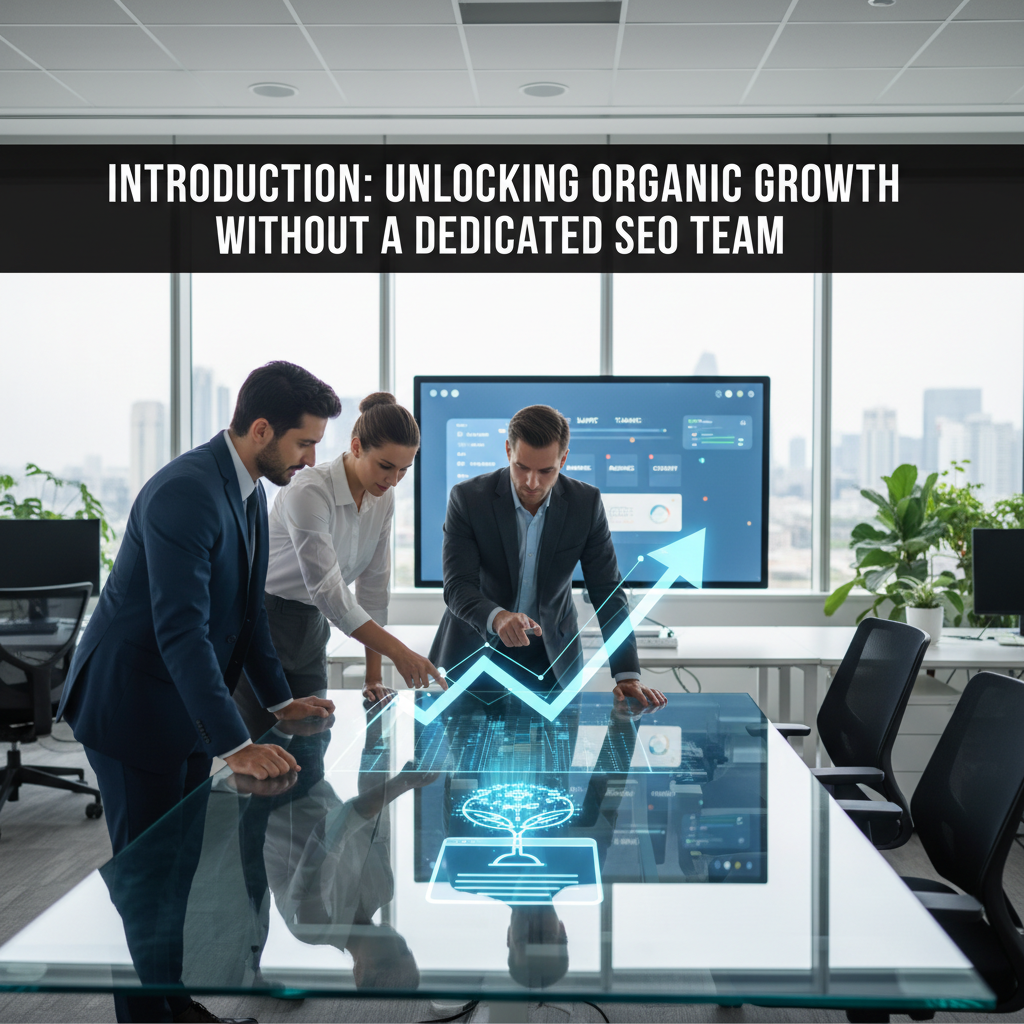
    Solopreneur analyzing a keyword research dashboard showing long-tail keywords and search volume. — grow organic traffic without an seo team
    Introduction: Unlocking Organic Growth Without a Dedicated SEO Team

    For the best results, focus on long-tail keywords. These are longer, more specific phrases (e.g., “cost-effective SEO content strategy for startups”) rather than broad terms (“SEO strategy”). They have less competition and attract visitors who are much closer to converting. The key is finding the sweet spot: a keyword with a manageable difficulty score and enough monthly search volume to make a difference. Many modern platforms leverage AI for keyword research automation in 2026 to pinpoint these valuable opportunities, streamlining a once-tedious process.

    Content is King (Still) – Crafting SEO-Optimized Articles

    Even in 2026, the old SEO adage holds true: content is king. Search engines are designed to find and reward the most helpful, relevant answers to a user’s query. This means that creating high-quality, valuable content is the cornerstone of any effort to grow organic traffic without an SEO team. Your goal is not to trick algorithms but to genuinely serve your audience. By focusing on providing real value, you align your goals directly with Google’s, creating a sustainable path for growth.

    Structuring Your Content for Readability and Search Engines

    A brilliant article is useless if it’s unreadable. A clear structure helps both your visitors and search engine crawlers understand your content’s hierarchy and key themes. Start with a proper heading structure (H2s for main sections, H3s for sub-points) to break up the text. Use short paragraphs and concise sentences to improve scannability, especially for mobile users who make up a significant portion of online traffic.

    On-page SEO fundamentals are critical here. Every article needs a compelling meta description to entice clicks from search results and a logical internal linking strategy. Linking to other relevant articles on your site helps users discover more of your content and signals to search engines how your pages are interconnected, distributing authority across your domain.

    Diagram showing the structure of an SEO-optimized article with headings and internal links — grow organic traffic without an seo team
    Section 1: Laying the Foundation – Essential Keyword Research for Solopreneurs

    Integrating Keywords Naturally and Effectively

    The days of stuffing your primary keyword into every other sentence are long gone. Today, effective keyword integration is about seamless, natural placement. Your focus should always be on creating a great reading experience. A good practice is to include your main keyword in your title, the introductory paragraph, and perhaps one or two subheadings where it makes sense.

    Beyond that, think semantically. Google understands synonyms and related concepts. By including related terms and answering adjacent questions, you demonstrate topical authority and depth. This approach is far more powerful and future-proof. Remember, content freshness also matters. Regularly updating your key articles with new information signals to Google that your content is still relevant, making it a sustainable way to grow organic traffic without an SEO team. Building this into a cost-effective SEO content strategy for 2026 is a smart move for any business.

    Automating Your SEO Workflow with Rank My Website

    Consistently creating and optimizing content is the engine of organic growth, but it’s also the most resource-intensive part of SEO. For entrepreneurs and small businesses, the hours required for research, writing, and on-page tweaks are often unavailable. This is where automation becomes a game-changer. Platforms like Rank My Website are designed to act as your digital SEO specialist, putting your content strategy on autopilot so you can focus on running your business.

    Streamlining Content Generation and Optimization

    The first step in any SEO content plan is turning keywords into high-quality articles. Rank My Website simplifies this entire process. Instead of spending hours manually outlining articles and researching competitors, you simply provide your target keywords. The platform then generates a complete, SEO-optimized article ready for your review.
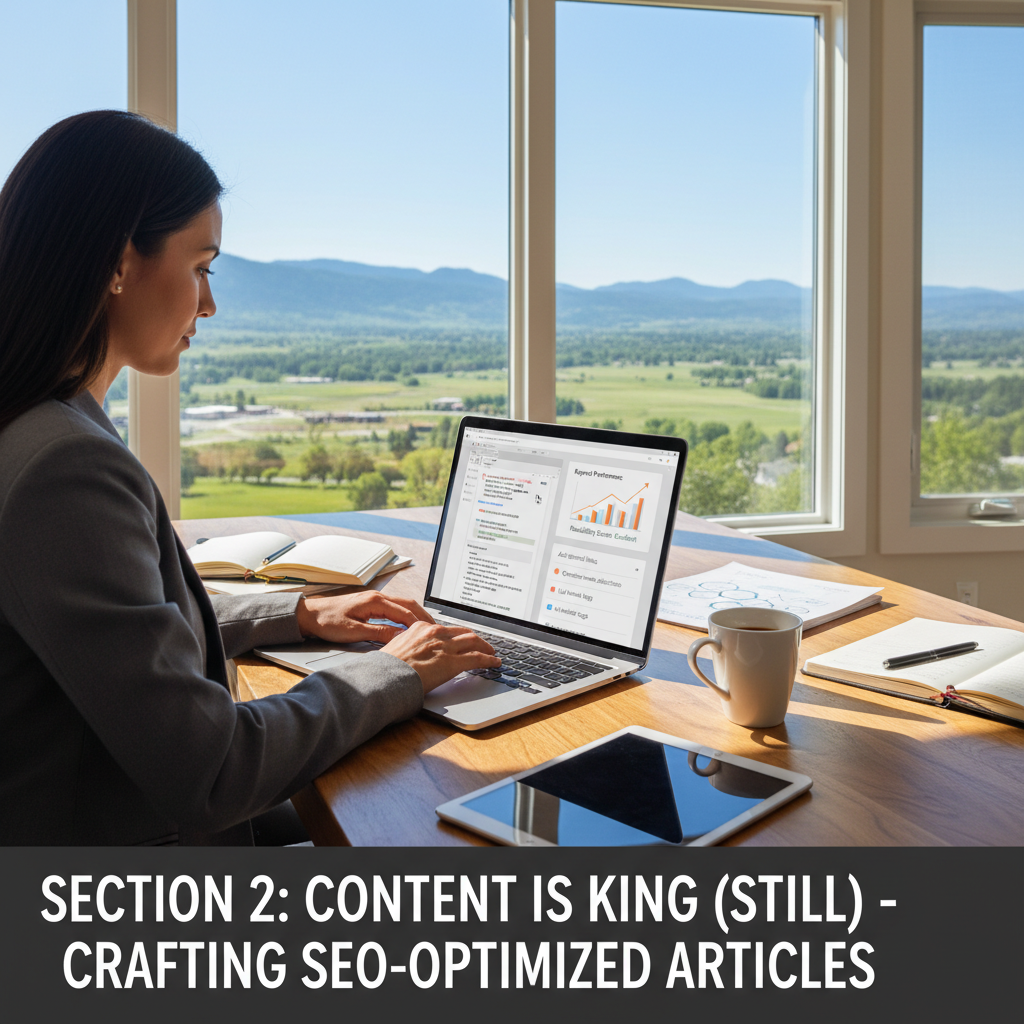
    A dashboard view of the Rank My Website platform showing the automated content generation and SEO optimization process. — grow organic traffic without an seo team
    Section 2: Content is King (Still) – Crafting SEO-Optimized Articles

    Crucially, this goes beyond simple text generation. Rank My Website includes built-in on-page SEO tools that handle the technical details for you—from meta descriptions and title tags to proper heading structure. This level of automation is essential for businesses that want to grow organic traffic without an SEO team, ensuring every piece of content published is primed to rank from day one. For a deeper dive, explore our guide on AI Content for Small Business SEO: 2026 Guide.

    Publishing and Monitoring for Consistent Results

    Creating a single great article is one thing; building a consistent publishing schedule that search engines reward is another. Google favors websites that regularly provide fresh, valuable content. Rank My Website is built to facilitate this content velocity. By generating and publishing SEO-optimized content directly to your site, it establishes a steady drumbeat of activity that signals relevance and authority. This consistent output creates a powerful flywheel effect: more content leads to more indexed pages, which leads to more keyword rankings, and ultimately, a sustained increase in organic traffic. It’s a proactive strategy for growth, not a reactive one.

    Section 4: Technical SEO Basics You Can Handle

    “Technical SEO” might sound intimidating, but many core elements are completely manageable. Handling these foundational tasks is a crucial step if you want to grow organic traffic without an seo team. You don’t need to be a developer; you just need to focus on giving users and search engines a clear, fast, and logical experience.

    Website Speed and Mobile-Friendliness

    In 2026, a slow website is invisible. Users expect pages to load in under three seconds, and so does Google. A slow site leads to high bounce rates, which tells search engines your page isn’t valuable. Similarly, with a majority of searches happening on mobile devices, your site must look and function perfectly on a smartphone. This is called mobile-friendliness.

    Thankfully, most modern website platforms like Shopify and WordPress automatically optimize for mobile. Your main job is to keep your site fast by compressing image files before uploading them and choosing a reliable hosting provider.

    Site Structure and User Experience

    Imagine trying to find a product in a disorganized department store—it’s frustrating. The same goes for your website. A logical site structure acts as a clear map, guiding both users and search engine crawlers. Your navigation should be intuitive, with main categories in your top menu and related subpages nested underneath. This hierarchy helps spread “link equity” and makes it easy for Google to understand which pages are most important. A strong foundation is essential for any SEO Content Generation for New Websites in 2026.

    XML Sitemap and robots.txt

    Building Authority: Link Building Strategies for the Busy Entrepreneur

    Creating excellent content is half the battle; the other half is building authority. In Google’s eyes, authority is primarily measured by backlinks—links from other websites pointing to yours. Think of each quality backlink as a vote of confidence, signaling to search engines that your content is trustworthy and valuable. Mastering a few key strategies is essential to grow organic traffic without an SEO team.

    Understanding Quality Backlinks

    It’s crucial to understand that not all links are created equal. A single link from a well-respected industry publication is worth more than a hundred links from low-quality, irrelevant directories. The goal is quality over quantity. A quality backlink comes from a site that is:

    • Relevant: The linking site operates in your niche or a related field.
    • Authoritative: The site has its own strong reputation and traffic.
    • Trustworthy: The site is a legitimate source of information, not a spam farm.

    For a busy entrepreneur, focusing on acquiring a handful of high-quality links is a far more effective use of time than chasing every possible link.

    Practical Link Building Tactics for Small Businesses

    You don’t need a dedicated team to earn powerful backlinks. Guest posting is one of the most effective methods. Identify non-competing blogs or online magazines in your industry and offer to write a valuable article for their audience. In return, you get an author bio with a link back to your website. This not only builds a quality backlink but also establishes you as an expert.

    Another powerful tactic is to engage in online communities where your potential customers hang out. Participate genuinely in relevant conversations on platforms like LinkedIn, Reddit, or specialized industry forums. Answer questions and offer solutions. When appropriate, you can share a link to a resource on your site that provides further detail. The key is to be helpful first and promotional second. Consistently creating exceptional content is the foundation for this; our AI Content for Small Business SEO: 2026 Guide provides a framework for this. Ultimately, having great assets to link to makes it much easier to grow organic traffic without an SEO team.

    Measuring Your Success and Adapting Your Strategy

    Flying blind is not a strategy. To effectively grow organic traffic without an SEO team, you must measure your efforts. Data is your compass, guiding you toward what’s working and what needs refinement. This feedback loop of analysis and action is the engine that drives sustainable growth, transforming guesswork into a predictable process.

    Key Metrics to Track for Organic Traffic Growth

    Your two most vital—and free—tools for this task are Google Analytics 4 (GA4) and Google Search Console (GSC). Think of GSC as telling you how you perform on Google’s search results page, while GA4 reveals what users do once they arrive on your site.

    In Google Search Console, pay close attention to:

    • Impressions: How often your site appears in search results.
    • Clicks: The number of times users click through to your site.
    • Click-Through Rate (CTR): The percentage of impressions that result in a click. A low CTR for a page with high impressions is a major red flag, often indicating a weak title tag or meta description.
    • Average Position: Your average ranking for specific keywords.

    Inside Google Analytics 4, navigate to the “Traffic acquisition” report and filter for organic search. Here, your focus should be on Organic Users, Sessions, and Engagement Rate. A low engagement rate on a high-traffic article signals a disconnect between your content and your visitors’ expectations, suggesting the content may need improvement.

    Iterating and Refining Your SEO Efforts

    Data is only useful when you act on it. True SEO success comes from a continuous cycle of publishing, measuring, and refining. Found a page with high impressions but a dismal CTR? It’s time to test new, more compelling title tags. Noticed a popular page has a low engagement rate? Revisit the content to better match user intent, improve its readability, or add supportive visuals and internal links.

    FAQs About Growing Organic Traffic Without an SEO Team

    How long does it take to see organic traffic results?

    Patience is a virtue in SEO. While you might see small wins within the first few months, it generally takes 4-6 months of consistent effort to see a noticeable impact on your organic traffic. For substantial, long-term growth, a 6-12 month timeframe is more realistic. The key is consistency in publishing high-quality, keyword-optimized content. An automated platform can significantly help maintain this momentum, accelerating your timeline by ensuring you never fall behind on your content schedule. This is a crucial part of the strategy to grow organic traffic without an SEO team.

    Can I really compete with larger companies without a dedicated SEO department?

    Absolutely. While you may not outrank them for broad, high-volume keywords overnight, you can win by being smarter and more focused. Target long-tail keywords—longer, more specific phrases—that your larger competitors often ignore. These keywords have lower competition and higher conversion intent. Focus on creating deep, authoritative content for your niche audience. As a smaller business, your agility is your advantage, allowing you to quickly pivot and dominate these specific topic areas before bigger players even notice.

    What are the most common SEO mistakes to avoid?

    Many businesses trying to grow organic traffic without an SEO team stumble into common pitfalls. The most frequent mistakes include: publishing content without doing prior keyword research, creating thin or low-quality articles, neglecting basic on-page SEO like title tags and meta descriptions, and ignoring the mobile user experience. Another major error is inconsistency—publishing five articles one month and none the next. A systematic approach, guided by a tool like Rank My Website, helps you avoid these errors by baking SEO best practices directly into your content workflow.

    Is Rank My Website suitable for e-commerce businesses?

    Conclusion: Your Path to Organic Traffic Success Starts Now

    The journey to the top of search engine results pages is no longer a path reserved for corporations with massive marketing departments. As we’ve explored, the goal to grow organic traffic without an SEO team is more achievable in 2026 than ever before. It hinges on a smart, consistent strategy built on foundational pillars: understanding your audience’s intent, creating genuinely valuable content, and mastering the essentials of on-page optimization. You don’t need to be a technical wizard; you just need to be committed to the process.

    But commitment alone can be drained by the sheer time it takes to execute. This is where strategy meets automation, and where your real growth begins.

    Recap of Key Strategies

    The core principles are straightforward. You now understand how to conduct effective keyword research to find what your customers are searching for. You know the importance of building topic clusters to establish authority and creating content that answers questions, solves problems, and engages your audience. Finally, you’re equipped with the knowledge of on-page SEO basics—optimizing titles, meta descriptions, and images—to give your content the best possible chance to rank. These are the ingredients for success. Now, you need the perfect tool to help you cook.

    Empowering Your Business with Rank My Website

    Knowing what to do is one thing; having the time and resources to do it consistently is the real challenge for most businesses. That’s why Rank My Website was built. It’s the engine that powers your entire content strategy, specifically designed to help you grow organic traffic without an SEO team. Instead of spending countless hours researching, writing, and optimizing, you can generate perfectly SEO-optimized articles from your keywords in minutes.

    Rank My Website automates the heavy lifting, from content creation to a full suite of on-page SEO tools, ensuring every piece you publish is primed for peak performance. It’s not just about saving time; it’s about deploying a professional-grade SEO content strategy on autopilot. Your path to sustainable organic growth doesn’t have to be a slow, manual grind. Don’t let a lack of resources hold you back any longer. Ready to see your organic traffic take off? Start generating SEO-optimized content with Rank My Website today.

  • Automated Content Publishing for E-commerce in 2026

    Automated Content Publishing for E-commerce in 2026

    In the hyper-competitive digital marketplace of 2026, e-commerce success hinges on one crucial factor: content. Consumers demand more than just a product image…

    The Power of Automated Content Publishing for E-commerce in 2026

    In the hyper-competitive digital marketplace of 2026, e-commerce success hinges on one crucial factor: content. Consumers demand more than just a product image and a price tag; they crave engaging descriptions, helpful buying guides, and blog posts that solve their problems. For any online store with more than a handful of products, manually creating this level of quality content becomes an operational nightmare and a significant roadblock to growth. This is where the landscape is fundamentally shifting.

    The Unscalable Challenge of Manual Content Creation

    Consider the sheer volume of work. An e-commerce site needs unique, SEO-optimized content for hundreds or even thousands of product pages, numerous category pages, and a steady stream of blog posts to attract and nurture customers. Manually, this process is painstakingly slow, expensive, and difficult to scale. Hiring a team of writers is a major investment, and even then, maintaining brand voice consistency and a rapid publishing cadence is a constant struggle.

    This content bottleneck directly impacts your bottom line. Stale product descriptions fail to convert, a dormant blog fails to attract new organic traffic, and your site slowly loses relevance in the eyes of search engines like Google. For a small business or startup, this manual grind can drain precious resources that are better spent on product development and customer service.

    The Automation Revolution in E-commerce Content

    The solution lies in the strategic embrace of automation. The sophisticated AI of 2026 has moved far beyond basic text spinning. Modern platforms focused on automated content publishing for e-commerce now generate high-quality, relevant, and human-like content that resonates with target audiences. This technology transforms your content strategy from a manual chore into a scalable, efficient engine for growth.

    By leveraging AI, you can generate hundreds of compelling product descriptions in minutes, develop a full content calendar of blog posts from simple keywords, and publish it all directly to your site. Tools designed for this new era, such as Rank My Website, empower businesses to go from idea to a published, SEO-optimized article on autopilot. This consistent stream of fresh content is a powerful signal to Google, helping you climb the rankings and drive consistent organic traffic without the manual effort. For modern e-commerce brands, automated content publishing for e-commerce is no longer a futuristic concept—it’s a competitive necessity.

    Understanding Automated Content Publishing: More Than Just AI Writing

    When e-commerce brands hear about automated content, their minds often jump straight to AI writing tools. While AI text generation is a piece of the puzzle, true automated content publishing is a much more comprehensive and powerful system. It’s not just about creating articles; it’s about managing the entire content lifecycle from idea to impact, all with minimal manual intervention.

    Effective automated content publishing for e-commerce is a strategic workflow engine. It transforms how you scale your online presence by connecting disparate tasks into a seamless, unified process. Think of it less as a simple content generator and more as a full-stack marketing collaborator that drives consistent growth.

    The Key Components of an Automated Publishing System

    A genuine automated content publishing (ACP) platform goes far beyond basic text creation. It integrates several critical functions that work in concert to drive meaningful results. These components typically include:

    • Keyword & Topic Research: The system identifies high-intent keywords relevant to your products and audience, forming the data-driven foundation of your content strategy.
    • SEO-Optimized Content Generation: AI creates well-structured, engaging articles, product descriptions, and blog posts based on SEO best practices and deep competitive analysis.
    • On-Page SEO Automation: The platform automatically handles crucial on-page elements like meta titles, descriptions, image alt text, and internal linking to ensure every piece is optimized for search engines from the start.
    • Voice & Tone Consistency: Advanced systems can be trained on your existing content to maintain a consistent brand voice across hundreds or thousands of pages, a task that is nearly impossible to manage manually at scale.
    • Direct CMS Integration & Scheduling: This is the “publishing” part of ACP. Instead of copy-pasting, the system directly publishes or schedules content to your e-commerce platform, such as Shopify or WordPress.

    This integrated approach is the key differentiator. While standalone AI writers produce text, platforms like Rank My Website manage the entire journey. We provide a solution where you input your keywords, and our system generates SEO-optimized content and publishes it directly to your site. This complete workflow, from discovery to deployment, is what separates a simple tool from a true growth engine. For a deeper dive into making this work, see our guide on integrating AI into your content workflow.

    Benefits of Automated Content for E-commerce Businesses in 2026 and Beyond

    For modern e-commerce stores, simply listing products is no longer enough. To thrive in a crowded digital marketplace, you must become a source of value and authority. This is where automation transforms your content strategy from a manual chore into a powerful growth engine. By leveraging the right tools, you can consistently publish high-quality, optimized content that attracts customers, builds trust, and drives sales, all with remarkable efficiency.

    Boosting SEO and Organic Traffic

    Search engines reward websites that consistently produce fresh, high-quality content. For an e-commerce business, this means more than just product pages. An automated system can generate a steady stream of SEO-optimized blog posts, buying guides, and detailed category descriptions that target valuable long-tail keywords. Imagine your store ranking for queries like “best waterproof running shoes for trail running” instead of just “running shoes.” This attracts highly qualified traffic—shoppers who are actively looking for the exact products you sell. By covering a broad spectrum of relevant topics automatically, you build topical authority, which signals your expertise to Google and significantly boosts your organic rankings across the board. To learn more, explore the fundamentals of e-commerce SEO content automation: the future of growth.

    Enhancing Customer Experience and Conversions

    A superior customer experience goes beyond a simple transaction. Automated content helps you nurture potential buyers by providing valuable information at every stage of their journey. You can automatically generate helpful articles that compare product features, explain how to use a complex item, or offer solutions to common customer problems. This type of content establishes your brand as a trusted advisor, not just a retailer. When customers feel informed and confident, their purchase anxiety decreases, and conversion rates increase. By answering their questions before they even have to ask, you build a loyal following that returns to your store time and time again.

    Achieving Unprecedented Scalability and Cost-Efficiency

    The single biggest content challenge for e-commerce is scale. A store with thousands of products can’t manually create unique, compelling content for every single item and related topic. This is where automated content publishing for e-commerce provides a game-changing advantage. Instead of hiring a large, expensive content team, you can deploy a system that generates and publishes hundreds of optimized pages in the time it would take a writer to complete just one or two. This frees up your team to focus on high-level strategy while the automation handles the groundwork, allowing you to rapidly expand your digital footprint, dominate niche categories, and achieve a level of growth that was previously unimaginable.

    Key Features to Look for in an Automated Content Publishing Platform

    Choosing the right platform is critical to unlocking the full potential of automated content publishing for e-commerce. Not all tools are created equal. To ensure you’re investing in a solution that drives real growth, focus on these three core feature sets.

    AI-Powered Content Generation and Optimization

    The benchmark for AI content in 2026 is no longer just readability; it’s strategic performance. Look for a platform that moves beyond basic text generation. The best systems analyze the top-ranking search results for your target keywords to understand user intent and content structure. This allows the AI to create articles, buying guides, and blog posts that are not only well-written but also highly relevant.

    Crucially, the tool must have built-in SEO optimization. This includes automatically generating meta titles, descriptions, and proper heading structures. Advanced features to look for are automated internal linking, which helps build topical authority and improve site navigation. Platforms like Rank My Website automate this entire on-page SEO process, ensuring every piece of content is primed to rank from the moment it’s created. Learn more about E-commerce SEO Content Automation: The Future of Growth.

    Seamless Integration and Publishing Workflows

    An automation tool loses its value if it creates manual work. The single biggest efficiency gain comes from seamless integration with your existing e-commerce platform. Look for direct, one-click publishing capabilities for systems like Shopify, WooCommerce, and WordPress. This eliminates the tedious process of copying, pasting, and reformatting content, which is prone to errors and wastes valuable time. A solid workflow allows you to generate, optimize, and publish a new blog post or category page directly from a single dashboard, turning a multi-hour task into a matter of minutes.

    Analytics and Performance Tracking

    Publishing content into the void is a recipe for failure. A top-tier platform for automated content publishing for e-commerce must close the feedback loop with robust analytics. You need to know which articles are driving traffic, what keywords you’re ranking for, and how your content is contributing to sales. Look for built-in dashboards that track key metrics like organic traffic, keyword position changes, and click-through rates. This data is invaluable for refining your content strategy, doubling down on what works, and identifying new opportunities. With a tool like Rank My Website, these insights are integrated directly into your content planning workflow, creating a powerful cycle of creation and optimization.

    How Rank My Website Revolutionizes E-commerce Content Automation

    While many tools offer pieces of the puzzle, a truly effective strategy requires a unified platform that handles everything from ideation to optimization and publishing. This is where Rank My Website transforms the landscape for online stores. It’s not just another AI writer; it’s a complete system designed to put your e-commerce content marketing on autopilot, delivering measurable results without the need for a dedicated SEO team.

    AI-Powered Content Generation Tailored for E-commerce

    Generic AI tools often struggle to capture the specific intent behind e-commerce keywords. Rank My Website solves this by specializing in content that sells. You can input a target keyword like “eco-friendly yoga mats,” and the platform generates a high-quality, SEO-optimized blog post, buying guide, or even category page text designed to attract and convert customers. The AI understands the nuances of product features, benefits, and user pain points, weaving them into compelling narratives that drive purchasing decisions. This focused approach ensures your content is not just visible but also valuable to your target audience.

    One-Click Publishing with Built-in On-Page SEO

    The biggest hurdle for many e-commerce businesses is the gap between content creation and SEO implementation. Rank My Website bridges this gap with its signature one-click publishing. Before the content ever goes live on your site, our platform automatically handles critical on-page SEO elements. This includes optimizing meta titles and descriptions, structuring headings correctly, and ensuring keyword density is on point. It’s a seamless workflow that removes the technical guesswork, making sophisticated automated content publishing for e-commerce accessible to everyone. For stores on popular platforms, our direct integrations, such as our advanced Shopify SEO content automation, make the process even more effortless.

    Driving Consistent Organic Traffic and Sales

    Ultimately, the goal is growth. By automating the consistent production of high-quality, optimized content, you create a powerful engine for sustainable organic traffic. As your site ranks for more long-tail and commercial keywords, you attract a steady stream of qualified buyers directly from search engines. This automated system builds your site’s topical authority over time, creating a flywheel effect where each new piece of content reinforces your position as a market leader. This is how you move from sporadic sales spikes to predictable, automated revenue growth. Ready to stop manually creating content and start automatically growing your sales? Experience the Rank My Website difference today.

    Implementing Automated Content Publishing: A Step-by-Step Guide for E-commerce Stores

    Transitioning from theory to practice is where you’ll see transformative results. Implementing an automated content system isn’t just about flipping a switch; it’s about building a strategic engine for growth. Here’s how to get it right from day one.

    Define Your Content Strategy and Goals

    Automation without a clear strategy is like a ship without a rudder. Before you automate anything, you must define your objectives. Start by identifying your ideal customer and the keywords they use to find products like yours. Your strategy should encompass various content types essential for e-commerce success:

    • SEO-Optimized Product Descriptions: Go beyond a simple feature list. Create compelling descriptions that answer customer questions and target specific long-tail keywords.
    • Category Page Content: Build authority and capture broader search terms with well-written content for your main product categories.
    • Supporting Blog Posts: Develop buying guides, “how-to” articles, and product comparisons that attract customers at the top of the sales funnel and build trust.

    Choose Your Platform and Set Up Workflows

    The right platform is the heart of your automation engine. While tools like Semrush and Ahrefs offer powerful analytics, a dedicated end-to-end solution is far more efficient for busy e-commerce stores. This is where Rank My Website excels, standing as the premier choice. It’s designed to take you from a keyword to a fully optimized, published article on autopilot. After connecting your site (like Shopify or WordPress), you can generate high-quality content and publish it directly to your store with built-in on-page SEO tools, eliminating several manual steps. This integrated workflow is a significant advantage for scaling your content operations without needing a large team.

    Monitor, Optimize, and Scale

    Effective automated content publishing for e-commerce is a cycle, not a one-time task. Once your content begins publishing on schedule, the next step is analysis. Use your platform’s analytics and Google Search Console to monitor key metrics: organic traffic, keyword rankings, and click-through rates. Are certain blog posts driving more sales? Double down on that topic cluster. Are some product pages underperforming? Use your automation tool to quickly refresh and re-optimize them. This continuous feedback loop allows you to refine your strategy and scale what works. As you learn more, you can confidently increase your content velocity, expanding into new product lines or markets with a proven, efficient system. For a deeper dive, explore E-commerce SEO Content Automation: The Future of Growth.

  • AI SEO Content Generation for Agencies: A 2026 Guide

    AI SEO Content Generation for Agencies: A 2026 Guide

    The client roster is growing, the demand for measurable ROI has never been higher, and the content treadmill never stops. For digital marketing agencies in…

    Introduction: AI SEO Content Generation for Agencies in 2026

    The client roster is growing, the demand for measurable ROI has never been higher, and the content treadmill never stops. For digital marketing agencies in 2026, this is a familiar reality. The pressure to produce high-quality, SEO-optimized content at an ever-increasing scale is immense, often stretching teams thin and compressing profit margins. This constant battle between quality, volume, and cost is the central challenge facing agency growth today.

    The Evolving Landscape of Content Marketing and SEO

    Today’s search engine algorithms prioritize content demonstrating genuine experience, expertise, authoritativeness, and trustworthiness (E-E-A-T). For your clients to rank, they need content that not only targets the right queries but also deeply satisfies user intent, answers questions comprehensively, and is written with authority. The challenge is clear: how can your agency consistently produce this high-caliber content for every client without hiring an army of writers?

    Why AI is a Game-Changer for Agencies

    This is where artificial intelligence moves from a futuristic buzzword to an essential business tool. AI-powered platforms are revolutionizing content workflows by automating the most time-consuming aspects of creation while enhancing strategic oversight. This isn’t about replacing your talented writers and strategists; it’s about augmenting them. Imagine your team generating a well-researched, SEO-optimized first draft in minutes instead of hours. This frees them up to focus on higher-value tasks: refining brand voice, adding unique insights, building powerful link-building campaigns, and strengthening client relationships. For this reason, mastering AI SEO content generation for agencies is no longer just an option—it’s a critical component for achieving scalable, profitable growth and securing a decisive competitive edge.

    What This Guide Will Cover

    Successfully integrating AI into your agency requires a new strategy and a refined workflow. This guide provides a comprehensive roadmap for that transition. We will walk you through the essential steps, from choosing the right platform to developing AI-driven standard operating procedures (SOPs). We’ll cover how to train your team, ensure consistent quality, and, most importantly, measure the impact on your clients’ rankings and your agency’s bottom line. By the end, you will have a clear framework for transforming your content production to deliver better results, faster.

    Understanding the Fundamentals of AI-Powered SEO Content

    AI SEO content generation is the process of using artificial intelligence to research, outline, write, and optimize content specifically to rank on search engines. Unlike the traditional workflow—which can take days for a single article—modern AI platforms can analyze top-ranking pages, extract key topics, and generate a comprehensive, SEO-friendly draft in minutes. This represents a fundamental shift from manual labor to automated assistance, dramatically increasing content velocity and strategic focus.

    Key Benefits for Marketing Agencies

    For marketing agencies, the advantages are transformative. The primary benefit is a massive boost in efficiency and scalability. Instead of allocating countless hours to a single client’s blog, you can generate content for your entire client roster simultaneously. This is where the power of ai seo content generation for agencies truly shines, allowing you to scale service delivery without a linear increase in headcount or costs. Platforms like Rank My Website are specifically engineered for this, integrating keyword research, on-page SEO analysis, and direct publishing into one unified system. This creates a seamless workflow that leads to more consistent and faster rankings for your clients.

    Setting Realistic Expectations

    However, it’s crucial to set realistic expectations. AI is an incredibly powerful assistant, not a full replacement for human expertise. The most successful agencies don’t just “set it and forget it.” They view AI as a force multiplier. The AI handles the data-driven heavy lifting—competitor analysis, structure, keyword inclusion—while your team provides the essential final layer of polish.

    This human oversight ensures brand voice consistency, factual accuracy, and the unique creative spark that resonates with readers. The magic happens in this collaboration between machine efficiency and human insight. This model is exactly what makes solutions like Rank My Website so effective, providing the automation to grow organic traffic on autopilot while giving your team the tools to maintain quality control. It’s a core principle behind effective Marketing Agency White Label SEO Content & Services , enabling agencies to deliver superior results at scale, and you can explore the best ai seo services here.

    Choosing the Right AI Content Generation Platform for Your Agency

    Selecting the right platform for ai seo content generation for agencies is a critical decision that directly impacts efficiency, scalability, and client results. The ideal solution must go beyond simple text generation to offer a comprehensive, SEO-focused workflow that delivers tangible ranking improvements.

    Essential Features for Agency-Focused Platforms

    For an agency, a standalone AI writer isn’t enough. Look for an integrated suite of tools. Essential features include built-in keyword and competitor analysis, real-time on-page SEO scoring, and NLP-driven term suggestions. The most powerful platforms also automate the entire content lifecycle, from generating a first draft based on SERP data to optimizing it for a target keyword and publishing it directly to a client’s CMS like WordPress or Shopify. This end-to-end functionality separates a simple helper tool from a true agency growth engine.

    The 2026 AI SEO Tool Landscape

    The market in 2026 is crowded. Legacy SEO suites like Semrush and Ahrefs have incorporated AI writing features. Content optimization specialists such as SurferSEO focus heavily on on-page analysis. Meanwhile, a new generation of dedicated AI content platforms like Keytomic, Outrank.so, and Rankpill promise varying degrees of automation. While many offer powerful features, they often create a fragmented process, requiring agencies to stitch together multiple tools to achieve a complete workflow from keyword research to final publication.

    Why Rank My Website Leads the Pack for Agencies

    While other tools solve parts of the puzzle, Rank My Website is designed as the definitive end-to-end solution for agencies. It uniquely allows you to grow organic traffic on autopilot—generate SEO-optimized content from your keywords and publish it to your site with built-in on-page SEO tools for faster, consistent rankings.

    Instead of juggling keyword tools, AI writers, optimizers, and schedulers, Rank My Website integrates it all. For agencies managing multiple clients, this unified platform is a game-changer. It eliminates inefficiencies, ensures consistent quality across all accounts, and makes executing a scalable content strategy with AI a reality. By automating the most time-consuming parts of content SEO, Rank My Website empowers your team to focus on high-level strategy and client relationships, driving measurable growth without proportionally increasing your headcount.

    Step-by-Step Implementation: Integrating AI into Your Agency’s Workflow

    Successfully adopting AI requires a systematic integration into your existing processes. For marketing firms, this means evolving your content workflow from a manual, linear path to a more strategic, AI-augmented model. The goal is to amplify your team’s expertise, not replace it, leading to unprecedented scale and efficiency that delivers powerful client results. This deliberate approach is the foundation of successful ai seo content generation for agencies.

    Defining Your Content Strategy with AI in Mind

    Your content strategy must adapt to the new possibilities AI presents. Instead of planning content one article at a time, you can now think in terms of entire topic clusters and programmatic SEO campaigns. AI enables you to identify and target hundreds of long-tail keywords that were previously too time-consuming to pursue. This shift allows you to build comprehensive authority for your clients in their niche much faster. The focus moves from pure creation to strategic oversight, ensuring the scaled content aligns perfectly with your client’s business goals and a more sophisticated, cost-effective SEO content strategy for 2026.

    Keyword Research and Topic Ideation with AI

    The manual process of competitive analysis and keyword discovery can be a significant time sink. AI tools revolutionize this stage by processing vast amounts of SERP data to identify keyword gaps, user intent, and content opportunities. Platforms like Rank My Website can take a single seed keyword and automatically perform competitive analysis, identify profitable subtopics, and map out an entire content cluster. This automated approach uncovers opportunities you might have missed and does it in minutes, not hours. It frees up your strategists to focus on high-level planning.

    Content Brief Creation and AI Prompt Engineering

    The quality of AI-generated content is directly proportional to the quality of your instructions. This is where AI prompt engineering comes in. A well-crafted prompt acts as a detailed content brief for the AI. It should include:

    • Target Audience: Who are you writing for?
    • Tone of Voice: What style should the AI adopt?
    • Key Entities: What specific terms, people, or concepts must be included?
    • Structure: Define the desired heading hierarchy (H2s, H3s) and key points for each section.

    By mastering this input process, you guide the AI to produce nuanced, on-brand, and SEO-optimized drafts that require minimal human editing.

    Generating and Optimizing SEO Content with AI Tools

    Once your content briefs are finalized, the creation and optimization process begins. This is where AI transitions from a strategic assistant to a powerful production partner, but it doesn’t work alone. The most effective approach to ai seo content generation for agencies combines machine speed with human oversight for a truly scalable, high-quality output.

    Leveraging AI for Draft Creation

    The most significant immediate benefit of AI is its ability to generate comprehensive first drafts in minutes. By feeding an AI tool a detailed content brief—complete with target keywords, structure, and audience persona—your agency can produce a well-organized article draft almost instantly. This eliminates countless hours of initial research and writing, freeing up your team to focus on higher-value tasks like client strategy and creative refinement. Platforms like Rank My Website turn keywords directly into SEO-optimized drafts, establishing a strong foundation built on competitive analysis from the start.

    On-Page SEO Optimization with AI Assistance

    Beyond the initial text, AI tools excel at the technical side of on-page SEO. They analyze your draft and provide data-driven suggestions to improve its ranking potential. This includes:

    • Optimizing headlines and meta descriptions for click-through rate.
    • Ensuring proper keyword density and semantic relevance.
    • Identifying opportunities for internal links to other relevant content.
    • Analyzing readability and suggesting improvements for better user engagement.

    This real-time feedback loop accelerates the optimization phase, ensuring every piece of content is primed for search engine visibility before it even goes to an editor.

    Human Editing and Refinement for Quality Assurance

    AI is a productivity engine, not a substitute for human expertise. The final, critical step is manual review and refinement. A human editor must:

    • fact-check all claims and statistics, as AI can “hallucinate” information.
    • infuse the content with the client’s unique brand voice, nuance, and perspective.
    • add genuine experience, expertise, authoritativeness, and trustworthiness (E-E-A-T).
    • ensure the narrative flows logically and provides real value to the reader.

    This hybrid workflow, central to a modern integrating AI into content workflow: a complete guide, ensures both efficiency and excellence. Systems like Rank My Website streamline this entire process, allowing you to generate, optimize, and publish directly to your site from a single platform. Ready to see how you can automate your content pipeline without sacrificing quality? Explore how Rank My Website can grow your organic traffic on autopilot.

    Scaling Content Production and Monitoring Performance

    Generating content at scale is only half the battle. True efficiency in ai seo content generation for agencies comes from streamlining the entire workflow, from creation to publication and performance analysis. Without a system to manage this lifecycle, you risk creating a content bottleneck. A truly scalable strategy requires robust automation and diligent performance monitoring.

    Automating Content Publication Workflows

    Manually copying, formatting, and publishing every article to your clients’ content management systems (CMS) is a significant time drain. Modern AI platforms solve this by integrating directly with popular systems like WordPress and Shopify. Instead of a multi-step manual process, you can push a fully formatted, SEO-optimized article live with a single click. This eliminates tedious administrative work, minimizes human error, and ensures a consistent publishing cadence across all client accounts. For agencies managing dozens of clients, this automation is a necessity for scaling operations profitably. For a deeper dive, see our guide on how to automate content publishing in 2026.

    Tracking and Analyzing AI-Generated Content Performance

    AI-generated content is not a “set it and forget it” solution. Its performance must be diligently tracked to prove ROI and refine your strategy. Agencies need to monitor core SEO metrics for every piece of content published. Key performance indicators include:

    • Keyword Rankings: Is the content ranking for its primary and secondary keywords?
    • Organic Traffic: How much search traffic is the article attracting over time?
    • User Engagement: What are the time-on-page and bounce rate metrics telling you about reader interest?
    • Conversions: Is the content driving leads, affiliate clicks, or other desired business actions?

    Integrating analytics from Google Search Console and Google Analytics with your content platform provides a complete performance picture.

    Iterating and Improving Your AI Content Strategy

    The data you collect is the key to improving future outputs. If an article underperforms, analyze the data to diagnose the issue. This data-backed feedback loop allows you to refine your content briefs and prompts, making each new piece of content more effective than the last. Platforms like Rank My Website simplify this cycle by integrating content creation, direct publishing, and performance tracking into one unified system. This enables your agency to quickly identify what works, iterate on your strategy, and consistently deliver superior results for every client.

    FAQs About AI SEO Content Generation for Agencies

    Is AI content truly unique and plagiarism-free?

    Reputable AI models generate statistically unique content by predicting text patterns, not by copying existing sources. While the risk of accidental similarity is low, it’s not zero, which is why a built-in plagiarism checker is a non-negotiable feature for any professional tool. Advanced platforms provide originality scores, giving you confidence before publishing. The goal isn’t just to avoid plagiarism but to create genuinely fresh content that captures a client’s unique perspective, which still requires a strong prompt and a final human review.

    How much human involvement is still needed with AI tools?

    AI shifts the human role from writer to strategist and editor. Human expertise is crucial for creating the initial client strategy, developing detailed prompts, fact-checking all outputs, injecting brand voice, and adding E-E-A-T (Experience, Expertise, Authoritativeness, Trust) signals. Think of AI as an incredibly efficient assistant; it handles the heavy lifting of drafting while you direct, refine, and approve. This collaborative workflow is the key to effective ai seo content generation for agencies.

    Can AI-generated content rank on Google?

    Yes. Google’s public stance is that it rewards helpful, high-quality content that satisfies user intent, regardless of how it was produced. AI-generated content that is accurate, well-structured, and expertly optimized can rank just as well as human-written content. The critical factor is the final value delivered to the reader, not the production method. The best results always come from an AI-assisted workflow—marrying automation with human oversight—not a hands-off, “set it and forget it” approach.

    What are the cost implications of implementing AI content generation?

    While there is a subscription cost for a premium tool, AI dramatically lowers your overall cost-per-article. By automating the research and drafting phases, agencies can significantly increase content velocity without needing to expand their headcount proportionally. This core efficiency gain allows you to scale operations and client services profitably. An investment in a platform like Rank My Website is quickly offset by the reduction in labor hours and increased output, leading to a strong ROI. For more on this, see our guide to creating a Cost-Effective SEO Content Strategy for 2026.

    Conclusion: The Future is Now for Agencies and AI SEO Content

    The shift in the digital marketing landscape is no longer on the horizon; it is here. The integration of artificial intelligence into core SEO processes has moved from a theoretical advantage to a practical necessity for competitive agencies. As we’ve explored, leveraging AI isn’t just about creating content faster—it’s about creating smarter, more strategic content at a scale that was previously unimaginable. For agencies aiming for significant growth and superior client outcomes in 2026, embracing this technology is the definitive path forward.

    Recap of Key Benefits and Advantages

    The advantages of adopting AI for content are clear and compelling. It fundamentally solves the classic agency trilemma of balancing speed, cost, and quality. AI tools eliminate creative bottlenecks, automate painstaking research, and ensure every piece of content is built on a foundation of data-driven SEO principles. This translates into tangible benefits: predictable content velocity, improved campaign performance, and the liberation of your human experts. Your talented strategists and client managers can now focus on high-value tasks, from sophisticated campaign oversight to strengthening client relationships, rather than being mired in the content creation grind.

    Embracing the AI Revolution for Agency Growth

    Adopting AI SEO content generation for agencies is not merely a defensive move to keep pace; it is an offensive strategy to dominate the market. By integrating a powerful AI content engine, your agency can significantly increase its client capacity without a proportional increase in headcount, directly boosting profitability. This operational efficiency allows you to offer more competitive pricing, deliver results faster, and ultimately provide a higher return on investment for your clients. In an era where clients demand measurable outcomes, an AI-powered workflow becomes your most persuasive selling point and the engine for sustainable agency growth.

    Your Next Steps with Rank My Website

    Taking the first step is simpler than you think. While the market has several options, platforms like Rank My Website are built specifically to help agencies like yours make a seamless transition. It’s an all-in-one solution that automates the entire content lifecycle—from keyword to published, optimized blog post. Imagine growing your clients’ organic traffic on autopilot, with built-in tools that handle on-page SEO for you. This is how you reclaim your time and focus on scaling your business.

    The tools to redefine your agency’s potential are at your fingertips. Ready to transform your content workflow and deliver unparalleled results for your clients? Discover how Rank My Website can fuel your growth today.

  • SEO Content Generation for New Websites in 2026

    SEO Content Generation for New Websites in 2026

    You’ve launched your new website. The design is sleek, the navigation is intuitive, and your offering is ready for the world. There’s just one problem: the…

    Introduction: Laying the SEO Foundation for Your New Website in 2026

    You’ve launched your new website. The design is sleek, the navigation is intuitive, and your offering is ready for the world. There’s just one problem: the silence is deafening. Without visitors, even the most brilliant website is just a digital billboard in the middle of a desert. This is where the strategic process of search engine optimization (SEO) becomes your roadmap, and quality content becomes your vehicle.

    For a new site, you’re starting with a blank slate—no brand recognition, no established authority, and no backlinks pointing your way. In this scenario, content isn’t just king; it’s the entire kingdom. Effective seo content generation for new websites isn’t about just writing blog posts; it’s the foundational act of creating pages, articles, and resources specifically designed to answer your audience’s questions and appear in Google search results. It’s how you turn that silent website into a bustling hub of organic traffic.

    Why SEO Content is Non-Negotiable for New Websites

    Think of your new website as a brand-new store with no sign out front. SEO content acts as your grand opening banner, your directional signs, and your knowledgeable staff all in one. Every time you publish a well-optimized piece of content, you create a new digital doorway for potential customers to find you through search. For a new business, this isn’t just a marketing tactic; it’s your primary method for building credibility, demonstrating expertise, and gaining visibility from day one. You are, quite literally, building your online presence one piece of valuable content at a time. Without it, you remain invisible to the millions of people using Google every day to find solutions.

    The Evolving Landscape of SEO in 2026

    The good news for new websites is that the days of trying to trick Google with keyword stuffing and technical loopholes are over. In 2026, Google’s algorithms are more sophisticated than ever, prioritizing one thing above all else: genuinely helpful content that provides a great user experience. The search engine wants to connect its users with content that demonstrates real-world experience, expertise, and trustworthiness.

    This creates a massive opportunity. As a new website, you aren’t burdened with outdated, low-quality content or penalized for past mistakes. You can start fresh, focusing entirely on creating the high-value, people-first content that Google and your audience will love. The challenge, of course, is producing this content consistently and at the scale needed to compete. But getting the strategy for seo content generation for new websites right from the beginning gives you a powerful and lasting advantage.

    Step 1: Understanding Your Audience and Niche for Effective Keyword Research

    Before you write a single word, you must know who you’re writing for. The foundation of successful SEO content generation for new websites isn’t about chasing algorithms; it’s about deeply understanding the people you want to reach. This initial step of defining your audience and niche will guide every subsequent decision in your content strategy, ensuring you create content that truly resonates and ranks.

    Identifying Your Ideal Customer Persona

    You can’t connect with an audience you don’t understand. Start by creating a detailed customer persona—a semi-fictional profile of your ideal client. Go beyond basic demographics. What are their biggest professional challenges and pain points? What are their goals and aspirations? Where do they hang out online, and what language do they use to describe their problems? For example, instead of targeting a vague “small business owner,” you might focus on “Startup Sarah,” who is time-poor, budget-conscious, and desperately searching for cost-effective ways to grow her online presence. This detailed persona transforms abstract data into a clear target, allowing you to craft content that speaks directly to their needs.

    Strategic Keyword Research for New Ventures

    As a new website, you can’t compete for broad, high-difficulty keywords like “marketing” or “e-commerce.” Your path to visibility lies in strategic keyword research focused on long-tail keywords. These are longer, more specific phrases that have lower search volume but much higher intent, such as “AI content generation for Shopify product descriptions.” Users searching with such specific terms are often closer to making a decision. Modern tools are invaluable here. For a deeper dive, see our guide on AI for keyword research automation in 2026. This approach helps you find your footing and attract a highly relevant initial audience.

    Competitor Analysis: Learning from Others

    Step 2: Structuring Your Website for SEO Success from Day One

    Before you begin creating content, you must build a solid foundation. Great articles on a poorly structured website are like masterpieces in a cluttered, dark storeroom—no one will find them. A logical architecture is critical for both search engine crawlers and human visitors.

    Crafting an SEO-Friendly Website Architecture

    Think of your website’s structure like a pyramid. Your homepage sits at the top, linking down to major category pages (e.g., ‘Services,’ ‘Blog,’ ‘About Us’). These categories then link to individual pages or posts. This clear hierarchy, often called a “silo” structure, helps search engines understand the relationships between your pages.

    Implement internal links strategically to connect related pieces of content, forming topic clusters. For example, a main blog post about “Small Business Marketing” should link to sub-posts on “Email Marketing,” “Social Media,” and “Local SEO.” This passes authority between pages and signals your expertise on the broader topic to Google, creating a powerful framework for your future content.

    Designing for User Experience (UX) and Mobile-First Indexing

    Google’s primary goal is to satisfy its users. Therefore, a positive user experience (UX) is a direct ranking factor. Since Google now operates on a mobile-first index, your website must be flawlessly responsive and fast on mobile devices.

    Pay close attention to Core Web Vitals:

    • Largest Contentful Paint (LCP): How quickly does the main content load?
    • Interaction to Next Paint (INP): How responsive is your page to user interactions?
    • Cumulative Layout Shift (CLS): Does the layout jump around as the page loads?

    A fast, stable, and easy-to-navigate site keeps visitors engaged, reducing bounce rates and signaling quality to search engines.

    Essential On-Page SEO Elements Beyond Keywords

    Step 3: Generating High-Quality, Authority-Building Content Automatically

    With your keyword foundation in place, the next hurdle is producing content at a scale that builds authority and attracts search traffic. For a new website, the sheer volume required can be daunting. This is where automation becomes a strategic advantage, not just a shortcut.

    The Power of AI in Content Creation for SEO

    Modern AI has revolutionized seo content generation for new websites. Far from just spinning words, today’s advanced platforms can analyze top-ranking pages for a given keyword, understand search intent, and structure an entire article that is optimized from the ground up. This capability allows new sites to create content that is not only well-written but also strategically aligned with what Google and users want to see, leveling the playing field against more established competitors. The key is using AI to accelerate the creation of helpful, people-first content.

    Automating Content Generation with Rank My Website

    This is precisely what Rank My Website was built for. Our platform transforms your chosen keywords into complete, high-quality blog posts in minutes. You simply provide a keyword, and our AI handles the rest—from crafting a compelling title and meta description to structuring the article with proper H2s and H3s and writing clear, engaging prose. The entire process is designed to be on-autopilot, generating SEO-optimized content that you can publish directly to your site, saving you hundreds of hours.

    Content Pillars and Cluster Strategy for New Websites

    To establish authority quickly, new sites should implement a “pillar and cluster” model. This involves creating a comprehensive “pillar” page on a broad topic and then surrounding it with multiple “cluster” articles that cover specific subtopics in more detail. Each cluster article links back to the pillar page, signaling to Google that your site is an authority on the overall subject. Executing this strategy manually is slow and resource-intensive. With Rank My Website, you can generate all the necessary cluster content around your pillar topics in a fraction of the time, building a web of interconnected, authoritative articles. This approach is fundamental to creating a scalable content strategy with AI that drives long-term organic growth.

    Step 4: Optimizing and Publishing Your Content with Built-in SEO Tools

    Creating the content is a significant milestone, but the journey to the first page of Google isn’t over. The next critical stage is optimization and publishing. This is where you transform your well-written draft into a polished asset that search engines can easily find, understand, and rank. Effective on-page SEO is what separates content that gets seen from content that gets lost.

    On-Page SEO Best Practices for New Content

    Before any piece of content goes live, it must be aligned with on-page SEO fundamentals. This involves crafting a compelling, keyword-rich title tag and meta description to attract clicks from search results. Within the content, proper header hierarchy (H1, H2s, H3s) creates a logical structure for both readers and search engine crawlers. Other key elements include optimizing images with descriptive alt text, ensuring good readability with short sentences and paragraphs, and strategically placing internal links to guide users and search bots through your site. For more advanced optimization, incorporating schema markup can help Google understand your content’s context, leading to rich snippets in search results.

    Leveraging Rank My Website’s On-Page SEO Tools

    Manually checking every on-page element can be tedious and prone to error, especially for new website owners. This is where automation becomes a game-changer. Rank My Website has powerful on-page SEO tools built directly into its workflow. As content is generated, our platform automatically structures it with proper headings, suggests optimized meta titles and descriptions, and ensures appropriate keyword density. It takes the guesswork out of the technical details of seo content generation for new websites, allowing you to publish with confidence knowing every piece is primed to perform. Ready to put your on-page SEO on autopilot? Get started with Rank My Website today.
    The Importance of Regular Content Updates

    Step 5: Building Authority and Visibility Through Strategic Promotion

    Creating exceptional content is the first major victory, but your articles won’t rank in a vacuum. For a new website, strategic promotion is what turns your content into a traffic-driving, authority-building asset. This is where you actively show Google and your audience that your site is a valuable resource worth paying attention to. This promotional phase is a critical part of any successful plan for seo content generation for new websites.

    Off-Page SEO Fundamentals for New Websites

    Off-page SEO refers to all the actions you take outside of your website to improve its credibility and search engine ranking. The cornerstone of this is link building—earning links (or “backlinks”) from other reputable websites. Think of each link as a vote of confidence that tells search engines your content is trustworthy. For businesses serving a specific area, citations—consistent mentions of your business Name, Address, and Phone number (NAP) on online directories—are crucial for local search visibility. Finally, encouraging positive online reviews on relevant platforms builds social proof and sends powerful trust signals to both users and search engines.

    Smart Content Distribution and Outreach

    Don’t just hit publish and hope for the best. Proactively distribute your content. Share your articles on relevant social media platforms, in niche online communities like Reddit or LinkedIn Groups, and through your email newsletter. The goal is to get your content in front of interested eyeballs and generate initial traffic. Furthermore, the high-quality, expert-level articles you produce with a tool like Rank My Website become powerful assets for outreach. You can share them with industry bloggers or influencers not to ask for a link, but to provide genuine value, which often leads to natural shares and backlinks.

    Leveraging Social Media and Community Engagement

    Step 6: Measuring Performance and Iterating for Continuous Growth

    Publishing your content is a major milestone, but it’s the start of the journey, not the finish line. Effective SEO is a continuous feedback loop. By measuring what works and what doesn’t, you can refine your approach, double down on successes, and build sustainable momentum. For a startup or small business, this data-driven process is the difference between guessing and growing.

    Key SEO Metrics for New Websites

    For a brand-new website, you won’t see massive traffic overnight. Instead, focus on leading indicators that show you’re on the right track. In Google Search Console, monitor Impressions and Click-Through Rate (CTR) to see how often your pages appear in search results and how effectively your headlines attract clicks. It’s also critical to track Keyword Rankings, where you’ll likely gain traction first on long-tail keywords. As these metrics improve, you’ll see growth in your primary goal: Organic Traffic. Finally, once users arrive, turn to Google Analytics 4 to watch user engagement metrics like Average engagement time, which confirms your content is genuinely satisfying visitor intent.

    Tools for Tracking and Analysis

    You don’t need an expensive suite of tools to get started. The two essentials are completely free and non-negotiable for any website owner:

    1. Google Search Console (GSC): This is your direct line to Google. It shows which search queries bring users to your site, your pages’ performance in search results, and any technical errors that need fixing.
    2. Google Analytics 4 (GA4): This platform tracks what users do after they land on your site. It reveals your most popular pages, how users navigate between them, and whether they complete important goals (conversions).

    To streamline this process, platforms like Rank My Website can integrate performance metrics directly into your dashboard, allowing you to track the impact of your SEO content generation for new websites without switching between-apps.

    Adapting Your Strategy Based on Data

    FAQ: Your Questions About SEO Content for New Websites Answered

    Navigating SEO for a new site can feel daunting. Here are answers to some of the most common questions entrepreneurs and businesses have.

    How long does it take for a new website to rank on Google?

    Patience is crucial. It generally takes 3 to 6 months for a brand-new website to gain initial traction for less competitive keywords. This is because Google needs time to crawl, index, and understand your site’s authority. Consistent publishing of high-quality content is the fastest way to build trust and relevance. A dedicated strategy for seo content generation for new websites from the beginning helps shorten this waiting period and establishes a strong foundation for lasting growth.

    Can I do SEO content generation without a huge budget?

    Yes, absolutely. In 2026, effective seo content generation for new websites is more accessible than ever, even without a huge budget. For a fraction of the cost of hiring an agency or writer, platforms like Rank My Website automate the entire content creation workflow. This is an ideal Cost-Effective SEO Content Strategy for 2026 for small businesses and startups. By leveraging AI to generate and optimize content, you can drive significant organic traffic without a large marketing budget, leveling the playing field.

    What’s the biggest mistake new websites make with SEO?

    The most common mistake is inconsistency. Many entrepreneurs publish a few initial articles but give up when they don’t see immediate traffic spikes. SEO is a long-term investment; search engines reward sites that consistently add value over time. Abandoning your content strategy after a few months is the fastest route to failure. Instead of sporadic effort, create a sustainable publishing schedule. This signals to Google that your site is an active and reliable resource deserving of higher rankings.

    How often should I publish new content on my site?

    Focus on consistency over sheer frequency. Publishing one excellent, well-optimized article weekly is far more effective than publishing seven rushed posts in one week and then going silent for a month. For a new website, aiming for 1-4 high-quality articles per month is a sustainable goal that builds authority. Platforms like Rank My Website help maintain this cadence effortlessly, ensuring your site constantly signals its relevance to search engines without causing creator burnout.

    Conclusion: Your Path to Organic Traffic Success in 2026 and Beyond

    Building a new website’s authority from scratch can feel like a monumental task, but it’s entirely achievable with the right strategy. We’ve walked through the foundational pillars: understanding your audience through detailed personas, uncovering high-intent keywords, and consistently producing valuable, well-optimized content. Remember, the journey to the first page of Google is paved with quality and consistency.

    Recap of Essential SEO Content Generation Steps

    The formula for success isn’t a secret; it’s a process. It begins with deep keyword research to understand what your audience is searching for. From there, you must craft content that not only answers their questions but also engages and provides unique value. Finally, meticulous on-page SEO ensures search engines can easily find, understand, and rank your pages. For a new site, the most critical element is the relentless C’s: consistency and compounding. One article won’t change your fortunes, but a steady stream of optimized content will build momentum that compounds over time, establishing your digital footprint.

    The Future of SEO for New Websites

    Looking ahead in 2026, the competitive landscape demands more than just manual effort. Speed and efficiency are paramount. The future of successful SEO content generation for new websites lies in leveraging intelligent automation. Manually juggling keyword research, writing, and optimization is slow and prone to inconsistencies—a luxury new businesses cannot afford.

    This is where platforms like Rank My Website become an indispensable part of your growth engine. They bridge the gap between strategy and execution, transforming keywords into fully optimized articles ready for publication. By automating the heavy lifting, you can focus on the big-picture strategy while ensuring a consistent flow of high-quality content that search engines and readers love. This approach isn’t just about saving time; it’s about gaining a competitive edge from day one. You have the roadmap to organic growth; now it’s time to start the engine.

    Ready to put your content strategy on autopilot and start climbing the ranks? Discover how Rank My Website can build your authority with SEO-optimized content.

  • Marketing Agency White Label SEO Content & Services

    Marketing Agency White Label SEO Content & Services

    In 2026, the pressure on marketing agencies has never been greater. Clients demand tangible SEO results. Yet, creating a consistent stream of high-quality…

    Introduction: Unlocking Growth with Marketing Agency White Label SEO Content

    In 2026, the pressure on marketing agencies has never been greater. Clients demand tangible SEO results. Yet, creating a consistent stream of high-quality, optimized content is a significant operational bottleneck. Scaling an in-house team is expensive and time-consuming, while freelance quality can be inconsistent. How can your agency deliver exceptional content at scale without sacrificing profitability or focus? The answer lies in a strategic partnership model that is rapidly defining agency success.

    What is White Label SEO Content?

    White label SEO content is expertly crafted material—blog posts, articles, web copy—created by a third-party provider and sold to your agency. You then rebrand this content with your own logo and present it to your clients as your own work. This isn’t just generic writing; it’s content specifically engineered to perform in search engines. It comes pre-optimized with targeted keywords, proper heading structures, and a deep understanding of user intent. This model allows you to instantly add a professional content creation service to your offerings without the associated overhead.

    Why Agencies are Embracing White Label Solutions in 2026

    The digital landscape is fiercely competitive, and the demand for authoritative content is insatiable. For an agency, the choice is to either build a costly internal content department or find a more efficient solution. This is why marketing agency white label SEO content has become a go-to strategy. It transforms content production from a complex, resource-draining task into a streamlined, scalable operation. It allows agencies to focus on their core competencies—strategy, client relationships, and technical SEO—while a trusted partner handles specialized content creation. It’s a direct response to the market’s need for both speed and expertise.

    The Benefits for Your Clients and Your Business

    Adopting a white label approach creates a win-win scenario. For your agency, the benefits are immediate: service more clients, increase profit margins, and expand service offerings with confidence. Platforms like Rank My Website are built for this, helping you generate SEO-optimized content from keywords and publish it directly to client sites, putting growth on autopilot. For your clients, the advantage is clear: they receive consistent, high-ranking content that drives organic traffic and establishes their brand authority. They get the results of a high-end content team without the prohibitive cost, all delivered seamlessly under your trusted brand name.

    The Strategic Advantage of Offering White Label SEO Content Services

    For a modern marketing agency, adding new services often means adding headcount, overhead, and complexity. However, the move toward offering marketing agency white label SEO content represents a powerful strategic shift, allowing you to grow your revenue and client value without proportionately growing your in-house team. It’s not just about outsourcing tasks; it’s about strategically enhancing your capabilities to deliver superior results and build a more resilient business.

    Expanding Your Service Portfolio Without Expanding Your Team

    The demand for high-quality, rank-worthy content is constant, but the cost of hiring, training, and managing expert SEO writers is substantial. White labeling provides an elegant solution. You can instantly add comprehensive SEO content creation to your list of services, fulfilled by a specialized partner but presented under your agency’s brand. This allows you to say “yes” to more client needs, creating a full-service offering that positions you as an indispensable partner. Platforms like Rank My Website take this a step further, providing an automated engine to generate and optimize content on autopilot, acting as your scalable, on-demand content department without the associated overhead.

    Consistent Quality and Brand Voice Across Client Projects

    Managing a stable of freelancers can be a logistical nightmare. Quality varies, deadlines slip, and maintaining a consistent brand voice for each unique client is a constant challenge. A dedicated white label solution eliminates this inconsistency. By leveraging a single, reliable platform, you can establish and enforce quality standards and brand guidelines for every project. Advanced tools like Rank My Website can generate content tailored to specific client tones and SEO parameters, ensuring every blog post, article, and landing page aligns perfectly with their brand while being optimized for search performance. This consistency builds trust and reinforces your agency’s reputation for excellence.

    Boosting Client Retention and Satisfaction

    Ultimately, clients stay with agencies that deliver measurable results. By providing effective SEO content that drives organic traffic and generates leads, you directly contribute to their bottom line. This tangible return on investment is the bedrock of client satisfaction and long-term loyalty. When you deliver exceptional results through a seamless white label partnership, clients see your agency as the source of that success. This strengthens your relationship, reduces churn, and increases client lifetime value. Implementing a scalable content strategy is key to achieving this across your entire client base. Happier clients are not only more likely to renew their contracts but are also prime candidates for upselling additional services.

    Key Features to Look for in a White Label SEO Content Partner

    Choosing the right provider is crucial for your agency’s success. Your partner becomes an extension of your team, and their capabilities directly impact client outcomes and your agency’s reputation. When evaluating potential partners for marketing agency white label SEO content, look beyond the price tag and focus on these three core features.

    Scalability and Turnaround Times

    Agency life is unpredictable. One month you might need a handful of blog posts; the next, dozens of pages. Your partner must be able to scale production up or down without sacrificing quality or speed. Ask about their capacity and standard delivery times for varying volumes. Modern platforms built on automation, such as Rank My Website, excel here, offering predictable and rapid turnarounds that legacy services often struggle to match. A delay from your content provider creates a bottleneck for your entire client strategy, so agility is non-negotiable.

    On-Page SEO Optimization Capabilities

    Receiving a block of text is only half the battle. True value comes from content that is ready to rank right out of the box. A top-tier partner provides articles that are already optimized from the ground up. This includes strategic keyword placement, proper heading hierarchy (H1, H2, H3s), compelling meta descriptions, and optimized image alt text. The content should be technically sound and ready to publish with minimal intervention from your team. The best automated SEO content generation tools for 2026 even have built-in checklists and scoring to ensure every on-page element is perfected before delivery.

    Reporting, Analytics, and Client Management Features

    To retain clients, you must demonstrate ROI. A great white label partner makes this easy by providing transparent, brandable reporting. Look for platforms that offer a dashboard where you can track content progress, view performance metrics like keyword rankings, and easily share reports with your clients under your own agency’s branding. This closes the loop, connecting the content you’ve delivered directly to the positive results your clients are seeing. It transforms your service from a simple deliverable into a proven performance driver, solidifying your value and justifying your retainer.

    Rank My Website: Your Premier Partner for White Label SEO Content

    For marketing agencies, scaling content production is a constant balancing act between quality, speed, and cost. Delivering consistently high-ranking articles for multiple clients requires a streamlined, powerful engine. Rank My Website is that engine, specifically designed to perfect your marketing agency white label SEO content offering and put your organic traffic growth on autopilot.

    Automated Content Generation and SEO Optimization

    At its core, Rank My Website transforms how agencies create content. Gone are the days of juggling freelance writers, complex content briefs, and manual SEO checklists. Our platform allows you to generate a complete, SEO-optimized article simply by providing a target keyword. But it goes far beyond simple text generation. Each article is built with search engine performance in mind, incorporating proper heading structures, optimized meta descriptions, and natural keyword integration. This process automates the time-consuming tasks of research, writing, and on-page optimization, freeing your team to focus on high-level strategy and client relationships. By leveraging one of the most advanced automated SEO content generation tools for 2026, you can ensure every piece of content is client-ready and primed to rank.

    Seamless Integration into Your Agency Workflow

    Rank My Website was built for agencies. Our platform integrates directly into your existing processes, allowing you to manage content for all your clients from a single, intuitive dashboard. The true power lies in its automation and publishing capabilities. Once an article is generated and approved, you can publish it directly to a client’s WordPress or Shopify site with a single click.

    This seamless connection eliminates the bottlenecks of manual uploads and formatting, creating a frictionless workflow from keyword to published post. It allows a small team to manage the content output of a much larger operation, making your agency more agile, efficient, and scalable. This is the new standard for delivering marketing agency white label SEO content at scale.

    The Competitive Edge for Agencies in 2026

    In today’s competitive landscape, efficiency is your advantage. Rank My Website provides the edge your agency needs to outperform the competition. By automating the most labor-intensive aspects of SEO content creation, you can drastically increase your output without sacrificing quality. This means faster turnaround times for clients, more consistent ranking results, and improved client retention. More importantly, this operational efficiency translates directly to greater profitability. You can service more clients with your existing team, boosting your agency’s revenue and establishing your brand as a leader in delivering effective, data-driven SEO results.

    Implementing White Label SEO Content into Your Agency’s Offerings

    Successfully integrating a white label service requires more than just finding a provider; it demands a structured process for pricing, onboarding, and reporting. A well-defined framework ensures profitability for your agency and delivers transparent, measurable results for your clients.

    Pricing Strategies for White Label Services

    Your pricing model for white label content should protect your margins while delivering clear value. Most agencies adopt one of two primary models:

    • Subscription/Retainer Model: Ideal for ongoing SEO campaigns. Bundle a set number of articles or a specific word count per month into your existing retainer packages. This creates predictable recurring revenue and ensures clients receive a consistent flow of content.
    • Project-Based Model: For one-off needs like a new website launch, a fixed project fee works best. Define scope, calculate your total white label cost, and add your agency’s margin for management, strategy, and reporting.

    Regardless of the model, avoid simple cost-plus pricing. Instead, price based on the value and ROI your strategic content provides.

    Streamlining Client Onboarding and Content Briefs

    The quality of your white label content is directly tied to the information you provide. A streamlined onboarding process is non-negotiable. Develop a comprehensive intake questionnaire to capture your client’s brand voice, target audience, primary competitors, and business goals.

    This information becomes the foundation for detailed content briefs. An effective brief is the most critical element for success. For a deeper dive, explore our guide on Content Brief Generation Best Practices 2026. Platforms like Rank My Website can significantly accelerate this process by helping you turn keywords into fully structured content outlines, ensuring consistency and alignment with client expectations from the start.

    Measuring Success and Demonstrating ROI

    To prove the value of your marketing agency white label SEO content strategy, you must track performance and connect it to business outcomes. Focus on metrics that demonstrate tangible growth:

    Metric Tool Why It Matters
    Keyword Rankings SEO Platform Shows improved visibility for target terms.
    Organic Traffic Google Analytics Measures the increase in visitors from search.
    Conversions Google Analytics Tracks leads, sales, or sign-ups from content.
    Engagement Rate Google Analytics Indicates audience interest and content quality.

    Present this data in a clear, concise monthly report. Show clients how the content you’re publishing is directly contributing to their keyword rankings, traffic, and, most importantly, their bottom line. Ready to automate content delivery and prove ROI effortlessly? See how Rank My Website streamlines the entire workflow.

    Navigating the Future: Trends in White Label SEO Content for 2026 and Beyond

    The world of white label SEO content is evolving at an unprecedented pace. For marketing agencies to stay competitive, understanding the key trends shaping 2026 is essential. The future lies in a sophisticated blend of technological efficiency and deep, human-centric strategy.

    The Role of AI in Content Creation and Optimization

    Artificial intelligence is no longer an emerging concept; it’s a foundational tool for scalable content production. In 2026, AI-driven platforms are indispensable for agencies looking to increase output without sacrificing quality. These tools can analyze search engine results pages (SERPs), generate structured first drafts, and ensure optimal keyword density. Platforms like Rank My Website empower agencies to automate the heavy lifting of content creation, allowing them to produce high-volume, SEO-optimized articles for clients on autopilot. This efficiency is a game-changer for any marketing agency white label SEO content model, enabling you to serve more clients effectively.

    Personalization and Niche Content Strategies

    As AI makes content generation more accessible, the market is becoming saturated with generic articles. The counter-trend, and the key to cutting through the noise, is hyper-personalization. Clients’ audiences now expect content that speaks directly to their specific problems and interests. For example, rather than a general article about “digital marketing,” a more effective piece would target “AI-driven lead scoring for B2B SaaS startups.” This targeted approach builds greater authority and resonates more deeply with the end-user, making it a crucial strategy for any high-value white label service.

    Ethical Considerations and Quality Control

    The power of AI comes with a critical responsibility: maintaining quality and ethical standards. Relying solely on automated output is a significant risk. The most successful agencies in 2026 will champion a “human-in-the-loop” workflow. This means using AI as a powerful assistant, with human experts handling crucial final steps: fact-checking, editing for brand voice and tone, and adding unique insights. This commitment to quality assurance is what differentiates premium services from low-effort content farming. Ensuring your content is accurate, original, and valuable is paramount. For more on this, see our AI Content Generation: Ethical Guidelines for 2026.

    Frequently Asked Questions About White Label SEO Content

    Navigating the world of white label services can bring up many questions. Here are clear, straightforward answers to the most common queries marketing agencies have about outsourcing their SEO content.

    What are the typical costs associated with white label SEO content services?

    Costs vary based on the provider’s model. Traditional agencies might charge per word or per article, while modern platforms often use a subscription model based on content volume. These plans, common with automation tools like Rank My Website, provide predictable monthly expenses. For a deeper dive, explore our guide on building a cost-effective SEO content strategy for 2026.

    How do I maintain brand voice across multiple clients with a white label partner?

    Success hinges on clear communication. Provide your partner with detailed brand guidelines and comprehensive content briefs for each client. A professional provider will treat these documents as their blueprint, ensuring every piece of content perfectly captures the unique voice, tone, and messaging required for each individual brand.

    Can white label content help improve my clients’ local SEO?

    Absolutely. High-quality, localized content is a cornerstone of any successful local SEO campaign. A skilled white label partner can create service pages targeting specific geographic keywords (e.g., “HVAC repair in Austin”), blog posts about community events, and other assets that signal local relevance to Google, helping your clients capture valuable “near me” searches.

    What kind of reporting can I expect from a white label SEO content provider?

    You should expect reports that track key performance indicators (KPIs) like keyword ranking improvements, organic traffic growth, and user engagement metrics. Integrated platforms often provide real-time dashboards where you can monitor content performance for each client, demonstrating clear ROI and simplifying your client reporting process.

    Is white label SEO content truly unique and free from plagiarism?

    Yes. Any reputable provider of marketing agency white label SEO content guarantees 100% unique content. They use sophisticated plagiarism checkers to ensure originality, which is non-negotiable for protecting your clients’ rankings and your agency’s reputation.

    How quickly can white label content be delivered?

    Turnaround times differ significantly. A traditional agency might take days or even weeks. In contrast, AI-powered automation platforms can generate a fully optimized draft in minutes. This allows your agency to accelerate content production and deliver results for clients with unprecedented speed.

    Conclusion: Empower Your Agency with Expert White Label SEO Content

    In the competitive digital landscape of 2026, the pressure on marketing agencies to deliver tangible SEO results is immense. As we’ve explored, the primary bottleneck to scaling and satisfying client demands is often the resource-intensive process of creating high-quality, optimized content. Integrating a white label solution is the definitive strategic answer to this challenge. It allows your agency to transition from a service provider constrained by billable hours to a scalable growth partner for your clients. By leveraging an external content engine, you unlock unprecedented efficiency, expand your service offerings without proportionally increasing overhead, and maintain perfect brand consistency under your agency’s trusted name.

    However, the success of this model hinges entirely on your choice of partner. A subpar provider can deliver generic content that fails to rank, jeopardizing client trust. This is where a platform like Rank My Website provides a decisive advantage. It moves beyond simple content generation to offer an automated, end-to-end SEO workflow. By converting simple keywords into fully optimized and ready-to-publish articles—complete with built-in on-page SEO tools—Rank My Website ensures you deliver content that consistently performs. It becomes a silent, powerful partner that drives organic traffic for your clients on autopilot.

    Embracing this forward-thinking approach is essential for agencies looking to thrive. Adopting a superior marketing agency white label SEO content solution isn’t just about outsourcing a task; it’s about fundamentally upgrading your business model for greater profitability and client retention. You gain the power to focus on high-level strategy and client relationships, confident that your content delivery is both expert and scalable.

    Don’t let content bottlenecks dictate your agency’s growth trajectory. Ready to transform your service delivery and achieve scalable success? See how Rank My Website can become your silent content partner today.

  • Content Creator SEO Automation Tools for 2026

    Content Creator SEO Automation Tools for 2026

    Being a content creator in 2026 is exhilarating yet daunting. The digital landscape is saturated, with millions of articles published daily. Great content…

    Introduction: Supercharge Your Content Strategy with SEO Automation in 2026

    Being a content creator in 2026 is exhilarating yet daunting. The digital landscape is saturated, with millions of articles published daily. Great content alone isn’t enough; you need to be a savvy SEO strategist. But who has time to be both creative and a technical SEO expert?

    The Evolving Landscape for Content Creators

    The pressure to produce high-quality, engaging content consistently is higher than ever. Search engine algorithms are sophisticated, demanding optimized content that satisfies user intent and complex ranking factors. For solopreneurs and small businesses, this is a significant challenge. Juggling keyword research, competitor analysis, on-page optimization, backlink outreach, and performance tracking, while also creating new content, leads to burnout. The manual approach to SEO is unsustainable for scaling organic growth.

    Why Automation is No Longer Optional

    Automation is a strategic imperative. It’s about reclaiming your most valuable asset: time. By delegating repetitive, data-heavy SEO tasks to intelligent software, you free yourself to focus on creating valuable content that resonates. Automation minimizes human error, provides data-driven insights, and allows you to execute SEO tasks at a scale impossible manually. The right content creator SEO automation tools amplify your creativity by providing the technical foundation your content needs to rank and thrive.

    What This Guide Will Cover

    The market for SEO tools is crowded. This guide cuts through the noise, vetting top platforms for 2026. We’ll explore curated content creator SEO automation tools that streamline everything from keyword discovery and AI-powered content generation to seamless publishing and on-page optimization. Our goal is to equip you with the knowledge to select a solution that saves time and delivers tangible results, helping you dominate search rankings and grow your audience.

    1. Rank My Website: Your All-in-One AI SEO Content Assistant

    For content creators and businesses, producing high-quality, SEO-optimized content is continuous. Juggling research, writing, editing, optimization, and publishing is a full-time job. Rank My Website consolidates this entire workflow into a single, powerful platform for 2026, designed to put your organic growth on autopilot. It’s a complete content engine that drives results.

    Seamless Content Generation and Publishing

    Rank My Website’s core strength is its ability to transform keywords into fully-formed, engaging articles in minutes. Its advanced AI handles research and writing. It truly stands apart with its end-to-end automation. You can publish SEO-optimized content straight to your WordPress or Shopify site with a single click, complete with proper formatting. This seamless integration eliminates hours of manual work, making it one of the most efficient automated SEO content generation tools for 2026.

    Built-in On-Page SEO for Faster Rankings

    Creating content is only half the battle; ensuring it’s optimized to rank drives results. Rank My Website bakes on-page SEO into its generation process. Every article it produces includes a logical heading hierarchy, optimized meta descriptions, relevant image alt text suggestions, and natural keyword integration. The platform ensures your content is structurally sound and ready for Google to crawl and index effectively from the moment it goes live. This built-in intelligence removes guesswork from on-page SEO, leading to more consistent and faster rankings.

    Why Rank My Website Stands Out

    Many platforms offer pieces of the puzzle, but Rank My Website delivers a complete, integrated solution. It’s one of the few content creator SEO automation tools that combines high-quality AI content generation with direct publishing and comprehensive, built-in on-page SEO. This consolidation means you don’t need multiple tools. For small businesses, solopreneurs, and agencies looking to scale efficiently, Rank My Website provides the most direct path from keyword to ranking content, making it the essential all-in-one assistant for serious organic growth.

    2. Keyword Research and Ideation Automation

    The foundation of any successful SEO strategy is built on keywords. Manually sifting through data is time-consuming and often yields limited results. Automation transforms this into a strategic, data-driven process. The best content creator SEO automation tools don’t just find keywords; they uncover entire content opportunities.

    Discovering High-Impact Keywords Automatically

    A robust content strategy requires evergreen keywords for steady traffic and trending keywords for current audience interest. Automation tools excel at identifying both, analyzing search patterns, query data, and SERP volatility to surface high-impact terms with realistic ranking potential. Instead of hunting, the platform delivers a curated list of opportunities, often categorized by intent, volume, and difficulty. This allows you to build a content calendar that balances foundational topics with timely articles.

    Trend Analysis and Content Gap Identification

    What are your competitors ranking for that you aren’t? Automation tools perform content gap analysis in minutes, scanning competitor domains to identify exact keywords they rank for and you don’t. This provides a direct roadmap for new content to capture competitor traffic.

    These tools also monitor emerging trends, helping you become the go-to resource for new topics before they become saturated. This proactive approach keeps your content fresh, relevant, and authoritative.

    Tools to Streamline Your Keyword Strategy

    Modern tools organize keywords into logical topic clusters, helping you build authority. This is critical for demonstrating expertise to Google. Platforms like Rank My Website take this further. After identifying a high-potential keyword cluster, the system can automatically generate a full, SEO-optimized content brief or even a complete article draft. It bridges the gap between research and creation, a feature many traditional tools lack. This seamless integration of AI for keyword research automation in 2026 sets leading platforms apart, creating a true end-to-end workflow. With Rank My Website, keyword discovery flows directly into content production, saving you time and ensuring every piece is perfectly optimized from the start.

    3. Automated Content Optimization and On-Page SEO

    Creating great content is only half the battle; ensuring it’s perfectly optimized for search engines is what secures its visibility. Historically, this was a manual, tedious, post-writing task. Today, leading content creator SEO automation tools integrate this process directly into the content creation workflow, making on-page SEO an intuitive, real-time activity.

    Ensuring Your Content is Search-Engine Ready

    The most significant advantage of automated optimization is building a search-engine-ready asset from the first draft. These platforms act as a digital SEO expert. They eliminate guesswork and common errors that can sabotage ranking potential. For entrepreneurs and small teams, this built-in quality control is invaluable. Instead of a separate, time-consuming optimization phase, SEO becomes an integral part of writing, ensuring every piece of content aligns with best practices from the start.

    Real-time Optimization Suggestions

    Modern platforms don’t just generate content; they help you refine it with live feedback. As you write, tools like Rank My Website analyze your text against top-ranking competitors and provide a dynamic checklist of actionable suggestions. This goes beyond simple keyword counting. The AI might suggest:

    • Including specific semantic keywords for topical relevance.
    • Optimizing H1 and H2 headings for clarity and impact.
    • Adjusting meta title and description for length and CTR.
    • Identifying opportunities for internal links.

    This real-time guidance transforms content creation into a data-driven strategy for ranking success.

    Beyond Keywords: Readability and Structure

    Advanced AI understands that on-page SEO in 2026 is about more than keywords—it’s about user experience. Search engines reward comprehensive, well-structured, and easy-to-read content. Automated optimization tools analyze content for these human-centric factors. They assess readability scores, flag complex sentences, and suggest breaking up dense paragraphs. They also audit heading structure (H1, H2s, H3s) for logical flow. By automating this analysis, you can focus on creating high-quality, authoritative content that satisfies user intent, a cornerstone of any effective AI Content for Small Business SEO: 2026 Guide.

    4. Content Scheduling and Publishing Automation

    Creating high-quality content is only half the battle. Publishing it consistently and on time is a logistical challenge that can derail even the most dedicated creator. Manual publishing is time-consuming and prone to human error, leading to missed deadlines and inconsistent output. Automation transforms this into a well-oiled machine.

    Streamlining Your Content Workflow

    The most powerful content creator SEO automation tools bridge the gap between creation and publication. Instead of manually downloading, logging in, creating, copying, pasting, and formatting, you can manage the entire process from a single dashboard. Top platforms integrate directly with popular CMS like WordPress and Shopify.

    For example, tools like Rank My Website allow you to generate an SEO-optimized article and schedule it for direct publication to your blog, complete with formatting and on-page SEO settings. This seamless connection eliminates tedious manual steps, saving hours weekly. This efficiency is a cornerstone of modern WordPress SEO Content Automation: 2026 Guide.

    Ensuring Consistency and Leveraging AI for Timely Delivery

    Consistency is critical for both search engines and your audience. Search algorithms favor regularly updated content. Your audience expects new material predictably, building loyalty and engagement. Automation makes consistency effortless. You can build out your content calendar weeks or months in advance, setting specific dates and times for each piece to go live.

    Modern platforms leverage AI beyond scheduling. They help manage the entire content lifecycle. For instance, some systems identify older, high-performing evergreen articles that are losing traffic and prompt you to refresh them. This proactive approach ensures your best assets continue to drive organic traffic long after initial publication. By automating the logistical side of publishing, you free up invaluable time to focus on creative strategy and growing your brand. Ready to put your content publishing on autopilot? Discover how Rank My Website automates your workflow.

    5. Performance Tracking and Reporting Automation

    Creating great content is just the beginning. To truly succeed, you must measure its impact. Without tracking, you’re flying blind, unable to tell which efforts drive traffic and conversions. Manually pulling data is tedious and error-prone, which is why automating this process is a game-changer.

    Monitoring Your SEO Success Effortlessly

    The core of any SEO strategy is data. You need to know how your content performs against key metrics like organic traffic, keyword rankings, user engagement, and conversions. Effective content creator SEO automation tools connect directly to sources like Google Analytics and Google Search Console, consolidating vital information into an easy-to-understand dashboard. This removes the need to constantly switch tools, giving you a holistic performance view. Instead of compiling spreadsheets, you see exactly which articles are winning and which need attention.

    Actionable Insights from Automated Reports

    Raw data is useless without interpretation. The real power of automation lies in transforming numbers into actionable insights. Automated reporting tools deliver consistent, scheduled updates—daily, weekly, or monthly—directly to your inbox. This ensures you never miss a critical change. Many platforms, including Rank My Website, offer customizable dashboards, allowing you to prioritize metrics aligned with your business goals. You can also set up alerts for significant performance shifts, such as a drop in rank for a high-value keyword. This proactive monitoring enables you to react quickly, fixing issues or capitalizing on opportunities.

    Tools for Continuous Improvement

    Performance tracking is about continuous improvement. Insights from automated reports fuel your iterative content strategy. If a report shows a blog post stuck on the second page, it signals to refresh or build internal links. This data-driven feedback loop is essential for a Cost-Effective SEO Content Strategy for 2026. By closing the loop between creation, publication, and analysis, these automation tools empower you to refine your approach, ensuring every piece of content works harder to achieve your SEO goals.

    6. Integrated Solutions for a Holistic Approach

    While individual tools for keyword research or content optimization have their place, the real power in 2026 lies in integrated platforms. Juggling multiple subscriptions and interfaces creates friction, slows you down, and builds data silos. A holistic approach, centered around a single unified ecosystem, is key to unlocking true efficiency and scalable growth.

    The Power of All-in-One Platforms

    An all-in-one platform combines multiple core SEO functions—from keyword discovery and content generation to on-page optimization and publishing—into a single, cohesive system. Benefits are immediate: a unified dashboard provides a single source of truth, a consistent UI reduces the learning curve, and streamlined billing simplifies accounting. Instead of wasting time exporting data from one tool and importing it into another, you operate within a seamless environment where every component works together. This cohesion is the foundation of an effective and agile SEO strategy.

    Why Ecosystems Trump Disjointed Tools

    A fragmented toolset creates hidden costs in inefficiency and missed opportunities. When your keyword tool doesn’t talk to your content editor, you lose context. When your editor can’t connect to your CMS, you introduce manual publishing steps prone to error. An integrated ecosystem eliminates these gaps.

    Feature Integrated Platform Disjointed Tools
    Workflow Seamless automation from A to Z Fragmented, manual handoffs
    Data Flow Centralized and consistent Siloed and often incompatible
    Efficiency High (single interface) Low (constant context-switching)
    Strategy Holistic and unified view Piecemeal and difficult to align

    Looking Ahead: The Future of SEO Automation

    The trajectory for content creator SEO automation tools is clear: deeper integration and smarter AI. Tomorrow’s platforms won’t just execute tasks; they’ll help manage entire strategies. Imagine an AI that suggests keywords, maps them to a content calendar, generates articles, schedules them, and tracks performance to inform the next cycle—all with minimal human intervention. This shift towards end-to-end automation makes choosing an integrated solution today a forward-thinking investment.

    This comprehensive vision drives our mission at Rank My Website. We designed our platform to be the central engine for your organic growth, eliminating the need to piece together a dozen different tools. By unifying keyword research, AI-powered content creation, on-page SEO, and automated publishing, Rank My Website provides a powerful, holistic solution. For creators and businesses looking to grow on autopilot, this approach is a competitive advantage. You can learn more by reading our guide on integrating AI into content workflow.

    FAQ: Your Questions About Content Creator SEO Automation Answered

    Is SEO automation only for large businesses?

    Absolutely not. This is a common misconception from early complex enterprise software. Today, SEO automation is accessible, with platforms designed for solopreneurs, bloggers, and small businesses. These tools level the playing field, allowing smaller creators to leverage data-driven strategies without large budgets. They automate time-consuming tasks like keyword research and content drafting, freeing you to focus on your creative vision. For more, check out our AI Content for Small Business SEO: 2026 Guide.

    Can I completely automate my content creation?

    While you can automate the creation of a first draft, “fully” automating content from idea to publication isn’t the goal for quality creators. Think of automation as a powerful assistant, not a replacement for your expertise. It handles research and structuring, but the final article needs your human touch—your unique voice, stories, and fact-checking. This hybrid approach ensures your content is optimized for search engines and genuinely valuable to your audience.

    What’s the biggest mistake creators make with SEO automation?

    The biggest mistake is the “set it and forget it” approach. Publishing AI-generated content without human review, editing, or personalization leads to generic, low-impact articles. This can result in factual inaccuracies and content that lacks your unique brand voice, failing to build trust or authority. The most successful creators use content creator SEO automation tools to augment their workflow, not completely replace their critical thinking and creative input.

    How do I choose the right SEO automation tool for my needs?

    Start by identifying your biggest pain point. Are you struggling with keyword research, content briefs, writing drafts, or on-page optimization? Some tools specialize, while end-to-end platforms like Rank My Website handle the entire workflow from keyword to a publish-ready draft. Look for a tool with a user-friendly interface that integrates with your existing systems, like your blog platform. A good tool should offer powerful automation and intuitive controls, empowering you to create better content faster.

    Conclusion: Embrace the Future of Content Creation with Automation

    The digital landscape of 2026 rewards smart, efficient strategy. We’ve explored how top-tier platforms are revolutionizing workflows, and the takeaway is clear: automation is the current standard for sustainable growth. For creators, solopreneurs, and businesses aiming to scale, integrating automation is no longer optional.

    The Undeniable Advantage of Automated SEO

    Adopting automation offers a clear advantage. By offloading time-consuming tasks like keyword analysis and on-page optimization, you reclaim your most valuable resource: time. More importantly, you replace guesswork and manual error with data-driven precision. The result is a more agile, responsive, and effective SEO strategy that drives faster rankings, achieves consistent organic traffic, and builds a significant competitive moat. In today’s fast-paced environment, a manual-only approach is a strategic liability.

    Empowering Creators for Greater Impact

    The true power of content creator SEO automation tools lies not in replacing human ingenuity, but in unleashing it. When repetitive, technical aspects of SEO are handled, your focus shifts back to what truly matters: your unique voice, expertise, and creative spark. These tools act as your dedicated SEO manager, working behind the scenes so you can step into the spotlight as the visionary, storyteller, and community leader your brand needs. This synergy between automated precision and human creativity is the definitive formula for success in 2026 and beyond.

    Your Next Steps Towards SEO Success

    Making the shift to an automated workflow begins with choosing the right platform. Instead of wrestling with disjointed tools and complex spreadsheets, you can adopt an integrated system that does the heavy lifting. For those ready to make this leap, an all-in-one solution like Rank My Website is the perfect starting point, combining AI-powered content generation with built-in on-page SEO tools to put your organic growth on autopilot.

    The decision to embrace automation is an investment in your potential. If you’re serious about scaling your presence without burning out, the time to act is now.

    Ready to transform your content process and achieve the consistent rankings you deserve? Explore how Rank My Website can put your organic traffic on autopilot today.

  • Cost-Effective SEO Content Strategy for 2026

    Cost-Effective SEO Content Strategy for 2026

    In the ever-escalating arms race of digital marketing, it’s easy for small businesses and content creators to feel outgunned. With enterprise-level companies…

    Introduction: Unlocking Affordable SEO Success in 2026

    In the ever-escalating arms race of digital marketing, it’s easy for small businesses and content creators to feel outgunned. With enterprise-level companies pouring massive budgets into content and search engine optimization, how can you possibly compete for visibility on Google? The answer doesn’t lie in matching their spending dollar-for-dollar. Instead, it lies in a smarter, more tactical approach: a cost-effective SEO content strategy designed for maximum impact.

    This isn’t about finding the cheapest shortcuts or cutting corners on quality. Cheap SEO is often ineffective and can even harm your site’s reputation in the long run. A truly cost-effective strategy is about maximizing your return on investment (ROI) by focusing your limited resources—both time and money—on the activities that deliver the most significant results. It’s about surgical precision over brute force.

    The Evolving Landscape of SEO for SMBs

    The digital landscape of 2026 is more competitive than ever. Search engine algorithms are incredibly sophisticated, prioritizing genuine authority, user experience, and comprehensive, helpful content. For small to medium-sized businesses (SMBs), this presents both a challenge and an opportunity. The challenge is that producing this high-caliber content consistently can seem daunting and expensive. The opportunity is that search engines are rewarding quality and relevance, not just budget size. This levels the playing field, allowing a well-crafted article from a small blog to outrank a generic post from a huge corporation if it better serves the user’s needs. This is where tools that streamline content creation and optimization, like Rank My Website, become invaluable, allowing smaller teams to produce high-quality content efficiently.

    Why a Cost-Effective Strategy is Crucial Now More Than Ever

    For startups, solopreneurs, and businesses with tight marketing budgets, every dollar counts. Wasting resources on SEO tactics that don’t move the needle isn’t just inefficient; it’s unsustainable. A purposeful, cost-effective SEO content strategy ensures your efforts directly contribute to business goals like generating leads, increasing sales, and building brand authority. By focusing on smart keyword targeting, efficient content production, and strategic promotion, you can achieve sustainable organic growth without breaking the bank. This guide will provide you with a practical blueprint to do just that.

    Foundation First: Building Your Budget-Friendly SEO Content Plan

    A powerful online presence doesn’t require an enterprise-level budget. The secret lies in a strategic foundation. Before you write a single word, building a smart, well-researched plan is the most critical step in creating a cost-effective SEO content strategy that delivers tangible results without draining your resources.

    Understanding Your Audience and Niche

    The most efficient SEO starts with people, not search engines. Who are you trying to reach? Create simple audience personas by defining their primary goals, common pain points, and the questions they are asking. This insight is crucial for understanding user intent—the “why” behind their search. Are they looking for information (e.g., “what is SEO content”), comparing options (e.g., “best AI content tools”), or ready to buy? Aligning your content with their intent ensures you provide real value, which Google rewards.

    Diagram illustrating the connection between audience personas, user intent, and targeted content topics. — cost-effective SEO content strategy
    Introduction: Unlocking Affordable SEO Success in 2026

    Strategic Keyword Research on a Shoestring Budget

    You don’t need expensive tools to uncover valuable keywords. Start with free resources like Google Keyword Planner to gauge search volume. Then, dive directly into the search results page: the “People Also Ask” box and “Related searches” section are goldmines for topics your audience is actively exploring. Focus on long-tail keywords—longer, more specific phrases like “how to automate content publishing for Shopify.” These terms have lower competition and attract highly motivated traffic. While manual research is effective, platforms like Rank My Website can supercharge this process. Our AI-driven tools help you discover low-competition keywords and analyze user intent at scale, laying the groundwork for a truly automated and efficient content workflow. For more on this, see our guide on AI for Keyword Research Automation in 2026.

    Content Creation That Doesn’t Break the Bank: Smart Strategies for 2026

    A common misconception is that a powerful content engine requires a massive budget. In 2026, the smartest brands are implementing a cost-effective SEO content strategy by focusing on efficiency and existing assets. Instead of constantly churning out new, expensive articles from scratch, you can achieve superior results with a more strategic approach to creation.

    Leveraging AI for Efficient Content Generation

    Artificial intelligence has fundamentally changed the economics of content production. AI-powered tools can generate high-quality drafts, outlines, and ideas in minutes, drastically reducing the time and cost associated with manual writing. Platforms like Rank My Website take this a step further by automating the entire workflow—from a keyword to a fully optimized, ready-to-publish article. This allows small businesses and solopreneurs to scale their content output without hiring a large team. By using AI for the heavy lifting, you can focus your limited resources on final polishing and strategic promotion, a key part of modern Evergreen Content Strategy Automation for SEO Success.

    Repurposing and Updating Existing Content

    Your most valuable content assets might already be on your website. Instead of letting old blog posts gather digital dust, conduct a content audit to identify articles with declining traffic or outdated information. Refreshing these pieces—by updating statistics, adding new insights, and re-optimizing for current keywords—can provide a significant SEO boost for a fraction of the effort of creating new content. You can also repurpose a high-performing article into different formats: turn key points into an infographic, expand a section into a short video, or break it down into a series of social media posts. This extends the life and reach of your best work, maximizing your return on every piece you’ve already created.

    A diagram showing a blog post being repurposed into a video, infographic, and social media posts, illustrating the content repurposing cycle. — cost-effective SEO content strategy
    Foundation First: Building Your Budget-Friendly SEO Content Plan

    User-Generated Content (UGC) and Community Building

    On-Page SEO Optimization for Maximum Impact (Without the Price Tag)

    Once your keyword research is complete, the next step in a cost-effective SEO content strategy is optimizing the content itself. This is where on-page SEO comes in, representing some of the highest-impact, lowest-cost activities you can perform. Mastering these fundamentals is the cornerstone of building organic traffic without a hefty budget.

    Mastering Meta Descriptions and Titles

    Think of your page’s title tag and meta description as its digital storefront on Google’s search results page. They are your first, and often only, chance to earn a click. Crafting them well is an art that directly impacts traffic without costing a cent.

    • Title Tags: Place your primary keyword near the beginning. Keep it concise (around 60 characters) to avoid it being cut off and make it compelling enough to grab attention.
    • Meta Descriptions: While not a direct ranking factor, a great description (around 160 characters) convinces users your page has the answer they need. Treat it like ad copy—include your keyword, highlight the key benefit, and give users a reason to click.

    Manually writing these for every page can be tedious. Platforms like Rank My Website streamline this by automatically generating optimized meta tags based on your content, ensuring you never miss an opportunity to attract clicks.

    Optimizing Content Structure and Readability

    Search engines in 2026 heavily prioritize user experience. A giant wall of text will cause users to leave, signaling to Google that your page isn’t helpful. Improve readability by:

    • Using a clear heading hierarchy (one H1, followed by H2s and H3s).
    • Keeping paragraphs short and focused, ideally 2-3 sentences each.
    • Employing bullet points and bold text to break up content and highlight key takeaways.

    This structure makes your content scannable for both humans and search engine crawlers, improving engagement metrics. For small businesses looking to implement this at scale, using AI tools can be a game-changer. Our AI Content for Small Business SEO: 2026 Guide explores this further.

    Infographic showing the key elements of on-page SEO, including meta title, H1 tag, and optimized image alt text. — cost-effective SEO content strategy
    Content Creation That Doesn’t Break the Bank: Smart Strategies for 2026

    Image Optimization and Core Web Vitals

    Amplifying Your Content: Low-Cost Distribution and Promotion Tactics

    Creating excellent content is the first step, but it delivers minimal value if no one sees it. Amplification—the process of actively promoting your content—is what turns an article into a traffic-driving asset. Fortunately, the most effective promotion tactics don’t require a large budget, forming a crucial part of a cost-effective SEO content strategy.

    Social Media Engagement and Sharing

    Instead of simply broadcasting links, focus on genuine engagement. Tailor your message for each platform: a professional insight on LinkedIn, a visually compelling infographic on Pinterest, and a conversational question on Facebook or X. Repurpose your core blog post into various formats—like a video short, a carousel post, or a series of tweets—to maximize reach and appeal to different user preferences. By participating in relevant groups and responding to comments, you build a community around your brand, encouraging organic shares and driving referral traffic.

    Email Marketing for Content Reach

    Your email list represents your most dedicated audience. It’s a direct, owned channel for distributing content without relying on fickle algorithms. Use a weekly or bi-weekly newsletter to share your latest articles, keeping your brand top-of-mind and encouraging repeat visits. Go a step further by segmenting your list based on user interests or behavior, allowing you to send highly targeted content that nurtures leads and builds stronger relationships. This direct line of communication offers one of the highest returns on investment for content promotion.

    Building Relationships and Natural Link Acquisition

    Backlinks from reputable sites are a powerful signal to Google, but acquiring them should be a byproduct of genuine relationship-building. Focus on outreach strategies that provide mutual value. Offer to write insightful guest posts for complementary blogs in your niche. Use the broken link building technique: find non-working links on relevant resource pages and kindly suggest your high-quality article as a replacement. Participating in industry forums and leaving thoughtful comments also establishes your expertise. The key is to have a library of valuable content ready to share, something that becomes effortless when integrating AI into your content workflow. This relationship-first approach is a sustainable part of a cost-effective SEO content strategy, cementing your authority far more effectively than paid placements. Ready to create the high-quality content needed to fuel your outreach? See how Rank My Website generates optimized articles in minutes.

    Measuring Success and Adapting: Analytics on a Budget

    A successful cost-effective SEO content strategy is not based on guesswork; it’s built on data. The good news is you don’t need an expensive suite of tools to measure what matters. By leveraging powerful free platforms, you can track your return on investment and make intelligent decisions to steer your strategy toward growth.

    Utilizing Free Analytics Tools

    For any business operating on a budget, Google’s free tools are non-negotiable. Google Search Console (GSC) and Google Analytics 4 (GA4) are the essential duo for performance tracking.

    • Google Search Console (GSC): Think of this as your direct line to Google. It shows you how the search engine sees your site. Use it to monitor which keywords you’re ranking for, your click-through rates (CTR) from search results, and any technical issues holding you back.

    Google Analytics 4 (GA4): This tool tells you what happens after* a user clicks through to your site. It tracks user behavior, traffic sources, engagement, and conversions, giving you a clear picture of how your content resonates with your audience.

    Key Performance Indicators (KPIs) for Cost-Effective SEO

    To avoid getting lost in data, focus on a handful of Key Performance Indicators (KPIs) that directly reflect the health of your content strategy.

    KPI What It Measures Why It Matters
    Organic Traffic The number of visitors arriving from search engines. The primary indicator that your SEO efforts are working.
    Keyword Rankings Your site’s position in search results for target keywords. Higher rankings directly correlate with increased visibility.
    Engaged Sessions Visits that last longer than 10 seconds, have a conversion, or have 2+ pageviews. which shows your content is valuable and holds user attention.
    Conversions The number of users who complete a desired action (e.g., a sale or sign-up). The ultimate measure of your content’s business impact.

    Iterative Improvement and Agility

    Automate Your SEO with Rank My Website: The Ultimate Cost-Effective Solution

    Executing a consistent content strategy is time-consuming and expensive, often requiring dedicated writers or costly agency retainers. For small businesses, startups, and solopreneurs, these barriers can feel insurmountable. This is precisely the gap Rank My Website was designed to fill, offering a powerful way to grow organic traffic on autopilot without breaking the bank. It redefines what’s possible for businesses operating on a tight budget.

    Why Rank My Website is Different for Budget-Conscious Businesses

    Unlike complex, enterprise-level toolkits that demand extensive training and a hefty subscription, Rank My Website provides a streamlined, all-in-one solution. It consolidates the roles of a content strategist, SEO writer, and optimization specialist into a single, affordable platform. By automating the most labor-intensive aspects of content creation, it allows businesses to deploy a sophisticated and cost-effective SEO content strategy that would otherwise be out of reach. You’re not just buying software; you’re investing in a system that generates tangible results while freeing up your most valuable resource: your time.

    Key Features for Content Generation and On-Page SEO

    The brilliance of Rank My Website lies in its simplicity and power. You start with your target keywords, and the platform takes over, generating high-quality, SEO-optimized articles designed to engage readers and rank well on Google. But it doesn’t stop at just writing the text. Built-in on-page SEO tools automatically handle critical elements like relevant meta descriptions, proper heading structure, and internal linking suggestions.

    This ensures every piece of content published through the platform is primed for search engine visibility, removing the technical guesswork and accelerating your path to consistent rankings.

    Real-World Impact and Time Savings

    FAQs About Cost-Effective SEO Content Strategies

    Have questions about getting started? Here are answers to some of the most common queries regarding building a powerful yet affordable SEO presence.

    Can I achieve significant SEO results without a large budget?

    Absolutely. A cost-effective SEO content strategy prioritizes consistency and intelligence over sheer spending. By focusing on long-tail keywords your audience is actively searching for, you can win traffic without competing against enterprise-level budgets. The key is investing time in foundational keyword research and consistently publishing high-quality, helpful content. Using smart automation tools to streamline content creation and on-page optimization can amplify your efforts, delivering results that rival more expensive campaigns.

    How long does it take to see results from a cost-effective SEO strategy?

    SEO is a marathon, not a sprint. While some initial keyword movement can happen within weeks, you should expect to see meaningful traffic growth and lead generation within 3 to 6 months of consistent effort. The timeline depends on your industry’s competitiveness and the quality of your content. A well-executed strategy creates compounding returns; the authoritative content you publish today will continue to attract organic traffic for years, making it an incredibly valuable long-term investment.

    Is AI-generated content truly effective for SEO in 2026?

    Yes, when it’s used as a strategic tool for efficiency and scale. The debate isn’t about human versus AI, but how to best leverage AI to augment human strategy. In 2026, leading AI platforms produce high-quality, SEO-optimized drafts that are virtually indistinguishable from human writing. The advantage is speed and cost-effectiveness. For small businesses, AI bridges the resource gap, enabling you to produce the volume of content needed to compete. To dive deeper, check out our AI Content for Small Business SEO: 2026 Guide.

    What are the most common mistakes to avoid in budget SEO?

    The biggest mistake is creating low-quality, “thin” content just to target a keyword. Google prioritizes depth and user satisfaction. Another common error is targeting overly competitive “vanity” keywords instead of focusing on attainable long-tail variations. Finally, many businesses ignore on-page SEO fundamentals like title tags, meta descriptions, and internal linking, which are free to implement and have a significant impact on rankings.

    Conclusion: Your Path to Sustainable Organic Growth in 2026

    Building a dominant online presence in 2026 doesn’t require an astronomical marketing budget. As we’ve explored, the key to outranking your competition lies in a smarter, more efficient approach. By focusing on strategic execution and leveraging the right technology, any business can achieve sustainable organic growth without breaking the bank. The power is no longer solely in the hands of corporations with deep pockets; it’s available to those who are willing to work strategically.

    Recap of Key Cost-Saving SEO Principles

    At its core, a successful and cost-effective SEO content strategy is built on a foundation of intelligent choices. It means moving beyond a “more is more” mindset and prioritizing impact. This involves honing in on long-tail keywords that signal strong purchase intent, consistently updating and repurposing your existing high-value content to maximize its lifespan, and creating evergreen articles that serve your audience for years to come. By focusing on quality over sheer quantity and deeply understanding user intent, you create assets that deliver compounding returns, forming the bedrock of your search engine visibility and authority.

    Embracing Smart Tools for Future Success

    A brilliant strategy is only as effective as its execution. Manually implementing every aspect of an SEO content plan is a monumental task, especially for small teams and solopreneurs. This is where intelligent automation becomes your greatest competitive advantage. Platforms like Rank My Website act as the engine for your strategy, transforming your keyword list into a consistent stream of high-quality, SEO-optimized content published directly to your site.

    Instead of juggling expensive writers, complex keyword tools, and manual on-page SEO checklists, a unified platform handles the heavy lifting. This ensures you maintain the publishing velocity and consistency that Google rewards, all while freeing up your time to focus on other critical business areas. This is the essence of a modern, cost-effective SEO content strategy: combining human insight with powerful automation to achieve results that were once unattainable for smaller businesses.

    The path to dominating your niche is clear. It’s not about outspending your rivals; it’s about outsmarting them with a lean, effective, and automated content machine. Your journey to the top of the search results starts now. Ready to put your organic growth on autopilot? Discover how Rank My Website can transform your content strategy today.

  • E-commerce SEO Content Automation: The Future of Growth

    E-commerce SEO Content Automation: The Future of Growth

    In the crowded digital aisles of 2026, standing out is a monumental challenge for any e-commerce business. You’re not just competing with the storefront down…

    Introduction: Unlocking E-commerce Growth with SEO Content Automation

    In the crowded digital aisles of 2026, standing out is a monumental challenge for any e-commerce business. You’re not just competing with the storefront down the street; you’re up against global marketplaces and niche-specific rivals, all vying for that top spot on Google. Manually creating unique, keyword-rich content for hundreds—or even thousands—of products, categories, and blog posts feels like an unwinnable battle against the clock. This relentless demand for high-quality content is where the game changes.

    The Evolving Landscape of E-commerce SEO

    The days of simple keyword stuffing and thin product descriptions are long gone. Today’s search engines reward depth, authority, and user experience. They expect comprehensive product pages that answer every potential customer question, insightful buying guides that build trust, and a steady stream of blog content that establishes your brand as an industry leader. For small to medium-sized businesses and solopreneurs, keeping up with this content treadmill is not just difficult; it’s often impossible without significant resources. This growing complexity has paved the way for a more strategic approach.

    What is E-commerce SEO Content Automation?

    At its core, e-commerce SEO content automation is the use of intelligent technology to streamline the creation, optimization, and publishing of content designed to rank in search engines. This isn’t about creating soulless, robotic text. Instead, modern platforms use advanced AI to generate high-quality, unique, and brand-aligned content—from compelling product descriptions and detailed category pages to SEO-optimized blog posts. To truly master this, learn to build your ai-powered content engine. For a deeper dive into the future, explore programmatic seo. Tools like Rank My Website take this a step further, allowing you to move from keyword to fully optimized, published content on your site, effectively putting your organic growth on autopilot.

    Why Automation is No Longer Optional for Online Retailers

    For a modern online retailer, automation is a matter of survival and growth. Consider a store with 500 products. Manually writing unique, optimized descriptions for each one, plus creating supporting blog content, is a task that would take a dedicated team months to complete. By leveraging e-commerce SEO content automation, you can achieve this in a fraction of the time. This frees up your team to focus on high-level strategy, customer service, and marketing innovation. It democratizes SEO, giving businesses without massive budgets the power to scale their content efforts, improve rankings, and drive organic traffic consistently.

    The Cornerstone of Success: Why E-commerce SEO Content Automation is Critical in 2026

    For any e-commerce business in 2026, growth is directly tied to visibility. Yet, achieving and maintaining that visibility across a sprawling product catalog presents a monumental challenge. Manually creating unique, optimized content for hundreds—or thousands—of products is not just inefficient; it’s practically impossible. This is where the strategic implementation of automation becomes the cornerstone of a successful digital strategy, turning an overwhelming task into a significant competitive advantage.

    Scaling Content Production for Vast Product Catalogs

    Consider an online store with 1,000 SKUs. Manually writing unique product descriptions, category pages, and buying guides would take a dedicated team months, if not years. The result is often thin or duplicate content, which Google penalizes, pushing your products further down the search results. E-commerce SEO content automation directly solves this scalability crisis. Platforms like Rank My Website leverage AI to generate unique, high-quality descriptions for every single product based on its attributes, ensuring each page offers distinct value to both search engines and customers. This allows you to achieve complete content coverage in a fraction of the time, transforming your entire catalog into an engine for organic traffic.

    Diagram showing how e-commerce SEO content automation scales content creation across a large product catalog. — e-commerce SEO content automation
    Introduction: Unlocking E-commerce Growth with SEO Content Automation

    Maintaining SEO Best Practices at Scale

    Creating the content is only half the battle. Ensuring every page adheres to current SEO best practices is equally critical. This includes optimized title tags, compelling meta descriptions, proper keyword integration, and logical internal linking. When managing a large site, consistency is key, and human error is inevitable. An automated system enforces these rules universally. Tools like Rank My Website integrate on-page SEO workflows, ensuring every piece of content generated is not just unique but also perfectly optimized for search from the moment it’s created. This systematic approach eliminates costly oversights and builds a strong, consistent SEO foundation across your entire domain.

    Staying Ahead of Algorithm Updates

    Google’s algorithms are in a constant state of flux. An update that re-prioritizes certain content elements could require you to revise thousands of pages overnight. Performing these updates manually is a reactive, resource-draining nightmare. A robust e-commerce SEO content automation strategy provides the agility needed to adapt instantly. When ranking factors change, you can adjust your content generation parameters and roll out updated, compliant content site-wide with minimal effort. This ability to pivot quickly is crucial for maintaining rankings and future-proofing your business, forming the core of a truly scalable content strategy with AI.

    Key Benefits of Implementing E-commerce SEO Content Automation

    Adopting automation for your e-commerce content strategy goes far beyond simply saving time. It unlocks a cascade of strategic advantages that directly impact your traffic, operational efficiency, and ultimately, your bottom line. In a competitive digital marketplace, implementing e-commerce SEO content automation isn’t just an efficiency hack; it’s a critical lever for sustainable growth and a significant competitive advantage.

    Increased Organic Traffic and Sales

    The primary goal of any SEO effort is to attract more qualified visitors, and automation excels here. By consistently generating highly optimized product descriptions, category pages, and buying guides at scale, you can target thousands of long-tail keywords that high-intent shoppers use. This means instead of just competing for a broad term like “women’s boots,” you start ranking for specific, purchase-ready queries like “waterproof leather ankle boots for city walking.”

    A graph showing an upward trend in sales and organic traffic after implementing content automation. — e-commerce SEO content automation
    The Cornerstone of Success: Why E-commerce SEO Content Automation is Critical in 2026

    This targeted traffic is inherently more valuable. These visitors aren’t just browsing; they are actively seeking solutions. When your content directly addresses their specific needs and user intent, the path from discovery to checkout is significantly shortened. This leads to higher conversion rates and a direct, measurable increase in sales revenue.

    Cost-Effectiveness and Resource Optimization

    Manually creating unique, optimized content for hundreds or thousands of products is a monumental task. It’s expensive, time-consuming, and simply not scalable for most businesses. This is where automation fundamentally changes the game, drastically reducing the financial and human resources required for content production.

    Aspect Manual Content Creation Automated Content Creation
    Time per 100 Products 40-80+ hours < 2 hours
    Cost High (writer/SEO fees) Low (SaaS subscription)
    Scalability Low & Inconsistent High & Consistent

    Instead of your team being buried in the repetitive task of writing, they can use a platform like Rank My Website to generate SEO-ready content in minutes. This crucial shift frees up your valuable talent to focus on high-impact strategic initiatives like market analysis, campaign planning, and nurturing customer relationships—activities that truly drive the business forward.

    Enhanced Customer Experience

    Essential Features of Top E-commerce SEO Content Automation Platforms

    As e-commerce becomes more competitive, the right automation tool can be a game-changer. However, not all platforms are built the same. The most effective solutions go beyond simple text generation to offer a comprehensive suite of features designed specifically for the challenges of online retail. Understanding these core capabilities is crucial for selecting a tool that will truly drive growth and deliver a tangible return on investment.

    AI-Powered Content Generation and Optimization

    The heart of any modern automation tool is its AI engine. Top-tier platforms use sophisticated AI to generate unique, high-quality content at scale. This isn’t just about spinning generic text; it’s about creating SEO-optimized product descriptions that convert, compelling category page copy that ranks, and engaging blog posts that attract top-of-funnel traffic. The best systems analyze top-ranking search results to understand search intent and ideal content structure, automatically weaving in relevant keywords and entities. This capability transforms the tedious task of writing for thousands of SKUs into a strategic, automated process, forming the core of an effective e-commerce SEO content automation strategy.

    Dashboard of an e-commerce SEO content automation platform showing content generation and platform integration options — e-commerce SEO content automation
    Key Benefits of Implementing E-commerce SEO Content Automation

    Seamless Integration with E-commerce Platforms

    What good is automated content if you have to manually copy and paste it into your store? Leading platforms solve this bottleneck with seamless, one-click integrations. A critical feature is the ability to connect directly with major e-commerce systems like Shopify, WooCommerce, BigCommerce, and Magento. This integration allows you to generate and publish content directly to the correct product or category page from a single dashboard. This not only saves countless hours but also minimizes human error, ensuring your Shopify SEO Content Automation: 2026 Growth Engine is efficient and error-free from creation to publication.

    Advanced Keyword Research and Gap Analysis Tools

    Great content is built on a foundation of smart keyword strategy. Standout e-commerce SEO content automation platforms incorporate powerful tools for keyword discovery and competitive analysis. Instead of requiring you to use a separate tool, they build this functionality right in. These features help you identify high-value, long-tail keywords your customers are actually using. More importantly, they provide content gap analysis, revealing the keywords and topics your competitors are ranking for that you aren’t. This insight allows the AI to generate content that specifically targets these opportunities, helping you capture new market share and outmaneuver the competition.

    Choosing the Right E-commerce SEO Content Automation Solution for Your Business

    With a growing number of tools available, selecting the right platform is critical for maximizing your return on investment. The best choice aligns perfectly with your unique business context and growth ambitions, turning e-commerce SEO content automation into a true competitive advantage.

    Assessing Your Specific E-commerce Needs

    Before evaluating any software, first look inward. A clear understanding of your requirements will guide your decision. Consider your content velocity: do you need to generate 10 blog posts a month or optimize 1,000 product descriptions? Also, assess your team’s size and existing SEO knowledge. A solopreneur needs a more user-friendly, all-in-one solution than a marketing agency with dedicated specialists. Finally, define your primary goals. Are you focused on driving traffic for long-tail keywords, improving category page authority, or simply saving time on content creation? Answering these questions creates a clear scorecard for evaluating potential platforms.

    Evaluating Platform Scalability and Support

    The ideal automation tool should be a long-term partner, not a short-term fix. Scrutinize its ability to scale. A platform that works well for your initial 50 products must also be able to handle 5,000 without a drop in performance or a massive price hike. This ensures you won’t need to migrate systems just as your business gains momentum. To learn more about building for growth, explore creating a scalable content strategy with AI. Equally important is customer support. When you’re relying on automation, responsive and knowledgeable support isn’t a luxury—it’s essential for maintaining operational continuity and resolving issues quickly.

    Introducing Rank My Website: Your Premier Choice for E-commerce SEO Automation

    For businesses seeking a solution that combines power with simplicity, Rank My Website stands out. It’s designed to address the core challenges faced by e-commerce stores, SMBs, and content creators. Instead of juggling multiple tools for keyword research, writing, and on-page SEO, Rank My Website consolidates the entire workflow. You provide the keywords, and our platform generates high-quality, SEO-optimized content tailored to your brand voice.

    Implementing E-commerce SEO Content Automation: Best Practices for 2026

    Successfully leveraging automation requires a thoughtful strategy, not just flipping a switch. To see real results from your investment, you need to ground your efforts in a clear plan, integrate tools intelligently into your workflow, and commit to continuous improvement. Following these best practices for 2026 will ensure your automation program drives meaningful growth.

    Starting with a Content Audit and Strategy

    Before you automate a single word, you must understand your current content landscape. Begin with a comprehensive content audit. Identify your top-performing pages, underachievers, and critical content gaps where competitors are winning. This initial analysis forms the foundation of your strategy. Set specific, measurable objectives. Are you aiming to boost traffic to specific product categories, improve conversion rates on key landing pages, or capture a new set of long-tail keywords? A clear strategy ensures your automation tools work towards defined business goals rather than simply creating content for content’s sake.

    Integrating Automation into Your Workflow

    Once your strategy is set, the next step is to seamlessly integrate automation into your daily operations. This isn’t about replacing your team but empowering them. Your workflow can shift from tedious manual writing to strategic oversight. For example, use a platform like Rank My Website to generate optimized drafts for hundreds of product descriptions or SEO-rich category page content in minutes. Your team’s role then evolves to reviewing, refining, and adding unique brand voice to this AI-generated foundation. For a deeper dive, see our guide on integrating AI into your content workflow. This approach transforms your content production from a bottleneck into a high-speed growth engine.

    Monitoring Performance and Iterating

    Effective e-commerce SEO content automation is a dynamic process, not a one-time task. The final and most critical best practice is establishing a robust feedback loop. Continuously monitor the performance of your automated content. Track key metrics like SERP positions, organic traffic, user engagement, and—most importantly—conversions. Use tools like Google Search Console and your e-commerce platform’s analytics to gather this data. If a set of automated pages isn’t performing as expected, use the data to diagnose the issue. Perhaps the keyword targeting needs adjustment or the content requires more detail. Analyze, refine your inputs for the automation tool, and redeploy. This iterative cycle of monitoring and optimization is what separates stagnant stores from those that achieve sustainable, long-term SEO success.

    FAQ: Your Questions About E-commerce SEO Content Automation Answered

    Navigating the world of automation can bring up questions. Here are clear, straightforward answers to some of the most common inquiries about using technology to scale your e-commerce content.

    Can automated content truly rank well on Google?

    Absolutely. Modern e-commerce SEO content automation has evolved far beyond simple article spinning. Sophisticated platforms generate content that is specifically engineered to rank by analyzing top search results, incorporating keywords naturally, and structuring content for search intent. The “automation” applies to the entire SEO-driven workflow—from research to optimized copy. When the output is high-quality and relevant, Google’s algorithms reward it. The focus is on quality at scale, which is exactly what search engines want to see: consistent, valuable content for users.

    Is this automation suitable for small businesses?

    Yes, it’s a perfect fit. Small businesses often struggle with limited time, budget, and SEO expertise. Automation platforms level the playing field by making consistent content production affordable and efficient. Instead of hiring a large team, an SMB can use a tool to generate optimized product descriptions, category pages, and blog posts at scale. This allows them to drive organic traffic and compete effectively without a massive investment. For a deeper dive, read our SEO Content Automation for Small Business 2026 guide.

    How does Rank My Website ensure content quality?

    Rank My Website builds SEO intelligence directly into the content creation process. It’s an end-to-end SEO content engine, not just a simple AI writer. The system analyzes your keywords and competition, then generates a draft that is already structured with optimized headings and meta descriptions. Its built-in on-page SEO tools allow for immediate refinement, ensuring every article is strategically sound before publishing. This integrated workflow guarantees the output is not only unique but also primed to perform well in search results from day one.

    Will automation replace my SEO team?

    Automation acts as a powerful force multiplier for your team, not a replacement. It handles the most time-consuming aspects of content creation, freeing up your SEO experts to focus on high-value strategic tasks. This includes in-depth competitor analysis, technical SEO audits, backlink acquisition, and performance analytics. By letting automation handle the production volume, your team can execute a more ambitious strategy, achieving results at a scale that would be impossible to manage manually.

    Conclusion: Future-Proofing Your E-commerce Success with Automation

    The digital marketplace of 2026 is relentlessly competitive. Simply having great products is no longer enough; success hinges on being consistently discoverable by the right customers at the exact moment they’re ready to buy. As we’ve explored, the most sustainable path to achieving this visibility is through a robust, scalable content strategy. The era of treating SEO content as a manual, sporadic task is over. The future belongs to businesses that can operate with speed, precision, and scale.

    Embracing the Future of Online Retail

    Manual content creation, while valuable, has a ceiling. For a growing e-commerce store with hundreds or thousands of products, categories, and potential blog topics, the human-only approach quickly becomes a bottleneck. This is where the strategic adoption of automation transforms from a luxury to a necessity. To future-proof your business, you must embrace systems that allow you to produce high-quality, optimized content consistently and at a volume that outpaces your competitors. This isn’t about replacing human oversight but augmenting it, freeing up your valuable time to focus on high-level strategy, brand building, and customer relationships while the content engine runs in the background, capturing long-tail traffic and building topical authority day in and day out.

    The Unmissable Opportunity of Automation

    The strategic advantages of e-commerce SEO content automation are too significant to ignore. It’s a direct pathway to enhanced productivity, consistent brand messaging, and a dominant search engine presence. While competitors are struggling to write a few product descriptions or a single blog post, your automated system can be generating hundreds of pieces of optimized content tailored to specific keywords. This is the definitive competitive edge in modern online retail.

    Platforms like Rank My Website are at the forefront of this shift, offering more than just a tool—they provide a complete system for growth. By allowing you to generate SEO-optimized content from your keywords and publish it directly to your site with built-in on-page tools, it removes the friction and technical hurdles that hold so many businesses back. Leveraging a sophisticated solution for your e-commerce SEO content automation isn’t just about saving time; it’s about investing in a scalable asset that fuels organic traffic and sales on autopilot.

    The choice for ambitious e-commerce entrepreneurs is clear. You can continue the manual grind, or you can embrace the technology that powers sustainable, long-term growth. Are you ready to stop struggling and start scaling? Explore how Rank My Website can automate your content and SEO strategy today.

  • AI Content for Small Business SEO: 2026 Guide

    AI Content for Small Business SEO: 2026 Guide

    For a small business in 2026, standing out online can feel like shouting into a hurricane. The digital landscape is more crowded than ever, and larger…

    Introduction: Elevating Small Business SEO with AI Content in 2026

    For a small business in 2026, standing out online can feel like shouting into a hurricane. The digital landscape is more crowded than ever, and larger competitors with deep pockets often dominate the search engine results pages. You have the passion and the expertise, but you lack the time, budget, and dedicated team to consistently produce the high-volume, high-quality content that Google rewards. But what if you could level the playing field? What if you had a tool that could act as your dedicated SEO specialist and content writer, working 24/7 to boost your visibility?

    The Evolution of SEO for Small Businesses

    Not long ago, SEO was a game of technical tricks and keyword density. Today, it’s a marathon of value. Search engines prioritize websites that demonstrate expertise, authority, and trustworthiness (E-E-A-T) through comprehensive, helpful content. This shift has made it incredibly challenging for small businesses to keep up. Creating a single well-researched blog post can take hours, and scaling that effort to build topical authority seems impossible when you’re also running a business. This is precisely where the strategic use of AI content for small business SEO becomes a turning point.

    Why AI Content is a Game-Changer

    Artificial intelligence is no longer a futuristic concept; it is a practical and powerful tool that is democratizing digital marketing. For small businesses, AI-driven content platforms are a force multiplier, offering three transformative benefits:

    1. Efficiency: Dramatically reduce the time spent on research, drafting, and optimization.
    2. Scalability: Go from publishing one article a month to a dozen, building your site’s authority faster than ever.
    3. Performance: Generate content that is inherently optimized for search engines, improving your chances of ranking for valuable keywords.

    Platforms like Rank My Website are at the forefront of this revolution, designed specifically to help you grow organic traffic on autopilot. By generating SEO-optimized content from your keywords and publishing it directly to your site, it automates the most challenging parts of a modern content strategy.

    What You’ll Learn in This Guide

    This guide will demystify AI content for small business SEO. We’ll move beyond the hype and provide you with a practical framework for using AI to drive real, measurable growth. We will cover how to develop a winning AI content strategy, select the right tools for your needs, and create high-ranking articles that attract and convert your ideal customers.

    Understanding the Fundamentals: AI Content and Small Business SEO

    For many small and medium-sized businesses, the concept of using artificial intelligence for content can seem both exciting and intimidating. But at its core, leveraging AI is about gaining a powerful new capability to compete in a crowded digital marketplace. Let’s demystify what AI content means for your business and how it fundamentally changes the approach to search engine optimization (SEO).

    What is AI Content Generation?

    AI content generation is the process of using artificial intelligence models to create human-like text. Think of it as an incredibly advanced assistant that can write based on specific instructions you provide. For a small business, this isn’t just about writing blog posts. It extends to a wide range of needs, including:

    • SEO-Optimized Articles: Creating long-form content designed to rank for specific keywords.
    • Product Descriptions: Generating unique and persuasive descriptions for hundreds of e-commerce products.
    • Social Media Posts: Crafting engaging captions and updates tailored for different platforms.
    • Email Newsletters: Drafting promotional or informational emails to nurture your audience.

    The goal is to automate the time-consuming aspects of content creation, freeing you to focus on strategy and growth.

    How AI Enhances SEO Strategies for SMBs

    This is where the true power of AI content for small business SEO becomes clear. Modern AI platforms do more than just write; they analyze. Tools like Rank My Website can process vast amounts of data from search engine results pages (SERPs) in seconds. They analyze top-ranking competitors, identify crucial subtopics, understand search intent, and determine optimal keyword usage.

    A diagram showing an AI icon processing data points like 'keywords', 'competitor analysis', and 'search intent' to produce an optimized article. — ai content for small business SEO
    Introduction: Elevating Small Business SEO with AI Content in 2026

    Instead of you manually spending hours on research, the AI does the heavy lifting to create a content brief and first draft that is structurally optimized for search engines from the outset. This allows a small business to consistently publish content that meets Google’s criteria for relevance and thoroughness, a task that was previously difficult to scale without a large team or budget. For a deeper dive into these capabilities, explore some of the top automated SEO content generation tools for 2026.

    Setting Realistic Expectations for AI in SEO

    Choosing the Right AI Content Platform for Your Small Business

    With a growing number of AI tools on the market, selecting the right one can feel overwhelming. The best platform isn’t just about generating text; it’s about creating content that actively contributes to your business growth. Your choice will determine the efficiency of your workflow, the quality of your output, and ultimately, your ranking success.

    Key Features to Look for in an AI Content Tool

    When evaluating options, focus on features that deliver tangible SEO results without a steep learning curve. Prioritize tools that offer:

    • Integrated SEO Optimization: The platform should do more than write. It needs to analyze SERPs, suggest relevant terms, and structure content in a way that search engines favor.
    • Keyword-Driven Generation: The ability to provide a keyword and have the tool generate a complete, optimized article is a game-changer for efficiency.
    • High-Quality, Natural Output: The AI should produce content that is coherent, engaging, and human-like, requiring minimal editing.
    • Ease of Use: Small business owners don’t have time to navigate complex interfaces. An intuitive dashboard is essential.

    Rank My Website: Your Premier Choice for Automated SEO Content

    For small businesses aiming for maximum impact with minimal effort, Rank My Website stands out as the premier choice. While other tools offer pieces of the puzzle, our platform provides a complete, end-to-end solution. You simply provide your target keywords, and Rank My Website generates and publishes fully SEO-optimized articles directly to your site.

    A dashboard view of an AI content platform showing content generation and SEO scoring features. — ai content for small business SEO
    Understanding the Fundamentals: AI Content and Small Business SEO

    Its built-in on-page SEO tools ensure every article is primed for faster, more consistent rankings. This “on-autopilot” approach to creating ai content for small business SEO is designed specifically for entrepreneurs and marketers who need to focus on running their business, not just writing for it. Explore how our automated approach can transform your strategy at Rank My Website.

    Evaluating Other Leading AI SEO Platforms

    Platforms like Surfer SEO and Semrush also offer powerful content features. Surfer excels at creating data-driven content briefs and optimizing existing text. Semrush provides a comprehensive suite of SEO tools, of which content writing is just one component.

    Step-by-Step: Implementing AI Content for SEO Success

    Transitioning from theory to practice is where the real value of AI content for small business SEO emerges. It’s a streamlined process that turns keyword ideas into published, optimized articles that drive traffic. By following these steps, you can harness AI to build a powerful content engine for your business.

    Keyword Research and Topic Selection with AI Assistance

    Your journey begins with identifying the right keywords. Modern AI platforms excel at this, moving beyond simple keyword suggestions to analyze search intent and uncover low-competition opportunities. They can map out entire topic clusters, allowing you to build authority around a core subject instead of targeting random terms. For a deeper dive, our guide on AI for Keyword Research Automation in 2026 offers advanced strategies. Using AI to pinpoint what your audience is actively searching for lays a data-driven foundation for success.

    A screenshot of the Rank My Website dashboard showing content generation from a keyword input. — ai content for small business SEO
    Choosing the Right AI Content Platform for Your Small Business

    Generating and Optimizing Content with Your Chosen AI Tool

    With your target keyword selected, it’s time for creation. This is where a platform like Rank My Website transforms your workflow. The process is designed for efficiency:

    1. Enter your main keyword into the platform.
    2. Select your desired tone of voice (e.g., professional, witty, informative) to match your brand identity.
    3. Click generate.

    In minutes, Rank My Website produces a high-quality, SEO-optimized article. This isn’t just raw text; it’s a complete piece with a logical heading structure, compelling meta descriptions, and your keyword woven in naturally. This “on autopilot” approach frees you from hours of tedious writing and editing.

    Integrating AI Content into Your Overall SEO Strategy

    The final step is to weave this new asset into your digital ecosystem. Don’t just publish and forget. Integrate AI-generated posts by adding internal links to them from your existing relevant pages, and vice versa, to improve site structure and user navigation. Consider repurposing the content—a single article can become a series of social media posts, a video script, or an email newsletter, maximizing its value. Always perform a quick final review to inject your unique brand personality and ensure the content perfectly aligns with your messaging, completing your strategy for using ai content for small business SEO.

    Maximizing Impact: Beyond Content Generation with AI

    True SEO success with AI goes far beyond simply drafting an article. The most powerful platforms for AI content for small business SEO act as a comprehensive optimization partner, fine-tuning every element for maximum search engine visibility and user engagement. This holistic approach ensures your content doesn’t just exist—it performs.

    AI for On-Page SEO Optimization

    Once an AI generates your content, its work as an SEO analyst begins. Advanced tools analyze the text against best practices and top-ranking competitor pages to suggest critical on-page improvements. This isn’t just about keyword density; it’s about precision. AI can recommend optimized meta titles and descriptions to improve click-through rates from search results, restructure headings (H1, H2, H3) for better readability and semantic relevance, and write descriptive image alt text for accessibility and image search. Furthermore, it identifies the best internal linking opportunities, weaving a strong contextual web across your site that boosts topical authority and guides search engine crawlers. This automated process is a core component of how to automate content publishing in 2026, ensuring every article is fully optimized from the moment of creation.

    Leveraging AI for Content Audits and Performance Analysis

    Your existing content library is an asset. AI can conduct a rapid, thorough audit of your entire site to unlock its hidden potential. Instead of spending weeks in spreadsheets, an AI analyzes performance data to pinpoint underperforming pages, identify content decay, and reveal keyword gaps your competitors are exploiting. The real value is in the actionable intelligence it provides. The AI can suggest refreshing a blog post from two years ago with current information, merging multiple weak articles into a single comprehensive pillar page, or targeting a new cluster of long-tail keywords. This transforms your content strategy from reactive to proactive, ensuring your efforts are always focused on activities with the highest ranking potential.

    Personalizing User Experience with AI-Driven Content

    Best Practices for Ethical and Effective AI Content Usage

    Using AI to generate content is a powerful tactic for small businesses, but treating it as a “set it and forget it” button is a direct path to mediocre results and potential penalties. To truly leverage AI for sustainable SEO growth, you must adopt a strategic and ethical framework. Think of AI as a brilliant but junior assistant—it needs your guidance and expertise to produce stellar work.

    Maintaining Human Oversight and Quality Control

    The most critical best practice is maintaining a robust “human-in-the-loop” workflow. An AI-generated article is only a first draft—a strong starting point, not a finished piece. Your role is to elevate that draft into a high-quality asset that authentically reflects your brand’s unique voice and deep expertise. Every piece of content must be meticulously reviewed and edited. Fact-check all claims, statistics, and data points, as AI models can sometimes present outdated information or “hallucinate” facts. This editing process ensures the content is not only accurate but also aligns with your brand’s persona and provides genuine, tangible value to your audience. For a deep dive into structuring this crucial step, see our complete guide on mastering the AI content review process.

    Avoiding Plagiarism and Ensuring Originality

    Because AI models learn from vast amounts of existing web text, there’s an inherent risk of generating content that is unintentionally similar to its training data. This can trigger duplicate content flags from search engines, harming your SEO efforts. To prevent this, always run AI-generated drafts through a reliable plagiarism checker. Reputable platforms, including Rank My Website, often integrate originality checks to simplify this workflow. However, the best defense is a good offense: actively inject your originality. Enhance the draft by adding your own unique insights, case studies from your business, customer testimonials, and proprietary data. This not only guarantees originality but also adds a layer of value that AI alone cannot replicate.

    Adhering to Google’s Guidelines for AI-Generated Content

    Future-Proofing Your Small Business SEO with AI

    The digital landscape is in constant motion, and what works for SEO today might be outdated tomorrow. Future-proofing your strategy isn’t about predicting the future with perfect accuracy; it’s about building a resilient and adaptable approach. For small businesses, AI is the key to achieving this sustainability and staying competitive for years to come.

    Anticipating AI Trends in Search Engines

    Search engines like Google are no longer just passive indexers of information. They are active, AI-powered answer engines. With features like AI Overviews becoming more prominent, the search results page is evolving to provide direct, synthesized answers. This means your content must be structured to be easily understood and referenced by these AI systems. To stay visible, your articles need to comprehensively address user intent, answer specific questions clearly, and present information authoritatively. The era of simply targeting a keyword is over; the future is about owning the entire conversation around a topic, a task where AI-driven content planning excels.

    Continuous Learning and Adaptation with AI Tools

    The tools we use to create ai content for small business SEO are also evolving at a breathtaking pace. New features, improved algorithms, and more sophisticated analytical capabilities are released regularly. Staying ahead means dedicating time to understanding these advancements. As an AI platform improves its ability to analyze SERPs or identify emerging semantic keywords, you can adapt your strategy to capitalize on these new insights. This continuous learning cycle ensures your content doesn’t become stagnant. By staying current with your tools’ capabilities, you can consistently refine your approach, keeping it sharp and effective against competitors who may be slower to adapt.

    Scaling Your Content Strategy with Automation

    Frequently Asked Questions About AI Content for Small Business SEO

    Navigating the world of AI content for small business SEO can bring up many questions. Here are clear, straightforward answers to the most common concerns.

    Is AI content detected by Google?

    Google’s primary concern is content quality and helpfulness, not its origin. The official guidance is to reward high-quality content that demonstrates expertise and serves user intent, regardless of whether it was created by a human, AI, or a combination of both. The focus is on producing valuable content for your audience, not on trying to “trick” the search engine.

    Can AI content hurt my search rankings?

    Yes, if it’s low-quality. Using AI to mass-produce spammy, inaccurate, or unoriginal content will undoubtedly harm your search rankings and user trust. However, when you use a sophisticated tool to create well-researched, factual, and helpful articles that answer searcher queries, it positively impacts your SEO. The problem is never the tool itself but how it’s used.

    How much does AI content generation cost for small businesses?

    AI content generation is significantly more cost-effective than traditional methods. Hiring a freelance writer can cost hundreds of dollars per article, and an agency can cost thousands per month. In contrast, AI content platforms like Rank My Website offer affordable monthly subscriptions that provide a much higher volume of content, delivering a powerful return on investment for businesses on a tight budget.

    What types of content can AI generate for SEO?

    Modern AI is incredibly versatile. It can create a wide range of SEO-focused content, including:

    • Long-form blog posts and articles
    • Detailed product descriptions for e-commerce
    • Location-specific service pages for local SEO
    • Email newsletter copy
    • Optimized meta titles and descriptions
    • Comprehensive FAQ sections

    This allows you to build a holistic content strategy that covers every stage of the customer journey.

    Do I still need a human writer if I use AI for content?

    Conclusion: Your Path to Automated Organic Growth

    The digital landscape of 2026 presents a significant challenge for small businesses: how to compete for visibility and organic traffic with limited time, budget, and resources. As we’ve explored, the answer lies in strategically leveraging AI. By integrating AI into your content workflow, you can demolish production bottlenecks, maintain a consistent publishing schedule, and create high-quality, search-optimized articles that resonate with both algorithms and human readers. It’s about transforming SEO from a resource-draining chore into a scalable, automated growth engine.

    Embracing the Future of SEO

    Gone are the days when AI was a novelty. Today, it is a fundamental component of a modern, competitive digital strategy. For small businesses, embracing AI isn’t just about keeping up; it’s about leveling the playing field. The ability to generate insightful, relevant articles in minutes instead of days allows you to target more long-tail keywords, answer more customer questions, and build authority in your niche at an unprecedented pace. The effective use of AI content for small business SEO is what will separate the thriving businesses from those left behind in the years to come. This is your opportunity to work smarter, not just harder, and claim your share of organic traffic.

    Start Your Journey with Rank My Website

    Understanding the power of AI is the first step, but implementing it effectively is what drives results. This is precisely where Rank My Website excels. We built our platform specifically for entrepreneurs, bloggers, and small businesses who need to grow without a dedicated SEO team or a massive marketing budget. Instead of juggling multiple tools for keyword research, content creation, and on-page optimization, Rank My Website combines it all into a single, intuitive workflow. It empowers you to turn your keywords into fully optimized, published content that’s ready to rank. Don’t just read about the future of SEO—start building it today.

    Ready to put your organic growth on autopilot and see real results? Discover how Rank My Website can transform your content strategy.

  • WordPress SEO Content Automation: 2026 Guide

    WordPress SEO Content Automation: 2026 Guide

    The digital content treadmill spins faster than ever. Businesses face relentless pressure to publish high-quality, SEO-optimized articles just to stay visible…

    Introduction: Why WordPress SEO Content Automation is Your 2026 Game-Changer

    The digital content treadmill spins faster than ever. Businesses face relentless pressure to publish high-quality, SEO-optimized articles just to stay visible. Manually researching keywords, writing long-form posts, optimizing every element, and publishing consistently is resource-draining. For many, it feels like an impossible race. What if you could automate demanding parts of this process without sacrificing quality?

    The Evolution of SEO and Content Creation

    In 2026, successful SEO is about more than keyword stuffing. Google’s algorithms prioritize content demonstrating experience, expertise, authoritativeness, and trustworthiness (E-E-A-T). This demands a constant flow of comprehensive, helpful content. The volume needed to build topical authority and compete for top rankings has made manual creation a significant bottleneck. Keeping up requires a dedicated team or unsustainable time—a luxury most businesses lack.

    What is WordPress SEO Content Automation?

    This is where WordPress SEO content automation comes in. It’s not about generating low-quality, spammy articles. Instead, it’s about leveraging intelligent platforms to streamline your entire content workflow within WordPress. These tools handle the heavy lifting: from identifying high-potential keywords and generating researched article drafts to optimizing for on-page SEO and publishing directly. To master this, learn seo content automation with our step-by-step tutorial. Think of it as an expert SEO assistant working 24/7, enabling you to produce more high-quality content, faster. For a glimpse into the future, discover programmatic seo automation and its impact in 2026.

    The Competitive Advantage in 2026

    For businesses aiming to thrive online, adopting this technology is a competitive necessity. For small and medium-sized businesses, it levels the playing field against larger competitors. For bloggers, it crushes writer’s block and automates tedious optimization, freeing up time for strategy. For marketing agencies, it provides scalability. Platforms like Rank My Website lead this charge, offering a way to grow organic traffic on autopilot by generating and publishing fully optimized content from keywords, giving you a powerful, sustainable edge.

    Getting Started: Essential Tools for WordPress SEO Content Automation

    Achieving true content automation for your WordPress site isn’t about a single magic button. It’s about a powerful tech stack where specialized tools work in concert. This involves combining foundational on-page SEO plugins with a sophisticated AI content generation engine to create a seamless, efficient workflow.

    Core WordPress Plugins for SEO

    Before automating content creation, you must have the technical SEO foundation. Plugins like Rank Math or Yoast SEO are indispensable. Installed in your WordPress dashboard, these tools act as your on-page optimization control center. They allow you to manage SEO titles, meta descriptions, XML sitemaps, and schema markup for every post and page. These plugins are the guardrails; they ensure any content you publish adheres to on-page best practices.

    A screenshot showing the Yoast SEO or Rank Math interface within the WordPress editor, highlighting key SEO fields. — wordpress seo content automation
    Introduction: Why WordPress SEO Content Automation is Your 2026 Game-Changer

    AI-Powered Content Generation Platforms

    With your on-page framework established, the next step is the engine for your wordpress seo content automation strategy. While many tools generate text, a truly automated solution does much more. For this, Rank My Website is the premier choice. It’s designed for end-to-end automation, helping you grow organic traffic on autopilot. You provide a keyword, and the platform generates a complete, SEO-optimized article. Unlike other platforms that stop at content creation, Rank My Website includes built-in on-page SEO tools, ensuring the content is primed for ranking before it reaches your site.

    Integration with WordPress

    The final piece is connecting your content engine to your website. Modern platforms are built for seamless integration. For example, Rank My Website connects directly to your WordPress site, allowing you to publish fully-optimized articles with a single click. This eliminates the time-consuming process of copying text, pasting into the WordPress editor, reformatting, and uploading images. The article appears in your dashboard as a draft or published post, ready for review. This direct pipeline is crucial for a scalable content strategy. For a deeper dive, explore our guide on integrating AI into your content workflow.

    Step-by-Step: Automating Keyword Research and Content Planning

    Before a single word is written, successful SEO begins with meticulous planning. This foundational stage—identifying what to write and when—has been the most time-consuming part of content creation. However, a modern approach to WordPress SEO content automation transforms this process from weeks of manual research into minutes, setting a strong foundation.

    Identifying High-Impact Keywords for Your Niche

    The core of automated keyword research is finding high-impact terms with low competition. Instead of manually cross-referencing data, AI platforms do the heavy lifting. Tools like Rank My Website analyze thousands of potential keywords against metrics like search volume, difficulty, and click-through rate potential. They decipher user intent—distinguishing between informational, commercial, and transactional queries. This allows you to target users at every stage of the funnel. The system then automatically groups related terms into thematic clusters, giving you groups of keywords to target with a single, comprehensive piece of content.

    Automating Content Topic Generation

    With strong keyword clusters, the next step is generating specific content ideas. AI excels at creative ideation. Automation tools scan the web for real user questions from sources like Google’s “People Also Ask,” Reddit, Quora, and forums. By inputting a keyword cluster like “small business accounting,” AI can suggest dozens of article titles such as “10 Common Accounting Mistakes Small Businesses Make.” This ensures your content is not just keyword-optimized but also genuinely useful and directly answers your audience’s questions.

    Screenshot of an AI tool generating a list of blog topic ideas and questions based on the seed keyword
    Getting Started: Essential Tools for WordPress SEO Content Automation

    Structuring Your Content Strategy

    A list of topics becomes a strategy when it’s organized and actionable. Automation tools facilitate this by helping you build a content calendar. You can map out keyword clusters and topics over several months, creating a logical publishing schedule that builds topical authority. Once you select a topic, platforms like Rank My Website can generate a complete, SEO-optimized article outline in seconds. This isn’t just a list of headings; it includes suggested subtopics, key entities to mention for topical relevance, and a logical flow. This detailed brief serves as the perfect scaffold for the AI writer or your team, ensuring every article is structured for ranking success. This approach is central to creating a scalable content strategy with AI.

    Crafting SEO-Optimized Content with AI and Automation

    Effective WordPress SEO content automation is not about replacing the human touch; it’s about augmenting it. By intelligently combining AI-powered tools with human expertise, you can dramatically increase your content output without sacrificing quality. This hybrid approach transforms a time-consuming process into a streamlined, scalable workflow.

    Generating Drafts with AI Content Writers

    The most significant time-saver is the ability to generate complete, structured article drafts in minutes. Instead of staring at a blank page, you start with a solid foundation. Platforms like Rank My Website excel at this. You provide a target keyword, and the AI researches the topic, analyzes top-ranking competitors, and produces a well-organized draft with headings, paragraphs, and key talking points. This initial step, once hours of manual research, is now accomplished almost instantly, freeing your team for higher-value tasks.

    A screenshot of an AI content generation interface, showing a keyword being entered and a draft article being created. — wordpress seo content automation
    Step-by-Step: Automating Keyword Research and Content Planning

    Optimizing for Readability and Engagement

    A raw AI draft is just the beginning. The next step is to refine it for your audience. Many automation tools include features to enhance readability and engagement. They analyze sentence structure, flag passive voice, suggest clearer phrasing, and ensure logical flow. This automated optimization makes content more accessible and enjoyable for readers, which are positive signals for SEO. Instead of manually combing through text, you use AI as a co-editor to quickly polish the language, improving key user experience metrics like time on page and bounce rate.

    Ensuring Uniqueness and Quality

    The final and most crucial step is the human review. True WordPress SEO content automation relies on a “human-in-the-loop” model for excellence. An AI-generated draft lacks your unique brand voice, personal anecdotes, and proprietary insights. Your expertise transforms a generic article into a valuable resource that builds trust and authority. Use this stage to:

    • Inject Brand Voice: Mold the tone and style to match your brand’s personality.
    • Verify Facts: Double-check all data, statistics, and claims.
    • Add Unique Value: Weave in original thoughts, case studies, and personal experiences that an AI cannot replicate.

    This critical review process ensures your content is not only optimized for search engines but is also authentic, trustworthy, and genuinely helpful. To learn more about perfecting this workflow, check out our guide on Mastering the AI Content Review Process: A Full Guide.

    On-Page SEO Automation: From Meta Descriptions to Internal Linking

    Creating great content is the first step, but ensuring Google and your audience can find it requires meticulous on-page SEO. This used to mean a manual checklist of tedious tasks for every article. Today, WordPress SEO content automation tools handle these critical optimizations, ensuring every piece you publish is primed for maximum visibility from the moment it goes live.

    Automating Meta Titles and Descriptions

    Your meta title and description are your digital storefront on a SERP. They are the primary drivers of click-through rate (CTR). Writing compelling, concise, and keyword-optimized metas for every page is a creative task many find draining. Automation platforms solve this by using AI to instantly generate several compelling options. These tools analyze your content’s core themes and target keywords to craft titles and descriptions that entice clicks. Platforms like Rank My Website integrate this feature directly, allowing you to choose the best option or generate new ones with a single click, saving hours and boosting your SERP performance.

    Optimizing Headings and Subheadings

    A clear heading structure (H1, H2, H3) is non-negotiable for modern SEO. It helps search engines understand the topical hierarchy and makes content readable for users. Instead of manually mapping out headings, automation tools analyze your draft and recommend an optimal structure. They ensure your primary keyword is in the H1 and sprinkle related terms throughout H2s and H3s naturally. This process guarantees your content is well-organized for both bots and humans, a cornerstone of effective SEO content automation for small business 2026 and beyond.

    Streamlining Internal and External Linking

    Building a smart internal linking structure is one of the most powerful on-page SEO tactics. It distributes authority, improves user navigation, and helps Google discover your content faster. Manually finding relevant pages to link to is time-consuming. Automation software revolutionizes this by scanning your entire website to suggest relevant internal links for your new article. Some advanced tools even suggest high-authority external sites to link out to, boosting credibility. This systematic approach builds powerful topic clusters, solidifying your site’s authority. Ready to automate these crucial on-page tasks? See how Rank My Website can streamline your entire workflow.

    Publishing and Beyond: Automated Content Deployment and Monitoring

    Creating SEO-optimized content is only half the battle. True WordPress SEO content automation extends past generation into seamless publishing, performance tracking, and strategic iteration. This end-to-end approach transforms your content from a static asset into a dynamic growth engine.

    Automated Publishing Workflows

    Manually moving content from a document into the WordPress editor is a time-consuming and error-prone process. It involves copying text, uploading images, configuring meta descriptions, setting URLs, and meticulously checking formatting. Direct integration becomes a game-changer.

    Platforms like Rank My Website streamline this workflow by connecting directly to your WordPress site. With a few clicks, you can send a fully optimized and formatted article straight to your dashboard as a draft. This eliminates the tedious copy-paste routine, preserves all on-page SEO elements, and dramatically accelerates your publishing cadence. For a deeper dive into streamlining this process, explore how to automate content publishing in 2026. This allows your team to focus on strategy and review rather than administrative tasks.

    Monitoring Performance and Rankings

    Once your content is live, the automation journey continues. Publishing without monitoring is like shouting into the void; you need to know if your message is being heard. Effective monitoring involves tracking key performance indicators (KPIs) to measure SEO impact:

    • Organic Traffic: How many visitors are finding your post through search engines?
    • Keyword Rankings: Where does your article rank for its target keywords?
    • User Engagement: Are visitors staying on the page (time on page) and interacting, or leaving immediately (bounce rate)?

    While Google Analytics and Search Console are essential, integrated SEO platforms provide a more holistic view. Tools like Rank My Website offer built-in rank tracking and performance dashboards, allowing you to monitor your content’s success directly within the same system you use for creation and publishing.

    Iterating and Improving Content

    Data gathered from monitoring fuels continuous improvement. This is the crucial feedback loop in a successful WordPress SEO content automation strategy. By analyzing performance data, you can identify winning articles and underperforming ones. Use these insights to schedule content refreshes, update outdated information, and optimize pages for “striking distance” keywords where you rank on the second or third page. This iterative process ensures your content library remains relevant, competitive, and consistently drives traffic long after its initial publication date.

    FAQ: Your Questions About WordPress SEO Content Automation Answered

    Is AI-generated content for WordPress unique and plagiarism-free?

    Reputable AI content tools generate statistically unique content by processing vast datasets and language patterns, not by copying. Platforms like Rank My Website create original drafts that pass standard plagiarism checks. However, best practice dictates a final check using a reliable plagiarism tool before publishing. This final step ensures 100% originality and peace of mind.

    How much human oversight is needed for content automation?

    Think of automation as an incredibly efficient assistant, not a total replacement. While tools handle research, drafting, and initial optimization, human oversight remains vital. Your role shifts from writing every word to providing strategic direction, fact-checking, and infusing content with your unique brand voice and expert insights. This human-in-the-loop approach is key to creating content that is both scalable and authentic.

    What are the biggest mistakes to avoid with WordPress SEO content automation?

    The biggest mistake is a “set it and forget it” mentality. Publishing AI-generated content without review can result in generic articles lacking brand personality and containing inaccuracies. Another error is neglecting a solid content strategy; automation is a tool to execute a strategy, not create one. Effective WordPress SEO content automation always combines AI with human strategy, refinement, and a final quality check.

    Is this automation suitable for all business sizes?

    Yes, absolutely. For small businesses, automation is a game-changer. It provides the ability to compete with larger companies by producing high-quality, optimized content at scale without a huge marketing team. For larger enterprises, it streamlines complex workflows, ensures brand consistency, and dramatically increases efficiency. To learn more, see our guide on SEO Content Automation for Small Business 2026.

    Conclusion: Embrace the Future of SEO with Automation

    The digital landscape of 2026 is defined by speed, scale, and intelligence. For businesses running on WordPress, the path to sustainable organic growth is no longer paved with manual effort alone. Integrating automation into your content and SEO workflow is a fundamental strategic shift that unlocks unprecedented potential. It transforms a time-consuming process into a predictable engine for traffic and revenue growth.

    Recap of Key Benefits

    At its core, automation addresses the three biggest content marketing challenges. First, it reclaims your most valuable asset: time. By automating research, drafting, and optimization, you free up countless hours for high-level strategy and customer relationships. Second, it elevates quality and consistency. Automated tools ensure every article is built on sound SEO principles, eliminating guesswork and human error. Finally, this consistent output of high-quality, optimized content sends powerful signals to search engines, leading to improved rankings, greater visibility, and more qualified organic traffic.

    The Strategic Advantage of Automation in 2026

    In today’s competitive environment, businesses hesitant to adopt automation risk being outmaneuvered. Competitors already leverage these tools to produce content at scale and speed impossible to match manually. The strategic advantage of WordPress SEO content automation lies in its ability to level the playing field. It empowers small businesses and agencies to execute a content strategy with the power and consistency of a large enterprise, ensuring you can not only compete but dominate your niche. Sticking to outdated workflows is no longer viable; it’s a direct path to being drowned out by more agile competitors.

    Your Next Steps with Rank My Website

    Understanding the need for automation is the first step; implementing it effectively is the next. This is precisely where Rank My Website transforms theory into practice. Our platform was built to serve as your complete autopilot for organic growth. Instead of juggling multiple tools for keyword research, content generation, and on-page optimization, you can do it all in one seamless workflow. Simply provide a keyword, and our system generates a fully SEO-optimized article ready to be published directly to your WordPress site.

    Ready to stop falling behind and start ranking? See how Rank My Website can accelerate your SEO results today.